





Exploring mental health through art: 5 powerful ways to heal
The Unspoken Language of Healing
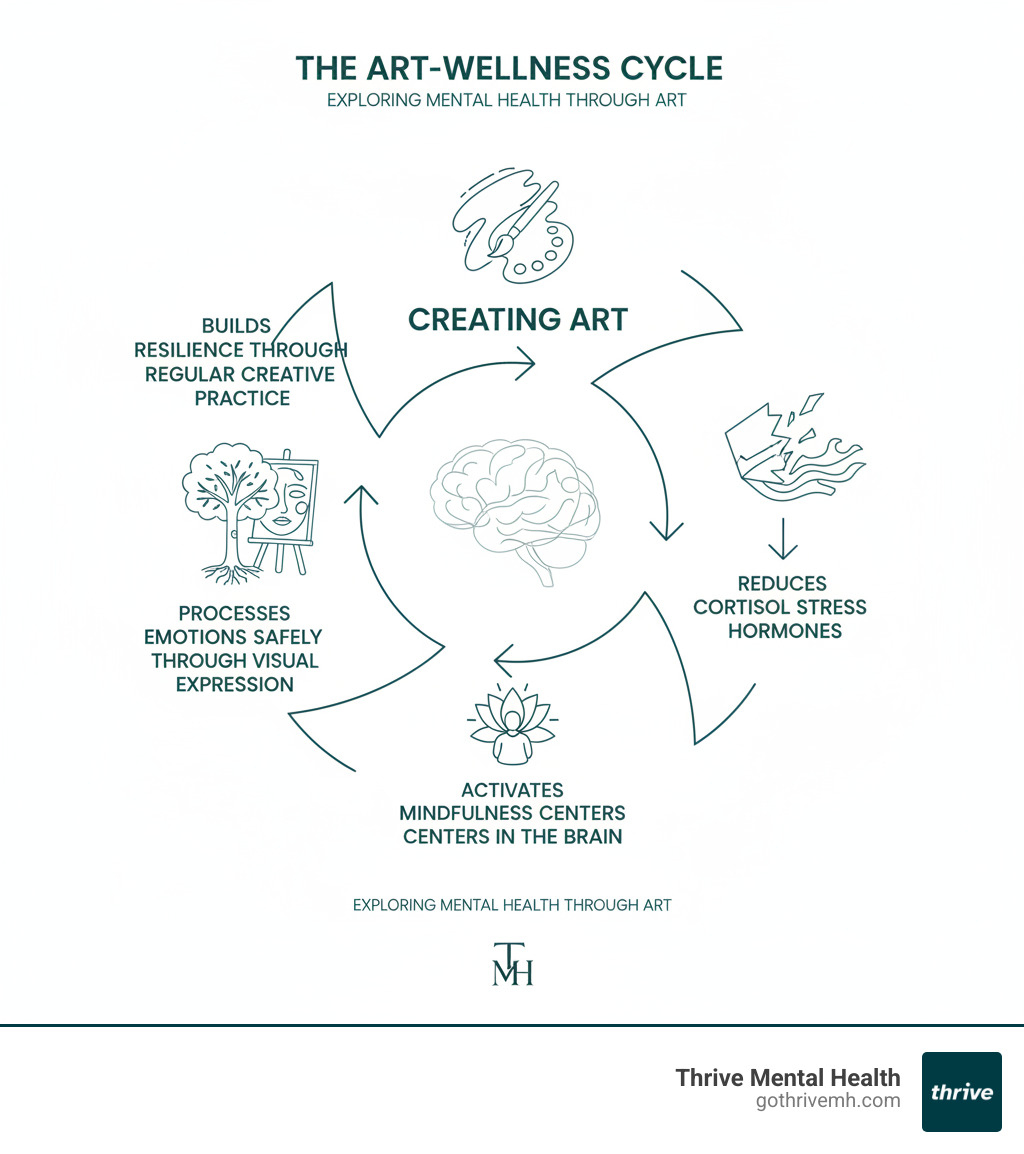
Exploring mental health through art offers a powerful path to healing when words aren’t enough. Creativity can become a bridge between complex inner emotions and outer well-being, providing a unique form of release and understanding.
How Art Supports Mental Health:
- Reduces stress hormones: Creating art can lower cortisol levels.
- Activates mindfulness: The focus required anchors you in the present.
- Processes trauma safely: Visual expression helps externalize difficult experiences.
- Builds emotional resilience: Regular creative practice strengthens coping skills.
- Connects communities: Shared artistic experiences reduce isolation.
Nearly half (46%) of Americans use creative activities to manage stress. What makes art uniquely therapeutic isn’t the final product, it’s the process. For busy professionals managing anxiety or depression, art offers a flexible, accessible tool for self-care.
“Art has the power to heal, to process emotions and connect with others,” as one artist shared about their journey through mental health challenges.
I’m Anna Green, LMHC, LPC, Chief Clinical Officer at Thrive Mental Health. I specialize in art therapy and have seen how exploring mental health through art creates breakthrough moments that talk therapy alone sometimes can’t reach.
Exploring mental health through art terminology:
If you or someone you know is struggling or in crisis, help is available. Text or call 988 or chat 988lifeline.org. Support is available 24/7. You are not alone.
The Science of Creativity: How Art Rewires Your Brain for Wellness
When you’re absorbed in sketching or painting, your brain is literally rewiring itself for better mental health. The field of neuroesthetics uses brain scans to show what happens when we create, revealing that exploring mental health through art triggers measurable biological changes that promote healing.
When you create art, your brain:
- Slashes cortisol levels (your main stress hormone) by up to 75%.
- Releases dopamine (your brain’s natural reward chemical).
- Activates different neural pathways than logical thinking.
- Shifts into brain states that promote well-being.
Research confirms that creating art reduces cortisol levels, giving your nervous system a much-needed break. Regular creative practice strengthens your brain’s ability to handle stress. For practical ways to get started, check out these Therapeutic Art Activities.
The ‘Flow State’: Achieving Mindful Engagement
When you’re so absorbed in creating that hours feel like minutes, you’re in a state of “flow.” First studied by psychologist Mihaly Csikszentmihalyi, flow is a state of complete immersion where your inner critic goes quiet and self-consciousness melts away.
Research shows that the arts can create this unique cognitive shift into flow, leading to improved attention, creativity, and cognition. This state is neurochemically rewarding, as your brain releases feel-good chemicals that combat anxiety and depression. You also emerge with a sense of accomplishment, which builds confidence.
Art as a Mindfulness Practice
Exploring mental health through art naturally cultivates mindfulness. While meditation requires stillness, art gives your hands something to do while your mind finds peace. Repetitive motions like knitting or painting anchor you in the present moment, allowing worries to fade.
Art also engages all your senses, the smell of charcoal, the feel of clay, the sight of vibrant colors. This sensory engagement keeps you grounded. The arts are effective tools for mindfulness because they promote non-judgmental observation. As you focus on creating, your inner critic takes a backseat, which is the essence of mindfulness.
Art as a Language: Tools for Emotional Expression and Self-Findy
When you feel too overwhelmed for words, exploring mental health through art becomes transformative. It gives you a way to speak the unspeakable. Art serves as a universal language, giving form to feelings and making the invisible visible.
Creative activities provide a valuable outlet for emotional expression and regulation, improving how you respond to stress. This process is about more than just “getting it out”, it’s about understanding and gaining control over your emotional landscape. The healing power lies in authenticity; you don’t need to create a masterpiece, just be genuine in your creation.
Processing Difficult Emotions and Trauma
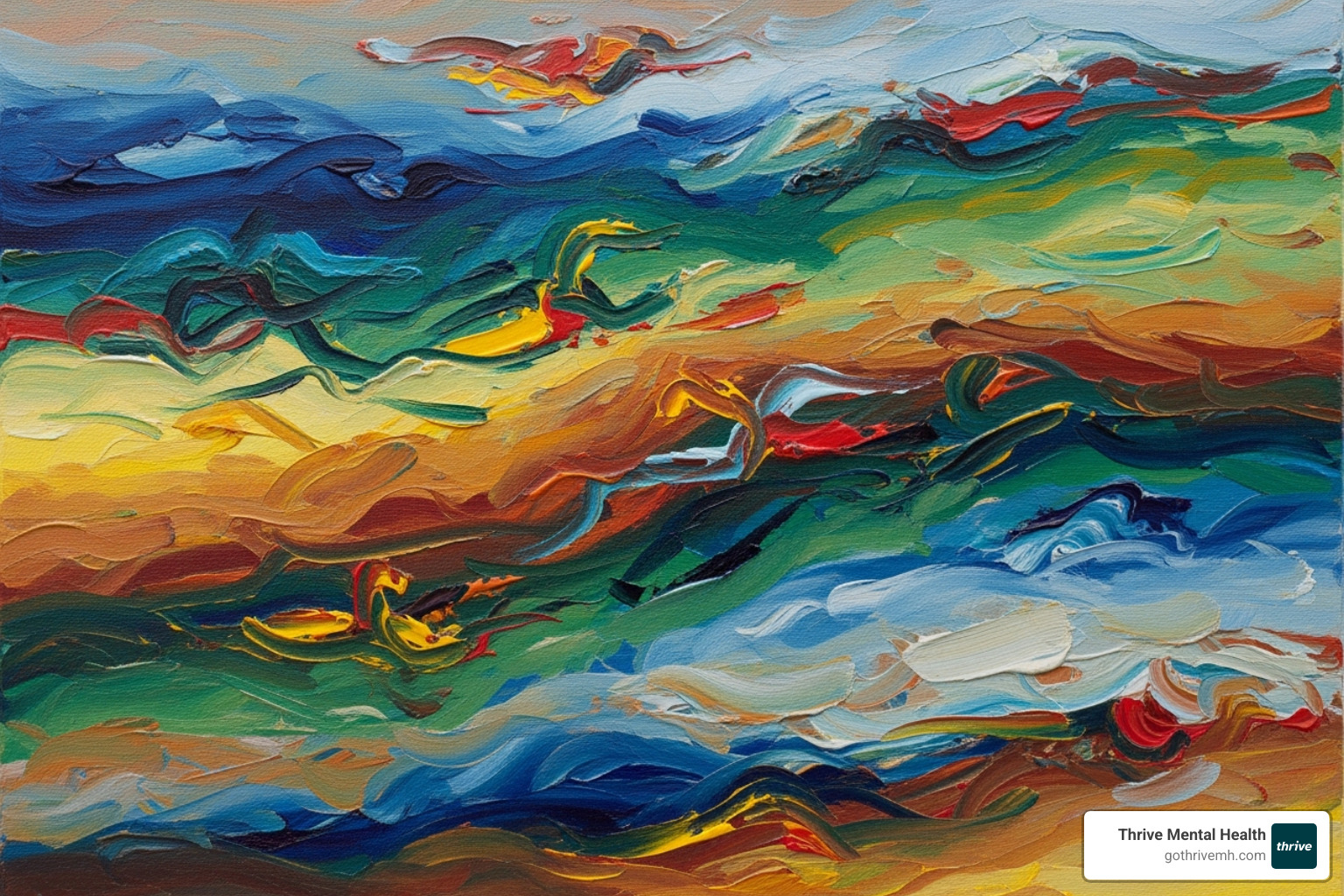
When emotions are too big for words, art offers a safe, non-verbal space to process them. Instead of explaining depression, you can sculpt it. Instead of describing anxiety, you can paint it. This externalizes feelings, making them tangible and easier to examine from the outside.
For trauma, art creates a safe container for difficult experiences, allowing them to be processed without re-traumatization. Engaging in a creative practice has been shown to reduce symptoms of depression and PTSD, offering a path toward healing that complements traditional therapy. For a deeper dive, check out our resources on Art Therapy for Emotional Healing.
Fostering Empathy and Connection
Art builds bridges between people. When someone shares their mental health journey through artwork, they invite others to understand their inner world. This visual storytelling fosters empathy, humanizes mental health struggles, and reduces stigma.
Artists like Ezra, who uses art to build empathy, create work that invites viewers to connect with complex emotional states, reminding us we’re not alone. Community art projects amplify this connection by bringing people together to create and share, strengthening social bonds and reducing isolation in a judgment-free environment.
From Hobby to Healing: Exploring Mental Health Through Art Therapy
While making art on your own is beneficial, exploring mental health through art therapy takes this connection to a clinical level. Art therapy is a recognized mental health treatment using creative processes to improve well-being, guided by a licensed professional with specific therapeutic goals.
| Feature | Arts in Health (Making Art) | Creative Arts Therapy |
|---|---|---|
| Goal | General well-being, enjoyment | Clinical outcomes, treatment plan |
| Leader | Artist, educator, or self-guided | Licensed therapist |
| Setting | Community spaces, home | Clinical settings (in-person/virtual) |
A licensed art therapist has specialized training in both art and psychology to address conditions like depression, trauma, and anxiety.
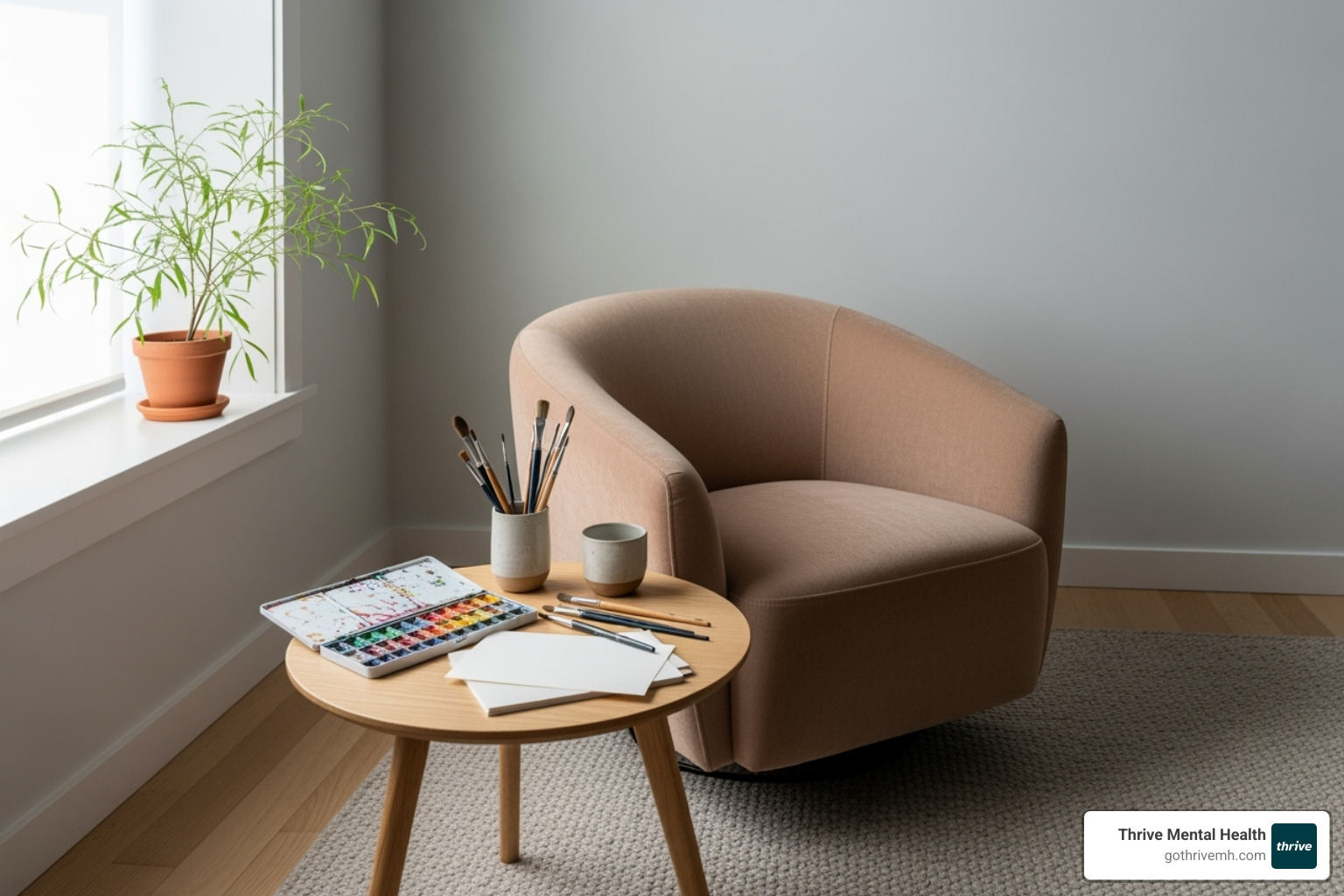
Types of Creative Arts Therapies
Creative arts therapy includes diverse modalities to match your needs:
- Visual Art Therapy: Painting, drawing, or sculpting to express what words can’t.
- Dance/Movement Therapy: Using the body to explore emotions and reduce stress.
- Music Therapy: Creating or listening to music to address emotional and cognitive needs.
- Drama Therapy: Using improvisation and role-playing to explore personal narratives.
- Poetry/Writing Therapy: Using words through journaling or storytelling to process thoughts.
For a comprehensive look at these modalities, explore our guide to Treatment Modalities like Art Therapy.
 How Mental Health Services Provide Culturally Responsive Care: A Complete GuideMental Health
How Art Therapy Supports Specific Populations
Art therapy is highly adaptable. For isolated teens, it aids identity development and provides a non-threatening outlet to manage social anxiety. We offer specialized Art Therapy Activities for Adolescents.
For pregnant and postpartum women, art-based interventions are a safe way to reduce anxiety and depression symptoms. For individuals with dementia, art therapies like reminiscence or calligraphy can improve cognitive function and quality of life.
The Rise of Virtual Art Therapy
Access to care shouldn’t depend on your location. Virtual art therapy has proven to be as effective as in-person sessions, overcoming geographical barriers. This is especially true in a diverse state like Florida, where online programs can reach individuals from bustling cities like Miami and Orlando to more remote areas. At Thrive, we embrace this innovation, offering Virtual IOP: Art Therapy as part of our flexible treatment options. This ensures that exploring mental health through art is possible for any Floridian with an internet connection.
Getting Started: 5 Practical Ways to Use Art for Your Mental Health
You don’t need to be an artist to benefit from exploring mental health through art. The healing happens in the process, not the product. All you need is curiosity and a willingness to create without judgment. Here are five simple activities to try:
- Mindful Doodling: Grab a pen and paper and draw repetitive patterns or shapes without a plan. This quiets the mind and anchors you in the present, like a form of meditation.
- Emotional Color Palette: Choose colors that match your current feelings and let them flow onto paper. You don’t need to paint anything recognizable; just let the colors express what you can’t say.
- “Self-Care” Collage: Cut out images, words, or colors from magazines that represent comfort and joy. Arrange them on paper to create a visual reminder of what nurtures you.
- Sculpt Your Stress with Clay: Use clay or playdough to squeeze, pound, and shape your stress. The tactile experience is grounding and helps pull you out of anxious thoughts.
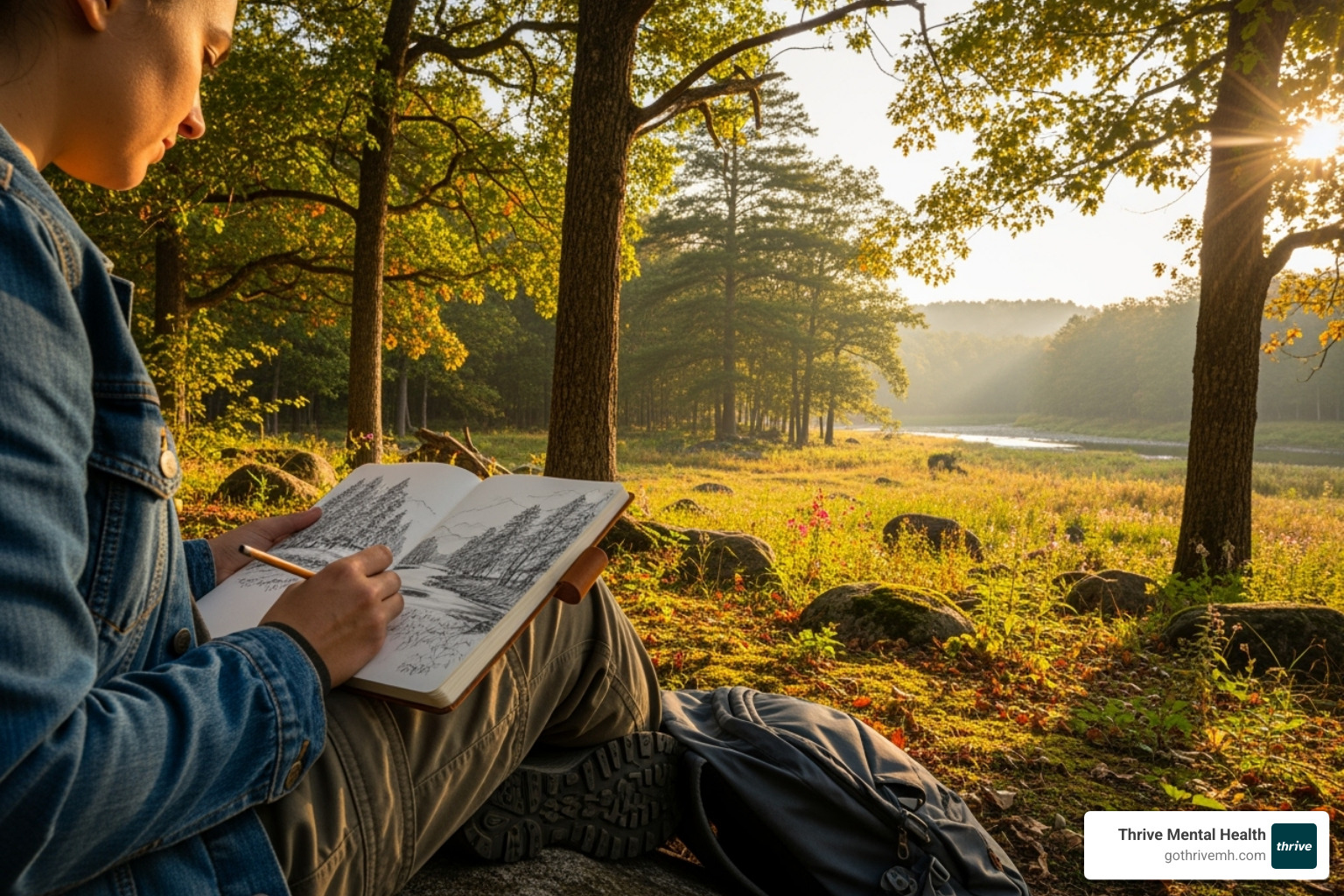
- Nature Journaling: Take a notebook outside and sketch what you see, a palm frond, a coastal bird, or the way the sun hits the water. In Florida, you’re surrounded by unique natural beauty that can inspire this practice of mindful observation, which naturally calms the nervous system.
Finding Your Creative Outlet
The key is finding what speaks to you. Experiment with different mediums:
- Traditional: Painting, sketching
- Digital: Art apps on a phone or tablet
- Photography: Capturing meaningful moments
- Pottery/Ceramics: Centering clay to center yourself
- Fiber Arts: Knitting or crocheting for “moving meditation”
Set up a small creative space and consider finding a community to share your interest with. For more ideas, explore our guide to Mental Health Art Activities. The only requirement is to begin.
Finding Your Path: Insurance and Access to Care
Exploring mental health through art shouldn’t be limited by financial barriers or geographic location. At Thrive Mental Health, we understand that seeking help is already a brave step, and we’re committed to making that journey as smooth as possible.
The good news? Many major insurance providers recognize the value of comprehensive mental health treatment, including art therapy. We work directly with Cigna, Optum, Aetna, Florida Blue, and Anthem to help maximize your benefits. Our team takes the guesswork out of insurance navigation, we’ll help you understand your in-network benefits and explore out-of-network options when needed.
Think of us as your insurance translators. We know the language of copays, deductibles, and prior authorizations, so you don’t have to become fluent in insurance-speak while you’re focusing on your healing.
Our virtual Intensive Outpatient Program (IOP) is designed for the realities of life in Florida. Whether you’re a busy professional in Miami, a student in Orlando, a parent in Tampa, or living anywhere from Jacksonville to the Keys, our flexible scheduling works around your life.
Evening options mean you don’t have to choose between getting help and keeping up with your responsibilities. Imagine attending a meaningful art therapy session from the comfort of your home office after work, or joining a group session during your lunch break. This accessibility removes traditional barriers that might have prevented you from seeking care in the past.
We believe that custom care isn’t a luxury, it’s essential. Your healing journey is unique, and your treatment plan should reflect that. Our evidence-based programs incorporate art therapy alongside other proven modalities, creating a comprehensive approach that addresses your specific needs and goals.
Ready to take the next step? Our team is here to help you steer insurance coverage and find the program that fits your life. Because when it comes to mental health, the best treatment is the one you can actually access and complete.
Frequently Asked Questions about Exploring Mental Health Through Art
Do you need to be “good” at art to benefit from it?
Absolutely not. The therapeutic benefit of exploring mental health through art comes from the process, not the final product. It’s about self-expression and engaging your mind and body in a creative act. The act of creating is what reduces stress and helps process emotions, regardless of technical skill.
What’s the difference between art therapy and just making art?
Making art on your own is a beneficial self-care practice (“arts in health”) that can reduce stress and boost your mood. Art therapy, however, is a formal mental health treatment guided by a licensed art therapist. It is a structured process used to address specific clinical goals, like managing anxiety or processing trauma, within a therapeutic relationship.
How can I start using art for my mental health today?
You can start right now with simple materials. Try mindful doodling by letting your hand move freely on paper without a goal. Or, create a mood collage with images from a magazine that reflect how you feel. The key is to start small and release any pressure for the result to look a certain way. If you want to go deeper, consider professional support through programs like our Virtual IOP Art Therapy.
Take the Next Step in Your Healing Journey
Your creative journey doesn’t have to end here. Exploring mental health through art is one of the most accessible and powerful tools for emotional wellness. Whether you start with a simple doodle or consider working with a licensed art therapist, this path can transform how you relate to stress, trauma, and your own emotions.
Art meets you where you are. It can be a ten-minute stress reset or a professionally guided process for deep healing. At Thrive Mental Health, our virtual IOP program integrates art therapy with other evidence-based treatments, offering flexible evening options that fit your life across Florida.
You can start creating today on your own. But if you’re ready for professional support that combines the power of art with comprehensive mental health care, we’re here.
Ready for support? Thrive offers virtual IOP with evening options. Verify your insurance in 2 minutes (no obligation) → Start benefits check or call 561-203-6085. If you’re in crisis, call/text 988.

This article is for informational purposes only and is not a substitute for individualized clinical advice or insurance verification.