


Powerful Art Therapy Clinics for Self-Esteem 2025
Why Finding the Right Art Therapy Clinic Changes Everything
What are some clinics that use art therapy activities for self esteem building? If you’re asking this, you’re likely ready for something different than traditional talk therapy to rebuild your self-worth. The good news: art therapy clinics across the U.S. are helping people rebuild confidence through creative expression, and many accept major insurance plans.
Quick Answer: Types of Clinics Offering Art Therapy for Self-Esteem:
| Clinic Type | Best For | Insurance Coverage |
|---|---|---|
| Integrated IOP/PHP Programs | Moderate to severe self-esteem issues, structured recovery | Often covered by Cigna, Optum, Florida Blue, Aetna |
| Community Mental Health Centers | Accessible care, group support | Medicaid, sliding scale fees |
| Hospital-Based Programs | Medical + mental health needs | Most major insurance plans |
| Specialty Trauma Centers | Trauma-related self-esteem issues | Varies; verify benefits |
| University Counseling Centers | Students, young adults | Often included in tuition/fees |
Art therapy works because it bypasses the limitations of language. When shame or self-doubt makes it impossible to find the right words, painting a storm or sculpting your inner strength tells the story for you. Research shows that just 45 minutes of creative art-making reduced stress hormones in 75% of participants. Completing a small creative project sparks a sense of accomplishment that can take months to build in traditional therapy.
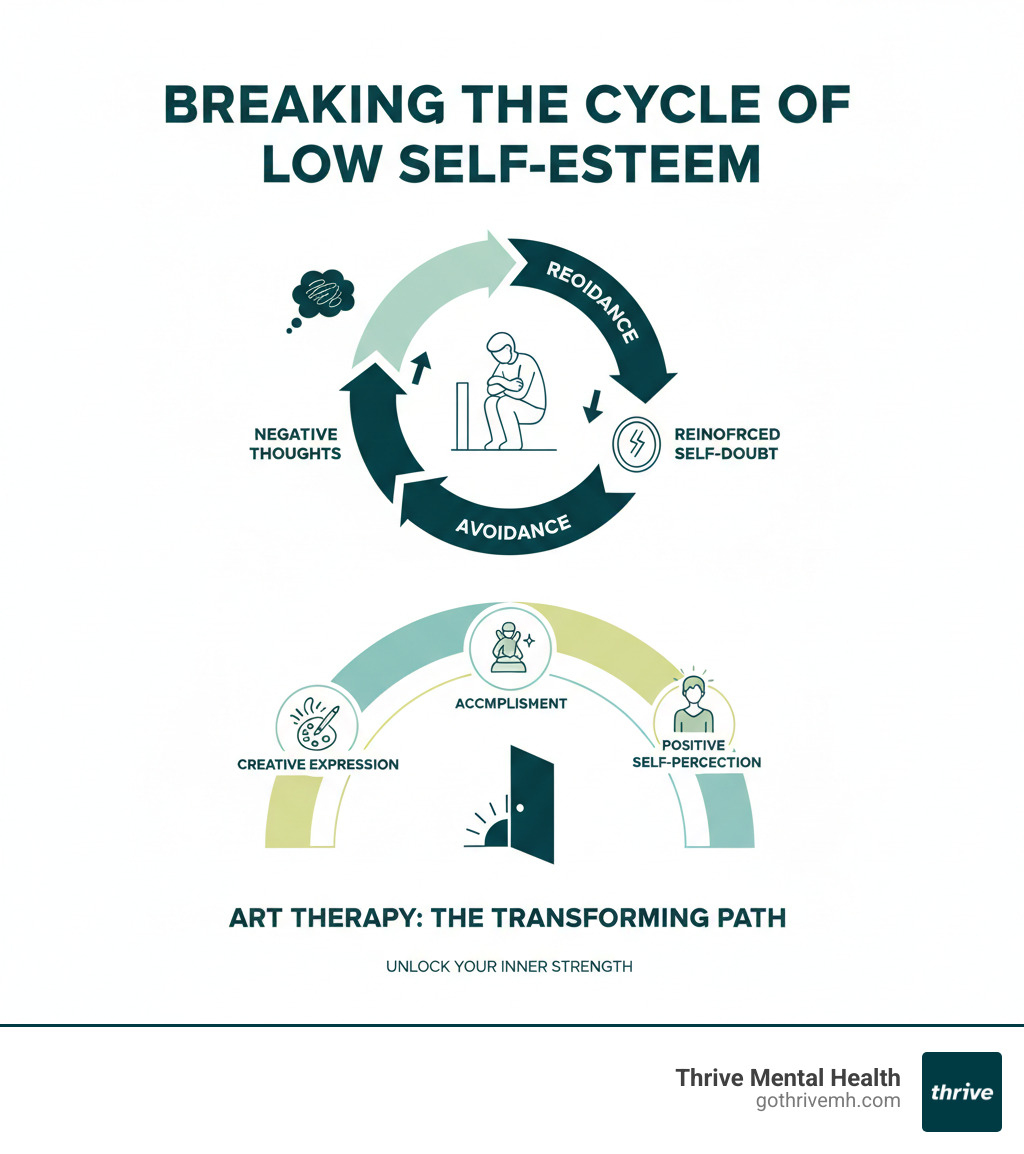
Low self-esteem is a cycle: negative thoughts lead to avoidance, which reinforces the belief that you can’t do things. Art therapy breaks this pattern by giving you concrete proof of your capability. You create something. You see it. You own it. That tangible evidence starts to rewrite the negative story you tell yourself.
This guide will show you what to look for in a clinic, which activities work, and how to verify insurance. I’m Nate Raine, CEO of Thrive Mental Health, where we integrate art therapy into comprehensive treatment plans to make high-quality, outcome-focused mental health care accessible in Florida.
Learn more about:
How Art Therapy Rewires Your Brain for Confidence [The Science]
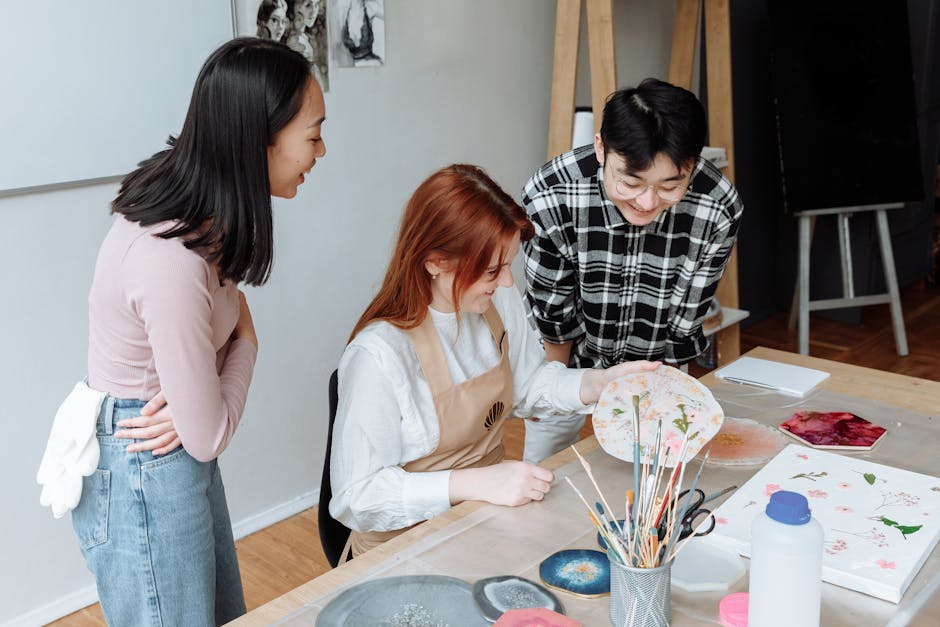
When you pick up a paintbrush, you’re not just making art, you’re changing your brain chemistry. Art therapy works on a biological level to reduce stress, create new neural pathways, and give your brain concrete evidence of your capabilities.
Engaging in creative work lowers cortisol levels, the body’s primary stress hormone. Research on creative arts interventions for stress found that 45 minutes of art-making reduced cortisol in 75% of participants. This stress reduction creates the mental space needed to challenge negative self-talk.
The real magic is the sense of accomplishment. Finishing a piece, even a simple collage, provides tangible proof that you can create and complete a task. When low self-esteem has convinced you that you’re incapable, your brain sees this evidence and starts to question the old narrative. Art therapy also strengthens problem-solving skills in a low-pressure way and facilitates emotional expression when words fail. For a deeper look at this process, see our guide on Exploring the Healing Power of Art Therapy.
What makes art therapy more effective than just talking?
Art therapy is a complementary approach that opens doors traditional conversation can’t. When you try to explain deep insecurities, your inner critic often edits or shuts you down. Art sneaks past that gatekeeper.
- Bypassing the inner critic: When you’re focused on mixing paint, your conscious mind relaxes, allowing subconscious thoughts and feelings to surface.
- Processing trauma non-verbally: Trauma lives in the body and in sensory memories. Art offers a way to create symbolic representations and work through the emotional impact without having to narrate every painful detail.
- Tangible progress: You can literally watch your emotional journey unfold across a series of artworks. This visual record becomes undeniable proof of change. Learn more about how these approaches work together in our article on Art Therapy and Counseling.
How is progress measured?
Licensed art therapists use multiple methods to track your growth:
- Therapeutic goals: Established at the start of treatment, these goals provide a roadmap for what progress looks like for you.
- Qualitative feedback: Regular check-ins about how you feel during the creative process help identify patterns and breakthroughs.
- Self-assessment scales: Short questionnaires measure changes in self-esteem, mood, and coping skills over time.
- Behavioral changes: Therapists observe shifts in how you interact with others and the world, such as speaking up more in group sessions or trying new activities.
- The artwork itself: Your art becomes a visual journal. Therapists are trained to notice recurring themes, evolving use of color, and symbolic content that reflects internal shifts.
- Therapist observation: A licensed art therapist’s clinical expertise helps interpret the art and the creative process to guide your healing.
What to Look For: Finding a Clinic That Gets Results
The difference between a life-changing art therapy experience and a disappointing one often comes down to the program’s credentials and structure. Not all “creative activities” are clinical art therapy, and that distinction is critical for rebuilding self-esteem.
When searching for clinics that use art therapy activities for self esteem building, here’s what to prioritize:
- Credentialed art therapists: Look for an Art Therapy Credentials Board (ATCB) credential, ATR-P, ATR or ATR-BC. These professionals have master’s-level training in both psychology and art, plus thousands of supervised clinical hours.
- Evidence-Based Integration: The most effective programs integrate art therapy with approaches like Cognitive Behavioral Therapy (CBT) or Dialectical Behavior Therapy (DBT). This gives you both creative expression and practical coping skills.
- Program Structure (IOP/PHP): For moderate to severe issues, weekly therapy may not be enough. Intensive Outpatient (IOP) and Partial Hospitalization (PHP) programs offer structured, daily support to build momentum. Our Virtual IOP programs provide this structure with the flexibility of attending from home.
- Insurance Coverage: Reputable programs are often in-network with major insurers like Cigna, Optum, Florida Blue, and Aetna. Always verify your benefits upfront.
- Flexible Scheduling: Look for clinics with evening or virtual options that fit your life.

What are some clinics that use art therapy activities for self esteem building and accept insurance?
Finding an insured clinic is possible, especially with IOP and PHP programs that insurers recognize as medically necessary. Thanks to mental health parity laws, most plans cover mental health at rates similar to physical health, but details vary.
Here’s how to steer insurance:
- Verify your benefits: Call your insurance company and ask specifically about coverage for intensive outpatient programs and if art therapy is included as part of that care.
- Confirm in-network status: In-network providers have negotiated rates that dramatically reduce your out-of-pocket costs.
- Understand your costs: Ask the clinic about co-pays, deductibles, and co-insurance before you commit.
- Ask about sliding scale fees: If you’re uninsured or have a high deductible, many community centers and some private practices offer income-based rates.
At Thrive Mental Health, we work with major insurers across Florida, serving clients in Tampa, Miami, Orlando, and throughout the state. We can verify your benefits in about 2 minutes with no obligation.
How do I find clinics that use art therapy activities for self esteem building near me?
Use a targeted search strategy to find the right fit:
- Psychology Today Directory: Filter by specialty (art therapy), insurance, and location. Look for ATR-BC credentials and mentions of self-esteem or trauma work.
- American Art Therapy Association (AATA): Their “Find an Art Therapist” tool lists professionals who meet national standards.
- Specific Online Searches: Use terms like “IOP art therapy Florida” or “art therapy for self-esteem [your city]” to find comprehensive programs.
- Ask for Referrals: Your doctor or a current therapist can often recommend reputable local programs.
- Consider Virtual Programs: Virtual art therapy is highly effective and removes barriers like commute time. Ensure the provider is licensed in your state and offers a structured program.
Art Therapy in Action: Activities That Build Unshakeable Self-Worth
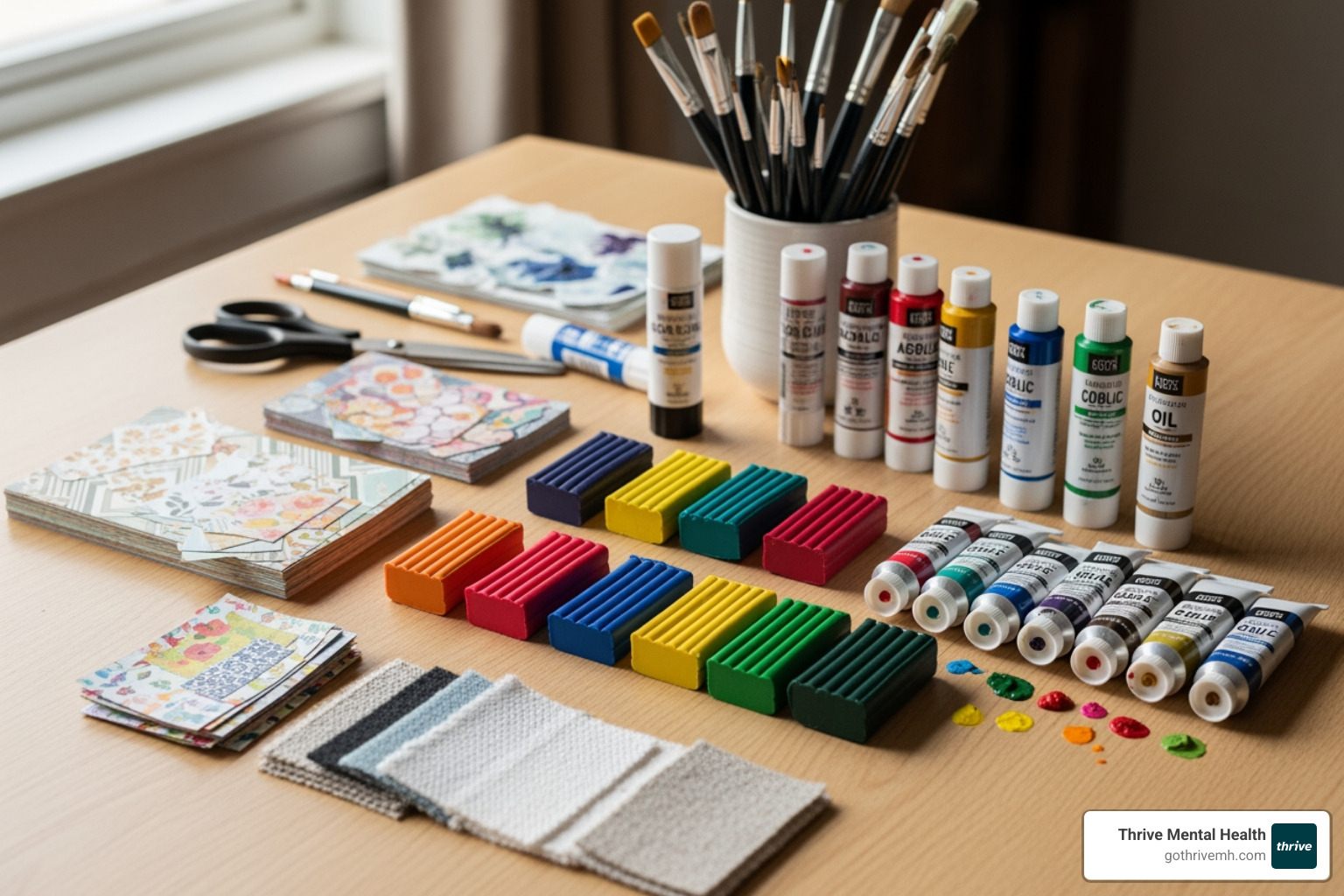
Here’s the most important thing to know: art therapy activities for self esteem building require zero artistic talent. If you can hold a crayon or tear paper, you can benefit. The healing is in the process of creating, not in the final product. An art therapist provides a judgment-free zone to explore materials, textures, and colors as a language for feelings that words can’t reach. The activities become tangible proof of your capability, you start a project, you finish it, and you create something that didn’t exist before. That’s evidence your brain can’t argue with.
Self-Esteem Activities for Adults
Art therapy helps adults externalize and rewrite years of negative self-talk.
 5 Online SC Anxiety Providers That are Proven to HelpMental Health
- Collage and Vision Boards: This low-pressure activity involves selecting images and words that represent your strengths and goals. It’s a form of visual goal-setting that clarifies what you value about yourself.
- Altered Books: You take an old book and literally change its story by painting over pages, adding new images, and writing new narratives. It’s a powerful metaphor for demonstrating you have the power to create a new story for your life.
- Clay Sculpting: The tactile experience of shaping clay is grounding. You can sculpt an abstract representation of anxiety and then reshape it into something symbolizing strength, building a visceral sense of control. Research on clay art therapy has shown significant benefits for adults with depression.
- Mindful Mandalas: Creating or coloring these circular designs quiets the inner critic and promotes focus. The symmetry can bring a sense of balance and wholeness.
For more ideas, explore our guide on Art Therapy Activities for Adults.
Self-Esteem Activities for Teenagers
Art therapy gives teens a non-threatening way to explore identity and build confidence when talking feels awkward.
- Superhero Self-Portraits: Teens create portraits of themselves as superheroes, incorporating their unique strengths as superpowers. This act of visualizing themselves as powerful begins to shift their internal narrative.
- Mask Making: Teens decorate the outside of a mask to represent their public self and the inside to represent their inner world. This facilitates conversations about authenticity and social pressure.
- Digital Art and Photography: Using apps and cameras feels natural for teens. They can create self-portraits or capture images representing their emotions, empowering them to control their narrative in a familiar medium.
- Zine Creation: Creating small, self-published magazines with drawings and text gives teens a voice and a sense of agency. It’s a way to produce content, not just consume it.
Find more targeted activities in our Art Therapy for Teenagers article and learn about other Therapeutic Art Activities.
What are some clinics that use art therapy activities for self esteem building? [Program Examples]
When searching for clinics that use art therapy activities for self esteem building, understanding the program types is key to finding the right fit for your needs and goals. This section breaks down the main approaches, not specific brands.
Community-Based Group Programs
Often run by non-profits or local mental health centers, these programs are designed for accessibility and connection. The power of peer support is immense; creating art alongside others who understand reduces isolation and normalizes your feelings. Activities like group murals or collaborative sculptures foster a sense of belonging and collective accomplishment. Many offer services on a sliding scale, making them a great lower-cost option. For more on group benefits, see our guide on Art Therapy Group Activities.
Integrated Intensive Outpatient (IOP/PHP) Programs
If your self-esteem struggles are moderate to severe or co-occur with anxiety or depression, you may need more than a weekly session. Integrated Intensive Outpatient Programs (IOP) and Partial Hospitalization Programs (PHP) provide structured care that combines art therapy with evidence-based modalities like CBT and DBT. At Thrive Mental Health, our IOP/PHP programs in Florida use this approach. You don’t just express emotions through art, you learn practical skills for lasting change. The consistent, structured environment keeps you supported and accountable. Learn more at our Virtual IOP Art Therapy page.
Specialized & Trauma-Informed Programs
Some clinics offer art therapy custom to specific populations like veterans, trauma survivors, or those dealing with grief. Trauma-informed art therapy creates a safe environment to process difficult emotions at your own pace. Therapists use targeted techniques like body mapping (using an outline of the body to map sensations and emotions) or container building (creating a symbolic box to hold overwhelming feelings). These activities help externalize internal struggles, making them feel more manageable without forcing you to talk before you’re ready.
Frequently Asked Questions about Art Therapy for Self-Esteem
Do I need to be “good at art” to benefit from art therapy?
No, you absolutely do not. Art therapy is about the creative process and self-expression, not the final product. A licensed art therapist creates a judgment-free zone focused on your internal experience. If you can hold a crayon, you have all the skill you need.
How is art therapy different from a regular art class?
The goal is different. An art class teaches technique to create an aesthetic product. Art therapy uses the creative process as a tool for psychological healing, insight, and emotional regulation, guided by a mental health professional. The focus is on the “why” behind your creation, not the “how.”
How long does it take to see results for self-esteem?
Results vary, but many people report a sense of relief and accomplishment after the first few sessions. Completing a project provides immediate, tangible evidence of your capability. However, deep, lasting changes in self-perception often develop over a few months of consistent participation in a structured program like an IOP.
What role does the therapeutic relationship play in art therapy for self-esteem building?
It’s foundational. A safe, trusting, and non-judgmental connection with your therapist is essential for the vulnerable work of rebuilding self-esteem. This supportive relationship models the self-acceptance you’re learning to develop and allows you to take creative risks that lead to healing.
How can art therapy help individuals reframe negative self-perceptions and build a more positive self-image?
Art therapy allows you to externalize your inner world and then literally transform it. When you draw or sculpt a negative belief, it becomes something outside of you that you can examine and change. Creating positive self-images, like a superhero self-portrait, provides a tangible blueprint for who you want to become, reinforcing a healthier self-concept. The act of creating can shift brain chemistry, reduce stress hormones, and activate reward centers in the brain, as shown in studies on creative arts interventions.
Your Creative Path to Confidence Starts Here
Low self-esteem doesn’t have to be a life sentence. Art therapy offers a powerful, evidence-based way to rebuild your sense of self, process difficult emotions, and create a tangible record of your growth. Finding the right program, one with licensed therapists, a structured approach like IOP or PHP, and a supportive environment, is the crucial first step. Every piece of art you create becomes proof that you are capable and that you matter.
Ready for support? Thrive offers virtual IOP programs with evening options. Verify your insurance in 2 minutes (no obligation) → Start benefits check or call 561-203-6085. If you’re in crisis, call/text 988.

This article is for informational purposes only and is not a substitute for individualized clinical advice or insurance verification.