


5 Crucial Help: Active vs Passive Suicidality
Where can I find immediate help for someone with active vs passive suicidality? [2025 Step-by-Step Guide]
Important: If someone is in immediate danger, call 911 now. In the U.S., you can call or text 988 for 24/7 confidential support.
If you’re in crisis, call/text 988 right now. You are not alone.
You need answers fast. Here’s the bottom line: in 3 minutes, you’ll know exactly who to call, what to ask, and how to make the environment safer, so you can keep someone alive and get them real help today.
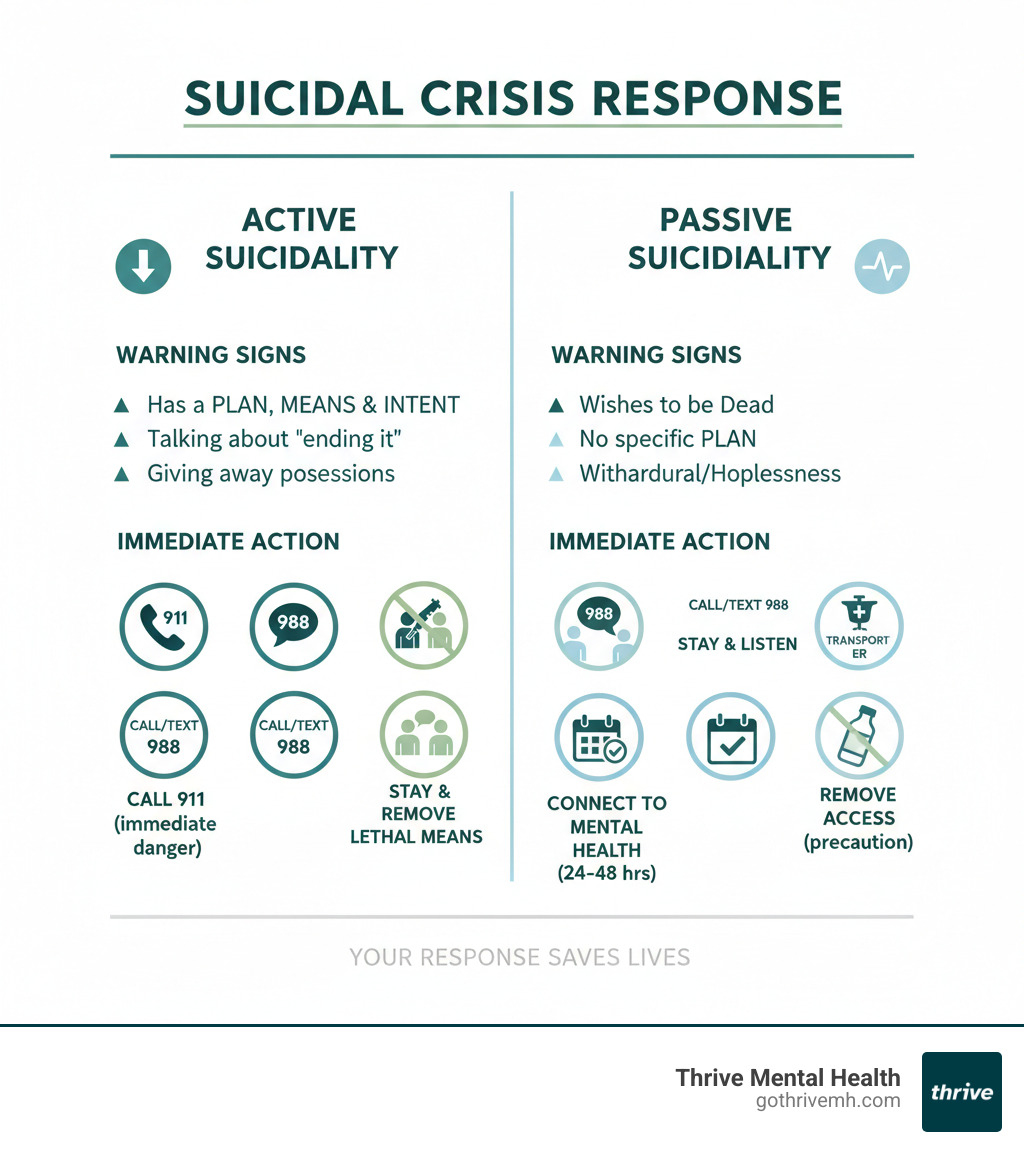
- Active suicidality: specific plan + intent + access to means. This is an emergency, act now.
- Passive suicidality: wishes to die, no plan or intent. Serious and urgent, support and connect to care today.
Ignore this and you risk losing the critical minutes that save lives. Act now and you protect them, stabilize the crisis, and start recovery the same day.
Key terms to remember:
- crisis intervention for suicidality
- evidence-based suicide prevention
- suicide prevention for professionals
Tip 1: Assess the Immediate Risk (Active vs. Passive Suicidality)
Your first step is to determine if the person is in immediate danger. This means figuring out if they are actively or passively suicidal. This distinction will guide your next actions. For a more detailed look, explore our Difference Active Passive Suicidal Guide.

| Feature | Active Suicidality | Passive Suicidality |
|---|---|---|
| Definition | Thoughts of suicide with a specific plan and intent to die. | A desire to die or thoughts of death without a specific plan or intent to act. |
| Examples | “I’m going to overdose on my medication tonight.” “I have a gun and I’m going to use it.” “I’ve written a note and I’m ready to go.” | “I wish I could just go to sleep and not wake up.” “Everyone would be better off if I wasn’t here.” “I just want the pain to stop.” |
| Risk Level | High, immediate danger. Requires urgent intervention. | Serious, but not immediately life-threatening. Requires prompt support and professional help. |
How to ask direct questions to assess the risk level.
It can be difficult, but asking direct questions is the most effective way to understand the situation. It shows you care and are willing to have a tough conversation. Research confirms that asking about suicide does not plant the idea.
- Start with a direct question: “Are you thinking about killing yourself?”
- If they say “yes” (active suicidality), ask follow-up questions:
- “Do you have a plan?”
- “Do you have what you need to carry out your plan?”
- “Have you decided when you would do it?”
- If they say “no” (passive suicidality), explore their feelings:
- “You mentioned you wish you wouldn’t wake up. Can you tell me more about that?”
- “What’s making you feel this way?”
Direct communication is a sign of care, not a risk. It opens the door for a real conversation and is the first step toward getting help. For more on this, see this research on the effects of discussing suicide.
Tip 2: Where can I find immediate help for someone with active vs passive suicidality?
Once you’ve assessed the risk, you need to know who to call. Both 988 and 911 are critical resources, but they serve different purposes. Understanding which to use can make all the difference. For more detailed information, visit our 988 Hotline page.
When to call 988 (The Suicide & Crisis Lifeline)
The 988 Suicide & Crisis Lifeline connects you with trained crisis counselors. It’s the right call for passive suicidal thoughts (e.g., “I wish I wasn’t here”) or active suicidal thoughts where there is no immediate physical danger. Counselors provide support, help create a safety plan, and can dispatch mobile crisis teams in many areas, including throughout Florida. It’s free, confidential, and available 24/7. Learn more at 988lifeline.org.
When to call 911 (Emergency Medical Services)
Call 911 immediately if a suicide attempt is in progress, if the person has a weapon, is violent, or has already harmed themselves. These situations require immediate medical and police intervention to ensure safety. 911 is for life-threatening emergencies. For more on crisis response, see our Crisis Mental Health Emergency Services page. When in doubt, call 911.
Tip 3: Secure the Environment (For Active Suicidality)
If someone is actively suicidal, your immediate goal is to create a safe environment until professional help arrives. This is called lethal means restriction, and it’s one of the most effective ways to prevent suicide. The impulse to act can be brief; removing the means can save a life. For comprehensive guidance on immediate crisis response, see our page on Crisis Intervention for Suicidality.
How can I ensure the safety of someone with active suicidality?
- Do not leave them alone. Your presence is a powerful deterrent. Stay with them until professional help arrives.
- Remove all potential means of self-harm. This includes firearms, knives, medications, ropes, and any other objects that could be used. Lock them away or have someone else remove them from the home.
- Take them to the nearest emergency room or a designated Baker Act receiving facility in Florida. If they are willing, transport them immediately. Stay with them during the intake process.
- Call 911 if the situation is unsafe. If the person is agitated, has a weapon, or refuses to go for help, call 911. Their safety is the top priority.
Tip 4: Offer Support & Listen (For Passive Suicidality)
For someone with passive suicidal thoughts (e.g., “I wish I could just disappear”), the immediate need is emotional support, not emergency services. Your role is to create a safe space for them to talk, feel heard, and be guided toward help. This validation can be a powerful lifeline. For a deeper understanding, explore our guide on Understanding Passive Suicidal Ideation.

What are the immediate steps for passive suicidality?
- Express your concern directly and without judgment. Say something like, “I’m worried about you. Can we talk about what’s going on?”
- Listen more than you speak. Let them share their feelings without interruption. Your goal is to understand, not to solve their problems in one conversation.
- Validate their pain. Use phrases like, “That sounds incredibly difficult,” or “I’m so sorry you’re going through this.” This shows you’re taking their feelings seriously.
- Avoid minimizing their feelings. Phrases like “It’s not that bad” or “You should be grateful for what you have” can make them feel more isolated.
- Reassure them that they matter. Let them know you care and that their life is important to you.
- Gently encourage professional help. Suggest, “I think it would be helpful to talk to someone who is trained for this. I can help you find someone and even go with you to the first appointment.”
Tip 5: Connect Them to the Right Level of Care
After the immediate crisis, connecting your loved one to the right level of care is crucial for long-term recovery. This is about treating the underlying issues, like depression or anxiety, that fuel suicidal thoughts.

Where can I find immediate help for someone with passive suicidality?
For someone experiencing passive suicidal ideation, the goal is to establish consistent support. This often involves:
- Individual Therapy: Approaches like Cognitive Behavioral Therapy (CBT) and Dialectical Behavior Therapy (DBT) are highly effective. They help individuals develop coping skills and change negative thought patterns. Online Therapy can be a convenient and accessible option.
- Support Groups: Connecting with others who have similar experiences can reduce feelings of isolation.
- Safety Planning: A therapist can help create a personalized plan to manage distressing thoughts and urges.
Where can I find immediate help for someone with active suicidality?
Active suicidality requires immediate stabilization followed by intensive, structured care. The path to recovery often includes:
- Emergency Room Evaluation: This is the first step to ensure medical stability and safety.
- Inpatient Hospitalization: May be necessary to provide a secure, 24/7 supervised environment.
- Intensive Outpatient (IOP) or Partial Hospitalization (PHP) Programs: These programs are a critical step down from inpatient care. They provide structured therapy multiple times a week while allowing the individual to live at home. This helps them transition back to daily life with robust support.
Thrive Mental Health specializes in providing this level of care across Florida. Our Virtual IOP and PHP Mental Health Services offer flexible, evidence-based treatment for residents throughout the state. We accept most major insurance plans in Florida, including Cigna, Optum, and Florida Blue. Find a program that serves your area on our Intensive Outpatient Mental Health Program Near Me page.
Frequently Asked Questions about Helping Someone with Suicidality
What’s the fastest way to help someone who is actively suicidal?
Stay with them. Remove lethal means (guns, meds, sharps). Call 911 if an attempt is in progress, there’s a weapon, severe intoxication, or medical danger. If there’s plan/intent but no immediate danger, call/text 988.
988 vs 911, which do I call?
- 988: Thoughts or plans without immediate physical danger. Get coaching, safety planning, and local resources.
- 911: Any immediate, life-threatening situation or attempt in progress.
Does asking about suicide put the idea in their head?
No. Asking directly reduces risk and opens the door to help. Try: “Are you thinking about killing yourself?” Research: Talking about suicide does not increase risk.
How do I make the home safer right now?
Store firearms offsite or locked with ammo separate, lock up medications (use a lockbox), remove/secure sharps and ligatures, and don’t leave them alone. More steps: Crisis Intervention for Suicidality.
How do we get treatment in Florida, and is it covered?
Start with therapy or higher support like Virtual IOP or PHP. Thrive accepts many plans (Cigna, Optum, Florida Blue, and more). Verify in 2 minutes → Start benefits check or call 561-203-6085. For added skills work, consider Online Therapy. For a deeper dive, see our related guide: Difference Active Passive Suicidal Guide.
Get the Right Support, Right Now
Summary: Knowing where to find immediate help for someone with active vs passive suicidality lets you act fast, call the right number (988 vs 911), ask the right questions, and secure the environment, so you keep them safe today and connect them to treatment that works.
Ready for support? Thrive offers virtual IOP programs with evening options for residents across Florida. Verify your insurance in 2 minutes (no obligation) → Start benefits check or call 561-203-6085. If you’re in crisis, call/text 988.

This article is for informational purposes only and is not a substitute for individualized clinical advice or insurance verification.