
The Best Art Therapy Programs for Mental Wellness

Find a program that focuses on the therapy of art for mental wellness. Best 5
Why Art Therapy Works When Words Fall Short
When you can’t find the words for your anxiety, trauma, or burnout, art therapy gives you another language. It’s not an art class; it’s a powerful, evidence-based form of psychotherapy. When you find a program that focuses on the therapy of art for mental wellness, you work with a trained clinician who uses creative expression—drawing, painting, sculpture—to help you process emotions and heal.
This approach is especially effective for driven professionals and young adults who struggle to verbalize their feelings or haven’t seen results from talk therapy alone. It creates a safe space to explore difficult emotions, build self-awareness, and develop healthier coping skills.
Quick Answer: Where to Find Art Therapy Programs
- American Art Therapy Association (AATA) Locator: Search for credentialed art therapists by zip code.
- Psychology Today Directory: Filter by “art therapy” and your city (e.g., Tampa, Miami).
- Intensive Outpatient Programs (IOPs): Virtual and in-person programs that integrate art therapy into comprehensive treatment.
- Community Mental Health Centers: Often provide sliding-scale or low-cost art therapy groups.
- Insurance Verification: Major plans like Cigna, Optum, Florida Blue, and Aetna may cover art therapy as part of mental health benefits.
Art therapy is a regulated mental health profession effective for treating anxiety, depression, PTSD, and trauma. It offers a structured, flexible path to faster results by reaching parts of your experience that words can’t touch.
Find a program that focuses on the therapy of art for mental wellness. terms at a glance:
- I’m looking for a therapist who uses art therapy activities for anxiety.
- art therapy activities for adults
- art therapy for trauma recovery
What is Art Therapy (And How Does It Actually Heal You?)
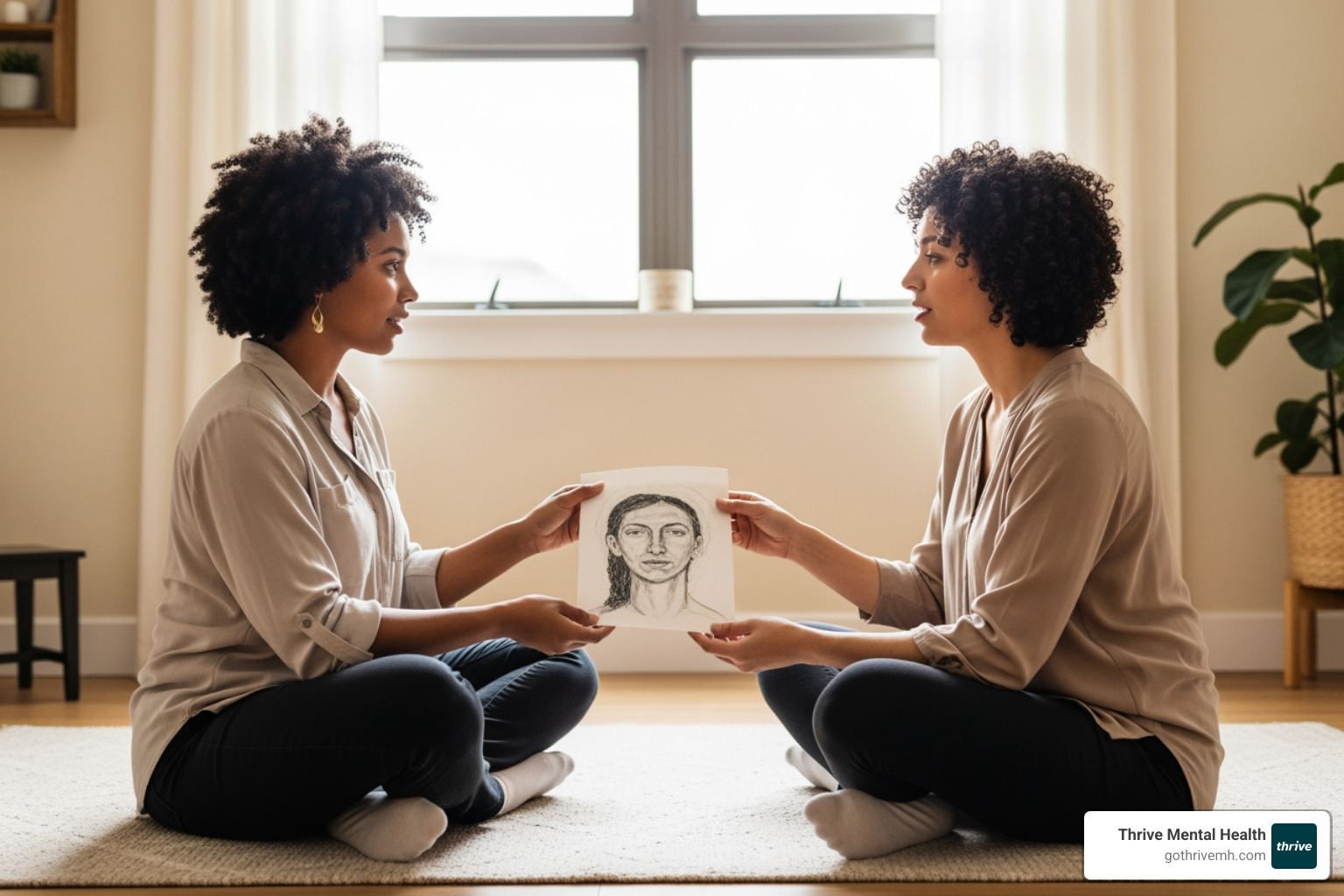
Art therapy is a regulated mental health profession that uses the creative process to improve your mental and emotional well-being. It’s a structured, evidence-based intervention guided by a trained clinician in a safe environment. The healing comes from the intersection of the art-making process, applied psychological theory, and the therapeutic relationship you build with your art therapist.
Your art becomes a language for feelings and experiences that are too complex or painful for words. The American Art Therapy Association (AATA) defines it as using “active art-making, the creative process, and applied psychological theory within a psychotherapeutic relationship.” The goal isn’t to create a masterpiece; it’s to increase self-awareness and improve your quality of life. Your therapist’s role is to guide and support you without judgment, focusing on the process, not the final product.
How Art Therapy Works Beyond Words
Ever tried to explain a panic attack or a traumatic memory and felt words were inadequate? Art therapy bypasses verbal limitations. The creative process taps into unconscious thoughts, allowing them to surface through metaphor and symbolism. This is especially powerful for trauma, as it lets you externalize painful experiences in a symbolic way, making them less overwhelming to process. You can represent memories, contain them, and understand them from a safer distance.
Art-making also engages the mind-body connection. Since trauma and anxiety live in the body as tension and exhaustion, the sensory act of creating art provides a holistic path to healing. Your therapist helps you explore what emerges in your art, empowering you to tell your story at your own pace.
The Proven Benefits for Your Mental Wellness
Research and clinical practice show that art therapy delivers tangible results:
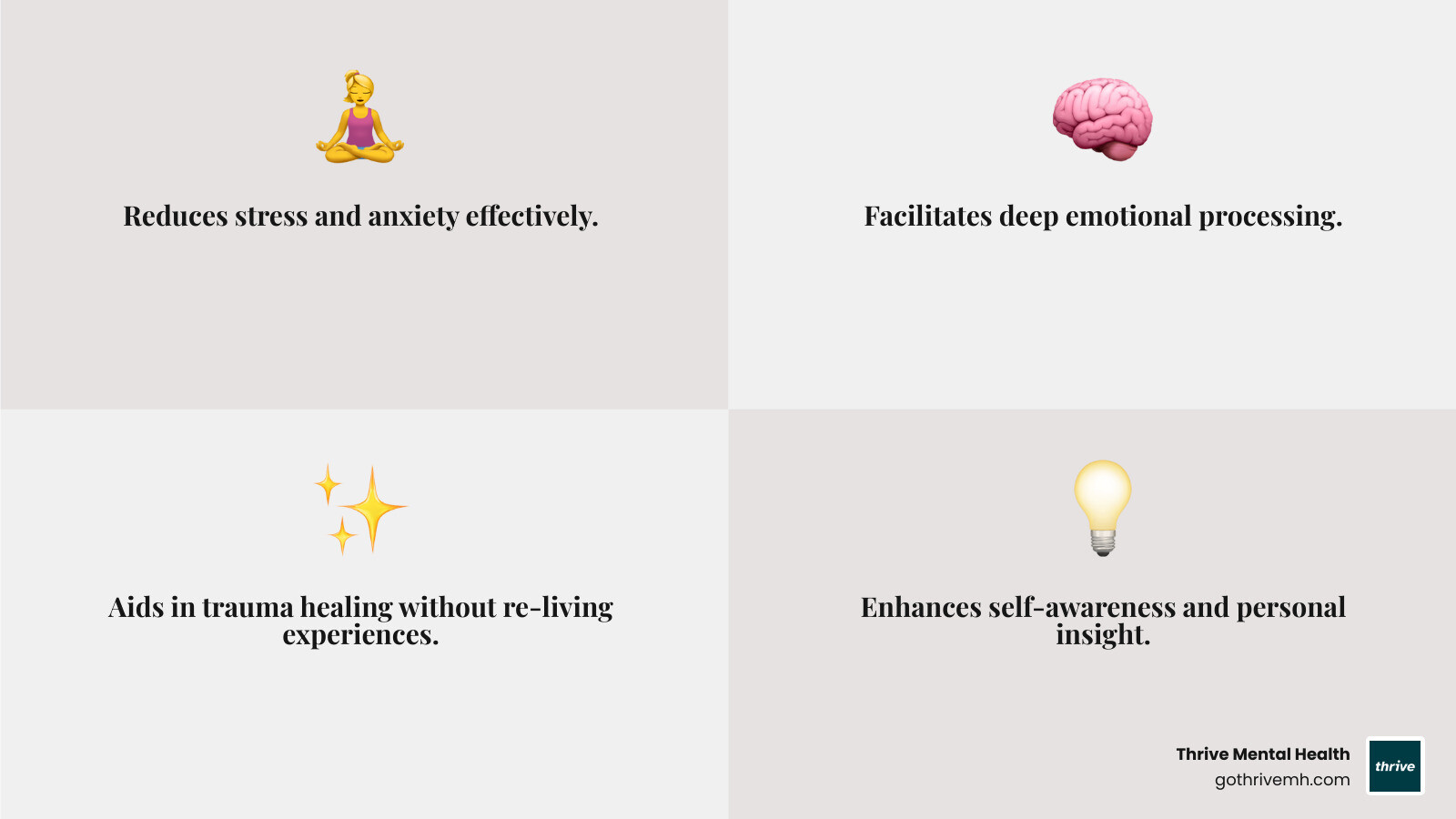
- Reduces anxiety and depression: Creating art lowers stress hormones and provides an outlet for overwhelming emotions.
- Processes trauma and grief safely: Represent experiences symbolically without having to verbally relive every painful detail.
- Increases self-awareness: Observing your own creations reveals hidden patterns in your thoughts and feelings.
- Develops healthy coping skills: Learn creative strategies to manage stress, anger, and other challenging emotions.
- Boosts confidence and self-esteem: Completing art projects, no matter how small, creates a tangible sense of accomplishment.
- Improves communication skills: Art offers a non-threatening way to express yourself, especially in group settings.
When you’re ready to experience these benefits, find a program that focuses on the therapy of art for mental wellness that fits your needs.
Who Can Benefit From Art Therapy? (And for Which Conditions?)
Art therapy is a versatile tool that helps people with a wide range of challenges. It’s not just for “artists”—it’s for anyone who needs a different way to heal. If you’re looking to find a program that focuses on the therapy of art for mental wellness, you’ll find it’s effective for many conditions.
Art therapy is particularly powerful for:
- Trauma and PTSD: It offers a way to externalize and process traumatic memories without the risk of re-traumatization from verbal retelling.
- Anxiety and Depression: Creating art can interrupt cycles of rumination and give you a sense of control over overwhelming thoughts.
- Grief and Loss: It provides a safe container for the complex and often contradictory emotions that words can’t capture.
- Substance Use Disorders: Art can help you explore the underlying emotional pain that drives addiction and develop healthier coping mechanisms.
- Newcomers and Refugees: Expressive arts transcend language barriers, helping to mitigate social isolation and process the trauma of displacement.
- Youth and Adolescents: It gives young people an engaging, non-threatening way to explore their emotions and build self-esteem.
- ADHD or OCD: The sensory nature of art-making can improve focus and offer a creative outlet for processing intrusive thoughts.
Specific Art Therapy Approaches for Different Needs
Not all art therapy is the same. A good program tailors its approach to your specific goals. Trauma-informed art therapy, for example, prioritizes your safety and sense of control. Cognitive-behavioral art therapy (CB-ART) combines the structure of CBT with creative expression to challenge negative thought patterns. Psychodynamic art therapy digs into the unconscious mind, using symbolism in your art to uncover how past experiences shape your present.
Other modalities, like Accelerated Resolution Therapy (ART), use guided imagery and eye movements to reprogram how distressing memories are stored, often providing relief in just a few sessions. Expressive Arts Therapy integrates multiple creative forms, including music, dance, and writing, recognizing that different emotions call for different outlets. The right approach is the one that best supports your unique journey to healing.
How to Find a Program That Focuses on the Therapy of Art for Mental Wellness
Finding the right art therapy program is a crucial step. Whether you need weekly sessions or a more comprehensive treatment plan, understanding your options will help you make an informed choice. With the rise of virtual programs, effective art therapy is more accessible than ever.
What Are the Different Types of Art Therapy Programs?
When you’re ready to find a program that focuses on the therapy of art for mental wellness, you’ll find several formats designed for different needs:
- Individual Sessions: One-on-one therapy offering personalized attention and complete confidentiality. Ideal for deep, private exploration of personal issues.
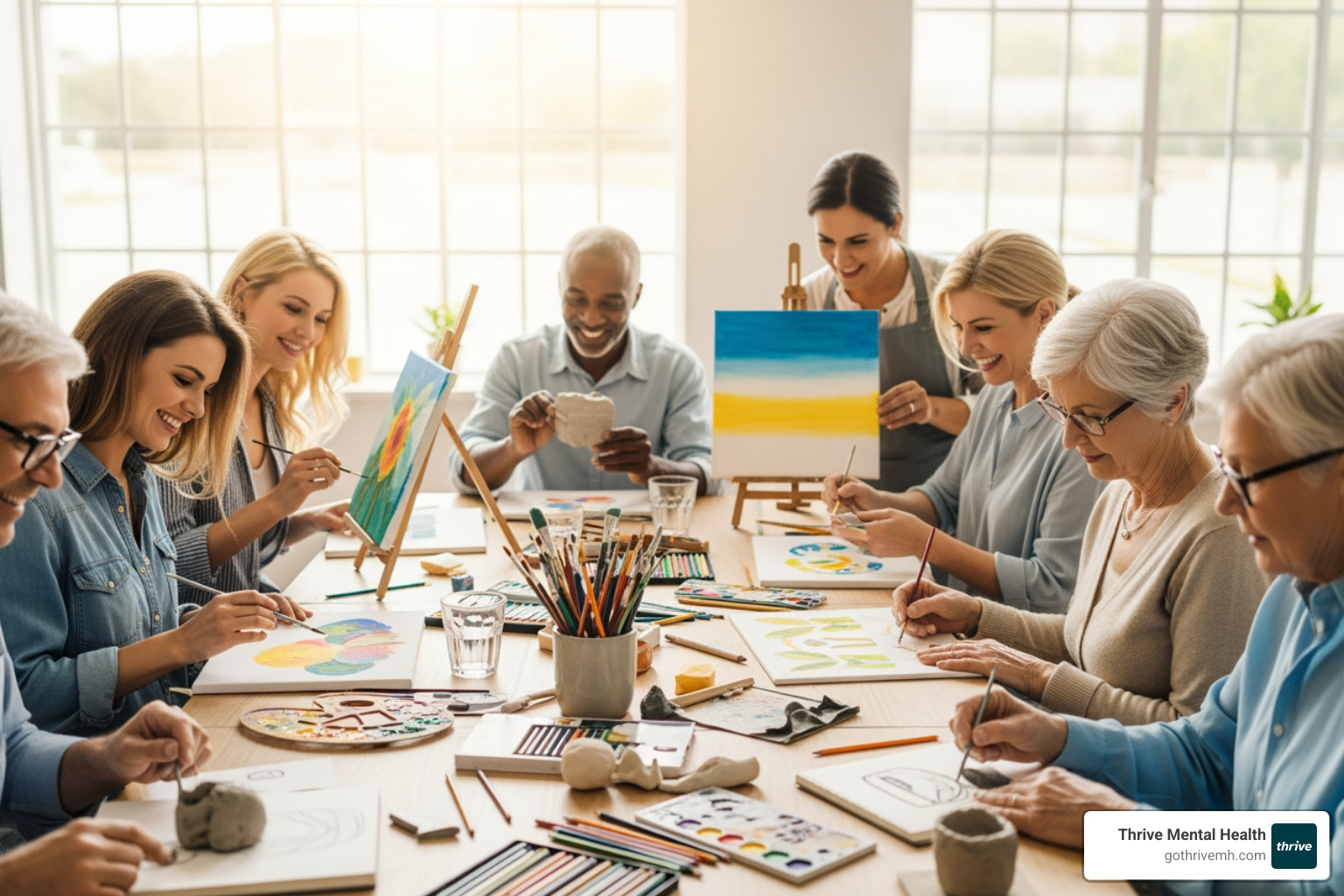
- Group Therapy: A small group setting that reduces isolation and builds communication skills. It’s a cost-effective way to get professional guidance and peer support.
- Intensive Outpatient (IOP) & Partial Hospitalization (PHP) Programs: Structured programs meeting multiple times a week, combining art therapy with other treatments like CBT and DBT. At Thrive Mental Health, our virtual IOP and PHP programs offer intensive support with the flexibility to attend from home. This is ideal for those needing more than weekly therapy.
- Virtual Programs: Online sessions that remove geographic barriers and fit into busy schedules. You can access qualified therapists from anywhere in states like Florida, California, Arizona, Indiana, or South Carolina.
| Program Type | Structure | Intensity | Focus | Best For |
|---|---|---|---|---|
| Individual Therapy | One-on-one with therapist | Low to Moderate | Deep personal exploration, custom interventions | Specific concerns, privacy, in-depth work |
| Group Therapy | Small group with therapist | Low to Moderate | Shared experience, peer support, social skills | Reducing isolation, cost-effective option |
| IOP/PHP | Multiple sessions/week | High | Comprehensive treatment, crisis stabilization | Significant challenges, needing more than weekly therapy |
| Virtual Programs | Online sessions | Varies | Accessibility, convenience, remote support | Busy schedules, preference for home-based therapy |
How to Find an Art Therapy Program or Therapist
- AATA Art Therapist Locator: The American Art Therapy Association offers a national directory of credentialed therapists.
- Psychology Today: Use their directory to filter for “art therapy” in your city, such as Tampa, FL, or Orlando, FL. You can find options like Art Therapy Support Groups in Saint Petersburg, FL.
- Referrals: Ask your doctor or current therapist for recommendations.
- Community Centers: Local mental health centers and NAMI chapters often have information on affordable programs.
- Thrive Mental Health: If you’re in Florida, California, Arizona, Indiana, or South Carolina, our virtual IOP/PHP programs integrate art therapy. Call us at 561-203-6085 to learn more.
Understanding Costs and Insurance Coverage
Cost should not be a barrier to getting help. Individual sessions typically range from $75 to $200, while group therapy is more affordable. Many therapists offer sliding-scale fees based on income.
Most major insurance plans—including Cigna, Aetna, Florida Blue, and Optum—cover art therapy when it’s provided by a licensed mental health professional as part of a treatment plan. It’s crucial to call your insurance provider and ask about your “outpatient mental health services” coverage.
At Thrive, we can help you steer this. You can verify your insurance benefits in just 2 minutes with no obligation. Free or low-cost options also exist through non-profits and university training clinics.
The Difference Between Art Therapy and an Art Class (It’s Not a Hobby)
It’s a common misconception, but art therapy and an art class are fundamentally different. Understanding this distinction is key when you find a program that focuses on the therapy of art for mental wellness.
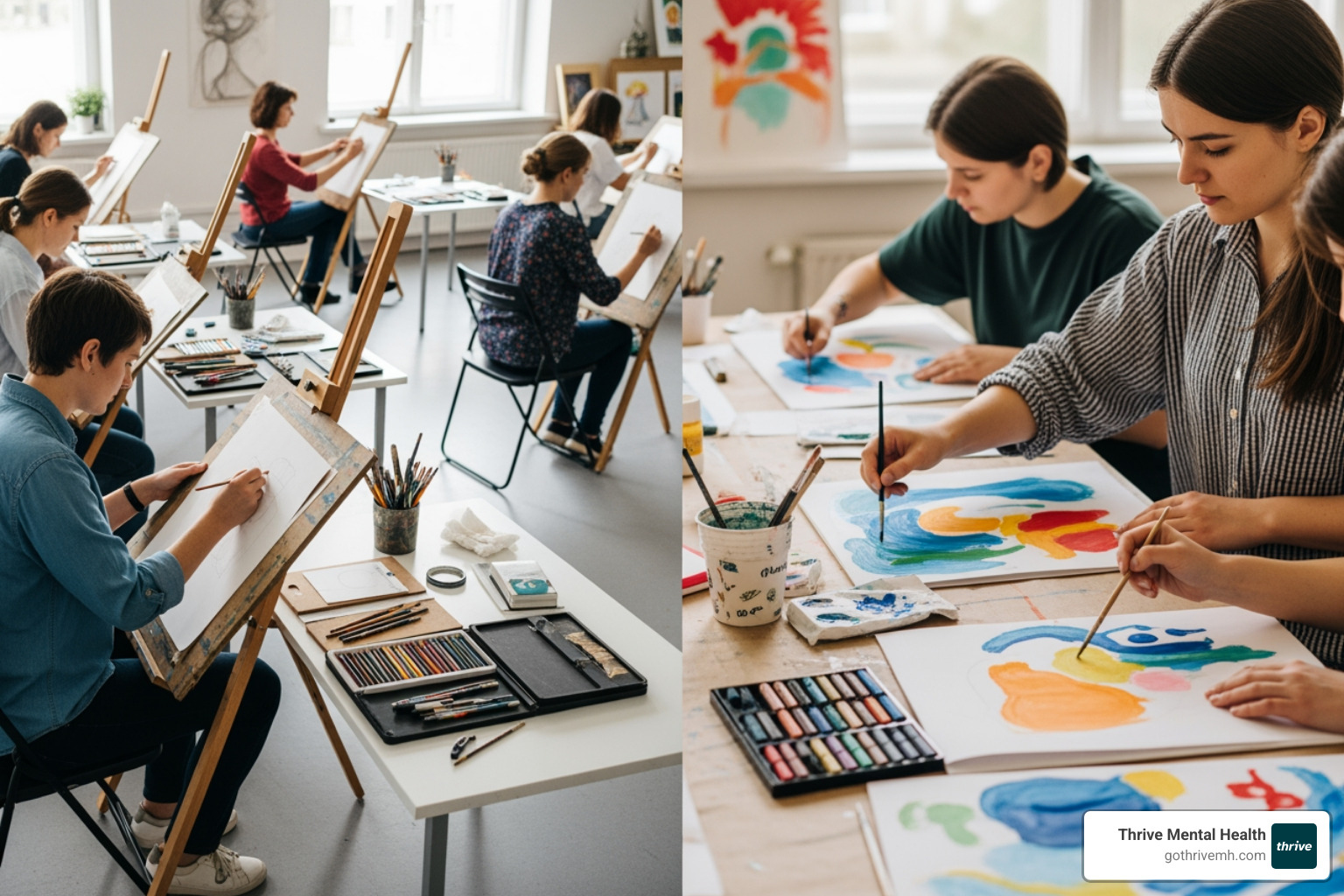
- An art class teaches technique. The goal is to improve your artistic skills and create an aesthetically pleasing product. Your instructor is an art expert.
- Art therapy facilitates healing. The goal is to process emotions, reduce anxiety, and gain self-awareness. The final product is secondary to the emotional and psychological process. Your guide is a licensed mental health clinician.
In art therapy, the environment is built on confidentiality and psychological safety, protected by the same ethical standards as any other form of psychotherapy. It’s a clinical treatment, not a recreational activity. The focus is always on your inner experience, not your artistic talent.
What Is the Training and Credentialing for Art Therapists?
Art therapy is a regulated mental health profession with rigorous training requirements. A qualified art therapist isn’t just someone who loves art; they are a licensed clinician.
Key qualifications include:
- A Master’s Degree: An advanced degree in art therapy or counseling with an art therapy concentration.
- Supervised Clinical Experience: Hundreds of hours of direct client work in settings like hospitals, clinics, and schools under the supervision of a licensed professional.
- Board Certification (ATR-BC): This credential from the Art Therapy Credentials Board (ATCB) signifies a high level of competence and commitment to ethical practice.
- State Licensure: In many states, art therapists must be licensed to practice, such as a Licensed Professional Clinical Counselor (LPCC), Licensed Marriage and Family Therapist (LMFT), or a Licensed Mental Health Counselor (LMHC) in Florida. This ensures they are accountable to a regulatory board.
These credentials are your assurance that you are working with a qualified professional. At Thrive Mental Health, our programs are led by licensed clinicians who are experts in both mental health treatment and the power of creative expression.
Frequently Asked Questions about Art Therapy
Can I do art therapy on my own at home?
While creating art at home is a great way to relieve stress, it isn’t the same as art therapy. True art therapy requires the guidance of a trained and licensed therapist. The therapeutic process involves not just making art, but also processing the experience with a professional who can help you uncover insights and steer the emotions that arise in a safe, confidential space.
What happens in a typical art therapy session?
A session usually starts with a brief check-in with your therapist. Then, you’ll be invited to create something using materials like paint, clay, or collage—no artistic skill is required. The focus is on your creative process, not the outcome. Afterward, you and your therapist will discuss the artwork, exploring any feelings, thoughts, or memories that emerged. It’s a collaborative process of findy.
Does insurance cover art therapy?
Often, yes. Many major insurance plans, including Cigna, Optum, Florida Blue, and Aetna, cover art therapy when it’s delivered by a licensed mental health professional as part of a comprehensive treatment plan. This is common in settings like an Intensive Outpatient Program (IOP). Always verify your benefits with your insurance company beforehand. At Thrive, we simplify this step—you can verify your insurance in 2 minutes online to see what your plan covers.
Find Your Path to Healing Through Art
When words aren’t enough to express the weight of anxiety, trauma, or depression, art therapy provides another way forward. It’s not about becoming an artist; it’s about giving a voice to what’s locked inside and healing in a space where creativity and therapy intersect.
To find a program that focuses on the therapy of art for mental wellness is to choose an evidence-based treatment that engages your whole self—mind, body, and creativity. For those who need more than weekly sessions, an Intensive Outpatient Program (IOP) or Partial Hospitalization Program (PHP) that integrates art therapy offers the structure and support needed for lasting change, often with flexible virtual and evening options.
This isn’t a hobby; it’s a structured, clinical intervention guided by a licensed therapist. It’s a path to building self-awareness, developing healthy coping skills, and reducing the symptoms that hold you back.
Ready for support? Thrive offers virtual and hybrid IOP/PHP programs with evening options that integrate creative modalities like art therapy. We serve Florida, California, Indiana, Arizona, and South Carolina. Verify your insurance in 2 minutes (no obligation) or call 561-203-6085. Our team is here to help you take the first step.
If you’re in crisis right now, call or text 988. You are not alone, and help is available immediately.