


Autism Diagnosis and Treatment: 1 Ultimate Guide
Why Understanding Autism Diagnosis and Treatment Matters Now
With roughly 1 in 31 U.S. children diagnosed with autism, understanding autism diagnosis and treatment is more critical than ever. If you’re a parent in Florida, an adult who’s always felt “different,” or a professional, you need clear answers, not complexity.
Quick Answer: What You Need to Know About Autism Diagnosis and Treatment
- Diagnosis: Based on observing social communication, repetitive behaviors, and developmental history using DSM-5 criteria. No blood test or scan.
- When It Happens: Screening is recommended at 18 and 24 months, but diagnosis can happen at any age.
- Treatment Goals: Not a “cure.” The focus is on building skills, managing co-occurring conditions (like anxiety or ADHD), and improving quality of life.
- Evidence-Based Approaches: Behavioral therapy (ABA), developmental therapies (speech, OT), psychological support (CBT), and medication for co-occurring symptoms.
- Who Can Help: Multidisciplinary teams of therapists, educators, and medical providers.
Getting an autism diagnosis in Florida can feel overwhelming due to medical jargon, waitlists, and insurance problems. For adults, a new diagnosis can bring a mix of relief, confusion, and grief for support they never received.
This guide provides a clear roadmap from recognizing the signs to accessing effective, evidence-based support.
About the Author: I’m Anna Green, LMHC, LPC, Chief Clinical Officer at Thrive Mental Health. I’ve spent my career delivering evidence-based care for complex presentations, including supporting adults navigating autism diagnosis and treatment alongside co-occurring conditions like anxiety and depression. My mission is to make high-quality care accessible and affordable.
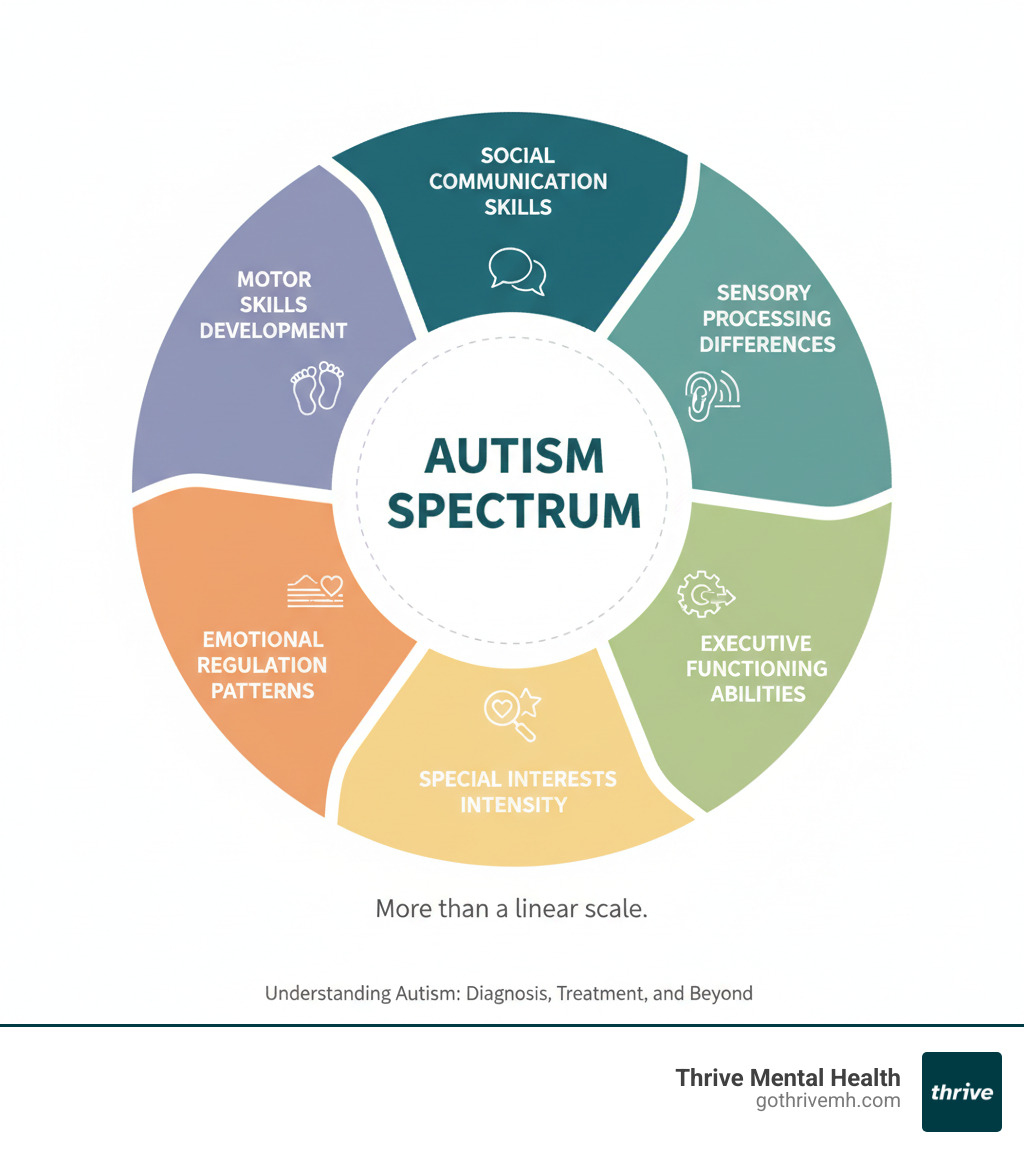
Terms related to autism diagnosis and treatment:
Decoding the Autism Diagnosis Process [Get Clarity Now]
Getting an autism diagnosis isn’t like a simple medical test. It’s a comprehensive process of observation and history-gathering by professionals who look at the whole picture. It’s normal to feel a mix of relief, anxiety, and frustration during this journey.

A key distinction is the difference between a medical diagnosis (for treatment and insurance) and an educational determination (for school services). You may need one or both, especially when navigating Florida’s school system. For help finding a specialist, our guide Choosing the Right Neurologist for Autism Diagnosis can help.
What Are the Official Criteria for an Autism Diagnosis?
Clinicians use criteria from The American Psychiatric Association’s DSM-5, the standard diagnostic manual. A diagnosis requires challenges in two core areas:
- Persistent difficulties with social communication and interaction: This goes beyond shyness. It can look like struggling with conversational back-and-forth, reading social cues (like tone of voice), or adjusting behavior for different social settings.
- Restricted and repetitive patterns of behavior, interests, or activities: At least two of the following must be present: repetitive movements or speech (stimming), insistence on sameness and routines, highly intense and focused interests, or unusual sensory responses (hyper- or hypo-sensitivity to sounds, textures, etc.).
These symptoms must be present from early development and cause significant challenges in daily life.
Who Can Diagnose Autism?
An autism diagnosis often involves a team. Specialists include developmental pediatricians, child neurologists, clinical psychologists, and neuropsychologists. Your journey will likely start with a primary care provider who can provide a referral for a comprehensive evaluation. The Interagency Autism Coordinating Committee provides resources to help find qualified specialists.
How Does Autism Diagnosis Differ Across Life Stages?
For young children, the focus is on early screening. The American Academy of Pediatrics recommends autism-specific screenings at 18 and 24 months. Tools like the M-CHAT-R flag concerns, leading to a full evaluation. Early intervention is crucial and can begin even before a formal diagnosis.
For school-age kids, the process often involves two tracks: a medical diagnosis for insurance-covered therapies and an educational determination for school-based support like an IEP, which is crucial for accessing resources in Florida schools.
For adolescents and adults, diagnosis is often complicated by years of “masking”, hiding autistic traits to fit in. This is especially common in women and can lead to exhaustion and burnout. An adult diagnosis often brings profound relief and self-understanding, providing a framework for their lifelong experiences. Our article Understanding Functioning Autism Symptoms in Adults explores this further.
Are There Gender Differences in Autism Diagnosis?
Historically, autism was diagnosed in boys much more often than girls, largely due to diagnostic bias. Research on sex bias in ASD shows that early studies focused on males, shaping criteria that missed how autism often presents in girls and women. They may have more subtle social difficulties, socially acceptable special interests, and are more likely to internalize struggles as anxiety or depression.
Many become experts at social masking, which leads to exhaustion and frequent underdiagnosis or misdiagnosis until later in life. There are also racial disparities, with Black children often diagnosed later than white children, missing critical early intervention windows. Equitable, culturally sensitive diagnostic practices are urgently needed across Florida to ensure everyone can access autism diagnosis and treatment.
Your Guide to Autism Diagnosis and Treatment Options
An autism diagnosis is the start of finding the right support. There is no “cure” for autism because it’s a neurodevelopmental difference, not a disease. The goal of autism diagnosis and treatment is to build skills, manage challenges, and improve well-being while honoring the individual’s identity.

At Thrive Mental Health, our neurodiversity-affirming care is customized to your unique goals. We are proud to offer these specialized services to individuals and families throughout Florida.
What Are the Main Categories of Autism Treatment?
Effective treatment plans integrate several approaches:
- Behavioral approaches
- Developmental therapies
- Educational strategies
- Social-relational models
- Psychological support
- Pharmacological interventions (for co-occurring conditions)
- Complementary and alternative treatments (use with caution)
Behavioral and Developmental Therapies: Building Core Skills for autism diagnosis and treatment
Applied Behavior Analysis (ABA) is a well-known, data-driven approach to build skills. Modern, neurodiversity-affirming ABA uses positive reinforcement to teach functional skills without forcing conformity or suppressing authentic traits. It’s crucial to find a provider whose philosophy respects individual autonomy.
Developmental therapies target specific skills:
- Speech and Language Therapy helps with all forms of communication.
- Occupational Therapy (OT) teaches daily living skills and helps manage sensory overload.
- Physical Therapy (PT) improves gross motor skills, balance, and coordination.
- Sensory Integration Therapy helps individuals process sensory input without becoming overwhelmed.
Other models like the Early Start Denver Model (ESDM) and TEACCH use play-based learning and visual structures to create predictable, supportive environments.
Psychological and Social-Relational Approaches
Living in a world not built for you takes a toll, making psychological support essential.
 Beyond the Trauma: Understanding PTSDMental Health
- Cognitive Behavioral Therapy (CBT) is highly effective for managing the anxiety and depression that often accompany autism. It helps identify and change distressing thought patterns. Learn more in our Ultimate Guide to Understanding Cognitive Behavioral Therapy (CBT).
- Social Skills Training provides tools for navigating social situations through direct instruction and role-playing.
- Relationship Development Intervention (RDI) and DIR/Floortime are relationship-centered models that focus on building emotional connection and flexible thinking.
What Is the Role of Medication in Autism Treatment?
To be clear: no medication treats core autism traits. Medication can, however, manage co-occurring conditions that are common in autistic individuals:
- ADHD: Stimulant or non-stimulant medications can improve focus and impulsivity.
- Anxiety and Depression: Antidepressants or anti-anxiety medications can provide significant relief.
- Irritability/Aggression: In severe cases, FDA-approved medications like Risperidone (Risperdal) and Aripiprazole (Abilify) may be considered.
- Epilepsy: About 30% of autistic people develop epilepsy, requiring anticonvulsant medications.
- Sleep Problems: Melatonin and good sleep hygiene are common first steps.
- Gastrointestinal (GI) Issues: Affecting nearly half of autistic individuals, these can be managed with medical and dietary support.
Always discuss medications with an experienced doctor. Be cautious with Complementary and Alternative Treatments (CAM); many lack evidence and some are dangerous. At Thrive Mental Health, we focus on evidence-based therapies and accept insurance from Cigna, Optum, Florida Blue, Aetna, and others to make support more affordable.
Thriving with Autism: Managing Health, Finding Strengths, and Building Support
Autism diagnosis and treatment is about more than managing challenges, it’s about building a life where you can thrive. This means managing your health, recognizing your unique strengths, and building a strong support system.

How Do You Manage Common Co-Occurring Conditions?
Co-occurring conditions are the rule, not the exception. Managing them is a key part of comprehensive autism diagnosis and treatment.
- Mental Health: Anxiety, depression, and ADHD are extremely common. Integrated care that addresses autism and mental health together is crucial. Our article on Autism and Depression Treatment offers more insight.
- Medical Conditions: Gastrointestinal issues (affecting ~47%), epilepsy (~30%), and sleep disorders are also frequent and often linked to neurological functioning.
- Insurance Coverage: Many plans from providers like Cigna, Optum, Florida Blue, and Aetna cover services for co-occurring conditions. You can verify your insurance with us in minutes.
What Are the Unique Strengths of Autistic Individuals?
The neurodiversity model recognizes that autism comes with significant strengths. Research on autistic strengths highlights several common traits:
- Detail-orientation: Noticing patterns and solutions others miss.
- Deep focus (hyperfocus): Sustained, intense concentration that leads to expertise.
- Pattern recognition: Seeing logical connections and systems.
- Strong sense of justice: A deep commitment to fairness and honesty.
- Creativity: Unique perspectives and innovative problem-solving.
- Honesty: Direct, straightforward communication.
These are not just quirks; they are valuable assets.
Where Can You Find Support for Your Autism Diagnosis and Treatment Journey?
You don’t have to do this alone.
- Family Support: Educating yourselves on your loved one’s needs can transform daily life. Our guide on Parenting Neurodivergent Children: Essential Tips and Advice offers practical strategies.
- Peer Support Groups: Connecting with others who “get it” provides validation and community. Find local groups with our guide: Discover Nearby Neurodivergent Groups for Support.
- Adult Support Services: For adults managing autism and co-occurring mental health issues, Intensive Outpatient (IOP) and Partial Hospitalization (PHP) programs offer a higher level of care. At Thrive Mental Health, our virtual and in-person programs are designed for this complexity, with flexible evening sessions.
- Local Resources: Thrive Mental Health provides support across Florida, with services in Tampa Bay, St. Petersburg, Miami, Orlando, Boca Raton, West Palm Beach, Jacksonville, Fort Lauderdale, Naples, and Sarasota.
Frequently Asked Questions about Autism Diagnosis and Treatment
Here are the questions we hear most often at Thrive Mental Health about autism diagnosis and treatment.
What is the first step to getting an autism diagnosis?
Start with your primary care provider (pediatrician or family doctor). They can perform an initial screening and refer you to a specialist, such as a developmental pediatrician or psychologist, for a comprehensive evaluation. In Florida, early intervention services can often begin even while you’re on a waiting list for a full evaluation.
Can autism be cured?
No, and that’s not the goal. Autism is a lifelong neurodevelopmental difference, not a disease. Autism diagnosis and treatment focuses on building skills, managing co-occurring conditions like anxiety, and improving quality of life while respecting the person’s authentic identity.
What is the difference between a medical diagnosis and an educational determination of autism?
A medical diagnosis is made by a healthcare professional using DSM-5 criteria and is needed for medical treatments and insurance coverage. An educational determination is made by a Florida school system to determine if a student is eligible for special education services, such as an Individualized Education Program (IEP). You can have one without the other.
Are there any medical tests that can diagnose autism?
No. Currently, there is no blood test, brain scan, or other single medical test for autism. Diagnosis is made through a comprehensive assessment of behavior and development by trained clinicians. This includes interviews, direct observation, and standardized screening tools.
Conclusion: Your Path Forward After an Autism Diagnosis
An autism diagnosis is not an endpoint; it’s a new beginning toward clarity and effective support. Whether for a child, an adult, or a young professional also managing mental health challenges, this moment opens the door to empowerment.
Effective autism diagnosis and treatment is about providing tools to thrive on your own terms, building on your strengths, and addressing real-world challenges. It’s personalized, evidence-based, and respects your identity.
At Thrive Mental Health, we understand that many autistic adults also face anxiety, depression, or ADHD. Our specialized IOP and PHP programs are designed for this complexity, offering flexible virtual and in-person care that fits your life. We provide expert support across Florida, helping you move forward with confidence.
Ready for support? Thrive offers virtual IOP programs with evening options. Verify your insurance in 2 minutes (no obligation) → Start benefits check or call 561-203-6085. If you’re in crisis, call/text 988.

This article is for informational purposes only and is not a substitute for individualized clinical advice or insurance verification.