





Mental Health Crisis Services: Your 1st Step to Safety
When Every Second Counts: Why Mental Health Crisis Services Save Lives
Mental health crisis services are your lifeline when you’re overwhelmed, in danger, or can’t manage alone. Here’s what you need to know right now:
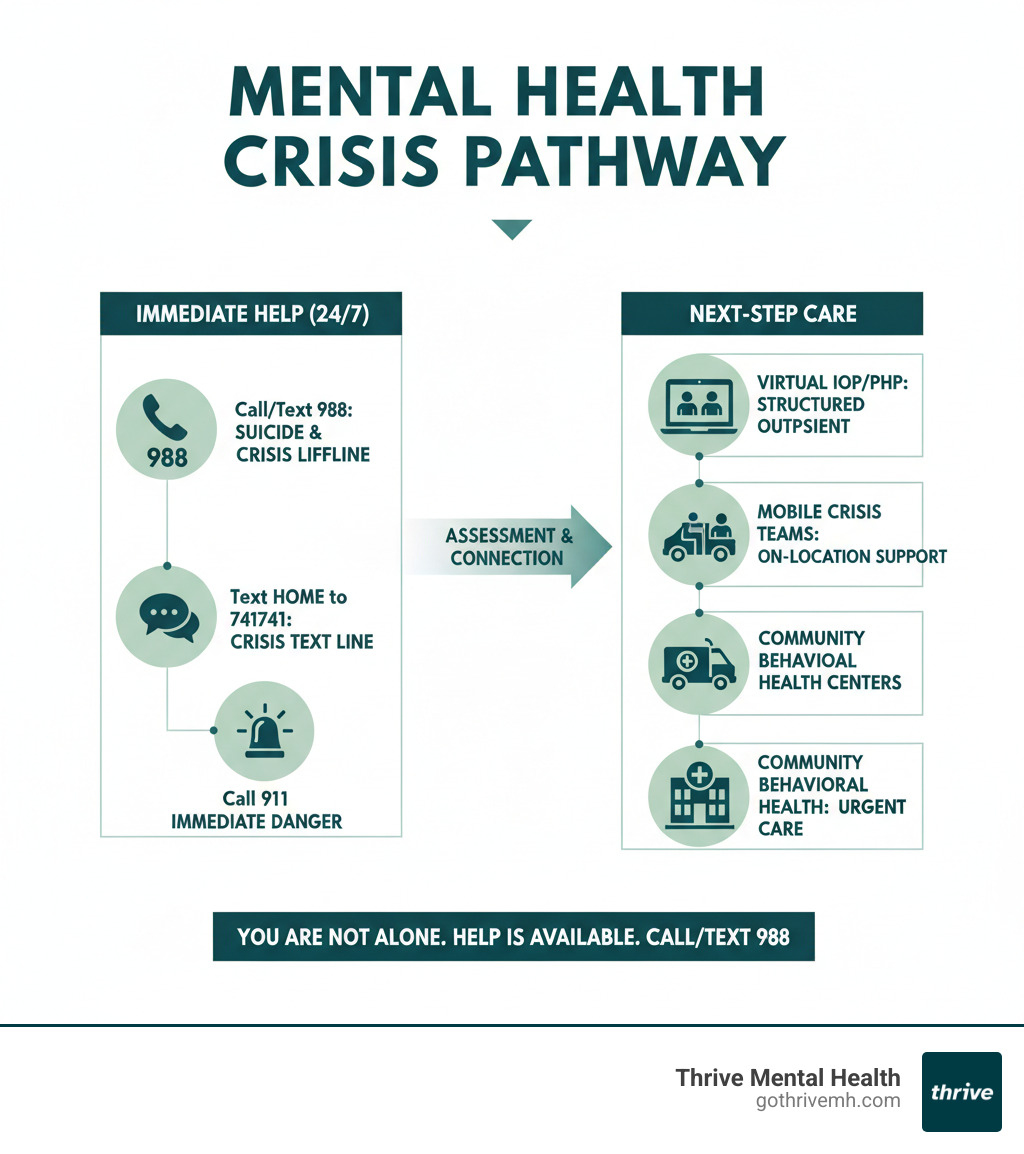
Immediate Crisis Help (Free, 24/7):
- 988 Suicide & Crisis Lifeline, Call or text 988 for trained counselors
- Crisis Text Line, Text HOME to 741741 for confidential support
- 911, For immediate physical danger or medical emergencies
Next-Step Care:
- Virtual IOP/PHP Programs, Structured outpatient care that fits your life
- Mobile Crisis Teams, In-person support where you are
- Community Behavioral Health Centers, Local, immediate help without ER waits
If you’re in crisis right now, call or text 988. You are not alone, help is available 24/7.
A mental health crisis hits when panic becomes unbearable, thoughts of self-harm won’t stop, or you simply can’t get through the day. You’re not broken, you’re in crisis, and there’s a clear path forward.
This guide cuts through the confusion to show you exactly what mental health crisis services in Florida exist, how they work, and which ones get you help the fastest. Whether you need immediate support, want to avoid the ER, or are looking for structured care that fits your life, you’ll find real options here that save lives and speed recovery.
I’m Nate Raine, CEO of Thrive Mental Health. For over a decade, I’ve focused on connecting people to evidence-based mental health crisis services. At Thrive, we bridge the gap between immediate crisis support and long-term recovery with virtual IOP programs that deliver real results, fast, with dedicated services for residents of Florida.
Basic mental health crisis services glossary:
24/7 Crisis Help: Your First Step to Safety
When a mental health crisis hits, panic, dark thoughts, feeling like you can’t take another minute, you need help now. That’s what mental health crisis services are for. They are free, confidential, and available 24/7 with trained professionals ready to help you through this moment.
Here are the two fastest ways to get support when you need it most.

988 Suicide & Crisis Lifeline: What Happens When You Call or Text?
The 988 Suicide & Crisis Lifeline is your go-to resource when things feel unbearable. It’s free, confidential, and available 24/7/365. You can call, text, or chat by dialing or texting 988, or by visiting 988lifeline.org. If you use TTY, dial 711 then 988.
You’ll connect with a real, trained crisis counselor who listens without judgment. In Florida, your call is routed to a local crisis center, connecting you with someone who understands community resources. They are skilled in helping with suicidal thoughts, panic, substance use, and any situation where you feel out of control.
Here’s what actually happens:
The counselor will help you de-escalate your feelings, work with you on a safety plan, and connect you to next-step resources. Everything you say is confidential, your call is free, and you don’t have to be suicidal to reach out, 988 is for anyone in distress.
Crisis Text Line: Fast, Private Support by Text
Not everyone wants to talk on the phone. If texting feels safer, Crisis Text Line is a powerful option. With over 11 million conversations and a 90% helpfulness rating, this service provides real impact.
To connect, just text HOME to 741741 from anywhere in the U.S. to be matched with a trained volunteer Crisis Counselor. They help with anxiety, loneliness, self-harm, suicidal thoughts, and more, moving you from a “hot moment to a cool calm.”
You can also reach them via WhatsApp or their web chat. It’s completely confidential, and most people report feeling calmer after their conversation.
988 vs. Crisis Text Line: Which Gets You Help Faster?
Both services get you help fast. The best choice is the one that feels right for you. Call 988 if you need to hear a voice or the situation is escalating. Text 741741 if you prefer texting or need to be discreet.
Here’s a quick breakdown:
| Feature | 988 Suicide & Crisis Lifeline | Crisis Text Line |
|---|---|---|
| Method | Call, Text, Chat | Text, WhatsApp, Web Chat |
| Staffing | Trained Crisis Counselors | Trained Volunteer Crisis Counselors |
| Scope | All mental health and substance use crises | Text-based support for anxiety, depression, self-harm, and more |
| Access | Phone, text, web | Text, app, web |
| Cost | Free | Free (standard text rates may apply) |
| Availability | 24/7/365 | 24/7 |
| Confidentiality | Yes | Yes |
Both services are designed to provide immediate emotional support and help you figure out what to do next. They’re your first step to safety, not your only step. Once you’re stable, you might need more structured care, like a virtual IOP or PHP program, to build long-term recovery.
What Happens After the Call? Your Next Move for Real Recovery
Immediate crisis intervention is a critical first step, but what comes next? A crisis is often a signal that more structured treatment is needed to build resilience. This is where comprehensive outpatient mental health crisis services become essential.

Why ERs Aren’t Your Only Option: Outpatient Crisis Services That Work
The emergency room is vital for immediate physical danger, but it’s often not the best place for a behavioral health crisis. You can face long waits in a chaotic environment and may be discharged with little to no follow-up plan. There’s a better path.
Specialized services like mobile crisis teams, Community Behavioral Health Centers, and walk-in crisis services connect you to care quickly and compassionately, providing a more effective and less restrictive alternative to the ER.
Thrive Mental Health’s Intensive Outpatient (IOP) program is that next step. Our structured, evidence-based programs offer real support without putting your life on hold, with flexible evening options that fit around work or school. We accept most major insurance, including Cigna, Optum, Florida Blue, and Aetna, making quality care accessible right here in Florida. We help you skip the ER chaos and move straight toward recovery.
Virtual IOP & PHP: How They Cut Recovery Time in Half
Once a crisis is de-escalated, you need more than a weekly therapy session but may not need hospitalization. This is where Intensive Outpatient Programs (IOP) and Partial Hospitalization Programs (PHP) shine.
Our IOP programs offer 9-12 hours of therapy per week, combining individual, family, and group work. This intensive, flexible structure allows you to live at home and apply new skills in your daily life, which research shows can significantly cut recovery time. For those needing more support, a PHP provides a higher level of daily care, a bridge between outpatient and inpatient treatment, and our team can help you find one.
Crucially, our IOP is available virtually. You get expert-led, evidence-based treatment from home, eliminating barriers like transportation or time off work. Studies confirm online therapy improves mental health outcomes, delivering the same clinical rigor and results in a way that fits your life.
We serve patients across Florida, providing accessible virtual care no matter where you are in the state. You can learn more about our approach to virtual care here.
Insurance and Local Access: What You Need to Know
Getting help shouldn’t mean going broke. We work with most major insurance providers, Cigna, Optum, Florida Blue, Aetna, and more, to ensure our IOP program is within reach.
Immediate crisis lines like 988 are always free. When you’re ready for longer-term treatment, understanding your coverage is important. Many local crisis services are also available regardless of insurance status. For help navigating options, FindTreatment.gov is a confidential resource from SAMHSA.
At Thrive, we’ve made it simple to check your coverage. You can verify your insurance in 2 minutes, no obligation, completely confidential. We believe evidence-based mental health crisis services and ongoing treatment should be accessible to everyone.
Specialized Crisis Support: Get the Right Help for Your Situation
Not all mental health crises look the same. A veteran dealing with PTSD has different needs than a teenager struggling with identity. That’s why specialized mental health crisis services exist, to meet you where you are, with people who understand your specific challenges.
Veterans, Students, and LGBTQ+, Custom Crisis Services
If you’re a veteran or active-duty service member in Florida, you can get support from people who understand military life. When you call or text 988, simply press 1 to reach the Veterans Crisis Line. You’ll connect with qualified responders, many of whom are veterans themselves. You can also chat online at veteranscrisisline.net or text 838255.
Young people and students face unique pressures. The Trevor Project offers 24/7 crisis support for LGBTQ+ young people at thetrevorproject.org. Crisis Text Line (text HOME to 741741) is also popular among younger people. For more options, visit Crisis Hotlines for Youth.
 DIY Awareness: Arts and Crafts for Substance Abuse PreventionMental Health
Language should never be a barrier to getting help. The 988 Lifeline offers services in Spanish, a vital resource for many in Florida, and interpreters are available for many other languages.
How to Help a Loved One in Crisis, Step-by-Step
Watching a loved one in a mental health crisis is terrifying. You don’t need to be a therapist to make a life-saving difference, you just need to show up with compassion and a plan.
- Listen without judgment. Validate their feelings by saying, “That sounds incredibly hard. I’m here for you.” Simply being present is powerful.
- Offer to connect them to help. Suggest calling or texting 988 together, or offer to do it for them. You can also call 988 yourself for guidance on how to provide support.
- Know the warning signs. Look for extreme withdrawal, dramatic mood swings, talk of hopelessness, increased substance use, reckless behavior, or poor self-care. Trust your instincts if something feels off. NAMI’s guide to being prepared for a crisis can help.
- Help them find structured care. A hotline is a first step, not a long-term solution. Help them explore the virtual IOP program at Thrive, which is designed to prevent future crises for Florida residents. You can verify their insurance or look at our Intensive Outpatient Program together.
Your compassion and willingness to act can change someone’s life. You don’t have to have all the answers, just help them find the right mental health crisis services.
Your Crisis Plan: Stay Safe, Stay Ahead
A mental health crisis doesn’t always announce itself. Sometimes it builds quietly until you or a loved one can’t manage alone. The best time to prepare for a crisis is before you’re in one.
Think of it like a fire escape plan. A personal mental health crisis plan gives you and your loved ones a clear roadmap when thinking straight feels impossible.

Build a Crisis Plan That Works, Before You Need It
A mental health crisis plan is a personalized document you create when you’re calm. It outlines what to do when a crisis hits, bringing clarity when your mind is clouded. Use a template like the one at Think Ahead: Mental Health Crisis Plan to get started.
Your plan should outline:
- Warning Signs & Triggers: What does a crisis look like for you?
- Coping Strategies: What helps you feel grounded? (e.g., breathing exercises, calling a friend).
- Support Network: Contact info for trusted friends, family, and therapists.
- Medical Information: Medications, allergies, diagnoses.
- Crisis Contacts: 988, Crisis Text Line (741741), and your local crisis team.
- Treatment Preferences: Do you prefer virtual care? Are there providers you trust?
- Action Plan: Step-by-step instructions for what to do as a crisis escalates.
Once you’ve created your plan, share it with your support system, family, close friends, and your therapist. A plan only works if people know it exists.
From Crisis to Stability: Why Structured Outpatient Care Matters
A crisis plan gets you through the storm, but structured outpatient care builds lasting stability. After immediate intervention, you need consistent support to understand what happened and prevent it from happening again.
That’s what our Intensive Outpatient (IOP) program at Thrive Mental Health does. It provides a higher level of care than weekly therapy without the disruption of inpatient hospitalization.
With faster access, flexible virtual options, and proven results, our programs, available throughout Florida, are your bridge from crisis to recovery. To explore how our programs can support your journey, visit Thrive IOP Programs.
FAQs: Mental Health Crisis Services, What People Ask Most
What’s the difference between 988 and 911?
Call 911 for immediate physical danger or medical emergencies where police, fire, or paramedics are needed. Call or text 988 for mental health crises, including suicidal thoughts or overwhelming emotional distress. You’ll connect with a trained crisis counselor for confidential support, not law enforcement. If police are necessary, you can request a CIT (Crisis Intervention Team) officer trained in mental health response, a service available in many Florida communities.
Are mental health crisis services free?
Yes, the 988 Lifeline and Crisis Text Line are always free and confidential. For ongoing care like our virtual IOP program, most major insurance plans (including Cigna, Optum, Florida Blue, and Aetna) provide coverage. You can check your coverage here in two minutes to remove financial barriers to your recovery.
Can I use crisis services to help someone else?
Yes. You can call 988 or text 741741 for guidance on how to support a loved one in crisis. Counselors can advise you on what to say, what to do, and how to help them connect with care. These services are there to support you, too.
How fast can I start a virtual IOP program?
At Thrive Mental Health, we eliminate long wait times. After you verify your insurance, we can typically complete intake and get you started in a virtual IOP program within 24-48 hours. With virtual and evening options available for residents across Florida, you can start treatment quickly without putting your life on hold.
What if I need ongoing support after a crisis?
A crisis hotline is the first step; ongoing support builds lasting recovery. Our virtual IOP program provides the structured, consistent care needed to bridge the gap from crisis to stability. You’ll build coping skills and create a plan for long-term wellness with expert clinicians. This intensive support (9+ hours/week) is a proven pathway from surviving to thriving. Learn more about our programs here.
Summary: Don’t Wait, Get the Mental Health Crisis Services You Deserve
When you’re in crisis, you don’t have to face it alone. Mental health crisis services like 988 and Crisis Text Line offer free, 24/7 support to help you de-escalate and find safety. They are your first line of defense.
But crisis intervention is just the beginning. Real recovery happens with structured outpatient care. Virtual IOP and PHP programs bridge the gap to long-term stability, helping you recover faster without the disruption of inpatient care.
At Thrive Mental Health, we deliver expert-led virtual IOP programs across Florida. We accept most major insurance, including Cigna, Optum, Florida Blue, and Aetna, and offer flexible evening options. You can verify your coverage in 2 minutes with no obligation.
Don’t let a crisis define your future. Whether you’re navigating the immediate aftermath or looking for structured support to prevent the next one, help is available, and it works.
Your Path Forward Starts Now
You know what mental health crisis services are available and how structured care can make the difference. Now, take the next step.
At Thrive Mental Health, our virtual IOP programs are designed for busy lives, with evening options so you don’t have to put your responsibilities on hold. Serving all of Florida, our programs offer clinical excellence with virtual flexibility.
Not sure if your insurance covers treatment? Verify your coverage in 2 minutes with no obligation. We accept most major plans, including Cigna, Optum, Florida Blue, and Aetna. Or call us at 561-203-6085 to speak with our team now.
If you are in crisis, don’t wait. Call or text 988 for immediate, confidential support 24/7.
Your path to stability starts with one decision. We’re ready when you are.
Explore Thrive’s IOP Programs | Learn About Virtual Therapy | Verify Your Insurance

This article is for informational purposes only and is not a substitute for individualized clinical advice or insurance verification.