





Mental health crisis: Urgent help 24/7
The Alarming Scale of the Global Mental Health Crisis
A mental health crisis is a situation where intense emotional distress makes it impossible to function or creates a risk of harm. It can involve suicidal thoughts, severe anxiety, psychotic episodes, or overwhelming hopelessness that goes beyond normal stress.
Quick facts about the mental health crisis:
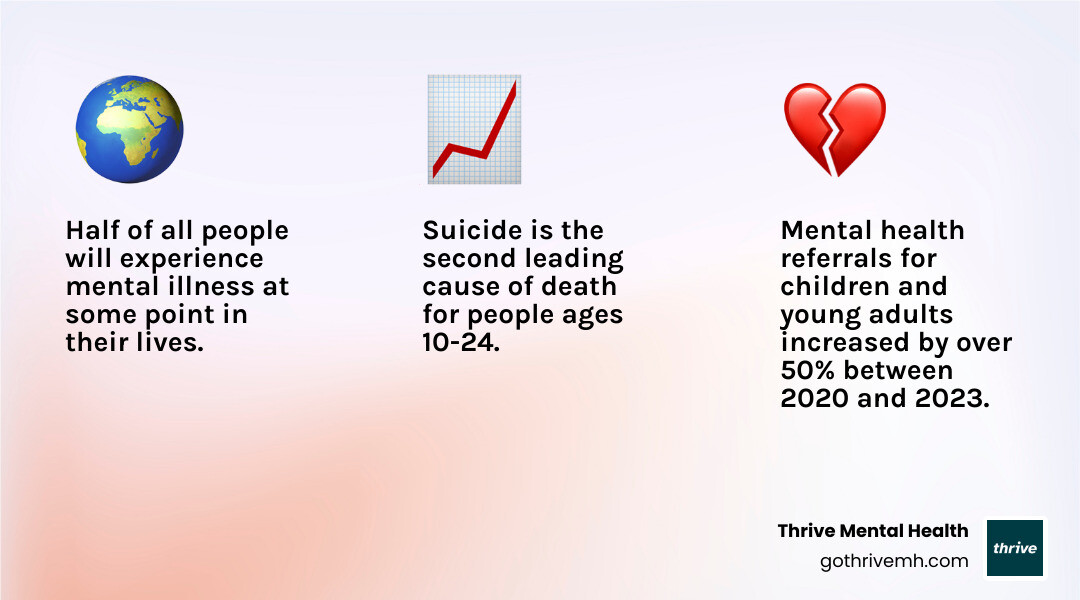
- Half of all people will experience mental illness in their lifetime.
- 1 in 5 adolescents had major depressive disorder in 2021, but less than half received treatment.
- Suicide is the second leading cause of death for people ages 10-24.
- Over two-thirds of people with mental health conditions don’t get the care they need.
- Immediate help is available 24/7 by calling or texting 988.
The United States is in a mental health crisis, and Florida is no exception, with residents facing unique stressors from a high cost of living to the aftermath of natural disasters. While the COVID-19 pandemic worsened the situation, these trends began years earlier. The crisis doesn’t discriminate, but it hits hardest when combined with stressors like financial pressure or lack of access to care. The good news is that mental health crises are treatable. With the right support, most people can stabilize and recover.
As Anna Green, LMHC, LPC, I’ve spent my career developing crisis intervention programs, many of them right here in Florida. At Thrive, we’ve built a virtual IOP program to make high-quality, evidence-based care accessible for Floridians when it’s needed most.
Simple guide to mental health crisis terms:
The economic fallout is staggering, with mental health disorders projected to cost the world an estimated $16 trillion by 2030. The global economy already loses about $1 trillion annually due to depression and anxiety. Furthermore, people with serious mental illness are twice as likely to develop cardiovascular and metabolic diseases, highlighting that mental health is an integral part of our overall well-being.

The Overlooked Youth Mental Health Crisis
Young people today face a uniquely challenging mental health landscape. From 2019 to 2021, 1 in 5 adolescents experienced a major depressive disorder, yet fewer than half received treatment. Several factors contribute to this growing crisis:
- Social Media: While a source of connection during the pandemic, platforms also exposed young people to harmful content, cyberbullying, and unrealistic comparisons, exacerbating anxiety and depression. High-profile tragedies like the Molly Russell case highlight the potential risks of harmful online content.
- ‘Culture of Safetyism’: Well-intentioned efforts to minimize all risks have sometimes limited children’s opportunities for unsupervised play and independent conflict resolution, experiences crucial for building resilience and problem-solving skills.
- ‘Emerging Adulthood’: The path to adulthood is longer and more uncertain, with extended education and economic instability creating constant pressure. This, combined with intense academic demands, makes school a significant stressor for many.
How Disparities Fuel the Crisis
The mental health crisis does not affect everyone equally. Socioeconomic status, race, and ethnicity are deeply intertwined with mental health outcomes and access to care.
Socioeconomic factors, like educational attainment, are major predictors of overdose deaths. A 2023 JAMA Health Forum study revealed that in 2021, individuals without any college experience had overdose death rates nine times higher than those with bachelor’s degrees, showing how lower socioeconomic groups are disproportionately affected.
In a diverse state like Florida, these gaps are especially concerning. Teenagers of color, particularly Latinos, have the lowest treatment rates for major depression, partly due to a lack of culturally appropriate services. Non-Hispanic American Indian or Alaska Native youth face suicide rates three times higher than the general population, while LGBTQ+ youth have a fivefold higher rate of attempting suicide. These statistics show the need for targeted interventions over a one-size-fits-all approach.
Vulnerable populations like veterans, Indigenous peoples, and those in rural communities face unique barriers. Veterans grapple with the impacts of service, Indigenous communities contend with intergenerational trauma, and rural residents face geographic isolation. Addressing these disparities requires targeted, culturally competent, and accessible solutions.
Recognizing the Signs and Finding Immediate Help
Callout Box: If you are in crisis or believe you are a danger to yourself or others, call or text 988 immediately. You are not alone, and help is available now.
A mental health crisis is more than a bad day; it’s a period of overwhelming distress that surpasses your ability to cope, potentially putting you or others at risk. It can happen to anyone, at any time, even without a prior mental health diagnosis. The key is recognizing when distress disrupts your ability to function safely.
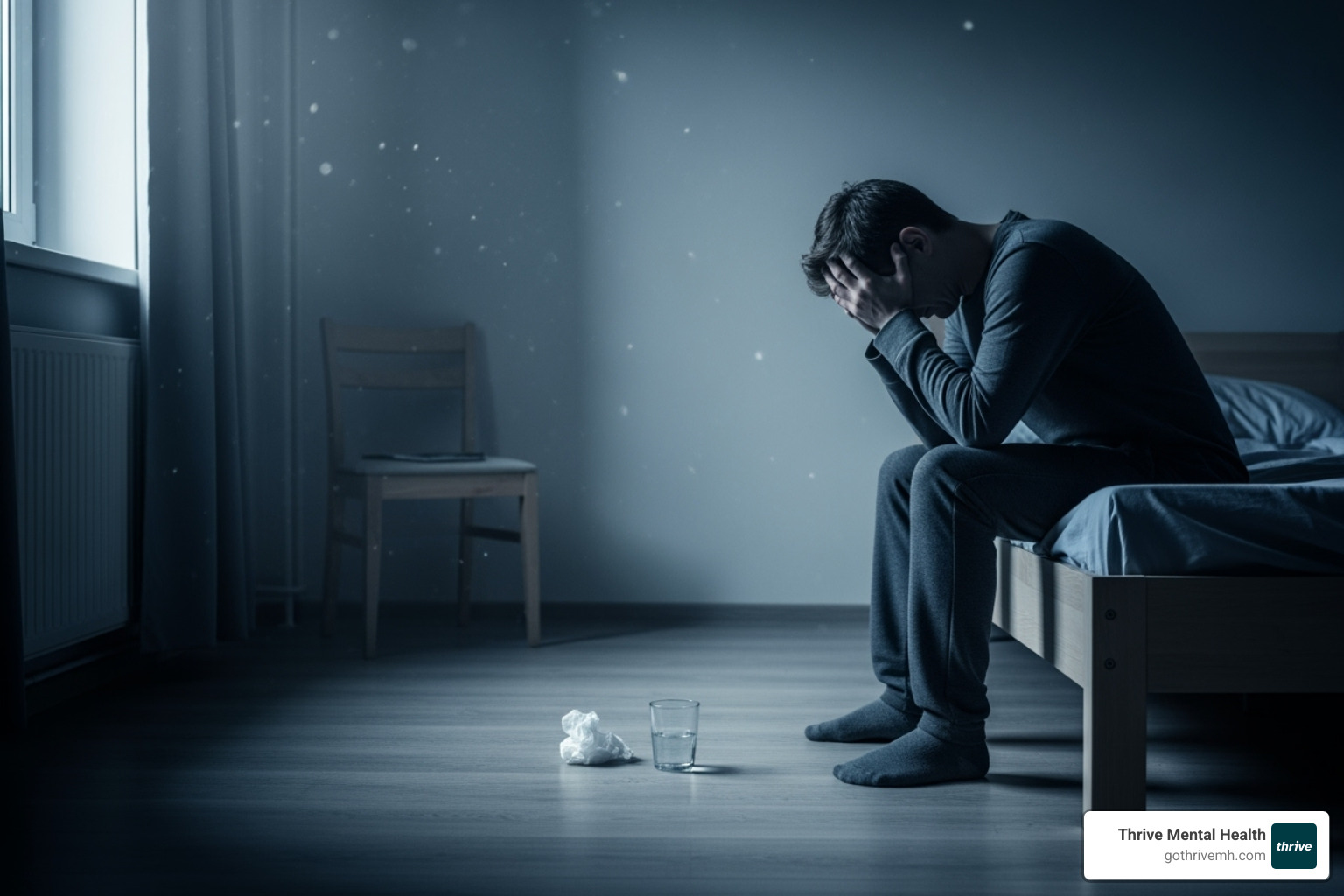
A crisis can manifest through emotional, physical, and behavioral changes. You might feel intense, unmanageable sadness or anxiety, or a sudden numbness. Physical signs can include significant changes in sleep or appetite, constant fatigue, or unexplained headaches. Behaviorally, you might withdraw from others, engage in risky behaviors, or struggle to concentrate. When someone talks about death or wanting to disappear, it’s a critical warning sign that requires immediate action.
Key Warning Signs of a Mental Health Crisis
Knowing what to watch for can help you act quickly. If you notice several of these signs, especially if they are new or worsening, it’s time to seek help.
- Suicidal Thoughts or Talk: Any expression of a desire to die, discussion of ending one’s life, or planning for suicide is a medical emergency.
- Self-Harm Behaviors: Actions like cutting, burning, or hitting oneself are signs of severe distress that require professional support.
- Extreme Mood Swings: Rapid, uncontrollable shifts between intense happiness, anger, irritability, or sadness.
- Increased Anxiety or Agitation: Persistent restlessness or a feeling of being constantly on edge that makes daily functioning nearly impossible.
- Withdrawal and Isolation: Pulling away from friends, family, and social activities.
- Paranoia or Distorted Thinking: Experiencing delusions, hallucinations, or an inability to distinguish reality from unreality.
- Inability to Perform Daily Tasks: A noticeable decline in basic self-care, work or school attendance, or household responsibilities.
- Increased Substance Use: Using alcohol or drugs more heavily to cope with emotions.
- Panic Attacks: Sudden, intense waves of fear accompanied by physical symptoms like chest pain and difficulty breathing.
- Aggressive or Violent Behavior: Uncharacteristic outbursts of anger, threats, or physical violence.
- Disorientation or Confusion: Losing awareness of surroundings, struggling to think clearly, or having significant memory problems.
Where to Turn for Immediate Support
Help is available 24/7. You are not alone.
- 988 Suicide & Crisis Lifeline: In the US and Canada, call or text 988 anytime to connect with a trained crisis counselor for free, confidential support. In British Columbia, you can also call 1-800-SUICIDE (1-800-784-2433).
- Crisis Text Line: Text “HELLO” to 741741 in the US or “HOME” to 686868 in Canada to connect with a crisis counselor via text message.
- 911 or Local Emergency Services: If there is an immediate risk of harm to yourself or others, or in a medical emergency like an overdose, call 911 without hesitation. Inform the dispatcher it’s a mental health crisis.
- Mobile Crisis Units: Many Florida communities have teams that provide in-person support, help de-escalate a crisis, and connect you to local resources without hospitalization.
- Kids Help Phone (Canada): Youth aged 20 and under can call 1-800-668-6868 or use the online chat at Kids Help Phone for free, confidential counseling. Indigenous youth can text FIRSTNATIONS, INUIT, or METIS to 686868 for culturally sensitive support.
- Hospital Emergency Department: If you or someone you know is in a severe crisis and doesn’t feel safe, your local emergency room can provide assessment, ensure safety, and connect you to follow-up care.
At Thrive, our virtual IOP program provides the next step in evidence-based care for residents across Florida after a crisis has been stabilized. You don’t have to steer this alone.
Navigating Treatment and Long-Term Recovery
Surviving a mental health crisis is the first step. The path to lasting recovery is a process of healing and building resilience, and it always involves consistent, professional support. At Thrive, we focus on evidence-based care, treatments backed by scientific research, to empower individuals to not just manage symptoms, but to truly thrive.

Effective Interventions and Levels of Care
When a mental health crisis occurs, the immediate goal is stabilization. From there, treatment transitions to different levels of care based on individual needs.
 Beginner’s Guide to Understanding TraumaMental Health
- Crisis Stabilization: Short-term interventions, often through crisis lines or mobile teams, focused on ensuring safety and calming acute distress.
- Inpatient Hospitalization: For severe crises with immediate risk, this provides a safe, 24/7 supervised environment for medication stabilization and initial therapy.
- Partial Hospitalization Programs (PHP): A step-down from inpatient care, PHPs offer structured treatment for several hours a day, multiple days a week, while you return home in the evenings.
- Intensive Outpatient Programs (IOP): IOPs provide a flexible yet structured option with fewer hours per week than PHP, allowing you to maintain work or school commitments. Thrive’s virtual IOP services make expert-led care accessible from anywhere.
Within these programs, proven therapies are used to create lasting change:
- Cognitive Behavioral Therapy (CBT): Helps you identify and change the negative thought patterns and behaviors contributing to your distress.
- Dialectical Behavior Therapy (DBT): Teaches practical skills in mindfulness, distress tolerance, emotion regulation, and interpersonal effectiveness, especially for those with intense emotional dysregulation.
At Thrive, we are committed to providing flexible, expert-led care customized to your needs. Our virtual and in-person programs for adults and young professionals are designed to support you every step of the way toward recovery.
Paying for Treatment: Insurance and Options
Cost should not be a barrier to getting help. At Thrive, we work to make our programs accessible.
Many insurance plans cover mental health services like IOP and PHP. In Florida, we frequently work with major providers like Florida Blue, Cigna, and Optum. Mental health parity laws require most plans to cover mental health care similarly to physical health, but it’s always best to verify your specific benefits, copays, and deductibles.
As a provider deeply rooted in the state, we help our Florida-based clients navigate state-specific resources. We are proud to serve individuals in major metropolitan areas including Miami, Fort Lauderdale, Palm Beach, Orlando, Tampa, and Jacksonville, connecting them with all available local resources.
To simplify the process for Floridians, we offer a quick, confidential way to verify your insurance benefits. It takes just two minutes with no obligation, so you can understand your coverage before starting your journey with us.
Frequently Asked Questions about Mental Health Crises
JSON-LD FAQ Schema Suggested
When facing a mental health crisis, it’s normal to have urgent questions. Here are concise answers to what we hear most often.
What is considered a mental health crisis?
A mental health crisis is any situation where a person’s thoughts, feelings, or behaviors put them at risk of harming themselves or others, or prevent them from caring for themselves. It’s an emotional breaking point where coping mechanisms fail, and it can involve suicidal thoughts, severe panic attacks, psychosis, or overwhelming hopelessness. Immediate support is needed.
What are the first steps to take during a mental health crisis?
Your first priority is safety. If there is an immediate risk of harm, call 911. If the crisis involves severe emotional distress or suicidal thoughts without immediate physical danger, call or text 988 to connect with the Suicide & Crisis Lifeline. A trained counselor can provide immediate, confidential support and guide you to the right resources. Reaching out for professional help is the most important first step.
How can I help someone who is in a mental health crisis?
First, stay calm and listen without judgment. Your steady, non-judgmental presence can be an anchor.
- Listen and Validate: Let them talk and express that you care. Use phrases like, “I’m here for you. How can I help?” Avoid dismissive comments like “snap out of it.”
- Encourage Professional Help: Gently suggest they talk to a professional. Offer to help them call the 988 Lifeline or find treatment options, like Thrive’s accessible virtual programs for Florida residents.
- Ensure Safety: If you believe they are in immediate danger, do not leave them alone. Call 911 for assistance and remove any potential means of self-harm if it’s safe to do so.
- Offer Practical Support: Small acts of care, like driving them to an appointment or ensuring they’ve eaten, can make a huge difference.
At Thrive, we’re here to support both individuals in crisis and their loved ones through our virtual IOP program across Florida.
Conclusion
The mental health crisis is a real and daunting challenge, but it’s one we can meet with awareness, compassion, and timely support. Recovery is not just possible, it’s within reach.
Understanding the warning signs of a mental health crisis and knowing where to turn can save a life. Recognizing extreme mood swings, withdrawal, or talk of self-harm empowers you to act. Reaching out, whether by calling 988 or connecting with professional support, is always a sign of strength.
The path to stability and well-being is more accessible than ever, especially for those in Florida. At Thrive Mental Health, we believe you deserve care that fits your life. Our virtual IOP program offers flexible, expert-led, evidence-based treatment designed for Floridians, with evening options available for busy adults and young professionals.
Recovery is about building resilience, finding hope, and learning to flourish. If you’re feeling overwhelmed, you don’t have to figure this out alone. Help is available now.
Ready for support in Florida? Thrive offers virtual IOP with evening options. Verify your insurance in 2 minutes (no obligation) → Start benefits check or call 561-203-6085. If you’re in crisis, call/text 988.

This article is for informational purposes only and is not a substitute for individualized clinical advice or insurance verification.