





When Words Aren’t Enough, Art Can Heal
Art Therapy Interventions [2025]: 9 Proven Ways to Reduce Anxiety Fast
When you can’t find the words for what you’re feeling, your body still holds the story. For the millions of adults who find talk therapy helpful but incomplete, art therapy interventions offer another language. These are structured, evidence-based techniques, like drawing, sculpting, or collage, that help you process emotions, reduce anxiety, and build coping skills in a non-verbal way. In this guide, you’ll learn how art therapy interventions work, which activities reduce anxiety fastest, and how to find a provider that accepts your insurance in Florida.
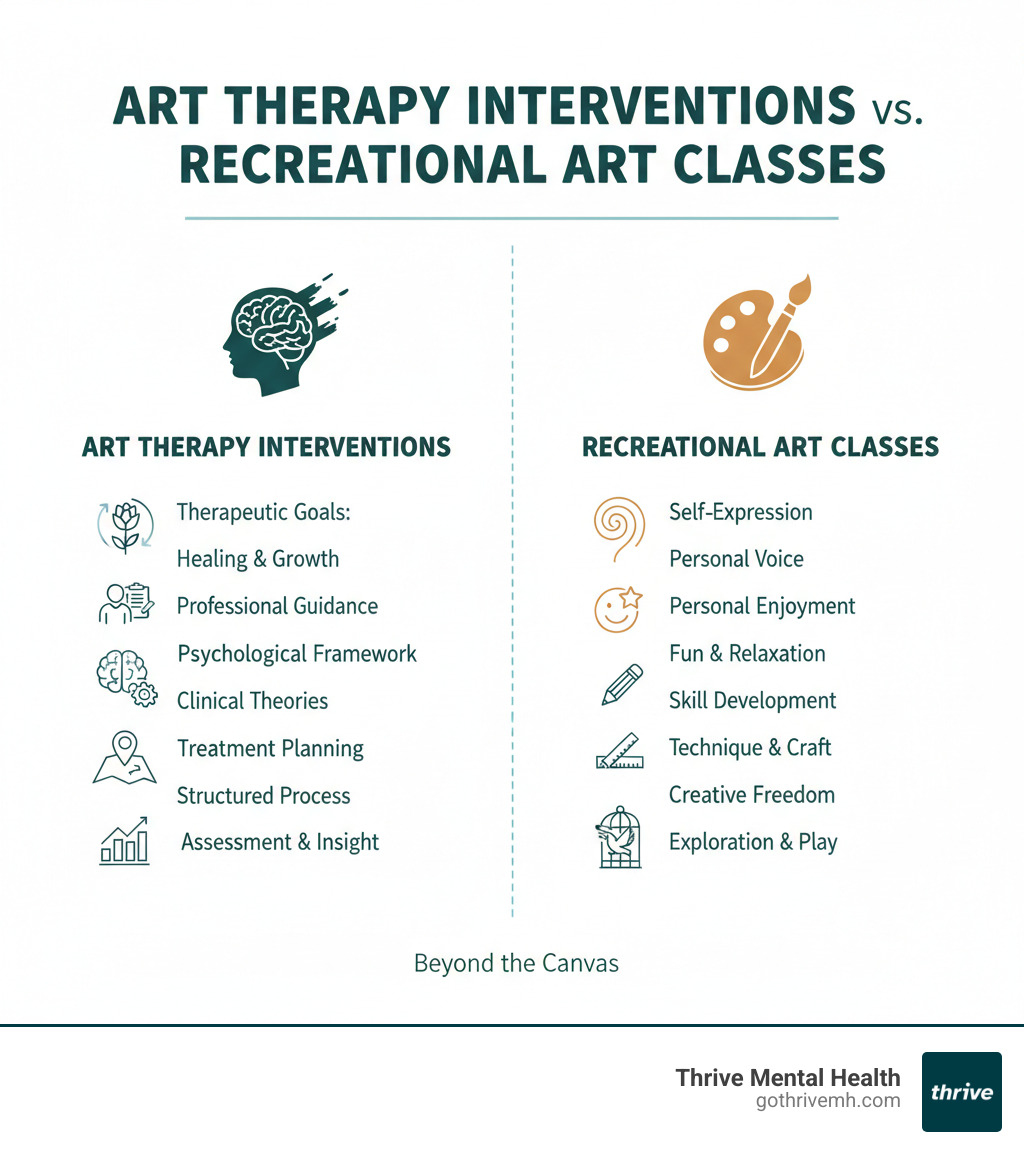
Unlike a recreational art class focused on skill, what is art therapy? is a clinical practice guided by a trained professional. It combines psychological theory with the creative process to achieve specific therapeutic goals. It’s not about making a masterpiece; it’s about the journey of healing through artistic expression.
Quick Overview: Common Art Therapy Interventions
- Mandala coloring: Reduces anxiety through focus on circular patterns.
- Clay sculpting: A tactile way to externalize and reshape difficult emotions.
- Visual journaling: Combines images and words to track your inner world.
- Mask making: Explores the gap between your inner feelings and outer persona.
- Anxiety drawing: Turns fear into a visual form you can confront and manage.
How Art Rewires Your Brain for Healing
The power of art therapy lies in its ability to engage your mind and body simultaneously. The creative process activates sensory, symbolic, and emotional pathways in the brain that language often can’t reach. This can help reprogram how distressing memories are stored, leading to significant emotional relief.
Scientific research on arts-based therapies confirms its benefits. For example, one study found that coloring mandalas induced a meditative state that measurably reduced anxiety. A licensed art therapist creates a safe, goal-oriented environment to guide you through these activities, helping you build insight and coping skills custom to your needs.
At Thrive Mental Health, we integrate creative therapies into our Intensive Outpatient (IOP) program because they are a powerful complement to traditional care, especially for processing trauma, anxiety, or burnout. Prefer remote care? Our virtual IOP delivers the same expert-led structure from home. Explore more resources in our blog.
9 Powerful Art Therapy Interventions to Reduce Stress & Anxiety
When you’re drowning in anxiety, talking about it can feel impossible. Art therapy interventions are structured activities that let you process what you’re feeling without words. These aren’t just crafts; they’re evidence-based techniques used by licensed therapists to externalize emotions and build coping skills. The best part? You don’t need any artistic talent. The process is what matters, not the product.

Before you start, gather a simple toolkit: paper, colored pencils or markers, clay or play-doh, scissors, glue, and old magazines. A journal is also helpful. Now, let’s explore nine interventions that can make a real difference.
1. Mandala Coloring for a Meditative State
If your mind is racing, coloring intricate, circular mandala patterns can induce a meditative state. Research published in the National Library of Medicine confirms this practice lowers anxiety. The repetitive motion and focus on symmetry quiet your inner critic and create mental space to breathe.
2. Clay Sculpting to Mold Your Emotions
Clay offers a tactile, grounding experience to physically shape what you’re feeling. Angry? Pound the clay. Sad? Mold it into something soft. The act of working with clay is a metaphor for personal growth, you can reshape, start over, or smooth rough edges. It’s a way for your hands to speak when words fail.
3. Visual Journaling to Document Your Journey
A visual journal is a no-rules scrapbook for your emotions. Combine sketches, paint, photos, and words to capture your state of mind. It’s not about being pretty; it’s about creating a visual record of your emotional journey and a safe space for self-reflection.
4. Mask Making to Explore Your Inner and Outer Self
This intervention makes a common metaphor literal. Create a mask where the outside represents the self you show the world, and the inside reveals who you really are. The contrast can be revealing, a smiling exterior hiding inner chaos. This technique is powerful for exploring the gap between your public and private selves, which is the first step toward integration.
5. “Draw Your Anxiety” to Externalize Your Fears
What does your anxiety look like? A monster? A storm? A tangled mess? Personifying your anxiety by giving it shape and color puts it on the paper, outside of you. Mental health professionals note that visualizing fear helps you develop strategies to manage it. Once your anxiety has a face, you can confront it and regain control.
6. Postcard to a Past or Future Self
Write a postcard to a past or future version of yourself. Express regrets, offer forgiveness, or set intentions. This self-discovery exercise creates perspective, making it easier to be honest and compassionate with yourself. It helps you gain distance from your problems while bridging the gap between where you’ve been and where you’re going.
7. Family Sculpture to Understand Dynamics
Family relationships are complex. This intervention asks you to represent your family using clay or found objects, arranging each member to reflect their role and relationships. It’s a non-verbal way to map complex dynamics, revealing who is close, who is isolated, and where the tension lies.
8. A Self-Care Box for Comfort in Crisis
Decorate a box and fill it with items that ground you: affirmations, photos, a smooth stone, a comforting scent. The creation and use of this box is a therapeutic act in itself. When you’re spiraling, you have a tangible resource for comfort that you built, reminding you that you have your own back.
9. Words to Live By Collage
Visualize your core values by creating a collage. Cut out words, phrases, and images from magazines that resonate with you. This activity helps you explore your self-talk and the narratives that guide you. It shows you what’s there, so you can decide what to keep and what to let go.
Art Therapy vs. ART: What’s the Difference? [And Does It Matter?]
You may have heard of “ART” and wondered if it’s the same as art therapy. The short answer is no. While traditional art therapy interventions use creative expression to process emotions over time, Accelerated Resolution Therapy (ART) is a specific, evidence-based protocol designed to rapidly reprogram how your brain stores traumatic memories, often in just 1-5 sessions.
Both are powerful, but they serve different purposes. Understanding the distinction helps you choose the right tool for your healing journey.
| Feature | Art Therapy (General) | Accelerated Resolution Therapy (ART) | Arts-in-Health Practices |
|---|---|---|---|
| Primary Goal | Self-expression, emotional processing, insight, healing | Reprogram distressing memories, symptom reduction (often rapid) | Improve well-being, community engagement, humanize care |
| Methodology | Diverse art modalities, process-oriented | Guided imagery replacement, eye movements, specific protocol | Broad range of arts, often recreational or experiential |
| Professional | Licensed Art Therapist (ATR-BC) | Licensed mental health professional trained in ART | Artists, facilitators, healthcare staff |
| Focus | Uncovering and processing emotions, symbolic meaning | Direct manipulation of distressing images/sensations | Creative engagement, social connection, stress reduction |
| Setting | Clinical, community, schools, private practice | Clinical, private practice | Hospitals, community centers, museums, public spaces |
| Timeframe | Short-term to long-term | Often rapid, 1-5 sessions | Varies, often ongoing or program-based |
| Key Mechanism | Symbolic communication, creative process, therapeutic relationship | Memory reconsolidation, eye movements, imagery rescripting | Engagement, distraction, self-efficacy, social support |
Understanding Accelerated Resolution Therapy (ART)
Developed by Laney Rosenzweig, Accelerated Resolution Therapy (ART) is a structured therapy that helps you replace negative images from distressing memories with positive ones. It uses guided imagery and lateral eye movements (similar to EMDR) to change a memory’s emotional charge without forcing you to relive every painful detail. ART is used to effectively treat PTSD, anxiety, depression, phobias, and grief. You can learn more about its development and scientific backing at the official ART website.
 Best Virtual IOP in Arizona 2026: How to Compare ProgramsIntensive Outpatient Program
The Role of Arts-Based Practices in Health
Beyond clinical therapy, arts-in-health practices bring creative expression into hospitals, community centers, and public spaces. These activities, like music therapy, dance, or writing workshops, are designed to reduce stress, foster connection, and humanize care. While not always clinical, they are a vital part of a holistic approach to well-being. At Thrive Mental Health, we integrate evidence-based creative approaches into our treatment plans when they align with your goals, because healing happens in many languages.
How to Start Professional Art Therapy [Insurance, Cost & Finding a Therapist]
Ready to take the next step? Finding a qualified art therapist is crucial. It’s not just someone who loves art; a credentialed art therapist (ATR-P, ATR or ATR-BC) has a master’s degree and hundreds of hours of supervised clinical experience; those holding ATR-BC have also passed a national board certification exam. This training ensures they can safely and effectively use creative expression as a precise therapeutic tool.
How do you find a qualified art therapist?
- Use the Art Therapy Credentials Board’s directory to find certified professionals.
- Prefer a structured program? Explore Thrive’s Intensive Outpatient (IOP) options that integrate art therapy with CBT/DBT.
At Thrive Mental Health, we integrate art therapy interventions directly into our IOP program, combining creative modalities with proven treatments for those who need more than weekly therapy.
Does Insurance Cover Art Therapy Interventions?
Yes, in many cases. Major insurance plans like Cigna, Optum, Florida Blue, and Aetna often cover art therapy when it’s part of a treatment plan for a diagnosed mental health condition (e.g., anxiety, PTSD, depression).
Always call your provider to confirm your benefits. Ask about coverage for outpatient mental health, copays, and whether you need prior authorization. We know this can be a hassle, which is why at Thrive, you can verify your insurance coverage online in about two minutes, with no obligation.
Finding an Art Therapist in Florida
Thrive Mental Health offers expert-led art therapy within our in-person programs for adults across Florida. We have convenient locations in major cities, including Tampa Bay, St. Petersburg, Miami, Orlando, Boca Raton, West Palm Beach, Jacksonville, Fort Lauderdale, Naples, and Sarasota. If you’re not near one of our physical centers, our virtual IOP options provide the same structured, effective care from the comfort of your home. You don’t have to figure this out alone. Our team is here to help you find the right fit and get started.
Frequently Asked Questions about Art Therapy Interventions
Do I need to be a “good artist” to benefit from art therapy?
Absolutely not. Art therapy has nothing to do with artistic talent. The goal is to use the creative process as a tool for self-expression and healing. A trained therapist guides you to explore your emotions through color, shape, and texture, the focus is on your inner journey, not the final product.
What is the difference between art therapy and just making art at home?
Making art at home is a great form of self-care, but it’s not the same as therapy. Professional art therapy interventions happen within a therapeutic relationship with a licensed clinician. The activities are goal-oriented and designed to address specific challenges. Your therapist helps you interpret what emerges, providing professional guidance in a safe, confidential space to turn creative expression into a powerful tool for growth.
Can art therapy really help with severe anxiety or trauma?
Yes. Art therapy is highly effective for anxiety and trauma because it accesses non-verbal parts of the brain where traumatic memories are often stored as images and sensations. It allows you to process experiences without having to find the “right” words, which can feel safer and more manageable. As the American Art Therapy Association confirms, these techniques consistently improve mental health outcomes. In our Intensive Outpatient (IOP) programs, we see clients make breakthroughs with art therapy that talk therapy alone couldn’t achieve.
How many sessions until I feel better?
Everyone is different. Many people feel calmer after a single guided session. For trauma-focused work, some evidence-based protocols like ART can produce results in 1-5 sessions, while broader art therapy goals (coping skills, identity, mood) may benefit from several weeks in an IOP or PHP.
Can I do art therapy online?
Yes. Thrive offers expert-led virtual IOP that incorporates art therapy activities you can do at home with simple supplies, plus real-time clinical support.
Is art therapy covered by my insurance?
Often yes, especially when part of a structured treatment plan. We’re in-network with many plans (Cigna, Optum, Florida Blue, Aetna). Check your benefits in 2 minutes.
Ready to Heal Beyond Words?
The anxiety, trauma, and stress you’re carrying often live beyond language. Art therapy interventions provide a tangible way to process what’s stuck, release what’s painful, and rebuild your sense of self. It’s not about being an artist; it’s about using a scientifically-backed process to heal.
At Thrive Mental Health, we integrate creative therapies into our IOP program to accelerate recovery. We combine clinical expertise with compassionate, flexible care to help you get results. You don’t need the right words to start healing.
Ready for support? Thrive offers virtual IOP programs with evening options. Verify your insurance in 2 minutes (no obligation) at gothrivemh.com/verify-your-insurance or call 561-203-6085. If you’re in crisis, call/text 988.

This article is for informational purposes only and is not a substitute for individualized clinical advice or insurance verification.