
5 Ways to Find Mental Health Providers in Columbia, SC
Find mental health providers in Columbia, South Carolina Top5
Struggling to Find a Mental Health Provider in Florida? Get Help That Fits Your Life3Now
Find mental health providers in Florida and get the support you need without wasting months searching. Whether you’re struggling with anxiety, depression, trauma, or burnout, the right provider can change everything3but only if you know where to look.
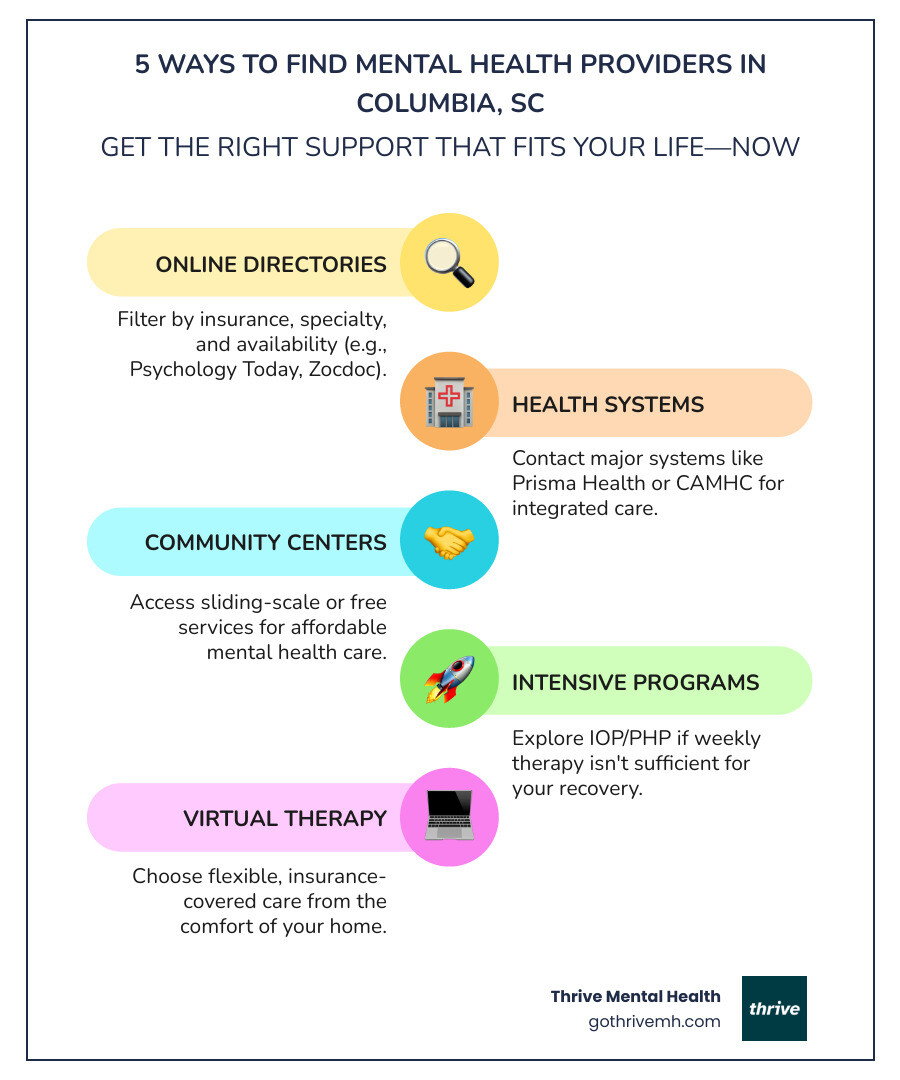
Quick Answer: 5 Ways to Find Mental Health Providers in Florida
- Use online directories with insurance, specialty, and availability filters
- Contact major health systems and public community mental health centers for integrated care
- Access community mental health centers for sliding-scale or free services
- Explore intensive outpatient programs (IOP/PHP) if weekly therapy isn’t enough
- Choose virtual therapy for flexible, insurance-covered care from home
What You Need to Know Right Now:
- Thousands of therapists practice in Florida
- Average cost: $100-$200/session (many accept insurance)
- Top issues treated: Anxiety, Depression, Trauma
- Insurance accepted: Florida Blue (BCBS), Aetna, Cigna, UnitedHealthcare
- Session options: Most offer both in-person and online sessions
Florida offers strong mental health resources3but finding the right provider who takes your insurance, fits your schedule, and specializes in your needs can feel overwhelming. This guide cuts through the noise and shows you exactly where to look, what to expect, and how to get started fast.
I’m Nate Raine, CEO of Thrive Mental Health, and I’ve spent over a decade building systems that connect people with evidence-based, accessible behavioral health care. I know how to find mental health providers in Florida who deliver real results3and I’ll show you how to do it in minutes, not months.
Find more about Find mental health providers in Florida.:
1. Use Online Tools to Find Florida Therapists Who Take Your Insurance
Skip the guesswork. Use trusted online tools to filter local providers by specialty, insurance, and therapy style3so you don’t waste time or money.
Finding the right mental health provider in Florida often starts with a search online. Trusted online directories and your insurance plan’s provider finder offer extensive listings where you can filter providers based on crucial criteria, helping you narrow down your options quickly. These tools allow you to see who is accepting new clients, what specialties they offer, and, critically, which insurance plans they accept.
In Florida, there are thousands of therapists available, each with unique specializations and approaches. The average cost per session for therapy in Florida is about $100-$200. However, this cost can be significantly reduced if your provider accepts your insurance.
How to Find a Florida Therapist Who Accepts Your Insurance
Navigating insurance can be one of the biggest problems when seeking mental health care. Fortunately, many providers in Florida accept common insurance plans. Here’s what we know about insurance acceptance rates:
- Florida Blue (BlueCross BlueShield of Florida): Widely accepted by therapists in Florida.
- Aetna: Accepted by a majority of therapists.
- Cigna and Evernorth: Accepted by a majority of therapists.
- UnitedHealthcare: Often accepted by Florida therapists.
- Medicaid (Florida Medicaid): Accepted by community mental health centers and some private practices.
- Medicare: Accepted by community mental health centers and some private practices.
If you have insurance, the cost of therapy is typically lower, but it varies based on your plan details and whether you choose an in-network or out-of-network provider. Many insurance plans are legally required to cover behavioral health care at the same level as other health services. We highly recommend checking your specific plan details. You can learn more about Insurance Covered Online Therapy and even Verify your insurance in 2 minutes to get a clear picture of your benefits.
For those without insurance or who prefer not to use it, self-pay options are always available. While the average cost per session is $100-$200, some providers offer competitive self-pay rates. For ongoing sessions, self-pay rates for talk therapy can range from $135-$195, and for psychiatry, follow-ups are typically $175-$300.
Find a Specialist for Your Needs3Fast
Once you’ve sorted out insurance, the next step is to find a therapist who specializes in your specific concerns. Florida therapists treat a wide array of mental health issues, with some common areas of focus:
- Anxiety: 93% of therapists in Florida treat anxiety.
- Depression: 88% of therapists treat depression.
- Trauma/PTSD: 69% of therapists address trauma and PTSD.
- Relationship issues: 73% of therapists focus on relationship issues.
- Self-esteem: 76% of therapists treat self-esteem issues.
- Coping skills: 74% of therapists assist with coping skills.
- Stress: 71% of therapists help manage stress.
To find the right specialist, you can use the filters on online directories to search by these specific issues. Many therapists will detail their therapeutic approaches in their profiles, such as Cognitive Behavioral Therapy (CBT), Dialectical Behavior Therapy (DBT), Eye Movement Desensitization and Reprocessing (EMDR), or psychodynamic therapy. Understanding the differences between modalities, like EMDR vs CBT for PTSD, can help you choose a provider whose approach aligns with your preferences.
When evaluating potential providers, read their bios carefully. Look for therapists whose philosophy resonates with you and who emphasize a non-judgmental, compassionate approach. All mental health professionals are held to high APA ethical standards to ensure a safe and supportive environment.
2. Get Integrated Care Through Florida Healthcare Systems
Major health systems offer coordinated mental health and medical care3ideal if you need therapy plus medication or medical support.
For comprehensive and integrated mental health care, major healthcare systems in Florida provide a wide range of services. These systems often feature a multidisciplinary team of professionals who collaborate to offer holistic treatment plans, especially beneficial if you require both therapy and psychiatric medication management.
What Therapy Services Are Offered?
A major Florida health system’s behavioral health clinic is a prime example, offering innovative, evidence-based mental health care for children and adults with diagnosed or suspected behavioral health or substance use disorders. Their services include:
- Outpatient therapy: This is the most common form of therapy, where individuals attend regular sessions with a therapist.
- Psychiatry/medication management: For those who may benefit from medication, psychiatric nurse practitioners and psychiatrists provide diagnostic consultation and manage prescriptions.
- Psychological testing: Used to accurately diagnose conditions like neurodevelopmental disorders or learning disabilities.
- Day treatment programs: For adults facing mental health or chemical dependency problems that significantly interfere with daily functioning, offering more concentrated and structured counseling than routine office visits.
- Structured therapies: These include specialized approaches like Cognitive Behavioral Therapy (CBT) which helps individuals identify and change negative thought patterns, and Dialectical Behavior Therapy (DBT) skills, which focuses on emotional regulation and distress tolerance.
- Play therapy for children: A specialized approach for younger patients to express themselves and process emotions.
- Parenting-focused therapies: Programs like Parent-Child Interaction Therapy, a Positive Parenting Program, and the Circle of Security program are available to support families.
A physician’s referral is often required for appointments at some hospital-based clinics. This ensures that your mental health care is coordinated with your overall medical health.
Accessing Crisis and Inpatient Services
Healthcare systems also play a critical role in providing emergency and inpatient mental health care. If someone is experiencing a severe mental health crisis, these facilities are equipped to provide immediate support.
- Emergency mental health care: Available for acute mental health crises, ensuring individuals receive prompt assessment and stabilization.
- Crisis stabilization: Dedicated units for managing severe psychiatric symptoms, often as a step before or after inpatient care.
- Inpatient behavioral health: For individuals who require 24-hour care in a secure environment due to the severity of their mental illness or risk of harm to themselves or others. Some local facilities offer acute inpatient services for adolescents and adults, with specialized programs for crisis stabilization, psychiatric concerns, and substance abuse.
Understanding the range of services available within healthcare systems is key to finding the right level of care. For a broader perspective on different types of mental health facilities, you can check our guide on Understanding Mental Health Facilities & Services.
3. Find Affordable Care at Florida Community Mental Health Centers
Community centers offer sliding-scale fees and serve everyone3insured or not. Don’t let cost stop you from getting help.
Cost should never be a barrier to accessing mental health care. For residents of Florida, community mental health centers are vital resources that ensure services are available to everyone, regardless of their ability to pay. These centers are often publicly funded and operate with a mission to serve the broader community, especially those with significant mental health needs.
Are There Free or Low-Cost Mental Health Services in Florida?
Yes, absolutely. Florida’s network of local public community mental health centers are cornerstones of affordable mental health care. These centers serve thousands of patients each year and are committed to providing services regardless of a patient’s ability to pay.
Here’s how they make care accessible:
- Sliding scale fees: For individuals who qualify based on family size and income, discounted fees are available. This ensures that the cost of treatment is manageable.
- Medicaid/Medicare accepted: Public community clinics readily accept Medicaid, Medicare, and other state-funded plans, making it easier for those with public insurance to receive care. You can find more information about Medicaid Covered Therapy and how it can help you.
- No one turned away for inability to pay: This is a crucial aspect of their mission, underscoring their commitment to public health.
Who Do Community Centers Serve?
Community mental health centers are designed to support a diverse range of individuals and families, focusing on those most in need.
Their priority populations include:
- Adults with serious and persistent mental illness: Providing ongoing support and treatment for chronic conditions.
- Adults with major acute psychiatric concerns: Addressing immediate and severe mental health issues.
- Children and adolescents with serious emotional disturbance: Offering specialized care for younger individuals and their families.
- Family counseling: Supporting the entire family unit in navigating mental health challenges.
- Case management: Helping individuals coordinate their care, access resources, and steer the healthcare system.
- Outpatient therapy: Offering individual and group counseling to help manage various mental health conditions.
- Emergency mental health care: Local crisis stabilization services operate 24/7 for mental health emergencies. In non-emergency situations, most clinics operate Monday-Friday from 8:30 AM to 5:00 PM.
These centers are vital for ensuring that everyone in Florida has access to the mental health support they need. For a deeper dive into what services are typically offered, explore our Comprehensive Guide to Behavioral Health Services.
4. Choose Intensive or Virtual Mental Health Support in Florida
If weekly therapy isn’t enough, or you need flexible care, Florida offers intensive outpatient (IOP), partial hospitalization (PHP), and virtual therapy—so you don’t have to put your life on hold.
Sometimes, traditional weekly therapy isn’t enough to address complex or severe mental health challenges. For those who need a higher level of care than standard outpatient therapy but don’t require 24/7 inpatient hospitalization, intensive outpatient programs (IOP) and partial hospitalization programs (PHP) offer a structured, supportive middle ground. Additionally, the rise of virtual care provides unprecedented flexibility.
At Thrive Mental Health, we specialize in delivering virtual and in-person Intensive Outpatient (IOP) and Partial Hospitalization (PHP) programs for adults and young professionals. Our programs are designed for people who need more than once-a-week therapy but less than inpatient care, combining clinical expertise, flexible scheduling, and measurable results.
What Are Your Options for Intensive or Virtual Care?
Florida has several options for more intensive or flexible mental health support:
- Intensive Outpatient Programs (IOP): These programs offer several hours of therapy per day, multiple days a week, allowing individuals to live at home and continue with some daily responsibilities like work or school. IOPs are ideal for managing ongoing mental health issues or stepping down from inpatient treatment.
- Partial Hospitalization Programs (PHP): PHPs provide an even higher level of structured care, often resembling a full workday of therapy and activities, typically 5 days a week. They are a great option for those needing significant support to stabilize their mental health without requiring overnight stays.
- Virtual Therapy: Our virtual programs bring evidence-based treatment directly to you, making it accessible anywhere, anytime. This is particularly beneficial for those with busy schedules, transportation issues, or who prefer the comfort and privacy of their own home.
- Evening and hybrid options: We understand that life doesn’t stop for mental health treatment. Many intensive programs, including ours, offer evening sessions and hybrid models (a mix of in-person and virtual) to accommodate work, school, and family commitments.
- Step-down care after inpatient treatment: IOPs and PHPs serve as crucial stepping stones for individuals transitioning from inpatient hospitalization back to their daily lives, providing continued support and relapse prevention strategies.
- Flexible scheduling for work or school: The design of these programs prioritizes maintaining your routine as much as possible, helping you integrate recovery into your life seamlessly.
- Virtual Intensive Outpatient Programs: Our virtual IOPs allow you to access comprehensive, expert-led treatment from the comfort of your home in Florida, providing the structure and support you need without the commute.
These intensive programs are designed for individuals who need consistent, structured support to build coping skills, manage symptoms, and achieve lasting recovery.
5. Match Your Lifestyle: In-Person vs. Virtual Therapy in Florida
Your life is busy. Choose care that fits—whether you want to meet face-to-face or get help from home.
The decision between in-person and virtual therapy often comes down to personal preference, lifestyle, and practical considerations. Fortunately, Florida offers a robust mental health landscape that accommodates both options, allowing you to choose the modality that best supports your healing journey.
Should You Choose Virtual or In-Person Therapy?
The effectiveness of therapy largely depends on the connection you build with your provider, regardless of the format. Both in-person and virtual sessions have distinct advantages:
-
Virtual therapy:
- Privacy: Engage in sessions from the comfort and discretion of your chosen space.
- Convenience: Eliminate travel time and logistical hassles, fitting therapy seamlessly into a busy schedule.
- Accessibility: Especially beneficial for those in more remote areas of Florida or with mobility challenges.
- Wider selection: Access to a broader pool of therapists, as you’re not limited by geographic proximity.
- Online therapy can be just as effective as in-person therapy, as long as there is a strong alliance between the client and the therapist. Our Virtual Therapy programs exemplify this flexibility. Many health insurance plans offer equivalent coverage for online and in-person therapy, and in many places, they are legally required to do so. You can check our guide on Insurance Covered Online Therapy for more details.
-
In-person therapy:
- Face-to-face connection: Some individuals prefer the direct, non-verbal cues and personal presence of an in-person session.
- No reliance on technology: Avoid potential technical glitches or internet issues that can sometimes disrupt virtual sessions.
- Physical privacy: For some, a dedicated office space outside the home provides a clearer boundary between therapy and daily life, ensuring a distraction-free environment.
In Florida, the mental health community is adapting to these preferences:
- Hybrid care: A significant number of therapists in Florida offer both in-person and online sessions, giving you the flexibility to switch between modalities as needed.
- Online-only options: Many therapists in Florida exclusively offer online sessions, providing dedicated virtual care.
When making your choice, consider what feels most comfortable and conducive to your personal growth. The most important factor is finding a provider with whom you feel safe, understood, and supported, regardless of whether you meet in a physical office or virtually.
FAQs: Finding Mental Health Providers in Florida
What’s the difference between a psychologist, therapist, and counselor?
A psychologist typically holds a doctoral degree (Ph.D. or Psy.D.) and can provide psychological testing, diagnosis, and therapy. Therapists and counselors usually have master’s degrees and offer talk therapy, focusing on emotional and behavioral challenges. A psychiatrist is a medical doctor (M.D.) who can diagnose mental health conditions, prescribe medication, and provide medication management. They may also offer therapy.
How much does therapy cost in Florida?
The average cost per session for therapy in Florida is around $100 to $200. However, this can vary based on the provider’s experience and specialization. Many providers accept insurance, with Florida Blue, Aetna, and Cigna/Evernorth being widely accepted. Community mental health centers offer sliding scale fees and accept Medicaid and Medicare, ensuring options for those with financial needs.
How do I know if I need a therapist?
You might benefit from therapy if you’re experiencing persistent feelings of sadness, anxiety, hopelessness, difficulty managing daily stress, overwhelmed by grief, frequent mood swings, or changes in appetite, sleep, or energy levels. Therapy can also help with relationship issues, unresolved trauma, or struggles with addictive behaviors. You don’t need a diagnosis to seek therapy; it can be a valuable tool for personal growth, gaining new perspectives, and improving coping skills. Therapy is effective for many concerns and can make a decent life even better.
What should I do in a mental health crisis in Florida?
If you’re in immediate danger or believe someone else is, call 911 right away. For urgent mental health support, you can call or text the 988 Suicide & Crisis Lifeline. This service is available 24/7, free, and confidential. Local community mental health centers in Florida also provide emergency mental health care, and some operate 24/7 crisis stabilization units. You are not alone.
Summary: Find Mental Health Providers in Florida—Get Help That Fits Your Life
Don’t wait. The right mental health provider in Florida can help you recover faster, feel better, and get your life back. Use online tools to filter by insurance and specialization, explore integrated care through major health systems, or access affordable options at community mental health centers. For more intensive or flexible support, consider Thrive’s virtual IOP/PHP programs. By understanding your options—whether in-person or virtual—you can find care that fits your needs, insurance, and schedule.
If you’re in crisis, call/text 988 right now. You are not alone.
Ready for support? Thrive offers virtual and hybrid IOP/PHP programs with evening options. Verify your insurance in 2 minutes (no obligation) → Start benefits check or call 561-203-6085. If you’re in crisis, call/text 988.