A Massive List of Art Mental Health Programs

Essential Art Mental Health Programs for Young Pros 2025
Why Young Professionals Are Turning to Art for Mental Health Support
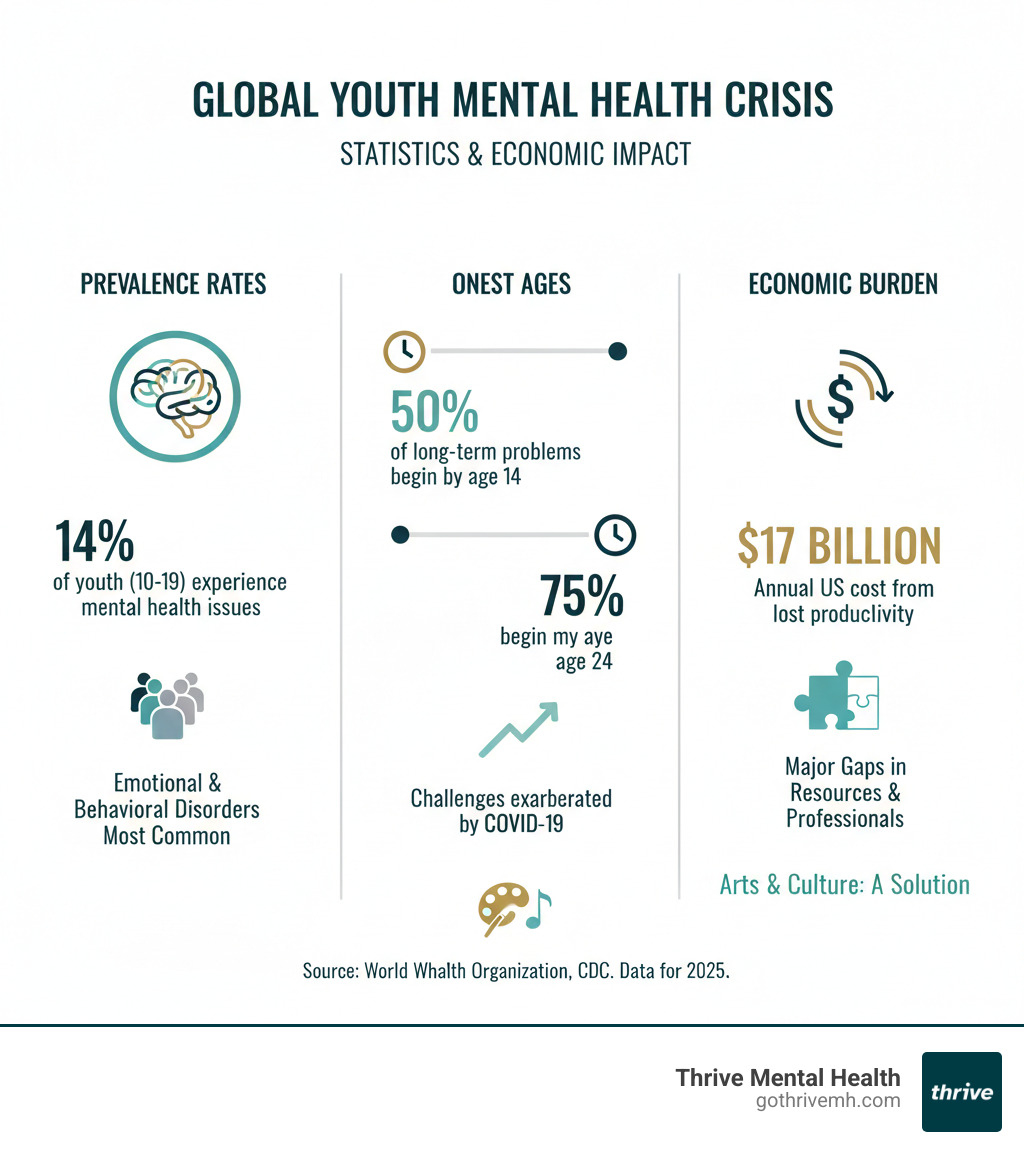
If you’re a young professional struggling with anxiety, depression, or burnout, you’re not alone. 67% of workers believe burnout has worsened since the pandemic, and for many, these challenges started long before their first job—75% of long-term mental health problems begin by age 24.
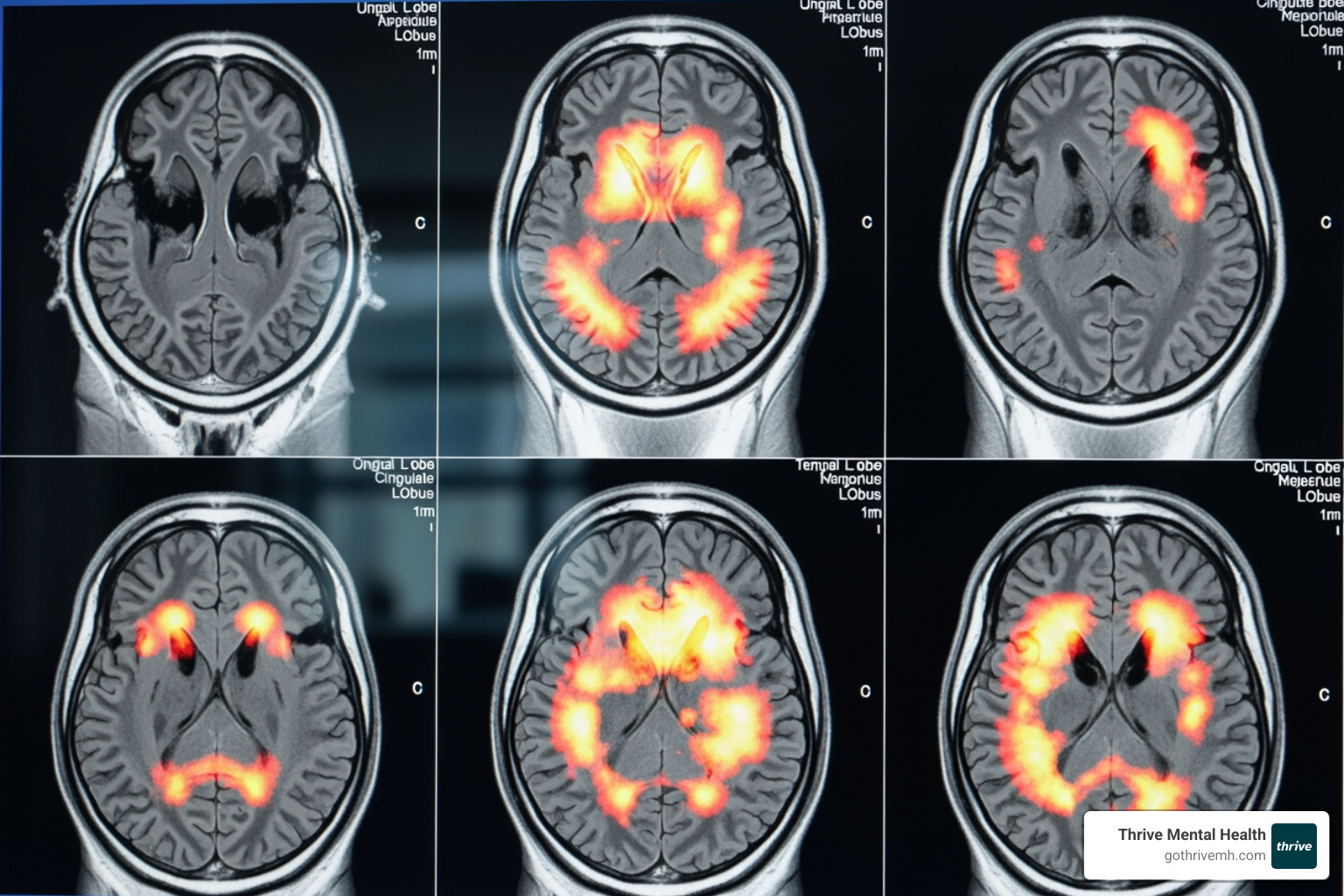
Weekly therapy helps, but it’s not always enough to combat deadlines, imposter syndrome, and constant pressure. This is where art therapy offers a science-backed solution. It uses creative expression to process emotions and build resilience, no artistic skill required. Research shows creative tasks activate brain regions associated with relaxation and meditation, offering a non-verbal path to healing when words fail.
Are there any programs that use art and mental health techniques for young professionals? Yes. From clinical Intensive Outpatient (IOP) and Partial Hospitalization (PHP) programs to university initiatives and community workshops, structured, evidence-based options are available. These aren’t just wellness activities; they are legitimate treatments delivered by licensed professionals and often covered by insurance plans like Cigna, Optum, and Florida Blue.
This article is your roadmap to understanding art therapy, the science behind it, the types of programs available, and five techniques you can try today.

Quick art and mental health definitions:
The Silent Crisis: Why Young Professionals Are Burning Out (And How Art Can Help)
You landed the job and you’re pushing hard—but under the surface, you’re exhausted and anxious. You’re not alone. Performance pressure, blurry work-life boundaries, and digital overload have spiked mental health issues among young adults, draining an estimated $17 billion annually in lost productivity.
The real cost shows up as sleepless nights, panic, and strained relationships. Traditional once-a-week therapy can’t always keep up—especially in a crunch. That’s why we need solutions that are accessible, structured, and effective.
Art is one of them. Recognized as a social determinant of health, arts engagement reaches parts of the brain that words miss. When integrated into structured care—like the IOP and PHP programs at Thrive Mental Health and our flexible virtual IOP/PHP options—art therapy becomes a powerful, evidence-based tool against burnout and anxiety. This isn’t about becoming an artist. It’s about having a proven way to process what feels impossible to say.
What is Art Therapy? The Science Behind Creative Healing
Art therapy is a clinical approach that uses creative expression as a pathway to healing, combining psychotherapy with the art-making process. It’s not about artistic talent; it’s about using a non-verbal pathway to healing to explore thoughts and feelings that are too complex for words. The focus is on the process, not the final product.
The science backs this up. Neuroscience research shows that creative tasks activate brain regions responsible for emotion and memory, inducing a state similar to meditation. This addresses mental health challenges at a neurological level, making it a powerful tool for young professionals dealing with performance anxiety and burnout.
How does art therapy benefit a young professional’s mental health?
Art therapy provides tangible benefits for navigating early career pressures:
- Emotional Regulation: It offers an alternative language to express and understand feelings when you’re too stressed to talk.
- Stress Reduction: The creative process is inherently meditative, pulling you out of anxious thought loops and into the present moment.
- Stronger Coping Skills: You learn to process difficult emotions constructively, building resilience against work and life stressors.
- Identity Exploration: It provides a space to explore your authentic self beyond your job title, which is crucial for combating imposter syndrome.
- Empowerment: Creating something tangible boosts confidence and self-worth, which translates to your professional life.
What evidence supports art therapy for young adults?
The effectiveness of art therapy for young adults is grounded in clinical research. Studies show it produces positive biological and psychological effects in treating mental health conditions and trauma. It offers a trauma-informed and culturally responsive way for therapists to engage with difficult experiences non-verbally. Research confirms that arts-based strategies raise mental health awareness, reduce stigma, and promote recovery and resilience.
For more evidence on the role of arts in improving well-being, explore comprehensive reviews.
Are there any programs that use art and mental health techniques for young professionals?
Yes, and they’re easier to access than most people realize. From clinical care to community spaces, you can choose a fit that matches your symptoms, schedule, and goals.
Available programs include:
- Clinical Treatment Programs (IOP/PHP)
- Community-Based Arts Programs
- University Initiatives
- Workplace Wellness Solutions
- Virtual Therapy Platforms
Clinical Programs: Structured Art Therapy for Measurable Results
When you need more than weekly therapy, clinical programs like Intensive Outpatient (IOP) and Partial Hospitalization (PHP) deliver multi-hour, multi-day care. At Thrive Mental Health, our virtual and in-person IOP and PHP programs are built for young professionals in Florida—with flexible evening options so treatment fits your life.
- Learn more about IOP/PHP and virtual care → Thrive Virtual IOP/PHP
- Check coverage (Cigna, Optum, Florida Blue, and more) → Verify insurance in ~2 minutes
Our licensed art therapists integrate creative work into individual, group, and family therapy for anxiety, depression, burnout, and trauma. This clinical approach often surfaces insights that talk therapy alone can miss. Many insurance plans cover art therapy when included in an IOP or PHP treatment plan.
Community & University Initiatives: Building Supportive Networks
If you don’t need clinical-level care, community and university programs offer supportive, lower-intensity options that reduce isolation and build resilience through shared creativity.
- University Programs: Initiatives like The ‘Mindful Campus’ program blend mindfulness and peer support through the arts, easing the transition from campus to career.
- Community Arts Organizations: Groups like Workman Arts’ Bruised Years Choir connect people with shared experiences, using creative practice to foster belonging and recovery.
Prefer fully remote support with licensed clinicians? Explore Thrive’s virtual programs to get care anywhere in Florida.
5 Powerful Art Therapy Techniques You Can Try Today
You don’t need a formal program to start using art for mental health. These techniques can be adapted for self-care, focusing on the process over the product.
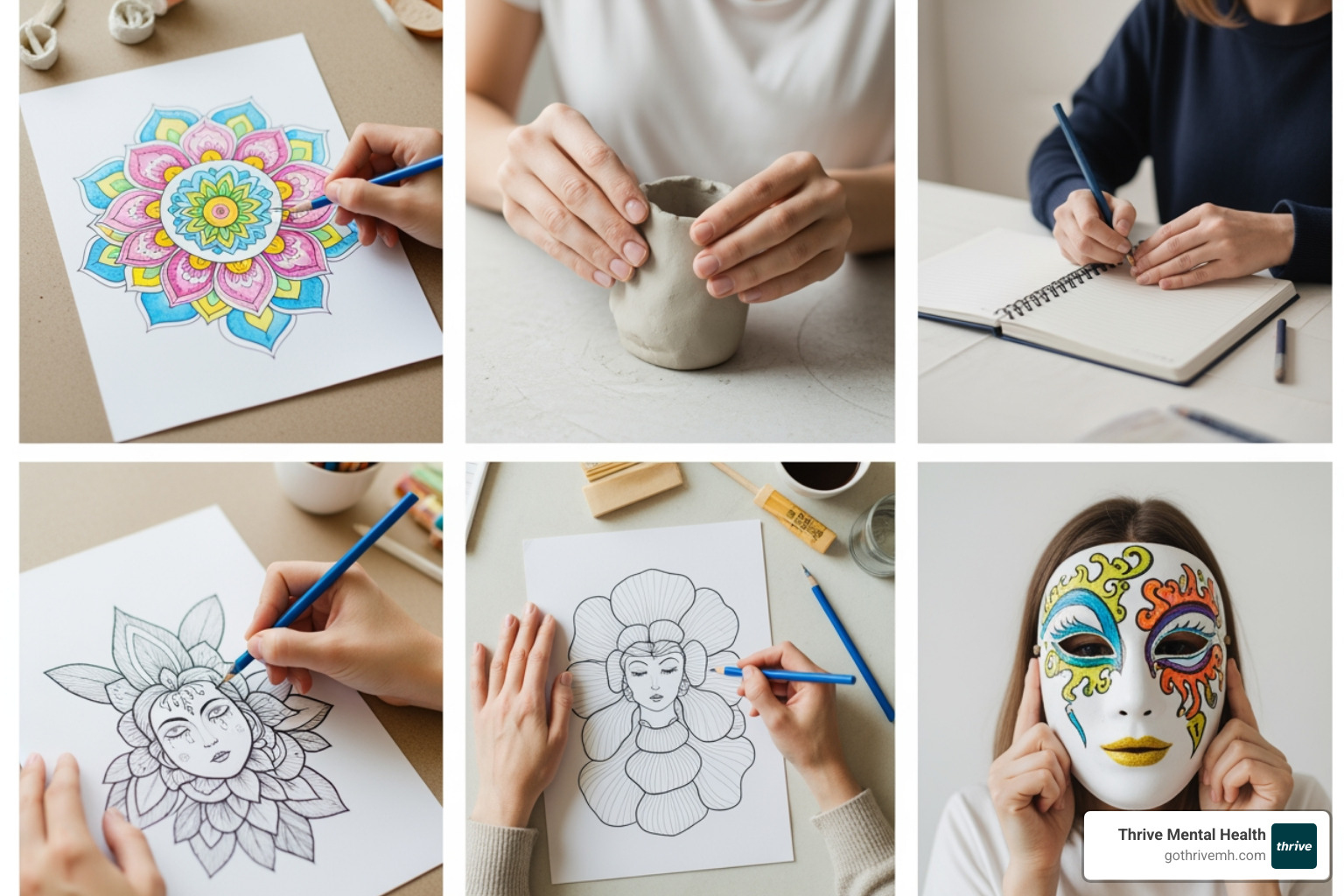
1. Mandala Drawing for Focus and Calm
Creating circular designs, or mandalas, is a meditative practice known to reduce negative emotions and foster calm. There are no rules, allowing for complete creative freedom.

2. Clay Sculpting to Reshape Your Emotions
Working with clay is a tactile, grounding experience. Molding the material can be a metaphor for personal growth, allowing you to physically represent and reshape emotions. As Spotted Rabbit Studio suggests, it’s a way to engage with your inner world.
3. Visual Journaling for Self-Exploration
Combine art and writing in a visual journal to explore your thoughts and feelings. Use drawings, collage, and mixed media alongside written notes. As Mindful Art Studio states, “in an art journal, everything belongs,” making it a forgiving way to track emotional patterns.

4. Mindful Doodling to Quiet a Busy Mind
Mindful doodling is about making spontaneous shapes and lines without expectation. This calming activity helps quiet an overactive mind by focusing on the sensation of the moment, as highlighted by Art in Coaching.
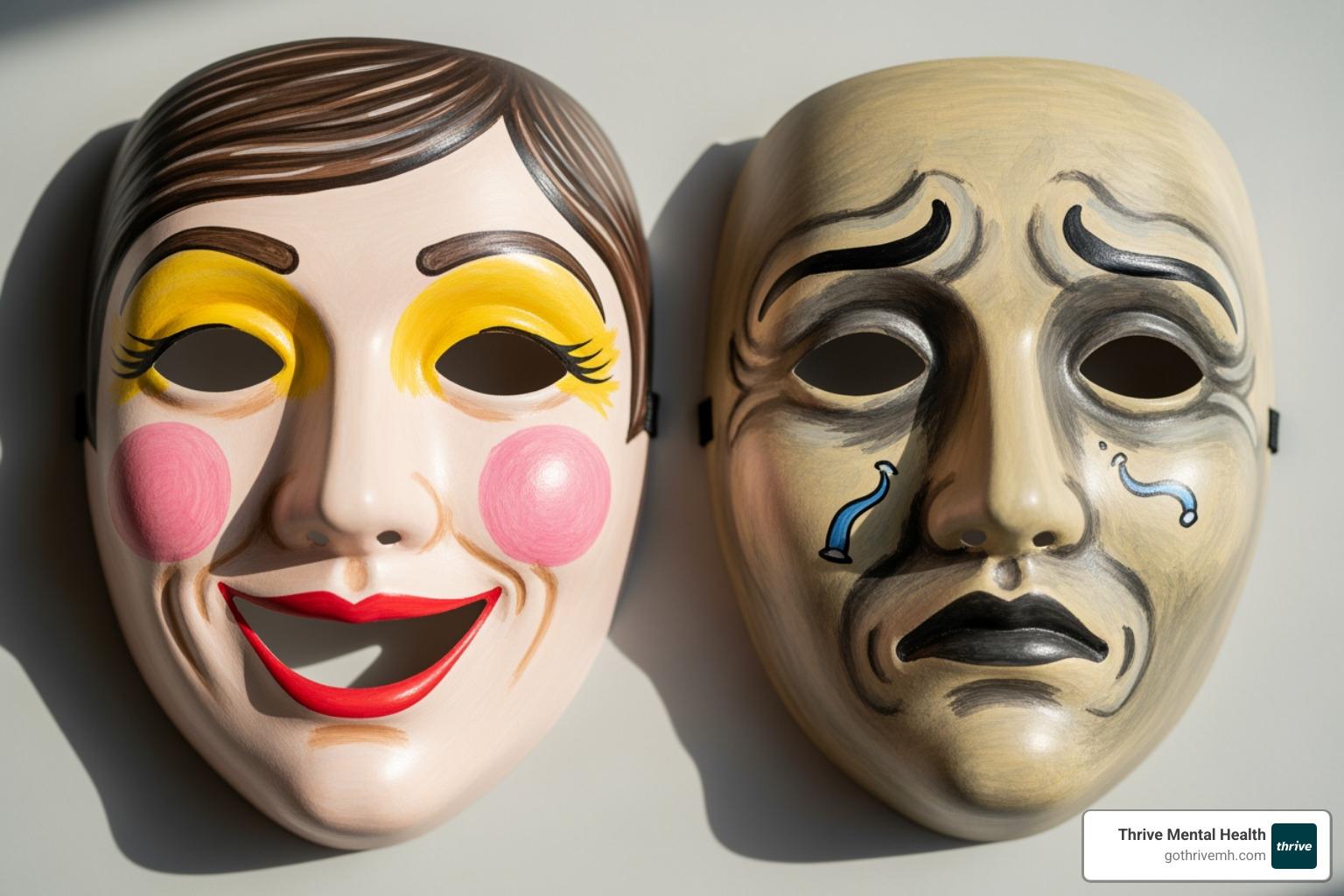
5. Mask Making to Explore Identity
Mask making helps explore different aspects of your personality. Create a mask representing your external persona on the outside and your true inner self on the inside. This “common tactic” in mask therapy, described by Thirsty for Art, provides a tangible way to engage with identity and self-perception.
The Big Picture: Why Investing in Arts and Mental Health Matters
Investing in art and mental health programs for young professionals is more than a wellness perk; it’s a fundamental shift in healthcare that can reshape our economy and communities. With youth mental health conditions projected to cost the global economy $16.1 trillion by 2030, we need better solutions.
Arts-based interventions are cost-effective, scalable, and ideal for early intervention. They also have a unique power to break down stigma by offering a less intimidating and more culturally relevant alternative to traditional therapy. In communities across Florida, integrating local arts into public health strengthens social connections and builds resilience.
Investing in arts and mental health means a healthier, more productive future with fewer lost workdays and reduced healthcare costs. At Thrive Mental Health, we see how integrating creative modalities into treatment creates breakthroughs. When insurance plans like Cigna, Optum, and Florida Blue cover these approaches, we remove critical barriers to care.
Frequently Asked Questions about Art Therapy for Professionals
Do I need to be an artist to benefit from art therapy?
No. Art therapy focuses on the creative process for healing, not the final product. It’s about self-expression, and no artistic skill is required. Your therapist is a mental health professional, not an art critic.
Can art therapy replace traditional talk therapy?
It can be a primary treatment or a powerful complement to talk therapy. For many, it helps access feelings that are difficult to verbalize. In structured programs like Thrive’s IOP and PHP, art therapy is integrated into a comprehensive plan with other evidence-based treatments.
Is art therapy covered by insurance?
Yes, in many cases. When provided by a licensed professional as part of a structured treatment plan like an IOP or PHP, art therapy is often covered by insurance providers like Cigna, Optum, and Florida Blue. It must be part of a clinical treatment plan, not a standalone art class. At Thrive, you can verify your insurance in 2 minutes with no obligation.
Take Control of Your Well-being: Start Your Creative Healing Journey
Art and mental health techniques for young professionals can cut stress fast and help you regain control—without needing to “be artistic.” Whether you try a simple technique at home or step into structured care, the best time to start is now.
At Thrive Mental Health, our programs are designed for people who need more than weekly therapy. Our virtual and hybrid IOP/PHP programs in Florida integrate art therapy with evidence-based care and offer evening options. Most major insurance plans (Cigna, Optum, Florida Blue, and more) are accepted.
Ready for support? Thrive offers virtual and hybrid IOP/PHP programs with evening options. Verify your insurance in 2 minutes (no obligation) → Start benefits check or call 561-203-6085. If you’re in crisis, call/text 988.