
Mastering Moods: How Art Therapy Helps Behavioral Issues in Teens
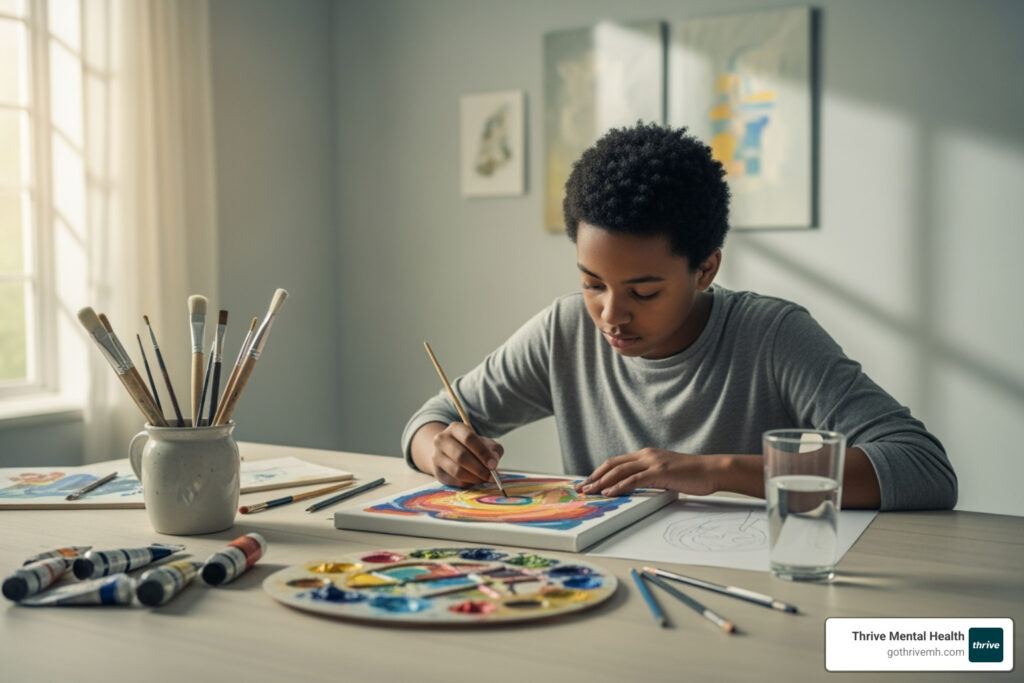
Art therapy for teenagers with behavioral issues: 7Boost
Beyond Words, Toward Healing
Art therapy for teenagers with behavioral issues offers a powerful alternative when traditional talk therapy falls short. Many teens struggle to verbalize complex emotions, making creative expression a vital pathway to healing and positive behavioral change.
Art therapy addresses teen behavioral issues through:
- Emotional expression – Bypassing verbal barriers to process difficult feelings
- Self-regulation – Building coping skills through creative outlets
- Identity exploration – Understanding themselves through artistic creation
- Behavioral change – Redirecting negative behaviors into constructive activities
- Trauma processing – Creating safe distance from painful experiences through symbolism
Understanding teens with behavioral issues is a profound challenge. The teenage brain is still developing, particularly in areas that control impulse regulation and emotional processing. When defiance, aggression, or withdrawal emerge, parents often feel helpless.
Art therapy creates a non-threatening bridge between a teen’s inner world and their path to healing. Unlike therapy that relies on verbal communication, it allows teens to express what they cannot say. Through drawing, painting, and sculpting, teens can externalize internal conflicts and begin to understand their behavioral patterns.
This approach makes the behavior the problem, not the teen. When a teen creates art that represents their anger or trauma, they gain power over these emotions instead of feeling controlled by them. This process creates breakthrough moments when other approaches haven’t succeeded.
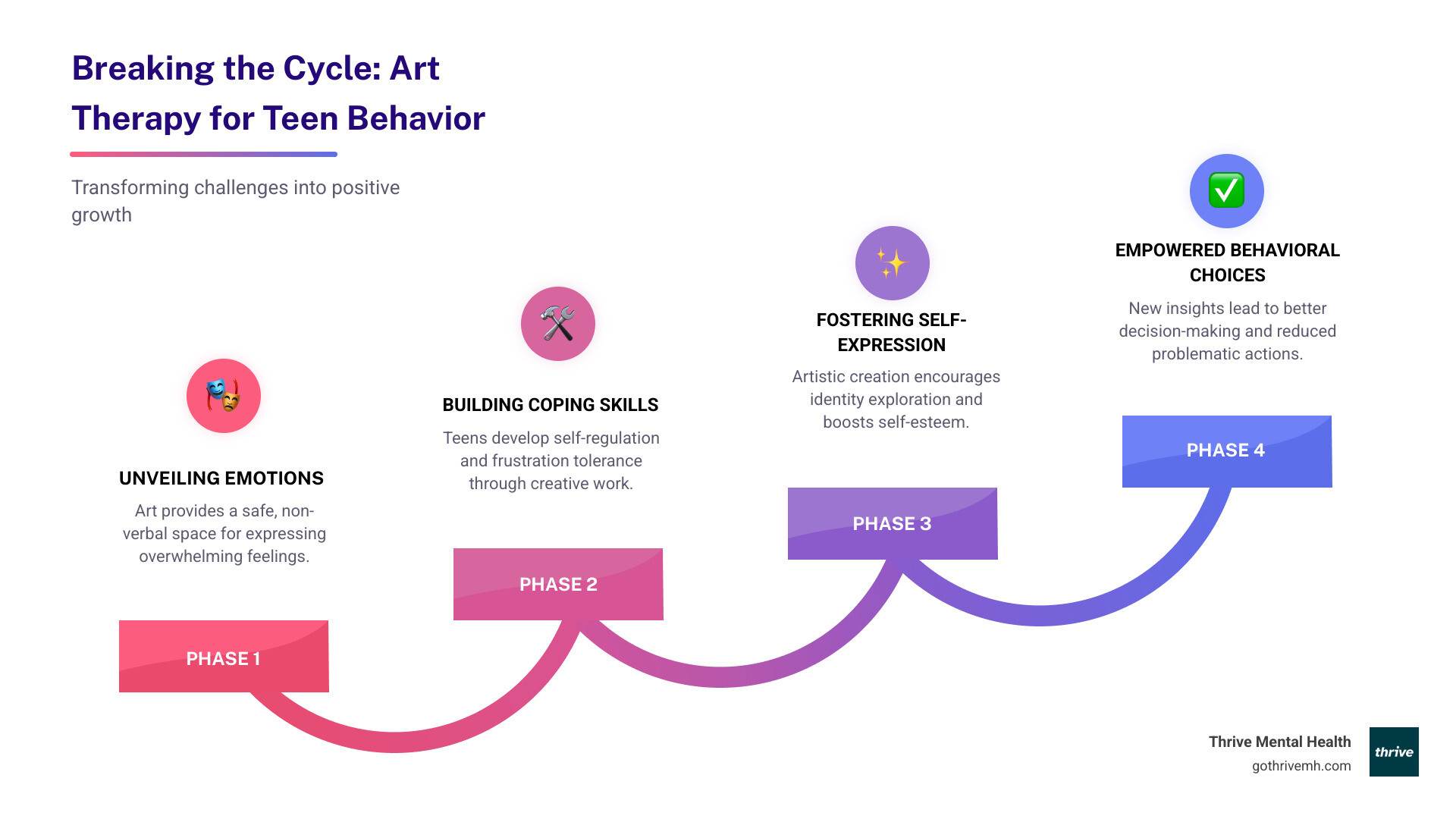
Art therapy for teenagers with behavioral issues basics:
What Are Teen Behavioral Issues? [And When to Seek Help]
Parenting a teenager can be challenging. While some moodiness is normal, persistent behavioral issues often signal a deeper problem.
Teen behavioral issues fall into two main categories. Internalizing problems turn emotions inward (anxiety, depression, withdrawal). Externalizing problems explode outward (aggression, defiance, hyperactivity).
Both types can disrupt a teen’s life, affecting grades, friendships, and family dynamics. Statistics are sobering: a 2021 CDC survey found 42% of high schoolers felt persistent sadness or hopelessness. Distinguishing normal angst from a clinical issue is tough. If the behavior is frequent, intense, and impacts school, home, and relationships, it’s time to seek professional help.
Art therapy for teenagers with behavioral issues offers a creative outlet for teens who resist talk therapy, creating connection instead of confrontation.
Recognizing the Signs in Your Teen
Trust your instincts and look for these patterns rather than isolated incidents:
- Sudden changes in friends or habits, especially if new friends encourage risky behavior
- Declining grades or loss of interest in school activities
- Increased secrecy or hostility toward family
- Loss of interest in hobbies that previously brought joy
- Persistent sadness, anger, or hopelessness
- Risky behaviors like substance use, reckless driving, or self-harm
- Dramatic sleep or appetite changes
- Social withdrawal and isolation
- Feelings of worthlessness or excessive guilt
The key is looking for clusters of these signs that persist over time. Early intervention makes all the difference.
Which Behavioral Issues Does Art Therapy Address Best?
Art therapy excels where talk therapy struggles, especially for teens who shut down verbally.
- Oppositional Defiant Disorder (ODD): Research on painting therapy for ODD shows it reduces symptoms by providing outlets for frustration and control issues.
- Conduct Disorder: It helps teens externalize destructive patterns symbolically, fostering insight without judgment.
- ADHD-related challenges: Focus-building art activities improve concentration, frustration tolerance, and self-regulation.
- Aggression management: It becomes possible when teens direct rage into artistic creation instead of destructive actions.
- Trauma-related behaviors: Art provides a safe distance from trauma through symbolism, allowing teens to process what happened without reliving it verbally.
- Social withdrawal: Group art therapy fosters connection without the pressure of direct conversation.
- Self-esteem issues: The non-judgmental creative process rebuilds confidence and a sense of mastery.
The Science of Healing: How Art Therapy Transforms Teen Behavior
Art therapy isn’t just about making art; it’s about rewiring the brain. It taps into healing mechanisms that talk therapy can’t always reach.

The developing teenage brain has high neuroplasticity (the ability to form new connections). Art therapy uses this to build new neural pathways for healthier emotional regulation and impulse control. Unlike talk therapy, it activates emotional processing centers, providing a safe outlet for expression.
It effectively bypasses verbal defenses, allowing teens who shut down to express what they can’t say out loud. The mind-body connection is also key. Sensory integration through art helps teens process emotions, which is especially useful for those with ADHD or on the autism spectrum.
How Art Therapy Helps Process Difficult Emotions
Art therapy externalizes the struggle, making the behavior the problem, not the teen. Drawing anger as a storm or sculpting anxiety as a twisted figure puts those feelings outside themselves. This creates “safe psychological distance,” making overwhelming emotions manageable through symbolism.
A teen who can’t talk about their trauma might draw it as a dark forest they’re trying to escape. Symbolism allows for indirect, non-judgmental communication. Teens can explore their inner world through colors and shapes, creating a safe space to process difficult feelings.
For families in Florida seeking flexible options, our virtual therapy programs integrate art therapy techniques that can be adapted for home settings.
Through art, teens develop mentalization—the ability to understand their own thoughts and emotions, as well as those of others. This skill is crucial for improving relationships and reducing behavioral conflicts.
The Core Benefits of Using Art Therapy for Teenagers with Behavioral Issues
The benefits of art therapy for teenagers with behavioral issues become lifelong skills.
- Improved self-regulation: Teens learn to channel intense emotions into creativity instead of destructive behaviors, developing a healthy coping mechanism.
- Increased self-esteem: Creating art builds confidence and personal agency, shifting a teen’s self-narrative from “problem case” to “capable creator.”
- Better communication skills: Art provides a bridge from non-verbal to verbal expression, helping teens find their voice.
- Frustration tolerance: Working through creative challenges builds emotional regulation and problem-solving skills.
- Resilience: Art therapy builds the ability to bounce back from setbacks. A study on art therapy’s effectiveness demonstrates how it reduces behavioral problems while building these crucial life skills.
- Healthy coping skills: Mindful creation and breathing techniques become practical tools for lifelong emotional wellness.
Art in Action: 7 Powerful Art Therapy Techniques for Teens
An art therapist’s role is not to teach art, but to guide a teen’s creative process in a safe space, helping them find meaning in their work. The teen is the expert of their own art. The therapist asks curious questions to help them find their own insights, building a trusting therapeutic alliance.
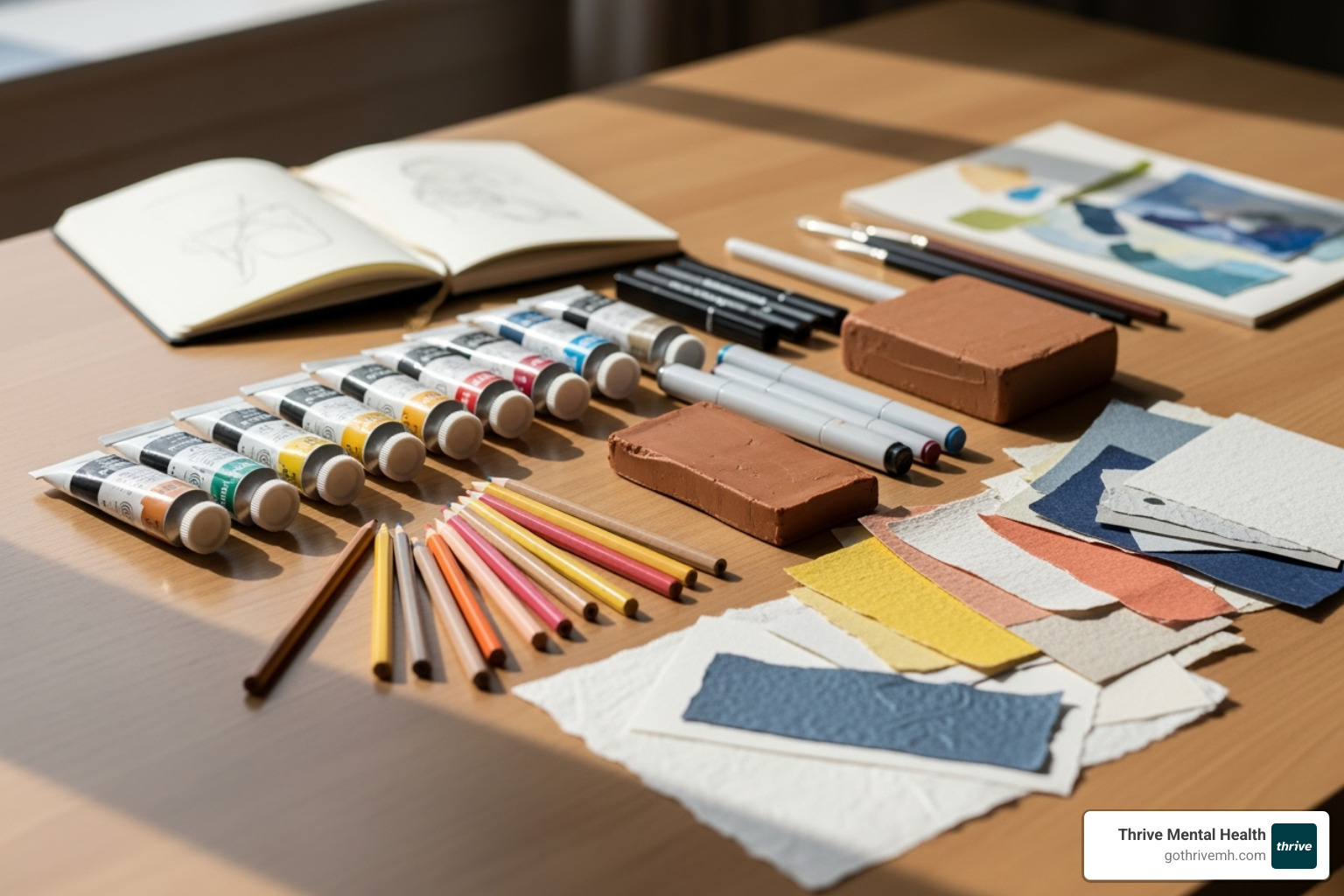
The therapist matches materials to emotional needs. For example, clay can be a physical release for aggression, while mandalas can calm anxiety.
Specific Activities for Managing Behavioral Issues
These seven techniques are especially effective for art therapy for teenagers with behavioral issues:
- The Monster/Anxiety Drawing: Teens draw or sculpt their anxiety or anger as a monster. This externalization creates distance, making the emotion manageable instead of overwhelming.
- Clay Sculpting: The tactile experience of molding clay offers a powerful physical outlet for tension, aggression, and frustration.
- Collage and Vision Boards: Using images and words, teens explore their identity, values, and future goals without pressure to verbalize them.
- Mask Making: This technique helps teens explore the difference between their public persona and private self, which is insightful for issues of identity and authenticity.
- Family Sculpture: Using figures or clay, teens represent family dynamics, uncovering unspoken tensions and communication patterns that influence their behavior.
- Mindful Mandalas: The repetitive patterns of mandalas promote focus and reduce anxiety, teaching a practical coping skill.
- Creating a “Calm-Down” Box: Teens create a personalized self-care kit with items that provide comfort during stressful moments, empowering them to manage emotions independently.
How These Techniques Foster Positive Change
These techniques do more than provide emotional release; they rewire a teen’s relationship with themselves. Working with challenging materials builds frustration tolerance and mentalization—the ability to understand their own and others’ minds.
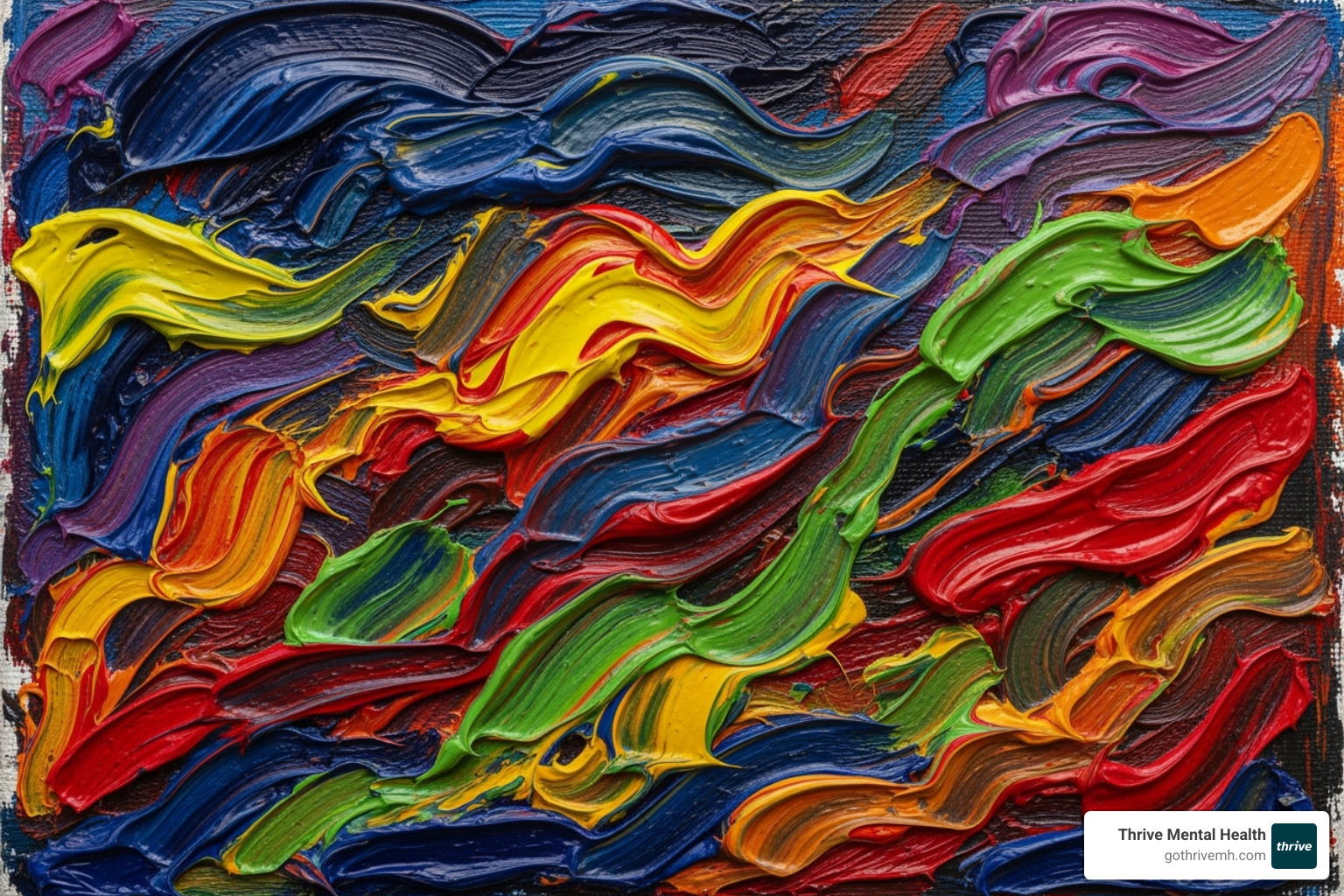
Directing rage into creation transforms destructive energy. This process fosters a sense of accomplishment and mastery. This sense of control is foundational for lasting change, empowering teens to manage their inner world.
These therapeutic approaches integrate seamlessly into comprehensive treatment plans. Learn how these evidence-based techniques become part of our holistic care in our Florida-based evidence-based Intensive Outpatient Programs (IOP).
Art Therapy vs. Talk Therapy: What’s the Right Fit?
Choosing between art and talk therapy can be tough, but they often work best together. Understanding their differences helps you make an informed choice for your teen.
Talk therapies like Cognitive Behavioral Therapy (CBT) are effective for identifying negative thought patterns and building coping skills, especially for anxiety and depression. However, art therapy shines with its non-verbal approach, making it ideal for teens who are resistant to talking, have experienced trauma, or can’t verbalize their emotions.
| Criteria | Art Therapy | Traditional Talk Therapy (e.g., CBT) |
|---|---|---|
| Primary Method | Non-verbal creative expression (drawing, sculpting, etc.) | Verbal communication, cognitive restructuring, dialogue |
| Best For | Teens resistant to talking, trauma, emotional regulation, identity exploration, non-verbal communication issues. | Identifying negative thought patterns, anxiety, depression, specific phobias, concrete problem-solving. |
| Key Benefits | Externalizes emotions, bypasses verbal defenses, builds coping skills, boosts self-esteem, provides safe distance from trauma. | Directly addresses cognitive distortions, teaches practical coping strategies, provides tools for managing specific symptoms. |
| Challenges for Teens | May feel pressure to be “artistic” (though therapists emphasize process over product), might struggle to connect art to feelings initially. | Resistance to talking, difficulty verbalizing complex emotions, feeling judged, can feel abstract for some. |
Art therapy complements, rather than replaces, talk therapy. We often integrate art into CBT or Dialectical Behavior Therapy (DBT) frameworks for a more comprehensive experience. For example, a teen might draw their anxiety, then use the art to start a CBT discussion. Or they might create mandalas to practice DBT mindfulness skills.
In our Florida-based programs like our Partial Hospitalization Program (PHP), art therapy is integrated with individual, group, and family therapy, creating multiple pathways to healing.
The key is finding what resonates with your teen. Most benefit from a combination, giving them a fuller toolkit for managing their behavioral challenges.
Getting Started: Insurance, Access, and Finding the Right Program
Finding the right art therapy program for your teen involves navigating credentials, insurance, and program fit. Here’s how to get started.
Look for a qualified art therapist with ATR (Registered Art Therapist) or ATR-BC (Board-Certified Art Therapist) credentials. This ensures they have specialized training in both psychotherapy and art. The therapeutic relationship is key, so ask potential therapists about their approach to ensure a good fit for your teen and family.
Many insurance plans, including major providers like Cigna, Optum, and Florida Blue, now cover art therapy as part of mental health benefits. Our team can help you verify your coverage.
For families across Florida, accessing quality care is more convenient than ever. Thrive Mental Health offers flexible virtual and hybrid intensive outpatient programs (IOP) and partial hospitalization programs (PHP) that can be accessed from anywhere in the state.
Our programs integrate art therapy into comprehensive, evidence-based treatment plans. Virtual therapy is proven to be as effective as in-person care and offers a comfortable environment for teens.
Art therapy for teenagers with behavioral issues becomes part of a larger support system. Our flexible evening programs allow teens to receive expert care without disrupting school and other important commitments.
Frequently Asked Questions about Art Therapy for Teens
Parents often have questions about art therapy for teenagers with behavioral issues. Here are the most common concerns we hear.
How long does art therapy take to work for behavioral issues?
Progress varies by teen, the severity of the issues, and engagement. Consistent weekly sessions over several months are typical for meaningful, long-term change. Art therapy focuses on building foundational skills, not quick fixes.
Can my teen do art therapy if they aren’t “good at art”?
Absolutely. No artistic talent is needed. Art therapy focuses on the creative process for self-expression, not the final product. The environment is completely non-judgmentalthere is no “good” or “bad” art.
What is the difference between art class and art therapy?
Art class teaches technique and aesthetics. Art therapy is a form of psychotherapy facilitated by a trained mental health professional. The goal is emotional healing and behavioral change, using the creative process to explore a teen’s inner world.
How much does art therapy for teens cost?
Cost varies, but many insurance plans, including major providers like Cigna, Optum, and Florida Blue, cover art therapy as part of mental health services. When included in an IOP or PHP program, it’s often a core component. You can check your insurance benefits here to understand your coverage. Our team can also help you steer the process.
Conclusion: Paint a Brighter Future for Your Teen
Parenting a teen with behavioral issues is overwhelming. When talk therapy falls short, art therapy for teenagers with behavioral issues can be the key to a breakthrough. For a teen who shuts down verbally, art provides a pathway to healing that bypasses those defenses.
Art therapy fosters healing through self-understanding and emotional regulation. By externalizing their struggles into art, teens take control of emotions that once controlled them.
The change is powerful. Teens develop healthy, lasting coping skills. They learn to manage their behavior constructively because they’ve found their own inner strength and can regulate their emotions and communicate their needs.
This approach empowers teens to be active participants in their healing. They learn to channel intense emotions into something constructive, becoming artists of their own recovery.
Seeking professional, evidence-based support is a powerful first step. You don’t have to steer this alone. A path forward exists, filled with creativity and hope.
Ready for support? Thrive offers virtual and hybrid IOP/PHP with evening options for families in Florida. Verify your insurance in 2 minutes (no obligation) Start benefits check or call 561-203-6085. If you’re in crisis, call/text 988.