
The Best Mental Health Programs in Greenville, SC.
Best mental health programs in Greenville, SC. Healing 2025
The Best Mental Health Programs in Greenville, SC [2025 Guide]
If you’re in crisis, call/text 988 right now. You are not alone.
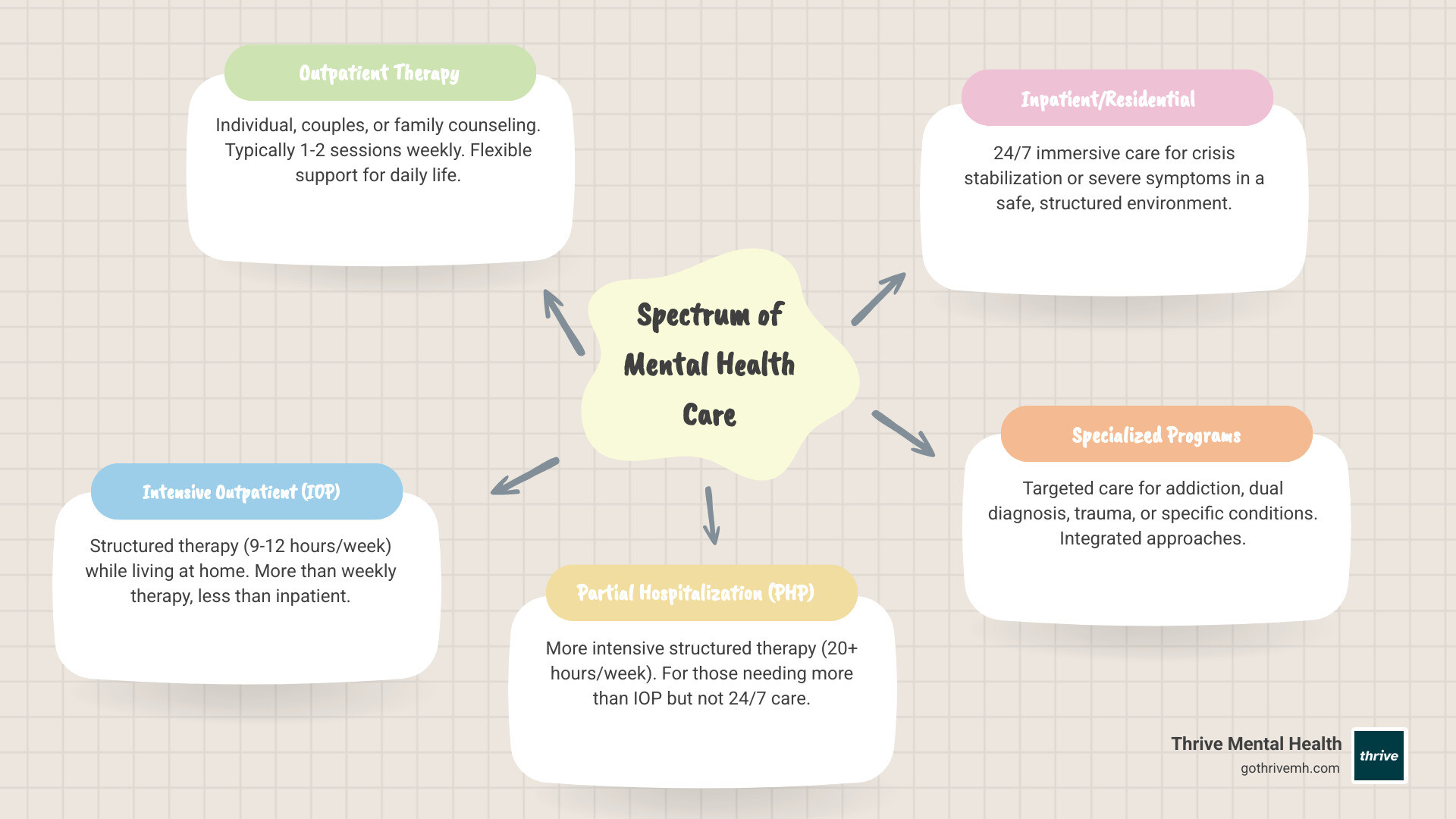
Best mental health programs in Greenville, SC offer a range of options from weekly therapy to intensive residential care—here’s how to find what fits your life:
- Outpatient Therapy: Individual, couples, or family counseling (1-2 sessions weekly)
- Intensive Outpatient (IOP): 9-12 hours/week of structured therapy while living at home
- Partial Hospitalization (PHP): 20+ hours/week for those needing more than IOP
- Inpatient/Residential: 24/7 care for crisis stabilization or severe symptoms
- Specialized Programs: Addiction treatment, dual diagnosis, trauma-focused care
If you’re reading this, you already know something needs to change. Maybe weekly therapy isn’t cutting it. Maybe you’re functional on the outside but falling apart inside. Or maybe you’ve tried to “push through” anxiety, depression, or burnout for so long that it’s now affecting your work, relationships, and health.
You’re not alone. 150,000 adults in South Carolina live with serious mental illness, and 87.6% of adults with mental illness in the state are unemployed. The right program can be the difference between staying stuck and reclaiming your life.
Greenville offers everything from traditional therapy to intensive outpatient programs (IOPs) and full residential care. The challenge isn’t finding a program—it’s finding your program. One that fits your schedule, accepts your insurance, and delivers measurable results fast.
I’m Nate Raine, CEO of Thrive Mental Health, and I’ve spent over a decade building evidence-based behavioral health systems that integrate virtual and in-person care. I’ve seen how the best mental health programs in Greenville, SC transform lives when they match the right level of care to the person, not the diagnosis.
Basic Best mental health programs in Greenville, SC. vocab:
Understanding the Levels of Mental Health Care Available
Understanding the different levels of mental health care is crucial for finding the right support. It’s not a one-size-fits-all journey, and Greenville, SC, provides a spectrum of options designed to meet varying needs, from flexible, weekly sessions to 24/7 immersive support.

Outpatient & Telehealth: Flexible Support for Your Daily Life
For many, the first step into mental health care begins with outpatient services. This level of care allows individuals to receive support while continuing to live at home, maintain work or school responsibilities, and engage with their communities.
In Greenville, you’ll find a wide range of psychiatric services available on an outpatient basis for adults, children, families, and couples. These services typically include:
- Individual Therapy: One-on-one sessions with a licensed therapist to address specific concerns, develop coping strategies, and foster personal growth. Many local providers focus on creating a comfortable, judgment-free zone where you can be authentic and receive compassionate care, often helping you find a therapist who matches your specific needs.
- Couples Counseling: Therapy focused on improving communication, resolving conflicts, and strengthening relationships.
- Family Therapy: Sessions designed to address family dynamics, improve understanding, and foster healthier interactions within the family unit.
- Psychiatric Services: Access to board-certified psychiatrists and nurse practitioners for comprehensive evaluation, consultation, and medication management. Outpatient clinics throughout the Upstate region provide these services, offering crisis intervention, long-term and short-term psychotherapy, and cognitive behavioral therapy.
- Group Therapy: A supportive environment where individuals facing similar challenges can share experiences, learn from others, and develop new skills under the guidance of a therapist.
A significant development in recent years is the rise of online therapy (telehealth). This offers unparalleled benefits, including:
- Convenience: Accessing therapy from the comfort of your home, eliminating travel time and logistical problems. This is especially beneficial for those with busy schedules or limited mobility.
- Accessibility: Broadening access to specialists who might not be available locally.
- Flexibility: Often providing more flexible scheduling options, including evening appointments.
At Thrive Mental Health, we offer comprehensive virtual therapy services designed to fit seamlessly into your daily life, ensuring you get the support you need, when and where you need it.
Intensive Outpatient (IOP) & Partial Hospitalization (PHP): Structured Care, Real-Life Integration
Sometimes, weekly therapy isn’t enough, but full-time inpatient care isn’t necessary. This is where Intensive Outpatient Programs (IOP) and Partial Hospitalization Programs (PHP) come in. These programs offer a crucial middle ground, providing structured, evidence-based treatment while allowing you to live at home and continue engaging with your community.
- What is IOP? An IOP typically involves 9-12 hours of structured therapy per week, spread across several days. It’s designed for individuals who need more support than traditional outpatient therapy but don’t require 24/7 supervision.
- What is PHP? A PHP offers an even higher level of care, usually involving 20 or more hours of therapy per week, often for several hours a day, five days a week. It’s a step down from inpatient care but provides intensive support for acute symptoms or during a crisis.
Who benefits from IOP/PHP? These programs are ideal for individuals who:
- Need more than weekly therapy to manage their symptoms.
- Are stepping down from inpatient care and need continued support to transition back to daily life.
- Are struggling with mental health challenges that impact their daily functioning but can still benefit from living at home.
- Want to maintain work, school, or family responsibilities while receiving intensive treatment.
At Thrive Mental Health, our IOP/PHP programs are specifically designed for adults and young professionals. We combine clinical expertise with flexible scheduling and measurable results, helping you make significant progress without disrupting your entire life.
Inpatient & Residential Treatment: 24/7 Immersive Support
For individuals experiencing severe mental health crises or persistent, debilitating symptoms, inpatient and residential treatment offer the most intensive level of care. These programs provide a safe, structured, and therapeutic environment with 24/7 medical supervision.
- Crisis Stabilization: Inpatient care often serves as a critical first step for individuals in acute mental health crises, providing immediate stabilization and a secure environment away from stressors.
- 24/7 Medical Supervision: Patients receive constant monitoring and access to medical professionals, including psychiatrists, nurses, and therapists, ensuring their safety and the rapid adjustment of treatment plans as needed.
- Safe and Structured Environment: These facilities remove individuals from potentially harmful situations, allowing them to focus entirely on their recovery without external pressures.
- Psychiatric Residential Treatment Centers (PRTCs): These centers offer comprehensive residential treatment in a caring environment for individuals battling mental illness and addiction. They provide a change of pace, time to focus on wellness goals, and inclusion in a community of professional staff and empathetic peers. Facilities across South Carolina offer specialized units for adult psychiatry and substance use disorders.
When is inpatient care necessary? It’s typically recommended for those who:
- Are a danger to themselves or others.
- Are unable to function safely in their daily lives due to severe mental health symptoms.
- Have not responded to lower levels of care.
- Require round-the-clock medical and psychiatric monitoring.
The main differences between PRTCs and other mental health facilities in Greenville, SC, often lie in the duration and intensity of care. PRTCs are designed for longer-term, immersive treatment, focusing on rehabilitation and skill-building in a residential setting, while acute inpatient units might focus more on short-term crisis stabilization.
A Guide to the Best Mental Health Programs in Greenville, SC
Finding the best mental health programs in Greenville, SC means looking beyond a single type of therapy. It involves understanding specialized treatments, community-based models, and integrated care approaches that address the whole person.

Finding the Best Mental Health Programs in Greenville, SC for Addiction & Dual Diagnosis
Mental illness and substance use often go hand-in-hand. This is known as a dual diagnosis or co-occurring disorder. In South Carolina, where 150,000 adults live with serious mental illness, the need for integrated treatment is paramount. While various organizations work to address the impacts of mental illness, many individuals also struggle with addiction.
Effective programs in Greenville recognize this connection and offer an integrated treatment approach where both mental health conditions and substance use disorders are treated simultaneously. This contrasts with older models that treated these issues separately, often leading to less successful outcomes.
Key features of these specialized programs include:
- Medically Supervised Detox: For individuals struggling with substance dependence, a safe, medically supervised detoxification process is often the first step.
- 12-Step Principles: Many addiction treatment programs incorporate the principles of 12-step programs (like AA or NA) to provide a framework for recovery and community support.
- Specialized Therapies: Programs may offer a combination of individual and group therapy, cognitive behavioral therapy (CBT), dialectical behavior therapy (DBT), and trauma-informed care.
- Support for Specific Substances: Whether it’s alcohol, opioids, stimulants, or other substances, programs tailor their approach to the specific challenges presented by each addiction.
Finding the right support for addiction and dual diagnosis can be life-changing. These programs aim to heal both the mind and body, offering a path to sustainable recovery. For more information on mental illness in South Carolina, you can refer to this SAMHSA report.
Community-Based Rehabilitation: The Unique Clubhouse Model
Stepping away from traditional clinical settings, the Clubhouse Model offers a unique, community-based approach to mental health rehabilitation. This model is used in Greenville to empower adults living with persistent and severe mental illnesses.
What is the Clubhouse Model? It’s an internationally accredited, community-based rehabilitation program that provides a restorative environment. Unlike traditional patient care, members are referred to as “members” rather than “patients” or “clients,” fostering a sense of belonging and mutual support.
Key aspects of the Clubhouse Model include:
- Focus on Community and Belonging: Members are actively involved in the daily operations of the Clubhouse, contributing to its functioning and building meaningful relationships. This helps combat the isolation often experienced by individuals with mental illness.
- Vocational and Social Skills: The program provides opportunities to increase social and vocational skills through participation in a “work-ordered day,” where members and staff work side-by-side on tasks essential to the Clubhouse.
- Member-Driven Recovery: The model is built on the belief that everyone has the potential for recovery. Members have a voice in their treatment and rehabilitation plans, fostering empowerment and self-determination.
- Empowerment: The Clubhouse offers opportunities for education, employment, and housing, helping members lead normal and productive lives.
The Clubhouse Model differs significantly from traditional patient care by shifting the focus from a medical model (patient receiving treatment) to a psychosocial rehabilitation model (member actively participating in their recovery within a supportive community). This impactful approach is used globally. You can learn more about the Clubhouse Model and its international impact.
Comprehensive & Integrated Behavioral Healthcare Systems
Greenville is home to comprehensive healthcare systems that prioritize integrated behavioral health. This means mental health care isn’t isolated but is woven into a broader healthcare framework, ensuring a more holistic approach to well-being.
Key features of this integrated model in the Upstate region include:
- Integrated Care in Primary Care Offices: A key feature is the integration of behavioral health therapy directly into primary care offices. On-site counselors provide support, making it easier for patients to access mental health services as part of their overall health routine. This removes barriers and promotes early intervention.
- Evidence-Based Therapies for All Ages: Leading healthcare systems offer advanced, evidence-based mental health care for children, adolescents, and adults. They treat a wide range of conditions, including mood and anxiety disorders, psychosis, personality disorders, developmental and behavioral disorders, neurocognitive disorders, and substance use disorders.
- Access to Board-Certified Psychiatrists: Patients have access to highly qualified professionals who can diagnose, treat, and prevent mental health conditions, including providing talk therapy, medication management, and lifestyle recommendations.
- Advanced Treatment Options: The region is committed to providing the latest psychiatric knowledge and expanding access to care, with ongoing projects to increase capacity for behavioral care for children, teens, and adults in the Upstate.
This integrated approach ensures that mental health is seen as an integral part of overall health, making access to necessary services more streamlined and effective for individuals in Greenville, SC.
How to Choose the Right Program & Steer Insurance
Finding the best mental health programs in Greenville, SC involves more than just knowing what’s available; it’s about matching a program to your unique needs and navigating the often-complex world of insurance.
Assessing Your Specific Needs
Before you even think about insurance, take a moment to honestly assess what you need. Ask yourself:
- What conditions am I seeking treatment for (e.g., depression, anxiety, trauma, addiction)?
- What level of intensity do I require (weekly therapy, IOP, PHP, or inpatient)?
- What kind of therapeutic approach resonates with me (e.g., CBT, DBT, trauma-informed, holistic)?
- Do I need specialized care (e.g., dual diagnosis, LGBTQ+ affirming, specific age group)?
- What is my schedule like, and how much time can I realistically commit to treatment?
- Do I prefer in-person sessions or is virtual therapy a better fit?
Verifying Insurance Coverage
Once you have a clearer picture of your needs, the next step is to understand your insurance benefits. Many of the best mental health programs in Greenville, SC accept a variety of insurance plans. We often see common providers like Cigna, Aetna, Optum, and BlueCross BlueShield covering mental health services.
Here’s what you need to know:
- In-network vs. Out-of-network: Programs that are “in-network” with your insurance typically mean lower out-of-pocket costs for you. Out-of-network providers may still be covered, but often at a lower percentage, meaning you’ll pay more upfront.
- Deductibles, Copays, and Coinsurance: Understand what your plan requires. A deductible is what you pay before your insurance starts covering costs. A copay is a fixed amount you pay for each service. Coinsurance is a percentage of the cost you pay after your deductible is met.
- Pre-authorization: Some programs or levels of care require pre-authorization from your insurance company. This is a crucial step to avoid unexpected bills.
Don’t let the insurance process overwhelm you. Many providers, including Thrive Mental Health, offer free benefits checks to help you understand your coverage.
Key Questions to Ask a Potential Mental Health Provider
When contacting potential programs or providers in Greenville, be prepared with these questions:
- What conditions do you specialize in treating?
- What levels of care do you offer (e.g., individual therapy, IOP, PHP, residential)?
- What therapeutic approaches do you use (e.g., CBT, DBT, EMDR)?
- What are your staff’s qualifications and credentials?
- Do you offer virtual or telehealth options?
- What is your intake process and how long is the waitlist?
- What are the program hours and schedule?
- What is the cost of your program, and do you offer a sliding scale or payment plans?
- Do you accept my insurance (specifically mention your plan, e.g., Cigna, Optum, BlueCross BlueShield)?
- What is your policy on family involvement or support?
- How do you measure client progress and outcomes?
Asking these questions will help you find the right fit and ensure you’re making an informed decision about your mental health journey.
Frequently Asked Questions about Greenville Mental Health Programs
What is the difference between inpatient and outpatient mental health care?
Inpatient care involves living at a facility with 24/7 medical supervision for crisis stabilization, while outpatient care (including IOP/PHP) allows you to live at home and attend scheduled treatment sessions, offering more flexibility.
How much does a mental health program cost in Greenville, SC?
Costs vary widely based on the level of care, program duration, and your insurance coverage. Outpatient therapy can range from $100-$200+ per session, while IOP/PHP and inpatient programs have different structures. Many programs accept insurance, which significantly reduces out-of-pocket costs.
Can a therapist prescribe medication in South Carolina?
No, therapists (like LPCs, LCSWs, and psychologists) provide talk therapy but cannot prescribe medication. Psychiatrists and psychiatric nurse practitioners are medical professionals who can diagnose conditions and prescribe medication.
Take the First Step: Your Path to Healing Starts Now
Navigating the landscape of mental health care in Greenville, SC, can feel daunting, but as we’ve explored, a wealth of options exists to support your journey to wellness. From flexible outpatient therapy and the structured support of IOPs and PHPs to immersive residential care and unique community models like the Clubhouse, the best mental health programs in Greenville, SC are designed to meet diverse needs.
Finding the right program means understanding the levels of care, identifying what truly fits your life, and proactively asking the right questions about services and insurance. Hope and recovery are not just possibilities; they are achievable realities when you connect with the right support.
At Thrive Mental Health, we believe that everyone deserves access to evidence-based treatment that fits their life. Our vital mental health services, including virtual and hybrid IOP/PHP programs, are designed with your needs in mind, offering evening options for flexibility.
Ready for support? Thrive offers virtual and hybrid IOP/PHP programs with evening options. Verify your insurance in 2 minutes (no obligation) → Start benefits check or call 561-203-6085. If you’re in crisis, call/text 988.