
Finding Your Way: Best Mental Health Programs for Young Adults

If You’re in Crisis, Read This First
If you or someone you know is thinking about suicide or self-harm, call or text 988 now. You are not alone.
Why Young Adults Need Specialized Mental Health Support Right Now
Young adult mental health programs offer structured, evidence-based treatment designed specifically for people ages 18-26 who are struggling with anxiety, depression, trauma, or other mental health challenges. Here’s what you need to know:
Quick Answer: Top Options for Young Adults
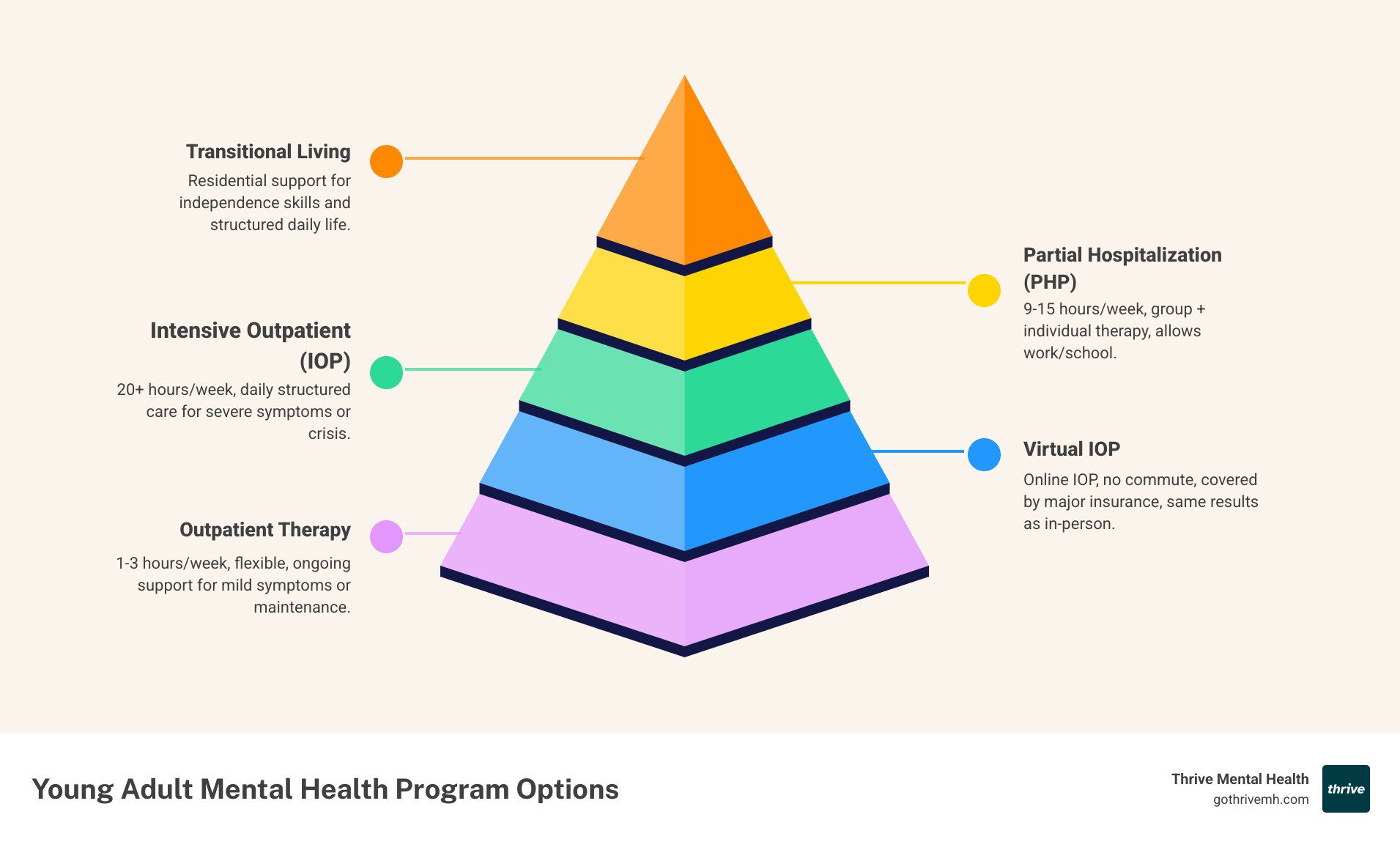
- Intensive Outpatient Programs (IOP): 9-15 hours/week, keep your job/school, group + individual therapy
- Partial Hospitalization Programs (PHP): 20+ hours/week, daily structure, crisis stabilization
- Virtual IOP: Same results as in-person, no commute, covered by major insurance
- Outpatient Therapy: 1-3 hours/week, ongoing maintenance and support
- Transitional Living Programs: Residential support for independence skills
75% of mental health disorders emerge before age 25. You’re not alone—and you don’t have to figure this out by yourself.
US teens and young adults report higher stress levels than adults, with many feeling overwhelmed, depressed, or sad. The pressure is real: college deadlines, career uncertainty, financial stress, social media comparison, and the “quarter-life crisis” that no one warned you about.
Here’s what you risk if you wait:
- Worsening symptoms that become harder to treat
- Lost opportunities in school, work, and relationships
- Higher treatment costs down the road
- Potential hospitalization or crisis situations
What you gain by acting now:
- Fast symptom relief (programs show 84% improvement rates)
- Skills that last a lifetime
- Support from people who actually understand what you’re going through
- The ability to keep your job, finish school, and build your future
Young adult programs are different from teen or general adult services. They focus on your unique challenges: building independence, transitioning from pediatric to adult healthcare, managing school and work, and learning self-directed care skills. Research shows that specialized programs work better because they address the developmental stage you’re actually in.
I’m Nate Raine, CEO of Thrive Mental Health, where we’ve spent over a decade building evidence-based young adult mental health programs for families across Florida. We integrate virtual and in-person care with flexible scheduling designed for real life. At Thrive, we’ve seen how the right program at the right time changes everything—and we’ve built our IOP, PHP, and virtual programs specifically for young adults in Florida who refuse to put their lives on hold while getting the help they need.
Common young adult mental health programs vocab:
- exposure and response prevention therapy
- how to treat ocd
- Find therapists in my area who use exposure and response prevention therapy
Why Young Adults Are Struggling: The Mental Health Crisis No One Warned You About
The journey from adolescence to adulthood (ages 18-25) is a pivotal time, often marked by significant changes and intense pressure. This period, sometimes dubbed the “quarter-life crisis,” brings unique mental health challenges that demand specialized support. The statistics paint a stark picture: a staggering 75% of mental health disorders emerge before the age of 25, with half having their onset by 14. This means many young adults are struggling with the first signs of serious mental health conditions while simultaneously navigating major life transitions.
US teens and young adults consistently report higher stress levels than adults, often feeling overwhelmed, depressed, or sad. This isn’t surprising when you consider the complex landscape they face:
- Academic and Career Pressure: The weight of college applications, student debt, finding a first job, or establishing a career path can be immense.
- Identity Formation: Finding who you are, what you value, and where you belong is a profound process that can be fraught with uncertainty.
- Social Anxiety and Isolation: The digital age, with its constant comparison on social media, can exacerbate feelings of inadequacy and loneliness, even while being constantly connected.
- Financial Stress: Managing newfound financial independence, or the lack thereof, can be a significant source of anxiety.
- Relationship Dynamics: Navigating romantic relationships, friendships, and evolving family roles adds another layer of complexity.
- Substance Use: Many young adults attempt to “self-medicate” mental health conditions with drugs and alcohol, leading to dependency and co-occurring disorders.
Ignoring these early warning signs or hoping they’ll simply disappear is a dangerous gamble. Untreated mental health conditions can worsen, leading to lost opportunities in education, career, and personal relationships. The long-term costs, both emotional and financial, can be far greater than addressing issues early. Early intervention is not just beneficial; it’s critical for affecting the healthy development of young people, especially given the adolescent brain’s malleability during this period (12-25).
When to Get Help: 7 Red Flags You Can’t Ignore
CALLOUT BOX: If you’re in crisis, call/text 988 right now. You are not alone.
Recognizing when a young adult needs professional mental health support can be challenging, as some symptoms might be mistaken for typical adolescent angst or “growing pains.” However, certain persistent or severe signs should never be ignored. We’ve seen these red flags in countless young people who have successfully found their way back to thriving. Here are 7 critical indicators that it might be time to seek help:
- Persistent sadness or hopelessness: More than just a bad mood, this is a pervasive feeling that doesn’t lift, impacting daily functioning.
- Loss of interest in things you used to enjoy: Hobbies, social activities, or passions that once brought joy now feel meaningless or too difficult.
- Extreme mood swings: Rapid, dramatic shifts in mood, from intense highs to profound lows, that interfere with relationships or responsibilities.
- Changes in sleep or appetite: Significant increases or decreases in sleep (insomnia or oversleeping) or eating habits (loss of appetite or overeating).
- Increased substance use: Relying on alcohol, drugs, or even excessive screen time to cope with emotions or escape reality.
- Withdrawing from friends/family: Isolating oneself from social connections, avoiding activities, or struggling to maintain relationships.
- Suicidal thoughts: Any mention of wanting to die, self-harm, or feeling like life isn’t worth living. This is an emergency.
If you observe any of these signs in yourself or a young adult you care about in Florida, reaching out for professional support is crucial. We can help you understand these changes and guide you toward effective solutions.
Learn more about early warning signs
The Power of Young Adult-Focused Care: Why Age Matters
You might wonder, “Why can’t a young adult just go to a general therapist or an adult program?” The answer lies in the unique developmental stage of young adulthood. Specialized young adult mental health programs are not just for a different age group; they offer a fundamentally different approach custom to this critical phase of life.
Here’s why age matters and what makes specialized programs so powerful:
- Peer Support from People Who “Get It”: In programs designed for young adults, individuals connect with peers facing similar life challenges. This shared experience fosters a powerful sense of community and reduces feelings of isolation. Knowing you’re not alone, and seeing others steer similar struggles, can be incredibly validating and motivating.
- Tackling Independence, School, and Work Transitions: Young adults are often balancing education, career development, and increasing personal autonomy. Specialized programs integrate these real-world pressures into treatment, offering guidance on vocational planning, academic support, and strategies for managing the stress of these transitions.
- Moving from Pediatric to Adult Care Systems: This transition can be daunting. Young adult programs help individuals learn to advocate for themselves, manage their own appointments, understand insurance, and take ownership of their healthcare decisions. This fosters competence in independently directing their healthcare, a crucial life skill.
- Self-Directed Healthcare Skills: Unlike pediatric care where parents often manage health decisions, young adults need to develop the skills to self-advocate and manage their own care. Our programs focus on empowering individuals to take an active role in their treatment and long-term well-being.
The period from 12-25 is often described as the “last critical opportunity” to affect the healthy development of young people. The brain is still highly malleable, meaning interventions during this time can have profound and lasting positive impacts. This is why specialized programs for young adults are not just “nice-to-haves” but essential for building a strong foundation for lifelong mental wellness. We believe in using this unique window of opportunity to build resilience and equip young adults in Florida with the tools they need to thrive.
See the benefits of mental health services
What Are Your Options? Levels of Care Explained for Young Adults
Navigating the landscape of mental health treatment can feel overwhelming, especially when you’re trying to find the right fit for a young adult in Florida. At Thrive, we understand that needs vary, which is why we offer a stepped-care model. This approach ensures that you or your loved one receives the appropriate level of support – no more, no less – matching your needs to the right program.
We provide comprehensive young adult mental health programs in Florida, including Intensive Outpatient (IOP), Partial Hospitalization (PHP), and Virtual IOP, alongside traditional outpatient therapy. These programs are designed for people who need more than once-a-week therapy but less than inpatient care, allowing individuals to continue with their daily lives while receiving robust support.
![Young adult in a virtual therapy session, alt=”Young adult in virtual IOP mental health program”]
To help clarify your options, here’s a comparison of common levels of care:
| Level of Care | Hours/Week | Structure | Best For |
|---|---|---|---|
| Outpatient | 1-3 | Flexible | Mild symptoms, maintenance |
| IOP | 9-15 | Group + Individual | Moderate symptoms, keep work/school |
| PHP | 20+ | Highly Structured | Severe symptoms, need daily support |
Intensive Outpatient Programs (IOP): Fast Results, Real Flexibility
Our Intensive Outpatient Programs (IOPs) are a cornerstone of our young adult mental health programs. Designed for individuals who need significant support but can still live at home and maintain some daily responsibilities, IOPs typically involve 9-15 hours of therapy per week. This includes a combination of group therapy, individual sessions, and sometimes family therapy.
The beauty of IOP is its flexibility. Many of our clients successfully keep their jobs or stay enrolled in school while attending our programs. We offer evening and virtual options to accommodate busy schedules, making it possible to get the intensive help you need without putting your life on hold. IOPs are particularly effective for young adults struggling with moderate symptoms of anxiety, depression, trauma, or co-occurring disorders, offering a structured environment for skill-building and symptom reduction.
More about IOP
IOP for young adults
Virtual IOP: Get Help Anywhere, Anytime
In today’s world, access to care shouldn’t be limited by geography or transportation. Our Virtual IOP programs revolutionize mental healthcare by delivering the same high-quality, evidence-based treatment from the comfort and privacy of your own home. This means no commute, no long waitlists, and the flexibility to access our young adult mental health programs from anywhere in Florida.
A key benefit of virtual programs is their accessibility, which translates to better outcomes. Research has shown that telehealth therapy programs, including those involving parents and teenagers, can have comparable outcomes to traditional in-person family counseling. Our Virtual IOPs are covered by major insurance providers like Cigna, Aetna, Optum, and Florida Blue, making quality care more attainable. This innovative approach ensures that geographical barriers don’t prevent young adults from getting the critical support they need.
Virtual IOP details
Research: Virtual vs. in-person outcomes
Partial Hospitalization Programs (PHP): Maximum Support Without Moving In
For young adults who require a higher level of care than IOP but don’t need 24/7 inpatient hospitalization, our Partial Hospitalization Programs (PHPs) offer a robust solution. PHPs typically involve 20 or more hours of structured therapy per week, providing daily support and intensive treatment. These programs can serve as a “step-down” from inpatient care, helping individuals transition back to daily life, or as a “step-up” from IOP when more intensive intervention is needed.
Our PHPs focus on crisis stabilization, intensive skill-building, and comprehensive therapeutic engagement. They provide a safe and supportive environment for young adults to address severe symptoms, develop coping mechanisms, and build resilience. While highly structured, participants still return home in the evenings, maintaining important family connections and practicing new skills in their natural environment.
PHP vs. IOP: What’s right for you?
What Happens in a Young Adult Mental Health Program?
When you step into one of our young adult mental health programs in Florida, you’re entering a supportive environment designed for healing and growth. We believe in a holistic, evidence-based approach that addresses not just symptoms, but the underlying issues preventing young adults from thriving.
![Therapist and young adult in session, alt=”Therapist supporting young adult in mental health program”]
Our programs incorporate a variety of therapeutic modalities and key components:
- Evidence-Based Therapies: We use proven therapeutic approaches such as Cognitive Behavioral Therapy (CBT) and Dialectical Behavior Therapy (DBT). CBT helps young adults identify and change negative thought patterns, while DBT focuses on emotional regulation, distress tolerance, and interpersonal effectiveness—crucial skills for navigating intense emotions and complex relationships. We also integrate innovative techniques like Art Therapy and Somatic Experiencing to help process emotions and trauma in non-verbal ways.
- Group and Individual Sessions: A balance of individual therapy provides personalized attention and deep dives into personal challenges, while group therapy offers peer support, shared experiences, and the opportunity to practice new social skills in a safe setting.
- Family Involvement (When Helpful): We understand the crucial role families play. When appropriate, we involve family members in the treatment process through family therapy and education, fostering better communication and understanding.
- Medication Management: For some, medication can be an important component of treatment. Our programs often include access to psychiatric providers for medication evaluation and ongoing management, carefully integrated with therapy.
- Addressing Co-Occurring Disorders: Many young adults struggle with more than one condition, such as anxiety alongside substance use, or depression with an eating disorder. Our programs are equipped to address these co-occurring disorders (often called dual diagnosis), providing integrated treatment that tackles all aspects of a person’s mental health. This comprehensive approach is vital for sustainable recovery.
- Life Skills Development: Beyond clinical treatment, our programs emphasize practical life skills that foster independence and prepare young adults for the real world.
Medication management online | CBT | DBT | Art Therapy | Dual Diagnosis
Building Independence: Life Skills for the Real World
A core goal of our young adult mental health programs in Florida is to equip individuals with the skills necessary for a successful and independent future. We go beyond traditional therapy to address the practical aspects of adult life, recognizing that mental wellness is deeply intertwined with functional independence. These life skills empower young adults to steer challenges, build self-confidence, and create a “life worth living.”
Key areas of focus include:
- Vocational and Educational Planning: Support with career exploration, job applications, interview skills, resume building, and academic planning to help young adults achieve their professional and educational goals.
- Financial Literacy: Learning budgeting, managing expenses, understanding credit, and other essential financial skills to promote stability and reduce stress.
- Healthy Relationships: Developing communication skills, setting boundaries, and fostering positive social connections—critical for preventing isolation and building a strong support network.
- Executive Functioning: Improving organizational skills, time management, problem-solving, and decision-making abilities, which are often impacted by mental health challenges.
By integrating these practical skills into treatment, we help young adults not only manage their mental health but also build the foundational competencies that foster success in adulthood.
Life skills for adulthood
How to Find—and Pay For—the Best Program [Action Plan]
Finding the right young adult mental health program in Florida can feel like a daunting task, but with a clear action plan, it’s entirely manageable. Our goal is to make this process as straightforward as possible, ensuring you find a program that fits your specific needs and circumstances.
![Person reviewing insurance on tablet, alt=”Young adult checking insurance for mental health program”]
Here’s how we recommend approaching it:
- Assess Your Needs: Start by understanding the level of care required. Are symptoms mild, moderate, or severe? Do you need to stay in school or work? This will help determine if an outpatient, IOP, or PHP program is the best fit.
- Ask the Right Questions: When evaluating programs, inquire about:
- Credentials: Are the therapists licensed? Is the program accredited (like Thrive’s Joint Commission Accreditation)?
- Insurance Acceptance: Which insurance plans do they work with? (More on this below.)
- Flexibility: Do they offer evening or virtual options? Can they accommodate your schedule?
- Therapeutic Approaches: Do they use evidence-based therapies like CBT or DBT?
- Specialization: Do they specifically cater to young adults (18-26)?
- Verify Insurance: This is often the biggest hurdle. Don’t assume you’re not covered. Many reputable young adult mental health programs accept a wide range of insurance plans. For instance, Thrive works with major providers like Cigna, Aetna, Optum, and Florida Blue for our programs in Florida.
Navigating the mental health system and advocating for your needs can be complex, but you don’t have to do it alone. We’re here to help guide you through the process, from initial assessment to understanding your coverage.
Verify your insurance in 2 minutes | Thrive IOP | Thrive PHP | Virtual Therapy
Making Treatment Affordable: Insurance, Payment Plans, and More
Cost is a significant factor in accessing mental health care, and we believe it shouldn’t be a barrier. Understanding your insurance benefits is the first step toward making treatment affordable.
- In-network vs. Out-of-network: Programs that are “in-network” with your insurance plan will typically have lower out-of-pocket costs. However, even if a program is “out-of-network,” your plan might offer partial reimbursement. It’s always worth checking.
- Understanding Deductibles: Familiarize yourself with your deductible, co-pays, and co-insurance. Our admissions team can help you decipher your benefits and estimate potential costs.
- Payment Plans Available: For those with higher deductibles or out-of-pocket expenses, many programs, including Thrive, offer flexible payment plans to ease the financial burden.
We encourage you to verify your insurance benefits directly or contact our team for assistance. We’re committed to helping you understand your options and access the care you need.
Insurance covered online therapy
Family: Your Secret Weapon in Recovery
While young adult mental health programs in Florida emphasize self-directed care, the role of family involvement cannot be overstated. Family can be a powerful source of support, but it can also be a source of conflict if not managed constructively. When appropriate and beneficial, we encourage family participation to improve the healing process.
Family involvement in treatment can include:
- Support and Communication: Learning effective communication strategies and how to offer support without enabling can transform family dynamics.
- Boundaries: Establishing healthy boundaries is crucial for young adults gaining independence and for families adjusting to new roles.
- Family Therapy Options: Sessions with a family therapist can address underlying conflicts, improve understanding, and create a more supportive home environment.
The support of loved ones, when channeled effectively, can significantly contribute to a young adult’s long-term success and well-being.
Family therapy for teens and young adults
FAQs: Young Adult Mental Health Programs
What’s the difference between adolescent and young adult programs?
Adolescent programs (typically for ages 12-17) often involve more parental supervision and focus on school performance and family dynamics. Young adult programs (generally ages 18-26) emphasize building independence, navigating college or career paths, and developing self-management skills as individuals transition into full adulthood.
How long do programs last?
The duration of young adult mental health programs varies by level of care. Intensive Outpatient Programs (IOPs) typically last 8-12 weeks, while Partial Hospitalization Programs (PHPs) may range from 2-6 weeks. Outpatient therapy can be ongoing, depending on individual needs and progress.
Can I keep my job or stay in school during treatment?
Yes! Our IOP and Virtual IOP programs are specifically designed for flexibility. Many of our young adult clients successfully continue working or pursuing their education while receiving treatment, with evening and virtual options available to fit their schedules.
Does insurance cover these programs?
Yes, most major insurance plans cover young adult mental health programs. Thrive accepts Cigna, Aetna, Optum, Florida Blue, and more for our programs available to Florida residents. We encourage you to check your specific benefits.
What if I need help fast?
If you are in crisis or experiencing suicidal thoughts, please call or text 988 immediately for free, confidential support. For information about starting a program quickly, you can call Thrive at 561-203-6085.
Summary: Don’t Wait—Get the Right Young Adult Mental Health Program Now
The transition to young adulthood presents unique mental health challenges, but specialized young adult mental health programs offer a powerful path to recovery and long-term well-being. These programs, like our IOP, PHP, and Virtual IOP options at Thrive, provide evidence-based therapies, crucial life skills, and flexible scheduling designed to fit your busy life. With significant improvements in symptoms and increased engagement in school and work, these programs are a proven investment in your future. Don’t let geographical barriers or financial concerns hold you back; our virtual options are accessible across Florida, and covered by major insurance providers. Acting now means avoiding bigger problems and higher costs later, empowering you to build a resilient and fulfilling life.
Ready for support? Thrive offers virtual and hybrid IOP/PHP programs with evening options for Florida residents. Verify your insurance in 2 minutes (no obligation) → Start benefits check or call 561-203-6085. If you’re in crisis, call/text 988.