
Art for All: Engaging Group Therapy for Mental Health

Can’t Find the Words? Say It With Art.
Group art therapy activities for mental health offer a powerful alternative when words fall short. Whether you’re managing anxiety, processing trauma, or simply feeling stuck, creative expression in a supportive group setting can help you heal, connect, and find new parts of yourself—no artistic skill required.
Here’s what makes group art therapy work:
- Non-verbal expression: Say what you can’t put into words through painting, drawing, or sculpting
- Built-in support system: Share experiences with others who understand your struggles
- Evidence-based results: Research shows art therapy reduces symptoms of depression and anxiety
- Accessible to everyone: You don’t need to be “good at art” to benefit
- Multiple modalities: Choose from drawing, collage, clay work, music integration, and more
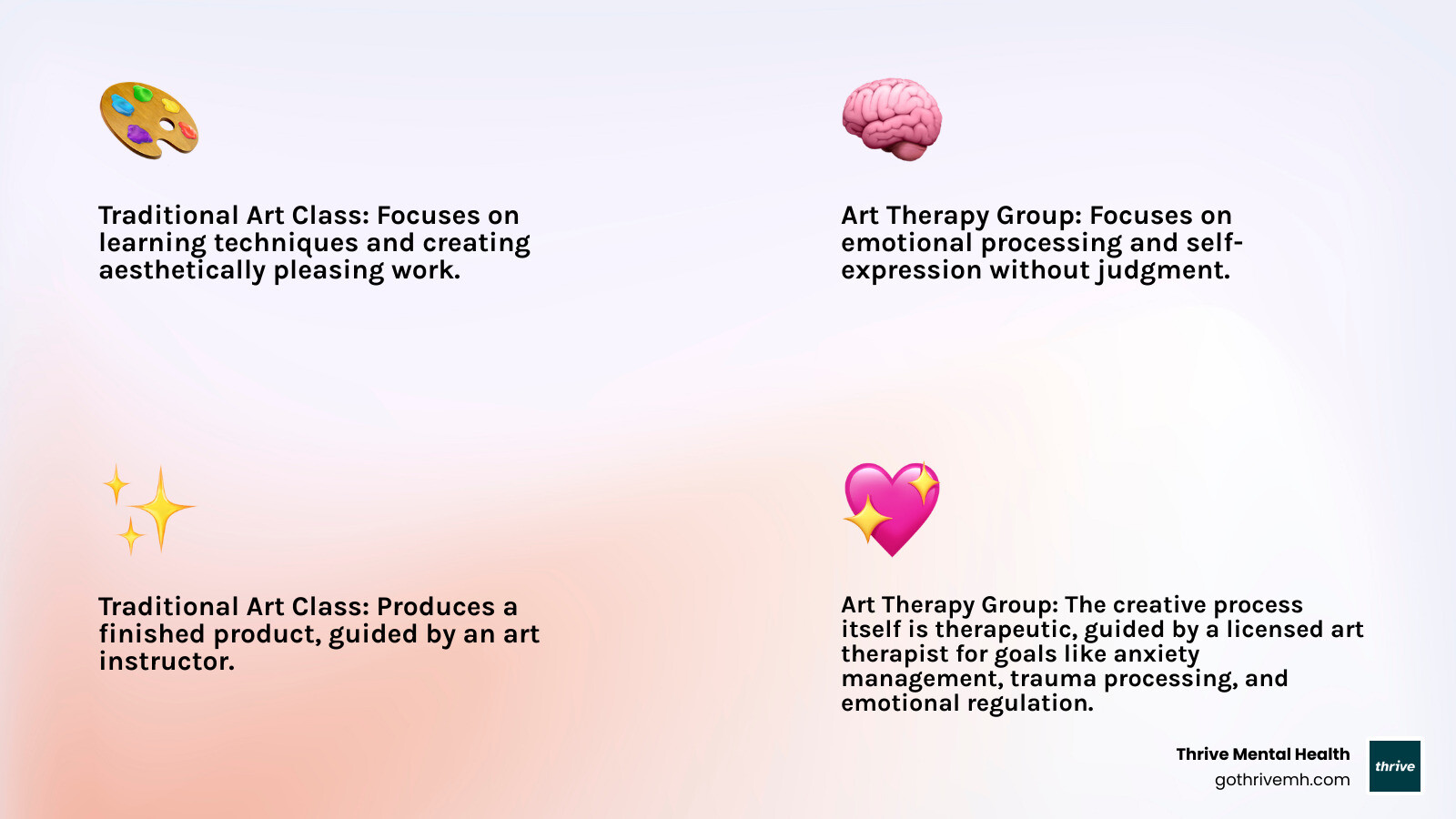
The key difference? In a regular art class, you learn technique to create something beautiful. In art therapy, the process is the point—what you find while creating matters more than the finished piece.
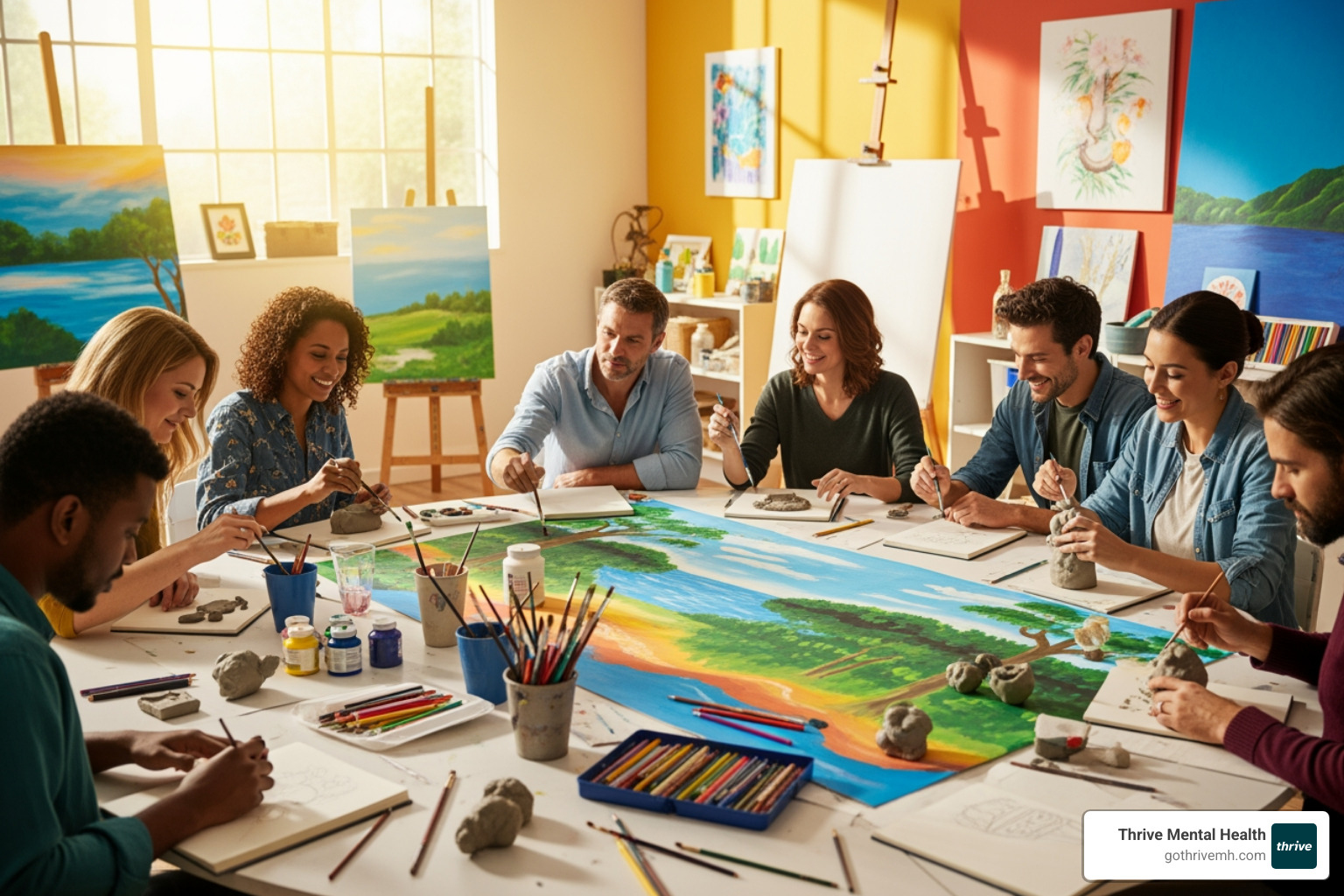
Group art therapy combines the healing power of creative expression with the strength of shared experience. When one person adds a sunset to a collaborative mural while another adds a city skyline, something unexpected happens: connection without explanation, understanding without words.
I’m Nate Raine, CEO of Thrive Mental Health, and I’ve spent over a decade building evidence-based behavioral health programs that integrate innovative modalities like group art therapy activities for mental health into structured treatment. At Thrive, we’ve seen how creative expression accelerates healing—especially for young professionals and college-aged adults who’ve hit a wall with traditional talk therapy alone.
Relevant articles related to group art therapy activities for mental health:
- Find a program that focuses on the therapy of art for mental wellness.
- List providers that combine therapy and art in their treatment plans.
- art therapy for trauma recovery
Why Group Art Therapy Works [Backed by Science]
Art therapy is a powerful approach that combines creative expression with psychological theory, helping individuals heal from trauma, stress, and behavioral issues. Coined by British artist Adrian Hill in 1942, art therapy, as defined by the American Art Therapy Association, blends traditional therapy techniques with the creative process of making art. It’s a journey of self-findy and healing that can be applied effectively across all ages and in diverse settings, including our Intensive Outpatient (IOP) and Partial Hospitalization (PHP) programs at Thrive Mental Health.
The benefits of engaging in group art therapy activities for mental health are wide-ranging, touching on psychological, physical, and sociological aspects of well-being. This isn’t just about making pretty pictures; it’s about open uping deeper understanding and fostering resilience.
How is art therapy different from just talking?
Traditional psychotherapy often relies heavily on verbal conversation and analytical methods. While effective, words can sometimes fail us, especially when we’re struggling, facing a challenge, or experiencing a health crisis. This is where art therapy steps in.
Art therapy offers a non-verbal avenue for expression and communication. Instead of finding the right words, you can use colors, shapes, textures, and forms to convey thoughts and emotions that might be difficult to articulate verbally. This process allows us to access our subconscious, explore emotions, and gain insights without the pressure of verbal defenses. The creative process itself can be a meditative and soothing practice, helping us externalize internal conflicts and find new perspectives.
For instance, when a client feels overwhelmed by anxiety, drawing what that anxiety looks like can be more immediate and revealing than trying to describe it. This visual representation then becomes a starting point for deeper conversations and understanding within the therapeutic context. It’s a way to transform complex feelings into something tangible, making them easier to examine and process.
What are the social and physical benefits?
Beyond the psychological insights, group art therapy activities for mental health offer significant social and physical advantages:
- Reduced Isolation and Improved Communication: In a group setting, art making can bridge communication gaps, especially for individuals who struggle with verbal expression. It creates a shared experience, fostering social interactions and mutual support. We’ve seen participants, from young professionals to adults in our Florida programs, build trust and empathy as they witness others express themselves creatively.
- Sense of Belonging and Mutual Support: Group art therapy fosters a sense of belonging and community. Participants realize they are not alone in their struggles, leading to increased empathy and a supportive environment where vulnerability is welcomed. This shared journey can be incredibly validating and empowering.
- Physical Engagement and Stress Reduction: Engaging with art materials like clay, paint, or drawing tools can improve hand-eye coordination and fine motor skills. The act of creation is also deeply sensory, which can be grounding and calming. Manipulating materials, especially for those with depression, can provide a tangible sense of accomplishment. Furthermore, the focus required for art making can release tension, reduce stress, and promote physical relaxation, offering a welcome respite from daily pressures.
The American Art Therapy Association supports research demonstrating that these techniques significantly improve mental health, emotional regulation, and overall engagement, contributing to a holistic healing process.
15 Group Art Therapy Activities for Mental Health [Step-by-Step]
At Thrive Mental Health, we integrate a variety of group art therapy activities for mental health into our IOP and PHP programs. These activities are carefully selected and adapted by our licensed art therapists to meet diverse therapeutic goals, helping adults and young professionals in our Florida-based programs to steer their healing journeys.
Activities for Anxiety & Depression
These activities are designed to calm the mind, process difficult emotions, and provide a sense of control and accomplishment.
- Mandala Drawing: This ancient practice involves creating or coloring circular designs. Research shows that mandala drawing reduces negative emotions in its creators. The repetitive nature and focus required can induce a meditative state, promoting calm and self-reflection. We provide templates or encourage freehand designs, allowing for personal expression within a structured form.
- Mindful Doodling: There are no expectations for a cohesive drawing here. Participants simply make marks on paper, focusing on the sensation of creating. This activity encourages present-moment awareness and can be incredibly stress-reducing, allowing feelings to flow onto the page without judgment.
- Painting to Music: Participants listen to calming or evocative music and express the emotions it stirs through painting. This non-verbal activity allows for emotional release and can help externalize feelings that are hard to describe, fostering a deeper connection between emotion and physical expression.
- Clay Sculpting: Working with clay is a highly tactile and grounding experience. Participants mold and shape clay to represent their emotions, abstract inner states, or even re-create something that brings them joy. The physical act of manipulating the clay can be cathartic and provides a sense of accomplishment, acting as a powerful metaphor for personal growth.
- Panic Book Creation: This activity involves creating a small, personal book filled with images, words, colors, and textures that evoke calm, safety, and joy. It serves as a tangible tool for individuals to use during moments of anxiety or panic, providing a quick and accessible source of comfort and grounding.
- Zentangle Patterns: Similar to mindful doodling, Zentangle involves creating intricate patterns in a structured, repetitive way. This activity is calming, meditative, and helps improve focus, pushing anxious thoughts to the background.
Activities for Trauma & Grief
Art provides a safe and symbolic space to process difficult memories, express loss, and build resilience. These activities are particularly effective in a trauma-informed approach, which we prioritize at Thrive Mental Health. You can learn more about our approach to art therapy for trauma recovery.
- Memory Boxes: Participants decorate a box and fill it with objects, images, or written memories that honor a loved one or a significant past experience. This activity provides a tangible way to process grief, maintain connection, and create a personal sanctuary for cherished memories.
- Lifeline Drawing: On a long piece of paper, participants draw a line from “birth” to “now.” They then mark significant high and low points, noting the corresponding ages and feelings. Sharing these “lifelines” in a group can foster empathy and help individuals see patterns of resilience and growth.
- Torn Drawing Reconstruction: This powerful activity involves drawing an image related to a difficult experience or emotion, then tearing it into pieces. The pieces are then reconstructed, perhaps adding new elements or rearranging them, symbolizing the process of integration and healing after rupture. This is excellent for trauma or grief work, helping individuals to reclaim and re-story their experiences.
- Unsent Postcards: Participants create a postcard with an image and a message (which they don’t have to send) to someone with whom they have unresolved feelings or to a past event. This allows for the release of negative emotions and provides a sense of closure or expression without direct confrontation.
- Creating a “Safe Place” Image: Participants visualize a place where they feel completely safe, calm, and secure. They then draw or paint this safe place, incorporating details that improve the feeling of safety. This visual anchor can be used for grounding during moments of distress, a key component in trauma recovery.
- Group Mural of Resilience: The group collaboratively creates a large mural depicting themes of resilience, strength, and overcoming adversity. Each participant contributes elements that symbolize their personal journey or collective strength. This activity fosters a sense of shared purpose and mutual empowerment, highlighting the ability to thrive even after challenges. You can find more info about trauma-informed expressive arts that guide such activities.
Activities for Self-Esteem & Emotional Regulation
These activities encourage self-reflection, build confidence, and help individuals understand and manage their emotional landscape.
- Inside/Outside Bags or Boxes: Participants decorate the outside of a bag or box with images and words representing how they present themselves to the world (their public persona). The inside is decorated with images and words reflecting their inner qualities, feelings, or hidden aspects. Sharing these can spark honest conversations about authenticity and self-perception.
- Prompts for Inside/Outside Box Activity:
- What qualities do you show to the world?
- What inner qualities are hidden to most people?
- What influences which parts of yourself you show to others?
- Are there aspects of your ‘inside’ that you’d like to express more openly?
- How does keeping certain parts hidden affect your connections with others?
- Prompts for Inside/Outside Box Activity:
- Emotion Wheels: Participants draw a large circle divided into sections, like a pie chart. Each slice represents a different emotion they’ve experienced, colored or drawn to reflect its nature (e.g., sharp reds for anger, deep blues for sadness, bright yellows for joy). This helps map emotional landscapes, fostering self-awareness and emotional regulation.
- Self-Portraits (Past, Present, Future): Participants create three self-portraits: one representing themselves in the past, one in the present, and one envisioning their future self. This exercise encourages reflection on personal growth, identity evolution, and aspirations, building a narrative of progress and hope.
- Mask Making: Participants create a mask that represents different emotions or aspects of their personality. A common technique is to paint how they think others see them on the exterior, while on the interior, they depict how they truly feel. This can be a powerful tool for exploring identity, self-perception, and the masks we wear.
- Lighthouse Activity: Participants visualize themselves lost at sea, then see a glimmer of light. They then draw or paint a lighthouse as a source of guidance, depicting themselves and words representing their guidance (e.g., faith, family, hope). This activity builds a personal symbol of hope and direction, especially for those feeling lost or overwhelmed.
- Compliment Wall: In a group setting, participants create small artworks or written notes of compliments they’ve received or given to themselves. These are then displayed on a shared “wall,” fostering a positive self-image and reinforcing self-worth through collective affirmation.
How to Run a Successful Group Session [Facilitator’s Checklist]
Facilitating group art therapy activities for mental health requires careful planning and a supportive environment. At Thrive Mental Health, our licensed art therapists are experts in creating safe, engaging spaces for healing in our virtual and in-person programs across Florida.
What materials and setup do you need?
Creating a conducive environment is paramount for effective group art therapy.
- Essential Materials:
- Paper (various sizes and types)
- Paints (acrylics, watercolors, tempera) and brushes
- Drawing tools (crayons, markers, colored pencils, pastels)
- Clay or modeling dough
- Collage materials (magazines, newspapers, fabric scraps, natural elements)
- Scissors, glue, and tape
- Optional: Play-Doh, glitter, yarn, pipe cleaners, found objects
- Creating a Safe Space: We cultivate a non-judgmental atmosphere where participants feel comfortable exploring their inner worlds. Establishing clear group rules and ensuring confidentiality from the outset builds trust. It’s crucial to explain that the art is for exploration, not diagnosis, and that there are no “right” or “wrong” ways to create.
- Arranging the Space: Ensure good lighting and enough space for everyone to spread out their materials comfortably. Consider accessibility for all participants, making sure materials are within reach and the environment is inclusive. A typical session duration is 60 to 90 minutes, allowing ample time for creation and processing. Group sizes can vary, but smaller groups (up to 15) often allow for more individual attention and deeper connection.
How do you foster connection and communication?
Collaborative art-making techniques are excellent for building rapport, enhancing social skills, and encouraging mutual support within a group.
- Collaborative Art-Making: This umbrella term covers various activities where participants work together on a shared piece. It demonstrates how different perspectives can merge beautifully into something none could have created alone.
- Round-Robin Art Making: Each person starts a piece of paper, draws or paints for a minute or two, then passes it to the next person to add to. This continues until the original piece returns to its creator. It teaches letting go of control, trusting the process, and responding to others’ contributions.
- Group Murals: The group works together on a large-scale mural, often centered around a theme relevant to their therapeutic goals (e.g., “Our Journey to Healing” or “Community Strength”). This fosters teamwork, shared purpose, and a sense of collective accomplishment.
- Pass-Around Drawing: Similar to Round-Robin, but with less emphasis on the original piece returning. It’s about contributing to an evolving artwork, highlighting the fluid nature of creativity and collaboration.
- Open-Ended Questions and Active Listening: The facilitator’s role is to guide the therapeutic process, not direct artistic technique. We use open-ended questions like “Tell me about your piece” rather than “What is that?” to encourage self-expression and deeper reflection. Active listening during sharing helps validate experiences and build empathy.
- Managing Group Dynamics: Our therapists are skilled at managing group dynamics, ensuring everyone has a voice and feels heard. We gently redirect discussions if they become unhelpful and hold a safe space for processing the artwork and the emotions that arise. We adapt activities based on the group’s energy and needs, always prioritizing therapeutic goals.
Frequently Asked Questions about Group Art Therapy
Do I need to be an artist to join a group?
Absolutely not! We hear this question often, and our answer is always the same: artistic skill is completely irrelevant to the healing power of group art therapy activities for mental health. The beauty of this modality lies in its accessibility. What truly matters is the process of creating, not the final product. The art is simply a language for expressing what’s inside, and everyone speaks that language in their own unique way. We focus on self-expression and self-awareness, not aesthetics or technique.
Is art therapy covered by insurance?
Often, yes! When provided by a licensed clinician as part of a structured treatment plan, such as in our Intensive Outpatient (IOP) or Partial Hospitalization (PHP) programs, many major insurance providers recognize art therapy as a legitimate mental health treatment. Providers like Cigna, Optum, and Florida Blue, which are common in Florida, where we operate, frequently offer coverage. However, coverage can vary depending on your specific plan. We always recommend verifying your benefits directly with your insurance provider to understand what’s covered.
What’s the difference between expressive arts therapy and art therapy?
While both are incredibly valuable, there’s a key distinction. Art therapy typically focuses on visual arts—think drawing, painting, and sculpting—as its primary mode of expression. It digs deep into the meaning and symbolism within visual creations. Expressive arts therapy, on the other hand, is a broader, multimodal approach. It integrates various art forms, including visual art, dance, music, drama, and creative writing, often combining them within a single session. The idea is to allow clients to move fluidly between different modalities based on what feels most expressive for them in the moment. At Thrive, we integrate elements of both, tailoring our approach to your individual and group needs.
Start Your Healing Journey—No Words Required
Group art therapy activities for mental health offer a unique and powerful pathway to healing, connection, and self-findy. We’ve seen countless individuals in our programs across Florida find their voice, process complex emotions, and build resilience through creative expression. Whether you’re managing anxiety, navigating trauma, or seeking to improve self-esteem and emotional regulation, art therapy provides a supportive and transformative experience. Our approach at Thrive Mental Health combines clinical expertise with flexible scheduling and measurable results, ensuring you receive comprehensive care designed for real-world impact.
Ready for support? Thrive offers virtual and hybrid IOP/PHP programs with evening options. Verify your insurance in 2 minutes (no obligation) → Start benefits check or call 561-203-6085. If you’re in crisis, call/text 988.