
The Ins and Outs of EMDR: Is It Right for Everyone?

Is EMDR Right for Everyone? The Science Behind the Debate
Why EMDR Sparks Heated Debate in Mental Health
Whether EMDR is right for everyone is a question that divides clinicians and patients alike—some call it a breakthrough, others call it overhyped. If you’re struggling with trauma, anxiety, or painful memories, you need real answers, not marketing fluff.
Quick Answer: Is EMDR Right for You?
EMDR may be right for you if:
- You have PTSD, trauma, anxiety, or panic attacks.
- Traditional talk therapy hasn’t worked fast enough.
- You want faster results in fewer sessions.
- You’re stable enough to process difficult memories.
EMDR may NOT be right for you if:
- You have active substance abuse or severe dissociation.
- You’re in immediate crisis (suicidal thoughts, active psychosis).
- You lack a safe living situation or support system.
- You need stabilization first (IOP/PHP may come first).
The evidence: Up to 90% of single-trauma survivors no longer meet PTSD criteria after EMDR. It’s endorsed by the WHO, APA, and VA—but it’s not a magic bullet.
EMDR (Eye Movement Desensitization and Reprocessing) is backed by over 30 randomized controlled trials. But the debate rages on—is the eye movement part essential? This guide cuts through the noise to give you the science, risks, and real-world results, including how to get covered by insurance in Florida.
I’m Nate Raine, CEO of Thrive Mental Health. We’ve seen when EMDR accelerates recovery and when other approaches work better. Let’s break it down.
Key EMDR Concepts:
- Somatic Therapy vs. EMDR: Which is Right For You?
- emdr therapy for grief
- Bilateral Stimulation vs EMDR: What’s the Difference?
What Is EMDR? [How It Works, Who It Helps]
EMDR—Eye Movement Desensitization and Reprocessing—is a therapy designed to help your brain reprocess traumatic memories that have become “stuck.”
When a traumatic event occurs, the memory can get frozen in your nervous system, triggering flashbacks, panic, and nightmares. EMDR is built on the Adaptive Information Processing (AIP) model, which posits that your brain has a natural healing system that trauma can overwhelm.
EMDR uses bilateral stimulation—typically side-to-side eye movements, taps, or tones—while you focus on a traumatic memory. This dual focus helps your brain reprocess the stuck memory, reducing its emotional charge and storing it in a less painful way. The debate over whether the eye movements are essential is ongoing, but the results are clear: EMDR works differently than most therapies.
- No detailed retelling: You don’t have to narrate the trauma out loud in excruciating detail.
- No homework: You’re not assigned journaling or exposure exercises between sessions.
- Faster relief: Many people see significant improvement in just 3–6 sessions for single-incident trauma. Complex trauma takes longer and often requires integrated care like Thrive’s Trauma & PTSD Treatment programs.
Research from the American Psychological Association shows EMDR is as effective as trauma-focused cognitive behavioral therapy, often with lower dropout rates because the process can feel less retraumatizing.
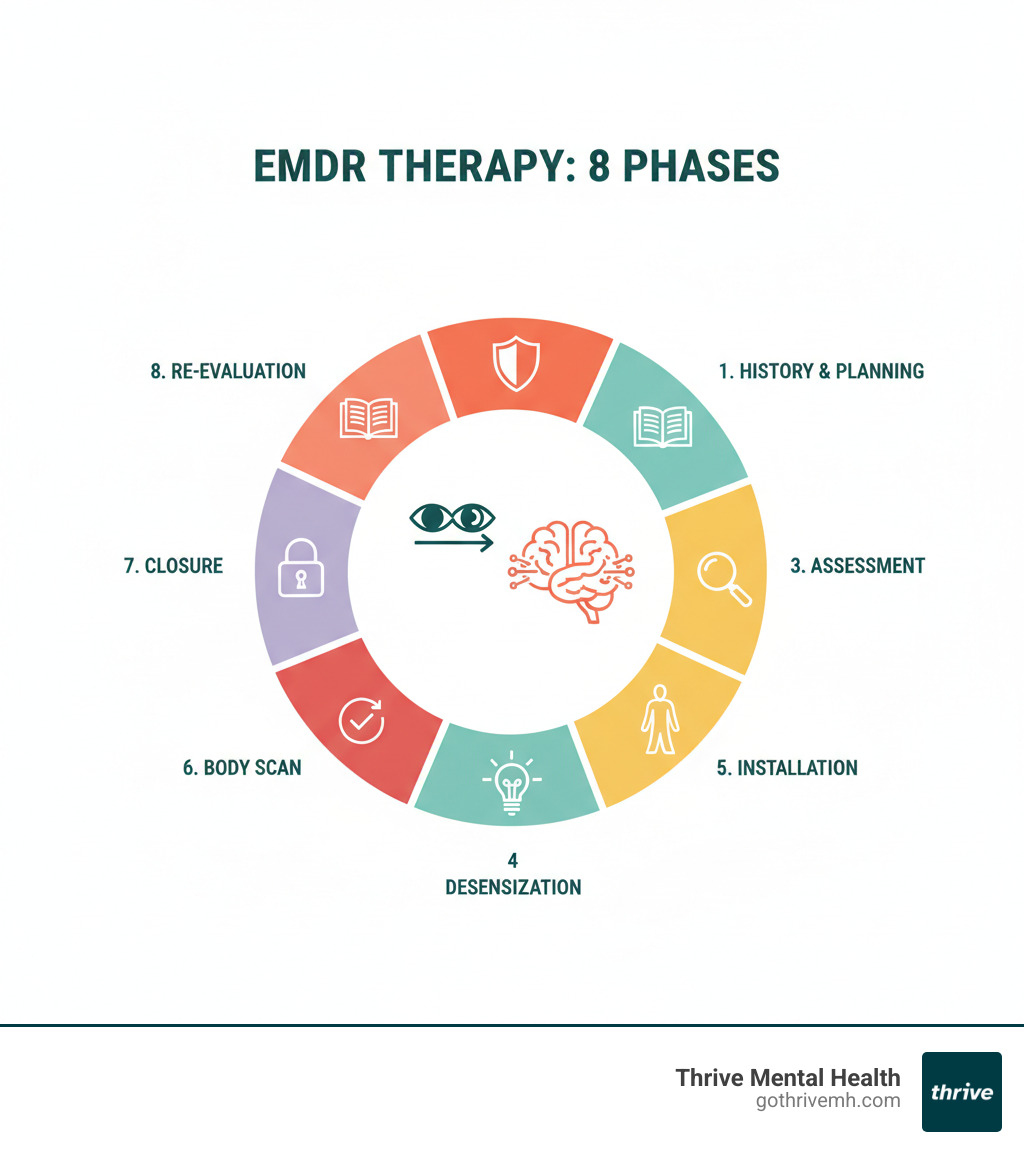
The 8 Phases of EMDR Therapy [Quick Breakdown]
EMDR is a structured, eight-phase protocol that ensures the process is safe and effective.
- History & Treatment Planning: Your therapist learns your history and identifies target memories.
- Preparation (Resourcing): You learn grounding techniques and coping skills to manage distress.
- Assessment: You identify the target memory’s image, negative belief, emotions, and body sensations.
- Desensitization: You hold the memory in mind while engaging in bilateral stimulation until the distress decreases.
- Installation: You strengthen a positive belief (e.g., “I am safe now”) using more bilateral stimulation.
- Body Scan: You scan your body for any remaining tension and use bilateral stimulation to release it.
- Closure: Each session ends with you feeling grounded and stable.
- Re-evaluation: The next session begins by checking on your progress and identifying the next target.
This structured approach makes EMDR safe for processing intense trauma. For comprehensive support, Thrive’s Virtual IOP and PHP programs integrate trauma therapy with group support and crisis care, so you’re never processing alone.
The Big Question: Is EMDR Right for Everyone? [Science vs. Hype]
The debate over EMDR’s universal suitability isn’t just academic—it’s a real tension between breakthrough results and lingering skepticism. Some therapists see it as a miracle, while others dismiss it as pseudoscience. The truth is, it’s a legitimate, evidence-based therapy that works powerfully for many, but it’s not a one-size-fits-all solution.
The biggest controversy is whether the bilateral stimulation (eye movements) is the secret sauce or just a distraction while exposure therapy does the real work.
At Thrive Mental Health, we are clinicians, not ideologues. EMDR is a key tool in our Trauma & PTSD Treatment programs in Florida, but we also integrate CBT, DBT, and somatic approaches. Our job is to match you with what works.
Does EMDR Really Work—Or Is It Just a Placebo?
Short answer: EMDR works. The debate isn’t if it works, but how.
The leading explanation is working memory taxation theory. Holding a distressing memory in your mind while performing a demanding task (like eye movements) overloads your working memory. This dual-task interference reduces the memory’s vividness and emotional intensity. It’s like trying to watch a horror movie while solving math problems—the fear doesn’t hit as hard. Research on eye movements and memory supports this, showing bilateral stimulation reduces the emotional intensity of distressing memories.
Critics have argued EMDR is just exposure therapy in disguise, but the evidence has shifted. EMDR is now endorsed as a first-line PTSD treatment by the World Health Organization (WHO), American Psychiatric Association (APA), and the U.S. Department of Veterans Affairs (VA). For your recovery, what matters most is that it works.
EMDR vs. Traditional Talk Therapy: What’s the Difference?
If you’ve felt stuck in talk therapy, EMDR offers a different path:
- Less talking, more processing: You don’t have to narrate your trauma in detail. The focus is internal, which many find less retraumatizing.
- No homework: Unlike CBT, EMDR processing happens in-session, reducing the burden on you.
- Faster results: Studies show up to 90% of single-trauma survivors no longer meet PTSD criteria after just three 90-minute sessions. Combat veterans saw 77% freedom from PTSD after 12 sessions.
- Lower dropout rates: People may be more likely to complete EMDR because they experience relief faster.
Why Is EMDR Controversial If It Works?
Despite its effectiveness, controversy lingers for three reasons:
- Rapid Adoption: EMDR spread quickly after its introduction in 1987, sometimes before research caught up, making scientists skeptical.
- Unclear Mechanism: The exact neurobiological process isn’t fully mapped, which makes some clinicians uncomfortable.
- Initial Skepticism: The idea of healing trauma by waving a finger sounded like a gimmick, and that early impression has been hard to shake.
However, the consensus from major health organizations is clear: EMDR is an effective treatment for PTSD. At Thrive, we focus on the real-world outcomes for our clients in Florida.
The Evidence: What Does Research Say About EMDR’s Effectiveness?
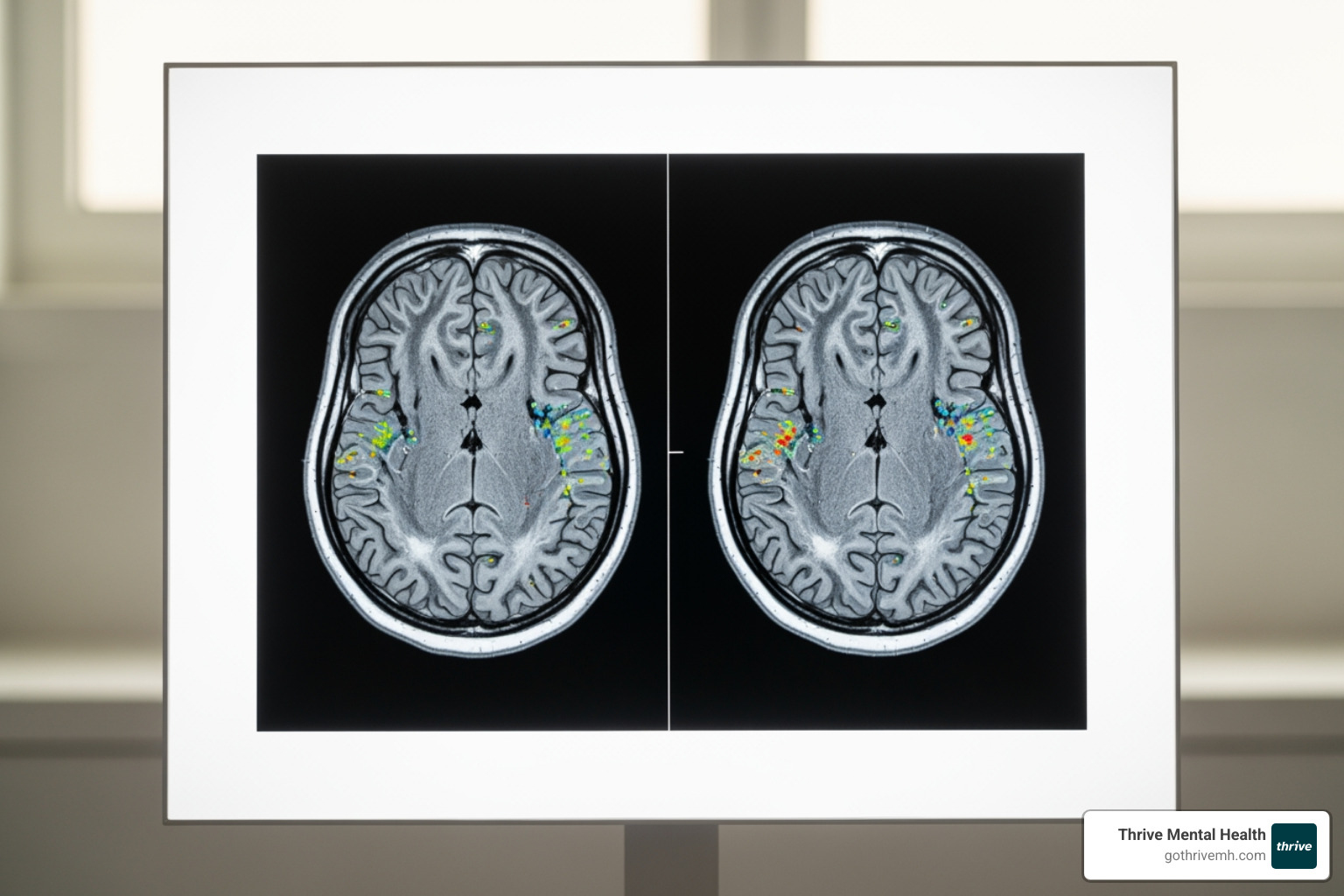
When you’re struggling, you want results, not theories. The research on EMDR is striking. Clinical trials show 84–90% of people with single-incident trauma no longer met PTSD criteria after treatment. One study found 100% of single-trauma survivors were PTSD-free after six 50-minute sessions.
The debate over EMDR’s effectiveness quiets when you look at the evidence. With over 30 randomized controlled trials, it’s endorsed by the World Health Organization (WHO), American Psychiatric Association (APA), and the U.S. Department of Veterans Affairs. These are the gold standard for mental health care.
When compared to other treatments like Cognitive Behavioral Therapy (CBT), EMDR is consistently found to be equally effective, often with faster results. A community-based study comparing EMDR and prolonged exposure confirmed its efficacy. Most people see significant relief in just 3–6 sessions.
Can EMDR Help with Anxiety, Depression, or Chronic Pain?
Yes. While developed for PTSD, research shows EMDR is effective for a broader range of conditions rooted in distressing life experiences.
- Complex PTSD (C-PTSD): Stemming from prolonged trauma like childhood abuse, C-PTSD responds well to EMDR, often without lengthy preparation.
- Anxiety Disorders: A systematic review found that reprocessing underlying memories significantly reduces symptoms of anxiety, panic attacks, and phobias.
- Depression: EMDR can be highly effective for depression linked to past trauma or adverse life events.
- Chronic Pain: EMDR can improve chronic pain, especially when it has a psychological component worsened by trauma.
At Thrive Mental Health, we integrate EMDR into our Virtual IOP and PHP options in Florida. This holistic approach ensures you get the right combination of therapies for your recovery.
Who Should AVOID EMDR? [Risks, Contraindications, and Safety]

The hard truth is that EMDR isn’t right for everyone. It’s a powerful therapy that requires a solid foundation. At Thrive Mental Health, your safety is our priority, which is why we conduct thorough assessments before beginning any trauma work.
When EMDR Might Not Be Safe [Key Contraindications]
EMDR may not be appropriate if you are currently experiencing:
- Active substance use disorder: A clear mind is needed to process emotions. We often address substance use first in our IOP or PHP programs.
- Severe dissociative symptoms: If you frequently “check out” or lose time, you may need to build grounding skills first to stay present during sessions.
- Active psychosis or an unstable living situation: Basic safety and stability must come first before processing past trauma.
- Lack of coping skills or support: EMDR can bring up intense emotions. A strong support system and coping strategies are essential.
- Immediate safety crisis: If you are actively suicidal or engaging in self-harm, stabilization is the immediate priority. If you’re in crisis, call/text 988 right now. You are not alone.
These are not permanent barriers but signals that foundational work is needed first. Many clients start with our Trauma & PTSD Treatment programs to build stability before moving into EMDR.
What Are the Potential Side Effects of EMDR?
Even when it’s a good fit, EMDR is hard work and can have temporary side effects. These are usually signs that your brain is actively healing.
- Temporary distress: You might feel worse before you feel better as disturbing thoughts or emotions surface. This typically fades within a day or two.
- Vivid dreams: Your brain continues processing between sessions, often during sleep.
- Emotional exhaustion: You may feel tired or foggy after a session, as if you’ve run a mental marathon.
- New memories surfacing: Processing one memory can sometimes open up related ones.
- Physical sensations: You might notice tingling or muscle tension as your nervous system recalibrates.
It is crucial to work with a licensed, EMDR-trained therapist. Self-administering EMDR is unsafe. At Thrive, our IOP and PHP programs in Florida provide the structured support and aftercare needed to steer this process safely.
FAQs: EMDR Therapy [People Also Ask]
How fast does EMDR work?
EMDR’s speed is a key feature. For single-incident trauma (like a car accident), many people see significant results in just 3–6 sessions. Complex trauma (like childhood abuse) takes longer and benefits from a comprehensive approach, such as integrating EMDR into an Intensive Outpatient (IOP) or Partial Hospitalization (PHP) program.
Is EMDR covered by insurance?
Yes. EMDR is widely covered by insurance when medically necessary for conditions like PTSD, anxiety, or depression. Most major plans, including Cigna, Optum, Florida Blue, Aetna, and UnitedHealthcare, recognize it as an evidence-based treatment. Thrive Mental Health is in-network with many providers in Florida. We can help you understand your coverage with no surprises.
Is EMDR better than talk therapy for PTSD?
Research shows EMDR is at least as effective as trauma-focused talk therapies like CBT, but often works faster and has lower dropout rates. This is partly because it doesn’t require you to verbally recount every painful detail. However, the “best” therapy is always the one that fits you. At Thrive, we tailor treatment to your unique needs.
Can I do EMDR on my own?
No. EMDR is a complex psychotherapy that can be overwhelming or even dangerous without the guidance of a trained professional. It must be administered by a licensed, EMDR-certified therapist who can ensure your safety and manage intense emotional responses. Attempting to do it yourself is unsafe and ineffective.
How do I find a qualified EMDR therapist?
Look for a licensed mental health professional (LCSW, LMFT, PhD, etc.) who has completed EMDRIA-approved training and has experience with your specific type of trauma. At Thrive Mental Health, our therapists are licensed, trained, and work within a comprehensive support framework. You can find a Thrive therapist in Florida to see if EMDR is the right fit.
Is EMDR Your Next Step? [How to Decide, What to Do Now]

You’ve read the research and understand the risks. So, is EMDR your next move? Ask yourself:
- Are you stuck replaying a painful memory?
- Has talk therapy felt like spinning your wheels?
- Do you want faster relief?
If you’re nodding along, EMDR might be what you need. But first, a quick readiness check:
- Safety: Is your daily life and living situation stable and safe?
- Readiness: Are you willing to engage with difficult memories with professional support?
- Support: Do you have some coping skills and a support system in place?
- Coverage: Most major insurance plans cover EMDR. We are in-network with providers like Cigna, Optum, and Florida Blue in Florida. You can verify your insurance in 2 minutes.
At Thrive Mental Health, we integrate EMDR into comprehensive IOP and PHP programs, offering expert clinicians and structured support. Our flexible virtual and evening programs work around your schedule.
Wondering if EMDR is right for your specific situation? Find out if Thrive’s EMDR programs are right for you, or explore our convenient Virtual Therapy options. You might also find value in our related article on how the right level of care can accelerate healing.
The bottom line: EMDR isn’t magic, but for the right person at the right time, it can feel close. If you’re ready for something different, it might be time to take the next step.
Summary: Is EMDR Right for Everyone? [Key Takeaway]

So, is EMDR right for everyone? The debate isn’t about declaring a winner—it’s about finding what works for you. The evidence is clear: EMDR is a powerful, proven therapy backed by the WHO, APA, and VA. For many, it offers rapid relief with less talking and results you can feel in weeks, not months.
But EMDR isn’t a magic bullet. It’s not safe for those in active crisis or without a stable foundation. At Thrive Mental Health, we know EMDR is most effective when delivered within a comprehensive treatment plan, like our IOP or PHP programs.
Here’s the bottom line: EMDR is a proven, insurance-covered therapy that can deliver rapid relief from trauma and anxiety when used safely with the right support. It’s not for everyone, but for many, it’s a game-changer. You don’t have to stay stuck in painful memories.
Ready for support? Thrive offers virtual and hybrid IOP/PHP programs with evening options in Florida. Verify your insurance in 2 minutes (no obligation) or call 561-203-6085. If you’re in crisis, call/text 988.