
7 of the Best Websites for LGBTQIA+ Resources

LGBTQIA+ Resources: 7 Best Websites
Why Finding Affirming LGBTQIA+ Resources Can Change Your Life
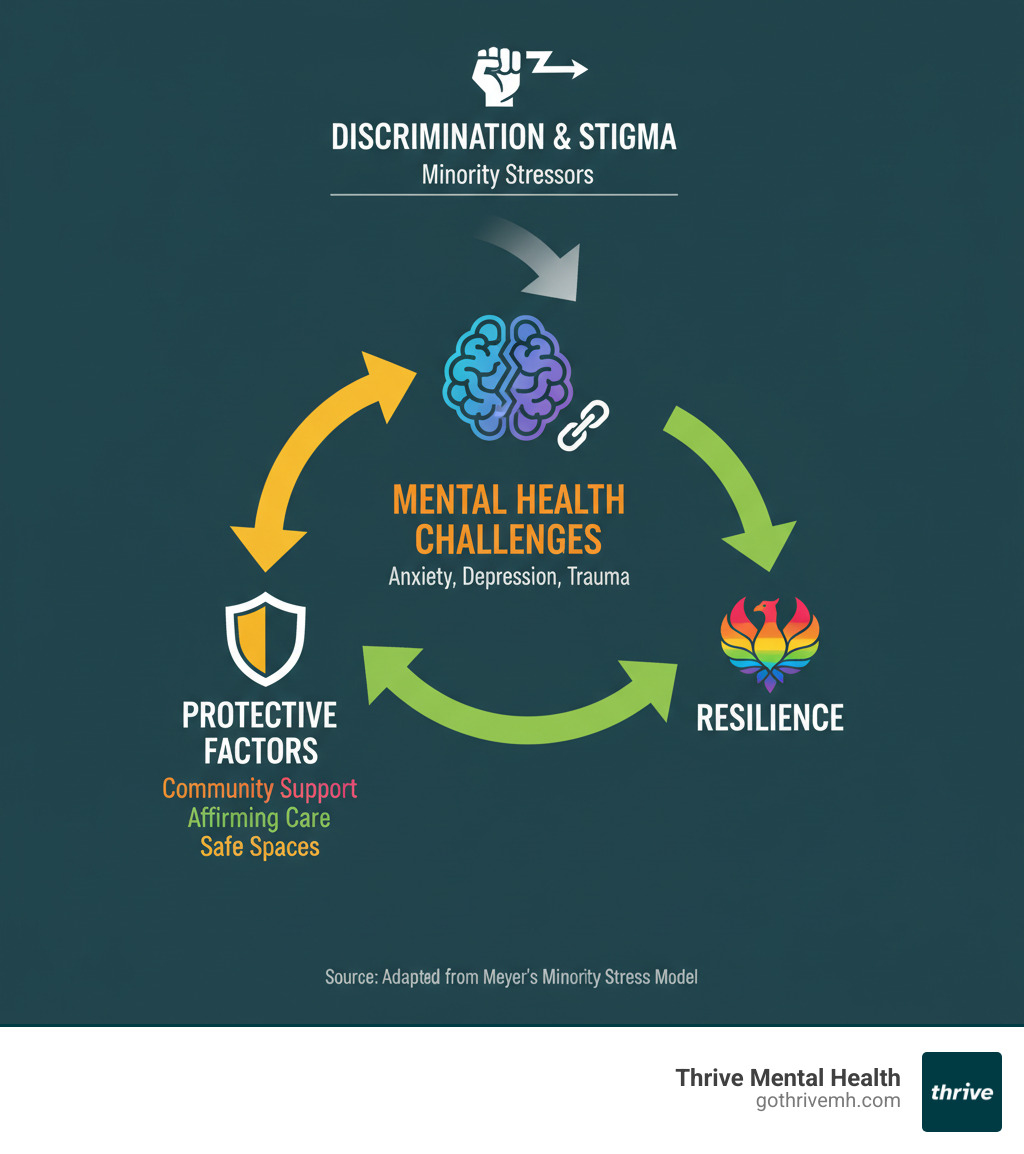
Finding support is critical when facing mental health challenges rooted in societal stigma and discrimination. These LGBTQIA+ Resources are essential lifelines:
- Crisis Support: The Trevor Project (24/7 for LGBTQ youth), 988 Suicide & Crisis Lifeline
- Family & Community: PFLAG (local chapters), CenterLink (community centers nationwide)
- Trans-Specific: National Center for Transgender Equality (legal, healthcare, ID changes)
- Workplace & Policy: Human Rights Campaign (inclusion guides, legislative advocacy)
- Schools: GLSEN (anti-bullying, GSA networks)
- Mental Health: Mental Health America (screening tools, affirming therapy directories)
The statistics are stark: Suicide is the second leading cause of death for young people (10-24). For LGBTQ youth, the numbers are even more alarming: 40% have considered suicide in the last year. These struggles aren’t caused by being LGBTQIA+; they’re caused by societal discrimination and rejection.
Research proves that with affirming care, supportive families, and inclusive communities, LGBTQ individuals thrive. Simple acts like using a trans youth’s chosen name significantly reduce suicide risk. Affirming therapy and safe spaces build a foundation for resilience.
The trans community faces intense challenges, with higher rates of mental health conditions than any other LGBTQ+ group. These aren’t just numbers—they’re people who deserve support.
Resilience runs deep in the LGBTQIA+ community. The organizations in this guide offer decades of proven support. Whether you need crisis intervention, legal guidance, or affirming mental healthcare, these seven resources can connect you to help.
I’m Nate Raine, CEO of Thrive Mental Health. For over a decade, I’ve focused on scaling access to behavioral healthcare for underserved populations. At Thrive, we integrate virtual and in-person care to ensure everyone can access evidence-based, affirming treatment.
Essential LGBTQIA+ Resources terms:
The Trevor Project: 24/7 Crisis Support for LGBTQ Youth
[CALLOUT BOX] If you are in crisis or thinking about suicide, call or text 988 to reach the Suicide & Crisis Lifeline. You are not alone.
For a young LGBTQ person struggling with depression, anxiety, or suicidal thoughts, the night can feel impossibly dark and lonely. The Trevor Project exists for this exact reason.
With 40% of LGBTQ youth seriously considering suicide in the past year, the need for immediate, affirming support is critical.
The Trevor Project provides 24/7 crisis intervention for LGBTQ youth under 25 via phone, text, or online chat. Their trained counselors understand and affirm your identity without judgment. They get it.
What makes The Trevor Project different is its deep understanding of minority stress—the mental health burden caused by discrimination and rejection. Their counselors know the crisis isn’t your identity; it’s how society treats you.
Beyond crisis support, their website offers extensive LGBTQIA+ Resources, including guides on coming out and self-care. They also run TrevorSpace, an international social network for LGBTQ youth to connect with peers.
The Trevor Project also provides guidance on how to help a friend or loved one. Research is clear: supportive, accessible resources dramatically reduce suicide risk and help young LGBTQ people thrive.
The Trevor Project: Crisis Intervention and Suicide Prevention

PFLAG: Uniting Families, Allies, and LGBTQIA+ People
Having just one accepting adult can dramatically lower an LGBTQIA+ young person’s suicide risk. PFLAG exists to help parents, families, and friends become those accepting adults.
As the first and largest organization of its kind, PFLAG unites LGBTQIA+ people with families and allies. They know family acceptance is life-saving and a key protective factor against mental health challenges caused by stigma.
The power of family support is immense. Acceptance improves mental health outcomes, reduces depression and anxiety, and builds resilience against discrimination.
PFLAG’s local chapters offer irreplaceable peer support meetings for families to share experiences and ask questions in a non-clinical setting. These gatherings foster honest dialogue and growth for parents, siblings, and LGBTQIA+ individuals alike.
The organization also provides extensive educational resources and advocacy tools, including a glossary of terms and guides on using correct pronouns and challenging discrimination. They teach allies how to show up effectively and advocate for inclusive policies.
For those seeking LGBTQIA+ Resources to strengthen family bonds, PFLAG is essential. They recognize that healing happens in relationships, and when families learn together, everyone benefits.

National Center for Transgender Equality (NCTE): Trans-Specific LGBTQIA+ Resources
The transgender community faces higher rates of mental health challenges than any other LGBTQ+ group due to relentless discrimination and barriers to care. With 49% of trans students reporting sexual harassment, it’s a crisis of safety and dignity.
The National Center for Transgender Equality (NCTE) is a leading advocacy organization working to advance transgender equality through policy change and education.
NCTE provides invaluable, practical guidance on challenges like changing identity documents (birth certificates, driver’s licenses). Their website is a comprehensive hub for transgender rights and legal services, making an overwhelming process manageable.
NCTE also champions access to gender-affirming healthcare, offering resources on insurance coverage and finding affirming providers. This is critical, as anti-trans legislation has a severe negative impact on the mental health of trans and nonbinary youth.
These are the LGBTQIA+ Resources that don’t just inform—they protect, advocate, and affirm the dignity of transgender lives.
National Center for Transgender Equality
How do I find affirming healthcare as a trans person?
Finding affirming healthcare can be difficult, but there are concrete steps you can take to find competent and respectful providers.
Start by seeking out informed consent clinics to access gender-affirming care (like hormones) without unnecessary psychological evaluations, respecting your autonomy. Familiarize yourself with the WPATH Standards of Care, the accepted guidelines for trans healthcare, to help you vet potential providers.
Many insurance plans, including those from Cigna, Optum, and Florida Blue, now cover gender-affirming care, especially in states like Florida. Always call your provider to confirm specific services.
When searching for affirming therapists, look for providers who list experience with trans clients. Ask about their approach to gender identity and pronouns to ensure they can provide a safe space for you to cope with minority stress and steer transition.
Research proves affirming care improves mental health. At Thrive Mental Health, we provide culturally responsive and affirming care because you deserve providers who prioritize your well-being.
More info about LGBTQIA+ affirming care

Human Rights Campaign (HRC): Driving Change in Workplaces and Beyond

For many LGBTQIA+ individuals, the workplace is a source of stress. An employer’s commitment to inclusion makes the difference between a toxic environment and a space of belonging.
The Human Rights Campaign (HRC), the largest LGBTQIA+ civil rights organization in the U.S., drives change with its Corporate Equality Index (CEI). The CEI rates businesses on their LGBTQIA+-inclusive policies, from non-discrimination to trans-inclusive healthcare. If you’re job hunting in Florida, a company’s CEI score reveals its true commitment beyond a rainbow logo in June.
Beyond the workplace, HRC offers essential LGBTQIA+ Resources like coming-out guides and legislative scorecards. Understanding the laws in your state helps you make informed decisions about your life and safety.
HRC’s work proves that when workplaces combat discrimination, mental health improves. Inclusive benefits and a respectful environment allow LGBTQIA+ employees to thrive.
How can workplaces create more inclusive environments?
Creating an inclusive workplace is about building an environment where LGBTQIA+ employees can bring their whole selves to work without fear. Here are five ways to build a genuinely inclusive culture:
- Implement Comprehensive Non-Discrimination Policies: Explicitly protect employees based on sexual orientation, gender identity, and gender expression. Ensure these policies are clearly communicated and consistently enforced.
- Offer Inclusive Benefits: Provide healthcare that covers transgender-specific care, parental leave for all family structures, and domestic partner benefits.
- Support Employee Resource Groups (ERGs): Fund and provide executive sponsorship for LGBTQIA+ ERGs. They offer community, mentorship, and a direct line to leadership for advocating change.
- Normalize Pronoun Usage: Encourage the use of pronouns in email signatures, meeting introductions, and company profiles. This simple act signals respect and creates an inclusive atmosphere.
- Conduct Regular, Meaningful Training: Invest in ongoing diversity and inclusion training that addresses unconscious bias, microaggressions, and the specific challenges LGBTQIA+ employees face.
When organizations take these steps, they reduce discrimination and the mental health burden it creates.
CenterLink: Your Local LGBTQ+ Community Hub
Sometimes the most powerful LGBTQIA+ Resources are local. CenterLink connects you to over 300 LGBTQ+ community centers across the U.S., which serve as safe havens and hubs for social connection.
These centers offer affirming health services, including connections to medical and mental health providers, HIV/AIDS testing, and sexual health education. Centers in Florida provide crucial support for local communities, especially youth.
Centers provide vital programs for all ages. Youth programs offer safe spaces for exploration and support, while senior services combat the isolation faced by many older LGBTQIA+ adults.
From a transgender support group in Phoenix to resources for QTBIPOC individuals in South Carolina, these centers meet diverse needs. They offer support groups, crisis referrals, legal aid, and local advocacy.
Many centers offer both virtual and in-person programs, providing flexibility. Whether you’re in a major city or a smaller town in Florida, CenterLink’s directory can help you find your local hub.
CenterLink: The Community of LGBT Centers
Where can I find local LGBTQIA+ Resources and support groups?
Use CenterLink’s directory to search by city and state. In Florida, for example, you can find centers like The Pride Center in Wilton Manors.
Once you find a local center, check their website or call to learn about their services, which often range from counseling referrals to social events. Look for specialized groups that fit your identity and life stage.
Decide if virtual or in-person support is best for you. Virtual programs offer accessibility, while in-person options provide direct community engagement.
A local center can reduce isolation and connect you to vital LGBTQIA+ Resources. For more structured support, Thrive Mental Health offers virtual and in-person IOP/PHP programs across Florida, with flexible scheduling and major insurance coverage through providers like Cigna, Optum, and Florida Blue.

GLSEN: Creating Safe and Affirming Schools for All Students
For too many LGBTQIA+ students, school is a source of fear and pain due to bullying and harassment, which leaves lasting scars on their mental health. A sobering 49% of transgender students report experiencing sexual harassment at school.
GLSEN (Gay, Lesbian & Straight Education Network) works to create safe and inclusive K-12 schools for all students by addressing policy, culture, and community.
At the policy level, GLSEN advocates for comprehensive anti-bullying policies that explicitly protect LGBTQIA+ students, ensuring schools take harassment seriously and respond effectively.
GLSEN also champions Gay-Straight Alliances (GSAs), which provide crucial peer support and create visible safe spaces. Research shows schools with GSAs have less harassment and better mental health outcomes for LGBTQIA+ students.
GLSEN provides extensive LGBTQIA+ Resources for educators, including training and materials on creating inclusive classrooms, using correct pronouns, and supporting trans and nonbinary students.
One of GLSEN’s most visible initiatives is the Day of Silence, a powerful annual student protest against the bullying of LGBTQIA+ students, raising awareness and prompting important conversations about the impact of discrimination.
Safer schools have an immediate, positive impact on student mental health, leading to lower rates of depression and anxiety. By empowering students and educators, GLSEN improves one of the most critical environments in a young person’s life.
GLSEN: Championing LGBTQ issues in K-12 education
Mental Health America (MHA): A Hub for LGBTQ+ Mental Wellness
Mental Health America (MHA) focuses specifically on LGBTQ+ mental health. It’s crucial to understand: being LGBTQ+ is not a mental illness. However, societal stigma and discrimination create real mental health challenges, leading to higher rates of depression and anxiety, particularly among youth and the trans community.
MHA’s LGBTQ+ Mental Health Resource Center offers practical tools to help you find affirming care. Their free, confidential mental health screening tools for depression, anxiety, and PTSD can be a powerful first step toward healing.
MHA provides valuable guidance on finding LGBTQ+-friendly therapy, including questions to ask potential therapists. They offer specific resources for QTBIPOC individuals seeking culturally competent care. Knowing what to look for when searching insurance networks like Cigna or Optum in Florida saves time and energy.
Beyond professional help, MHA also offers LGBTQIA+ Resources for self-support, including Q Chat Space, a safe online community for LGBTQ+ youth. Their articles cover topics from identity and coming out to body image and relationship diversity.
MHA emphasizes resilience and empowerment, recognizing that supportive environments are fundamental to well-being. Their resources aim to foster conditions where LGBTQIA+ people can thrive, offering accessible pathways to healing for residents in Florida.
LGBTQ+ Mental Health Resources from MHA
Frequently Asked Questions about LGBTQIA+ Resources
What are the biggest mental health challenges for the LGBTQIA+ community?
The biggest challenges stem from minority stress—the chronic stress caused by societal stigma, discrimination, and rejection. Family rejection is especially harmful. This leads to higher rates of depression, anxiety, and suicidality, particularly among youth and the trans community. It’s critical to remember the problem isn’t the identity; it’s the discrimination. With access to affirming care and supportive communities, LGBTQIA+ individuals thrive.
How can I find an LGBTQIA+ affirming therapist?
Finding an affirming therapist is crucial. Here’s how:
- Use online directories with filters for LGBTQ+ specialization. Look for bios that list pronouns and specific training.
- Ask local LGBTQ+ community centers (find them via CenterLink) for referrals in your area, including Florida.
- Interview potential therapists. Ask about their experience with LGBTQIA+ issues and minority stress.
- Check your insurance. Providers like Cigna, Optum, and Florida Blue often cover affirming care. Thrive Mental Health’s LGBTQIA+ affirming care programs are in-network with major providers.
Affirming care improves mental health outcomes. You deserve a therapist who celebrates you.
What free resources are available for immediate help?
If you are in crisis, free, immediate help is available:
- 988 Suicide & Crisis Lifeline: Call or text 988 for 24/7 confidential support.
- The Trevor Project: LGBTQ youth can call 1-866-488-7386, text START to 678-678, or use the online chat at thetrevorproject.org for 24/7 crisis support.
- Local LGBTQ+ Centers: Many operate free hotlines for crisis support and warmlines for non-emergency emotional support.
For more structured care, intensive outpatient programs like those at Thrive Mental Health offer a higher level of support while you maintain your daily life. You are not alone.
Your Path to Deeper Healing Starts Here
Finding the right LGBTQIA+ Resources is a critical first step—but sometimes, it’s not enough. If you’ve been struggling with anxiety, depression, or trauma rooted in minority stress, and weekly therapy sessions aren’t giving you the support you need, you’re not alone. Many people in our community need something more structured, more intensive, and more comprehensive to truly heal.
That’s where intensive outpatient programs (IOP) and partial hospitalization programs (PHP) come in. These programs offer the depth of care you need without requiring you to step away from your life completely. You get evidence-based treatment, group support, and the structure to make real progress—while still sleeping in your own bed at night.
At Thrive Mental Health, we’ve built our virtual and in-person IOP/PHP programs specifically for adults and young professionals who need this level of care. Our programs are affirming and inclusive of the LGBTQIA+ community, because we know that culturally responsive care isn’t optional—it’s essential. We offer flexible evening options so you can get the support you need without sacrificing your job, your education, or your responsibilities.
We’re in-network with major insurance providers like Cigna, Optum, and Florida Blue across Florida, making high-quality, affirming mental healthcare accessible where you are. Our mission is straightforward: make evidence-based treatment accessible anywhere, anytime through expert-led virtual programs and trusted in-person centers.
Ready for support? Verify your insurance in 2 minutes (no obligation) → Start benefits check or call 561-203-6085. If you’re in crisis, call/text 988.