
Mental Health Partial Hospitalization Programs Made Simple

Is Weekly Therapy Not Enough? Here’s What Comes Next
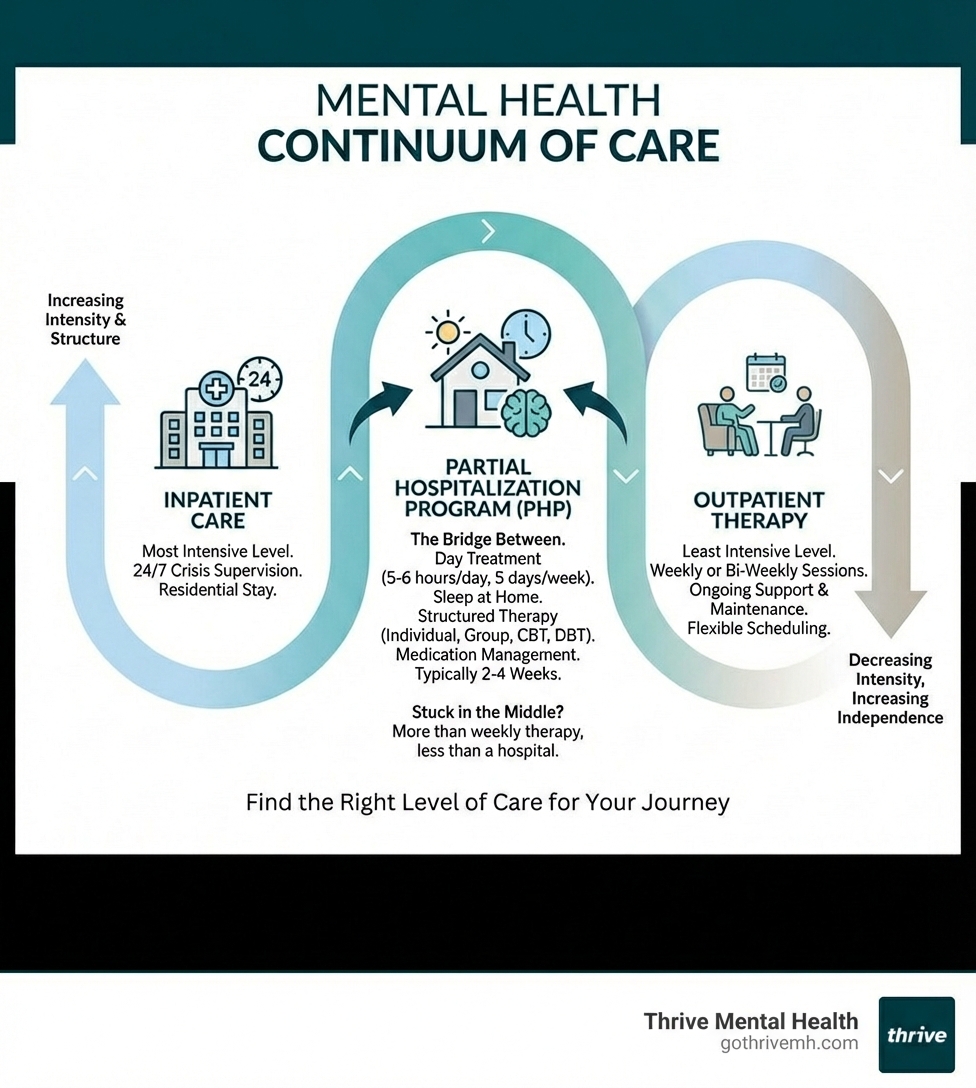
Partial hospitalization mental health programs exist for a reason most people don’t talk about: sometimes weekly therapy isn’t enough, but you’re not sick enough to check into a hospital. You’re stuck in the middle—struggling to function at work or school, managing symptoms that feel overwhelming, but not in immediate crisis.
Here’s what you need to know:
- What it is: Partial Hospitalization Programs (PHPs) provide 5-6 hours of structured treatment per day, 5 days a week, while you sleep at home each night
- Who it’s for: Adults who need more than outpatient therapy but don’t require 24/7 inpatient supervision
- What you get: Individual therapy, group sessions, medication management, and evidence-based treatments like CBT and DBT
- How long: Typically 2-4 weeks, followed by a step-down to less intensive care
- The difference: More intensive than weekly therapy, less restrictive than a hospital stay
If you’re reading this, you’re likely asking yourself whether you need more help than your current therapist can provide. Maybe you’ve had multiple crisis episodes. Maybe you can’t get out of bed most days. Maybe your symptoms are getting worse despite months of traditional therapy.
You’re not broken. You just need the right level of care.
As Nate Raine, CEO of Thrive Mental Health, I’ve spent over a decade building behavioral health systems that bridge the gap between crisis and recovery, including evidence-based partial hospitalization mental health programs designed for people who need real results fast. At Thrive, we’ve helped thousands of clients stabilize, build skills, and avoid hospitalization through our virtual and in-person PHP programs, with a primary focus on serving communities across Florida.
Handy partial hospitalization mental health terms:
What is a Partial Hospitalization Program (PHP) and Who Is It For?
A Partial Hospitalization Program (PHP) is a highly structured, time-limited outpatient treatment designed to provide intensive therapeutic care for adults experiencing significant mental health or substance use challenges. Think of it as a crucial “middle ground” in the mental health care continuum—more intensive than traditional outpatient therapy but less restrictive than inpatient hospitalization. Patients attend treatment for several hours each day, typically five days a week, but return to their own homes or a supportive living environment in the evenings.
The core purpose of a PHP is multifaceted: it serves as an effective alternative to psychiatric hospitalization, helping individuals stabilize acute symptoms without requiring 24/7 inpatient care. It can also function as a “step-down” program for those transitioning from an inpatient stay, providing continued intensive support as they reintegrate into their daily lives. Conversely, for individuals whose symptoms are too severe for standard outpatient therapy but don’t warrant full hospitalization, a PHP acts as a “step-up” to a higher level of care.
Historically, PHPs have been a vital part of mental health treatment since the mid-20th century. Pioneers like Dr. Albert E. Moll recognized the need for intensive treatment that allowed patients to maintain connections to their families and work, while also reducing the high costs associated with long-term inpatient care. The Community Mental Health Act of 1963 further cemented PHPs as a core component of community mental health services, leading to their widespread adoption across the United States. Today, PHPs are recognized for their ability to provide crisis stabilization, manage medication adjustments, and equip individuals with essential coping skills to prevent relapse and foster long-term recovery.
Want to dive deeper into what a PHP entails? Explore More info about PHP Mental Health Services.
Who is a good candidate for a partial hospitalization mental health program?
A partial hospitalization mental health program is ideal for individuals who are experiencing acute mental health symptoms that significantly interfere with their daily functioning but are not in immediate danger to themselves or others. This level of care requires a stable home environment and a willingness to engage actively in treatment.
Here are key indicators that a PHP might be the right fit for you:
- Struggling with daily tasks: You find it difficult to manage routine responsibilities like work, school, self-care, or household chores due to overwhelming mental health symptoms. Your ability to function independently is severely impaired.
- At risk of hospitalization: Your symptoms are escalating, and without intensive intervention, you might require inpatient hospitalization. A PHP can often serve as an effective diversion from inpatient care.
- Need for structure: You benefit from a highly structured daily routine and intensive therapeutic engagement to manage your symptoms and develop coping strategies.
- Stable home environment: You have a safe and supportive place to return to each evening, where you can apply the skills learned during the day and receive support from family or loved ones.
- Motivated for change: You are actively seeking to improve your mental health, willing to participate in various therapies, and committed to the program’s demanding schedule.
- Transitioning from inpatient care: You have recently completed an inpatient program and need a structured step-down to continue your recovery and practice new skills in a less restrictive setting.
What Conditions Can a PHP Treat?
Partial hospitalization mental health programs are designed to treat a wide range of mental health conditions and co-occurring disorders. Their intensive, structured environment makes them particularly effective for individuals who need comprehensive support to stabilize symptoms and build resilience.
At Thrive Mental Health, our Florida PHPs are equipped to address:
- Major Depressive Disorder: For individuals experiencing severe and persistent depressive episodes that significantly impact their daily lives, a PHP provides the intensive therapy and support needed to lift mood, develop coping mechanisms, and prevent relapse.
- Bipolar Disorder: PHPs can help individuals manage the extreme mood swings associated with bipolar disorder, providing stabilization during manic or depressive phases, medication management, and strategies for maintaining mood stability.
- Anxiety Disorders: Including Generalized Anxiety Disorder, Panic Disorder, Social Anxiety Disorder, and phobias. The structured environment and evidence-based therapies like CBT help individuals confront anxiety triggers, reduce symptoms, and regain control.
- PTSD and Trauma: For those struggling with the profound effects of trauma, PHPs offer a safe and supportive space to process experiences, learn coping skills, and reduce symptoms like flashbacks, hypervigilance, and avoidance. Learn more about More info about Trauma.
- Substance Use Disorders: When mental health struggles are compounded by addiction, PHPs provide integrated treatment, addressing both the substance use and underlying mental health conditions to support sustained recovery.
- Dual Diagnosis: Many individuals experience co-occurring mental health and substance use disorders. PHPs specialize in treating both simultaneously, leading to more holistic and effective outcomes.
- Personality Disorders: Conditions like Borderline Personality Disorder often benefit from the high level of intensity and containment offered by PHPs, which can provide specialized therapies like Dialectical Behavior Therapy (DBT).
A Day in the Life: What to Expect from a PHP [Schedule & Therapies]
Imagine a typical weekday in a partial hospitalization mental health program. It’s a full day, designed to immerse you in healing and skill-building, but with the comfort of returning home each evening. Most PHPs operate approximately 5 days per week, with programming lasting an average of 5 to 6 hours per day. This intensive schedule ensures you receive consistent, structured support to steer your challenges.
A typical day often begins in the morning and extends into the afternoon, filled with a variety of therapeutic activities. The structured environment is key to helping you stabilize symptoms, learn new coping mechanisms, and practice them in a supportive setting. While individual sessions are part of the program, treatment in a PHP is often heavily group-focused, fostering a sense of community and shared experience among participants.

What are the core components of a partial hospitalization mental health program?
The comprehensive nature of a partial hospitalization mental health program is defined by its core components, carefully designed to provide holistic care:
- Individual Therapy: You’ll engage in one-on-one sessions with a licensed therapist. These sessions provide a private space to explore personal issues, process emotions, and develop individualized coping strategies. Your therapist will help tailor your treatment plan and track your progress.
- Group Therapy: This is often the cornerstone of a PHP. Group sessions provide a powerful environment for peer support, shared learning, and practicing interpersonal skills. Research shows that group therapy can be just as effective as individual therapy for many mental health conditions, including depression, anxiety disorders, and personality disorders. We believe social support and community are key aspects of healing and recovery. Learn more about the benefits of this approach in our Evidence-Based Group Therapy Guide.
- Family Therapy: Mental health challenges often impact the entire family system. Family therapy sessions, when appropriate, involve loved ones to improve communication, resolve conflicts, and build a stronger support network. This is particularly crucial for adolescents and young adults, though valuable for all ages.
- Medication Management: For many, medication is a vital part of managing mental health conditions. PHPs include regular psychiatric evaluations and medication management with a psychiatrist or nurse practitioner. This ensures your medications are effective, appropriately dosed, and closely monitored for any side effects. Explore more about More info about Psychiatry Medication Management.
- Evidence-Based Modalities: PHPs use scientifically proven therapeutic approaches. These often include:
- Cognitive Behavioral Therapy (CBT): Helps you identify and change unhelpful thought patterns and behaviors.
- Dialectical Behavior Therapy (DBT): Focuses on mindfulness, emotion regulation, distress tolerance, and interpersonal effectiveness. DBT was originally developed for individuals with Borderline Personality Disorder but is highly effective for a range of conditions involving emotional dysregulation. Learn more about More info about Dialectical Behavior Therapy.
- Acceptance and Commitment Therapy (ACT): Encourages psychological flexibility by teaching you to accept difficult thoughts and feelings while committing to actions aligned with your values.
- Eye Movement Desensitization and Reprocessing (EMDR): An effective therapy for trauma and PTSD, helping to reprocess distressing memories.
- Life Skills Training: Many PHPs incorporate psychoeducational groups and workshops focused on practical skills like stress management, anger management, communication skills, problem-solving, and relapse prevention.
Who Is on the Treatment Team and How Long Does It Last?
At Thrive Mental Health in Florida, a partial hospitalization mental health program is delivered by a dedicated multidisciplinary team of mental health professionals working collaboratively under the direction of a physician. This team approach ensures comprehensive care that addresses all aspects of your well-being.
Your treatment team will typically include:
- Psychiatrist: A medical doctor specializing in mental health who oversees your overall treatment, conducts psychiatric evaluations, and manages your medication.
- Licensed Therapists: Including licensed professional counselors (LPCs), licensed clinical social workers (LCSWs), and licensed marriage and family therapists (LMFTs) who lead individual, group, and family therapy sessions.
- Nurses: Often registered nurses (RNs) who provide medical monitoring, administer medications, and offer support with health-related concerns.
- Case Managers: Professionals who help coordinate your care, connect you with community resources, and assist with discharge planning.
- Other Specialists: Depending on the program, you might also interact with expressive therapists (e.g., art or music therapists), occupational therapists, or peer support specialists.
The duration of a PHP can vary based on individual needs and the specific program. While some programs have an average length of stay of about two weeks, others may last typically 4 to 6 weeks, often followed by an additional 2 to 4 weeks of Intensive Outpatient Program (IOP) as a step-down. The goal is to provide enough intensive treatment to stabilize symptoms and equip you with lasting skills without unnecessary prolongation. The decision to transition out of a PHP is made collaboratively by you and your treatment team, based on your progress and readiness for a less intensive level of care. For more detailed insights into the structure and duration, you can read Psychiatric partial hospitalization programs: What you need to know.
PHP vs. Other Levels of Care: Finding the Right Fit
Understanding where partial hospitalization mental health programs fit within the broader mental health continuum of care is crucial for making informed treatment decisions. We offer a range of services, from PHPs to IOPs and virtual therapy, all designed to meet you where you are in your recovery journey. A key benefit of PHPs is their ability to prevent inpatient hospitalization for many individuals, offering intensive support while still allowing them to maintain their home life. This approach has shown to provide superior or equivalent recovery-based care with greater patient satisfaction compared to inpatient treatment. Patients and their families often report being more satisfied with PHP care one year after discharge than with inpatient discharge.

How Does PHP Compare to Inpatient and IOP?
To help you visualize the differences, here’s a quick comparison of the three most common intensive mental health treatment options:
| Feature | Inpatient Treatment | Partial Hospitalization Program (PHP) | Intensive Outpatient Program (IOP) |
|---|---|---|---|
| Hours/Week | 24/7 supervision | 25-30 hours (5-6 hours/day, 5 days/week) | 9-15 hours (3-4 hours/day, 3-5 days/week) |
| Living Situation | Reside at facility | Reside at home (or supportive living) | Reside at home |
| Intensity | Highest (24/7 medical and psychiatric care) | High (daily structured therapy, medical oversight) | Moderate (multiple weekly therapy sessions) |
| Medical Oversight | Constant | Daily psychiatric and nursing support | Less frequent psychiatric/nursing support |
| Ideal For | Acute crisis, immediate danger to self/others | Acute symptoms, step-down from inpatient, diversion | Moderate symptoms, step-down from PHP, maintain daily life |
PHP vs. Inpatient Benefits:
When compared to inpatient care, PHPs offer distinct advantages:
- Less Restrictive Environment: You maintain your autonomy and connections to your family, community, and daily life.
- Real-World Application: You can immediately practice the coping skills and strategies learned in therapy within your natural environment.
- Reduced Stigma: Many individuals find PHPs less stigmatizing than a full inpatient stay.
- Cost-Effectiveness: PHPs are generally more cost-effective than inpatient hospitalization because they do not involve overnight stays. This often translates to more days of coverage from insurance providers.
PHP vs. IOP Differences:
While both PHPs and IOPs are intensive outpatient options, their primary difference lies in the level of intensity and time commitment. PHPs are more intensive, requiring a greater number of hours and days per week, and typically offer a higher level of medical supervision with psychiatrists and nurses readily available. IOPs, on the other hand, are a step down, offering significant mental health support while allowing for greater flexibility to manage work, school, or family responsibilities. We explore these differences in depth in our article More info about IOP Program vs. PHP.
At Thrive Mental Health, we understand that accessibility is key. That’s why we offer More info about Virtual Partial Hospitalization Program options, bringing this vital level of care directly to your home throughout Florida. This flexibility allows you to receive intensive treatment without putting your life on hold.
The Practical Guide: PHP Admissions, Cost, and Life After
Navigating the process of entering a partial hospitalization mental health program might seem daunting, but we’re here to make it as straightforward as possible. The journey typically begins with a clinical assessment to determine if a PHP is the most appropriate level of care for your specific needs.
Admission requirements for a PHP generally include:
- Clinical Assessment: A thorough evaluation by a mental health professional to assess your symptoms, functional impairment, and suitability for the program.
- Medical Necessity: A determination that your condition requires the intensive, structured treatment offered by a PHP, and that you would otherwise be at risk for inpatient hospitalization.
- Stable Living Situation: Since you return home each evening, a safe and supportive home environment is crucial for your success in the program.
- Motivation to Participate: A willingness to commit to the demanding schedule and actively engage in all therapeutic components.
Many individuals or their loved ones can initiate the process through a self-referral by contacting a treatment provider directly. We encourage you to reach out to us at Thrive Mental Health to discuss your situation and explore if one of our Florida PHP programs is the right fit.
How Do Admissions and Insurance Work for PHPs?
Once you’ve decided to explore a PHP, the next steps involve a few practical considerations:
- Initial Evaluation and Referral: You’ll undergo an initial evaluation. While some programs accept self-referrals, many benefit from a doctor’s referral from your primary care physician or current therapist. This helps ensure continuity of care and appropriate placement.
- Insurance Verification: Understanding your insurance coverage is paramount. PHPs are considered a medical service, and most major health insurance plans provide coverage. This includes leading providers like Aetna, Cigna, Florida Blue, Blue Cross Blue Shield, UnitedHealthcare, and for eligible individuals, Medicare and Medicaid. We often see that insurance companies may authorize more days for a PHP than for inpatient or detox treatment, recognizing its cost-effectiveness and efficacy. It’s essential to verify your specific benefits early to understand any potential out-of-pocket costs, deductibles, or copays. At Thrive, we work with various insurance providers across Florida to make treatment accessible. You can learn more about how specific plans cover this level of care, such as More info about United Healthcare Partial Hospitalization.
- Program Challenges: While highly effective, PHPs are not suitable for everyone. Individuals experiencing severe acute psychosis, active mania, or who pose an imminent danger to themselves or others typically require the 24/7 supervision of an inpatient setting. The clinical assessment process will help determine the most appropriate level of care.
What Happens After Completing a PHP?
Completing a partial hospitalization mental health program is a significant achievement and a testament to your hard work and commitment to recovery. However, the journey doesn’t end there. A crucial aspect of any effective PHP is comprehensive discharge planning, designed to ensure a smooth transition to a lower level of care and sustain your progress long-term.
Here’s what you can expect after completing a PHP:
- Step-Down Care: The most common next step after a PHP is transitioning to an Intensive Outpatient Program (IOP). An IOP provides continued structured therapy, but with fewer hours per day and fewer days per week, allowing you to gradually reintegrate into your daily routines while maintaining essential support. Learn more about this next step in our guide to More info about Intensive Outpatient Programs (IOP).
- Relapse Prevention Plan: Your treatment team will work with you to develop a personalized relapse prevention plan. This plan identifies your triggers, outlines coping strategies, and specifies resources to access if you feel your symptoms returning.
- Individual and Group Therapy: You’ll likely continue with individual therapy sessions and may choose to participate in less intensive group therapy or support groups to maintain connections and practice skills.
- Medication Management: Ongoing medication management with a psychiatrist or primary care physician is essential to ensure continued stability.
- Aftercare Support: This might include connecting with community resources, support groups, or peer support specialists to build a robust network of ongoing care. The goal is to equip you with the tools and support systems needed for long-term mental wellness.
Frequently Asked Questions about Partial Hospitalization Programs
How much does a PHP cost with insurance?
Costs vary based on your plan and provider. Most major insurance plans, including Aetna, Cigna, and Florida Blue, cover PHP as a medical service. It’s crucial to verify your benefits beforehand to understand any deductibles or copays.
Can I work or go to school during a PHP?
It can be challenging due to the significant time commitment (typically 25-30 hours per week). However, some programs, especially Virtual PHP Treatment Programs, offer evening or flexible schedules designed for working professionals and students.
What is the main goal of a partial hospitalization program?
The primary goal is to provide intensive, short-term treatment to stabilize acute mental health symptoms, teach coping skills, and prevent the need for a full inpatient hospital stay. It helps you build a foundation for long-term recovery while remaining in your community.
Your Next Step to Intensive Healing
A Partial Hospitalization Program (PHP) is a powerful, effective level of care that bridges the critical gap between weekly therapy and 24/7 inpatient treatment. It offers the structure and intensity needed to manage acute symptoms and build lasting coping skills, all while allowing you to return to the comfort of your own home each evening. If you’re feeling stuck and need more support, a PHP could be the turning point in your recovery journey. Thrive Mental Health offers both in-person and virtual PHP options across Florida to fit your life.
Ready for support? Thrive offers virtual and hybrid IOP/PHP programs with evening options. Verify your insurance in 2 minutes (no obligation) → Start benefits check or call 561-203-6085. If you’re in crisis, call/text 988.