





When you’re living with a mood disorder, some days can feel like you’re trying to navigate through fog, everything seems harder, emotions feel overwhelming, and it’s difficult to remember what “normal” even feels like. Maybe you’ve experienced the crushing weight of depression that makes getting out of bed feel impossible, or perhaps you’ve ridden the unpredictable waves of bipolar disorder, never quite sure which version of yourself will show up tomorrow. You’re not alone in this experience, and more importantly, you’re not without options.
Mood disorders, including major depression, bipolar disorder, cyclothymic disorder, and persistent depressive disorder, are conditions that fundamentally affect how you experience emotions and engage with daily life. They impact relationships, work performance, physical health, and your sense of who you are. But here’s what you need to know: these conditions are highly treatable, and specialized mental health programs exist specifically designed to address the unique challenges mood disorders present.
This guide will walk you through exactly what mood disorder treatment programs provide, from the therapeutic approaches that form the foundation of care to the practical skills you’ll develop during treatment. Whether you’re considering treatment for yourself or supporting someone you love, understanding what these programs offer helps you make informed decisions about care. And let’s be clear from the start: reaching out for help isn’t a sign of weakness. It’s a courageous step toward reclaiming your life and emotional well-being.
The Building Blocks of Mood Disorder Treatment
Think of mood disorder treatment as building a house, you need a solid foundation made of multiple components working together. Quality mental health programs don’t rely on a single approach; instead, they combine several evidence-based therapeutic methods to address the complex nature of mood disorders.
At the core, you’ll typically engage in individual therapy sessions where you work one-on-one with a licensed therapist. These sessions provide a safe, confidential space to explore your specific experiences, identify patterns in your thoughts and emotions, and develop personalized coping strategies. Individual therapy allows your treatment to be tailored precisely to your situation, whether you’re dealing with treatment-resistant depression, managing bipolar episodes, or working through the persistent low mood of dysthymia.
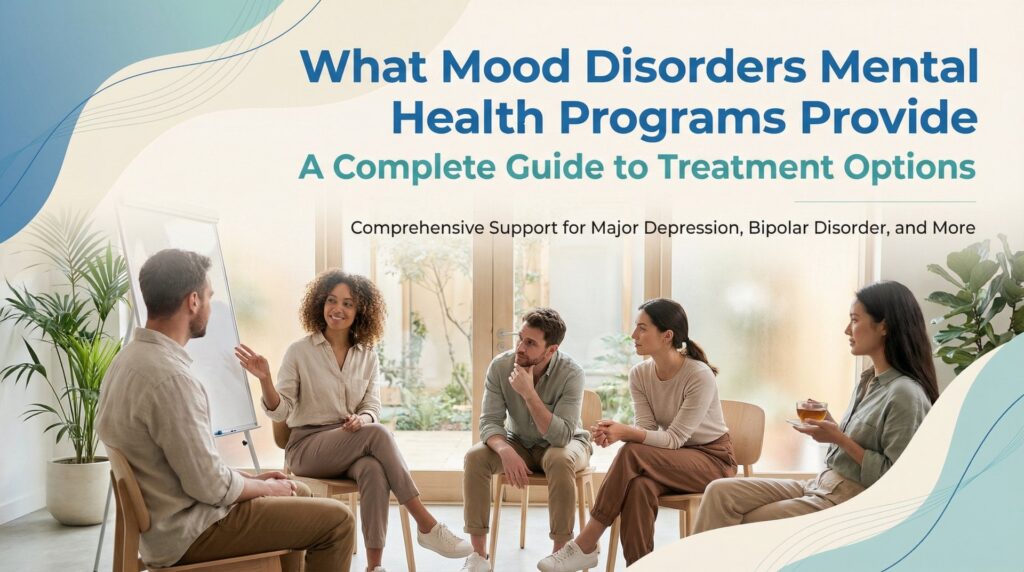
Group therapy forms another essential component. If you’re skeptical about sharing personal struggles with others, that’s completely understandable. But here’s what many people discover: sitting in a room with others who truly understand what you’re going through can be profoundly healing. Group sessions reduce the isolation that mood disorders create and provide opportunities to learn from others’ experiences while building connection and accountability.
Psychoeducation might sound clinical, but it’s actually one of the most empowering aspects of treatment. These sessions help you understand what’s happening in your brain and body when you experience mood episodes. You’ll learn to recognize early warning signs, understand triggers, and develop a framework for making sense of your experiences. Knowledge really is power when it comes to managing mood disorders.
Most comprehensive programs employ Cognitive Behavioral Therapy, which helps you identify and change the negative thought patterns that fuel mood disorders. CBT is particularly effective for depression, teaching you to challenge distorted thinking and develop more balanced perspectives. You might also encounter Dialectical Behavior Therapy skills, which focus on emotional regulation, distress tolerance, and interpersonal effectiveness, tools that prove invaluable when emotions feel unmanageable.
Interpersonal therapy addresses how relationship patterns and life transitions affect your mood. Since mood disorders often strain relationships and are sometimes triggered by interpersonal conflicts or losses, this approach helps you improve communication skills and navigate relationship challenges more effectively.
For many individuals, psychiatric evaluation and medication management form an important part of comprehensive care. A psychiatrist can assess whether medication might help stabilize your mood, and if so, monitor your response and adjust treatment as needed. Medication isn’t right for everyone, but for some people with mood disorders, it provides crucial support that makes therapy more effective.
Structured Support Through Different Program Levels
Not everyone with a mood disorder needs the same level of care. That’s why quality treatment programs offer different formats designed to meet you where you are in your journey.
Intensive Outpatient Programs, commonly called IOP, provide substantial support while allowing you to maintain your daily responsibilities. Typically, IOP involves nine to twelve hours of programming each week, often scheduled in blocks of three hours per session. You might attend three evenings a week from 6 to 9 PM, or perhaps three mornings from 9 AM to noon. This structure works well if you’re employed, caring for family members, or have other commitments you can’t set aside.
During an IOP session, you’ll participate in a combination of group therapy, skills training, and therapeutic activities. One day might focus on CBT techniques for managing depressive thoughts, while another emphasizes mindfulness practices and emotional regulation. The consistent schedule creates routine and accountability, both crucial when mood disorders disrupt your sense of structure.
Partial Hospitalization Programs represent a higher level of care for those who need more intensive support. PHP typically involves five to six hours of programming per day, five days a week. If you’re experiencing severe symptoms, struggling with safety concerns, or finding that less intensive treatment hasn’t been sufficient, PHP provides the structure and support you need without requiring overnight hospitalization.
A typical PHP day includes multiple therapy sessions, psychiatric appointments, group activities, and therapeutic meals where you practice skills in real-time. The extended hours allow treatment teams to observe patterns, provide immediate support during difficult moments, and help you develop coping strategies through repeated practice and reinforcement.
Virtual program options have transformed access to mood disorder treatment. If you live in a rural area without nearby mental health services, have transportation barriers, or simply function better in your own environment, virtual IOP and PHP programs deliver the same comprehensive treatment through secure video platforms. You’ll join group sessions from home, meet individually with your therapist online, and access the full range of therapeutic services without geographical limitations.
The flexibility of virtual care doesn’t mean reduced quality. You’re still receiving expert-led treatment, connecting with peers in group sessions, and building the same skills as in-person programs. For many people, the comfort of participating from home actually reduces anxiety and makes it easier to engage fully in treatment.
Personalized Care Plans Built Around Your Needs
The most effective mood disorder programs recognize that your experience is unique. Two people with the same diagnosis might need completely different treatment approaches based on their symptoms, life circumstances, and personal goals.
Your treatment journey begins with a comprehensive assessment. During intake, clinical staff will ask detailed questions about your symptoms, history, current functioning, support systems, and what you hope to achieve through treatment. This isn’t about judgment, it’s about gathering the information needed to design care that actually works for you. You might meet with a therapist, psychiatrist, and other team members who each contribute their expertise to understanding your situation.
Based on this assessment, your treatment team develops an individualized care plan. This isn’t a generic template; it’s a roadmap specifically created for your recovery. Your plan identifies primary treatment goals, outlines which therapeutic approaches will be emphasized, establishes measurable objectives, and creates a timeline for reassessing progress.
Many people with mood disorders also experience co-occurring conditions. You might be dealing with anxiety alongside depression, or managing substance use issues that developed as you tried to cope with bipolar symptoms. Perhaps you have a trauma history that influences your mood patterns. Quality programs provide integrated dual-diagnosis treatment, addressing all conditions simultaneously rather than treating them in isolation.
This integrated approach matters because mood disorders rarely exist in a vacuum. Treating depression without addressing the anxiety that triggers it, or managing bipolar disorder without attending to co-occurring PTSD, leaves significant gaps in care. Comprehensive mental health services have the expertise to address the full picture of your mental health.
Your treatment plan isn’t static. As you progress through recovery, your needs change. The crisis that brought you to treatment begins to stabilize, you develop new skills, and different challenges emerge. Regular treatment team meetings review your progress and adjust your plan accordingly. Maybe you’re ready to reduce program intensity, or perhaps you need to add a specific therapeutic intervention. This adaptive approach ensures treatment remains relevant and effective throughout your journey.
Skills and Strategies That Change Your Daily Life
One of the most valuable aspects of mood disorder programs is learning practical skills you’ll use long after treatment ends. These aren’t abstract concepts, they’re concrete tools that change how you navigate daily life.
Emotional regulation techniques form the foundation of managing mood disorders. You’ll learn to identify emotions as they arise, understand what triggers them, and choose how to respond rather than being swept away by intense feelings. This might include grounding exercises that bring you back to the present moment when anxiety spikes, or opposite action skills that help you do the opposite of what depression tells you to do.
When depression whispers that you should isolate yourself, opposite action means reaching out to a friend. When anxiety insists you avoid a situation, opposite action involves approaching it with support and preparation. These techniques sound simple, but practicing them with guidance helps them become automatic responses.
Mindfulness practices teach you to observe thoughts and emotions without getting tangled in them. Instead of spiraling into catastrophic thinking when a negative thought appears, mindfulness helps you notice it, acknowledge it, and let it pass without attaching to it. Many programs incorporate meditation, breathing exercises, and body awareness practices that reduce stress and create space between stimulus and response.
Stress management tools are essential because stress often triggers or worsens mood episodes. You’ll learn to identify your personal stress signals, develop a toolkit of healthy coping mechanisms, and create plans for managing high-stress periods. This might include progressive muscle relaxation, time management strategies, or techniques for setting boundaries that protect your emotional energy.
 Autism Awareness Month Explained: Join the MovementMental Health
Building healthy routines might not sound exciting, but routine and structure provide crucial support for mood stability. You’ll work on establishing consistent sleep schedules, because sleep disturbances both result from and contribute to mood disorders. Programs help you develop sleep hygiene practices like maintaining regular bedtime routines, creating restful sleep environments, and addressing habits that interfere with quality rest.
Nutrition, physical activity, and other lifestyle factors also influence mood. While treatment programs aren’t primarily focused on diet and exercise, you’ll learn how these elements support holistic wellness. Regular movement, balanced nutrition, and limiting substances like alcohol all contribute to mood stability.
The Power of Community and Connection
Mood disorders are incredibly isolating. Depression tells you that no one understands and you’re better off alone. Bipolar disorder can strain relationships until you feel disconnected from everyone. One of the most healing aspects of treatment programs is discovering you’re not alone in this experience.
Group therapy creates a unique environment where you can be completely honest about your struggles without fear of judgment. Everyone in the room understands what it’s like to battle their own mind. This shared experience builds connection and reduces the shame many people feel about their mood disorder. You’ll witness others’ progress, which provides hope, and you’ll offer support that reminds you of your own strength and insight.
Beyond emotional support, group therapy provides practical benefits. You’ll hear how others handle similar challenges, gaining new perspectives and strategies you might not have considered. You’ll practice interpersonal skills in a safe environment and receive feedback from both peers and facilitators. The accountability of showing up for group sessions, even when depression makes you want to cancel everything, builds commitment to your recovery.
Many comprehensive programs include family involvement and psychoeducation components. Mood disorders affect entire family systems, and healing often requires helping loved ones understand what you’re experiencing. Family sessions might teach communication skills, help establish healthy boundaries, or address patterns that inadvertently maintain symptoms. When your support system understands mood disorders and knows how to help, your recovery becomes stronger.
Continuing care planning ensures you don’t fall through the cracks when intensive treatment ends. Before completing a program, you’ll work with your treatment team to develop an aftercare plan. This might include ongoing individual therapy, psychiatric medication management, support group participation, or step-down to a less intensive level of care. You’ll identify warning signs that suggest you need additional support and create a plan for accessing help quickly if symptoms resurface.
Aftercare resources might include alumni groups where you can maintain connections with others from your program, referrals to community support groups, or recommendations for wellness activities that support long-term recovery. The goal is ensuring you have a network of support and resources to draw on as you continue your journey.
Taking Your First Step Forward
If you’re considering treatment for a mood disorder, you probably have questions about what to expect. The unknown can feel intimidating, but understanding the process helps reduce anxiety about taking this important step.
The intake process typically begins with a phone call where you’ll speak with an admissions coordinator. They’ll ask some initial questions about your symptoms, previous treatment, insurance coverage, and what you’re looking for in a program. This conversation is designed to determine whether the program is a good fit for your needs. Be honest about your situation, the more accurate information you provide, the better they can match you with appropriate care.
If the program seems like a good fit, you’ll schedule a comprehensive assessment. This might happen over one or two appointments and involves detailed clinical interviews, possibly some questionnaires or assessments, and discussions about your goals for treatment. You’ll likely meet with multiple team members who each bring different expertise to understanding your needs.
Your first days in a program can feel overwhelming. You’re meeting new people, learning the schedule, and adjusting to being open about struggles you might have hidden for years. This is completely normal. Most programs understand that starting treatment is challenging and provide extra support during your first week. You’ll be introduced to the structure, oriented to expectations, and connected with staff members who can answer questions.
When evaluating mood disorder treatment programs, ask questions that help you understand what you’re committing to. What specific therapeutic approaches do they use? How do they handle co-occurring conditions? What does a typical day or week look like? How do they involve family or support systems? What happens after you complete the program? These are key considerations in choosing a mental healthcare provider.
Also ask about practical matters: What’s the cost and what does insurance cover? Are virtual options available? How flexible is the schedule? Can you continue working or managing other responsibilities? Understanding benefits of health insurance covering mental health services helps you make an informed decision and reduces surprises later.
Remember that recovery from mood disorders is absolutely possible. With proper treatment, most people experience significant improvement in symptoms and quality of life. You’re not signing up for a lifetime of suffering, you’re investing in learning skills and developing support that can fundamentally change your relationship with your emotions. The fact that you’re reading this guide and considering treatment shows strength and self-awareness. That’s exactly what recovery requires.
Your Path to Emotional Wellness Starts Here
Living with a mood disorder doesn’t have to mean accepting a diminished life. Specialized treatment programs provide comprehensive, compassionate care specifically designed to help you regain stability, develop effective coping skills, and rediscover quality of life. Whether you’re experiencing your first major depressive episode or you’ve been managing bipolar disorder for years, the right program can make a profound difference.
The combination of evidence-based therapies, structured support, personalized treatment planning, and community connection addresses mood disorders from every angle. You’ll work with experienced professionals who understand the complexities of these conditions, learn practical skills that translate into daily life, and build a support network that extends beyond treatment. Whether you need the intensive structure of a Partial Hospitalization Program or the flexibility of virtual Intensive Outpatient care, options exist to meet your specific needs.
Recovery isn’t about becoming a different person, it’s about becoming yourself again, without the overwhelming weight of unmanaged mood symptoms. It’s about waking up and feeling capable of facing the day, maintaining relationships that matter to you, and experiencing the full range of emotions without being controlled by them. This is what patient-centered mental health programs help you achieve.
At Thrive Mental Health, we understand that reaching out for help takes courage. Our Joint Commission accredited programs offer virtual Intensive Outpatient Programs designed specifically for adults experiencing mood disorders, anxiety, and co-occurring conditions. With expert-led care, flexible scheduling, and personalized treatment approaches, we meet you where you are in your journey toward emotional wellness. You don’t have to navigate this alone, our compassionate team is here to support you every step of the way.
Get Started Now and take the first step toward mood stability and renewed hope. Your path to recovery begins with a single conversation.

This article is for informational purposes only and is not a substitute for individualized clinical advice or insurance verification.