
Php Medical Guide: Your Essential Handbook for 2026

Feeling overwhelmed by burnout, anxiety, or just stuck in your daily routine? You’re not alone—adults and young professionals across California, Florida, Indiana, Arizona, and South Carolina are facing record rates of stress. If you’re searching for real solutions, understanding php medical programs and mental health IOP options can be the first step toward relief.
This handbook breaks down what php medical means, who it helps, and how virtual care works in California. We’ll address your top concerns about time commitment, privacy, insurance, and whether virtual programs are truly effective. Thrive offers structured, evidence-based support—both in-person and online—so you can get personalized care that fits your life.
Ready to see if a program is right for you? Check your eligibility or connect with a confidential care coordinator today.
Understanding PHP Medical: Definitions, Purpose, and Structure
Feeling burned out, anxious, or overwhelmed is increasingly common among adults and young professionals in California, Florida, Indiana, Arizona, and South Carolina. Many people search for solutions that go beyond weekly therapy but are less restrictive than inpatient care. That is where php medical programs come in, offering structured, evidence-based support that fits modern lifestyles.

What Is a PHP (Partial Hospitalization Program)?
A php medical program is a structured, intensive mental health treatment that bridges the gap between inpatient hospitalization and standard outpatient therapy. Participants attend treatment for several hours a day, usually five days a week, but return home in the evenings.
PHPs are designed for people who need more support than weekly therapy but do not require 24 hour hospitalization. They offer daily group and individual therapy, medication management, and psychiatric oversight. According to the Substance Abuse and Mental Health Services Administration, PHPs serve thousands of adults and young professionals nationally each year.
Many people mistakenly believe php medical care is only for severe cases, but it is also ideal for those experiencing burnout, anxiety, depression, or mood disorders who need a higher level of support. For more details on program structure and eligibility, see this Partial Hospitalization Program overview.
Key Differences Between PHP and IOP
While both php medical and IOP (Intensive Outpatient Program) options provide structured therapy, they differ in intensity and time commitment. PHPs typically involve 20 to 30 hours of care per week, compared to 9 to 15 hours for IOP.
The table below highlights key differences:
| Feature | PHP Medical | IOP |
|---|---|---|
| Hours per week | 20-30 | 9-15 |
| Therapy types | Group, individual, family | Group, individual |
| Medication management | Yes | Sometimes |
| Patient profile | Moderate to severe | Mild to moderate |
| Insurance coverage | Often broader | Varies |
Transitioning between levels of care is common, depending on progress and needs. Insurance coverage may also differ, with php medical programs often qualifying for broader benefits.
Who Benefits Most from PHP Medical Programs?
Php medical programs are ideal for adults and young professionals experiencing moderate to severe anxiety, depression, mood disorders, or dual diagnoses. Common scenarios include tech workers facing burnout, individuals struggling with post-pandemic stress, or those whose symptoms disrupt daily functioning.
Clinicians may recommend a php medical approach when outpatient therapy alone is not enough, but full hospitalization is not necessary. This level of care suits people who need frequent, structured interventions while maintaining some independence at home.
Eligibility is determined through a comprehensive assessment, ensuring the program matches each client’s needs and circumstances.
Core Components of a PHP Program
A typical php medical program combines several key elements to promote recovery:
- Individual therapy for personalized support
- Group sessions to foster connection and shared learning
- Family involvement to strengthen home support systems
- Medication management and psychiatric oversight
- Evidence-based treatments like CBT (Cognitive Behavioral Therapy), DBT (Dialectical Behavior Therapy), and MBT (Mentalization-Based Therapy)
- Holistic supports such as art, music, and experiential therapies
This blend addresses both symptoms and underlying causes, making php medical care comprehensive and adaptable for each participant.
Clinical Outcomes and Success Rates
Research shows that php medical programs significantly reduce symptoms, lower relapse rates, and improve overall functioning. National data indicate that most participants experience meaningful improvements, with many reporting satisfaction rates above 80 percent.
Long-term benefits often include better coping skills, increased work productivity, and improved relationships. Aftercare and step-down support further enhance outcomes, helping individuals maintain progress after completing the program.
If you are ready to take the next step or want confidential, no-obligation guidance, connect with a care coordinator today to check your eligibility for a php medical program in your state.
How Virtual PHP and IOP Work in California and Beyond
Feeling overwhelmed by burnout, anxiety, or the sense of being stuck is more common than you might think, especially in fast-paced states like California, Florida, Indiana, Arizona, and South Carolina. If you’re searching for flexible, effective solutions, virtual php medical and Intensive Outpatient Programs (IOP) are transforming how people access care, making support more accessible than ever.

The Rise of Virtual Mental Health Care
Since 2020, virtual mental health care has rapidly expanded across the United States. California, in particular, has led regulatory changes to support online therapy and virtual php medical services.
This growth means that individuals in both urban and rural areas can now access structured mental health IOP and PHP programs from the comfort of home. For many, this shift has removed barriers such as long commutes and limited local providers, offering a more convenient path to recovery.
Virtual care also allows for greater scheduling flexibility, making it easier for working adults and young professionals to fit treatment into busy lives. As a result, virtual php medical options are now a vital part of modern mental health care in California and beyond.
What to Expect from a Virtual PHP/IOP Experience
Virtual php medical and IOP programs are designed to reflect the structure and quality of in-person care. Participants typically engage in a blend of individual therapy, group sessions, and medication management, all delivered through secure video platforms.
A typical week may include several hours of group therapy, one-on-one counseling, and check-ins with psychiatric providers. Privacy is prioritized, with robust security measures and strict confidentiality protocols in place.
Interactive activities, real-time feedback, and supportive peer connections help keep engagement high. Whether you’re in California or another supported state, you can expect a personalized, supportive environment that mirrors the benefits of traditional, in-person php medical care.
Addressing Common Concerns: Time, Effectiveness, and Privacy
One of the most common questions about virtual php medical programs is whether they are as effective as in-person options. Research shows that outcomes for virtual partial hospitalization are comparable to traditional settings, with similar rates of symptom improvement and patient satisfaction. You can review findings from a Virtual Partial Hospitalization Program Outcomes study for more details.
Time commitment is another concern. Virtual IOP and PHP programs offer flexible scheduling, making it possible to balance treatment with work, school, or family obligations. Privacy is protected through HIPAA-compliant platforms and strict confidentiality policies, so you can focus on healing with peace of mind.
Insurance Coverage and Costs in California, Florida, Indiana, Arizona, and South Carolina
Navigating insurance for php medical and IOP programs can feel complex, but most major providers—such as Aetna, Cigna, and Anthem—cover virtual and in-person care. Out-of-pocket costs vary based on your plan, but many programs offer financial assistance or payment plans to reduce barriers.
Here’s a quick overview of what to expect:
| State | Major Insurers Accepted | Financial Aid Options |
|---|---|---|
| California | Aetna, Cigna, Anthem, more | Sliding scale, grants |
| Florida | Aetna, Cigna, Anthem, more | Payment plans |
| Indiana | Aetna, Cigna, Anthem, more | Scholarships |
| Arizona | Aetna, Cigna, Anthem, more | Sliding scale |
| South Carolina | Aetna, Cigna, Anthem, more | Payment plans |
Always confirm coverage with your provider and ask about pre-authorizations for virtual php medical services to avoid surprises.
How to Get Started: Assessment to Admission
Starting with a virtual php medical or IOP program is straightforward. Begin by contacting your chosen provider for a confidential intake assessment, which can be completed online or in person. You’ll discuss your symptoms, history, and goals, allowing the clinical team to create a tailored care plan.
Gather any relevant documents, such as insurance information and previous medical records. Most programs can verify coverage and schedule your first session within days.
If you’re ready to explore your options, consider reaching out for a no-obligation eligibility check. A care coordinator can guide you through every step, ensuring your privacy and supporting your journey toward better mental health.
Step-by-Step Guide: Entering a PHP Medical Program in 2026
Feeling overwhelmed by burnout, anxiety, or feeling stuck is more common than you might think, especially for adults and young professionals in California, Florida, Indiana, Arizona, and South Carolina. If you're considering a php medical program for intensive support, this step-by-step guide will help you navigate every stage, from recognizing the need to transitioning back to daily life.

Step 1: Recognizing the Need for Structured Support
The first step in starting a php medical program is acknowledging when daily life feels unmanageable. Signs might include persistent sadness, anxiety, irritability, or struggling to function at work or home. If traditional outpatient therapy is not enough, or you notice increased isolation and difficulty coping, it may be time to seek structured help.
Consider these self-assessment questions:
- Are your symptoms interfering with your job, school, or relationships?
- Have you tried therapy or medication with limited results?
- Do you feel unsafe, hopeless, or unable to manage daily routines?
If you answered yes to any of these, a php medical program can offer the intensive support you need. Early recognition leads to better outcomes, especially when symptoms escalate.
Step 2: Researching Accredited Providers
Finding a reputable php medical provider is crucial. Look for programs accredited by organizations like The Joint Commission, which signals high standards of care and safety. Check provider websites for clinical team credentials, experience, and specialties.
When researching, ask:
- Is the program available virtually, in-person, or both?
- What evidence-based therapies are offered?
- How flexible is the scheduling for work or family needs?
Reading reviews and speaking with care coordinators can help you evaluate whether a provider fits your unique needs. Accreditation and clinical expertise should always be top priorities.
Step 3: Insurance Verification and Financial Planning
Before enrolling in a php medical program, verify your insurance coverage. Reach out to both your insurance provider and the treatment center to clarify what services are covered, copays, deductibles, and out-of-pocket costs. Ask about in-network status, pre-authorizations, and payment plans.
Key questions to ask:
- Is my insurance accepted for virtual or in-person care?
- What are the estimated out-of-pocket costs?
- Are financial aid options available?
For more details on navigating insurance for virtual intensive programs, check the Virtual IOP insurance guidance resource. Understanding your coverage ensures there are no surprises, making planning for php medical care more manageable.
Step 4: Intake and Clinical Assessment
Once you choose a provider, the intake process begins with a clinical assessment. This evaluation is confidential and typically involves discussing your symptoms, history, and goals for treatment. You may complete questionnaires and meet with a licensed clinician virtually or in-person.
Prepare these documents:
- Photo ID
- Insurance information
- List of current medications
- Previous mental health records (if available)
The goal is to create a personalized php medical care plan tailored to your needs. Providers will explain your privacy rights and how your information stays secure.
Step 5: Program Participation and Progress Tracking
During the php medical program, you'll follow a structured daily or weekly routine. This often includes individual therapy, group sessions, medication management, and family involvement. Progress is measured through regular check-ins and symptom tracking.
Expect:
- Clear schedules for therapy and activities
- Support from a multidisciplinary team
- Ongoing communication with loved ones, if desired
Active participation improves outcomes. Providers encourage feedback and adjust your care plan based on what works best for you.
Step 6: Transitioning to Lower Levels of Care
As you meet your goals, your clinical team will help you transition from the php medical program to less intensive support. This might involve outpatient therapy, alumni groups, or other community resources. Discharge planning includes relapse prevention strategies and connections to ongoing care.
Your aftercare plan may feature:
- Scheduled follow-up appointments
- Access to peer support or alumni networks
- Emergency contacts for crisis support
Maintaining progress is a journey. The right php medical provider will support you every step, from your first call to life after program completion.
If you're ready to explore your options or simply have questions, reach out for a confidential, no-obligation eligibility check with a care coordinator. Taking the first step toward structured support can open the door to lasting recovery and renewed hope.
Evidence-Based Therapies in PHP and IOP: What Works?
Feeling overwhelmed by anxiety, burnout, or the pressure to keep up? Many adults and professionals in California, Florida, Indiana, Arizona, and South Carolina face these struggles. If you are considering structured support, understanding which therapies are proven to work in php medical programs can empower you to take the next step with confidence.
Cognitive Behavioral Therapy (CBT) and Dialectical Behavior Therapy (DBT)
CBT and DBT are foundational to php medical and IOP programs. These evidence-based therapies help individuals identify negative thought patterns and learn skills to manage anxiety, depression, and mood disorders. In both virtual and in-person settings, licensed therapists guide participants through structured activities, coping exercises, and real-world skill-building.
Virtual php medical care in California and other states uses secure video platforms, allowing for interactive group and individual CBT or DBT sessions. According to client feedback, many find the virtual format just as engaging as in-person care. For more on these approaches, see this overview of evidence-based treatment modalities commonly used in php medical programs.
Medication Management and Psychiatric Support
Many php medical programs include medication management as a core component. A psychiatric provider evaluates each participant to determine if medication may help reduce symptoms of anxiety, depression, or mood instability. Ongoing oversight ensures that prescriptions are safe, effective, and adjusted as needed.
Coordination between therapeutic and medical teams is central to php medical care. This collaboration supports a holistic approach, where medication and therapy complement each other for better outcomes. Virtual programs in California, Florida, and beyond offer confidential telepsychiatry appointments, so you can receive support without leaving home.
Holistic and Experiential Therapies
Beyond traditional talk therapy, php medical programs often offer holistic and experiential options. These therapies can include:
- Art therapy for creative self-expression
- Music therapy to process emotions
- Movement or yoga classes to reduce stress
Research shows that integrating these approaches with CBT or DBT can improve engagement and satisfaction. Many virtual php medical IOP programs in California adapt these therapies for online participation, making care accessible and interactive for all. This blend of modalities supports healing on mental, emotional, and physical levels.
Family Therapy and Support Groups
Family involvement is a powerful factor in recovery. Many php medical programs offer family therapy sessions to help loved ones understand your journey and learn ways to provide support. These sessions can be held virtually or in person, depending on your needs and location.
Support groups, whether peer-led or clinician-facilitated, create a sense of community. In virtual php medical care, group sessions foster connection and reduce feelings of isolation. Studies show that including families and peers in treatment leads to stronger outcomes and longer-lasting progress.
Measuring Success: Data and Patient Outcomes
How do you know if php medical is working? Programs track key performance indicators such as symptom reduction, relapse rates, and patient satisfaction. For example:
| Outcome Metric | Typical Improvement |
|---|---|
| Anxiety/Depression | 50-70% reduction |
| Relapse Rates | 10-20% decrease |
| Patient Satisfaction | 85-90% positive |
Long-term studies indicate that people who complete php medical and IOP programs experience improved quality of life and are more likely to maintain progress with the right aftercare. These measurable results highlight the value of choosing an accredited, evidence-based program.
Overcoming Barriers: Accessibility, Stigma, and Support Networks
Feeling overwhelmed by burnout, anxiety, or being stuck is all too common for adults and young professionals in California, Florida, Indiana, Arizona, and South Carolina. When considering php medical care, many face obstacles—access, stigma, and knowing where to turn for support. This section breaks down how modern solutions, especially virtual options, make structured mental health IOP and php medical programs more accessible and less intimidating.
Expanding Access: Virtual and Hybrid Models
Accessing php medical care used to mean traveling long distances or taking extended time off work. Now, virtual and hybrid models bring intensive outpatient and partial hospitalization options right into your home. This is a game-changer for those balancing demanding jobs, family, or who live far from urban centers.
States like California have updated regulations, making it easier for providers to deliver secure, effective virtual care. According to the NABH on Partial Hospitalization Programs, these changes are vital in helping more people get the support they need, regardless of location. By choosing a virtual or hybrid php medical program, you can access care without sacrificing privacy or flexibility.
Reducing Stigma Around Intensive Mental Health Care
Many people hesitate to seek php medical help due to fear of judgment or misunderstanding. Intensive outpatient and php medical programs are often misunderstood as "last resorts," but in reality, they are proactive steps toward wellness.
Education campaigns in California and nationwide are helping shift public perceptions. As more professionals and families openly discuss their experiences, stigma fades, and seeking structured support becomes normalized. Remember, choosing a php medical or IOP program is a sign of strength, not weakness.
Building a Reliable Support Network
Recovery is rarely a solo journey. Strong support networks are essential for anyone in a php medical program. Peer support groups, alumni associations, and family involvement can make a significant difference in sustaining progress.
You can connect with others through local communities or virtual meetings. Many programs offer ongoing access to support, resources, and check-ins. Building your network ensures you always have someone to turn to—whether you need encouragement or practical advice during your php medical journey.
Navigating Setbacks and Maintaining Progress
Setbacks can happen, but they don't define your recovery. A quality php medical program includes relapse prevention strategies, crisis support, and aftercare planning to help you stay on track.
- Identify early warning signs
- Access 24/7 support lines
- Develop a long-term wellness plan
If you ever feel progress slipping, reach out to your care team or support network. Remember, ongoing engagement with php medical resources is key to lasting mental health.
Choosing the Right PHP or IOP Provider: What to Look For
Feeling overwhelmed by burnout, anxiety, or a sense of being stuck is difficult enough. Choosing the right php medical provider should not add to your stress. Whether you are seeking care in California, Florida, Indiana, Arizona, or South Carolina, knowing what to look for ensures you receive quality support tailored to your needs.
Accreditation, Clinical Team, and Evidence-Based Practices
Start by confirming that your php medical provider is accredited by organizations like The Joint Commission. This accreditation signals adherence to rigorous safety and quality standards. Review the credentials of the clinical team—seek licensed therapists, psychiatrists, and support staff with experience in virtual IOP and in-person care.
A strong provider commits to ongoing training and uses evidence-based therapies, such as CBT and DBT. If you are unsure about the differences between programs, the Difference between IOP and PHP resource can clarify what each level of care offers. Always inquire about how the clinical team measures outcomes and maintains high standards.
Personalization and Flexibility of Programs
A php medical program should never be one-size-fits-all. Look for providers offering both virtual and in-person options, making it easier to balance treatment with your work, school, or family life. Leading providers create personalized care plans that address your unique symptoms, preferences, and goals.
Ask how programs are adapted for busy professionals, students, or parents. Virtual IOP models in California and other states often provide flexible scheduling, allowing treatment without major disruptions. Providers should also offer a blend of individual, group, and family therapy, ensuring comprehensive support.
Insurance, Affordability, and Rapid Access
Navigating insurance can feel daunting when seeking php medical help. Top providers streamline insurance verification, work with major plans like Aetna, Cigna, or Anthem, and provide transparent pricing up front. Ask about out-of-pocket costs, financial aid, and whether they support fast-track admissions.
Rapid access is crucial when symptoms escalate. Look for programs that can schedule assessments quickly and start care within days, not weeks. Providers should assist with pre-authorizations and claims, reducing administrative burdens on you or your family.
Questions to Ask Before Enrolling
Before committing to any php medical program, prepare a list of questions. Ask about program structure, therapy modalities, and the provider’s approach to privacy and confidentiality. Find out how they track progress, involve families, and support transitions to lower levels of care.
Consider creating a checklist:
- Is the provider accredited?
- Are virtual and in-person options available?
- What evidence-based therapies are offered?
- How quickly can treatment begin?
- What are the total costs and insurance coverage details?
Listen to your instincts. If a provider is vague, rushed, or cannot answer your questions, consider other options. Taking these steps helps ensure your care is safe, effective, and truly supportive.
Thrive Mental Health: Virtual and In-Person IOP & PHP in California, Florida, Indiana, Arizona, and South Carolina
If you are feeling overwhelmed by burnout, persistent anxiety, or simply stuck in your daily routine, you are not alone. Many adults and young professionals across California, Florida, Indiana, Arizona, and South Carolina are searching for effective php medical solutions that provide structure without sacrificing flexibility.
What is an IOP or PHP?
Intensive Outpatient Programs (IOP) and Partial Hospitalization Programs (PHP) offer a higher level of support than standard outpatient therapy, yet do not require overnight stays. These programs are ideal for individuals managing moderate to severe anxiety, depression, mood disorders, or burnout, especially when daily life demands make full-time hospitalization unrealistic.
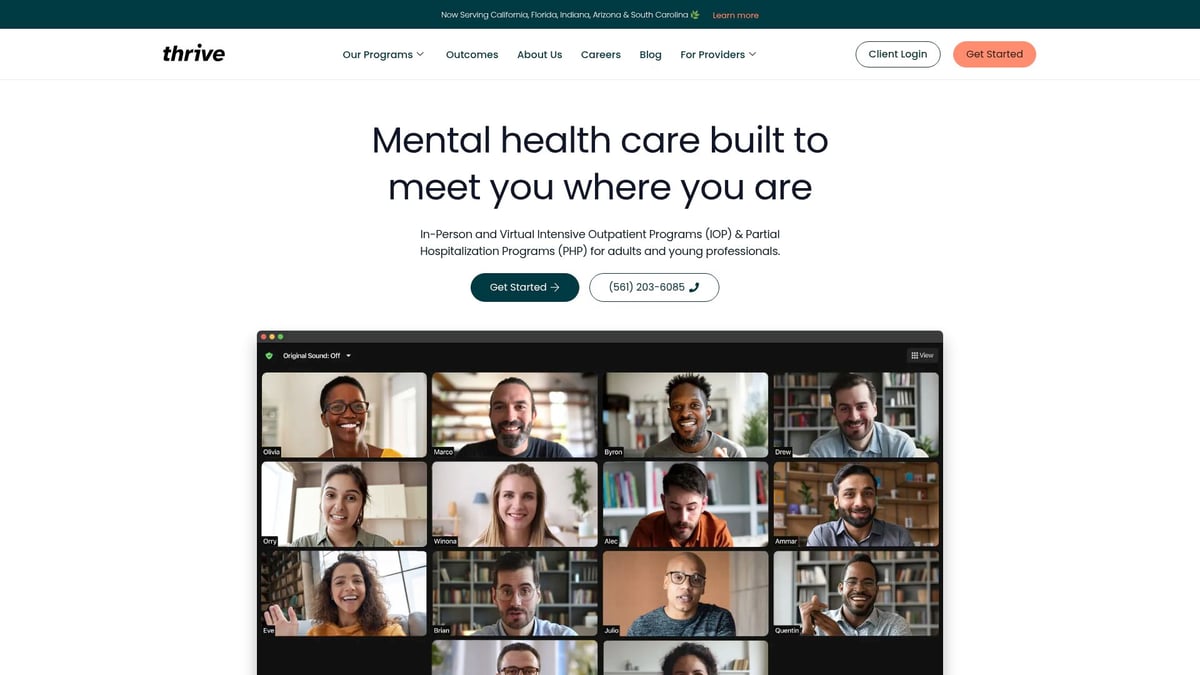
At Thrive Mental Health, both virtual and in-person php medical care are tailored for adults, teens, and professionals. Virtual IOP and PHP in California and other states allow you to access expert-led therapy, psychiatric care, and holistic supports from the privacy of your home. Sessions are structured, with regular individual, group, and family therapy, medication management, and evidence-based approaches like CBT and DBT.
Concerned about time commitment or privacy?
Thrive’s virtual php medical programs are designed for flexibility. Many clients balance work, school, or family while participating. Sessions use secure, HIPAA-compliant video platforms to keep your information confidential. Insurance is accepted from major providers including Aetna, Cigna, and Anthem, and financial aid is available.
Worried about whether virtual care works? Research shows that outcomes for virtual PHP are comparable to in-person programs, as demonstrated in this Virtual vs. In-Person PHP for Eating Disorders study. Many clients even report higher engagement and satisfaction with remote options.
Why choose Thrive Mental Health?
- Joint Commission-accredited care teams
- Rapid access: start within 24 hours of assessment
- Personalized treatment plans for anxiety, depression, and burnout
- Virtual and in-person php medical options in five states
- Insurance verification and care coordination at no cost
Getting started is simple. Thrive offers confidential, no-obligation eligibility checks—just reach out to a care coordinator to discuss your needs. Whether you seek virtual IOP in California or a hybrid option nearby, Thrive’s compassionate team can help you take the next step.
You deserve support that fits your life. Explore your options with Thrive Mental Health today.
As you think about your next steps in navigating mental health care, remember that you’re not alone—whether you’re just starting your research or ready to explore PHP and IOP options tailored to your needs. With Thrive Mental Health, you have access to compassionate experts, flexible virtual and in person programs, and support designed for real life in 2026. Taking that first step can feel daunting, but you deserve clarity and personalized care that fits your schedule and goals. If you’re ready to move forward or simply want to see what’s possible, you can Get Started Now.