
Brush Away Stress with These Easy Mental Health Paintings

Why Easy Mental Health Paintings Work Better Than You Think
Beat Anxiety Fast: 4 Easy Mental Health Paintings You Can Start Today
Easy mental health paintings offer a simple way to reduce stress and process emotions without needing any artistic experience. Here are the most effective beginner techniques:
Quick Answer: Top 4 Easy Mental Health Paintings
- Abstract Color Washes – Blend colors on wet paper for calming effects.
- Simple Mandalas – Use repetitive circles and patterns to focus the mind.
- Emotional Landscapes – Express feelings through color and loose brushstrokes.
- Blob-to-Flower Paintings – Turn random paint blobs into imaginary flowers.
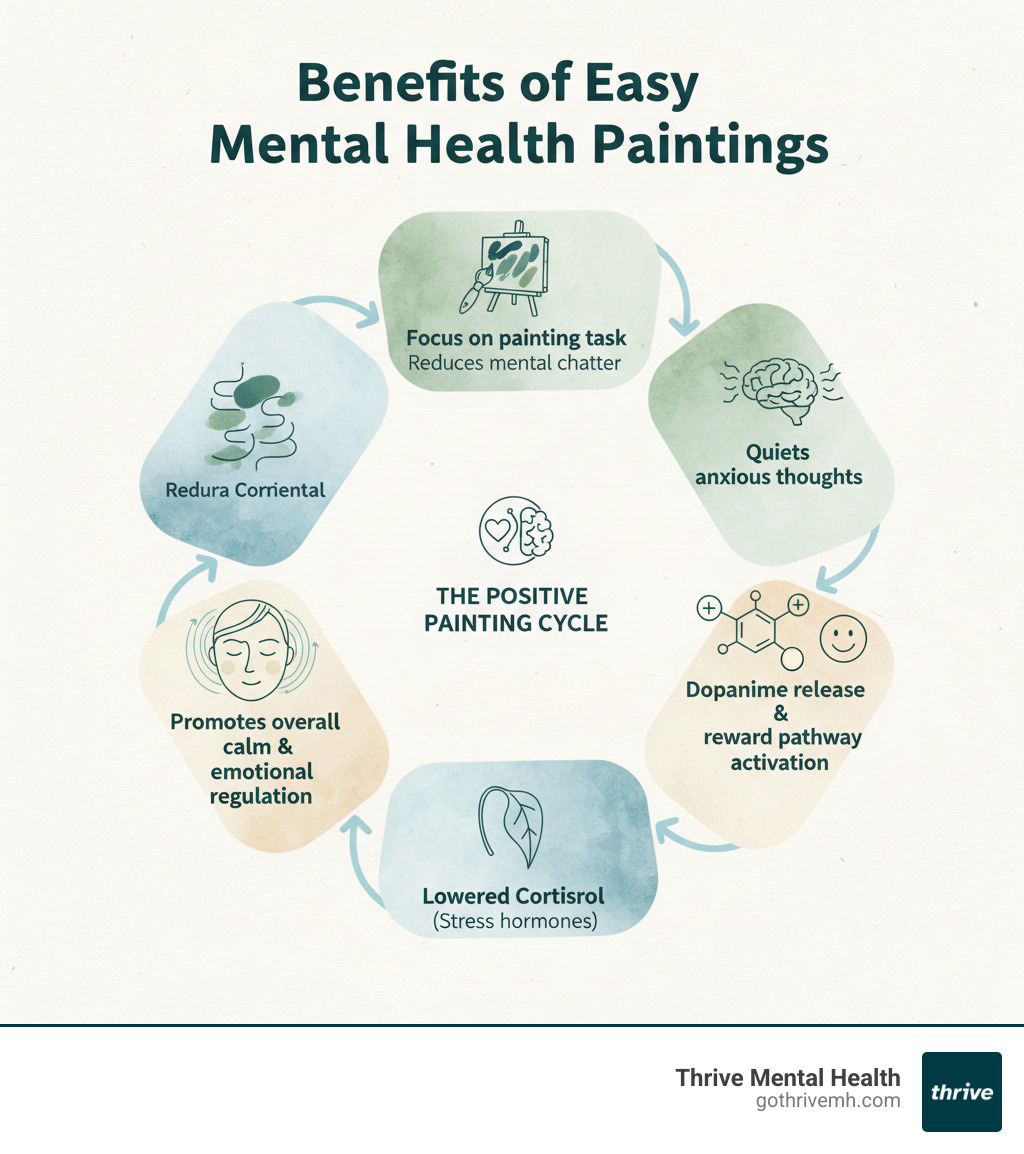
When life feels overwhelming, your mind craves a break from racing thoughts. Research shows that just 45 minutes of art-making reduces stress hormones like cortisol and helps 73% of people feel more capable. The goal isn’t to create a masterpiece; it’s to give your brain a chance to slow down, focus on a tactile task, and express emotions that are hard to put into words.
As licensed art therapists providing care across Florida, we’ve seen countless clients find peace through these simple painting techniques, even those who insisted they “couldn’t draw a stick figure.” The most profound healing often happens with the simplest methods.
Related content about easy mental health paintings:
Why Painting is a Powerful Tool for Your Mind
Easy mental health paintings don’t just feel good in the moment—they literally change your brain chemistry. When you move paint across paper, your brain releases dopamine, the feel-good neurotransmitter that lifts your mood. This creative process is a powerful way to process emotions without needing words, which is incredibly freeing when dealing with anxiety, depression, or trauma.
The American Art Therapy Association recognizes this unique power, showing how creative expression connects your mind, body, and spirit in ways traditional talk therapy sometimes can’t. You can learn more about this approach in our guide on Exploring the Healing Power of Art Therapy.
How Art Impacts Your Brain and Mood
When you’re absorbed in painting, your brain enters a “flow state,” a feeling of being completely present that is like meditation in action. The mental chatter of worries gets quieter, giving your mind a break. The sensory experience—the smell of paint, the texture of the brush—activates multiple brain regions and helps build new neural connections, strengthening the mind-body connection.
This process increases blood flow to brain regions crucial for emotional regulation and memory, like the insular cortex, amygdala, and hippocampus. This isn’t just a temporary mood boost; it builds lasting confidence and a genuine sense of accomplishment.
Using Painting to Process Difficult Emotions
When feelings like grief or complex anxiety are too big for words, painting becomes a powerful tool for emotional release. It allows you to externalize difficult feelings by putting them onto paper, making them feel more manageable. Art therapy works with nonverbal traumatic memories through sensory and visual elements, bridging the gap between what your body remembers and what your mind can process.
Therapists, including our team serving clients throughout Florida, often encourage clients to create art before discussing challenges because it activates both emotional and cognitive processing simultaneously. This prepares you for deeper therapeutic work by engaging your whole brain. This focus on healing through art is central to our approach, as detailed in our work on Art Therapy for Emotional Healing. It offers a safe space to explore your inner world at your own pace.
Your Simple Toolkit: What You Need to Get Started
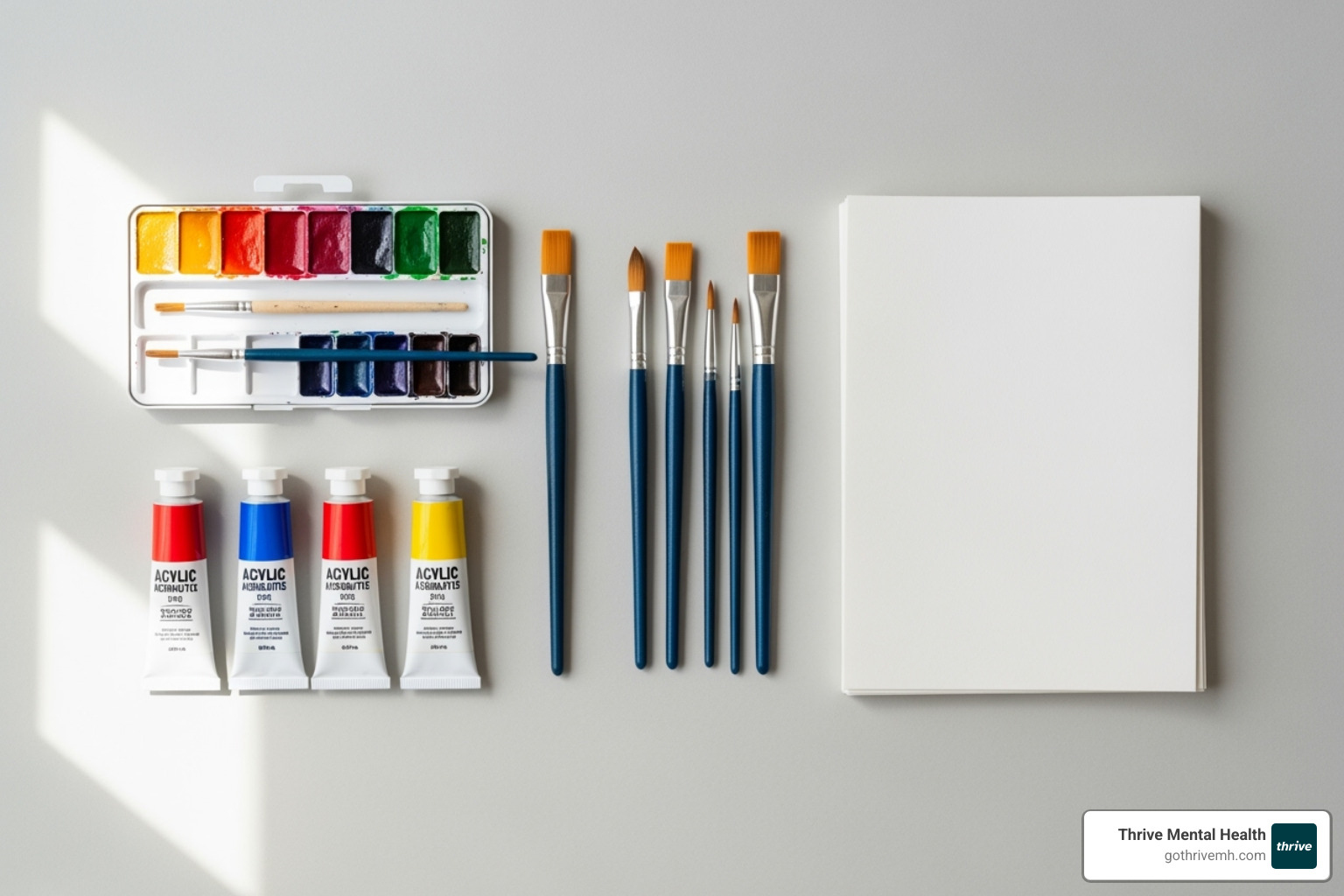
The best part about easy mental health paintings is that you don’t need expensive or complicated supplies. The goal is to remove every barrier between you and that first calming brushstroke. Keeping it simple makes you more likely to paint when you need emotional relief.
Best Paint Mediums for Therapeutic Art
- Watercolors: Forgiving and meditative. Watching colors flow and blend on wet paper teaches you to let go of control and accept the process.
- Acrylics: Bold and tactile. They dry quickly and are great for expressing intense feelings through vibrant, layered colors.
- Gouache: A perfect middle ground. It’s opaque like acrylic but can be thinned with water like watercolor, offering rich, matte colors.
Start with whichever medium calls to you. Your intuition is the best guide.
Essential Supplies (and What to Skip)
Focus on these basics to build your therapeutic art kit:
- Paper: A pad of mixed-media or watercolor paper (9×12 inch is a good start).
- Brushes: A small set with a few different sizes (e.g., small round, medium flat, large wash brush).
- Palette: An old ceramic plate or plastic lid works perfectly for mixing colors.
- Water & Towels: Two water containers (one for rinsing, one for clean water) and some paper towels or an old rag.
What to skip? Expensive easels, fancy brand names, and huge color sets. Your supplies should feel inviting, not intimidating. The magic is in the process, not the price tag.
4 Easy Mental Health Paintings Anyone Can Try
These techniques are designed to be accessible, require no artistic skill, and focus on relaxation and emotional release. You can start with whatever supplies you have and create something meaningful in just a few minutes.

Abstract Emotional Landscapes: An easy mental health painting for processing feelings
This technique transforms your internal world into color and brushstrokes without the pressure of realism. Ask yourself: What does my mood look like today? Choose colors that match your feelings—stormy grays for overwhelm, soft yellows for hope. Let your emotions guide your hand with loose, gestural strokes. Swirl the brush for confusion, drag it for sadness, or dab it for anxiety. There are no rules; your painting is a perfect expression of your inner state. This connects directly with our guide on Therapeutic Art Activities.
Mindful Mandalas: An easy mental health painting for focus and calm
Creating mandalas is like meditation in motion. Start with a small circle in the center of your paper and build outward with simple, repetitive shapes like petals, triangles, or dots. The rhythmic movement of creating patterns is a gentle focus exercise for anxious thoughts. Don’t worry about perfection; the slight wobbles and variations add character and remind you that healing, like art, is a beautifully imperfect process. For more anxiety-focused techniques, explore our Art Therapy Activities for Anxiety.
Soothing Color Washes and Gradients
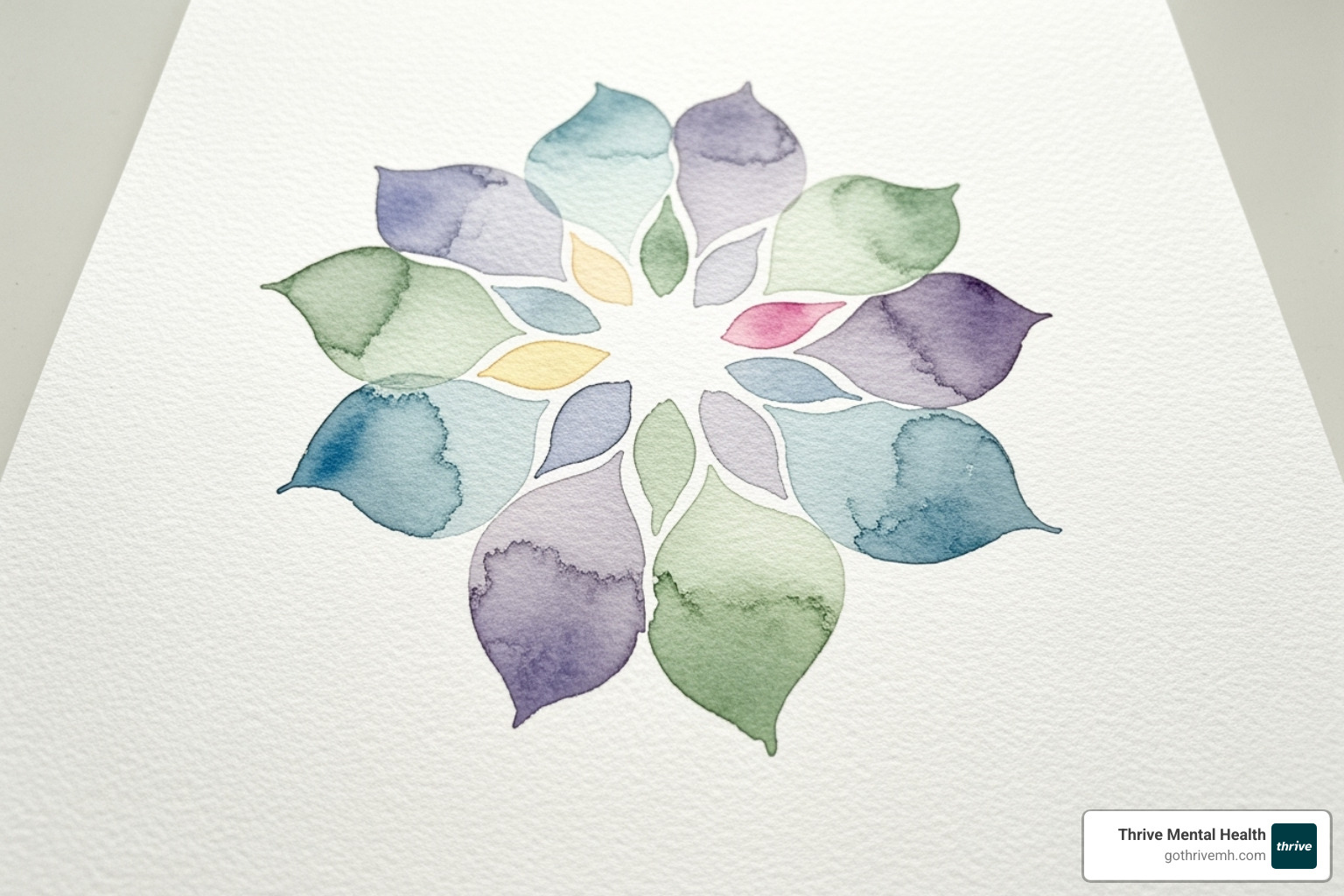
Sometimes the simplest paintings are the most healing. The wet-on-wet technique creates magic with minimal effort. Wet a section of paper with clean water, then drop in watercolor or thinned paint. Watch the colors bloom and spread organically. This lack of control can be incredibly liberating. Focus on the gentle flow of two or three soothing colors blending together. Each wash becomes a moment of mindfulness, a reminder that beautiful things happen when we release our need to control every outcome.
Expressive Florals from Imagination
This technique celebrates playfulness and freedom. Start by dropping colorful blobs randomly across your paper. Once they’re partially dry, look for shapes that suggest petals, leaves, or flower centers. Paint around these found shapes, defining them with more color and layers. Maybe a yellow blob becomes a sunflower, or blue drips transform into wildflower petals. This process feels like finding treasure in your own creation and encourages you to trust your creative instincts rather than copying reality.
Making It a Habit: Weaving Painting into Your Life
The real magic of easy mental health paintings happens when they become a regular routine. Think of it as a daily mental health vitamin—small, consistent doses build powerful benefits over time. You don’t need hours; even 10-minute art sessions can shift your mood and give your anxious mind a break.
- Try Art Journaling: Combine a few brushstrokes with your thoughts or feelings. Your journal becomes a visual record of your emotional journey, with no pressure to create something beautiful.
- Create a Dedicated Space: You don’t need a studio. A small corner or even a shoebox with your supplies makes them accessible and ready to grab when you need them.
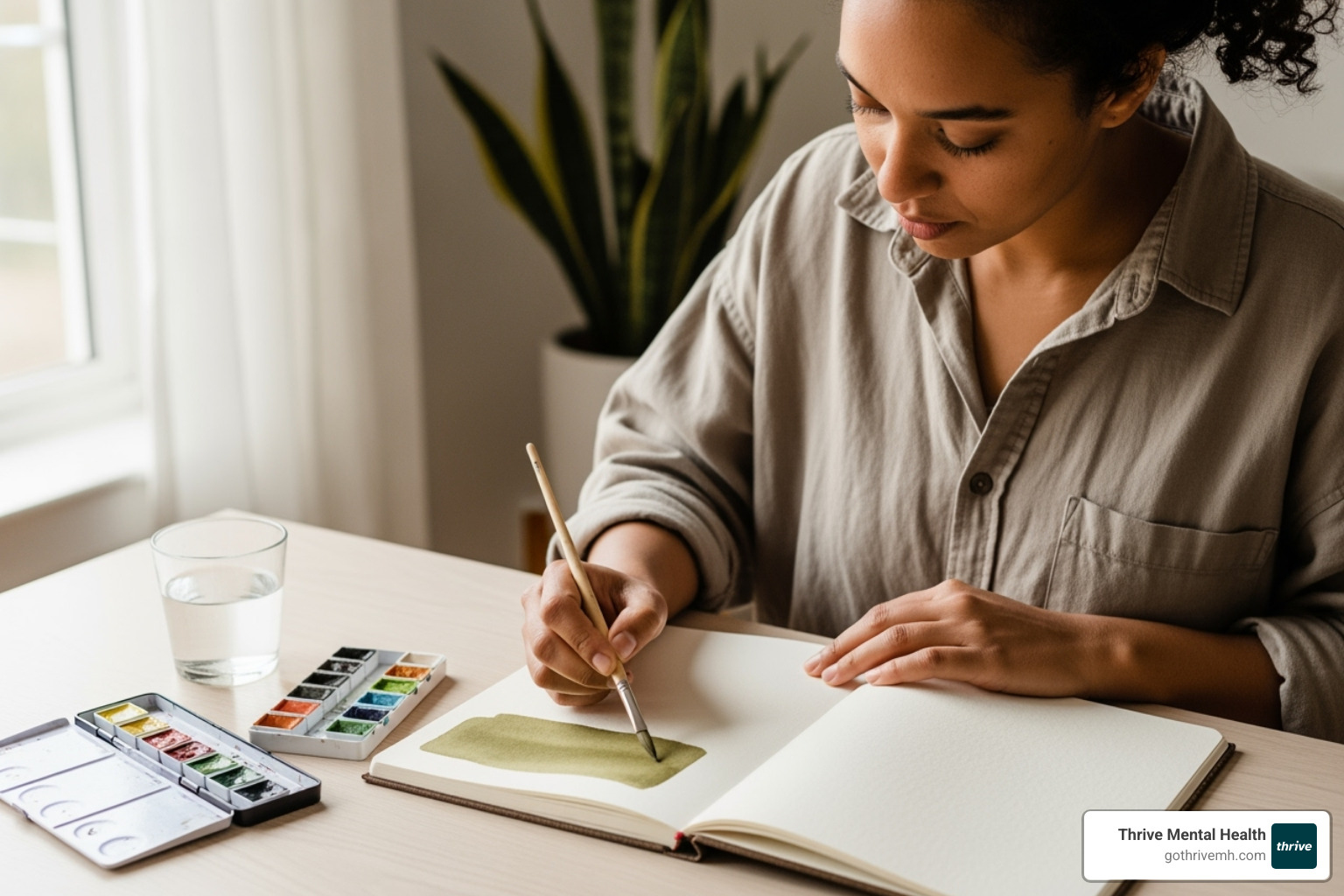
Making it feel like self-care, not another chore, is key. Research shows that creative activities can be a gentle yet effective way to process stress. Start small, be consistent, and let your painting practice grow naturally. For more ideas, check out our guide on Art Therapy Techniques You Can Try at Home.
Finding Support: Insurance and Professional Art Therapy
While easy mental health paintings at home are a wonderful self-care tool, sometimes you need more structured support. That’s where licensed art therapists come in. They have extensive training in both psychology and creative techniques to help you process trauma, work through complex emotions, and develop lasting coping skills.
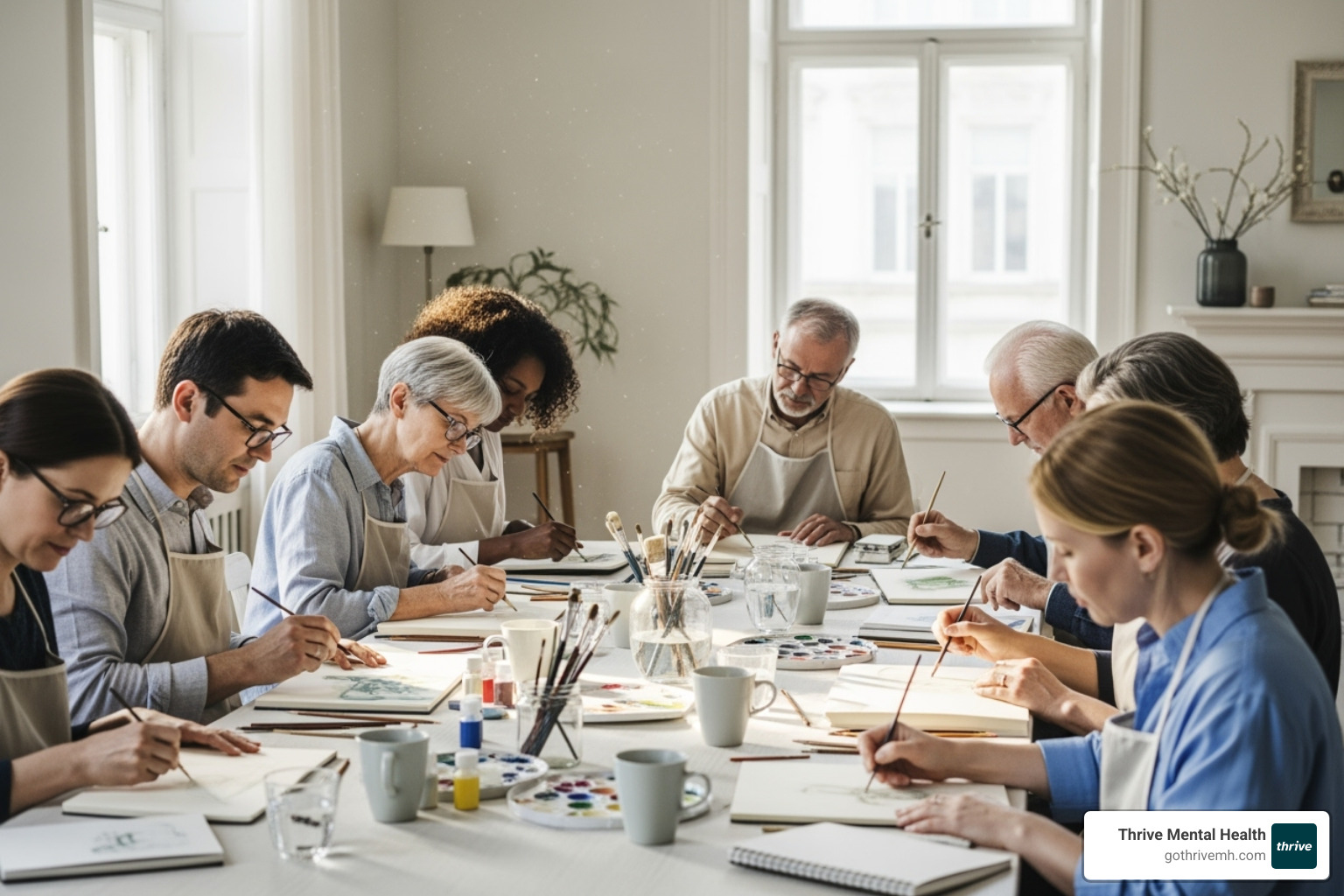
At Thrive Mental Health, we integrate art therapy into our comprehensive treatment programs, with a special focus on serving clients throughout Florida. Our Virtual IOP Art Therapy Program combines the convenience of virtual care with evidence-based approaches like Mindfulness-Based Art Therapy (MBAT). These proven methods use creative activities to support emotional regulation for clients in Tampa, St. Petersburg, Miami, Orlando, and across the state. Explore our program details here: https://gothrivemh.com/treatment-modalities-virtual-iop/art-therapy/
Better yet, many insurance plans cover art therapy when it’s part of a licensed professional’s treatment plan. We work with major providers, including Florida Blue, Cigna, and Optum, to make care accessible. These plans often include mental health services that incorporate art therapy, especially within intensive outpatient programs. Curious about your coverage? Verify your benefits in about 2 minutes at https://gothrivemh.com/verify-insurance/
While our primary service area is Florida, we also support clients virtually in Indiana, California, South Carolina, and Arizona. Our team handles the complicated insurance details so you can focus on healing. Your personal art practice and professional therapy can work beautifully together, with a therapist helping you understand what emerges in your creative work.
Frequently Asked Questions about Easy Mental Health Paintings
Here are answers to the most common concerns people have before they start their journey with easy mental health paintings.
What if I’m not creative and can’t even draw a stick figure?
This has nothing to do with artistic talent. The mental health benefits come from the process, not the product. Simple techniques like color washes or abstract marks require no skill. The goal is to enjoy the sensory experience of painting, which research shows is beneficial regardless of your artistic background.
How does painting help with anxiety?
Painting helps quiet an anxious mind by inducing a “flow state,” where you become fully immersed in the activity. This mindfulness breaks the cycle of racing thoughts. The repetitive, rhythmic motion of a brush is meditative, calming your nervous system. Studies show that art activities combined with treatment significantly improve anxiety symptoms.
What colors are best for mental health painting?
Your intuition is your best guide, but colors do have psychological effects. Warm colors (yellow, orange) can be uplifting, while cool colors (blue, green) are often calming. The most important thing is to choose colors that speak to you in the moment. Your mind knows what it needs.
Can I do this with my kids or partner?
Absolutely! Painting together is a wonderful way to connect. For children, it’s a natural outlet for big emotions they can’t put into words. For partners, creating art side-by-side can open new channels of communication and healing. Keep the focus on the shared experience and joy, not on creating a masterpiece.
{
  "@context": "https://schema.org",
  "@type": "FAQPage",
  "mainEntity": [{
    "@type": "Question",
    "name": "What if I'm not creative and can't even draw a stick figure?",
    "acceptedAnswer": {
      "@type": "Answer",
      "text": "Art for mental health is about the process, not the final product. The benefits come from the sensory experience of painting, which requires no artistic talent. Simple techniques like abstract color washes are designed for expression, not perfection."
    }
  },{
    "@type": "Question",
    "name": "How does painting help with anxiety?",
    "acceptedAnswer": {
      "@type": "Answer",
      "text": "Painting helps anxiety by inducing a 'flow state,' which quiets racing thoughts and promotes mindfulness. The repetitive motion of brushing paint is meditative and calms the nervous system, providing a constructive outlet for anxious energy."
    }
  },{
    "@type": "Question",
    "name": "What colors are best for mental health painting?",
    "acceptedAnswer": {
      "@type": "Answer",
      "text": "While warm colors (yellows, oranges) can be uplifting and cool colors (blues, greens) are calming, the best colors are the ones you are drawn to. Trust your intuition to choose hues that reflect or support your current emotional state."
    }
  },{
    "@type": "Question",
    "name": "Can I do this with my kids or partner?",
    "acceptedAnswer": {
      "@type": "Answer",
      "text": "Yes, painting together is a powerful bonding activity. It gives children a non-verbal way to express emotions and helps partners connect without the pressure of conversation. Focus on the shared experience rather than the artistic outcome."
    }
  }]
}
Take the Next Step in Your Healing Journey
Starting with easy mental health paintings is a powerful first step. The simple techniques we’ve explored offer immediate tools for managing stress right from your kitchen table. Research shows that even short art sessions can reduce cortisol and boost confidence.
While solo painting is a great self-care practice, sometimes life’s challenges require more structured support. If you’re in Florida and feel that anxiety, depression, or trauma are becoming overwhelming, professional art therapy can make all the difference. At Thrive Mental Health, our licensed therapists integrate these creative techniques with evidence-based care to help you build lasting coping skills.
Ready for support? Thrive offers virtual and hybrid IOP/PHP with evening options for clients across Florida, from Tampa to Miami. Verify your insurance in 2 minutes (no obligation) at https://gothrivemh.com/verify-insurance/ or call 561-203-6085. If you’re in crisis, call/text 988.