
Unlocking Your Mind: Specialists for Trauma-Induced Memory Loss

When Your Memory Betrays You After Trauma
You can’t remember where you put your keys. You forget entire conversations. You lose track of time. Friends mention events you attended—but you have no memory of being there.
If trauma has stolen pieces of your memory, you’re not “going crazy” and you’re not broken. Your brain is doing exactly what it was wired to do when survival felt uncertain: prioritize staying alive over storing memories. Trauma rewires the brain’s fear center (the amygdala) and memory hub (the hippocampus), making it harder to encode, store, and retrieve information. This isn’t a character flaw. It’s a biological response to overwhelming stress.
The good news? Cognitive issues caused by trauma are treatable. A team of specialists who treat cognitive issues like memory loss caused by trauma—from neurologists to trauma-trained therapists—can diagnose the root cause and build a personalized recovery plan. With the right support, you can see significant improvement in memory, focus, and daily functioning. This guide breaks down exactly who to see, what to expect, and how to start the journey toward reclaiming your mind.
Your Brain on Trauma: Why You Can’t ‘Just Remember’
When trauma strikes, whether it’s a single overwhelming event or prolonged, repetitive stress, our cognitive health—our “ability to clearly think, learn, and remember”—can be profoundly disrupted. This isn’t just about forgetting where you parked the car; it can involve significant memory loss, brain fog, and concentration issues that impact every aspect of daily life.
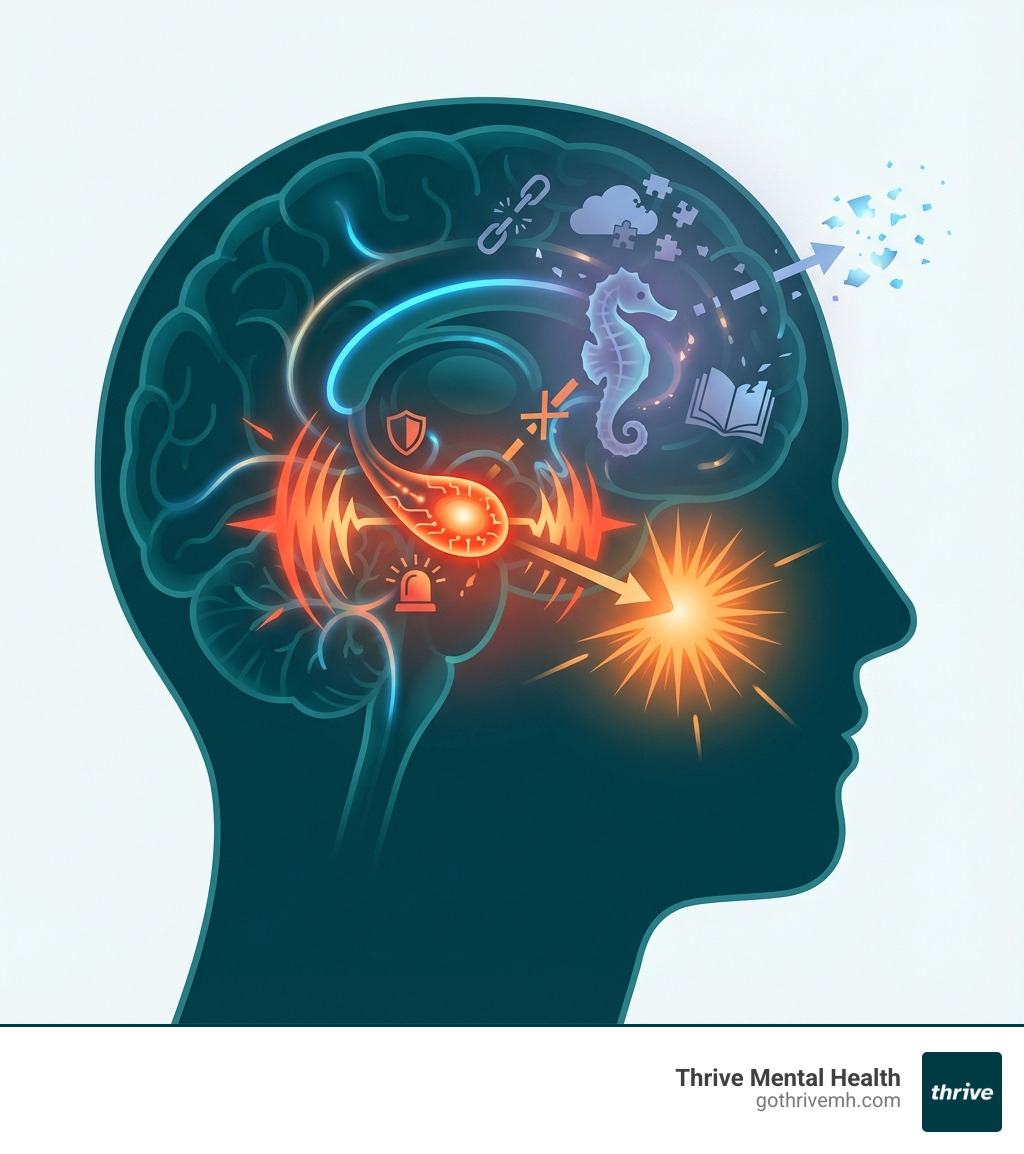
Trauma doesn’t just affect our emotions; it physically alters our brain. Key regions like the amygdala (our fear center), the hippocampus (crucial for memory formation), and the prefrontal cortex (responsible for executive functions like planning and decision-making) are particularly vulnerable. Chronic stress, a hallmark of trauma, floods the brain with hormones like cortisol, which can impair the brain’s ability to encode, store, and retrieve memories. This can lead to various cognitive issues, including:
- Memory Loss: This can range from difficulty recalling recent events (short-term memory loss) to significant gaps in our personal history (long-term memory issues). Sometimes, the brain protects us by unconsciously blocking out traumatic memories, a phenomenon known as dissociative amnesia.
- Brain Fog: A general sense of mental haziness, difficulty focusing, and slowed processing speed.
- Concentration Issues: Struggling to pay attention, easily getting distracted, or an inability to sustain focus on tasks.
- Executive Functioning Difficulties: Challenges with planning, organizing, problem-solving, and decision-making.
For individuals with Post Traumatic Stress Disorder (PTSD), these cognitive impairments are common. Complex PTSD, often stemming from prolonged trauma, can lead to even more pervasive memory difficulties. Our brains, in an attempt to protect us, sometimes create fragmented memories or even “false memories” to fill in gaps, which can be incredibly disorienting.
The good news is that understanding why trauma affects memory is the first step toward healing. It affirms that these are not personal failings but rather understandable biological and psychological responses to extreme stress. The next crucial step is connecting with the right specialists who treat cognitive issues like memory loss caused by trauma. As we’ve seen at Thrive Mental Health, with the right evidence-based interventions, significant recovery and improved cognitive function are absolutely possible. You can learn more about how trauma impacts memory in our guide: Can Trauma Cause Memory Loss?
Who Are the Key Specialists Who Treat Cognitive Issues Like Memory Loss Caused by Trauma?
Addressing cognitive issues like memory loss caused by trauma requires a comprehensive, multidisciplinary approach. No single specialist holds all the answers; rather, a team of experts collaborating ensures all facets of your condition are understood and treated. Research consistently shows that multidisciplinary teams yield better outcomes for complex conditions like those involving trauma and cognitive impairment. This coordinated care model is what we champion at Thrive Mental Health, bringing together various Expert Mental Health Professionals to support your journey.
Neurologists & Behavioral Neurologists
Neurologists are medical doctors specializing in the nervous system. When memory loss or other cognitive issues arise, especially after a physical trauma like a head injury or a suspected medical event, a neurologist is often the first point of contact after your primary care physician. They focus on diagnosing and treating physical brain conditions that might be causing or contributing to cognitive decline.
Behavioral neurologists are a subspecialty, focusing specifically on how brain conditions affect memory, thinking, and behavior. They are adept at detecting subtle brain injuries, such as a small stroke or an infection, which might be masquerading as memory problems. They also differentiate between cognitive issues stemming from physical damage and those from other causes. Their role often involves:
- Diagnosis of physical brain conditions: Such as traumatic brain injury (TBI), stroke, brain tumors, or encephalitis.
- Advanced imaging: Utilizing brain scans like MRI or CT to visualize brain structures.
- Medication management: Prescribing and managing medications to treat underlying neurological conditions or alleviate symptoms.
- Differentiating from other conditions: Crucially, they help distinguish between trauma-related cognitive issues, age-related cognitive decline, and neurodegenerative diseases like Alzheimer’s.
If there’s any concern about a physical cause for your memory loss, a behavioral neurologist is an invaluable expert. You can read more about their work in this Behavioral Neurology Overview.
Neuropsychologists
A neuropsychologist is a healthcare provider with specialized knowledge of how brain conditions affect your behavior and cognitive skills. Unlike neurologists, they are typically PhD-level psychologists, not medical doctors, meaning they cannot prescribe medication. Their superpower lies in their ability to conduct detailed cognitive assessments.
Neuropsychologists use a battery of neuropsychological tests to evaluate various cognitive functions, including:
- General intellect
- Attention and concentration
- Processing speed
- Language abilities
- Memory (short-term, long-term, working memory)
- Reasoning and problem-solving
- Visuospatial abilities
- Mood and personality
They assess individuals who’ve experienced sudden injuries like concussions or strokes, as well as those with chronic neurological conditions or trauma-related cognitive deficits. Their assessments help to:
- Identify specific areas of cognitive strength and weakness.
- Determine the impact of trauma or brain injury on daily functioning.
- Differentiate between various causes of cognitive impairment.
- Guide treatment plans: Their findings provide crucial insights for therapists and other specialists to tailor interventions.
Think of them as the detectives of the mind, uncovering how your brain’s function relates to your behavior and cognitive abilities. To understand their role better, consider the distinction between a Neuropsychologist vs. Neurologist.
Psychiatrists & Geriatric Psychiatrists
Psychiatrists are medical doctors who specialize in diagnosing and treating mental, emotional, and behavioral conditions. For individuals experiencing memory loss caused by trauma, a psychiatrist plays a vital role, especially when conditions like PTSD, depression, or anxiety are present and significantly impacting cognitive function. They can provide:
- Mental health diagnosis: Accurately diagnosing trauma-related mental health disorders that often co-occur with cognitive issues.
- Medication management: Prescribing and monitoring medications (e.g., SSRIs for PTSD, antidepressants for depression) that can help regulate mood, reduce anxiety, and indirectly improve cognitive function by reducing distress.
- Addressing co-occurring conditions: Treating other mental health challenges that may exacerbate memory difficulties.
- Assessing stress impact: Particularly, geriatric psychiatrists are skilled at evaluating memory problems linked to life stress, depression, anxiety, or other psychological factors, which can be critical for older adults who have experienced trauma.
When severe symptoms of trauma or co-occurring mental health conditions are significantly impairing your daily life and cognitive abilities, a psychiatrist can offer essential medical and pharmacological support.
Therapists & Counselors (LCSW, LMFT, LPC)
Therapists and counselors, including Licensed Clinical Social Workers (LCSWs), Licensed Marriage and Family Therapists (LMFTs), and Licensed Professional Counselors (LPCs), are crucial members of the care team. They provide psychotherapy and specialized interventions to help process trauma and mitigate its cognitive effects. Their expertise lies in:
- Psychotherapy: Offering talk therapy to explore and process traumatic experiences in a safe, supportive environment.
- Cognitive Behavioral Therapy (CBT): A highly effective approach that helps individuals identify and challenge negative thought patterns and behaviors stemming from trauma, which can indirectly improve memory and focus. Our guide to Cognitive Behavioral Therapy (CBT) offers more insights.
- EMDR Therapy: Eye Movement Desensitization and Reprocessing (EMDR) is an evidence-based therapy specifically designed to help individuals process traumatic memories and reduce their emotional charge. Learn more in our EMDR Therapy guide.
- Somatic Experiencing: This body-oriented therapeutic model helps release trauma stored in the body, which can alleviate physical symptoms and improve overall well-being, including cognitive function.
- Trauma-informed care: All these therapists should operate from a trauma-informed perspective, prioritizing safety, trust, and empowerment throughout the healing process.
These professionals help you build coping strategies, improve emotional regulation, and integrate traumatic memories into your life narrative in a way that reduces their disruptive power over your cognitive abilities.
[TABLE] Comparing Key Specialists: Neurologist vs. Neuropsychologist vs. Psychiatrist
Understanding the distinct roles of these primary specialists is key to navigating your care. Here’s a quick comparison:
| Specialist | Role | Can Prescribe Meds? | Primary Focus |
|---|---|---|---|
| Neurologist | Diagnoses physical brain conditions (TBI, stroke) | Yes | The brain’s physical structure and function. |
| Neuropsychologist | Assesses cognitive function (memory, attention) | No | How brain function impacts behavior and thinking. |
| Psychiatrist | Diagnoses and treats mental health conditions (PTSD, depression) | Yes | Emotional and psychological impact of trauma. |
The Road to Recovery: Evaluation and Treatment [2025 Guide]

The journey to recovering from trauma-induced memory loss begins with a thorough evaluation, leading to a personalized treatment plan. This road can feel daunting, but with Evidence-Based Trauma Treatment and a dedicated team, there is significant hope for recovery and reclaiming your cognitive abilities.
What to Expect During a Cognitive Evaluation
A cognitive evaluation is a crucial step in understanding the nature and extent of your memory issues. It’s not just about memory; it’s about assessing a wide range of thinking skills. Here’s what you can typically expect:
- Initial Consultation: This involves a detailed discussion with a specialist, often a neuropsychologist or behavioral neurologist. They will gather your medical history, discuss your symptoms, and explore any factors potentially contributing to your cognitive difficulties, such as sleep changes, mood fluctuations, or other medical conditions.
- Medical History Review: The specialist will review your past health records, including any previous brain injuries, medical conditions, or medications you’re taking, as these can all influence cognitive function.
- Symptom Discussion: You’ll have the opportunity to describe your specific memory challenges, how they impact your daily life, and any other cognitive or emotional symptoms you’re experiencing. Family members or close contacts may also be asked to provide their observations, with your permission.
- Neuropsychological Testing: This is the core of the evaluation. Clinical neuropsychologists use a variety of standardized tests, which can involve oral questions, paper-and-pencil tasks, computer-based exercises, puzzles, and word lists. These tests are designed to assess various cognitive domains systematically. While some tests may feel like “games,” they are scientifically validated tools to measure your cognitive strengths and weaknesses.
- Differentiating Normal Aging vs. Pathological Decline: A critical aspect of the evaluation is distinguishing between typical, age-related memory fluctuations and pathological cognitive decline that might be caused by trauma, neurological conditions, or dementia. Neuropsychologists look for patterns across numerous tests to make this important distinction.
The entire evaluation process can take anywhere from two to six hours, depending on the complexity of your symptoms. The goal is to get a clear picture of your cognitive profile to inform the most effective treatment strategy.
How do specialists who treat cognitive issues like memory loss caused by trauma approach treatment?
Once a thorough evaluation is complete, specialists who treat cognitive issues like memory loss caused by trauma develop a personalized care plan. This plan often combines medical interventions with therapeutic strategies to address both the neurological and psychological impacts of trauma.
-
Medical Interventions: Depending on the underlying causes identified, a neurologist or psychiatrist might prescribe medications. These could include:
- Medications to treat underlying physical conditions (e.g., managing post-concussion symptoms).
- Medications to manage co-occurring mental health conditions like anxiety or depression, which can significantly impair memory and focus.
- In some cases, cognitive improvers might be considered, though their use for trauma-induced memory loss is still an evolving area.
-
Therapeutic Interventions: This is where cognitive rehabilitation and trauma-focused therapies truly shine. These interventions aim to improve specific cognitive skills and help process traumatic memories.
- Cognitive Rehabilitation Therapy: This specialized therapy focuses on improving areas of cognition such as memory, attention, problem-solving, organization, executive function skills, and word finding. It’s a structured program of exercises designed to strengthen neural pathways and restore function. You can explore more about Cognitive Rehabilitation Therapy and how it helps.
- Memory Exercises: Therapists will guide you through exercises that target different aspects of memory, including acquisition, processing, storage, and retrieval. This might involve techniques like creating stories from word lists, using visualization, or practicing recall of daily events.
- Attention Training: Exercises to improve selective attention (focusing amidst distractions), divided attention (multitasking), and sustained attention (maintaining focus for extended periods).
- Problem-Solving Skills: Tasks and strategies to improve decision-making, reasoning, and organizational abilities.
We also offer flexible and convenient options like Virtual Therapy: A Convenient and Effective Approach to Counseling which can integrate these therapeutic interventions into your daily life.
The Power of Cognitive Rehabilitation
Cognitive rehabilitation is a cornerstone of treatment for trauma-induced cognitive issues. It’s not about “fixing” a broken brain in the traditional sense, but rather about improving cognitive skills and teaching adaptive strategies to regain function and independence. The ultimate goal is to restore “the ability to clearly think, learn, and remember”.
This therapy can focus on two main approaches:
- Restoration: Directly targeting impaired cognitive skills through specific exercises to help the brain relearn or strengthen those functions.
- Compensation: Teaching alternative strategies and using tools (like memory aids, calendars, or organizational systems) to bypass impaired functions and achieve goals.
Key professionals involved in delivering cognitive rehabilitation include:
- Speech-Language Pathologists (SLPs): Often, people think SLPs only work on speech issues, but they are highly trained in cognitive communication. This includes addressing memory, attention, problem-solving, organization, and word-finding difficulties that arise after brain injury or trauma.
- Occupational Therapists (OTs): While cognitive therapy focuses on the thinking process itself, occupational therapy focuses on how cognitive impairments affect your ability to perform daily tasks, either at home or work. OTs help adapt your environment or tasks to fit your current abilities, working hand-in-hand with cognitive rehabilitation.
Through these targeted interventions, individuals can experience significant improvements in their cognitive function, leading to a better quality of life and renewed confidence.
How to Find and Access the Right Specialist for You

Finding the right specialists who treat cognitive issues like memory loss caused by trauma can feel overwhelming, but it’s a crucial step. We understand that navigating the healthcare system, especially when dealing with cognitive challenges, can be difficult. The good news is that there are clear pathways to access the care you need.
How do I find specialists who treat cognitive issues like memory loss caused by trauma?
- Start with Your Primary Care Physician (PCP): Your PCP is your best starting point. They can conduct an initial assessment, rule out common medical causes for memory problems, and provide referrals to the most appropriate specialists. They often have established networks of trusted professionals.
- Memory Clinics or University Medical Centers: Specialized centers, often found in major Florida cities like Miami, Tampa, and Orlando, offer multidisciplinary evaluations and treatments for cognitive disorders. They bring together neurologists, neuropsychologists, psychiatrists, and therapists under one roof, providing comprehensive care.
- Online Directories and Professional Organizations: Websites for the American Psychological Association (APA), American Academy of Neurology, or local mental health associations can help you find qualified professionals in your area. You can search for specialists in “cognitive rehabilitation,” “neuropsychology,” or “trauma-informed therapy.” Our guide, A Comprehensive Guide to Finding the Best Mental Health Therapist Near You, can also help.
- Inquire About Insurance Coverage: Before scheduling appointments, always check with your insurance provider (e.g., Cigna, Optum, Florida Blue, Aetna) to understand your coverage for neuropsychological testing, neurological consultations, psychiatric care, and various therapies. This can significantly impact your access to care.
Finding a specialist who understands the unique intersection of trauma and cognitive function is key. Don’t hesitate to ask about their experience in this specific area during your initial inquiries.
What are Intensive Outpatient (IOP) and Partial Hospitalization (PHP) Programs?
For individuals who need more structured support than weekly therapy but don’t require inpatient hospitalization, Intensive Outpatient Programs (IOPs) and Partial Hospitalization Programs (PHPs) offer a powerful solution. At Thrive Mental Health, we specialize in delivering virtual and in-person IOP and PHP programs designed for adults and young professionals across Florida.
These programs provide:
- More Intensive Care: IOPs typically involve several hours of therapy per day, multiple days a week, offering a concentrated approach to healing. PHPs are even more intensive, often running for most of the day.
- Structured Support: They combine individual therapy, group therapy, and sometimes family therapy, providing a robust support system.
- Evidence-Based Treatment: Our programs integrate evidence-based therapies like CBT, EMDR, and cognitive rehabilitation techniques to address trauma and its cognitive impacts.
- Flexible Scheduling: We understand life doesn’t stop for therapy, which is why we offer evening options and virtual formats to fit your schedule.
- Measurable Results: Our focus is on clinical expertise, measurable progress, and equipping you with practical skills to steer your life.
These programs are ideal if you’re struggling with significant memory loss, brain fog, or other cognitive issues stemming from trauma, especially if these challenges are making it difficult to function in your daily life. Learn more about What is an IOP? and our Guide to Partial Hospitalization Programs.
Frequently Asked Questions about Trauma-Induced Memory Loss
What is the difference between a neurologist and a neuropsychologist?
A neurologist is a medical doctor who diagnoses and treats physical diseases of the nervous system, like a stroke or TBI, and can prescribe medication. A neuropsychologist is a PhD-level psychologist who specializes in assessing how brain function affects your thinking skills and behavior, using tests to guide treatment but cannot prescribe medication.
Can memory loss from trauma be reversed?
In many cases, cognitive function can be significantly improved. Recovery depends on the nature of the trauma, the individual, and the quality of treatment. Cognitive rehabilitation and trauma-focused therapies like EMDR and CBT can help rebuild neural pathways and develop effective coping strategies, leading to substantial recovery of memory and other cognitive skills.
How long does a neuropsychological evaluation take?
A comprehensive evaluation can take between 2 to 6 hours. It typically includes a detailed interview about your history and symptoms, followed by a series of standardized tests that assess various cognitive abilities like memory, attention, and problem-solving.
Take the First Step Toward Reclaiming Your Mind
Experiencing memory loss after a trauma is disorienting and frightening, but you are not alone, and healing is possible. The key is connecting with the right team of specialists who treat cognitive issues like memory loss caused by trauma who can accurately diagnose the issue and create a personalized recovery plan. A multidisciplinary approach that addresses both the neurological and psychological impacts of trauma offers the most comprehensive path toward regaining cognitive function and control. Programs like virtual Intensive Outpatient Programs (IOP) make this level of expert-led, evidence-based care more accessible than ever for residents throughout Florida.
Ready for support? Thrive offers virtual and hybrid IOP/PHP programs in Florida with evening options. Verify your insurance in 2 minutes (no obligation) → Start benefits check or call 561-203-6085. If you’re in crisis, call/text 988.