





Post traumatic stress disorder: Hope 2025
Post Traumatic Stress Disorder [2025]: 4 Symptom Clusters to Spot Now + Fast, Proven Treatments
If you’re in crisis, call/text 988 right now. You are not alone.
Post traumatic stress disorder (PTSD) is a mental health condition that can develop after experiencing or witnessing a traumatic event. It’s not a sign of weakness, it’s a real, treatable medical condition that affects the brain’s response to stress.
Quick Facts About PTSD:
- What it is: A mental health disorder triggered by experiencing or witnessing trauma
- Who it affects: Approximately 6% of Americans will develop PTSD in their lifetime
- Trauma exposure: 61-80% of people experience a traumatic event at some point
- Development rate: Only 5-10% of trauma survivors develop PTSD
- Key symptoms: Flashbacks, avoidance, negative thoughts, and hypervigilance
- Duration: Symptoms must last more than one month for diagnosis
- Treatment: Highly treatable with therapy, medication, or both
PTSD can develop after events like combat, assault, accidents, natural disasters, or sudden loss. While most people experience some distress after trauma, PTSD occurs when these reactions persist and interfere with daily life, work, relationships, and basic functioning.
The good news? Recovery is absolutely possible. With proper treatment, about 30% of people fully recover, and another 40% see significant improvement.
At Thrive Mental Health, our Florida-based clinical team specializes in helping individuals steer the complexities of post traumatic stress disorder through evidence-based approaches like EMDR and trauma-focused therapy. Our work centers on making recovery accessible, effective, and rooted in compassionate care that meets people where they are.
Key terms for post traumatic stress disorder:
Recognizing the Signs: PTSD Symptoms Explained
If you’re in crisis, call or text 988 right now. Help is available 24/7.
After a traumatic event, feeling stressed, anxious, or frightened is completely normal. For most people, these feelings gradually fade as time passes. But for some, the symptoms don’t just linger, they intensify and begin to disrupt everyday life.
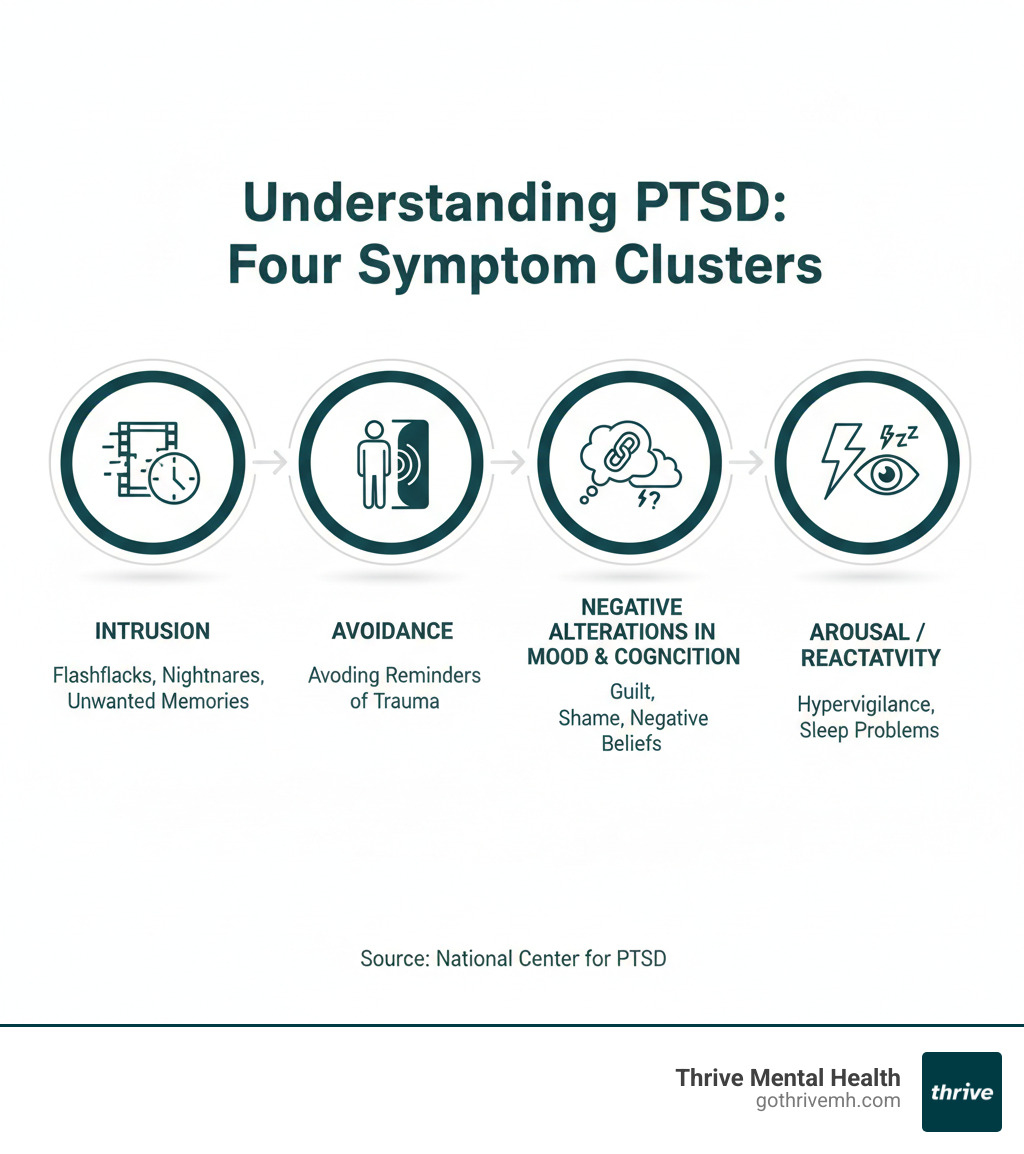
When these reactions persist for more than a month and significantly interfere with work, relationships, or daily functioning, post traumatic stress disorder may be present. Mental health professionals use the Diagnostic and Statistical Manual of Mental Disorders (DSM-5) to diagnose PTSD, looking for specific patterns of symptoms that fall into four core clusters: intrusion, avoidance, negative alterations in cognition and mood, and arousal and reactivity.
Understanding these symptom clusters can help you recognize PTSD in yourself or someone you care about, and take the first step toward healing.
Intrusion Symptoms (Re-experiencing)
Imagine trying to move forward with your life, but the past keeps forcing its way back in, uninvited and overwhelming. That’s what intrusion symptoms feel like.
Flashbacks are one of the most distressing forms of intrusion. During a flashback, you don’t just remember the traumatic event, you feel like you’re reliving it. A smell, a sound, or even a certain time of day can trigger these vivid, disturbing episodes where the boundary between past and present dissolves.
Nightmares related to the trauma can shatter sleep night after night, leaving you exhausted and dreading bedtime. Unwanted memories pop up without warning, intrusive thoughts that you can’t simply push away no matter how hard you try. (For more on how intrusive thoughts affect mental health, Cleveland Clinic offers helpful insights.)
Your body remembers trauma too. Emotional distress to reminders can hit suddenly, intense anguish when something symbolizes or resembles the traumatic event. Physical reactions to reminders might include a racing heart, sweating, trembling, or that familiar “fight or flight” sensation, even when you’re objectively safe.
Avoidance Symptoms
When the memories and feelings become too painful, many people with post traumatic stress disorder develop avoidance behaviors. It makes sense, right? If something causes you pain, you naturally try to stay away from it.
The problem is that avoidance, while offering temporary relief, often leads to isolation and actually prevents healing. You might find yourself avoiding memories, deliberately suppressing thoughts, feelings, or conversations about what happened. You might work hard at avoiding thoughts or feelings connected to the trauma, trying to numb yourself emotionally.
Avoiding external reminders can become all-consuming. This means staying away from people, places, conversations, activities, objects, or situations that bring back memories of the traumatic event. Someone who survived a car accident might refuse to drive or avoid certain roads entirely. A combat veteran might skip crowded spaces. A survivor of assault might avoid entire neighborhoods or social situations.
While understandable, this shrinking of your world can make life feel smaller and smaller.
Negative Alterations in Cognition and Mood
Trauma doesn’t just affect what you remember, it can fundamentally change how you think about yourself, others, and the world around you.
Memory problems are common, with some people unable to recall important aspects of the traumatic event. Negative self-beliefs can take root, persistent thoughts like “I’m broken,” “It was my fault,” or “I should have done something different.” These aren’t just passing thoughts; they become core beliefs that color everything.
Distorted blame often follows, whether you’re unfairly blaming yourself or others for what happened. Persistent negative emotions, fear, horror, anger, guilt, shame, can become your constant companions, making it hard to feel anything else.
Many people experience a loss of interest in activities that once brought joy. There’s often a sense of feeling detached from others, like you’re watching life from behind glass. Perhaps most heartbreaking is the inability to feel positive emotions, happiness, satisfaction, love, as if that part of you went numb.
Arousal and Reactivity Symptoms
Living with PTSD often means living in a constant state of high alert, as if danger could strike at any moment. This hyperarousal is exhausting and takes a serious toll on daily functioning.
Irritability and angry outbursts can come with little warning or provocation, sometimes leading to reckless behavior or self-destructive choices. Hypervigilance means constantly scanning your environment for threats, never fully relaxing even in safe spaces.
An exaggerated startle response might have you jumping at sudden noises or movements that wouldn’t faze most people. Problems with concentration make it hard to focus on work, conversations, or even watching a movie. Sleep disturbance, trouble falling asleep, staying asleep, or getting truly restful sleep, compounds everything else, leaving you drained and on edge.
These symptoms aren’t signs of weakness. They’re evidence that your brain is working overtime to protect you from a danger that’s already passed. With proper treatment, including options like intensive outpatient programs or virtual therapy, you can help your nervous system recalibrate and find peace again.
The Roots of Trauma: What Causes PTSD and Who Is at Risk?

Support systems are a key protective factor against post-traumatic stress disorder.
Post traumatic stress disorder begins with traumabut not all trauma leads to PTSD. That’s an important distinction. While somewhere between 61% and 80% of people will experience a traumatic event in their lifetime, only about 5% to 10% will develop PTSD. This tells us something crucial: trauma exposure is necessary for PTSD to develop, but it’s far from the only piece of the puzzle.
The traumatic event itself can take many forms. It might be something you experienced directly, witnessed happening to someone else, or learned happened to a loved one. According to the National Institute of Mental Health, multiple factors beyond the event itself shape whether someone develops PTSDincluding biological makeup, cognitive patterns, behavioral responses, and developmental history.
Common Traumatic Events
Trauma is deeply personal. What overwhelms one person’s ability to cope might not affect another in the same way. That said, certain experiences are commonly associated with post traumatic stress disorder.
Combat exposure puts military personnel and veterans at heightened risk due to repeated life-threatening situations. Childhood physical abuse or neglect creates vulnerabilities that can last a lifetime, significantly increasing the likelihood of PTSD later. Sexual violenceincluding assault and abuseis a particularly common trigger, as is physical assault of any kind.
Serious accidentscar crashes, workplace incidents, or other near-death experiencescan leave lasting psychological wounds. Natural disasters like hurricanes, earthquakes, or wildfires create trauma on a massive scale. Even receiving a life-threatening medical diagnosis such as cancer can be traumatic enough to trigger PTSD.
Domestic violence and other forms of interpersonal violence are also significant causes. For a deeper look at how these experiences shape our mental health, explore our guide on understanding trauma.
Risk and Protective Factors
So why do some people develop PTSD after trauma while others don’t? The answer lies in a complex interplay of vulnerabilities and strengths.
Certain risk factors make someone more susceptible. A history of mental illnessparticularly anxiety or depressioncan increase vulnerability. Lack of social support after trauma leaves people isolated with their pain. The severity of the trauma matters too: more intense, prolonged, or life-threatening events carry higher risk.
Additional life stress happening around the same time can compound the impact. Female gender is associated with higher PTSD rates, even though men may experience more traumatic events overall. Genetics and family history play a role we’re still understanding. Childhood adversity primes the stress response system in ways that increase later vulnerability. And for those in marginalized communities, additional stressors and barriers to support can heighten risk.
But here’s the hopeful part: protective factors can buffer against PTSD. Strong social support from family and friends makes an enormous differenceyou don’t have to face trauma alone. Having healthy coping strategies helps you process difficult emotions without becoming overwhelmed. Seeking help early prevents symptoms from becoming entrenched. Feeling good about your actions during the dangerous eventmaintaining a sense of purpose or self-efficacycan be surprisingly protective. Even helping others during a shared traumatic experience can foster resilience.
The takeaway? Timely support matters. Whether it’s turning to trusted friends, family, or mental health professionals, reaching out early can prevent normal stress reactions from developing into post traumatic stress disorder. If you’re ready to explore professional support in Florida, Thrive Mental Health is here to help. We accept many major insurance plans, including Cigna, Optum, and Florida Blue, you can verify your insurance in minutes to see how we can help.
Want to Know What Emotional Incest Means? Here’s HowMental HealthThe Path to Healing: Diagnosis and Evidence-Based Post-Traumatic Stress Disorder Treatment
Seeking professional help is a courageous and critical step toward healing from post traumatic stress disorder. I understand that stigma surrounding mental health can make reaching out feel impossible, but I want you to know something important: recovery is not only possibleit’s probable when you have the right support. The journey begins with an accurate diagnosis, which opens the door to evidence-based treatments custom specifically to your needs.
How is post-traumatic stress disorder diagnosed?
Diagnosing PTSD requires a thorough evaluation by a qualified mental health professionala psychiatrist, psychologist, or licensed therapist. This isn’t a quick checklist; it’s a comprehensive conversation about your experiences and how they’re affecting your life today.
During a clinical assessment, your mental health professional will ask detailed questions about your symptoms, when they started, and how they’re impacting your daily functioning. They’ll use the specific DSM-5 diagnostic criteria to determine whether your symptoms align with PTSD. One key requirement stands out: your symptoms must have lasted for over one month. This distinguishes PTSD from normal stress reactions that naturally fade after trauma.
The evaluation process also involves ruling out other conditions that might present similarlylike depression, anxiety disorders, or acute stress disorder. Sometimes a physical exam or blood tests may be recommended to ensure there’s no underlying medical condition contributing to your symptoms.
The entire diagnostic process typically takes one or two sessions. The goal isn’t just to label your experienceit’s to create a roadmap for your recovery.
What are the main treatments for post-traumatic stress disorder?
Here’s the good news: post traumatic stress disorder is highly treatable. Psychotherapyoften called talk therapyis considered the first-line treatment, and for good reason. Research consistently shows that specific, trauma-focused therapies can significantly reduce symptoms and help people reclaim their lives.
Trauma-Focused Cognitive Behavioral Therapy (TF-CBT) helps you identify and change the negative thought patterns and behaviors that keep you stuck. It’s structured, goal-oriented, and includes elements like exposure therapy and cognitive restructuring. Cognitive Processing Therapy (CPT) takes a similar approach, focusing specifically on reframing the negative beliefs about the trauma, yourself, and the world that PTSD creates.
Prolonged Exposure (PE) Therapy involves gradually, safely confronting the trauma-related memories, feelings, and situations you’ve been avoiding. While this might sound intimidating, it’s done at your pace, with a skilled therapist guiding you every step. The goal is to reduce the fear and distress these memories trigger.
Eye Movement Desensitization and Reprocessing (EMDR) is a unique, evidence-based therapy that uses bilateral stimulationoften guided eye movementsto help your brain process traumatic memories differently. Many people find it less verbally intensive than traditional talk therapy, which can feel more comfortable. You can learn more about how it works from the U.S. Department of Veterans Affairs on Understanding EMDR for PTSD.
At Thrive Mental Health, we offer comprehensive care through Intensive Outpatient Programs (IOP). These structured programs provide evidence-based therapy in a supportive environment while allowing you to maintain your daily responsibilities. You can explore our flexible IOP program to see how they might fit into your healing journey.
We also believe care should meet you where you are, literally. Our virtual therapy options allow you to connect with expert therapists from the comfort and privacy of your home, anywhere in Florida. Distance, transportation, or scheduling challenges shouldn’t stand between you and recovery. Learn more about our virtual mental health care and how it can work for you.
PTSD Across the Lifespan and Related Conditions

Post-traumatic stress disorder can affect anyone, regardless of age or background.
Post traumatic stress disorder doesn’t look the same for everyone. A seven-year-old child, a teenage student, and a combat veteran may all be living with PTSD, yet their experiences and symptoms can differ dramatically. Age, developmental stage, and the nature of the trauma all shape how PTSD manifests. Understanding these variations, and the related conditions that can emerge from trauma, helps us provide truly personalized, effective care.
PTSD in Children and Adolescents
When trauma affects young people, they often can’t articulate what they’re feeling the way adults can. Their distress shows up differently, and recognizing these signs is essential for parents, teachers, and caregivers.
Young children, especially those six years and younger, might not have the words to describe their inner turmoil. Instead, you might notice them re-enacting the trauma through play, repeatedly crashing toy cars if they witnessed an accident, or acting out violent scenarios with dolls. They may have frightening dreams that wake them screaming, though they can’t explain what scared them. Some children become unexpectedly irritable or aggressive, lashing out with tantrums or hitting other kids. Others experience developmental regression, suddenly wetting the bed again after being potty-trained or losing language skills they’d already mastered.
Adolescents face their own unique challenges. Approximately 8% of U.S. adolescents aged 13-18 struggle with PTSD. Teenagers might show symptoms more similar to adults, flashbacks, avoidance, mood changes, but they’re also navigating identity formation, peer relationships, and increasing independence. Early childhood exposure to adversity significantly increases the risk of developing PTSD later, making early intervention crucial.
If you’re concerned about a young person in your life, our virtual therapy options can provide accessible, age-appropriate support that fits into busy family schedules.
Related Conditions: Acute Stress Disorder vs. Complex PTSD
Trauma doesn’t always result in PTSD. Sometimes the timeline is different, or the nature of the trauma creates a distinct pattern of symptoms. Understanding these related conditions helps ensure accurate diagnosis and appropriate treatment.
Acute Stress Disorder (ASD) occurs in the immediate aftermath of trauma. Symptoms appear within three days to one month following a traumatic event. You might experience many of the same symptoms as PTSD, intrusive memories, avoidance, hypervigilance, but they’re concentrated in that first month. About 50% of people with ASD go on to develop full PTSD if left untreated. Early intervention during this acute phase can sometimes prevent PTSD from taking hold.
Complex PTSD (C-PTSD) emerges from a different kind of trauma entirely. Rather than a single event or even multiple separate incidents, C-PTSD develops from prolonged, repeated trauma, often situations where escape feels impossible. This includes childhood abuse that lasted years, domestic violence, human trafficking, or being a prisoner of war. Beyond the core PTSD symptoms, people with C-PTSD face additional challenges: profound difficulties with emotional regulation (emotions feel overwhelming and uncontrollable), persistent relationship issues and trouble trusting others, and a deeply negative self-concept that goes beyond typical PTSD guilt.
| Condition | Onset of Symptoms | Duration of Symptoms | Key Characteristics |
|---|---|---|---|
| PTSD | After a traumatic event | More than 1 month | Intrusion, avoidance, negative mood/cognition, arousal symptoms |
| Acute Stress Disorder (ASD) | 3 days to 1 month post-trauma | 3 days to 1 month | Similar to PTSD but shorter duration; ~50% develop PTSD |
| Complex PTSD (C-PTSD) | After prolonged, repeated trauma | Ongoing | PTSD symptoms plus emotional dysregulation, relationship difficulties, negative self-concept |
Whether you’re dealing with PTSD, C-PTSD, or acute stress symptoms, evidence-based treatment makes a real difference. Our flexible IOP program offers intensive support while allowing you to maintain work, school, or family commitments. We accept many major insurance plans including Cigna, Optum, and Florida Blue, serving clients throughout Florida with our in-person and virtual options.
Frequently Asked Questions About Post-Traumatic Stress Disorder
(For developers: Consider adding JSON-LD FAQ schema markup to this section for enhanced search visibility.)
What are the 4 main symptoms of PTSD?
The four main symptom clusters of PTSD are:
- Intrusion: Unwanted, upsetting memories, flashbacks, and nightmares.
- Avoidance: Staying away from people, places, or thoughts that remind you of the trauma.
- Negative Alterations in Cognition and Mood: Persistent negative beliefs, distorted blame, and an inability to feel positive emotions.
- Arousal and Reactivity: Being irritable, jumpy, hypervigilant, or having trouble sleeping.
What can be mistaken for PTSD?
Several conditions can have overlapping symptoms with PTSD, including Acute Stress Disorder (which occurs within the first month of trauma), anxiety disorders, depression, and Complex PTSD (C-PTSD), which results from prolonged, repeated trauma. A professional diagnosis is essential to distinguish between them.
How do you calm down from PTSD?
Grounding techniques can help manage overwhelming moments. Try the 5-4-3-2-1 method: name 5 things you can see, 4 things you can touch, 3 things you can hear, 2 things you can smell, and 1 thing you can taste. Deep, slow breathing can also calm your nervous system. These are coping skills; long-term healing often requires professional therapy.
Can you have PTSD and not know it?
Yes. Some people may not connect their symptoms, like irritability, sleep problems, or feeling detached, to a past traumatic event. They might think it’s just “stress” or a part of their personality. Avoidance symptoms can also be so effective that a person successfully pushes away thoughts of the trauma, making the connection less obvious.
Ready for support in Florida? Thrive offers virtual IOP with evening options. Verify your insurance in 2 minutes (no obligation) Start benefits check or call our Florida-based team at 561-203-6085. If you’re in crisis, call/text 988.

This article is for informational purposes only and is not a substitute for individualized clinical advice or insurance verification.