
Navigate Tucson: Essential Services for Adults with High-Functioning Autism

Why Navigating Tucson with Autism Feels Overwhelming (And How This Guide Helps)
Finding support services for adults with high-functioning autism in tucson can feel impossible. The resources are scattered, and navigating them alone is overwhelming. This guide is designed to change that.
Adults with high-functioning autism face significant barriers in Tucson. Social isolation, employment challenges, sensory overload, and executive function difficulties can make daily life a constant struggle. With a national unemployment rate for autistic adults between 60-80%, the need for effective support is critical.
But here’s the truth: Tucson has resources. They’re just not always easy to find.
This guide cuts through the confusion. You’ll learn where to get diagnosed, how to access mental health services, which employment programs have proven track records, and how to qualify for government assistance. Whether you’re newly diagnosed, struggling to find work, or just looking for people who understand, this guide will show you the path forward.
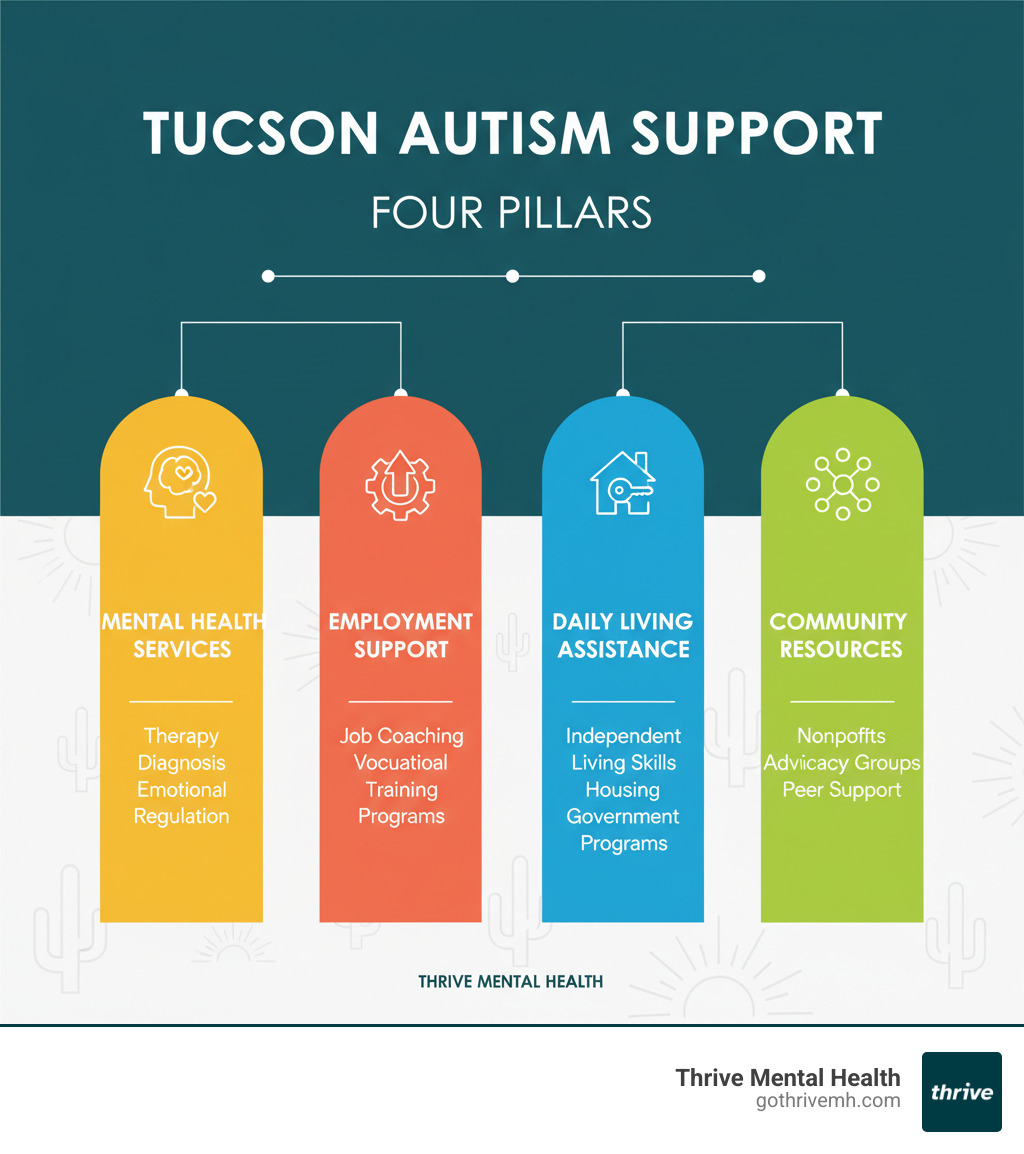
Quick Resource Guide:
- Mental Health: Mercy Care, Arizona Complete Health
- Employment: Project SEARCH, The Guide Group, Career Link Southwest, Vocational Rehabilitation
- Daily Living: Arizona Centers for Independent Living, DDD support coordination
- Government Aid: Division of Developmental Disabilities (DDD), AHCCCS/ALTCS
- Community Support: Autism Society of Southern Arizona, The Arc of Tucson, Tucson Alliance for Autism (TAFA)
Mental Health Support: Build Your Emotional and Social Toolkit
Having strong cognitive skills doesn’t make you immune to anxiety, depression, or the exhaustion of decoding a neurotypical world. Emotional regulation can feel impossible, and social situations can lead to hours of over-analyzing. This constant stress and anxiety are why targeted therapy is crucial.
Therapy isn’t about ‘fixing’ you; it’s about building a toolkit that works with your brain. You’ll learn to identify emotions before they become overwhelming, steer social interactions without burnout, and work toward self-acceptance. Many autistic adults also have co-occurring conditions like depression or ADHD, and integrated treatment that addresses these together is far more effective.

How is therapy different for adults with HFA?
Traditional therapy often fails autistic adults because it’s designed for neurotypical brains. A neurodivergent-affirming approach is different. It recognizes autism as a core part of who you are, not something to be cured. The goal is to work with your neurology, not against it.
- Structured and Direct: Sessions use clear, concrete language and focus on practical, observable skills.
- Adapted CBT: Cognitive-Behavioral Therapy (CBT) is modified to identify specific triggers for sensory overload or develop step-by-step social strategies.
- Authentic Social Skills: Training focuses on communication strategies that feel authentic to you, rather than forcing you to ‘mask’ or act neurotypical.
- Strengths-Based Models: Therapy emphasizes your inherent strengths, like attention to detail, logical thinking, and deep focus, as powerful assets.
- Individual and Group Therapy: Individual therapy provides a private space for deep work, while group therapy offers a chance to practice skills with peers who understand your experience.
Finding mental health and diagnostic services in Tucson
Finding the right support services for adults with high-functioning autism in tucson starts with providers who understand adult autism.
Start with your primary care physician for referrals. Be specific that you’re looking for specialists in adult autism, as many clinicians are only trained to work with children.
- The Mercy Care network provides diagnostic services for autism. If a provider has a long waiting list, ask for a referral to another provider within their network.
- Arizona Complete Health uses a whole-person approach, addressing medical and behavioral health needs together, which is ideal for autistic adults with co-occurring conditions.
A formal diagnosis is often required to access state-funded services through the Division of Developmental Disabilities (DDD) and workplace accommodations. To prepare for an assessment, gather any childhood records and write down specific examples of your current challenges.
If in-person appointments are difficult, virtual therapy options offer the flexibility you need. Thrive Mental Health provides virtual intensive outpatient programs that offer more support than weekly therapy from the comfort of your home.
Your Guide to Support Services for Adults with High-Functioning Autism in Tucson
Finding and keeping a job when you’re autistic is hard. The national unemployment rate for autistic adults is a staggering 60-80%. This isn’t due to a lack of skill; it’s because traditional hiring and workplace cultures weren’t built for neurodivergent minds.
The good news? Tucson has support services for adults with high-functioning autism in tucson that get results. Programs like Project SEARCH have a 70% job placement rate, and The Guide Group serves over 2,000 people with disabilities annually. You don’t have to figure this out alone.

Employment support services for adults with high-functioning autism in Tucson
Employment is about purpose and independence. Tucson offers several resources to help autistic adults steer the job market.
- Arizona’s Vocational Rehabilitation (VR): This is the first stop for many. VR provides comprehensive, customized support to help individuals with disabilities find and keep employment.
- Career Link Southwest: Working with VR, this group connects clients with employers committed to hiring and supporting neurodivergent employees for long-term success.
- The Guide Group: This organization takes a holistic approach, providing job placement, education, and socialization skills to help clients lead productive lives.
- Project SEARCH: This model program places young adults directly into businesses for hands-on learning, leading to a 70% job placement rate. Graduates build careers in fields that match their strengths.
Many of these programs offer individualized job coaching, resume building, and interview practice custom to neurodivergent communication styles. For self-advocacy and planning, use the Autism Society’s free resource: Employment Toolkit (PDF).
What should Tucson employers know about hiring autistic adults?
You’re sitting on an untapped talent pool. Autistic adults bring exceptional focus, attention to detail, analytical thinking, and loyalty. Hiring them requires a few intentional, low-cost adjustments.
- Provide reasonable accommodations: Offer quiet workspaces, noise-canceling headphones, flexible schedules, or written instructions.
- Use clear communication: Be direct and unambiguous. Avoid metaphors, sarcasm, and implied expectations.
- Offer sensory adjustments: Allow natural lighting or permit sunglasses indoors if bright lights are an issue.
- Assign a peer mentor: A mentor can help new employees steer unwritten workplace rules and culture.
Companies like Synchrony Financial in Arizona have proven that creating an inclusive environment where neurodivergent employees are valued gives them a competitive advantage.
Daily Living: Mastering Independence with the Right Support
Independent living is more than just having your own place. It’s about building the skills to manage finances, transportation, and home life while feeling connected to your community. These skills can be learned with the right support.
Central to this is the dignity of risk—the freedom to make your own choices and learn from experience, rather than being shielded from every potential mistake. This is a key part of true independence.
What residential and housing support is available?
Tucson offers several pathways to residential independence.
- Arizona Centers for Independent Living: This is a cornerstone resource, acting as a hub to connect adults with autism to housing, transportation, and personal care services.
- In-home support services: This option allows you to live in your own home while receiving customized assistance with tasks like meal prep, housekeeping, or managing bills. The goal is to build your skills over time.
- Supported living arrangements: These offer a middle ground, such as a shared apartment or group home with staff available as needed. They focus on teaching life skills in a real-world environment.
Long-term planning is also critical. Families should discuss future housing, financial, and guardianship needs early to ensure security and avoid crisis-driven decisions.
How to access Arizona government assistance programs [DDD & AHCCCS]
Navigating government programs can be confusing, but they are essential for accessing support services for adults with high-functioning autism in tucson.
The Division of Developmental Disabilities (DDD) is the primary gateway to state-funded services. To qualify, you must have a developmental disability like autism that began before age 18 and significantly impacts daily life. Once approved, a support coordinator will help you create a service plan and connect you with providers.
Arizona Health Care Cost Containment System (AHCCCS) is the state’s Medicaid program. It covers medical and behavioral health treatment, which is vital for adults with autism who often have co-occurring conditions. If you have a low income or meet disability criteria, you likely qualify.
A specialized program within AHCCCS is Arizona Long Term Care Services (ALTCS). It provides long-term care, including home and community-based services, for those who meet medical and financial criteria, focusing on keeping people in their communities.
At Thrive Mental Health, we work with most major insurance plans, including Arizona Complete Health and other AHCCCS providers, to ensure cost is not a barrier to care.
Community, Advocacy, and Education: Finding Your Place in Tucson
Finding where you belong is crucial. For autistic adults in Tucson, this means finding spaces where you can be yourself, connect with people who understand, and continue to grow. This could be a hobby group, a volunteer opportunity, or simply a familiar, safe environment.
Self-advocacy—speaking up for your needs at work and in healthcare—is a vital skill. Connecting with other autistic adults through peer support can be incredibly validating and empowering. Continuing education, whether through a university or a trade school, also keeps doors open for personal and professional development.

Key nonprofit and advocacy organizations in Tucson
When looking for support services for adults with high-functioning autism in Tucson, these local organizations are the backbone of the community.
- Autism Society of Southern Arizona (ASSA): A central hub for empowerment, advocacy, and adult-specific support groups.
- The Arc of Tucson: Part of a national network, they advocate for the rights and community inclusion of people with developmental disabilities.
- Tucson Alliance for Autism (TAFA): Offers structured social skills groups, evaluations, and consultations for individuals and families.
- Arizona Center for Disability Law: Provides legal protection and advocacy to ensure individuals with disabilities have access to justice and equality.
- DIRECT Center for Independence: Promotes the independent living philosophy, emphasizing consumer control, informed choice, and the dignity of risk.
Educational and skill-building resources
Tucson offers several programs to build practical skills and create new opportunities.
- SALT Center at the University of Arizona: Provides comprehensive academic support for university students with learning and attention challenges, including autism.
- Applied Behavior Analysis (ABA) therapy: Adapted for adults, ABA can help with practical goals like improving social communication or building adaptive life skills.
- SEEDs for Autism: Offers hands-on vocational training in fields like woodworking, ceramics, and technology, along with job placement support.
Many of these nonprofits also host workshops and social events, offering low-pressure opportunities to learn and connect.
Frequently Asked Questions about Autism Support in Tucson
How do I get an official autism diagnosis as an adult in Tucson?
Start by speaking with your primary care physician or a mental health provider for a referral to a specialist in adult autism. An assessment will likely involve interviews about your developmental history and current challenges. An official diagnosis is often the key to open uping support services for adults with high-functioning autism in Tucson, including government aid and workplace accommodations.
What financial help is available for adults with autism in Arizona?
Several programs offer financial support. The Arizona Division of Developmental Disabilities (DDD) funds services like employment programs and daily living support. AHCCCS, Arizona’s Medicaid program, covers medical and behavioral health costs. For those unable to work, Supplemental Security Income (SSI) provides monthly federal financial assistance. Advocacy organizations like The Arc of Tucson can offer guidance on navigating these applications.
Are there social groups specifically for adults with HFA in Tucson?
Yes. Social isolation is a major challenge, and Tucson has groups to help you connect. The Autism Society of Southern Arizona (ASSA) hosts social events and peer support meetings. The Tucson Alliance for Autism (TAFA) offers structured social communication groups for adults. These groups provide a space to build friendships and share experiences without the pressure to mask.
If you’re struggling with co-occurring mental health challenges, you may need more intensive support. Thrive Mental Health offers virtual therapy options that provide clinical support to complement community-based groups.
Take the Next Step Toward a More Supported Life
You’ve just explored the landscape of support services for adults with high-functioning autism in Tucson. Feeling overwhelmed is normal, but the most important takeaway is this: support exists, and you don’t have to find it alone.
The best path forward involves customized support that respects your neurodivergent brain. Whether you’re dealing with anxiety, employment issues, or isolation, the right help can make all the difference.
At Thrive Mental Health, we know that weekly therapy isn’t always enough. We offer intensive virtual and hybrid IOP/PHP programs for adults who need more structured, evidence-based treatment. Our flexible programs, including evening options, allow you to get support without putting your life on hold.
We work with most major insurance plans, including Cigna, Optum, and Aetna in Arizona, making quality care accessible. Our team specializes in helping adults with autism and co-occurring conditions like depression and anxiety, using affirming approaches that work.
You deserve a life where you feel supported and empowered. Taking the first step is what matters.
Ready for support? Thrive offers virtual and hybrid IOP/PHP programs with evening options. Verify your insurance in 2 minutes (no obligation) → Start benefits check. If you’re in crisis, call/text 988.