
Telehealth IOP: A Deeper Dive into Virtual Intensive Care

Why a Telehealth Intensive Outpatient Program Might Be Your Next Best Move
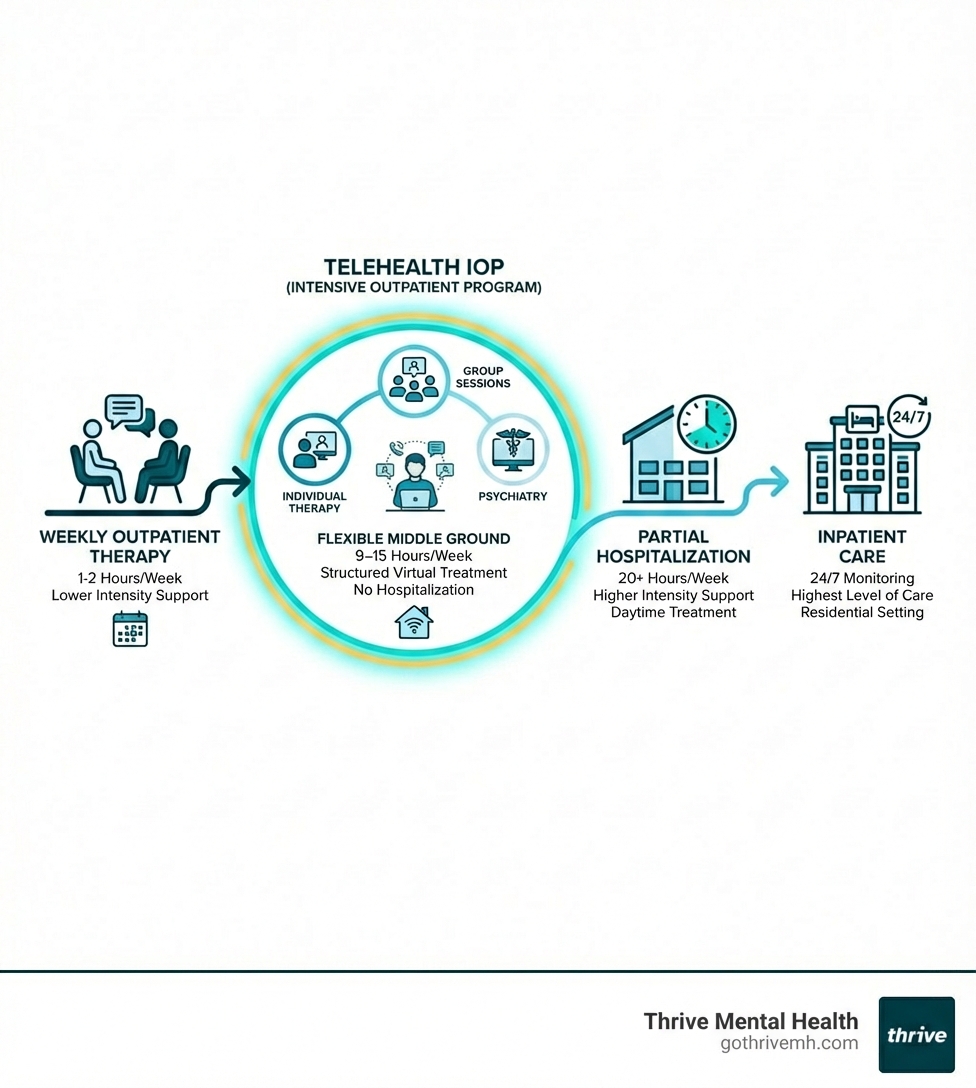
A telehealth intensive outpatient program (IOP) delivers structured mental health treatment virtually. Offering 9–15 hours of therapy per week via secure video, it’s designed for those who need more support than weekly therapy but don’t require 24/7 inpatient care. It’s intensive, evidence-based healing from the comfort of your Florida home.
Quick Facts:
- What it treats: Depression, anxiety, PTSD, substance use, eating disorders, and more.
- Time commitment: 3–5 days/week, 3 hours/day (morning or evening options).
- Core components: Individual & group therapy, psychiatry, medication management, and skills training.
- Who it’s for: Motivated adults with stable housing and reliable internet who need intensive support.
- Insurance: Most major plans cover virtual IOP, including Cigna, Aetna, UnitedHealthcare, and Blue Cross Blue Shield.
If weekly therapy isn’t enough—or you’re stepping down from a higher level of care—virtual IOP provides structure and clinical results without disrupting your life. Research shows virtual IOPs deliver outcomes equal to in-person programs, with added benefits like better engagement and zero commute time.
In Florida alone, 648,000 adults live with serious mental illness, and many struggle to find care that fits their schedule and location. Telehealth IOP changes the game.
I’m Nate Raine, CEO of Thrive Mental Health. For over a decade, I’ve focused on integrating technology with evidence-based care. Our telehealth intensive outpatient programs at Thrive are built to deliver measurable, rapid results for professionals, students, and families across Florida who need real support.
Basic telehealth intensive outpatient program vocab:
- telehealth for mental health
- My weekly sessions aren’t enough. What are some affordable online therapy programs that offer more frequent support?
- online therapy platforms
What Is a Telehealth IOP (And Why Does It Work?)
Defining the Telehealth Intensive Outpatient Program
An Intensive Outpatient Program (IOP) is a structured form of care that provides more support than traditional weekly therapy but is less restrictive than residential treatment. It’s a significant step up in care for individuals who need a higher level of support to manage mental health or substance use challenges.
A telehealth intensive outpatient program (Virtual IOP) delivers this same high-quality, structured treatment entirely online. Using secure, HIPAA-compliant technology, you can access intensive therapy from home, removing geographical barriers—whether you’re in a bustling city like Miami or a more remote part of the Panhandle—and scheduling conflicts that often prevent Floridians from getting help. This innovative approach provides flexible and accessible treatment without sacrificing clinical effectiveness.
To learn more, explore our More info about Intensive Outpatient Programs guide or our page on More info about Telehealth Therapy & Outpatient Programs.
Conditions Treated in a Virtual Setting
Our telehealth intensive outpatient programs are designed to treat a wide range of mental health and substance use disorders, including co-occurring conditions. Our integrated approach ensures all interconnected needs are addressed simultaneously for more sustainable recovery.
Conditions we treat:
- Depression: Manage symptoms, build coping skills, and find renewed hope.
- Anxiety disorders: Learn strategies to reduce overwhelming worry, social anxiety, and panic.
- PTSD and trauma: Specialized care for coping with the aftermath of traumatic events. See our More info about Trauma care page.
- Substance use disorders: A structured environment for recovery, focusing on relapse prevention.
- Eating disorders: Intensive support to develop healthier relationships with food and body image.
- Bipolar disorder: Stabilize mood, manage episodes, and maintain long-term wellness.
- OCD (Obsessive-Compulsive Disorder): Tools and therapies to break the cycle of obsessions and compulsions.
- Personality disorders: Focus on emotional regulation, interpersonal effectiveness, and distress tolerance.
- Neurodivergence: Specialized support for neurodivergent individuals. Find more on our More info about Neurodivergent Intensive Outpatient Treatment page.
The Core Components of Treatment
An effective telehealth intensive outpatient program equips you with practical skills for lasting change through evidence-based therapies.
Key components include:
- Individual Therapy: Weekly one-on-one sessions with a dedicated therapist for personalized treatment planning.
- Group Therapy: The cornerstone of IOP, where you connect with peers, share experiences, and learn recovery skills in a safe, supportive community.
- Family Therapy: Sessions to improve communication, address relational dynamics, and build a stronger family support system.
- Psychiatry and Medication Management: Access to psychiatric evaluations and ongoing medication management to optimize your well-being. Visit More info about Medication Management Online.
- Skills-Building: Dedicated training in coping mechanisms, emotional regulation, communication skills, and mindfulness.
- Relapse Prevention: For substance use, we focus on identifying triggers and developing strategies for long-term recovery.
How Virtual IOP Compares to Other Care Levels

Virtual IOP vs. Traditional In-Person IOP
A telehealth intensive outpatient program offers a powerful alternative to in-person care, delivering the same structured support with distinct advantages in accessibility and convenience.
| Feature | Traditional In-Person IOP | Telehealth Intensive Outpatient Program (VIOP) |
|---|---|---|
| Accessibility | Limited by geographic location and transportation | Accessible from anywhere with internet, removing physical barriers |
| Convenience | Requires travel to a facility, rigid schedule | Eliminates commute time, offers flexible morning/evening options |
| Cost Savings | Incurs costs for travel, childcare, and lost work time | Saves money on travel and childcare, reduces lost wages |
| Flexibility | Difficult to balance with work, school, or family | Allows you to maintain daily responsibilities and integrate treatment |
| Anonymity/Stigma | May involve being seen entering a treatment facility | Offers greater privacy and reduces feelings of stigmatization |
| Environment | Clinical setting | Comfortable, familiar home environment |
Our virtual IOPs replicate the face-to-face experience, ensuring you receive intensive, evidence-based treatment and build strong peer rapport with the added benefits of convenience and flexibility.
Telehealth IOP vs. Telehealth PHP: What’s the Difference?
Intensive Outpatient Programs (IOP) and Partial Hospitalization Programs (PHP) both offer structured care but differ in intensity and time commitment. For a full comparison, read our article on More info about IOP vs PHP.
A telehealth intensive outpatient program typically requires 9-12 hours per week, spread across 3-5 days. IOP is ideal for individuals who need more support than weekly therapy but can function independently and wish to maintain work, school, or family commitments.
A Telehealth Partial Hospitalization Program (PHP) is a higher level of care, requiring 20+ hours per week (often 5 days a week). PHP provides a more immersive therapeutic structure and is often used as a step-down from inpatient care or for those whose symptoms are too severe for IOP.
Both virtual options offer remote access, but the choice depends on the level of daily structure and support you need. For more on PHP, see our More info about Partial Hospitalization Program (PHP) guide.
A Day in the Life: What to Expect from a Telehealth Intensive Outpatient Program

Your Typical Weekly Schedule
A telehealth intensive outpatient program involves a structured schedule designed for therapeutic progress while fitting into your life.
Our virtual IOPs typically include:
- 3-5 days per week of scheduled sessions.
- 3 hours per day of active therapy.
- Morning or evening options to fit your schedule (e.g., 9 AM–12 PM or 5 PM–8 PM).
- A mix of group therapy and individual sessions, with group work forming the core of the program.
This consistent routine provides accountability and ensures you are always moving toward your recovery goals. It’s an intensive commitment that delivers significant results. To learn more, see our guide on More info about what to expect in an IOP.
Therapies and Modalities Used
Our telehealth intensive outpatient programs use a variety of evidence-based therapies adapted for effective virtual delivery to promote healing and skill development.
Common therapies include:
- Cognitive Behavioral Therapy (CBT): Helps you identify and reframe negative thought patterns and behaviors. Highly effective for depression, anxiety, and mood disorders.
- Dialectical Behavioral Therapy (DBT): Focuses on emotional regulation, mindfulness, distress tolerance, and interpersonal effectiveness. Especially helpful for intense emotions and relationship difficulties.
- EMDR (Eye Movement Desensitization and Reprocessing): A powerful therapy for processing traumatic memories and reducing their emotional hold, delivered effectively in a virtual setting.
- Somatic Therapy: Addresses the mind-body connection to help release stored trauma and tension.
- Art Therapy: Uses creative expression to explore emotions and gain self-awareness. Learn about More info about Art Therapy and Counseling.
- Motivational Interviewing (MI): A client-centered approach to strengthen your motivation for change and recovery.
- Psychoeducation: Provides essential information about your condition and treatment to empower you with knowledge.
Your Dedicated Treatment Team
Behind every successful telehealth intensive outpatient program is a multidisciplinary team providing holistic, collaborative care custom to your needs.
Your team may include:
- Therapists: Licensed professionals who lead individual and group sessions.
- Psychiatrists: Medical doctors who provide evaluations and manage medication.
- Case Managers: Professionals who help coordinate care and connect you with resources.
- Coaches: Recovery coaches who offer motivational support and help with goal setting.
This team works together to create and adjust your personalized treatment plan, ensuring you receive the highest standard of care. Meet our More info about Expert Mental Health Professionals.
Is Virtual IOP Right for You? [Key Considerations]
The Benefits of Getting Care from Home
Choosing a telehealth intensive outpatient program offers powerful benefits that make recovery more accessible and integrated into your daily life.
Why a virtual IOP might be your best move:
- Increased Access to Care: It breaks down geographical barriers, offering expert care to residents throughout Florida, from the Keys to the Panhandle.
- Reduced Stigma: Receiving treatment discreetly from home can alleviate the fear of judgment.
- Schedule Flexibility: Morning and evening options allow you to continue with work, school, or other commitments.
- Maintain Daily Life: Attend sessions without putting your career or family responsibilities on hold.
- Improved Engagement: The convenience of home often leads to better attendance and commitment to treatment.
- Proven Effectiveness: Studies show equal outcomes for virtual IOPs compared to in-person care, so you don’t sacrifice quality for convenience.
- Cost Savings: Eliminating travel and related expenses makes treatment more affordable.
For more insights, check out More info about the benefits of a Virtual IOP.
Who is a telehealth intensive outpatient program best for?
A telehealth intensive outpatient program is a powerful tool, but it works best for individuals whose needs and circumstances align with its structure.
Virtual IOP is often ideal for:
- Individuals needing more than weekly therapy: Get the consistent, intensive support needed for real progress.
- Those with a stable living environment: A safe, supportive home provides a foundation for virtual treatment.
- Individuals who are not an acute danger to themselves or others: Virtual IOP is not for crises requiring 24/7 supervision. If you’re in crisis, call/text 988 right now. You are not alone.
- Motivated individuals: Success depends on your commitment to participate and apply what you learn.
- Those comfortable with technology: Basic familiarity with computers and video calls ensures a smooth experience.
- People in rural or underserved areas: Virtual IOP removes barriers to specialized care.
- Busy professionals, students, and parents across Florida: Flexible scheduling makes it possible to get intensive treatment without disrupting your life.
Potential Challenges and How to Overcome Them
While a telehealth intensive outpatient program has many advantages, it’s wise to prepare for potential challenges.
Common challenges include:
- Technology issues: Unstable internet or device problems can be disruptive.
- Solution: We recommend a reliable internet connection and can help troubleshoot technical issues.
- Distractions at home: Family, pets, or household chores can pull your focus.
- Solution: Create a dedicated, quiet space for sessions and ask for uninterrupted time.
- Building virtual connections: Some worry about connecting with therapists and peers online.
- Solution: Our clinicians are skilled at fostering strong virtual rapport. Active participation helps build genuine peer support.
- Privacy concerns: Ensuring confidentiality in a shared living space can be difficult.
- Solution: Use headphones and find a private room. Discuss your need for privacy with housemates.
Proactively addressing these challenges is key to a successful virtual IOP experience. For more, read our article on More info about challenges in behavioral health care.
Paying for Care: Insurance, Costs, and Finding a Provider
How a telehealth intensive outpatient program handles insurance
Most major insurance providers recognize the effectiveness of virtual IOPs and offer coverage, making care more accessible.
Here’s what you need to know:
- Coverage Varies: While most programs accept insurance, your specific coverage depends on your plan’s deductible, co-pay, and network status. This will determine your out-of-pocket costs.
- In-Network vs. Out-of-Network: We are in-network with major providers in Florida, including UnitedHealthcare/Optum, Cigna, Aetna, and Blue Cross Blue Shield. Many plans also offer out-of-network benefits.
- Verifying Benefits: The best way to understand your coverage is to let us verify your benefits. Our team can provide a clear picture of your financial responsibility.
We believe financial barriers shouldn’t prevent access to quality care. For more information, check out our guide on More info about insurance covered online therapy.
What to Look For in a Quality Provider
Choosing the right telehealth intensive outpatient program is critical for your recovery. Here’s what to look for in a quality provider.
- Licensing and Accreditation: Verify the provider is licensed in Florida and accredited by bodies like the Joint Commission Accreditation. This signals high standards for safety and care.
- Evidence-Based Practices: The program should use scientifically proven therapies like CBT, DBT, and EMDR.
- Qualified Staff: Inquire about the credentials and experience of the clinical team. They should be licensed professionals with expertise in virtual care.
- Program Structure: Look for a clear schedule, a mix of therapy types, and aftercare planning.
- HIPAA Compliance: Ensure the telehealth platform is HIPAA-compliant to protect your privacy.
- Personalized Treatment: A quality provider will conduct a thorough assessment to create a treatment plan custom to your goals.
Our guide on More info about finding an ideal therapist offers more tips.
Frequently Asked Questions about Telehealth IOP
What technology do I need for a virtual IOP?
To participate in a telehealth intensive outpatient program, you only need a few basic items.
Here’s a quick checklist:
- A stable internet connection: This is essential for clear, uninterrupted video sessions.
- A device with a camera and microphone: A smartphone, tablet, or computer will work. A larger screen is often better for group sessions.
- Headphones: These improve audio quality and increase privacy.
- A private, quiet space: A dedicated area free from interruptions is crucial for focus and confidentiality.
If you have concerns about technology, please let our team know. We can offer guidance to ensure you can participate.
How is my privacy protected during online therapy?
Protecting your privacy in a telehealth intensive outpatient program is our top priority. We adhere to strict standards to keep your information secure.
Here’s how we protect you:
- HIPAA-Compliant Platforms: We use only HIPAA-compliant video platforms with advanced encryption, designed specifically for secure healthcare communication. Learn more about More info about HIPAA compliant online therapy.
- Data Encryption: All video, audio, and chat data is encrypted, making it unreadable to unauthorized parties.
- Strict Confidentiality: Our clinical staff is bound by law and professional ethics to keep your information private.
- Secure Records: Your health records are stored in secure electronic systems that meet industry-leading security standards.
We are committed to maintaining the highest level of privacy and security throughout your treatment.
Can teens and young adults join a telehealth IOP?
Yes. Many telehealth intensive outpatient programs are designed for the unique needs of adolescents and young adults.
What to expect:
- Specialized Tracks: We offer age-appropriate tracks with relevant therapeutic content and peer groups.
- Custom Therapies: Treatment addresses common challenges like academic stress, peer pressure, and family dynamics.
- Flexible Scheduling: Virtual IOP allows teens and young adults to attend sessions without disrupting school or social activities.
- Family Involvement: Family therapy is often a key component for adolescents to improve communication and support at home.
- Community Building: Virtual platforms help create a sense of community, which is vital for reducing isolation and building resilience.
Learn more about our More info about virtual counseling for teens services.
Take the Next Step Toward Healing
A telehealth intensive outpatient program is a powerful, flexible, and effective path to recovery for residents across Florida. It blends evidence-based therapies with modern technology to remove barriers to high-quality mental healthcare. Thrive Mental Health’s expert-led virtual IOPs are designed for real life, helping you build skills and find healing from anywhere in the Sunshine State.
Ready for support? Thrive offers virtual and hybrid IOP/PHP programs with evening options for Florida residents. Verify your insurance in 2 minutes (no obligation) → Start benefits check or call 561-203-6085. If you’re in crisis, call/text 988.