
Trauma Survival Guide – Effective Ways to Deal with Trauma

How to Deal with Trauma [Your First Step Away from Pain]
How to deal with trauma starts with understanding one crucial truth: you’re not alone, and what you’re feeling is a normal response to abnormal events. Trauma happens when overwhelming experiences shatter your sense of safety—and the emotional and physical fallout can last long after the event itself.
Quick Answer: How to Deal with Trauma
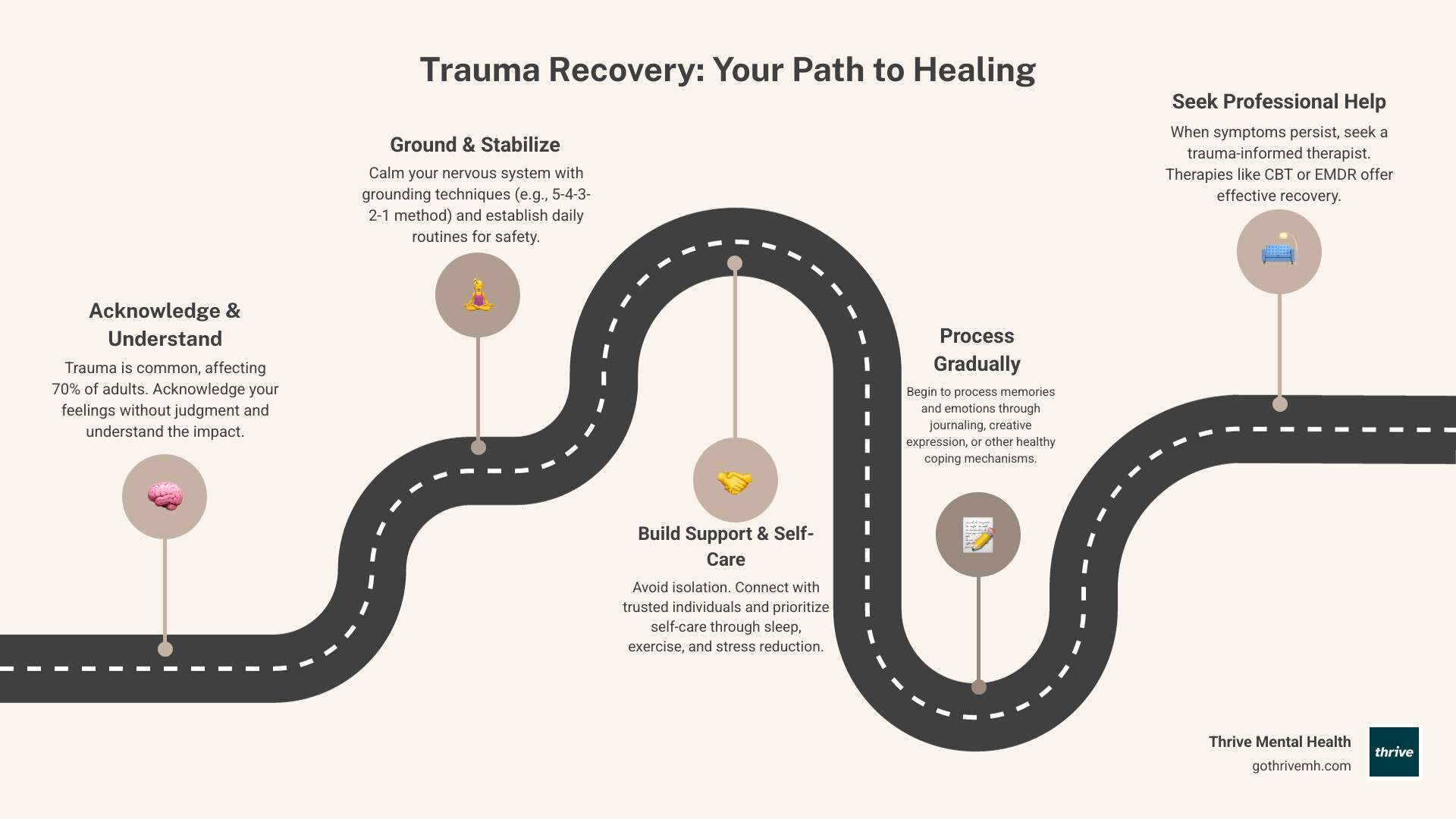
- Acknowledge your feelings without judgment or shame
- Practice grounding techniques like the 5-4-3-2-1 method to calm your nervous system
- Avoid isolation by connecting with trusted friends, family, or support groups
- Establish safety through firm boundaries and structured routines
- Seek professional help from a trauma-informed therapist when symptoms persist
- Prioritize self-care with regular sleep, exercise, and stress-reducing activities
- Process memories gradually through journaling, therapy, or creative expression
The Reality of Trauma
About 70% of adults in the U.S. have experienced at least one traumatic event in their lives. These events—whether sudden and acute or ongoing and complex—can leave lasting scars that affect your relationships, work, physical health, and sense of self. You might struggle with intrusive memories, avoid people or places that remind you of what happened, or feel constantly on edge.
Healing is possible. With the right strategies and support, you can move from survival to recovery. This guide provides actionable, evidence-based steps to help you process trauma, manage symptoms, and reclaim control of your life.
I’m Nate Raine, CEO of Thrive Mental Health. I’ve spent over a decade helping thousands of people learn how to deal with trauma using the same evidence-based methods we use at Thrive to support individuals across Florida. We don’t believe in erasing the past—we believe in integrating it so you can reclaim your life. This guide shows you how.
How to deal with trauma terms to remember:
What is Trauma? (And Why Your Brain Feels “Stuck”)
Trauma is a deeply distressing or upsetting emotional response to a shocking, scary, or dangerous experience. It’s not just about what happened, but your subjective emotional experience of fear and helplessness that determines if an event is traumatic. This could be a single, overwhelming incident like a car accident or natural disaster, or something ongoing, like abuse or living in an unsafe environment.
When we experience trauma, our body’s natural “fight-or-flight” response kicks in, designed to protect us from danger. However, in trauma, this response can get “stuck,” leaving our nervous system dysregulated. This means our brain and body continue to react as if the danger is still present, even when we are safe. This is why many people feel a sense of being “stuck” in their trauma, constantly on high alert or disconnected.
Understanding the different types of trauma can help us grasp its varied impacts:
| Type of Trauma | Description | Examples |
|---|---|---|
| Acute Trauma | Results from a single, short-term, distressing event. | Car accident, a hurricane or other natural disaster, isolated assault. |
| Complex Trauma | Arises from repeated and prolonged exposure to various traumatic events, often in childhood or by a caregiver. | Chronic abuse (physical, emotional, sexual), neglect, domestic violence, living in an unsafe environment. |
| Secondary Trauma | Occurs when you experience distress after hearing about another person’s horrific or traumatic experience. Also known as “vicarious trauma” or “compassion fatigue.” | First responders, mental health professionals, aid workers, or loved ones of trauma survivors. |
It’s particularly important to recognize the profound impact of Childhood Trauma. Disturbing occurrences like physical, sexual, or emotional abuse, neglect, or household dysfunction during formative years can have a long-term impact on adults. Research suggests that children who experience trauma are twice as likely to develop a mental health condition in the future. Unresolved childhood trauma can shape how we view the world, form relationships, and even our overall well-being as adults. For more in-depth understanding, explore scientific research on trauma-related disorders.
What are the signs and symptoms of trauma?
Trauma doesn’t just affect our minds; it manifests in our emotions, thoughts, and even our physical bodies. It’s crucial to recognize these signs, both in ourselves and in others, as they are indicators that our nervous system is struggling to return to a state of safety.
Emotional and Psychological Symptoms:
- Shock and Denial: Feeling numb or disbelieving about what happened.
- Confusion: Difficulty concentrating or thinking clearly.
- Anger and Irritability: Experiencing sudden outbursts or a persistent short temper.
- Anxiety and Fear: Constant worry, panic attacks, or feeling easily startled.
- Guilt and Shame: Blaming yourself or feeling like you deserved what happened.
- Withdrawal and Isolation: Pulling away from friends, family, and social activities.
- Sadness and Hopelessness: Persistent low mood, depression, or a sense of despair.
- Numbness: Feeling disconnected from your emotions or even your body.
- Mood Swings: Rapid shifts between intense emotions.
Physical Symptoms:
- Insomnia and Sleep Disturbances: Trouble falling or staying asleep, nightmares, or night sweats.
- Fatigue: Persistent tiredness, even after rest.
- Racing Heartbeat: Feeling your heart pound, even when calm.
- Aches and Pains: Unexplained chronic pain, headaches, or muscle tension.
- Being Easily Startled: An exaggerated jump response to sudden noises or movements.
- Edginess: Feeling constantly on high alert or agitated.
- Digestive Issues: Stomach pain, nausea, or other gastrointestinal problems.
- Rapid Breathing: Short, shallow breaths, especially during moments of stress.
- Shaking or Trembling: Involuntary physical tremors.
These symptoms can be overwhelming, and sometimes they can persist for a long time, leading to conditions like Post-Traumatic Stress Disorder (PTSD). For a comprehensive overview, refer to our PTSD: Mental Health Complete Guide.
How does trauma affect your daily life?

The ripples of trauma can extend into every corner of your life, making once-simple tasks feel monumental and altering your relationships and sense of self. When your brain is constantly scanning for danger, it’s hard to engage fully with the present.
- Relationship Difficulties: Trauma can lead to intimacy issues, difficulty trusting others, and challenges in expressing emotions. You might become hypervigilant, expecting betrayal, or isolate yourself to avoid potential hurt. This can result in increased interpersonal conflict or unhealthy attachment patterns like avoidance or clinginess.
- Work or School Performance Issues: Difficulty concentrating, memory problems, and a constant state of anxiety can significantly impair your ability to focus, learn, and perform at work or school. You might miss deadlines, struggle to retain information, or find it hard to engage with colleagues or classmates.
- Avoidance of People and Places: To protect yourself from re-experiencing distress, you might start avoiding situations, people, or places that remind you of the traumatic event. This can severely limit your life, preventing you from pursuing opportunities or enjoying activities you once loved.
- Loss of Interest in Hobbies: The emotional numbness and pervasive sadness that often accompany trauma can lead to a significant loss of interest in activities that once brought you joy. Hobbies and passions can feel meaningless or too exhausting to pursue.
- Overall Well-being: Unresolved trauma can lead to a host of mental health conditions like depression, anxiety, and even physical health issues such as cardiovascular disease, autoimmune disorders, and chronic pain. Basic self-care, like grooming and nutrition, can also become challenging.
Understanding these impacts is the first step toward healing. We dig deeper into these effects in our guide on Understanding Post Traumatic Event Symptoms and Recovery Paths.
Your Action Plan: How to Deal with Trauma in Daily Life
How to deal with trauma effectively involves shifting from passive coping—where we might shut down, avoid, or distract ourselves—to active coping. Active coping means taking direct, intentional steps to deal with your emotions and the challenges that trauma brings. It’s about facing your feelings in healthy ways, building new skills, and reclaiming a sense of control over your life. This isn’t about ignoring what happened or pretending it didn’t hurt; it’s about courageously engaging with your healing journey.

Start with Safety: Grounding and Self-Regulation Techniques
When trauma has left your nervous system on high alert, creating a sense of safety is paramount. Grounding and self-regulation techniques are powerful tools to bring you back to the present moment, calm overwhelming emotions, and remind your body that it is safe.
- Grounding Techniques: These help you reconnect with the “here and now.” A popular method is the 5-4-3-2-1 technique:
- Name 5 things you can see.
- Name 4 things you can feel (e.g., your clothes on your skin, the chair beneath you).
- Name 3 things you can hear.
- Name 2 things you can smell.
- Name 1 thing you can taste.
- Mindful Breathing: Deep, slow breaths can signal to your nervous system that you are safe. Practice belly breathing, where you inhale deeply, feeling your belly rise, and exhale slowly, letting your belly fall. Focus solely on the sensation of your breath.
- Progressive Muscle Relaxation: This technique involves systematically tensing and then relaxing different muscle groups in your body, one by one. It helps you become aware of physical tension and consciously release it.
- Creating a Self-Care Routine: A consistent routine provides structure and predictability, which can be incredibly soothing for a traumatized nervous system. This includes regular meal times, consistent sleep schedules, and daily activities that nourish your mind, body, and spirit.
- Prioritizing Sleep: Sleep is not a luxury; it’s essential for healing. Trauma often disrupts sleep, but good sleep hygiene (a dark, cool room, avoiding screens before bed, consistent bedtime) can make a significant difference. If you can’t sleep, get up and do something soothing or pleasant until you feel tired again.
Active vs. Passive Coping: How to Deal with Trauma Head-On
When we’re reeling from trauma, our instincts might tell us to avoid, numb, or distract ourselves. This is passive coping, and while it might offer temporary relief, it ultimately prevents true healing. Active coping, on the other hand, means confronting your emotions and challenges head-on, in healthy and constructive ways.
Active Coping Involves:
- Facing Emotions: Instead of bottling them up, acknowledge your feelings—sadness, anger, fear, guilt. Allow yourself to feel them without judgment.
- Developing Healthy Skills: Learning new ways to manage stress, regulate emotions, and communicate effectively. This builds resilience and a sense of agency.
- Problem-Solving: Identifying specific issues related to your trauma and taking concrete steps to address them.
- Seeking Support: Actively reaching out to trusted individuals or professionals for help and guidance.
Negative Coping Mechanisms to Avoid:
These strategies might seem helpful in the short term, but they can worsen trauma symptoms and hinder long-term recovery:
- Substance Use: Using alcohol or drugs to numb pain or escape memories can lead to addiction and exacerbate anxiety and depression.
- Isolation: While it’s common to withdraw after a traumatic experience, isolating yourself deprives you of crucial social support, which studies show can reduce stress hormones like cortisol.
- Self-Blame: Constantly replaying events and blaming yourself for what happened can perpetuate feelings of shame and worthlessness.
- Excessive Distraction: While healthy distractions have their place, constantly avoiding thoughts and feelings through endless scrolling, overworking, or other compulsive behaviors prevents you from processing the trauma.
Reclaim Your Life: Practical Strategies for how to deal with trauma
Healing from trauma is a courageous journey that involves integrating the traumatic experience into your life in a way that allows you to live more fully and freely. Here are practical, actionable strategies for how to deal with trauma and reclaim your sense of self and agency:
- Identifying Triggers: Understanding what activates your trauma responses is a powerful step. Pay attention to people, places, sounds, smells, or even times of year that bring back difficult feelings or memories. Keeping a mood diary can help you track these patterns. Once identified, you can either avoid triggers when possible or develop coping strategies to use when they’re unavoidable.
- Setting Firm Boundaries: Trauma can erode your sense of safety and control. Establishing clear boundaries in your relationships and environment is crucial for rebuilding these. This means understanding your limits, communicating them clearly, and enforcing them respectfully. Saying “no” when necessary and protecting your energy are acts of self-compassion.
- Journaling for Emotional Release: Writing down your thoughts and feelings can be a powerful way to process experiences, gain insight, and release pent-up emotions. It doesn’t have to be perfect; simply putting pen to paper (or fingers to keyboard) can create a safe space for expression.
- Creative Expression: Engaging in creative activities offers a non-verbal outlet for emotions that might be too complex or painful to articulate. Whether it’s drawing, painting, playing an instrument, dancing, or crafting, creative expression can help you externalize and process your inner world.
- The Power of Exercise: Physical activity can be incredibly beneficial for processing trauma. It helps to release tension, reduce stress hormones, and can even help you feel more connected to your body rather than disconnected. Choose activities you enjoy, whether it’s walking, dancing, yoga, or sports. Regular physical activity can reduce the psychological and physiological responses to stress. For more on this, explore research on exercise and trauma processing.
- Focusing on Controllable Aspects of Life: When trauma has made you feel helpless, regaining a sense of agency is vital. Shift your energy towards things you can influence, such as your daily routine, self-care habits, personal goals, or how you respond to challenges. This empowers you and reduces feelings of overwhelm.
- Self-Compassion and Patience: Healing is not linear, and setbacks are a normal part of the process. Treat yourself with the same kindness and understanding you would offer a good friend. Avoid self-blame and remember that recovery takes time. Be patient with your progress, celebrating every small victory along the way.
- Building a Strong Support System: While it’s common to withdraw after a traumatic experience, your relationships with others can be a source of immense strength. Connecting with trusted friends, family, or support groups provides emotional validation, reduces feelings of isolation, and can even lower stress levels.
- Celebrating Small Victories and Setting Realistic Goals: Break down your healing journey into smaller, manageable steps. Acknowledging and celebrating every bit of progress, no matter how small, reinforces positive change and motivates you to continue.
- Routine and Lifestyle: Establishing and maintaining a predictable routine can provide a sense of stability and normalcy, which is incredibly grounding after trauma. This includes consistent sleep schedules, regular meals, and dedicated time for self-care and enjoyable activities.
In Crisis? You Are Not Alone.
If you or someone you know is struggling or having thoughts of suicide, call or text the 988 Suicide & Crisis Lifeline at 988 or chat at 988lifeline.org/chat/. In life-threatening situations, call 911.
When Self-Help Isn’t Enough: Finding Professional Trauma Treatment
While self-help strategies are invaluable, there are times when the impact of trauma requires professional intervention. Knowing when to seek help is a sign of strength, not weakness.
Signs You Need Professional Help:
- Worsening Symptoms: If your emotional or physical symptoms are intensifying or becoming unmanageable.
- Inability to Function: If trauma symptoms are severely interfering with your daily life, relationships, work, or school.
- Severe Depression or Anxiety: Persistent feelings of deep sadness, hopelessness, panic attacks, or overwhelming worry.
- Persistent Symptoms: If symptoms have lasted for several months or longer and show no signs of improvement.
- Self-Harm or Suicidal Thoughts: If you are experiencing thoughts of harming yourself or ending your life, seek immediate professional help.
- Substance Abuse: If you are relying on alcohol or drugs to cope with your trauma symptoms.
Finding a trauma-informed therapist is crucial. This means seeking a professional who specializes in trauma, understands its complex impact on the brain and body, and uses evidence-based approaches designed specifically for trauma recovery.
What are the most effective therapies for trauma?
The landscape of trauma therapy has evolved significantly, offering highly effective, evidence-based treatments that can help you process past experiences and build a healthier future.
- Cognitive Behavioral Therapy (CBT): This widely recognized therapy helps you identify and change unhelpful thinking patterns and behaviors that contribute to your trauma symptoms. CBT for PTSD is a very common and effective treatment, as studies even show it might reduce the risk of developing PTSD.
- Eye Movement Desensitization and Reprocessing (EMDR): EMDR is a unique therapy that combines elements of CBT with bilateral stimulation (such as eye movements) to help your brain reprocess traumatic memories. It helps reduce the emotional charge associated with these memories, allowing you to integrate them more adaptively. You can read inspiring EMDR Success Stories: Healing Journeys for PTSD Treatment to see its impact.
- Somatic Experiencing (SE): SE focuses on the body’s natural self-regulating systems and helps release stored trauma from the body. It involves tracking bodily sensations to help individuals discharge “frozen” fight-or-flight energy, restoring a sense of calm and safety. For a deeper dive, explore Somatic Therapy vs. EMDR: Which Is Right for You?.
- Intensive Outpatient (IOP) and Partial Hospitalization (PHP) Programs: For individuals in Florida who need more structured support than weekly therapy, Intensive Outpatient (IOP) and Partial Hospitalization (PHP) programs offer comprehensive, evidence-based treatment. At Thrive Mental Health, we specialize in providing expert-led virtual and in-person IOP/PHP programs for adults and young professionals throughout Florida. These programs combine clinical expertise with flexible scheduling to support significant healing right where you are.
Does insurance cover trauma therapy?
Accessing high-quality trauma treatment in Florida, especially through comprehensive programs like IOP and PHP, is a critical concern for many. We understand that navigating insurance can be daunting. Many insurance providers in Florida, including major carriers like Cigna, Optum, and Florida Blue, offer coverage for mental health services, including trauma therapy and intensive outpatient programs. However, coverage can vary widely depending on your specific plan. We encourage you to verify your benefits, and our team at Thrive Mental Health is here to assist Florida residents. Our dedicated admissions team can help you understand your coverage and ensure you get the most out of your benefits. For more information on accessing care, including virtual options, visit our page on Online Counseling for Trauma.
How to Support a Loved One Through Trauma
Supporting someone who is experiencing trauma can be challenging, but your presence and understanding can make a profound difference.
- Be Patient and Understanding: Healing is a non-linear process, and there will be good days and bad days. Avoid putting pressure on them to “get over it.”
- Listen Without Pressure: Offer a safe space for them to talk without judgment or unsolicited advice. Sometimes, simply being heard is the most powerful support.
- Offer Practical Help: Trauma can make everyday tasks overwhelming. Offer concrete assistance with chores, meals, or childcare.
- Help Them Socialize: While they might want to withdraw, gentle encouragement to engage in social activities can be beneficial. Social connection is a powerful antidote to isolation.
- Don’t Take Symptoms Personally: Trauma can manifest as irritability, mood swings, or withdrawal. Understand that these are symptoms of their pain, not a reflection of your relationship.
- Encourage Professional Help: Gently suggest seeking professional treatment. Offer to help them research therapists or even accompany them to an initial appointment. The NIMH offers guidance on how to help a loved one with PTSD.
In Crisis? You Are Not Alone.
If you or someone you know is struggling or having thoughts of suicide, call or text the 988 Suicide & Crisis Lifeline at 988 or chat at 988lifeline.org/chat/. In life-threatening situations, call 911.
Frequently Asked Questions about Dealing with Trauma
What is the first step in dealing with trauma?
The first step is to acknowledge the event’s impact and prioritize your physical and emotional safety. This means removing yourself from any ongoing danger and using grounding techniques to calm your nervous system and bring you back to the present moment.
Can you fully heal from trauma?
Healing from trauma is about integration, not erasure. It means the traumatic memories no longer control your life or dictate your future. Through effective coping strategies and therapy, you can significantly reduce symptoms, regain a sense of agency, and live a full, meaningful life.
How long does it take to recover from trauma?
There is no set timeline for trauma recovery. It is a deeply personal journey that depends on many factors, including the type and severity of the trauma, your individual resilience, your support system, and the coping strategies and professional help you engage with. Be patient and compassionate with yourself through the process, recognizing that healing is often a gradual, non-linear path.
Your Path to Healing Starts Now: Take the First Step
Learning how to deal with trauma is an active process, a courageous journey toward reclaiming your life from the grip of past pain. While the path to healing can be challenging, it’s also incredibly rewarding, leading to greater self-awareness, resilience, and a deeper connection to yourself and others. You have the power to integrate your experiences, manage your symptoms, and build a future filled with hope and purpose.
You don’t have to steer this journey alone. Support is crucial for recovery, and professional guidance can provide the tools and framework for lasting healing. For residents of Florida, Thrive Mental Health offers expert-led, evidence-based programs, including virtual and in-person Intensive Outpatient (IOP) and Partial Hospitalization (PHP) programs, designed to support you every step of the way.
Ready for support in Florida? Thrive offers virtual and hybrid IOP/PHP programs with evening options available throughout the state. Verify your insurance in 2 minutes (no obligation) → Start benefits check or call our Florida-based team at 561-203-6085. If you’re in crisis, call/text 988.