
Virtual Relief: The Ultimate Guide to Online Trauma Therapy

Best Online Trauma Therapy: Faster Healing Without Leaving Home
Best online trauma therapy isn’t about vague “support.” It’s about getting your life back faster—with expert, trauma-focused care you can access from your couch.
If you’re here, something’s not working:
- You’re exhausted but can’t stay asleep.
- You keep replaying what happened, no matter how hard you try to move on.
- Work, parenting, or relationships feel like walking through mud.
You’ve already proven you can survive hard things. But white-knuckling it through trauma symptoms long-term comes with a cost: burnout, broken relationships, missed work, and a body that never fully relaxes.
Online trauma therapy changes the equation. You get:
- No commute, no waiting room, no extra overwhelm.
- Licensed trauma specialists in Florida.
- The same evidence-based care you’d get in-office—often with faster, more consistent access.
Research is clear: online cognitive behavioral therapy for PTSD is as effective as face-to-face therapy, with significant, lasting improvements in PTSD, depression, and anxiety.
In this guide, you’ll learn:
- What trauma actually does to your brain and body.
- Which online trauma therapies work best (EMDR, TF-CBT, somatic work—and when to use each).
- How to choose the right online trauma therapist in your state.
- When weekly therapy isn’t enough—and how virtual IOP/PHP can give you more support without inpatient hospitalization.
I’m Nate Raine, CEO of Thrive Mental Health. Our team has spent over a decade building virtual and hybrid programs—like Virtual IOP and PHP—that make best online trauma therapy actually accessible. We work with major insurers like Cigna, Optum, and Florida Blue so cost doesn’t block your recovery.
If you’re tired of “just coping” and want a clear path forward, you’re in the right place.
Best online trauma therapy helpful reading:
- Somatic Therapy vs. EMDR: Which is Right For You?
- benefits of emdr therapy
- benefits of somatic therapy
- Virtual IOP: How Online Care Works at Thrive
What is Trauma and Why Does It Stick With You?
Trauma isn’t just a bad memory; it’s a profound experience that can deeply impact our mental, emotional, and physical well-being. At Thrive Mental Health, we understand that “trauma can affect absolutely anyone.” It’s defined as anything we perceive as life-threatening to ourselves or others that leaves us feeling overwhelmed.
The Diagnostic and Statistical Manual of Mental Disorders (DSM-5) specifies trauma as direct or indirect exposure to “death, threatened death, actual or threatened serious injury, or actual or threatened sexual violence.” This clinical definition helps us understand the severe impact of these events.
However, trauma isn’t always a “Big T” event like a major accident or combat. There are also “Little t” traumas, which are non-life-threatening but still challenging events like a sudden job loss, an affair, or ongoing emotional abuse. While not life-threatening, these can still cause significant distress and symptoms.
When trauma persists and interferes with daily life, it can lead to Post-Traumatic Stress Disorder (PTSD). PTSD is characterized by intrusive thoughts, avoidance of trauma reminders, negative changes in mood, and heightened arousal. It’s a surprisingly common condition, affecting more women than men. Approximately one in three individuals who experience severe trauma will develop PTSD.
For those who experience prolonged or repeated trauma, particularly in childhood, Complex PTSD (C-PTSD) may develop. This often involves difficulties with emotional regulation, self-perception, relationships, and finding meaning in life.
Beyond personal experiences, trauma can also be tied to our identity or community. Identity-based trauma stems from experiences of discrimination, prejudice, or violence due to one’s race, gender, sexuality, or other identity markers. Similarly, religious trauma can arise from abuse by religious leaders or experiences within a religious context that cause spiritual, psychological, or emotional harm.
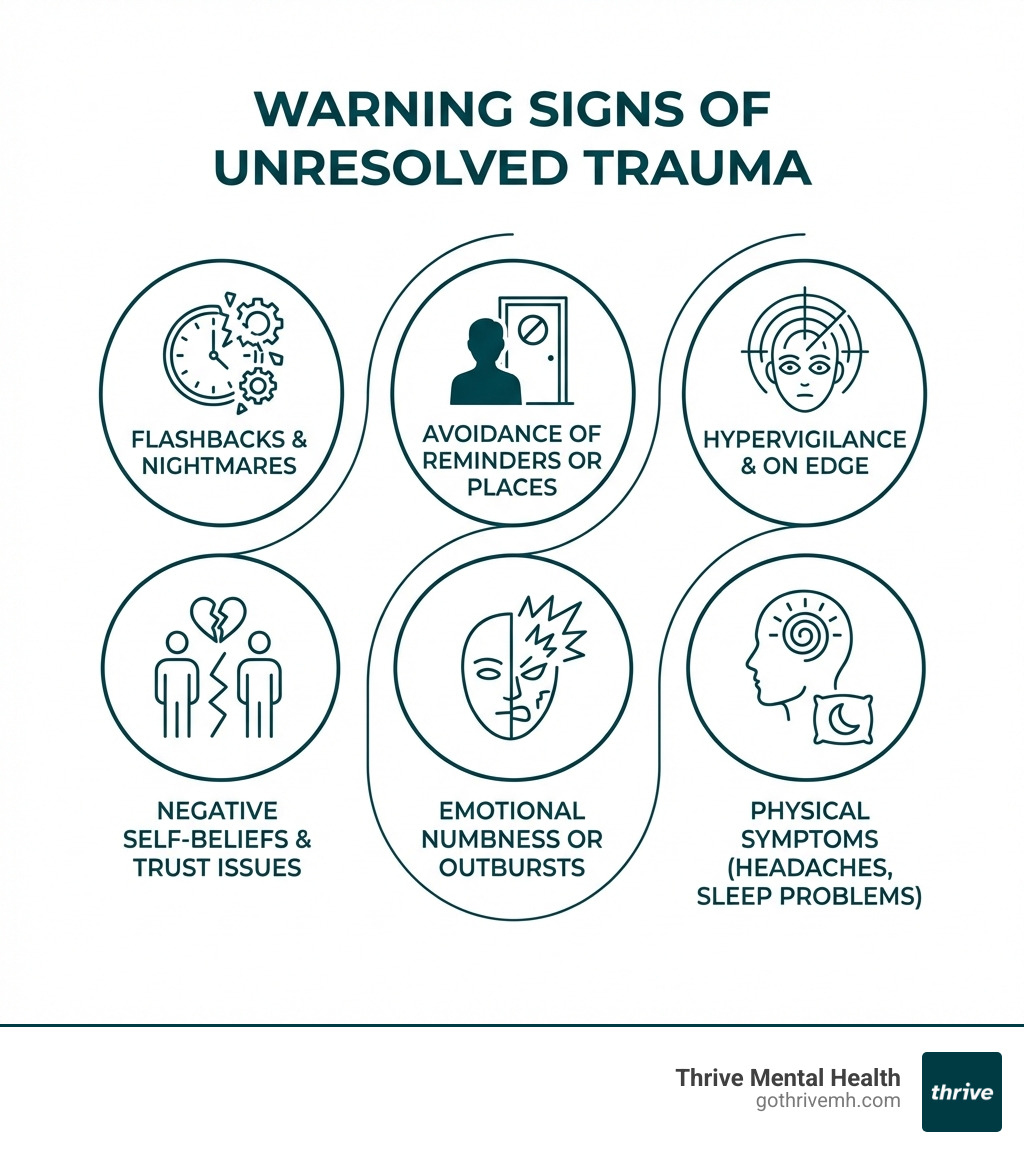
Signs That Trauma Has Taken Root
How do we know if trauma is still affecting us? The signs can be emotional and physical:
- Emotional Symptoms: Shock, denial, confusion, overwhelming fear, sadness, shame, anger, irritability, mood swings, anxiety, difficulty concentrating, withdrawing from others, emotional numbness, or even outbursts.
- Physical Symptoms: Sleeplessness, nightmares, flashbacks (where you relive the event), constant vigilance (hypervigilance), a heightened startle response, lack of energy, aches and pains, tense muscles, headaches, and digestive issues.
Trauma doesn’t just affect our minds; it fundamentally rewires our brains and bodies. When we experience a traumatic event, our brain’s alarm system (the amygdala) goes into overdrive, flooding our system with stress hormones like cortisol. This can keep our bodies in a constant state of “fight-or-flight,” even long after the danger has passed. This prolonged stress can impact brain development, especially in children, making them more sensitive to stress as they age. Our brains, in an attempt to cope, might encode traumatic memories as fragmented pictures and bodily sensations, leading to dissociation and difficulties with memory, concentration, and emotional regulation.
This is why online therapy is such a viable option for treatment. It offers a safe, accessible, and often less intimidating way to begin processing these deep-seated impacts from the comfort of your own home, making it easier to commit to the consistent care needed for true healing.
Online vs. In-Person Trauma Therapy: What Actually Works Faster?
Choosing online vs. in-person trauma therapy isn’t a preference question—it’s a results, cost, and access question.

Why Online Trauma Therapy Often Wins
For many people in Florida, online trauma therapy leads to more consistent treatment, which often means faster progress:
- Better access: See a licensed trauma specialist even if your local area has a waitlist or no specialists at all.
- Less time + lower total cost: No commute, parking, or time off work. That can mean fewer missed sessions and less financial strain.
- More privacy: No sitting in a waiting room wondering who might see you.
- More choice: You’re not limited to whoever is within a 20–30 minute drive. You can find someone who truly specializes in PTSD, C-PTSD, EMDR, or somatic therapy.
When Online Therapy Isn’t Enough
Online therapy is powerful, but it isn’t right for every situation:
- Not for immediate crisis or active self-harm risk. If you’re unsafe right now, online sessions alone are not enough.
- Tech matters. Unstable internet can disrupt deep work.
- Some people need more structure. If weekly sessions aren’t touching the sides of your symptoms, you may need a higher level of care.
If you’re in crisis, call/text 988 right now. You are not alone.
What the Research Says (and Why It Matters to You)
Studies show that online CBT for PTSD is as effective as face-to-face therapy in reducing PTSD symptoms, anxiety, and depression—and gains last beyond treatment. Translation: you don’t sacrifice quality by going virtual.
When to Level Up to Virtual IOP or PHP
If your trauma symptoms are:
- Disrupting work or school.
- Wrecking sleep and relationships.
- Not improving with once-a-week therapy.
…you may need Intensive Outpatient (IOP) or Partial Hospitalization (PHP) instead of just standard outpatient.
At Thrive Mental Health, we offer:
- Virtual and in-person IOP/PHP across Florida.
- Evening options so you can work, parent, and still get intensive care.
- Programs that work with Cigna, Optum, Florida Blue, and other major plans, so higher-level care is actually realistic.
Learn more about how our Virtual IOP and PHP programs support trauma recovery without inpatient hospitalization.
Finding the Best Online Trauma Therapy: 5 Steps to Avoid Wasting Time and Money
Online trauma therapy can change your life—or drain your wallet with little progress. Use this checklist to stack the odds in your favor.
1. Verify Real Trauma Credentials
Look for:
- Licensed in your state (Florida).
- Clear trauma-focused training (EMDR, TF-CBT, CPT, Prolonged Exposure).
- A trauma-informed approach that emphasizes safety, collaboration, and empowerment.
2. Demand Trauma-Friendly Features
The setup matters as much as the therapist:
- HIPAA-compliant platform (not FaceTime or standard Zoom).
- 50–60 minute sessions so you’re not rushed through deep work.
- Options for video, phone, or secure messaging to match your energy and schedule.
You can access these features through structured programs like Thrive’s Virtual Therapy & IOP, designed specifically for trauma and related conditions.
3. Check Cost, Insurance, and Real Affordability
Trauma recovery shouldn’t collapse your budget.
- Ask for clear per-session or program pricing up front.
- Confirm whether they take Cigna, Optum, Florida Blue, or your specific plan.
- Ask about IOP/PHP coverage if you suspect weekly therapy isn’t enough.
You can verify your insurance with Thrive in a couple of minutes to see what’s covered before you commit.
4. Test the Fit Quickly
After 1–3 sessions, ask yourself:
- Do I feel safe and understood?
- Do they explain things in plain language?
- Do I leave sessions with concrete tools or insights, not just venting?
If the answer is no, you’re not stuck. You can switch therapists—even within the same program.
5. Listen to Your Gut (and the Data)
Your instincts matter, but so do results.
- Are your symptoms slowly improving after a few weeks?
- Are you showing up consistently because the format works for your life?
- Do you feel more hopeful about healing?
If not, consider stepping up to a higher level of care like IOP or PHP, where you get more frequent, structured support.
Most Effective Online Trauma Therapies: What Actually Moves the Needle
Not all trauma therapies are equal. These are the approaches with the strongest evidence—and they all adapt well to online care.
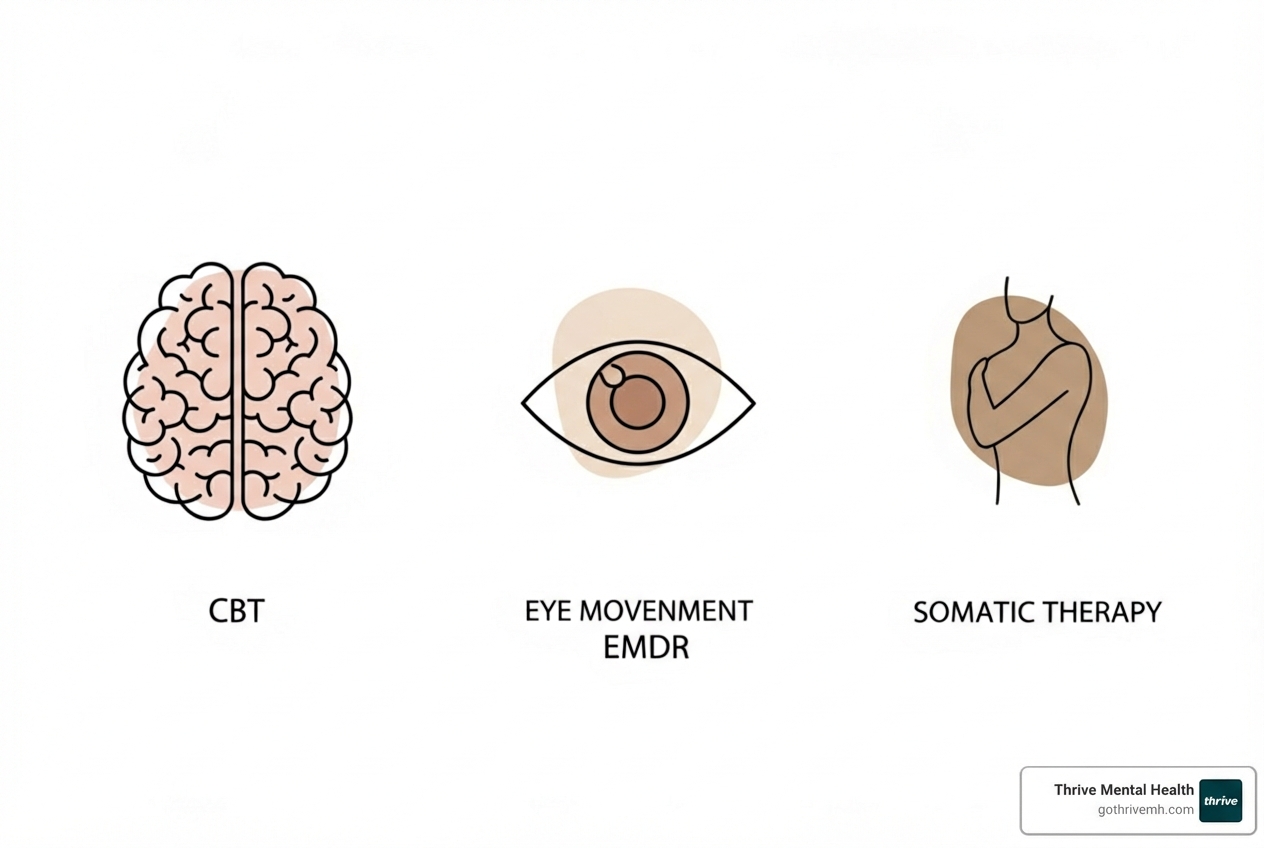
Trauma-Focused CBT: Clear Skills, Measurable Progress
Best for: PTSD, C-PTSD, anxiety, depression linked to trauma.
What you get:
- A structured way to spot and challenge trauma-driven thoughts (like “It was my fault” or “I’m never safe”).
- Concrete tools to reduce avoidance, panic, and emotional shutdown.
Online TF-CBT often includes digital worksheets, between-session exercises, and clear goals—so you can see your progress, not just hope for it.
EMDR Online: When the Past Won’t Let Go
Best for: Single-incident trauma, repeated trauma, intrusive memories, “stuck” feelings.
EMDR helps your brain reprocess traumatic memories so they’re no longer running your life in the background.
Online EMDR uses:
- On-screen visual tracking.
- Alternating sounds or tapping.
The goal: you remember what happened without the same physical and emotional shock every time.
Somatic Therapy: When Your Body Won’t Calm Down
Best for: Chronic tension, shutdown, dissociation, feeling “numb but wired.”
Somatic approaches (like Somatic Experiencing) focus on:
- Noticing where trauma lives in your body—tight chest, clenched jaw, numb limbs.
- Gently releasing stuck fight/flight/freeze energy.
Online, your therapist guides you through simple, body-based exercises to help your nervous system finally stand down.
When to Add Psychiatry or a Higher Level of Care
If your symptoms are so intense you can’t:
- Sleep more than a few hours.
- Go to work or school reliably.
- Stay present in therapy sessions.
…you may need medication support or a more intensive program for a period of time.
Options include:
- Online psychiatric care for medications like SSRIs/SNRIs to dial down the intensity.
- Trauma-focused IOP/PHP for multiple sessions per week, combining therapy, skills groups, and psychiatry.
At Thrive, our Virtual IOP and PHP programs are built for people whose trauma symptoms are too big for weekly therapy but don’t require inpatient hospitalization.
FAQs: Best Online Trauma Therapy
Is online trauma therapy as effective as in-person?
For many people, yes. Research shows online CBT for PTSD is as effective as in-person therapy in reducing PTSD, anxiety, and depression. The keys are: a licensed trauma specialist, evidence-based methods (like TF-CBT or EMDR), and consistent attendance.
How long does online trauma therapy take to work?
Some people notice shifts in 3–6 sessions (better sleep, fewer flashbacks, less reactivity). Deeper recovery often takes a few months or more, especially with complex or long-term trauma. If you’re not improving with weekly sessions, a structured program like virtual IOP/PHP can speed progress.
Does insurance cover online trauma therapy and virtual IOP/PHP?
Often, yes. Many plans—including Cigna, Optum, and Florida Blue—cover online therapy and higher levels of care like IOP/PHP, especially for PTSD and related conditions. You can verify your insurance with Thrive in a couple of minutes to see your exact coverage in Florida.
How do I know if I need IOP or PHP instead of weekly online therapy?
Consider IOP/PHP if you:
- Can’t function at work, school, or home.
- Have severe symptoms despite regular therapy.
- Need more structure and support but not 24/7 inpatient care.
Thrive’s IOP and PHP programs are designed for exactly this middle ground.
Can I do EMDR or somatic therapy online safely?
Yes—if your therapist is properly trained and experienced in delivering EMDR or somatic work virtually. They should move at a pace that feels safe, keep you grounded, and have a clear plan for managing distress during and after sessions.
Summary: Best Online Trauma Therapy Can Shorten Your Road to Recovery
Best online trauma therapy gives you something most people never get with trauma: consistent, expert help that fits your real life. No commute, no waitlists for specialists in your zip code, no guessing about what actually works.
With approaches like TF-CBT, EMDR, and somatic therapy—plus higher levels of care like Virtual IOP and PHPyou don’t have to choose between survival and healing. You can do both.
Ready for support? Thrive offers virtual and hybrid IOP/PHP programs with evening options. Verify your insurance in 2 minutes (no obligation) Start benefits check or call 561-203-6085. If you’re in crisis, call/text 988.