






Virtual Therapy for Stress: Top Relief
Why Virtual Therapy for Stress is Changing How We Get Help
Virtual therapy for stress offers licensed mental health support through secure video calls, phone sessions, and messaging, making professional help accessible from anywhere. Here’s what you need to know:
Top Benefits:
- Flexible scheduling, evening and weekend sessions available
- No commute, therapy from your home or office
- Same effectiveness, 80% report virtual therapy as or more effective than in-person
- Insurance coverage, most major plans cover virtual sessions
- Immediate access, sessions often available within 12 hours
Modern life hits hard. Work deadlines, financial pressure, relationship challenges, and constant connectivity create a perfect storm of chronic stress. You’re not alone, over 20% of people will experience anxiety attacks in their lifetime, with women twice as likely to be affected.
The good news? Virtual therapy breaks down the biggest barriers to getting help. No more taking time off work, sitting in waiting rooms, or searching for parking. You can connect with licensed therapists who specialize in stress management from wherever feels comfortable.
Research shows that 70% of people see improvement in anxiety and depression symptoms within 3 months of starting virtual therapy. The key is finding the right fit, whether that’s Cognitive Behavioral Therapy to challenge negative thought patterns, mindfulness techniques for present-moment awareness, or intensive programs for more complex needs.
I’m Anna Green, LMHC, LPC, Chief Clinical Officer and founder of Thrive, where I’ve spent years developing virtual-first behavioral health programs that make virtual therapy for stress both accessible and effective. My experience leading clinical strategy and earning accreditation from The Joint Commission for Behavioral Health Care and Human Services has shown me how technology can deliver the same high-quality care as traditional settings.
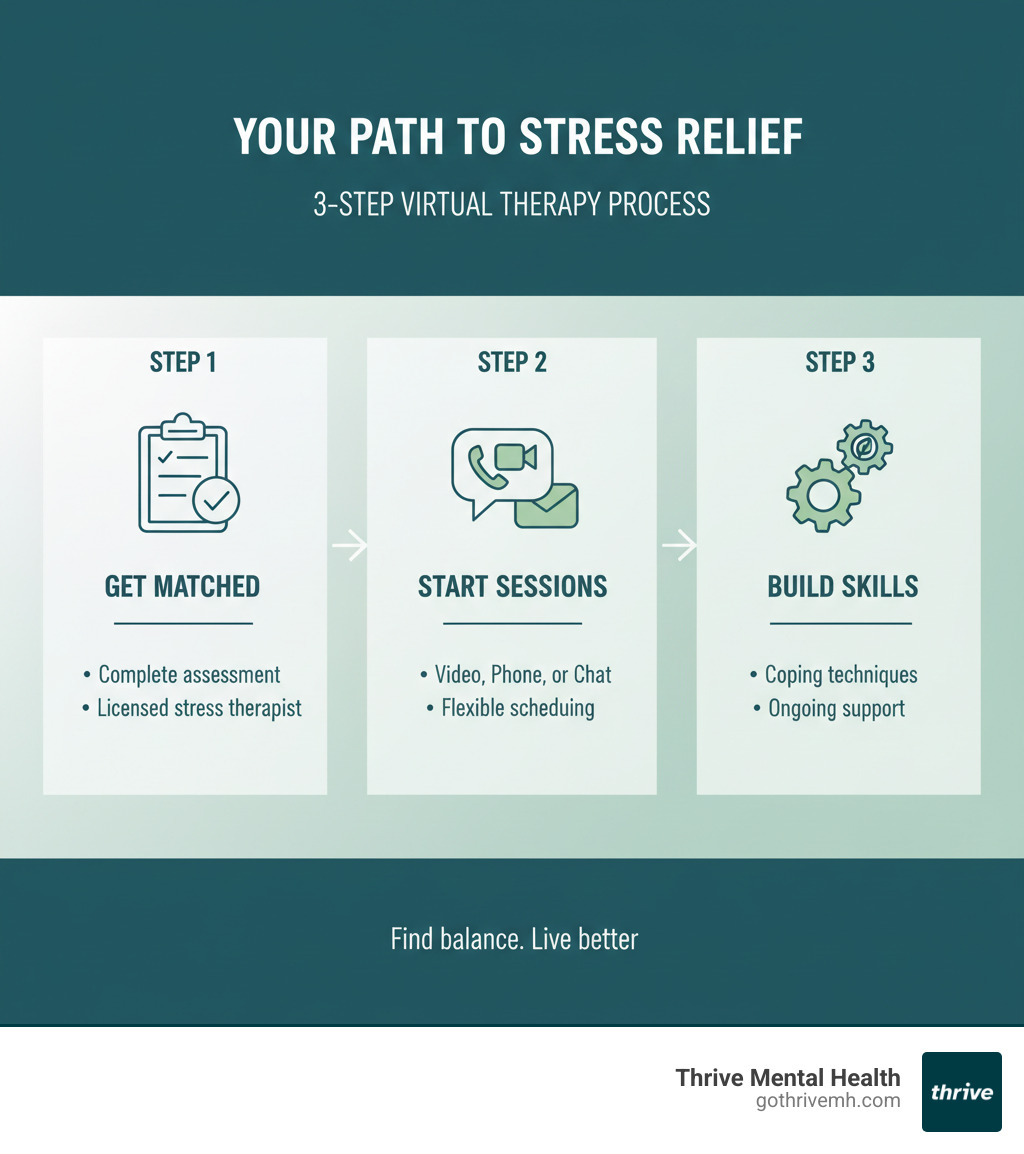
Simple guide to virtual therapy for stress terms:
What is Virtual Therapy and How Does It Work for Stress?
Think of virtual therapy for stress as having a licensed therapist in your back pocket, ready to help whenever and wherever you need it most. Also called teletherapy or online counseling, it’s simply professional mental health care delivered through your phone, tablet, or computer instead of a traditional office setting.
The beauty of virtual therapy lies in its simplicity. You’re still working with the same licensed mental health professionals you’d meet in person, they just happen to be accessible from your living room, office, or anywhere you feel comfortable talking.
How you connect matters, and virtual platforms give you options that work with your lifestyle. Video calls feel most like traditional face-to-face sessions, letting you and your therapist pick up on visual cues and build that important connection. Phone calls work perfectly when you’re on the go or prefer audio-only conversations.
Here’s where virtual therapy gets really smart: asynchronous messaging. You can send your therapist messages anytime, 2 AM stress spiral included, and they’ll typically respond within a day or two during the work week. It’s like having ongoing support between your regular sessions.
But how does this actually help with stress? Your therapist becomes your detective and coach rolled into one. Together, you’ll identify your specific stress triggers, maybe it’s Sunday night work anxiety or that particular family dynamic that sets you off. Once you know what’s pushing your buttons, you can start building a personalized toolkit of coping strategies.
The real magic happens when you learn to reframe those negative thought patterns that fuel stress. Through approaches like Cognitive Behavioral Therapy for Panic Disorder, you’ll find how to challenge thoughts like “I’m going to mess this up” and replace them with more balanced perspectives.
Virtual therapy removes the barriers that often keep people from getting help. No more rushing through traffic to make a 3 PM appointment or taking time off work. No more sitting in waiting rooms wondering if someone you know will walk by. This accessibility can be life-changing for people whose stress feels too overwhelming to manage alone.
Research backs this up, multiple studies show that online therapy delivers the same results as in-person care for stress and anxiety. The therapeutic relationship and your commitment to the process matter more than whether you’re sitting across from each other or connecting through a screen.
Key Benefits of Choosing Online Therapy for Stress Management

When stress feels like it’s running your life, adding another appointment to your already packed schedule can feel overwhelming. That’s exactly why virtual therapy for stress has become such a game-changer for so many people, it removes the barriers that often keep us from getting the help we need.
The convenience factor alone can be life-changing. Picture this: no rushing through traffic to make a 3 PM appointment, no circling the block looking for parking, and no sitting in a waiting room flipping through outdated magazines. Your therapy session is literally wherever you are, your living room, office, or even your car during lunch break. Many platforms now offer evening and weekend appointments, which means you can finally prioritize your mental health without rearranging your entire work schedule.
For residents across Florida, this accessibility breakthrough is particularly meaningful. Whether you’re in a bustling city like Miami dealing with work stress or living in a smaller town where mental health resources feel limited, telehealth counseling Florida breaks down geographic barriers completely. You’re no longer stuck with whatever therapist happens to practice within driving distance, you can connect with specialists from the Panhandle to the Keys who truly understand stress management and have the specific expertise you’re looking for.
There’s something powerful about being in your own space during therapy too. Many people find that the privacy and comfort of home actually helps them open up more honestly. As one person shared, “Instead of just texting my friends, I text my therapist and there’s no judgment on what I say.” That familiar environment can reduce the intimidation factor that sometimes comes with traditional therapy settings.
The wider choice of specialists available through virtual platforms means you’re more likely to find that perfect therapeutic match. Maybe you need someone who specializes in work-related stress, or perhaps you’re dealing with anxiety alongside chronic illness. With virtual options, you can connect with therapists across your state who have exactly the background and approach that resonates with you.
But here’s what really matters, the results speak for themselves. Research consistently shows that virtual therapy delivers the same outcomes as in-person sessions. Studies reveal that 70% of people see improvement in anxiety and depression symptoms within three months of starting virtual therapy, and an impressive 80% report it as equally or more effective than face-to-face therapy. The convenience factor isn’t just nice to have, it actually contributes to success, with 98% finding virtual therapy more convenient, which often translates to better attendance and engagement.
This isn’t just a temporary trend, it’s part of The Rise of Virtual Behavioral Health: Changing Mental Healthcare in fundamental ways. Multiple studies, including research showing that Online therapy is as effective as in-person care, confirm what many people are experiencing firsthand.
When you choose virtual therapy for stress, you’re not settling for second-best, you’re choosing a proven approach that fits your real life, making it easier to build the coping skills and resilience you need to manage stress effectively.
Top Therapeutic Approaches Used in Virtual Therapy for Stress
When it comes to managing stress through virtual therapy, you have access to some of the most effective, evidence-based approaches that mental health professionals use today. The beauty of virtual therapy for stress is that these proven methods translate seamlessly to digital platforms, often with improved flexibility and engagement.
Cognitive Behavioral Therapy (CBT) stands as the gold standard for stress and anxiety treatment. This approach helps you understand the powerful connection between your thoughts, feelings, and behaviors. Instead of getting caught in cycles of “what if” thinking or catastrophizing, CBT teaches you to catch those unhelpful thought patterns and challenge them with evidence-based reality checks.
The process is surprisingly practical. Your therapist might help you identify that racing thought of “I’ll never get this project done” and guide you to reframe it as “This project feels overwhelming right now, but I can break it into smaller steps.” This changing of thought patterns creates real relief because you’re literally rewiring how your brain responds to stressors. The Benefits of CBT in Mental Health Treatment explores how this transformative approach can help you build lasting coping skills.
Dialectical Behavior Therapy (DBT) takes a different but equally powerful approach, especially if your stress comes with intense emotions that feel hard to manage. Originally developed for more complex conditions, DBT has proven incredibly effective for anyone struggling with emotional regulation and distress tolerance.
DBT focuses on four core skill areas that work together beautifully. You’ll learn mindfulness techniques to stay grounded in the present moment, distress tolerance skills to ride out difficult emotions without making them worse, emotion regulation strategies to understand and manage your feelings, and interpersonal effectiveness tools to communicate your needs clearly without damaging relationships.
Mindfulness-Based Stress Reduction (MBSR) offers something many people crave in our always-on world: present-moment awareness. Rather than getting pulled into worries about tomorrow’s deadline or replaying yesterday’s awkward conversation, MBSR teaches you to anchor yourself in the here and now.
Through guided meditations, body awareness exercises, and mindful breathing techniques, you develop the ability to observe your stress without getting swept away by it. It’s like learning to watch clouds pass through the sky instead of feeling like you’re caught in the storm.
One of the most exciting developments in virtual therapy is Virtual Reality (VR) Therapy, which creates immersive relaxation environments that can transport you from your stressed-out living room to a peaceful beach or serene forest. This isn’t just fancy technology for its own sake, research shows VR relaxation can reduce stress by 40% in just 10 minutes.
VR therapy allows you to practice coping skills in different virtual environments, helping you build confidence in your ability to manage stress wherever life takes you. Whether you’re virtually walking through a calming nature scene or practicing breathing exercises in a peaceful virtual space, this technology makes stress relief more engaging and often more effective than traditional methods alone.
These therapeutic approaches work because they give you concrete tools rather than just talking about problems. Whether you’re learning to challenge negative thoughts through CBT, building emotional resilience with DBT skills, finding peace through mindfulness, or exploring new possibilities with VR therapy, virtual therapy for stress empowers you to develop lasting strategies that fit your unique situation and lifestyle.
How to Find the Right Program for Virtual Therapy for Stress

Finding the right virtual therapy for stress feels a bit like dating, you want someone who gets you, speaks your language, and makes you feel comfortable opening up. The good news? With some thoughtful preparation, you can find a therapist or program that becomes your partner in building real resilience against life’s curveballs.
The therapeutic relationship is everything. It doesn’t matter how many degrees someone has on their wall if you don’t click. When you feel heard and understood, that’s when the real work begins, creating your personalized toolbox of strategies that actually work in your daily life.
Choosing a Therapist or Program
Start with the basics: credentials matter. You want licensed professionals who’ve earned their stripes through rigorous training. Look for designations like Licensed Professional Counselor (LPC), Licensed Clinical Social Worker (LCSW), Licensed Marriage and Family Therapist (LMFT), or psychologists with PhD or PsyD degrees. At Thrive, our therapists hold minimum master’s degrees with years of hands-on experience, all carefully vetted by our clinical directors.
 Bipolar Disorder Signs and Symptoms ExplainedTherapy
But credentials are just the foundation. Specializations in stress and anxiety make the real difference. Many therapists can help with general stress, but you want someone who specifically lists stress management, anxiety disorders, or related areas like trauma or work-life balance as their expertise. It’s like choosing a cardiologist for heart surgery instead of a general practitioner, specialized knowledge leads to more targeted, effective treatment.
Communication style is surprisingly important too. Some people thrive on video calls where they can see facial expressions and body language. Others prefer the intimacy of phone conversations or appreciate the flexibility of messaging their therapist between sessions when thoughts pop up at 2 AM.
When exploring structured programs, take time to read program descriptions carefully. Programs like “RELAX: Relieve Your Anxiety” or “BREATHE: Reduce Stress & Depression” clearly outline their focus and duration, helping you find something that matches your specific needs. For a broader view of your options, check out Mental Health Care Online.
If you’re dealing with more intense or chronic stress, consider program intensity levels. Our telehealth IOP program offers comprehensive, structured support for those who need it. This program provides expert-led, evidence-based care to residents across Florida, perfect for adults and young professionals juggling demanding lives.
Understanding Costs and Insurance for virtual therapy for stress
Let’s talk money, because therapy shouldn’t break the bank. Virtual therapy for stress often costs less than traditional in-person sessions since providers have lower overhead costs. Many online platforms offer plans starting around $65-$100 per week, compared to the national average of $125-$199 per session for face-to-face therapy.
Here’s the really good news: most major insurance plans cover virtual therapy. The Mental Health Parity and Addiction Equity Act (MHPAEA) requires that mental health benefits match medical benefits. Major providers like Cigna, Optum, and Florida Blue typically offer coverage for telehealth services, with many insured members enjoying $0 copays or low co-payments.
Verifying your benefits doesn’t have to be a headache. We get it, insurance can feel like decoding ancient hieroglyphics. That’s why many platforms offer online insurance checkers to help you understand your coverage, including copays, deductibles, and reimbursement procedures. Don’t forget to ask about Employee Assistance Programs (EAPs) through your employer, they sometimes cover virtual therapy at no cost to you.
What to Expect in Your First virtual therapy for stress Session
Taking that first step feels nerve-wracking, but knowing what’s coming can calm those butterflies. Your initial assessment is really just a getting-to-know-you conversation. Your therapist will ask about your history, current stressors, and what you hope to achieve. They might explore your Anxiety Symptoms and Their Impact on Daily Life, your lifestyle, and any past mental health experiences.
This is your time to share your story at whatever pace feels comfortable. Discussing your history and goals becomes a collaborative process where you and your therapist start identifying specific, achievable targets for your therapy journey. There’s no pressure to spill everything in session one, think of it as planting seeds that will grow over time.
Building rapport happens naturally when you find the right fit. A good therapist creates space for you to feel safe and heard without judgment. If something feels off, that’s valuable information too. The first session helps you gauge whether their style and personality mesh with yours.
Therapy is collaborative. You’re not lying on a couch while someone analyzes you from afar. You’ll work together to develop a treatment plan that fits your unique circumstances and lifestyle. Your therapist will explain how sessions work, what techniques they might use, and what kind of progress you can expect.
Most importantly, there’s no pressure to have all the answers. That’s exactly why you’re there. You don’t need to arrive with a perfectly articulated problem or a clear vision of your goals. Sometimes the first step is simply admitting that stress has become unmanageable, and that’s more than enough to get started.
Frequently Asked Questions about Virtual Therapy for Stress
When considering virtual therapy for stress, it’s natural to have questions about how it works, what to expect, and whether it’s truly effective. Here are the most common concerns people share, along with clear, honest answers to help you make an informed decision.
Is virtual therapy as effective as in-person therapy for stress?
Absolutely. This is probably the most important question, and the research is overwhelmingly positive. Numerous studies have demonstrated that for stress, anxiety, and many other mental health conditions, virtual therapy for stress delivers results that match or even exceed traditional face-to-face sessions.
What’s particularly encouraging is that effectiveness doesn’t depend on whether you’re sitting in an office or connecting from your living room. The magic happens in the therapeutic relationship you build with your therapist and your personal commitment to the process. In fact, many people find the convenience and comfort of virtual sessions actually helps them engage more fully in their treatment.
Some studies even suggest that the accessibility of online therapy leads to higher satisfaction rates and better adherence to treatment plans. When therapy fits seamlessly into your life, you’re more likely to stick with it and see lasting results.
Can an online therapist prescribe medication for stress?
This depends entirely on their professional license and training. Licensed therapists, including those with credentials like LCSW (Licensed Clinical Social Worker), LMFT (Licensed Marriage and Family Therapist), or LPC (Licensed Professional Counselor), specialize in talk therapy and counseling. They can’t prescribe medication, but they’re incredibly skilled at helping you develop coping strategies and work through stress without medication.
However, many virtual platforms, including comprehensive programs like those at Thrive, work with psychiatrists and psychiatric nurse practitioners who are medical doctors. These professionals can evaluate whether medication might be helpful for your stress management and can prescribe and monitor medications when appropriate.
If medication becomes something you want to explore during your therapy journey, your therapist can typically connect you with a psychiatric provider within the same network or platform. It’s all about finding the right combination of support for your unique needs.
How long does virtual therapy for stress usually take?
There’s no one-size-fits-all answer here, and that’s actually a good thing. Your therapy timeline will be as unique as you are. Some people notice significant improvement in their stress levels and develop solid coping skills within just a few months of consistent sessions.
Others, particularly those dealing with chronic stress, complex life circumstances, or underlying anxiety conditions, may find that longer-term therapy provides the most benefit. The beauty of virtual therapy for stress is that it can adapt to your changing needs over time.
Your therapist will work closely with you to create a treatment plan that makes sense for your situation and goals. They’ll regularly check in about your progress, and you can always discuss adjusting the frequency or focus of your sessions. Some people prefer intensive support initially and then space out sessions as they build confidence in their coping skills.
The most important factor isn’t how long therapy takes, but that you feel supported throughout the process and empowered with tools that work for your life.
Ready for Support?
Stress doesn’t have to control your life. Virtual therapy for stress has transformed how thousands of people find relief, offering a path that’s both convenient and genuinely effective. When you connect with the right mental health professional and dive into evidence-based approaches, you’re not just managing today’s stress, you’re building the resilience to handle whatever life throws your way.
The beauty of virtual therapy lies in how it meets you where you are. No more rearranging your entire schedule or sitting in traffic to get help. You can learn powerful coping strategies, reframe those overwhelming thoughts, and develop lasting emotional skills from the comfort of your own space.
Whether you’re dealing with work pressures, relationship challenges, or just the general overwhelm of modern life, you deserve support that works with your lifestyle, not against it. The research is clear: people who engage in virtual therapy for stress see real improvements in their daily lives, often within just a few months.
Ready to take that first step? Thrive offers virtual IOP programs for Florida residents, designed specifically for adults and young professionals who need flexible, expert-led care. Our evening options mean you don’t have to choose between your career and your mental health.
Getting started is simple: Verify your insurance in 2 minutes (no obligation) → Start benefits check or call 561-203-6085. Our team will help you understand your options and find the right level of support for your unique situation.
If you’re in crisis, call/text 988. You are not alone, and help is available right now.

This article is for informational purposes only and is not a substitute for individualized clinical advice or insurance verification.