
The 5 Best Mental Health Services for Tech Employees Compared

Why Tech’s Mental Health Crisis Demands Better Solutions
What are the best mental health services for technology sector employees? The answer has changed dramatically—and traditional Employee Assistance Programs (EAPs) are no longer enough. Here are the five most effective options:
The 5 Best Mental Health Services for Tech Employees:
- Comprehensive Digital Platforms – 24/7 access, AI-powered matching, therapy + coaching + self-guided tools
- On-Demand Coaching & Mindfulness Apps – Preventative care, stress management, resilience building
- Evidence-Based Online Therapy (CBT, DBT, EMDR) – Targeted treatment for anxiety, depression, PTSD with licensed therapists
- Virtual Intensive Outpatient (IOP) & PHP Programs (Thrive Mental Health) – Structured, high-acuity support for severe burnout or mental health crises
- Manager Training & Culture Initiatives – Leadership development to reduce stigma and build psychological safety
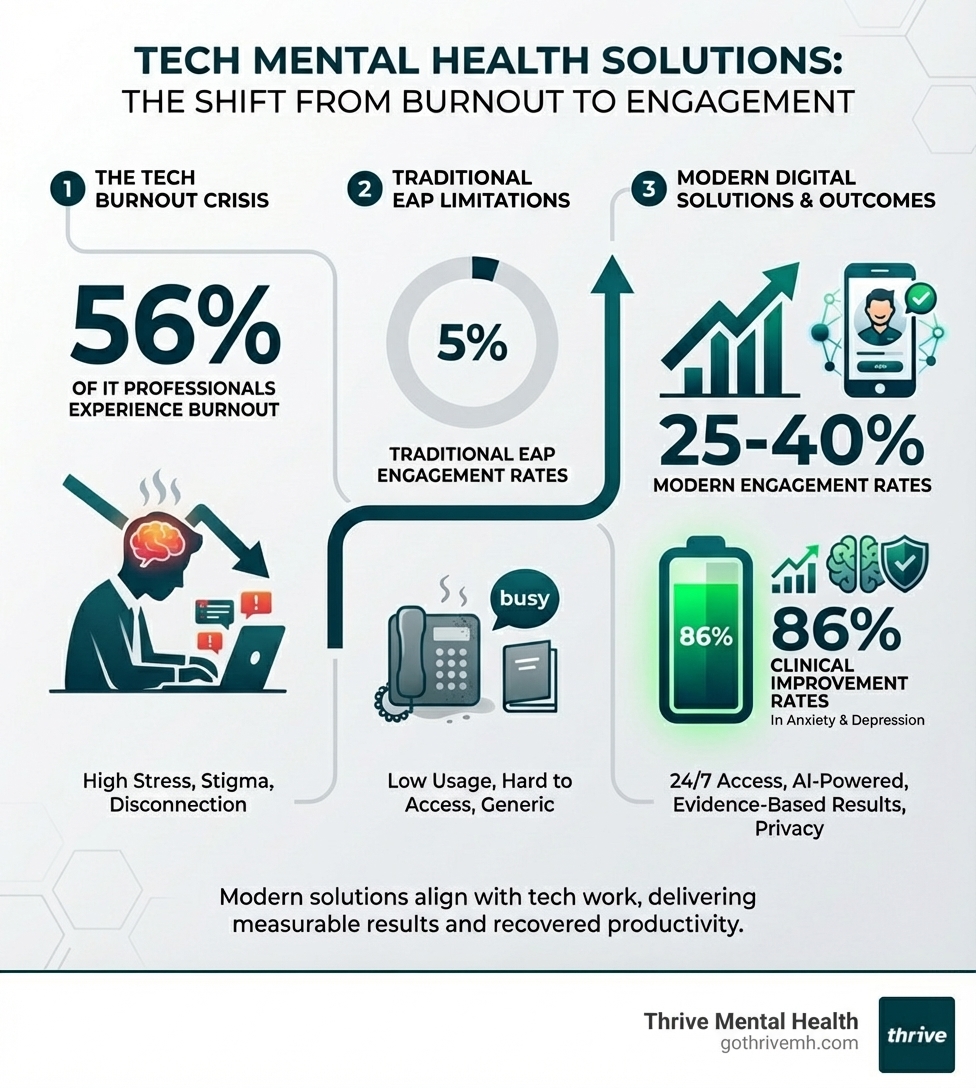
The tech industry is burning out. 56% of IT professionals report experiencing burnout, with women disproportionately affected (69% feel run down vs. 56% of men). Meanwhile, depression and anxiety cost the global economy over $1 trillion each year in lost productivity.
Yet traditional EAPs—the go-to mental health benefit for decades—have engagement rates as low as 5%. Employees don’t use them because they’re stigmatized, hard to access, and disconnected from how tech workers actually live and work.
Modern solutions are different. AI-powered platforms and virtual care programs see 25-40% engagement rates because they offer what tech employees need: instant access, flexible scheduling, privacy, and evidence-based results. Companies implementing these solutions report 86% improvement rates in anxiety and depression, 2.1 hours of recovered productivity per employee per week, and measurable ROI.
This isn’t about “wellness perks.” It’s about preventing talent loss, reducing healthcare costs, and keeping your team functional during crunch time. Whether you’re an HR leader evaluating vendors or a tech employee looking for help, this guide breaks down exactly which services work—and why.
I’m Nate Raine, CEO of Thrive Mental Health, where we’ve spent over a decade building evidence-based, tech-enabled behavioral health programs with a strong focus on serving communities across Florida. Having guided large-scale healthcare initiatives and integrated data science into clinical care, I’ve seen what are the best mental health services for technology sector employees—and which ones actually move the needle on outcomes. Let’s get into it.
Key What are the best mental health services for technology sector employees? vocabulary:
- What are my options for mental health treatment that’s more intensive than weekly therapy but doesn’t require living at a facility?
- virtual therapy for stress
- confidential mental health support
The High Cost of “Hustle Culture”: Why Tech’s Mental Health is at a Breaking Point
The tech sector, with its relentless pace and culture of constant innovation, often demands an extraordinary amount from its employees. This environment, while exciting, comes with a significant mental health toll. High pressure, demanding workloads, and deadlines are not just buzzwords; they are daily realities that contribute directly to anxiety, Depression Symptoms, and widespread burnout.
Consider this: 56% of IT professionals report experiencing burnout. This isn’t just a feeling of being tired; it’s a state of chronic workplace stress that hasn’t been successfully managed, manifesting as exhaustion, cynicism, and a feeling of inefficacy. According to The State of Burnout in Tech 2022, 62% of those at high risk of burnout feel physically and emotionally drained. The pressure to always be “on,” coupled with blurred boundaries between work and personal life, creates a perfect storm for mental health challenges.
This isn’t merely an individual problem; it’s a significant drain on the global economy. Depression and anxiety alone cost the global economy over $1 trillion each year in lost productivity. For tech companies, this translates to increased turnover, reduced innovation, and a less engaged workforce. A truly healthy workplace culture, as we discuss in Decoding Workplace Culture: Signs of a Healthy Environment, is one that proactively addresses these stressors.
The good news? Technology itself, often a contributor to these pressures, also holds the key to solving them. We’ve seen a shift from outdated, underused EAPs (with engagement rates as low as 5%) to modern, digital-first solutions that actually meet employees where they are, especially within Florida’s dynamic workforce. These innovative approaches are proving to be far more effective in providing what are the best mental health services for technology sector employees.
What are the best mental health services for technology sector employees? [The Top 5]

Moving beyond outdated EAPs, the focus for tech companies today is on services that offer instant access, unparalleled flexibility, and evidence-based care. These are the hallmarks of modern mental health support, crucial for a workforce that thrives on innovation and often works remotely or on flexible schedules. Here, we break down the top five categories of mental health services that are making a real difference for tech employees.
1. Comprehensive Digital Platforms for 24/7 Support
Digital platforms represent a significant leap forward in mental health accessibility. They offer on-demand access to a wide spectrum of support, from self-guided tools and educational resources to personalized coaching and therapy sessions. The beauty of these platforms lies in their ability to meet tech employees wherever they are, whenever they need help, often boasting engagement rates between 25-40%—a stark contrast to traditional EAPs.
These platforms often leverage AI-powered personalization to match employees with the most suitable resources or providers, streamlining the process of seeking help. For tech employees, who are accustomed to digital solutions and often value efficiency, this approach resonates deeply. Privacy and confidentiality are paramount, with reputable platforms adhering to strict data protection standards, ensuring that employees feel safe and secure when accessing Telehealth for Mental Health services.
2. On-Demand Coaching & Mindfulness Apps
Preventative care is key, and on-demand coaching and mindfulness apps empower tech employees to proactively manage their mental well-being. These tools are designed for daily use, offering guided meditations, stress management techniques, and resilience-building exercises. For individuals navigating the demanding tech landscape, a few minutes of Mindfulness or a quick coaching session can make a significant difference in preventing stress from escalating into burnout.
These apps provide practical strategies to cope with pressure, improve focus, and cultivate emotional balance. They are particularly effective for employees who may not yet need formal therapy but are looking for tools to improve their daily mental fitness. They also offer a discreet and accessible way to address common stressors, providing Online Therapy for Stress at their fingertips.
3. Evidence-Based Online Therapy (CBT, DBT, EMDR)
For more targeted mental health support, evidence-based online therapy offers powerful interventions for specific conditions like anxiety, depression, and PTSD. Modalities such as Cognitive Behavioral Therapy (CBT), Dialectical Behavior Therapy (DBT), and EMDR: Complete Guide are delivered by licensed therapists through secure virtual channels. This ensures that tech employees can receive high-quality, professional care without the added stress of commuting or rigid scheduling.
The effectiveness of online therapy is well-documented, often proving as impactful as in-person sessions. The convenience of connecting with a therapist from the comfort of one’s home or office, often with flexible appointment times, is a major advantage for busy tech professionals. Crucially, these services prioritize HIPAA Compliant Online Therapy, safeguarding sensitive personal health information.
4. Virtual Intensive Outpatient (IOP) & PHP Programs
Sometimes, weekly therapy isn’t enough, but inpatient care isn’t necessary. This is where virtual Intensive Outpatient (IOP) and Partial Hospitalization (PHP) programs step in, offering high-acuity support for individuals facing significant mental health challenges like severe burnout, complex trauma, or acute anxiety and depression. These programs provide a structured, comprehensive treatment experience that integrates group therapy, individual counseling, and psychiatric support, all delivered virtually.
At Thrive Mental Health, we specialize in these types of programs, with a strong focus on serving Florida’s tech sector. Our virtual IOP and PHP offerings are designed for adults and young professionals across the state. We combine clinical expertise with flexible scheduling, including evening options, to ensure that employees in Florida can access the care they need while maintaining their work and life commitments. Our programs focus on measurable results, helping individuals stabilize, build coping skills, and return to their optimal functioning. For a deeper dive into these options, explore our Virtual Intensive Outpatient Programs and understand What is the Difference Between PHP and IOP?.
5. Manager Training & Workplace Culture Initiatives
No matter how robust the mental health services are, they won’t be fully effective without a supportive workplace culture. This is why manager training and broader workplace culture initiatives are critical components of what are the best mental health services for technology sector employees. Leaders equipped with the skills to recognize signs of distress, communicate empathetically, and foster psychological safety can significantly reduce stigma and encourage help-seeking behavior.
These initiatives include leadership training on mental health awareness, creating peer support programs, and promoting open conversations about well-being. By actively working to reduce stigma, tech companies can cultivate an environment where employees feel comfortable discussing their mental health and utilizing available resources. We also see the importance of initiatives like Comprehensive Guide to Neurodiversity Training for Inclusive Workplaces to ensure all employees feel supported and understood.
How to Choose the Right Benefit: A Checklist for Tech Leaders

Selecting the ideal mental health solution for your tech company can feel overwhelming, but it’s a critical investment in your team’s well-being and your company’s future. Making an informed decision requires careful consideration of several key factors.
Key Criteria for Selecting the Best Mental Health Services for Technology Sector Employees
When evaluating providers for what are the best mental health services for technology sector employees, we recommend focusing on these criteria:
- Scalability: Can the service effectively support your entire workforce, regardless of size or geographic distribution (especially if you have remote teams)?
- Confidentiality (HIPAA Compliance): Is employee data protected with the highest standards, ensuring trust and encouraging utilization? Your employees need to feel secure that their personal health information is private.
- ROI Tracking & Reporting: Does the provider offer transparent, data-driven insights into engagement, clinical outcomes, and the financial return on your investment? This moves mental health from a “nice-to-have” to a strategic business imperative.
- Clinical Outcomes & Evidence-Based Practices: Are the services rooted in proven therapeutic methods, and can the provider demonstrate measurable improvements in employee mental health? Look for services that can show real clinical impact.
- Employee Feedback & Engagement: How does the provider gather and act on employee feedback? High engagement rates (like the 25-40% seen in digital solutions) indicate that employees find the service valuable and easy to use.
- Insurance Coverage & Accessibility: Does the service integrate seamlessly with major insurance providers like Cigna, Aetna, Florida Blue, and UnitedHealthcare? This is crucial for reducing financial barriers to access. Our programs at Thrive Mental Health, for example, are in-network with many major insurers, including Florida Blue, making high-quality care accessible for employees across Florida. Understanding How to Read Mental Health Insurance Benefits can help clarify coverage options.
- Local Access (where applicable): For companies with a physical presence in Florida, consider whether the provider offers convenient in-person options or robust virtual care that is tailored to the local community. As a Florida-based provider, Thrive Mental Health understands the unique landscape of the state’s tech industry.
The ROI of Mental Wellness: Measuring What Matters
In the competitive tech landscape, every investment must demonstrate value. Mental health services are no exception. Moving beyond the perception of mental wellness as merely a “soft benefit,” we now have concrete data to prove its tangible impact on a company’s bottom line. Investing in what are the best mental health services for technology sector employees isn’t just good for people; it’s good for business.
Calculating the ROI of the Best Mental Health Services for Technology Sector Employees
The return on investment (ROI) from robust mental health services can be measured in several compelling ways:
- Reduced Turnover: A mentally healthy workforce is a more stable workforce. Employees who feel supported are less likely to leave, saving companies significant costs associated with recruitment and training.
- Increased Productivity: When employees are struggling with anxiety, depression, or burnout, their focus, creativity, and output suffer. Effective mental health support can lead to substantial gains in productivity. For instance, some programs report 2.1 hours of lost productivity recovered each week, per member on average.
- Lower Healthcare Costs: Addressing mental health proactively can prevent more severe and costly physical health issues down the line. Studies show that for every $1 invested in mental health, companies can see a return of $2.39 in reduced healthcare costs alone. This is highlighted in research like that found in the Journal of Technology in Behavioral Science, demonstrating the strong link between employee well-being and financial outcomes.
At Thrive Mental Health, we are committed to providing measurable results and positive Outcomes for our clients, demonstrating how our programs help Florida-based companies improve both employee well-being and organizational success.
The Future of Mental Health in Tech
The landscape of mental health support in the tech sector is constantly evolving, driven by both the unique challenges of the industry and rapid advancements in technology. We’re moving towards a future where mental health care is not only accessible but also highly personalized and integrated into daily life.
What’s Next: AI, VR, and Personalized Care
The emerging trends point towards even more sophisticated and individualized approaches to what are the best mental health services for technology sector employees:
- AI-Driven Care Personalization: Artificial intelligence will continue to refine how employees are matched with therapists, coaches, and resources, ensuring even more precise and effective care pathways custom to individual needs.
- Virtual Reality (VR) Therapy: Immersive VR experiences are already being explored for treating phobias, PTSD, and anxiety. Virtual Reality Therapy Florida is an exciting frontier, offering controlled and engaging therapeutic environments.
- Pharmacogenetics: This field uses genetic information to predict an individual’s response to different medications, leading to more effective and personalized psychiatric treatment.
- Wearable Tech Integration: Devices that monitor stress levels, sleep patterns, and heart rate variability will provide real-time data, allowing for proactive interventions and personalized mental wellness nudges.
- Data-Driven Prevention: Leveraging anonymized data and analytics, companies will be able to identify patterns and implement preventative mental health strategies before issues escalate, fostering a truly proactive culture of well-being.
Frequently Asked Questions about Mental Health in Tech
What are the first signs of burnout for a tech worker?
The first signs often include chronic exhaustion, a noticeable increase in cynicism or detachment from work, a feeling of inefficacy or lack of accomplishment, making more errors than usual, and difficulty concentrating on tasks.
Are online mental health services confidential?
Yes, reputable online mental health services are legally and ethically bound to protect your privacy. They must be HIPAA Compliant Online Therapy to ensure your personal health information is secure. Your employer receives only aggregated, anonymized data on service usage, never your individual information.
How can a company create a mentally healthy culture?
Creating a mentally healthy culture starts with leadership. Promote open conversations about mental health, train managers to recognize distress and offer support, implement flexible work arrangements, ensure workloads are manageable, and actively encourage employees to use their paid time off (PTO) to recharge.
Conclusion
The tech sector’s “hustle culture” has led to a mental health crisis, marked by widespread burnout, anxiety, and depression. Traditional EAPs have fallen short, but modern, flexible, and evidence-based solutions are proving to be truly effective for what are the best mental health services for technology sector employees.
From comprehensive digital platforms and on-demand coaching apps to targeted online therapy and structured virtual IOP/PHP programs like those we offer at Thrive Mental Health for employees across Florida, the options are more robust than ever. Coupled with vital manager training and workplace culture initiatives, these services empower tech employees to thrive both professionally and personally. Investing in employee well-being is no longer optional; it’s a strategic imperative for company success, leading to increased productivity, reduced turnover, and a healthier, more innovative workforce. Prioritizing Remote Mental Health Support is a commitment to the most valuable asset any tech company has: its people.
Ready for support? Thrive offers virtual and hybrid IOP/PHP programs for Florida residents, with evening options available. Verify your insurance in 2 minutes (no obligation) → Start benefits check or call 561-203-6085. If you’re in crisis, call/text 988.