
The Complete Guide to Effective Anxiety Treatments

Your Path Out of the Anxiety Trap Starts Now
What mental health treatment options work best for adults with anxiety disorders? The most effective treatments are:
- Cognitive-Behavioral Therapy (CBT) – The gold-standard psychotherapy that teaches you to identify and change anxiety-fueling thoughts and behaviors
- Exposure Therapy – A powerful form of CBT that gradually confronts your fears in a safe, controlled way
- Medication (SSRIs/SNRIs) – First-line antidepressants that balance brain chemistry and make therapy more effective
- Combination Therapy – Pairing medication with psychotherapy for faster, more complete relief
- Lifestyle Changes – Regular exercise, sleep hygiene, stress management, and social support that directly reduce symptoms
Most patients see significant improvement after several months of treatment, with many noticing progress in just a few sessions.
Anxiety isn’t just worry—it’s a thief that steals your peace, shrinks your world, and exhausts your body. It makes you cancel plans and keeps you awake at night, convinced the worst is yet to come.
The numbers are staggering: Anxiety disorders will affect up to 31% of U.S. adults. Specific phobias impact 12% of people, social anxiety 7%, and generalized anxiety 3%. Women are up to twice as likely to be diagnosed, and most people suffer for years before seeking help.
But here’s the crucial truth: Anxiety disorders are highly treatable. The right combination of therapy, medication, and lifestyle changes can free you from its grip. This guide is your roadmap to reclaiming your life by understanding which treatments work, how to steer the healthcare system, and when to consider medication.
I’m Nate Raine, CEO of Thrive Mental Health. I’ve spent over a decade helping thousands of adults, particularly in Florida, find effective anxiety treatment through our IOP, PHP, and virtual programs. My goal is to clarify what mental health treatment options work best for adults with anxiety disorders so you can make the right choice for your life.
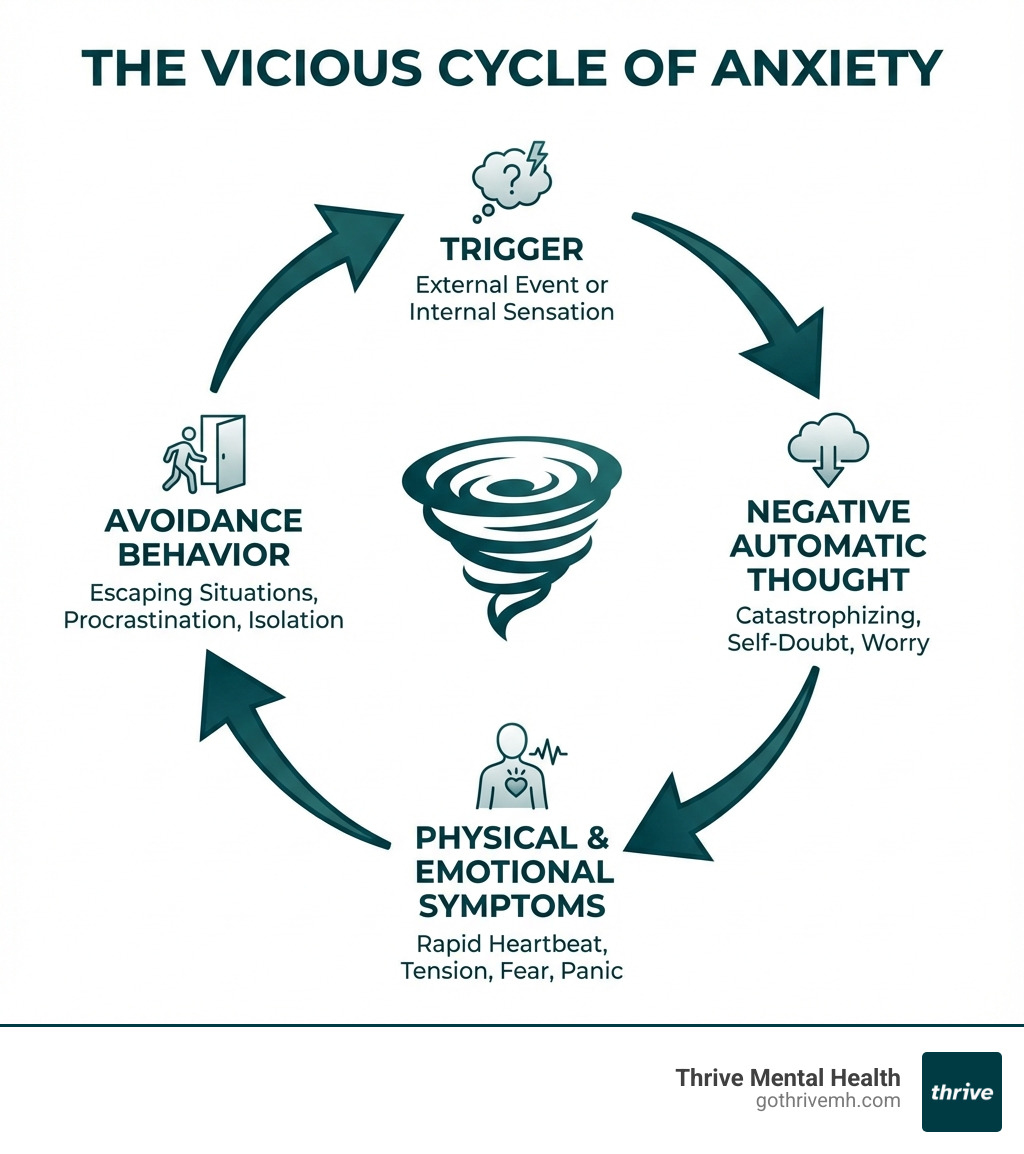
Understanding Anxiety Disorders: It’s Not “All in Your Head”
Unlike everyday stress, an anxiety disorder involves persistent, excessive fear that is out of proportion to the actual threat. These feelings are difficult to control and interfere with daily life, creating real impacts on your brain and body.
How Do Anxiety Disorders Impact an Adult’s Daily Functioning and Relationships?
The constant dread or sudden panic attacks associated with anxiety can make simple tasks like grocery shopping or attending meetings feel impossible. This leads to profound consequences:
- Strained relationships: Constant worry and avoidance of social situations can push loved ones away.
- Career limitations: Difficulty concentrating, fear of public speaking, or avoiding work-related travel can stall professional growth.
- Physical health consequences: Chronic anxiety often causes headaches, digestive issues, sleep problems, and can increase the risk of other chronic medical conditions.
What Are the Different Types of Anxiety Disorders That Affect Adults?
Anxiety disorders are a diverse group of conditions, each with its unique characteristics, yet often sharing core symptoms of fear and worry. According to the DSM-5, the standard reference for diagnosing mental health conditions, the most common types affecting adults include:
- Generalized Anxiety Disorder (GAD): Characterized by excessive, uncontrollable worry about everyday events for at least six months. Symptoms often include restlessness, fatigue, difficulty concentrating, irritability, muscle tension, and sleep disturbances. About 3% of the U.S. population is affected by GAD annually.
- Panic Disorder (PD): Involves recurrent, unexpected panic attacks—sudden surges of intense fear accompanied by physical symptoms like a pounding heart, sweating, trembling, shortness of breath, and a fear of losing control or dying. Panic disorder with or without agoraphobia (PDA) has a prevalence of 6.0%.
- Social Anxiety Disorder (SAD): An intense fear of social situations where one might be scrutinized, judged, or humiliated. This often leads to avoidance of social gatherings, public speaking, or even eating in front of others. About 7% of the U.S. population experiences SAD.
- Specific Phobias: Marked by an irrational and intense fear of a specific object or situation (e.g., heights, flying, animals, needles). These fears can lead to significant avoidance behavior. Specific phobias affect up to 12% of the U.S. population, making them the most common anxiety disorder.
- Agoraphobia: A fear of situations where escape might be difficult or help unavailable, often leading to avoidance of public places, open spaces, or being outside the home alone. It often co-occurs with panic disorder but can occur independently. Agoraphobia affects up to 1.7% of the U.S. population.
- Separation Anxiety Disorder: While often associated with childhood, this disorder can affect adults, characterized by excessive anxiety concerning separation from home or from those to whom the individual is attached. Up to 1.9% of adults are affected.
- Selective Mutism: A rare anxiety disorder where a person consistently fails to speak in specific social situations where there is an expectation for speaking (e.g., school, work), despite speaking in other situations. It affects between 0.47% and 0.76% of the U.S. population.
Women are 1.5 to 2 times more likely than men to receive a diagnosis of an anxiety disorder. This may be due to a combination of biological, psychological, and sociocultural factors.
What Mental Health Treatment Options Work Best for Adults with Anxiety Disorders?
When answering what mental health treatment options work best for adults with anxiety disorders, a multi-faceted approach yields the most powerful results. The primary treatments involve psychotherapy, medication, or a combination of both. At Thrive Mental Health, our goal is to empower adults across Florida to reclaim the life anxiety has tried to steal.
Why Therapy Is Your Strongest Weapon Against Anxiety
Psychotherapy, or “talk therapy,” is the foundation of effective anxiety treatment. It’s a collaborative process where you learn concrete skills to address the root causes of your anxiety. Most patients reduce or eliminate symptoms after several months, with many noticing improvement after just a few sessions.
The most effective forms of psychotherapy for anxiety disorders include:
- Cognitive-Behavioral Therapy (CBT): As the gold standard for anxiety treatment, CBT teaches you to identify, challenge, and replace the negative thought patterns that fuel anxiety. The behavioral component involves gradually confronting feared situations to build healthier responses, effectively rewiring your brain’s reaction to triggers.
- Exposure Therapy: A powerful form of CBT, this therapy involves safely and systematically confronting what you fear. The goal is to reduce your anxiety by learning that your feared outcomes are unlikely or manageable. It is highly effective for specific phobias, often in just a few sessions.
- Acceptance and Commitment Therapy (ACT): ACT teaches you to accept anxious thoughts and feelings without judgment, rather than trying to eliminate them. The focus shifts to committing to actions that align with your personal values, even in the presence of anxiety. This can be particularly helpful for chronic anxiety where constant struggle against symptoms can be exhausting.
- Dialectical Behavior Therapy (DBT): While often used for more complex mental health conditions, DBT can be highly effective for anxiety, especially when emotional regulation is a significant challenge. It teaches core skills in mindfulness, distress tolerance, emotion regulation, and interpersonal effectiveness to help you manage overwhelming feelings and improve your relationships.
- Eye Movement Desensitization and Reprocessing (EMDR): For anxiety rooted in trauma, EMDR is exceptionally effective. It uses bilateral stimulation (like eye movements) to help the brain reprocess distressing memories and reduce their emotional power, leading to positive outcomes like decreased depression and fewer flashbacks.
Psychotherapy can be as effective as medication for GAD and PD. For PD, evidence of benefit is strongest for cognitive behavior therapy. To find a licensed psychologist in Florida, visit the Psychologist Locator.
What role do medications play in treating adult anxiety disorders?
Medications can be a crucial tool for moderate to severe anxiety, especially when symptoms make it hard to engage in therapy. They aren’t a quick fix, but they help manage symptoms so you can fully benefit from psychotherapy.
First-Line Drug Options
The most commonly prescribed first-line medications for anxiety disorders are:
- SSRIs (Selective Serotonin Reuptake Inhibitors): These first-line antidepressants (like Zoloft and Lexapro) work by increasing serotonin in the brain to regulate mood and anxiety. They are recommended for GAD and PD and typically take 4-6 weeks to become fully effective.
- SNRIs (Serotonin-Norepinephrine Reuptake Inhibitors): Similar to SSRIs, these medications (like Effexor XR and Cymbalta) increase both serotonin and norepinephrine. They are also a first-line treatment for GAD and PD and require several weeks to work.
These medications help balance brain chemistry, which can reduce the intensity and frequency of anxiety symptoms, allowing you to feel calmer, more focused, and better equipped to learn coping strategies in therapy. Antidepressants should be continued for at least six to 12 months after achieving treatment response to decrease the rate of relapse.
A Clear-Eyed Look at Anxiety Medications [Pros, Cons, & Risks]
Choosing the right medication involves a careful discussion with your healthcare provider, weighing the benefits against potential side effects and risks. Understanding the differences between common drug classes is key.
| Feature | SSRIs/SNRIs (Antidepressants) | Benzodiazepines (Anti-anxiety medications) |
|---|---|---|
| Best For | Long-term management of chronic anxiety, depression, panic disorder, social anxiety, GAD, PTSD. | Short-term relief of acute, severe anxiety or panic attacks. |
| How They Work | Balance neurotransmitters (serotonin, norepinephrine) in the brain to improve mood and reduce anxiety over time. | Improve GABA, a calming neurotransmitter, to quickly reduce brain activity and induce relaxation. |
| Key Risks | Initial side effects (nausea, insomnia, sexual dysfunction), takes weeks to work, discontinuation syndrome if stopped abruptly. | High risk of dependence, withdrawal symptoms, sedation, cognitive impairment, rebound anxiety, potential for abuse. |
| Time to See Results | 2-6 weeks for full therapeutic effect. | Rapid onset, typically within 30-60 minutes. |
When Are Benzodiazepines (e.g., Xanax, Klonopin) Appropriate?
Benzodiazepines provide rapid relief from severe anxiety but carry significant risks and are not recommended for long-term use.
- Short-term crisis management: They can be effective for acute anxiety or severe panic attacks to quickly calm the nervous system.
- Not a long-term solution: They are unsuitable for long-term management due to high risks. Shockingly, 55% to 94% of U.S. patients with anxiety disorders are treated with benzodiazepines, often against clinical guidelines.
- High risk of dependence: The body can develop tolerance and physical dependence within months.
- Withdrawal dangers: Abruptly stopping can cause severe withdrawal, including rebound anxiety and seizures.
- Cognitive side effects: They can cause sedation, impaired coordination, and memory problems.
It’s crucial that patients are informed about the risks of habit formation and side effects associated with benzodiazepines. While they can offer immediate relief, they should be used cautiously, under strict medical supervision, and typically for very limited durations. For further reading, scientific research on benzodiazepine reappraisal can be found here: https://doi.org/10.1586/14737175.2014.963057.
What Are the Other Medication Options?
Beyond SSRIs, SNRIs, and benzodiazepines, other medications may be considered depending on the specific anxiety disorder, individual response, and co-occurring conditions:
- Buspirone (BuSpar): This anti-anxiety medication works differently from benzodiazepines and is generally used for generalized anxiety disorder. It has a slower onset of action (weeks) but is not habit-forming.
- Beta-blockers: Medications like propranolol can help manage the physical symptoms of anxiety, such as a rapid heart rate, trembling, and sweating. They are often used for performance anxiety or situational anxiety, rather than generalized anxiety.
- Tricyclic Antidepressants (TCAs): Older antidepressants like imipramine (Tofranil) or clomipramine (Anafranil) can be effective for some anxiety disorders, particularly panic disorder and OCD. However, they often have more significant side effects than SSRIs/SNRIs.
- Atypical Antipsychotics: In cases of severe or treatment-resistant anxiety, or when co-occurring with other conditions, low doses of certain atypical antipsychotics (e.g., quetiapine) may be used as an augmentation strategy. This is typically done with caution and requires close monitoring for metabolic side effects.
Medication management is a nuanced process. At Thrive Mental Health, we offer Psychiatry Medication Management services for adults in Florida to ensure you receive personalized care and optimal results.
Beyond the Clinic: 5 Lifestyle Changes That Directly Fight Anxiety
Lifestyle changes are not optional extras—they are an essential part of your recovery. These daily habits significantly reduce anxiety, improve well-being, and make clinical treatments more effective.
- Regular Physical Activity: “Physical activity reduces symptoms of anxiety.” This isn’t just a suggestion; it’s a proven fact. Exercise releases endorphins, natural mood boosters, and can serve as a powerful distraction from anxious thoughts. Aim for at least 30 minutes of moderate-intensity exercise most days of the week. This could be anything from a brisk walk in your neighborhood to yoga or swimming.
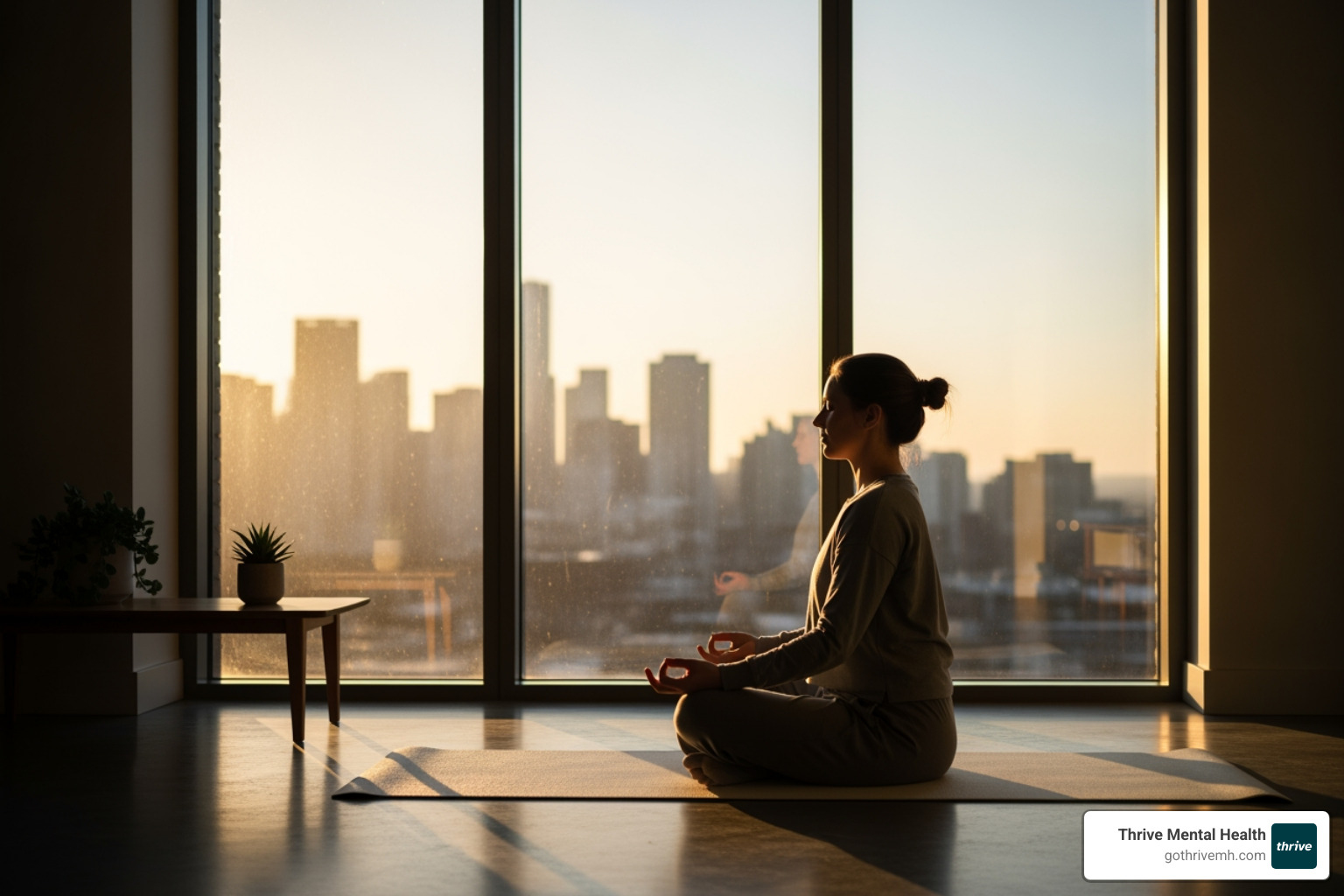
- Mindfulness and Meditation Practices: Learning to be present and observe your thoughts without judgment can be transformative for anxiety. Mindfulness-based interventions, including meditation, can help you develop a nonjudgmental awareness of the present moment, reducing the grip of anxious thoughts. Even just a few minutes of deep breathing or guided meditation daily can make a difference.
- Prioritizing Sleep Hygiene: Anxiety and sleep problems often go hand-in-hand, creating a vicious cycle. Establishing a consistent sleep schedule, creating a relaxing bedtime routine, and ensuring your sleep environment is conducive to rest can dramatically improve your anxiety levels. Avoid caffeine and screens before bed.
- Balanced Nutrition and Hydration: What you eat impacts your mood and energy. A diet rich in whole foods, fruits, vegetables, and lean proteins can stabilize blood sugar and support brain health. Conversely, excessive caffeine, sugar, and processed foods can exacerbate anxiety. Staying well-hydrated is also crucial for overall physical and mental function.
- Building a Strong Support System: You don’t have to face anxiety alone. Connecting with friends, family, or a support group can provide comfort, perspective, and a sense of belonging. Socialization is a powerful antidote to isolation, which often fuels anxiety. Sharing your experiences can be incredibly validating and help break the cycle of worry.
Your Roadmap to Getting Help: Diagnosis and First Steps
Taking the first step toward getting help is the most courageous one. We’re here to guide you through the process.
How to Prepare for Your First Doctor’s Appointment
Being prepared makes your initial appointment more productive. Here’s what we recommend:
- Track your symptoms: For a week or two before your appointment, keep a journal of your anxiety symptoms. Note when they occur, how long they last, and what seems to trigger or alleviate them.
- List your specific fears and worries: Be as detailed as possible. Are you worried about social situations, specific objects, or general daily events?
- Note your physical symptoms: Anxiety often manifests physically. Document symptoms like heart palpitations, sweating, shortness of breath, muscle tension, or digestive issues.
- Bring a list of all medications and supplements: Include prescription drugs, over-the-counter medications, vitamins, and herbal supplements you currently take, along with their dosages. This helps your doctor check for potential interactions or contributing factors.
- Write down your questions: It’s easy to forget questions once you’re in the room. Prepare a list of what you want to know about your symptoms, diagnosis, and treatment options.
What is the diagnostic process for anxiety disorders in adults?
The diagnostic process is thorough to ensure an accurate diagnosis and rule out other causes:
- Initial consultation: You may start by seeing your primary care provider in Florida. They can perform a physical exam and order tests (like blood or urine tests) to rule out underlying medical conditions (e.g., thyroid issues, heart problems) or medication side effects that might mimic anxiety symptoms.
- Referral to a mental health specialist: If physical causes are ruled out or your anxiety is severe, your primary care provider may refer you to a mental health professional like a psychiatrist or psychologist.
- Psychological evaluation: A mental health specialist will conduct a comprehensive assessment. This involves discussing your thoughts, feelings, behaviors, and life experiences. They will ask detailed questions about your symptoms, their duration, intensity, and how they impact your daily life. They will also inquire about your personal and family mental health history.
- Using DSM-5 criteria: The specialist will use the criteria outlined in the American Psychiatric Association’s Diagnostic and Statistical Manual of Mental Disorders (DSM-5) to determine if your symptoms align with a specific anxiety disorder. This ensures a standardized and accurate diagnosis.
- Addressing co-occurring conditions: Anxiety disorders frequently co-occur with other mental health conditions like depression, bipolar disorder, or substance use disorders. The diagnostic process will also assess for these to ensure a holistic treatment plan.
Finding the right provider in Florida is crucial. We encourage you to check your insurance benefits with providers like Cigna, Optum, or Florida Blue. You can verify your insurance in 2 minutes with no obligation to understand your coverage options.
Building a Resilient Future: Relapse Prevention and Higher Levels of Care

Recovery is a journey, not a destination. Preventing relapse and maintaining wellness requires ongoing, strategic planning.
What Are the Potential Long-Term Outcomes and Relapse Prevention Strategies for Adults with Anxiety Disorders?
Long-term outcomes for treated anxiety are very positive, leading to symptom reduction and a better quality of life. However, because anxiety can be chronic, relapse prevention is a critical part of any treatment plan.
Effective relapse prevention strategies include:
- Continued engagement in therapy: Even after significant improvement, periodic “booster sessions” of CBT can be beneficial to reinforce coping skills and address any emerging challenges.
- Identifying personal triggers: Understanding what situations, thoughts, or emotions tend to heighten your anxiety is crucial. This awareness allows you to develop proactive strategies to manage or avoid these triggers.
- Creating a wellness and crisis plan: This involves outlining daily self-care routines, identifying early warning signs of escalating anxiety, and having a clear plan for who to contact and what steps to take if symptoms begin to return.
- Maintaining lifestyle practices: The lifestyle changes we discussed earlier—regular exercise, good sleep, healthy eating, and a strong support system—are not just for initial recovery but are vital for long-term mental health.
- Medication adherence: If medication is part of your treatment plan, continuing it as prescribed, even when feeling well, is important for preventing relapse. Discontinuing antidepressants too early (before 6-12 months post-response) can lead to relapse in up to 50% of patients.
For those needing more than weekly therapy but less than inpatient care, structured programs like ours at Thrive Mental Health can be key to solidifying recovery and preventing relapse. Our Intensive Outpatient Programs (IOP) and Partial Hospitalization Programs (PHP) offer a higher level of support and structure, combining individual therapy, group therapy, and medication management in a comprehensive format. These programs are designed for people who need more intensive support to build lasting coping skills and integrate them into their daily lives. We also offer accessible support through Virtual IOP/PHP Programs, bringing evidence-based care directly to you, wherever you are in Florida.
Frequently Asked Questions about Anxiety Treatment
How long does it take for anxiety treatment to work?
Most people notice improvements within a few weeks to a few months of starting evidence-based therapy like CBT. Many patients see improvement after just a few sessions. Medication effectiveness varies, but SSRIs/SNRIs typically take 4-6 weeks to reach their full effect.
Can anxiety be cured completely?
While a “cure” isn’t the right term, anxiety disorders are highly treatable. The goal of treatment is to reduce symptoms to a manageable level where they no longer control your life, allowing you to function and thrive. Many people achieve long-term remission and live fulfilling lives free from significant anxiety.
Is therapy or medication better for anxiety?
Research consistently shows that psychotherapy, especially CBT, is the most effective long-term treatment because it teaches you skills to manage anxiety for life. Medication can be very effective for reducing symptoms, especially in the short term, making it easier to engage in therapy. For many adults, a combination of both therapy and medication is the best approach, offering faster and more complete relief.
Ready for Real Support?
Anxiety treatment works, and you don’t have to figure it out alone. The most effective path combines evidence-based therapy, lifestyle changes, and, when needed, medication, all within a structured and supportive environment. Thrive Mental Health delivers virtual and in-person IOP and PHP programs across Florida, designed for adults who need more than once-a-week therapy to get better.
Ready for support? Thrive offers virtual and hybrid IOP/PHP programs with evening options. Verify your insurance in 2 minutes (no obligation) → Start benefits check or call 561-203-6085. If you’re in crisis, call/text 988.