
An Essential Guide to Adult Dissociative Disorders Treatment

Understanding Your Path to Recovery from Dissociative Disorders
If you’re thinking about hurting yourself, call or text 988, the Suicide & Crisis Lifeline (U.S.). You don’t have to be in a crisis to dial 988. Someone is available to talk, no matter your situation, so you can feel better in your time of need.
Which treatment approaches assist adults with dissociative disorders? The most effective treatments include:
- Specialized psychotherapy (particularly trauma-focused therapy)
- Cognitive Behavioral Therapy (CBT) and Dialectical Behavior Therapy (DBT) for managing symptoms and emotions
- Eye Movement Desensitization and Reprocessing (EMDR) adapted for dissociation
- Medication for co-occurring conditions like depression or anxiety
- Phased treatment approach following established guidelines (safety/stabilization, trauma processing, integration)
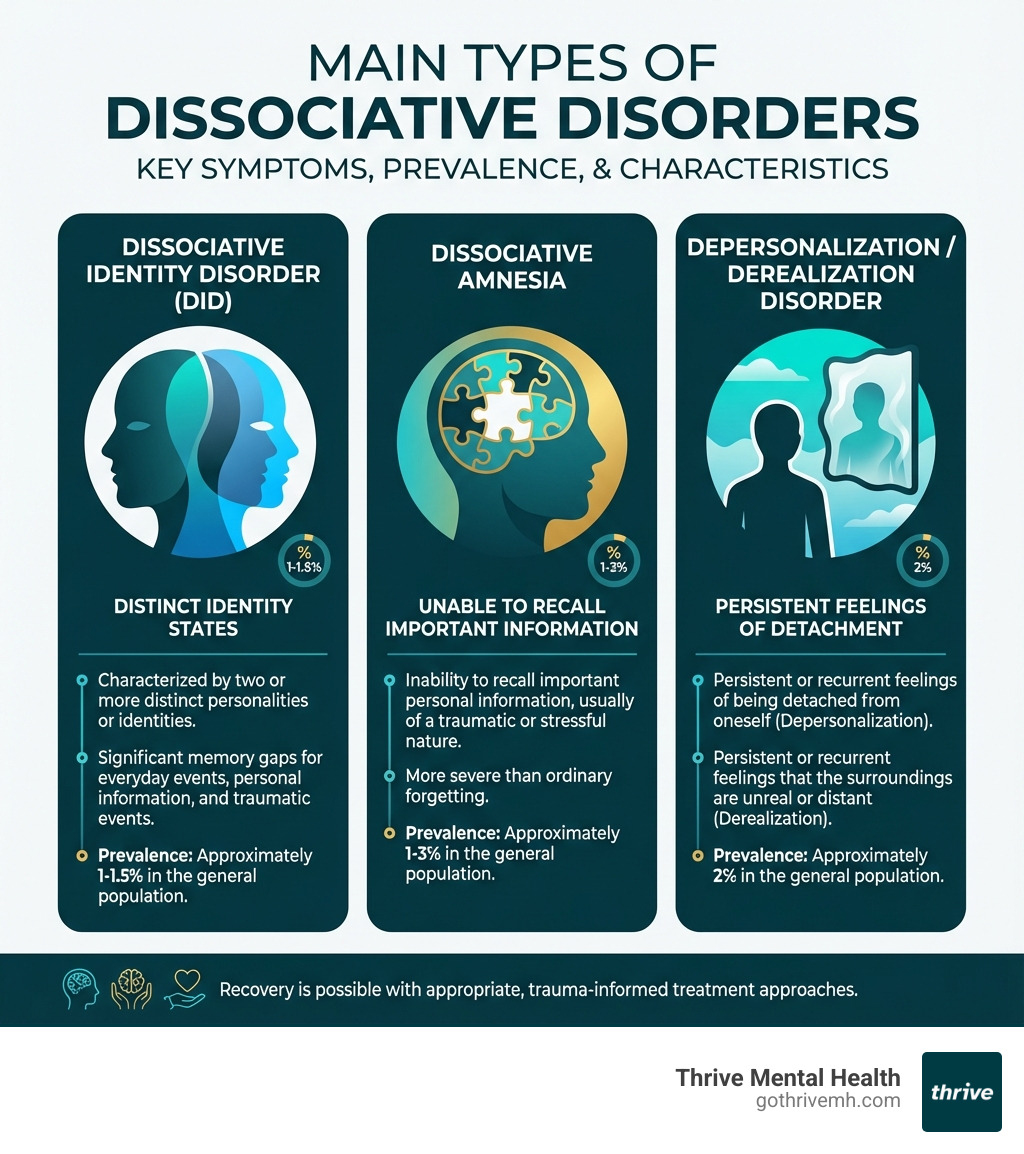
The reality: Dissociative disorders involve an involuntary disconnect from reality—affecting memory, identity, and sense of self. These aren’t signs of weakness. They’re often survival responses to overwhelming trauma.
Here’s what matters: Recovery is possible. With the right diagnosis and treatment, many people stop experiencing dissociative symptoms entirely. Others learn to manage them effectively and live full, productive lives.
The numbers tell a hopeful story. Up to 75% of people experience at least one dissociative episode in their lifetime, but only 2% meet criteria for chronic dissociative disorders. And over 80% of people who seek appropriate treatment show significant improvement.
The catch? Standard weekly therapy often isn’t enough. Most effective treatment takes years, not months—and requires a therapist who truly understands trauma and dissociation.
As Nate Raine, CEO of Thrive Mental Health, I’ve spent over a decade working at the intersection of behavioral health, data science, and digital change, building systems that improve access to evidence-based care. Understanding which treatment approaches assist adults with dissociative disorders has been central to developing our specialized IOP and PHP programs in Florida, which integrate trauma-informed therapy with the flexibility today’s adults need.
Related Reading:
- Eggshell Parenting: Causes, Signs & How to Heal
- Emotional Incest Doesn’t Mean What You Think It Means
- What Are Signs of Abandonment Issues in Adults?
The Cornerstone of Treatment: Why Specialized Psychotherapy is Essential
When considering which treatment approaches assist adults with dissociative disorders, psychotherapy stands out as the absolute cornerstone. It’s not just a recommendation; it’s the primary, most effective pathway to healing. At Thrive Mental Health, we understand that these conditions are complex, often rooted in profound trauma, and require a nuanced, deeply empathetic approach.
Psychotherapy helps individuals with dissociative disorders by providing a safe, consistent space to explore fragmented memories, identities, and emotions. The goal isn’t to “fix” you, but to help you integrate these experiences into a cohesive sense of self. This process relies heavily on building a strong, trusting therapeutic alliance – a bond with a therapist who is not only clinically skilled but also trauma-informed and understanding. This relationship becomes the anchor in what can often feel like a chaotic internal world.
A critical part of this journey is psychoeducation. This involves understanding what dissociation is, why it happens, and how it has served as a coping mechanism. We focus on normalizing your symptoms, explaining the biological and neural bases of dissociation. This knowledge can be incredibly empowering, reducing the shame and confusion that often accompany dissociative experiences. By understanding your own mind, you gain agency and a roadmap for healing.
Our virtual and in-person programs across Florida prioritize finding the right fit between client and therapist, recognizing that a truly trauma-informed therapist is essential for this delicate work. You can learn more about our comprehensive approach to Psychotherapy.

How do Cognitive and Dialectical Behavior Therapy (CBT & DBT) Help?
Among the most effective treatment approaches that assist adults with dissociative disorders are specialized forms of psychotherapy like Cognitive Behavioral Therapy (CBT) and Dialectical Behavior Therapy (DBT). While not always the primary standalone treatment for the deepest layers of trauma in dissociative disorders, they are invaluable for symptom management, skill-building, and creating a stable foundation.
Cognitive Behavioral Therapy (CBT) helps individuals identify and challenge distorted thought patterns and beliefs that contribute to distress. For someone with a dissociative disorder, this might involve addressing negative self-talk, managing anxiety-provoking thoughts, or understanding how certain beliefs perpetuate dissociative episodes. By learning to recognize and reframe these thoughts, individuals can change unhelpful behaviors and develop healthier coping strategies. We integrate CBT principles into our programs to help clients build mental resilience. Explore our approach to Cognitive Behavioral Therapy.
Dialectical Behavior Therapy (DBT), initially developed for Borderline Personality Disorder, is highly effective for individuals with dissociative disorders due to its focus on emotional regulation and distress tolerance. DBT teaches four core skill sets:
- Mindfulness: Learning to be present and aware of the moment without judgment, which is crucial for countering dissociative detachment.
- Distress Tolerance: Developing strategies to cope with intense, painful emotions without resorting to destructive behaviors (more on this in Phase 1).
- Emotion Regulation: Understanding, identifying, and managing overwhelming emotions.
- Interpersonal Effectiveness: Improving communication and relationship skills to steer social interactions more effectively and reduce interpersonal chaos.
DBT’s emphasis on balancing acceptance and change provides powerful tools for navigating the intense emotional fluctuations often experienced by those with dissociative disorders. Our specialized programs incorporate Dialectical Behavior Therapy skills to empower our clients.
Can EMDR be an Effective Treatment, and How is it Adapted?
Eye Movement Desensitization and Reprocessing (EMDR) is another powerful therapeutic modality within the spectrum of treatment approaches that assist adults with dissociative disorders, particularly those with a history of trauma. EMDR helps individuals process traumatic memories that contribute to their dissociative symptoms.
However, standard EMDR protocols are often not suitable for individuals with dissociative disorders without significant adaptation. For our clients, we ensure EMDR is carefully modified by experienced, trauma-informed therapists. The adaptation typically involves:
- Prioritizing Stabilization: EMDR is only introduced once a client is reasonably stable, has developed robust coping skills (like grounding and distress tolerance), and has established a strong therapeutic alliance. Attempting EMDR prematurely can be overwhelming and re-traumatizing.
- Shorter, Focused Sessions: Instead of long, intense processing sessions, EMDR for dissociative disorders often focuses on specific, manageable memories for shorter time periods. This prevents “flooding” – where a client becomes overwhelmed by traumatic material and dissociates further.
- Resource Installation: Therapists spend significant time installing internal resources (e.g., safe place imagery, nurturing figures) to help clients manage distress during processing.
- Careful Pacing: The therapist works at the client’s pace, constantly monitoring for signs of dissociation and adjusting the protocol as needed.
When adapted appropriately and delivered by a skilled clinician, EMDR can be incredibly effective in helping to desensitize clients to traumatic memories, reducing their emotional charge and integrating them into a more coherent life narrative. Learn more about our specialized EMDR Therapy offerings.
What Role do Medications Play in Treating Dissociative Disorders?
It’s important to clarify that when discussing which treatment approaches assist adults with dissociative disorders, there are currently no drugs licensed to treat dissociation specifically. Dissociation itself is a complex psychological process, not a chemical imbalance that can be directly targeted by medication.
However, medication can play a crucial supportive role by treating other problems you may experience alongside dissociation. Dissociative disorders frequently co-occur with other mental health conditions, such as:
- Depression: Antidepressants (SSRIs, SNRIs) can help alleviate depressive symptoms, improve mood, and increase energy levels.
- Anxiety Disorders: Anxiolytics or antidepressants can reduce severe anxiety, panic attacks, and generalized worry.
- Post-Traumatic Stress Disorder (PTSD): While psychotherapy is primary for PTSD, certain medications can help manage symptoms like nightmares, hypervigilance, and acute distress.
- Sleep Disturbances: Medications can help improve sleep quality, which is often severely disrupted in individuals with dissociative disorders.
- Psychotic Symptoms: In some cases, individuals with severe dissociative disorders, particularly Dissociative Identity Disorder (DID), may experience transient psychotic-like symptoms (e.g., hearing voices that are internal self-states). Antipsychotic medications may be used cautiously to manage these specific symptoms, always in conjunction with psychotherapy.
Your doctor, typically a psychiatrist, might offer you psychiatric medication to treat these co-occurring issues. The goal is to stabilize your emotional state, reduce overwhelming symptoms, and make you more available for psychotherapy – the core treatment. Medication is a supportive tool, not a cure for dissociation itself, but it can significantly improve your quality of life and capacity to engage in therapeutic work.
The 3-Phase Recovery Model for Treating Dissociative Disorders
For adults struggling with dissociative disorders, especially Dissociative Identity Disorder (DID), a structured, phased approach to treatment is vital. This isn’t a quick fix; it’s a deliberate journey designed to build safety, process trauma, and foster integration over time. This model is widely recognized and forms the foundation of best practices, including the Guidelines for treating dissociative identity disorder in adults published by the International Society for the Study of Trauma and Dissociation (ISSTD).
At Thrive Mental Health, our expert-led programs accept this phased model as a fundamental part of which treatment approaches assist adults with dissociative disorders. It provides a clear, actionable path, ensuring that each step prepares you for the next, maximizing the chances of lasting recovery.

Phase 1: Building a Foundation of Safety and Stability
This initial phase is arguably the most critical and often the longest. Its primary goal is symptom reduction and establishing a profound sense of safety – both internally and externally. For many individuals with dissociative disorders, life has been marked by unpredictability and danger, making safety a foreign concept.
Key components of Phase 1 include:
- Crisis Management & Safety Planning: For individuals who experience frequent crises, self-harm, or suicidal ideation (over 70% of outpatients with DID report a suicide attempt, making this a critical area), developing a comprehensive safety plan is paramount. This involves identifying triggers, coping strategies, and support systems.
- Grounding Skills: These are essential techniques to help you return to the present moment when you feel detached, overwhelmed, or are experiencing a dissociative episode. Grounding helps you regain focus and connect with your body and surroundings.
- Sensory Grounding: Engaging your five senses. For example, the 5-4-3-2-1 method (name 5 things you can see, 4 things you can feel, 3 things you can hear, 2 things you can smell, 1 thing you can taste). Other techniques include holding ice cubes, focusing on the texture of an object, or actively listening to ambient sounds.
- Cognitive Grounding: Engaging your mind in a task, such as counting backwards from 100 by 7s, describing an everyday object in detail, or mentally listing things in a category (e.g., all the blue objects in the room).
- Physical Grounding: Focusing on your body, like feeling your feet on the floor, doing simple stretches, or focusing on your breath.
- Distress Tolerance Skills: These skills, often taught in DBT, are about increasing your capacity to bear painful emotions when you can’t immediately change the situation. They provide “emotional first aid” to prevent impulsive or destructive behaviors. Examples include:
- TIPP Skills: Temperature (splash cold water on your face), Intense exercise, Paced breathing, Paired muscle relaxation.
- ACCEPTS Skills: Activities, Contributing, Comparisons, Emotions (opposite action), Pushing away, Thoughts (other thoughts), Sensations (intense sensations).
- Radical Acceptance: Fully accepting a painful reality that cannot be changed, which reduces suffering caused by fighting against it.
This phase is about building a robust toolkit for managing daily life and intense internal experiences. It’s about creating an internal sense of predictability and control, making the world feel safer.
If you’re in crisis, call/text 988 right now. You are not alone.
Phase 2: Processing and Grieving Traumatic Memories
Once a solid foundation of safety and stability is established, and you have effective coping skills, the work can move into Phase 2: confronting, working through, and integrating traumatic memories. This is the heart of healing from trauma-related dissociative disorders.
“Processing trauma” does not mean re-living it or forcing yourself to remember every detail. Instead, it involves carefully and systematically revisiting traumatic experiences in a controlled, supportive environment with an expert therapist. The goal is to:
- Reduce Emotional Charge: Lessen the intense emotional and physiological reactions associated with the memories.
- Integrate Fragmented Memories: Help connect dissociated memories into a coherent narrative, so they become part of your past, rather than actively impacting your present.
- Challenge Maladaptive Beliefs: Address negative beliefs about yourself, others, and the world that developed as a result of the trauma.
- Grieve Losses: Allow for the natural process of grieving the losses incurred due to trauma (e.g., loss of childhood, safety, trust).
This phase requires immense courage and a highly skilled therapist who can pace the work appropriately, manage potential re-traumatization, and use techniques like adapted EMDR or trauma-focused CBT. Our programs are designed to support you through Complex Trauma processing with compassion and expertise.
Phase 3: Integration and Building Your New Future
The final phase focuses on integration and rehabilitation, helping you build a fulfilling life beyond your dissociative symptoms. For individuals with DID, this often means fostering communication and cooperation between different self-states, ultimately leading to a more integrated sense of self. It might involve “internal meetings” to build bridges between parts that previously operated in isolation.
Key aspects of Phase 3 include:
- Identity Integration: Moving towards a more unified sense of self, where all parts of your experience, history, and personality are recognized and integrated. For some, this may mean a complete merging of identities; for others, it means cooperative functioning within a single sense of self.
- Improving Daily Functioning: Applying the skills learned in previous phases to steer relationships, work, education, and personal goals more effectively.
- Interpersonal Skills Training: Developing healthier communication patterns, setting boundaries, and building more trusting and reciprocal relationships. This is crucial as dissociative disorders often impact social connections.
- Relapse Prevention: Identifying warning signs and having strategies in place to manage stressors and prevent a return of severe dissociative symptoms.
- Life Beyond Symptoms: Focusing on personal growth, finding new interests, and building a future that reflects your values and aspirations.
This phase is about solidifying your gains, reinforcing your new skills, and empowering you to live a healthy, productive, and integrated life.
Key Considerations for a Successful Recovery Journey
Navigating the path to recovery from dissociative disorders involves more than just understanding therapeutic techniques; it also means making informed choices about the intensity and setting of your care, and recognizing the profound impact of cultural context. These are crucial considerations in determining which treatment approaches assist adults with dissociative disorders most effectively for you.
Which treatment approaches assist adults with dissociative disorders in different care settings?
The intensity of care needed for dissociative disorders can vary greatly, depending on symptom severity, safety concerns, and individual needs. We offer a continuum of care designed to meet you where you are.
- Outpatient Therapy: This is the most common and least intensive form of treatment, typically involving weekly or bi-weekly individual therapy sessions. It’s suitable for individuals who are relatively stable, have strong external support, and are able to manage daily life while engaging in therapy.
- Intensive Outpatient Programs (IOP) & Partial Hospitalization Programs (PHP): These programs offer a structured level of care that bridges the gap between traditional outpatient therapy and inpatient hospitalization. They are ideal for individuals who need more support than once-a-week therapy but less than 24/7 care.
- IOPs typically involve several hours of therapy per day, multiple days a week, allowing clients to live at home and maintain some responsibilities. Our Intensive Outpatient Programs are available virtually across Florida, offering flexibility for adults and young professionals.
- PHPs are more intensive than IOPs, often involving full-day treatment for several days a week, providing a robust therapeutic environment without requiring overnight stays.
These programs are excellent for stabilizing acute symptoms, building coping skills rapidly, and providing a consistent therapeutic environment for processing trauma. They offer a strong sense of community and peer support, which is invaluable.
- Inpatient Hospitalization: This is the highest level of care, providing 24/7 supervision and intensive treatment in a hospital setting. It’s reserved for acute crises, such as severe self-harm risk, persistent suicidal ideation, inability to function safely in daily life, or severe disorganization due to dissociation. While more expensive and difficult to arrange, inpatient care can provide the immediate stabilization needed to begin the longer-term therapeutic work.
The choice of setting is critical, especially given that over 70% of outpatient patients with Dissociative Identity Disorder (DID) report a suicide attempt. Ensuring the right level of care is paramount for safety and effective treatment.
Here’s a quick comparison of care settings:
| Care Setting | Intensity | Time Commitment | Primary Goals |
|---|---|---|---|
| Outpatient | Low (requires additional support) | Typically 1-2 hours per week | Symptom management, skill-building, trauma processing (Phase 2), integration (Phase 3) |
| IOP/PHP | Medium-High (structured, comprehensive) | 3-5 days per week, 3-6 hours per day | Rapid stabilization, intensive skill-building, deeper trauma processing, peer support, preparation for integration |
| Inpatient | Very High (24/7 observation, acute care) | Full-time, constant supervision | Crisis stabilization, immediate safety, acute symptom reduction, medication management, initiation of therapeutic work |
Which treatment approaches assist adults with dissociative disorders across different cultures?
The manifestation and interpretation of dissociative experiences can be profoundly influenced by culture. When considering which treatment approaches assist adults with dissociative disorders, it’s crucial to adopt a culturally competent lens. What might be considered a symptom in one culture could be a culturally sanctioned spiritual experience in another.
Research shows that the expression of dissociative disorders is significantly affected by culture. For example, some cultures may interpret what Western medicine calls “possession states” or “non-epileptic seizures” as spiritual phenomena rather than mental health conditions. A person in India exposed to Western culture might even present with an “alter” who only speaks English. These cultural variations highlight the importance of:
- Avoiding Misdiagnosis: A culturally insensitive approach can lead to misdiagnosing spiritual or cultural practices as pathology. Therapists must be aware of culturally patterned dissociative symptoms and avoid unwarranted pathologization.
- Custom Interventions: Treatment needs to be adapted to the individual’s cultural background, beliefs, and values. This might involve incorporating traditional healing practices, working with family systems, or understanding how cultural trauma plays a role.
- Therapist Competence: Clinicians working with diverse populations must develop cultural humility, continuously learning and respecting clients’ unique cultural contexts. This includes understanding how culture shapes help-seeking behaviors, symptom expression, and views on mental health.
At Thrive Mental Health, we recognize that our clients come from diverse backgrounds across Florida. Our clinicians are trained to provide culturally sensitive care, ensuring that your treatment plan respects your unique identity and experiences. Further exploration into culture-bound dissociation underscores this critical aspect of care.
Frequently Asked Questions about Dissociative Disorder Treatment
Can you fully recover from a dissociative disorder?
Yes, absolutely. Recovery from a dissociative disorder is not only possible but common with the right diagnosis and consistent, specialized treatment. For many, recovery means the complete cessation of dissociative symptoms, such as separate parts of identity merging into one cohesive sense of self. For others, it involves learning to effectively manage symptoms, leading to a healthy, productive, and integrated life. The journey is often long, but the prognosis with appropriate therapeutic interventions is overwhelmingly positive, with over 80% of individuals showing improvement.
How long does therapy for dissociative disorders take?
Therapy for dissociative disorders is a long-term commitment, often extending over several years rather than months. The exact duration depends on numerous factors, including the severity and complexity of the trauma, the specific dissociative disorder, the presence of co-occurring conditions, and the individual’s progress. Consistency with a qualified, trauma-informed therapist is far more important than rushing the process. The phased approach to treatment ensures that each step builds upon a solid foundation, which naturally takes time.
What should I look for in a therapist for dissociative disorders?
When seeking a therapist for dissociative disorders, look for a licensed mental health professional who specializes in trauma and dissociation. Key qualities include:
- Trauma-Informed Expertise: They should have specific training and experience in treating complex trauma and dissociative disorders.
- Patience and Long-Term Commitment: Dissociative therapy is a marathon, not a sprint. Your therapist should be prepared for a long-term therapeutic relationship.
- Safety and Trust: It’s paramount that you feel safe, understood, and respected by your therapist. This therapeutic alliance is the foundation of healing.
- Knowledge of Phased Treatment: They should understand and apply the three-phase model of treatment (safety/stabilization, trauma processing, integration).
- Cultural Competence: They should be sensitive to your cultural background and how it may influence your experiences.
You can find qualified professionals through organizations like the International Society for the Study of Trauma and Dissociation (ISSTD) or by contacting specialized treatment centers like Thrive Mental Health. Our team of expert mental health professionals is dedicated to providing specialized care across our virtual and in-person locations in Florida.
Your Path to Healing Starts Now
Understanding which treatment approaches assist adults with dissociative disorders is the first step on a powerful journey toward healing and integration. Recovery is a marathon, not a sprint, but with specialized and consistent care, you can absolutely regain control, process your past, and build a life you truly value.
At Thrive Mental Health, we are committed to making evidence-based treatment accessible and effective. Our expert-led virtual and in-person Intensive Outpatient (IOP) and Partial Hospitalization (PHP) programs are specifically designed for adults and young professionals dealing with complex trauma and dissociative disorders. We operate across Florida, with virtual and in-person services available in key areas including Tampa Bay, Miami, Orlando, Jacksonville, Boca Raton, West Palm Beach, Fort Lauderdale, Naples, Sarasota, and St. Petersburg. We understand the complexities of these conditions and offer structured, flexible programs that provide more support than weekly therapy but less than inpatient care.
We also work with major insurance providers like Cigna, Optum, and Florida Blue to help make this life-changing treatment more affordable and accessible. Don’t let the fear of the unknown keep you from the healing you deserve.
Ready for support? Thrive offers virtual and hybrid IOP/PHP programs with evening options. Verify your insurance in 2 minutes (no obligation) → Start benefits check. If you’re in crisis, call/text 988.