
5 Practical Ways to Find Orlando Adolescent & Young Adult IOPs

Why Orlando Families Are Searching for IOPs That Bridge Adolescence and Young Adulthood
Are there any adolescent IOP programs near Orlando that also serve young adults? Yes—and finding the right one could be the turning point your family needs.
Quick Answer:
- Yes, several IOPs near Orlando serve both adolescents (ages 12-17) and young adults (ages 18-25), providing a critical bridge between weekly therapy and inpatient care.
- Virtual IOPs like those offered by Thrive Mental Health eliminate geographic barriers and serve all of Florida, including Orlando.
- Most major insurance plans (Aetna, Cigna, Florida Blue, UnitedHealthcare) cover IOP treatment when clinical criteria are met.
- Typical program structure: 9-12 hours of therapy per week across 3-4 days, with evening options to accommodate school and work.
If you or your teen are in crisis or thinking about self-harm, call or text 988 now to connect with the 988 Suicide & Crisis Lifeline. You are not alone.
Youth mental health challenges are rising across Central Florida. Parents are reporting increased anxiety, school refusal, and social withdrawal in their teens at alarming rates. In 2020, NAMI found that 1 in 3 young adults experienced a mental illness, and suicide remains the second leading cause of death among this age group.
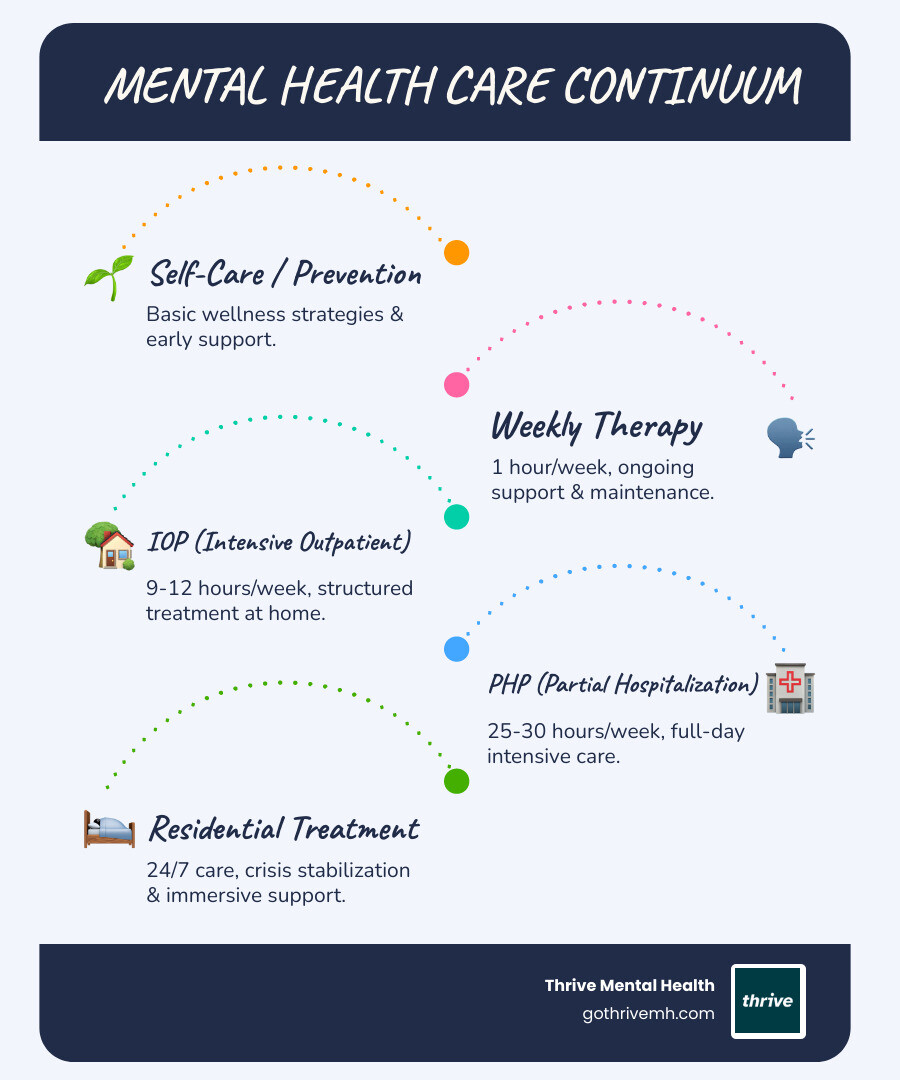
The gap between weekly therapy and inpatient care is real—and it’s where Intensive Outpatient Programs (IOPs) save lives.
Weekly therapy can feel like bringing a bucket to a wildfire. Residential treatment might be too much too soon. IOP is the critical middle ground: structured, evidence-based support that allows teens and young adults to heal while staying connected to home, school, and community.
But here’s what most parents don’t realize: the best IOPs don’t just treat adolescents or young adults—they bridge both, adapting care to the unique pressures of teens navigating high school and young adults facing college, career stress, and independent living.
I’m Nate Raine, CEO of Thrive Mental Health, and I’ve spent over a decade building scalable, evidence-based behavioral health programs across Florida. In this guide, I’ll show you exactly how to find adolescent IOP programs near Orlando that also serve young adults, so your family can access the right level of care—fast.
Simple Are there any adolescent IOP programs near Orlando that also serve young adults? glossary:
- Where can I find treatment centers in Orlando that accept BCBS of FL for intensive outpatient therapy?
- Which intensive outpatient programs offer flexible scheduling?
What is an Adolescent IOP? (And Why It’s a Lifeline for Young Adults, Too)
An Intensive Outpatient Program (IOP) is a structured mental health treatment option that provides comprehensive support without requiring a full-time stay. Think of it as a significant step up from traditional weekly therapy, offering a more intensive and consistent treatment experience, but still allowing individuals to live at home and maintain daily routines like school or work. It’s a powerful bridge between less intensive outpatient care and more restrictive residential treatment or hospitalization.
For adolescents and young adults, this model is particularly effective. It acknowledges that while they need significant support, completely removing them from their environment can sometimes hinder the application of new coping skills in real-world situations. IOPs typically involve several hours of treatment daily, several days a week, often ranging from a few weeks to a few months.
Signs a Teen Needs More Support
How do you know if your teen needs more than just weekly therapy? The signs can be subtle at first, but often escalate. If you’re seeing:
- Persistent sadness or irritability: A mood that doesn’t lift, even with effort.
- Social withdrawal: Pulling away from friends, family, and activities they once enjoyed.
- Significant changes in behavior: Drastic shifts in mood, increased aggression, or reckless choices.
- Academic decline: Unexplained drops in grades, school refusal, or difficulty concentrating.
- Self-harm behaviors: Any cuts, burns, or other forms of self-injury.
- Substance use: Experimentation or increasing reliance on drugs or alcohol.
- Overwhelming anxiety or panic attacks: Frequent episodes that disrupt daily life.
These are critical indicators that weekly therapy might not be enough. Research shows that 90% of adolescent clients with severe depression see measurable improvements with the right intensive outpatient program.
Conditions Treated by Adolescent IOPs
Adolescent IOPs in Orlando and across Florida are equipped to treat a wide range of mental health conditions, including:
- Depression and other mood disorders
- Anxiety disorders, including generalized anxiety, social anxiety, and panic disorder
- Trauma and Post-Traumatic Stress Disorder (PTSD)
- Self-harm behaviors and suicidal ideation
- Substance use disorders and co-occurring mental health issues
- Behavioral challenges like Oppositional Defiant Disorder (ODD) or Conduct Disorder
- Eating disorders (though some may require specialized PHP or residential care first)
- Bipolar disorder
- Attention-Deficit/Hyperactivity Disorder (ADHD) with co-occurring mental health struggles
IOP vs. PHP: Understanding the Difference
While both Intensive Outpatient Programs (IOP) and Partial Hospitalization Programs (PHP) offer intensive care, they differ in intensity and time commitment.
- IOP typically involves 9-12 hours of therapy per week, spread over 3-4 days. This allows adolescents and young adults to continue attending school or work.
- PHP is more intensive, requiring 25-30 hours of treatment per week, usually 5 days a week for 5-6 hours a day. It’s a step down from inpatient care but a step up from IOP, providing a full day of structured treatment.
Choosing between them depends on the severity of symptoms and the level of supervision and structure required. For a deeper dive into these distinctions, explore our guide on IOP vs PHP Mental Health.
The Young Adult Transition: Addressing Unique Pressures
The transition from adolescence (typically 12-17) to young adulthood (18-25) is a period of immense change and unique pressures. Young adults face:
- Academic stress: The demands of college, trade school, or beginning a career.
- Peer influence: Navigating new social circles and independence.
- Emotional development: Solidifying identity, managing complex relationships, and developing self-sufficiency.
- Financial pressures: Managing money, housing, and increasing responsibilities.
IOPs that serve both age groups understand these nuances. They adapt their therapeutic approaches to address the developmental stage of each individual, whether it’s a high school student struggling with social anxiety or a college student struggling with depression and substance use. This dual focus ensures that treatment is relevant, effective, and custom to their evolving needs. The National Alliance on Mental Illness (NAMI) reported that 1 in 3 young adults in the United States experienced a mental illness in 2020, highlighting the critical need for accessible and appropriate care for this age group.
The 5-Step Guide: Are There Any Adolescent IOP Programs Near Orlando That Also Serve Young Adults?
Finding the right mental health support for your loved one can feel like navigating a maze. But with a clear action plan, you can cut through the confusion and find a program that truly makes a difference. We’re here to empower you with the steps needed to find adolescent IOP programs near Orlando that also serve young adults.

Step 1: Start With Your Insurance Plan [Cut Costs Immediately]
The first question on many parents’ minds is, “How much will this cost?” The good news is that Intensive Outpatient Programs are often covered by insurance, thanks in part to mental health parity laws that require most plans to cover mental health treatment similarly to physical health.
Navigating insurance can be tricky, but it’s crucial for managing costs. You’ll want to understand the difference between in-network and out-of-network providers. In-network providers have agreements with your insurance company, typically resulting in lower out-of-pocket costs. Out-of-network providers may offer specialized care, but you might pay a higher percentage of the cost yourself.
To verify benefits and understand cost considerations, we recommend:
- Calling your insurance provider directly: Ask about your mental and behavioral health coverage for IOPs.
- Asking about deductibles and co-pays: Know what you’ll need to pay before your coverage kicks in and for each session.
- Checking for pre-authorization requirements: Some programs need approval from your insurer before treatment can begin.
Many quality programs in Florida, including Thrive Mental Health, work with major insurance providers such as:
- Cigna
- Aetna
- Florida Blue
- Optum
- UnitedHealthcare
- Humana
- Magellan
- TRICARE
Always confirm your specific plan’s coverage directly with the provider and the IOP program’s admissions team. Our team makes it easy to verify your insurance in minutes, taking the guesswork out of the process.
Step 2: Evaluate Specialized Tracks and Program Types (Virtual vs. In-Person)
One size does not fit all in mental health care. The best IOPs offer custom care through specialized tracks designed to meet unique needs. When looking for adolescent IOP programs near Orlando that also serve young adults, consider programs that offer:
- LGBTQIA+ affirming care: Creating a safe and validating space for youth exploring their identity.
- Neurodivergent support: Custom approaches for individuals with ADHD, Autism Spectrum Disorder, and other neurodevelopmental differences, focusing on executive function and emotional regulation.
- Trauma-informed therapy: Programs that understand the profound impact of trauma and integrate specific therapeutic techniques to address it safely and effectively.
Beyond specialized tracks, consider the format of the program: in-person or virtual. The rise of virtual IOPs has revolutionized access to care, especially in a geographically diverse state like Florida. Virtual programs offer:
- Flexibility and accessibility: Teens and young adults can attend sessions from the comfort and privacy of their home, eliminating transportation barriers and allowing them to maintain their school or work schedules.
- Reduced anxiety: For those with social anxiety or school refusal, a virtual setting can be less intimidating, fostering greater engagement.
- Real-world application: Learning and practicing coping skills in their natural environment can lead to more lasting change.
Thrive Mental Health offers expert-led virtual IOPs across Florida, including Orlando, making high-quality, evidence-based treatment accessible anywhere, anytime. Learn more about the advantages in our guide: The Benefits of a Virtual Intensive Outpatient Program (VIOP).
Step 3: Vet the Program’s Core Components & Therapies
Once you’ve narrowed down your options, it’s time to dig into the therapeutic approach. When seeking adolescent IOP programs near Orlando that also serve young adults, you need to know what’s under the hood.
What to look for:
- Accreditation: Programs accredited by bodies like The Joint Commission or CARF demonstrate a commitment to high standards of care and safety.
- Licensed therapists: Ensure the treatment team consists of licensed professionals with experience working with adolescents and young adults.
- Evidence-based therapies: Look for programs that use proven therapeutic modalities, such as:
- Cognitive Behavioral Therapy (CBT): Helps individuals identify and change negative thought patterns and behaviors.
- Dialectical Behavior Therapy (DBT): Focuses on emotional regulation, distress tolerance, mindfulness, and interpersonal effectiveness.
- Acceptance and Commitment Therapy (ACT): Encourages acceptance of difficult thoughts and feelings while committing to actions aligned with personal values.
Thrive Mental Health’s Florida adolescent IOP programs utilize these evidence-based models to create personalized treatment plans for teens and young adults.
Family involvement is a non-negotiable component of successful adolescent and young adult treatment. Programs should include:
- Regular family therapy sessions: To improve communication, address family dynamics, and build a supportive home environment.
- Parent support groups: To provide education, resources, and a space for parents to connect with others facing similar challenges.
- Psychoeducation: To help families understand mental health conditions and how to best support their loved one’s recovery.
Data from the Substance Abuse and Mental Health Services Administration (SAMHSA) underscores the critical need for comprehensive support, including family engagement, to improve outcomes for young adults.
The role of peer support in IOPs cannot be overstated. Group therapy sessions create a sense of community, reduce isolation, and allow participants to learn from each other’s experiences. This shared journey is a powerful catalyst for healing.
Finally, a comprehensive IOP should effectively treat co-occurring disorders. It’s common for mental health issues like anxiety or depression to exist alongside substance use. An integrated approach ensures both are addressed simultaneously for more sustainable recovery.
Step 4: Understand How Orlando-Based Adolescent IOPs Serve Young Adults as Well
The unique challenge of finding adolescent IOP programs near Orlando that also serve young adults lies in bridging the age gap while providing age-appropriate care. We understand that a 15-year-old’s needs differ significantly from a 22-year-old’s.
Programs that successfully serve both demographics typically achieve this through:
- Flexible age grouping: While some programs might have separate groups for adolescents and young adults, others may have mixed groups with skilled facilitators who can steer diverse developmental stages, ensuring all voices are heard and respected.
- Program adaptations for 18-25 year olds: For young adults, the focus often shifts to:
- Life transitions: Support for navigating college, vocational training, or entering the workforce.
- Career development: Workshops on resume building, interview skills, and professional conduct.
- Independent living skills: Practical guidance on financial literacy, budgeting, healthy cooking, and self-care.
- Building adult coping mechanisms: Developing strategies to manage stress, build healthy relationships, and maintain mental wellness as independent individuals.
These programs recognize that while the core therapeutic principles remain the same, the application and context for young adults often involve developing skills for greater autonomy and responsibility. Our programs at Thrive Mental Health are designed to support individuals through these critical life stages, offering specialized tracks and flexible scheduling that cater to the demands of young adult life. For more on adult-focused programs, see our guide on Adult Intensive Outpatient Mental Health Program Near Me.
Step 5: Ask These Critical Questions Before Enrolling
Choosing an IOP is a significant decision. Don’t hesitate to ask probing questions during your initial consultations. This parent checklist will help you evaluate if a program is the right fit for your teen or young adult:
- What does a typical day or week look like in your program? Understand the schedule, duration of sessions, and types of activities. IOPs typically involve 9-12 hours of therapy per week over 3-4 days.
- How is progress measured, and how will we be informed? Look for programs with clear metrics and regular communication with families.
- What is the aftercare plan once the IOP is completed? A robust aftercare strategy is crucial for sustained recovery, often including referrals to individual therapy, support groups, or less intensive outpatient services.
- How do you coordinate with schools or workplaces? For adolescents, academic support and coordination with school staff are vital. For young adults, flexibility and understanding of work commitments are key.
- What is the staff-to-patient ratio? A lower ratio often indicates more individualized attention.
- How are crises handled outside of program hours? Understand the emergency protocols and available support during non-program times.
- What specialized tracks or support systems are available? Reiterate questions about LGBTQIA+, neurodivergent, or trauma-informed care if these are relevant to your loved one.
- What evidence-based therapies are primarily used? Ensure they align with proven methods like CBT, DBT, or ACT.
- How do you incorporate family therapy and support? Strong family involvement is a top predictor of success.
- What are the insurance and cost considerations? Get a clear breakdown of potential out-of-pocket expenses.
Asking these questions will empower you to make an informed decision and ensure your loved one receives the comprehensive, individualized care they deserve.
The Unseen Benefits of IOP for Teens and Young Adults
Beyond simply stabilizing symptoms, IOPs offer a wealth of unseen benefits that lay the groundwork for long-term well-being for teens and young adults.
- Building resilience: Through consistent therapeutic work, individuals learn to bounce back from adversity and develop a stronger sense of self-efficacy.
- Developing coping skills: Participants gain a toolkit of practical strategies to manage stress, regulate emotions, and steer challenging situations without resorting to unhealthy behaviors.
- Reducing isolation: Group therapy fosters a sense of belonging and understanding. Connecting with peers who share similar struggles can be incredibly validating, especially for teens and young adults who often feel alone in their mental health battles.
- Improving family communication: Family therapy components help repair fractured relationships, establish healthier boundaries, and create a more supportive and understanding home environment.
- Fostering independence: IOPs empower individuals to take ownership of their recovery, teaching them self-advocacy and decision-making skills crucial for successful transition into adulthood.
The impact is clear: research indicates that 90% of adolescent clients with severe depression see measurable improvements with the right intensive outpatient program. This isn’t just about symptom reduction; it’s about building a foundation for a fulfilling life. By integrating back into their daily lives while receiving intensive support, teens and young adults can apply their new skills in real-time, leading to more sustainable change and long-term recovery success. For a comprehensive overview of IOPs, consult our Intensive Outpatient Programs Complete Guide.
Frequently Asked Questions about Orlando Adolescent & Young Adult IOPs
How long does an adolescent IOP program usually last?
Program duration is highly individualized based on the teen’s or young adult’s specific needs, progress, and the severity of their condition. On average, programs typically last 8–12 weeks. Treatment involves 9-12 hours of therapy per week, spread across 3-4 days, often with evening options to accommodate school or work schedules.
Are virtual IOPs as effective as in-person programs for teens?
Yes, for many teens and young adults, virtual IOPs can be just as effective as in-person programs, and sometimes even more so. They offer significant benefits like flexibility, reduced social anxiety, elimination of transportation barriers, and the unique ability to immediately practice newly learned skills within their natural home or community environment. Our data at Thrive shows that over 91% of our clients experience improvements in their most severe mental health symptoms through our virtual IOP programs.
How can I tell if my teen needs an IOP instead of just weekly therapy?
Consider an IOP if your teen’s symptoms are worsening despite weekly therapy, consistently negatively impacting their school or family life, or if they are not making satisfactory progress in less intensive settings. IOP is considered a “step-up” in care, providing more structure, support, and therapeutic hours per week than traditional therapy. If your teen needs more than an hour a week to manage their mental health effectively, an IOP is likely the right choice.
Your Teen Can Heal—Find the Right Support in Orlando Today
Finding the right program is a critical step toward healing. We understand the urgency and the desire to see your loved one thrive. The good news is that there are effective and accessible options available for adolescents and young adults in the Orlando area, designed to meet them where they are and guide them toward a brighter future.
Thrive Mental Health provides expert-led virtual IOP programs across Florida, offering the flexibility and clinical excellence your family needs. Our programs combine clinical expertise, flexible scheduling, and measurable results—designed for people who need more than once-a-week therapy but less than inpatient care. We are committed to making evidence-based treatment accessible, effective, and custom to the unique needs of adolescents and young adults.
Ready for support? Thrive offers virtual and hybrid IOP/PHP programs with evening options. Verify your insurance in 2 minutes (no obligation) → Start benefits check or call 561-203-6085. If you’re in crisis, call/text 988.