


Struggling to Function but Not Ready for the Psych Ward? Tampa Bay PHPs May Be Your Fastest Way Out
Find the best partial hospitalization programs in Tampa Bay for adults and you unlock a level of care most people don’t even know exists, a fast, intensive alternative to both “just therapy” and full hospitalization.
Quick Answer: How to Find the Best PHP in Tampa Bay (Without Wasting Weeks)
To find the best partial hospitalization programs in Tampa Bay for adults:
- Verify accreditation, Prioritize Joint Commission, accredited programs with licensed clinical teams.
- Check insurance first, Many PHPs accept Florida Blue, Cigna, Aetna, United Healthcare, Optum, Medicare, Medicaid, and Tricare.
- Compare intensity and structure, Top PHPs run 20-30 hours/week with proven therapies (CBT, DBT, EMDR).
- Ask for real outcomes, Request data on symptom reduction, return-to-work rates, and completion rates.
- Consider virtual or hybrid care, Quality virtual PHP options let you get hospital-level support from home.
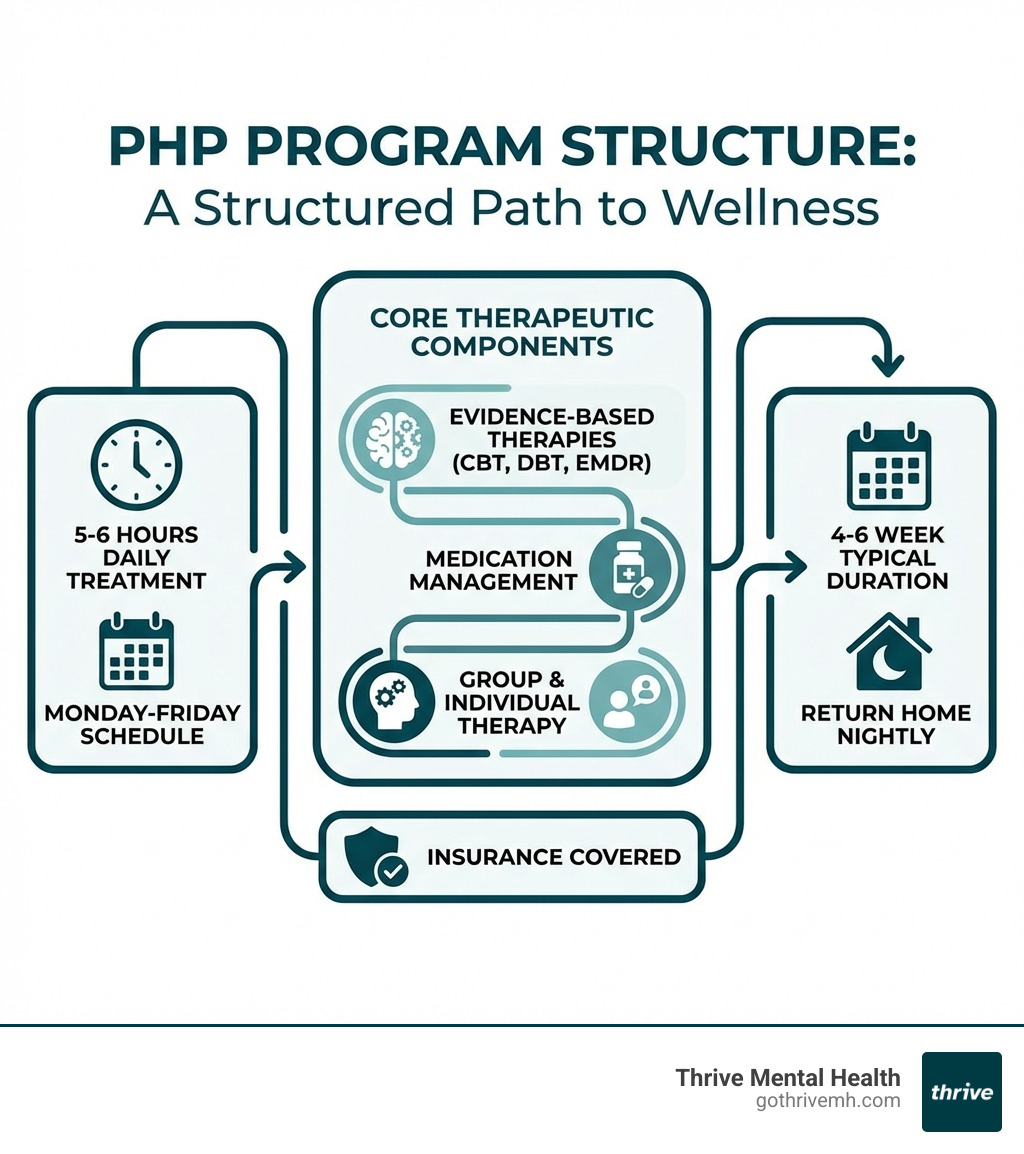
PHP might be right for you if: your depression, anxiety, trauma, or mood swings are wrecking your job, relationships, or daily life, but you don’t need (or want) 24/7 inpatient care. You attend 5-6 hours of treatment, Monday, Friday, then sleep in your own bed.
One in five adults in Tampa struggles with mental illness each year. Most try one hour of weekly therapy, hoping it’s enough. When that stops working and you still can’t get out of bed, can’t focus at work, or keep melting down at home, you’re stuck in a dangerous gap.
Too severe for standard outpatient. Not “bad enough” (or willing) for inpatient.
That gap is where people lose jobs, relationships, and hope.
Partial Hospitalization Programs (PHPs) are built precisely for that gap.
They deliver hospital-level treatment without a hospital stay:
- 20-30 hours of intensive care weekly
- Group therapy, individual sessions, medication management
- Skills to stabilize quickly and stay stable afterward
Most commercial insurance plans in Florida treat PHP as a covered, medically necessary service, which means your out-of-pocket cost can be far lower than you expect.
But not every PHP is worth your time, money, or energy. Some are outdated. Some don’t treat trauma or dual diagnosis. Some don’t take your insurance. Some can’t offer virtual or hybrid options that make care realistic for working adults.
I’m Nate Raine, CEO of Thrive Mental Health, where our team has helped thousands of adults across Florida get into the right PHP or IOP level of care, often within 24-48 hours. We run accredited Partial Hospitalization Programs and Intensive Outpatient Programs, both virtual and hybrid, designed around adult lives.
This guide gives you five clear steps to find the best partial hospitalization programs in Tampa Bay for adults, avoid common mistakes, and start treatment fast, before things get worse.
Important Find the best partial hospitalization programs in Tampa Bay for adults. terms:
Step 1: What Is a PHP, and Is It the Missing Link in Your Recovery?
A Partial Hospitalization Program (PHP) is an intensive, structured mental health treatment program that provides comprehensive care for several hours a day, typically five days a week. Unlike inpatient hospitalization, where you live at the facility 24/7, a PHP allows you to return home each night. This means you get the rigorous support you need during the day, but you can sleep in your own bed, maintain connections with loved ones, and practice coping skills in your real-world environment. It’s a critical bridge, offering significantly more support than weekly therapy but less restriction than inpatient care.
PHPs are perfect for adults in Tampa Bay who are experiencing worsening symptoms, daily struggles that impact their ability to work or maintain relationships, or those who have recently experienced a crisis but don’t require constant supervision. It’s also an ideal step-down option for individuals transitioning from inpatient or residential treatment, helping them gradually reintegrate into their daily lives with continued clinical support. We believe PHP is often the missing link for those caught in the treatment gap, offering a structured environment without completely disrupting your life.
If you or a loved one are struggling with mental health challenges that feel overwhelming, learning more about PHP could be your next step toward stability and recovery. You can learn more about PHP at Thrive.
If you’re in crisis, call/text 988 right now. You are not alone.
What Conditions Are Treated in a Tampa PHP?
Partial Hospitalization Programs in Tampa Bay are designed to treat a wide range of mental health conditions that require intensive intervention. If your symptoms are significantly impacting your daily functioning but you don’t require 24-hour supervision, a PHP might be the right fit. We often see adults seeking PHP for:
- Depression: For individuals struggling with severe or treatment-resistant depression that hasn’t responded to less intensive treatments.
- Anxiety Disorders: Including Generalized Anxiety Disorder, Panic Disorder, and Social Anxiety, when anxiety becomes debilitating.
- PTSD & Trauma: Providing a safe and structured environment to process traumatic experiences and develop coping mechanisms.
- Bipolar Disorder: Helping individuals stabilize mood swings and manage symptoms to prevent severe manic or depressive episodes.
- OCD (Obsessive-Compulsive Disorder): Offering intensive therapy, often including Exposure and Response Prevention (ERP), to manage compulsions and obsessions.
- Dual Diagnosis: Treating co-occurring mental health disorders and substance use disorders simultaneously, providing integrated care for both conditions.
- Personality Disorders: Such as Borderline Personality Disorder, where intensive group and individual therapy (like DBT) can be highly effective.
- Eating Disorders: Providing structured support for recovery, often alongside medical monitoring.
These programs offer comprehensive, coordinated care from a multidisciplinary team, ensuring all aspects of your well-being are addressed.
Step 2: PHP vs. IOP vs. Weekly Therapy, Which Level of Care Gets You Results Fastest?
Choosing the right level of mental health care can feel like navigating a maze, especially when you’re already struggling. We often find that adults in Tampa Bay are unaware of the distinct differences between treatment options, leading to delayed or inadequate care. Let’s break down the three main outpatient levels: PHP, IOP, and traditional weekly therapy, to help you understand which one will get you the results you need, fast.
-
PHP (Partial Hospitalization Program): This is the most intensive outpatient option. It requires a significant time commitment, typically 20-30 hours per week, usually spread across 5 days. It’s designed for individuals with severe symptoms who need daily structure and support to prevent hospitalization or as a step-down from inpatient care. The goal is rapid stabilization and intensive skill-building.
-
IOP (Intensive Outpatient Program): A step down from PHP, IOP offers a flexible yet structured approach. It generally involves 9-12 hours of therapy per week, often 3-5 days a week for 3-hour sessions. IOP is ideal for those with moderate symptoms who can maintain some work, school, or family commitments while receiving robust support. It’s a common step-down from PHP or a starting point for those who need more than weekly therapy. You can Find Intensive Outpatient Programs for Adults in Tampa Bay, Florida here.
-
Outpatient (Weekly Therapy): This is the least intensive option, typically consisting of 1-2 hours of therapy per week. It’s suitable for individuals with mild, stable symptoms or as a long-term maintenance plan after completing a more intensive program. While valuable, it often isn’t enough when symptoms are significantly disrupting daily life.
The key is matching the intensity of care to the intensity of your symptoms. If weekly therapy isn’t cutting it, but you don’t need 24/7 inpatient care, a PHP or IOP is likely your best bet for faster, more sustainable results. We’ve seen countless adults thrive by finding the right level of care at the right time. You can compare PHP vs. IOP at Thrive to see which might be best for your unique situation.
Table: Compare Your Options
| Program Type | Hours/Week | Duration | Best For | Key Features |
|---|---|---|---|---|
| PHP | 20-30 | 4-6 weeks | Severe symptoms, daily struggle | Group, individual, med mgmt |
| IOP | 9-12 | 6-8 weeks | Moderate symptoms, work/school | Group, skills, flexible |
| Outpatient | 1-2 | Ongoing | Mild, stable symptoms | 1:1 therapy, check-ins |
Step 3: What to Expect Each Day in Tampa’s Best PHPs
When you commit to a Partial Hospitalization Program, you’re investing in a structured, immersive healing experience. A typical day in a PHP is designed to maximize therapeutic impact while providing a supportive community. At Thrive, our PHP schedule in Florida often runs Monday through Friday from 9:00 a.m. to 2:40 p.m. This consistent routine helps build stability and allows for deep therapeutic work.
Here’s a glimpse of what your day might look like:
- Morning Sessions: Days typically begin with group therapy sessions. These are dynamic, interactive environments where you’ll connect with peers facing similar challenges. Topics cover everything from coping skills and emotional regulation to communication strategies and relapse prevention. Group therapy fosters a sense of community and reduces feelings of isolation.
- Individual Counseling: Throughout the week, you’ll have dedicated one-on-one sessions with your primary therapist. This is your space to dig deeper into personal issues, process trauma, and receive individualized guidance.
- Medication Management: If needed, psychiatric medication management is a core component. You’ll have access to psychiatrists or psychiatric ARNPs who can assess your needs, prescribe medication, and monitor its effectiveness, ensuring a holistic approach to your recovery.
- Skills Training: Much of PHP focuses on practical skills. You’ll learn and practice evidence-based techniques to manage symptoms, improve relationships, and build resilience. This might include mindfulness, distress tolerance, and interpersonal effectiveness.
- Lunch Break: A supervised lunch break provides an opportunity for informal social interaction and practice of healthy eating habits in a supportive setting.
- Afternoon Sessions: Continue with more group therapy, specialized workshops, or recreational activities that support your overall well-being. This could include art therapy, experiential activities, or psychoeducation.
The typical length of a PHP program is four to six weeks, but we emphasize that this timeline is always customized to your individual progress and needs. Your clinical team will continuously assess your development and adjust your plan as you heal, ensuring you transition to the next level of care when you’re truly ready.
 Your Neighborhood Guide to Intensive Outpatient Psychiatric ProgramsMental Health
We pride ourselves on using Evidence-Based Therapy modalities known for their effectiveness. These include:
- CBT (Cognitive Behavioral Therapy): Helps identify and change negative thought patterns and behaviors.
- DBT (Dialectical Behavior Therapy): Focuses on emotional regulation, mindfulness, distress tolerance, and interpersonal effectiveness.
- EMDR (Eye Movement Desensitization and Reprocessing): A powerful therapy for processing trauma.
- Brainspotting: Another effective method for addressing trauma and other challenging issues.
- Group Therapy: Provides peer support, shared experiences, and a safe space for growth.
- Family Therapy: Involving loved ones to improve communication and support systems.
- Experiential Therapy: Using activities and experiences to facilitate healing.
- Art Therapy: A creative outlet for emotional expression and processing.
By immersing yourself in this comprehensive daily structure, you gain the tools, insights, and support needed to stabilize your mental health and build a lasting foundation for recovery.
Step 4: Checklist, How to Find the Best Partial Hospitalization Program in Tampa Bay for Adults
Choosing a mental health program can feel overwhelming, especially when you’re already struggling. To find the best partial hospitalization programs in Tampa Bay for adults, you need a clear checklist. We’ve distilled our expertise into key factors that indicate a high-quality, effective PHP. Don’t settle for less when your well-being is on the line.

Here’s what to look for:
- Accreditation and Licensing: This is non-negotiable. Look for programs that are accredited by reputable organizations like The Joint Commission and licensed by the state of Florida. This ensures they meet rigorous standards for patient safety and quality of care.
- Licensed, Experienced Clinicians: The quality of your care hinges on the expertise of the staff. Ensure the PHP employs a multidisciplinary team of licensed therapists (LCSWs, LMHCs, LMFTs), board-certified psychiatrists, and other mental health professionals specializing in adult mental health. Their experience in treating the specific conditions you’re facing is crucial.
- Evidence-Based Practices: A top-tier PHP doesn’t rely on guesswork. It integrates therapies proven by research to be effective. Confirm the program uses modalities like Cognitive Behavioral Therapy (CBT), Dialectical Behavior Therapy (DBT), Eye Movement Desensitization and Reprocessing (EMDR), and other scientifically-backed approaches custom to adult needs.
- Virtual and Hybrid Options: The modern world demands flexibility. The best PHPs offer virtual and hybrid options that allow you to receive high-quality care from the comfort and privacy of your home. This is particularly beneficial for busy adults in Tampa Bay who need to balance treatment with work, family, or other responsibilities. Our virtual PHP programs are available across Florida.
- Patient Reviews and Outcomes: Look beyond marketing. Seek out testimonials or, if possible, inquire about patient outcomes and success rates. While individual results vary, a program that can demonstrate measurable improvements in patients’ symptoms and functioning is a strong contender.
- Program Specialization: Does the PHP specialize in treating your specific condition? Whether it’s severe depression, complex trauma, or dual diagnosis, a program with specialized tracks or expertise in your area of need can provide more targeted and effective treatment.
- Personalized Treatment Plans: Your journey is unique, and your treatment should be too. A quality PHP will conduct a thorough initial assessment to understand your specific goals, challenges, and strengths, then build a personalized treatment plan that evolves with your progress.
- Continuum of Care: The best programs don’t just treat you and send you off. They offer a clear path for continuing care, such as stepping down to an Intensive Outpatient Program (IOP) or traditional outpatient therapy, ensuring a smooth transition and sustained recovery.
By diligently applying this checklist, you can confidently find the best partial hospitalization programs in Tampa Bay for adults that are truly equipped to support your journey to lasting wellness.
Step 5: PHP Costs, Insurance, and How to Get Started, Don’t Let Money Block Your Recovery
We understand that concerns about cost can be a significant barrier to seeking treatment. However, it’s crucial to remember that the cost of untreated mental health is far greater than the cost of a Partial Hospitalization Program. Lost productivity, strained relationships, and decreased quality of life often far outweigh treatment expenses. The good news is that accessing a PHP might be more affordable than you think.
- Insurance Coverage for PHP: We’re happy to report that most major insurance plans cover PHP as an essential health benefit. Thanks to the Affordable Care Act, mental health services are mandated to be covered, meaning insurers cannot place caps on addiction or mental health treatment. Providers like Florida Blue, Cigna, Aetna, United Healthcare, and Optum typically provide coverage for PHPs in Florida. Medicare, Medicaid, and Tricare also often cover PHP services. Our team can help you steer the complexities of your policy.
- Self-Pay and Payment Plans: If you don’t have insurance, or if your plan has high deductibles, don’t despair. Many quality PHPs offer flexible self-pay options or payment plans to make treatment accessible. Always inquire about these possibilities, your recovery is worth the investment.
- Verify Your Insurance in 2 Minutes: One of the easiest steps you can take today is to verify your insurance benefits. Our process is quick and confidential, allowing you to understand your coverage without any obligation. This clarity can remove a huge hurdle and empower you to move forward.
- Admissions Process: Getting started with a PHP in Tampa Bay is designed to be as smooth as possible. We prioritize getting you the help you need, fast. The typical admissions process involves:
- A Quick Call: Reach out to a program you’re considering. Our compassionate admissions team is ready to listen and answer your initial questions.
- Clinical Assessment: You’ll undergo a free, confidential clinical assessment with a licensed therapist. This helps us understand your symptoms, history, and goals to determine if PHP is the right level of care for you.
- Insurance Check: We’ll help you verify your insurance benefits and understand any out-of-pocket costs.
- Start Treatment Fast: Once approved, many individuals can begin their PHP within 24-48 hours. We believe in providing rapid hope when you need it most.
Don’t let financial worries or a confusing admissions process deter you. We are here to guide you every step of the way, ensuring you can access the life-changing care you deserve.
Can You Work While in a PHP?
This is a common and important question for adults considering a PHP, especially in a busy area like Tampa Bay. The short answer is: it’s challenging, but sometimes possible.
A Partial Hospitalization Program is intensive, requiring 5-6 hours a day, 5 days a week. This schedule makes full-time work very difficult, if not impossible, for most individuals. The program’s intensity is precisely what makes it so effective for stabilizing symptoms and building skills rapidly. Your focus during PHP needs to be on your recovery.
However, there are options to consider:
- Part-time or Flexible Work: Some individuals manage to maintain part-time or highly flexible work schedules, especially if their employer is understanding and supportive.
- FMLA or Short-Term Disability: If your condition qualifies, you may be eligible for Family and Medical Leave Act (FMLA) protection or short-term disability benefits, which can provide job protection and income replacement during your treatment. We can help you explore these options.
- Virtual/Hybrid Options at Thrive: Our virtual and hybrid PHPs offer increased flexibility. While the time commitment remains significant, the ability to attend sessions from home can eliminate commute times and make it easier to manage other responsibilities outside of program hours. This can be a game-changer for busy adults in Florida.
We encourage you to discuss your work situation with our admissions team and your clinical care team. They can help you explore the best way to integrate treatment into your life with minimal disruption, prioritizing your long-term mental health.
FAQs: Partial Hospitalization Programs in Tampa Bay [Costs, Insurance, What to Expect]
How long does a PHP last for adults in Tampa Bay?
Most Tampa Bay, area PHPs, including Thrive, run about 4-6 weeks, Monday, Friday. Your exact length depends on how severe your symptoms are, how quickly you stabilize, and whether you’re stepping down from inpatient or stepping up from outpatient.
Does insurance like Florida Blue, Cigna, Aetna, or Optum cover PHP in Florida?
Yes, Florida Blue, Cigna, Aetna, United Healthcare, Optum, and many employer plans usually cover PHP when it’s medically necessary. Many clients in Florida pay only a copay or coinsurance. You can verify your insurance in about 2 minutes to see your real costs.
What’s the difference between PHP and inpatient psychiatric hospitalization?
Inpatient care = 24/7 supervision in a hospital or facility, used for high risk (like active suicide attempts or medical instability). PHP = 5-6 hours of intensive treatment per day, then you go home at night. PHP is a strong option when you need more than weekly therapy but don’t need to be monitored around the clock.
Can I do a virtual PHP in Florida?
Yes. Thrive offers licensed, accredited virtual and hybrid PHP/IOP programs across Florida. You get the same evidence-based therapies (CBT, DBT, EMDR, medication management) by secure video, which can eliminate commute time and make daily treatment realistic if you work or have family responsibilities.
How fast can I start a PHP in Tampa Bay?
In many cases, you can complete an assessment, verify insurance, and start PHP within 24-48 hours. The fastest route is to verify insurance and schedule a clinical assessment right away.
If you’re in immediate danger or having active suicidal thoughts, call or text 988 right now. You are not alone.
Summary: Find the Best Partial Hospitalization Programs in Tampa Bay for Adults, Before Things Get Worse
To find the best partial hospitalization programs in Tampa Bay for adults, focus on programs that are accredited, insurance-friendly, and built around evidence-based care. A strong PHP can quickly stabilize your symptoms, reduce your risk of hospitalization, and help you get back to work, school, and relationships with a real plan to stay well.
Thrive Mental Health offers virtual and hybrid PHP/IOP programs for adults across Florida, with insurance accepted from major plans like Florida Blue, Cigna, Aetna, Optum, United Healthcare, Medicare, Medicaid, and Tricare. You can move from “barely hanging on” to a clear, structured recovery path in a matter of days, not months.
Read: “How to Choose the Right IOP for Depression in Tampa Bay”
Ready for support? Thrive offers virtual IOP programs with evening options. Verify your insurance in 2 minutes (no obligation) → Start benefits check or call 561-203-6085. If you’re in crisis, call/text 988.

This article is for informational purposes only and is not a substitute for individualized clinical advice or insurance verification.