


Why Autistic People Need Specialized Mental Health Support
Autism mental health support addresses a critical gap: autistic individuals face mental health challenges at dramatically higher rates, yet most services weren’t designed for them.
If you’re looking for autism mental health support, here’s what you need to know:
- Autistic people are 4x more likely to experience depression and face higher rates of anxiety, OCD, and ADHD.
- Mental health symptoms often look different, depression might appear as increased stimming or sensory sensitivity, not sadness.
- Traditional therapy requires adaptations like visual aids, clear language, and structured sessions.
- Neurodiversity-affirming care is essential; providers must understand autism, not just mental health.
- Crisis support matters: Autistic adults are 9x more likely to have suicidal thoughts, making specialized crisis planning vital.
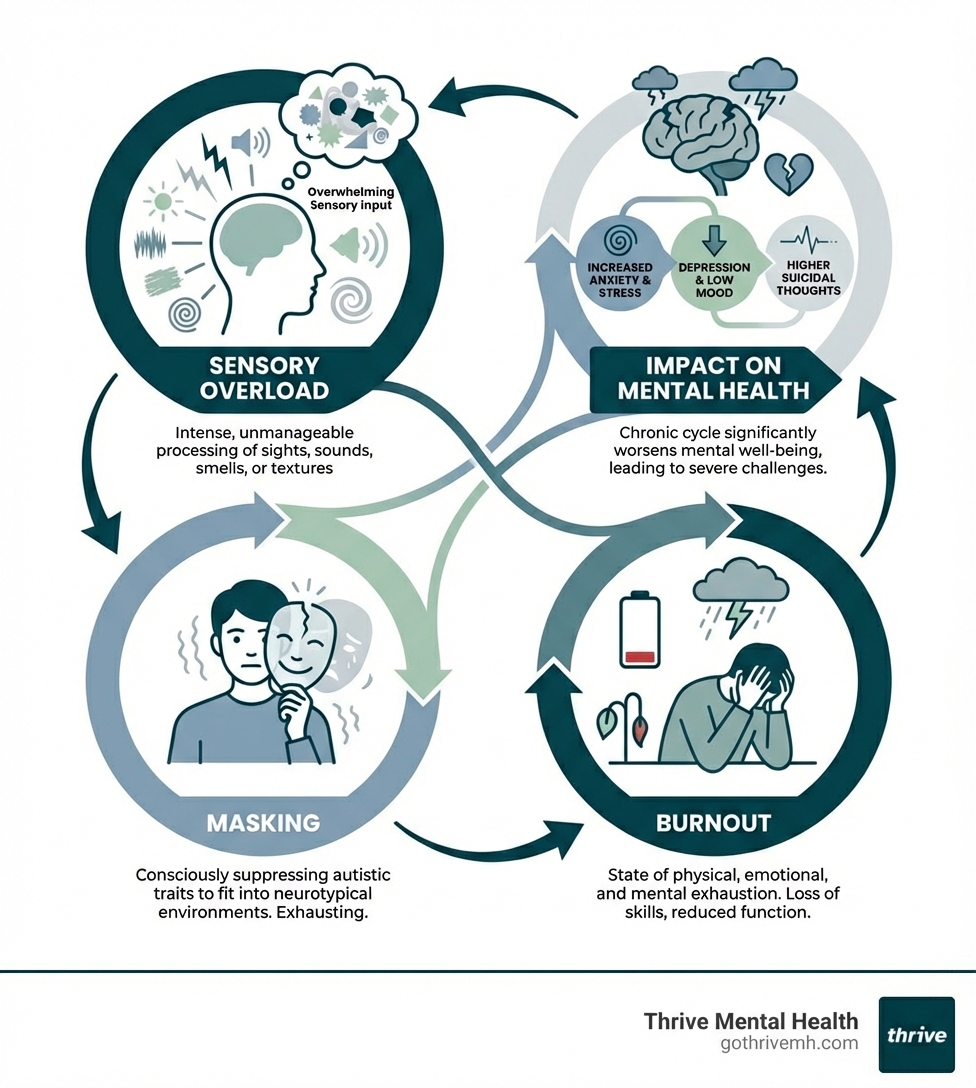
This isn’t because autism is a mental illness, it’s a neurodevelopmental difference. However, the chronic stress of navigating a neurotypical world, sensory overload, social challenges, and “masking” autistic traits creates a perfect storm for mental health struggles.
While 98% of autistic adults and caregivers report significant stress, 89% find effective support impossible to access. This gap contributes to a lifespan 10-15 years shorter than the general population, linked to chronic stress, healthcare barriers, and suicide.
The good news? When mental health support is adapted for autistic individuals, when therapists communicate clearly, make sessions less overwhelming, and build on autistic strengths, outcomes improve dramatically.
As CEO of Thrive Mental Health, I’ve seen how specialized support transforms outcomes. We are committed to providing neurodiversity-affirming care that recognizes how autistic individuals experience distress. Our virtual IOP, hybrid PHP, and telehealth services across Florida are designed to provide evidence-based mental health care that truly fits.
Autism mental health support definitions:
Why Autistic People Face Higher Mental Health Risks [The Unspoken Link]
The relationship between autism and mental health is complex. While autism is a neurodevelopmental difference, not a mental illness, autistic individuals are disproportionately affected by conditions like anxiety, depression, ADHD, and OCD. For example, research shows autistic people are four times more likely to develop depression.
Several factors contribute to this heightened vulnerability:
- Co-occurring Conditions: Co-occurring conditions like ADHD, dyslexia, epilepsy, and Ehlers-Danlos syndromes are common and add stressors that impact mental well-being.
- Chronic Stress: The “minority stress model” applies here: navigating a world not built for them causes chronic stress from discrimination, social isolation, and the constant effort to fit in.
- Masking and Camouflaging: Many learn to “mask” their autistic traits to appear neurotypical. This constant effort is emotionally exhausting, contributing to chronic stress, depression, and anxiety.
- Sensory Processing Differences: Sensory processing differences (hypersensitivity or hyposensitivity) mean that overwhelming environments can cause chronic stress, anxiety, and meltdowns, which directly affects mental health.
- Autonomic Nervous System Dysregulation: Research suggests differences in the autonomic nervous system, which controls involuntary functions like heart rate, may contribute to anxiety, causing physical and emotional distress.
- Gastrointestinal Issues: Chronic gastrointestinal issues are common. The “gut-brain axis” shows a link where GI problems affect mood and vice-versa. Addressing physical health is a key part of autism mental health support.
Understanding these links is crucial for providing effective, neurodiversity-affirming autism mental health support. For a deeper dive, explore our guide on Understanding the Autism Spectrum.
How Do Mental Health Symptoms Manifest Differently in Autistic Individuals?
A challenge in autism mental health support is that symptoms often manifest atypically, complicating diagnosis and treatment.
- Atypical Presentation: Instead of expressing sadness verbally, an autistic person with depression might show more repetitive behaviors (stimming), heightened sensory issues, or social withdrawal. Changes in sleep, appetite, or energy can also be signs. Research suggests depression symptoms can manifest differently in autistic individuals.
- Alexithymia: Alexithymia, a difficulty identifying and describing emotions, is common in autistic people. It doesn’t mean they don’t feel, but they struggle to label and communicate feelings, making it hard to articulate distress to clinicians.
- Increased Repetitive Behaviors (Stimming): While stimming is a common self-regulation tool, an increase in its intensity or type can signal underlying anxiety or distress.
- Social Withdrawal: A significant withdrawal from preferred activities or social engagements might indicate depression or overwhelming anxiety, not just typical social preferences.
- Meltdowns vs. Tantrums: Autistic meltdowns are intense, involuntary responses to being overwhelmed. They are not tantrums, which are behavioral. Misinterpreting a meltdown can lead to inappropriate interventions.
- Heightened Sensory Sensitivities: During mental health challenges, existing sensory sensitivities can intensify, making daily life even more overwhelming.
- Changes in Routine Adherence: A sudden departure from established routines can be a sign of mental health distress, particularly depression or high anxiety.
These unique manifestations underscore why mental health professionals must be autism-informed to accurately assess and treat co-occurring conditions.
The Unique Challenges for Autistic Women and Girls
Autism has been historically underdiagnosed in women and girls, creating unique mental health challenges that require specialized autism mental health support.
- Diagnostic Challenges & Misdiagnosis: Autism diagnostic tools were based on males, so traits in women and girls are often missed. Sophisticated masking can lead to late diagnosis in adulthood, often after years of misdiagnoses like BPD, anxiety, or depression, delaying proper support.
- Internalized Symptoms: Autistic girls often internalize struggles, showing anxiety or perfectionism instead of outward behaviors. This makes their autism harder to spot and leads to chronic stress.
- Social Masking: The pressure to conform leads many autistic women to master masking, suppressing stims, forcing eye contact, and scripting conversations. This comes at a high cost to mental health, causing burnout and identity confusion.
- Bullying and Social Exclusion: Bullying and social exclusion are common for autistic girls, impacting self-esteem long into adulthood. They often face subtle, gendered social aggression.
- Impact of Late Diagnosis: A late diagnosis means years of struggling without answers, leading to feelings of inadequacy and self-blame. This chronic invalidation raises the risk for complex mental health issues.
Understanding these gendered differences is vital for providing effective autism mental health support. For more on these challenges, read More on mental health in autistic women and girls.
Your Guide to Finding Effective Autism Mental Health Support
Finding the right autism mental health support can feel overwhelming, but it’s possible when you know what to look for.

Finding a Therapist
When seeking a therapist, look for those who offer “neurodiversity-affirming care” or are “autism-informed.” Ask about their experience with autistic adults, their understanding of autistic communication, and what adaptations they make. A good therapist will be open to this discussion. We recommend exploring resources like Discover the Best Autistic Therapist Near You to aid your search.
Neurodiversity-Affirming Care
This approach views autism as a natural variation, not a disorder to be cured. The focus is on thriving by embracing autistic identity, building on strengths, and addressing environmental mismatches. It is empathetic, respects self-advocacy, and aims to reduce the burden of masking.
Individualized Support Plans
Effective autism mental health support is never one-size-fits-all. We create individualized treatment plans that consider your specific strengths, challenges, sensory needs, and goals. This might involve adapting therapy techniques, incorporating special interests, or adjusting session structure.
Telehealth and Online Therapy Benefits
For many autistic adults, online therapy offers significant advantages. A familiar, controlled environment can reduce the anxiety and sensory overload of in-person appointments. It also eliminates travel stress and improves consistency. Research shows internet-based counseling is a good medium for autism support.
Insurance Coverage
Navigating insurance can be daunting. At Thrive Mental Health, we work with a wide range of providers, including major carriers like Cigna, Optum, and Florida Blue. We encourage you to verify your benefits with us; our team can help you understand your coverage for our programs.
Support in Florida
Thrive Mental Health offers virtual Intensive Outpatient (IOP) programs for adults across Florida. Our programs provide more intensive support than weekly therapy but less than inpatient care. Whether you’re in Tampa Bay, Miami, Orlando, or anywhere else in the Sunshine State, we’re dedicated to making treatment accessible.
What are the Recommended Supports and Services for Autism Mental Health Support?
An effective autism mental health support plan often uses a multidisciplinary, evidence-based approach adapted to individual needs.
Here are some recommended supports:
- Cognitive Behavioral Therapy (CBT) Adaptations: Adapted CBT is effective for anxiety and depression. Adaptations include using visual aids, concrete language, special interests, and structured sessions.
- Dialectical Behavior Therapy (DBT): Adapted DBT helps autistic individuals build skills for emotional regulation, distress tolerance, and interpersonal effectiveness to manage intense emotions.
- Art Therapy: Art therapy provides a non-verbal outlet to express emotions, reduce stress, and process feelings, especially for those who find verbal communication difficult.
- Occupational Therapy (OT): OT helps manage sensory sensitivities, develop self-regulation skills, and adapt environments to reduce anxiety and stress.
- Speech and Language Therapy (SLT): SLT improves verbal and non-verbal communication, reducing frustration and helping individuals express their needs and emotions.
- Social Skills Groups: Structured social skills groups help reduce social anxiety and isolation by teaching communication skills in a supportive environment.
- Peer Support: Connecting with other autistic people in peer support groups is validating and empowering, offering shared understanding and community.
At Thrive Mental Health, we integrate many of these neurodiversity-affirming approaches into our programs. Learn more about our Comprehensive Autism Therapy from Personalized Treatments to Online Support Programs.
 An Essential Guide to Adult Dissociative Disorders TreatmentMental Health
Key Considerations for Medication and Psychological Treatments
When considering medication for co-occurring mental health conditions, a careful, individualized approach is paramount.
- “Start Low, Go Slow” Medication Approach: Autistic individuals can be more sensitive to psychiatric medications and side effects. The best practice is to “start low and go slow” with dosages, monitoring carefully.
- Atypical Side Effects: Be aware that autistic individuals may experience atypical or more pronounced side effects. An autism-informed psychiatrist will be attuned to this.
- Importance of a Knowledgeable Psychiatrist: An autism-knowledgeable psychiatrist is crucial. They understand the unique neurobiology and needs of autistic individuals, leading to better prescribing and monitoring.
- Combining Medication with Therapy: A combination of medication and adapted therapy often yields the best results. Medication manages acute symptoms while therapy provides long-term coping strategies.
- Informed Consent: Ensure the individual and their caregivers give informed consent. Information on benefits, risks, and alternatives must be presented clearly and accessibly.
- Reporting Side Effects: Encourage diligent reporting of all side effects. Treatments should always be individualized, following principles like those in the NICE guidelines on adapting treatment.
Crisis, Burnout, and Self-Harm: Getting Urgent Help
If you or someone you know is in crisis or experiencing suicidal thoughts, this is a mental health emergency. Call or text the Suicide and Crisis Lifeline at 988 or visit 988Lifeline.org. You are not alone.

Autistic individuals face significantly higher risks for mental health crises, including suicidal thoughts and self-injurious behavior. It’s critical to understand these risks and know how to get urgent help.
- Suicide Risk Factors: Autistic adults are nine times more likely to experience suicidal thoughts than neurotypical individuals. Factors include chronic stress, masking, social isolation, and co-occurring conditions like depression.
- Autistic Burnout vs. Depression: Autistic burnout is a state of intense exhaustion and skill loss stemming from chronic stress and masking. It differs from clinical depression, a mood disorder, though they can co-occur.
- Self-Injurious Behavior (SIB): SIB is more prevalent in autistic individuals and can be a coping mechanism for extreme distress or sensory overload. Understanding its function is key to intervention.
- Creating a Safety Plan: A personalized safety plan is essential for individuals at risk. It should outline triggers, coping strategies, and support contacts for a crisis.
- Hospital Admission Considerations: If inpatient care is needed, ensure staff are autism-informed. Unfamiliar environments, sensory overload, and communication barriers can worsen an autistic person’s condition.
- Health Passports: A “health passport” is a valuable tool to communicate an individual’s specific needs, sensitivities, and communication style to healthcare professionals in an emergency.
How to Recognize and Prevent Autistic Burnout
Autistic burnout is a debilitating experience that severely impacts mental health. Recognizing its signs and using preventative strategies is a crucial part of autism mental health support.
| Symptom Category | Autistic Burnout | Clinical Depression |
|---|---|---|
| Energy Levels | Extreme, debilitating exhaustion; physical and mental fatigue. | Persistent sadness, loss of interest, low energy. |
| Cognition | Difficulty thinking, making decisions; loss of executive function skills. | Difficulty concentrating, remembering; feelings of worthlessness. |
| Social | Increased social withdrawal, inability to mask. | Social withdrawal, lack of motivation for social interaction. |
| Sensory | Heightened sensory sensitivities, increased discomfort. | May have sensory changes, but less central than burnout. |
| Skills | Temporary or long-term loss of previously mastered skills (e.g., verbal communication). | Less likely to involve loss of previously mastered skills. |
| Triggers | Chronic stress, masking, sensory overload, unmet needs. | Chemical imbalance, life events, genetic predisposition. |
Signs of Burnout: Signs include overwhelming exhaustion, increased sensory sensitivities, more stimming, executive function difficulties, reduced coping ability, and a temporary loss of skills (like verbal communication).
Causes: Burnout is caused by chronic stress from masking, sensory overload, and navigating environments not designed for autistic people.
Prevention Strategies:
- Reducing Demands: Reduce non-essential demands that cause stress.
- Energy Accounting: Recognize energy limits and prioritize activities to avoid depletion.
- Seeking Accommodations: Advocate for accommodations at work or school to reduce sensory and social demands.
- Self-Advocacy: Communicate your needs and boundaries. Saying “no” is a form of self-preservation.
- Prioritizing Rest: Prioritize rest and recovery, especially after demanding experiences.
- Embracing Autistic Traits: Allow yourself to unmask, stim, or engage in special interests without judgment.
- Formal Support: Seek support from neurodiversity-affirming therapists who understand burnout.
For more insights, you can refer to a helpful list of strategies to prevent burnout.
How to Adapt Therapy for Autistic Adults [For Professionals & Families]
Effective autism mental health support hinges on adapting therapeutic approaches to meet the unique needs of autistic individuals. This requires a fundamental shift in how therapy is delivered.
- Adapting Therapeutic Approaches: Traditional “talk therapy” can be challenging due to abstract language and social nuance. Adaptations are essential for therapy to be effective.
- Clear and Direct Communication: Use clear, direct, and concrete language. Avoid metaphors and sarcasm. Explain the session’s purpose, expectations, and goals.
- Using Visual Aids: Since many autistic people are visual thinkers, use aids like schedules, diagrams, and notes to explain concepts and structure sessions.
- Incorporating Special Interests: Weave special interests into therapy to increase engagement and make concepts more relatable. This can be an entry point for difficult topics.
- Structuring Sessions: Provide a clear, predictable session structure with an agenda. This reduces anxiety and increases a sense of control.
- Allowing Processing Time: Allow more time for processing information and formulating responses. Be comfortable with silence and avoid interrupting.
- Trauma-Informed Care: Given the high prevalence of trauma in the autistic community, a trauma-informed approach is essential. Prioritize safety, trust, collaboration, and empowerment.
- Neurodiversity-Affirming Therapy Techniques: This paradigm is at the core of our approach at Thrive Mental Health. We train our clinicians in Neurodiversity-Affirming Therapy Techniques for Health Professionals to ensure our programs genuinely serve the autistic community.
How Can Caregivers and Family Prioritize Mental Health?
Supporting an autistic loved one is a demanding role that can impact a caregiver’s own mental health. Prioritizing self-care isn’t selfish, it’s essential.
- Caregiver Burnout: The constant demands of caregiving can lead to burnout, a state of physical, emotional, and mental exhaustion with symptoms similar to depression and anxiety.
- Finding Respite Care: Respite care provides essential breaks to prevent burnout. Look for local support organizations in Florida.
- Seeking Personal Therapy: Caregivers also benefit from therapy. It provides a safe space to process emotions, build coping skills, and manage stress.
- Joining Support Groups: Support groups for caregivers reduce isolation and offer practical advice and validation. Many local and online options are available.
- Self-Care Strategies: Self-care is personal but essential. It can include hobbies, exercise, mindfulness, or quiet time. Find what recharges you.
- Setting Boundaries: Setting realistic boundaries is crucial to protect your energy and prevent resentment.
We understand the unique journey of caregivers. Our resources, such as Parenting Neurodivergent Children: Essential Tips and Advice, offer guidance and support.
Frequently Asked Questions about Autism and Mental Health
How do I find a therapist who understands autism?
Look for clinicians who list “neurodiversity-affirming” or “autism-informed” in their practice. Directories like Psychology Today allow you to filter by specialty. Ask potential therapists about their experience with autistic adults and what specific adaptations they make during sessions.
Can online therapy work for autistic individuals?
Yes, many autistic adults find online therapy highly effective. It allows you to be in a familiar, controlled sensory environment, reduces the stress of travel, and can facilitate more focused communication. Research shows internet-based counseling is a good medium for autism support.
What’s the difference between autistic burnout and depression?
Autistic burnout is a state of intense physical, mental, and emotional exhaustion, often caused by chronic stress and masking. It can lead to a loss of skills and increased sensory sensitivity. While it shares features with depression, like exhaustion and withdrawal, burnout is specifically linked to the cumulative toll of navigating a world not designed for autistic people. Depression is a clinical mood disorder with a broader set of diagnostic criteria.
Take the Next Step Toward Healing
Navigating mental health challenges while being autistic requires specialized, compassionate, and affirming support. Understanding how symptoms present differently and knowing what effective treatment looks like are the first steps toward empowerment and recovery. You don’t have to manage this alone; the right support system can help you build resilience and thrive.
Ready for support in Florida? Thrive offers virtual IOP programs with evening options. Verify your insurance in 2 minutes (no obligation) → Start benefits check or call 561-203-6085. If you’re in crisis, call/text 988.

This article is for informational purposes only and is not a substitute for individualized clinical advice or insurance verification.