




Sick of Talk Therapy Going Nowhere? Outpatient Art Therapy Programs That Actually Work
Mental health centers that use the therapy of art in outpatient programs can help when weekly talk therapy and meds still leave you stuck.
If youre exhausted from repeating your story, watching bills pile up, and seeing almost no change, art therapy in an Intensive Outpatient Program (IOP) or Partial Hospitalization Program (PHP) may get you moving againfaster.
Quick Answer: How to Find an Art Therapy Outpatient Program That Actually Helps
- What you get: Structured, multiple-times-per-week sessions where licensed art therapists use painting, drawing, collage, and sculpture to help you process trauma, depression, and anxietyno art skills needed.
- Where to find it: Look for IOP/PHP mental health centers with art therapy in Florida or via Virtual IOP Therapy.
- Insurance + cost: Many plans (including Cigna, Optum, Florida Blue, Aetna, UnitedHealthcare) cover art therapy when its part of an IOP or PHP. Check what youd actually pay here: Verify Insurance.
- Who it helps most: People with trauma, depression, anxiety, PTSD, grief, substance use, or eating disorders who arent improving fast enough with standard weekly therapy.
- Recovery speed: IOP/PHP with art therapy often means 34+ hours per week of care vs. 1 hour in traditional therapymore reps, faster progress, better relapse protection.
Why This Matters Now
Ignoring symptoms means more ER visits, higher costs, and problems at work, school, or home. Stepping into an art-therapy-based IOP or PHP gives you:
- More support without leaving your life or job
- A way to express what you cant say out loud
- A clear, structured plan instead of see you next week
Art therapists in these programs are licensed mental health professionals, not hobby instructors. They blend creative work with proven tools like CBT and DBT in outpatient settings so you can heal deeply and still sleep in your own bed.
About the Author
Im Nate Raine, CEO of Thrive Mental Health. I help build and run IOP and PHP programs with art therapy across Florida. Over the past decade, Ive watched people who felt broken beyond repair finally move forward once they joined mental health centers that use the therapy of art in outpatient programs instead of relying on once-a-week talk therapy alone.
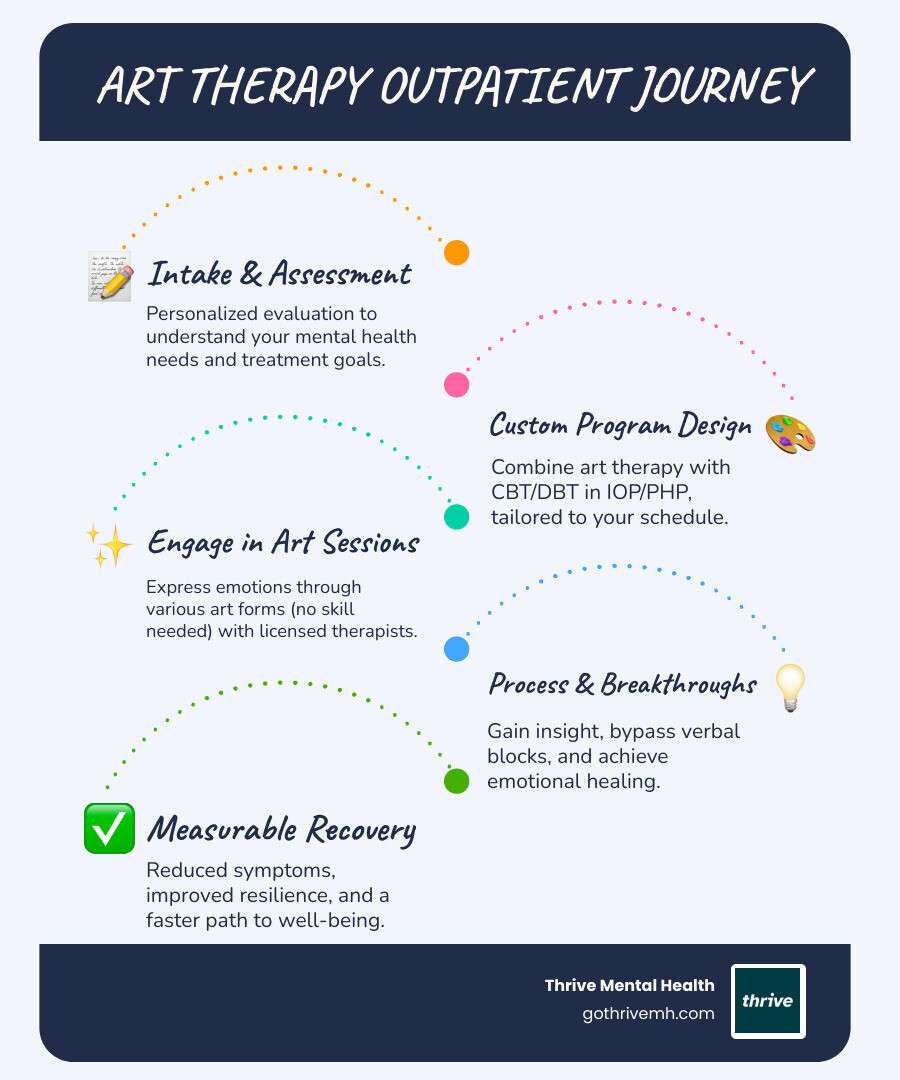
Simple guide to mental health centers that use the therapy of art in outpatient programs:
- Find a program that focuses on the therapy of art for mental wellness.
- art therapy for trauma recovery
- art therapy activities for adults
- Learn how virtual care fits your life: Virtual IOP Therapy
- See how PHP works if you need more support: Partial Hospitalization (PHP) Programs
Why Art Therapy in Outpatient Programs Works When Nothing Else Does
We’ve all been there: sitting across from a therapist, trying to articulate feelings that feel too big, too complex, or too painful for words. Sometimes, traditional talk therapy, while incredibly valuable, can hit a wall. This is precisely where mental health centers that use the therapy of art in outpatient programs step in, offering a unique path to healing that bypasses verbal roadblocks and taps into a deeper level of self-expression.
Art therapy is a mental health profession where individuals, guided by a licensed art therapist, use various art materials to explore and express their thoughts and feelings through creativity. The core goal isn’t to create a masterpiece, but to support the healing process and improve physical, mental, and emotional well-being. It’s about the journey of creation, not just the final product.
The creative process itself can be incredibly therapeutic. When words fail, art speaks. It provides a safe, non-threatening distance from overwhelming emotions, allowing us to externalize inner turmoil and gain perspective. This can lead to profound emotional breakthroughs that might otherwise remain hidden.
Related: The Healing Power of Art: How Art Therapy Can Transform Mental Health
How Does Art Therapy Actually Help in Mental Health Treatment?
At its heart, art is a powerful tool for change. It allows us to express what words simply can’t capture, especially when dealing with deeply rooted pain or trauma. Think of it as a bridge between your inner world and outer reality. By engaging in creative activities like painting, drawing, or sculpting, we can process emotions nonverbally, which can be particularly beneficial for those who find it difficult to articulate their experiences verbally.
Art therapy can be a powerful tool in treating trauma. By allowing people to express their feelings and experiences through art, they can process and work through their trauma in a safe and therapeutic environment. This non-verbal communication can be less intimidating than direct conversation, offering a sense of control and safety as you explore difficult memories.
Moreover, art therapy has been shown to be an effective way to treat depression. People can express and process their emotions nonverbally by engaging in creative activities. This process often leads to measurable mood boosts as individuals gain insight into their emotional states, develop coping mechanisms, and experience the satisfaction of creative expression. The focus on the process, rather than the outcome, fosters self-acceptance and reduces performance anxiety, allowing for genuine emotional release.
Learn more: Understanding Art Therapy: Comprehensive Overview
What Does a Licensed Art Therapist Do in Outpatient Care?
In an outpatient setting, the role of a licensed art therapist is crucial. They aren’t just art teachers; they are trained mental health professionals with graduate-level education recognized by art therapy associations. Their expertise lies in understanding the psychological implications of art-making and the symbolic meanings within creative expressions.
Our art therapists provide expert guidance, creating a safe, judgment-free space where you can explore your inner world without pressure. They help you decode your art’s meaning, offering insights into patterns, emotions, and experiences that emerge from your creations. This interpretation isn’t about telling you what your art means, but rather guiding you to find your own understanding. They facilitate self-findy, helping you connect the dots between your artwork and your mental health journey.
At Thrive Mental Health, our programs offer opportunities to work with licensed, professional art therapists to address a variety of cognitive, behavioral, or emotional needs through structured art projects in a supportive, non-institutional environment. They ensure that the art-making process is therapeutic, not just recreational, and integrate it seamlessly with other evidence-based modalities like CBT and DBT for a holistic approach to healing.
Explore: Art Therapy and Counseling
Faster Recovery, Real Results: Who Benefits Most from Outpatient Art Therapy?
When traditional methods fall short, art therapy can be the catalyst for significant change. We’ve seen countless individuals achieve faster recovery and experience real, tangible results. It’s about more than just feeling better; it’s about building lasting resilience and cultivating hope you can truly feel.
Our virtual intensive outpatient program (IOP) often integrates art therapy, providing a comprehensive approach for those needing more support than weekly therapy but less than inpatient care. This structured, yet flexible, environment allows for deep therapeutic work while enabling you to maintain your daily responsibilities.
See the data: Art Therapy Emotional Healing Growth Thrive
What Mental Health Issues Respond Best to Art Therapy?
Art therapy is incredibly versatile and effective for a wide range of mental health conditions. It’s particularly beneficial for individuals who struggle with verbalizing their experiences or who benefit from alternative forms of expression.
Here are some mental health issues that respond exceptionally well to art therapy in outpatient settings:
- Trauma & PTSD: Art therapy is a powerful tool in treating trauma. By allowing people to express their feelings and experiences through art, they can process and work through their trauma in a safe and therapeutic environment. This non-verbal outlet helps individuals confront overwhelming memories without being re-traumatized. It can facilitate emotional release and help integrate fragmented memories.
- Depression: Art therapy has been shown to be an effective way to treat depression. People can express and process their emotions nonverbally by engaging in creative activities such as painting, drawing, and sculpture. It can provide a sense of release, empowerment, and a way to explore and understand feelings, leading to improved mood and healthier coping mechanisms.
- Anxiety: Engaging in creative activities can be incredibly meditative and soothing, promoting relaxation and tension release. Art therapy teaches mindfulness and stress reduction techniques, allowing individuals to externalize their worries and gain a sense of control.
- Grief & loss: Processing grief is often a deeply personal and non-linear journey. Art therapy provides a safe space to explore complex emotions associated with loss, commemorate loved ones, and find meaning in the experience. It offers a tangible way to express sorrow, anger, or confusion.
- Substance use: For individuals in recovery, art therapy can be instrumental in identifying triggers, processing underlying emotional pain that contributed to addiction, and developing healthy coping strategies. It provides a constructive outlet for cravings and helps rebuild self-esteem.
- Eating disorders: Art therapy can help individuals explore body image issues, control, and self-worth in a non-judgmental way. It provides an avenue for expressing feelings about food, body, and self that might be too sensitive for direct verbal discussion.
- Low self-esteem: The act of creation, even without artistic skill, can be incredibly empowering. Art therapy fosters self-awareness, encourages self-reflection, and provides opportunities to experience accomplishment, all of which contribute to building a stronger sense of self-worth and confidence.
Deep dive: Art Therapy for Trauma Recovery
Why Choose Art Therapy Over Traditional Talk Therapy?
While talk therapy is foundational, art therapy offers distinct advantages, especially for certain individuals and conditions. It’s not necessarily about choosing one over the other, but understanding how art therapy can offer unique benefits or complement existing treatments.
Here’s why many choose art therapy in outpatient programs:
- Non-verbal breakthroughs: Some emotions and experiences are simply too difficult, too abstract, or too painful to put into words. Art provides a non-verbal language, allowing you to express these complex feelings without the pressure of finding the “right” words. This can lead to breakthroughs that traditional talk therapy might miss.
- Access hidden thoughts: Our subconscious mind often communicates through symbols and images. Art-making can tap directly into this deeper level of consciousness, revealing insights, memories, or perspectives that aren’t readily accessible through verbal processing alone. It’s like finding a secret door to understanding yourself.
- Less intimidating: For many, the idea of sitting and talking about their deepest fears or traumas can be incredibly intimidating. Art therapy offers a gentler entry point. The focus shifts from direct confrontation to creative expression, which can feel safer and less threatening, especially for those with trauma or social anxiety.
- More control, less pressure: In art therapy, you are in control of your creative process. You decide what to create, how to create it, and how much to share. This sense of agency can be empowering, particularly for individuals who have experienced situations where they felt powerless. There’s no “right” or “wrong” way to do art therapy, removing the pressure of performance.
Compare: Art and Science in Therapy: A Deep Dive into Cognitive Behavioral and Art Therapy
What to Expect: Inside an Outpatient Art Therapy Program
Stepping into an art therapy session in an outpatient program might feel a little different than what you expect from traditional therapy and that’s a good thing! We want you to know that you absolutely don’t need any prior art skills. Seriously, no “artistic” talent is required. The beauty of art therapy is that it’s all about the process, not perfection. It’s about what you find and express, not what the finished piece looks like.
Our virtual Intensive Outpatient (IOP) program integrates art therapy as a core component, meaning you’ll receive structured support several times a week. A typical program structure might include a combination of individual and group art therapy sessions, alongside other evidence-based modalities like Cognitive Behavioral Therapy (CBT) or Dialectical Behavior Therapy (DBT). This comprehensive approach ensures you’re getting holistic care custom to your needs, all while maintaining your daily life outside of treatment hours.
What Art Therapy Techniques Will You Try?
The world of art therapy is rich with diverse techniques designed to engage different parts of your mind and emotions. Our licensed art therapists will introduce you to various mediums, guiding you through activities that encourage self-expression and insight.
Here are some common art therapy activities and techniques you might encounter:
- Painting & drawing: From watercolors to pastels, these mediums offer a fluid way to express emotions, explore colors, and create visual narratives. You might be asked to draw your feelings, a safe place, or a representation of your journey.
- Clay sculpting: Working with clay is a tactile and grounding experience. It allows for three-dimensional expression, helping you shape and mold feelings that might feel formless. It’s particularly effective for processing anger, grief, or control issues.
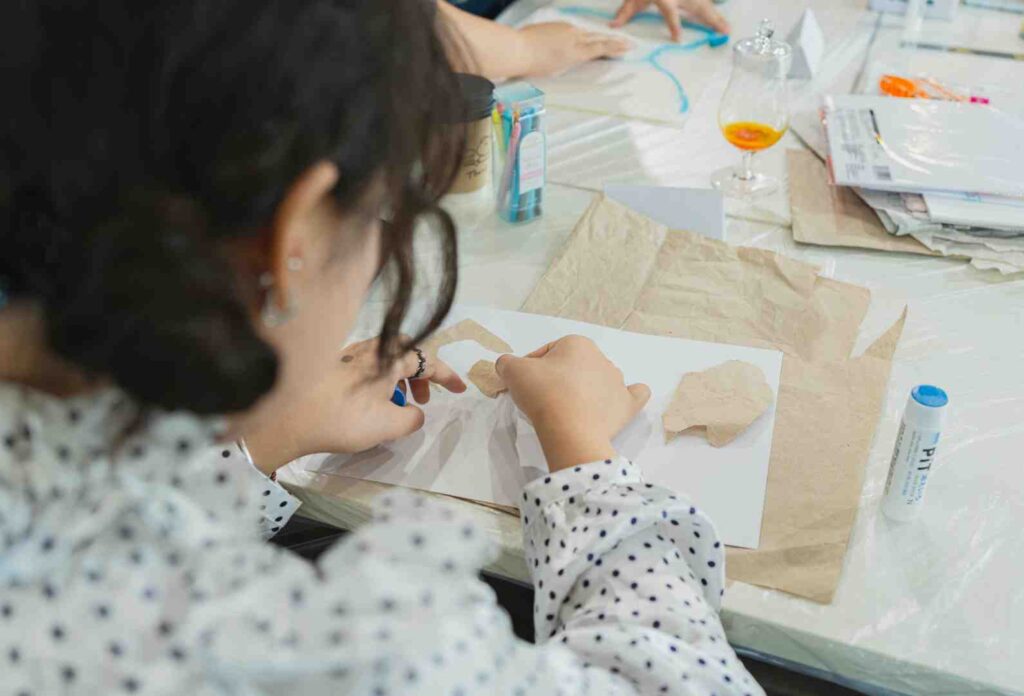
- Collage & mixed media: This involves creating images from various materials like magazine cutouts, fabric, photos, and found objects. It’s excellent for exploring identity, relationships, or complex emotional landscapes, as it allows for layering and symbolic representation.
- Mask making: Creating a mask can be a powerful way to explore different aspects of yourself, the self you show to the world versus your inner self, or different emotional “faces” you wear. It can lead to profound insights into identity and self-perception.
- Mandalas: Drawing or coloring mandalas (circular designs) is a meditative practice that promotes focus, relaxation, and self-reflection. It can help reduce anxiety, foster a sense of inner peace, and bring order to chaotic thoughts.
The emphasis is always on the process and what emerges from it, not on artistic skill. Our therapists create a supportive space for exploration and findy.
Try these: Therapeutic Art Activities
Individual vs. Group Art Therapy: Which Is Right for You?
Outpatient art therapy programs typically offer both individual and group sessions, each with its unique benefits. We often recommend a combination to provide comprehensive support.

- Individual Art Therapy: These sessions offer a one-on-one focus with your therapist, typically lasting 60 minutes. This setting allows for deep, personalized exploration of your artwork and its connection to your mental health. It’s ideal if you prefer privacy, need to address highly sensitive issues, or require focused attention on your unique therapeutic goals. The individual art therapy rate at some centers can be around $125/hour, though our programs are often integrated within a broader IOP structure.
- Group Art Therapy: Group sessions usually run for a longer duration, often 90 minutes or more, and provide an invaluable peer support environment. In a group, you share the creative space with others who may be experiencing similar challenges. This fosters a sense of community, reduces feelings of isolation, and allows you to learn from others’ perspectives. You might participate in a 3-hour Daytime Studio Program or a 90-minute Evening Group. No art experience is necessary for group sessions, and the shared experience can be incredibly validating.
Whether you choose individual or group art therapy, or a blend of both, our programs are designed to be flexible. We offer both virtual and in-person options across our Florida locations, ensuring you can access care in a way that best suits your lifestyle and needs.
See more: Art Therapy Group Activities
How to Find Mental Health Centers That Use the Therapy of Art in Outpatient Programs [Costs, Insurance, States]
Finding mental health centers that use the therapy of art in outpatient programs shouldnt take weeks of phone calls and insurance confusion.
If you delay, symptoms can spiral into job loss, school withdrawal, or another hospital stay. If you act now, you can lock in a spot in an IOP or PHP that uses art therapy to help you stabilize faster.
At Thrive Mental Health, our virtual Intensive Outpatient (IOP) program integrates art therapy and work with insurance so cost doesnt become one more reason to stay stuck.
We accept many major providers, including Cigna, Optum, Florida Blue, Aetna, and UnitedHealthcare. You can see what your plan actually covers in about 2 minutes here: Verify Insurance.
How to Get Started with Outpatient Art Therapy in Your State
Use this 5-step checklist to move from searching to scheduled:
- Use online directories (fast scan):
Go to Psychology Today or the American Art Therapy Association and filter for IOP/PHP and art therapy in your area. - Check with your doctor or current therapist:
Ask for referrals to mental health centers with IOP or PHP that include art therapynot just recreational art groups. - Call your insurance (confirm coverage):
Ask for outpatient IOP/PHP mental health programs that:- Use art therapy as a treatment modality
- Are in-network in Florida
- Accept your specific plan (Cigna, Optum, Florida Blue, etc.)
- Search virtual IOP art therapyplus your state:
Many programs, including Thrive, offer Virtual IOP so you can join from home while keeping work or school on track. - Contact Thrive for a same-week start when possible:
Thrive offers virtual IOP with art therapy for adults and young professionals. You can learn more about our levels of care here:- Intensive Outpatient Programs (IOP)
Want more context before you call? Read this related breakdown: Art Therapy Emotional Healing Growth Thrive.
Who Should Try Outpatient Art Therapy Instead of Waiting It Out?
You might be a strong fit if you are:
- An adult or young professional in Florida who needs real change in the next 3090 days, not someday.
- Not improving enough on weekly therapy or meds alone and want more structure without going inpatient.
- Struggling to talk about trauma, shame, or grief and feel shut down in traditional sessions.
- Open to creative work even if you feel not artistic at all.
Our goal is clear: help you stabilize faster and avoid another crash. Art-therapy-based IOP and PHP give you multiple hours of support per week so you can:
- Lower panic and depressive episodes
- Regain focus and energy for work, school, and relationships
- Build real coping tools instead of just surviving the day
Our local and virtual options in Florida include:
- Tampa Bay, St. Petersburg, Miami, Orlando, Boca Raton, West Palm Beach, Jacksonville, Fort Lauderdale, Naples, and Sarasota
You dont have to relocate or quit your job to get serious treatmentyou just need the right outpatient program that uses the therapy of art as a core tool, not an afterthought.
FAQs: Art Therapy in Outpatient ProgramsCosts, Coverage, and How It Works
Do I need to be good at art for art therapy to work?
No. Art therapy is about expression and healing, not talent. Stick figures, scribbles, or messy paint all work. Your therapist focuses on what it means to you, not how it looks.
Is art therapy in IOP/PHP covered by insurance?
Often yes. When art therapy is part of a structured IOP or PHP, many plans (including Cigna, Optum, Florida Blue, Aetna, UnitedHealthcare) cover it as outpatient mental health treatment. Always confirm your benefits with your insurer or use Thrives Verify Insurance tool.
How is art therapy different from a regular art class?
An art class teaches technique. Art therapy uses creative work as a treatment tool led by a licensed therapist. The goal is to reduce symptoms, understand patterns, and build coping skillsnot to create perfect art.
Can I do outpatient art therapy virtually?
Yes. Many mental health centers that use the therapy of art in outpatient programs, including Thrive, offer Virtual IOP and hybrid options so you can join from home while still getting intensive support.
Who is a good fit for art therapy IOP or PHP?
Youre a good fit if you feel stuck in weekly talk therapy, struggle to explain your feelings, or need more consistent support for trauma, depression, anxiety, grief, substance use, or eating disorders without going inpatient.
Summary: Why Outpatient Art Therapy Programs Are Worth Trying Now
When youve tried talking and still feel stuck, mental health centers that use the therapy of art in outpatient programs give you another way in.
In IOP and PHP, art therapy helps you process trauma, depression, and anxiety faster by using images and symbols where words fail. You stay in your own home, keep your job or classes, and still receive multiple hours of structured care each week.
Many plansincluding Cigna, Optum, Florida Blue, Aetna, and UnitedHealthcarehelp cover this level of treatment, especially in Florida. Ignoring your symptoms risks another crisis; choosing outpatient art therapy gives you a real shot at relief, clarity, and a plan.
The takeaway: You dont need to be an artist to heal. You just need the right support, at the right intensity, in a program built around how people actually recover.
Ready for support?
Thrive offers virtual IOP programs with evening options. Verify your insurance in 2 minutes (no obligation) Start benefits check or call 561-203-6085. If youre in crisis, call/text 988.

This article is for informational purposes only and is not a substitute for individualized clinical advice or insurance verification.