





Art Therapy for Trauma Recovery: 2025’s Proven Healing
Why Your Brain Can’t Heal Trauma With Words Alone
Art therapy for trauma recovery helps you process traumatic experiences when talk therapy falls short. The science proves it works.
What you need to know:
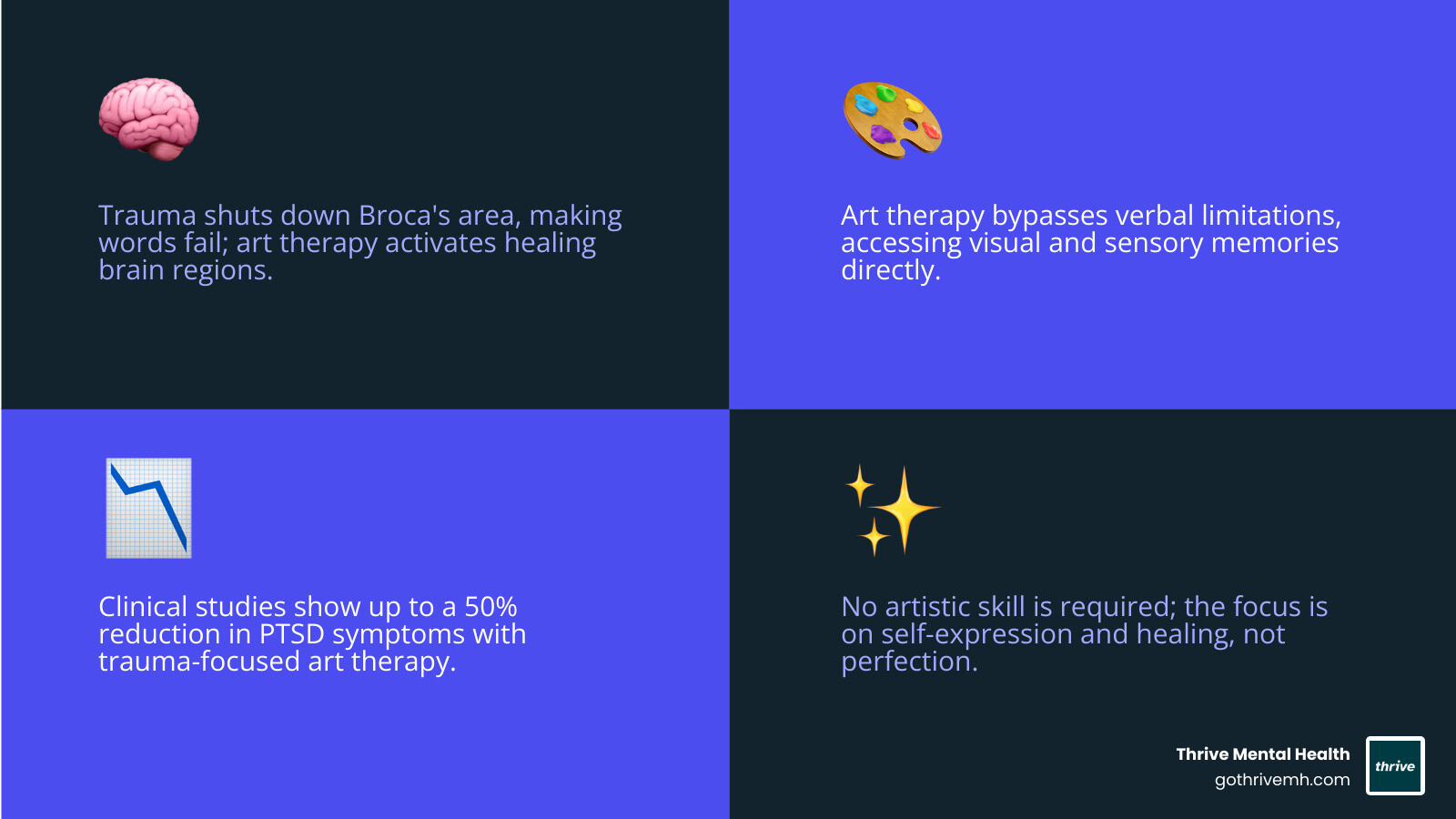
- Art therapy activates healing brain regions that trauma shuts down (like the speech center, Broca’s area).
- Up to 50% reduction in PTSD symptoms reported in clinical studies.
- No artistic skill required, it’s about expression, not perfection.
- Covered by most major insurance plans (Cigna, Optum, Florida Blue, Aetna) as part of Thrive’s IOP program.
- Available virtually or in-person throughout Florida.
When trauma happens, your brain’s language center can shut down while the fear center stays on high alert. This is why many survivors say, “I can’t find the words.” Art therapy bypasses the need for words, accessing visual and sensory memories that language can’t reach. It creates a safe container for unsafe memories, allowing you to process trauma without re-traumatizing yourself.
At Thrive Mental Health, we integrate innovative modalities like art therapy for trauma recovery into our evidence-based IOP care for Florida residents to help people who’ve felt stuck with traditional methods.
Similar topics to art therapy for trauma recovery:
- arts and crafts for mental health patients
- art therapy activities for adults
- art therapy activities for anxiety
Why Talk Therapy Alone Isn’t Enough After Trauma (And How Art Therapy Breaks the Cycle)
Trauma rewires your brain. The language center (Broca’s area) can go offline while the fear center (amygdala) becomes hyperactive. This is why you might struggle to talk about what happened, the words literally aren’t accessible. Traumatic memories get stored as raw sensations, images, and emotions, not a coherent story.
Why Talk Therapy Alone Can Leave You Stuck
Because trauma isn’t just a story in your mind, traditional talk therapies like CBT don’t always work. Forcing words can be re-traumatizing, and studies show over a third of patients don’t benefit from these standard interventions. If you feel like you’re just reliving the pain without making progress, you’re not alone. Talk therapy often fails to address the memory, emotion, and body-based aspects of PTSD.
How Art Therapy Reaches What Words Can’t
Art therapy for trauma recovery provides a non-verbal outlet to express what feels impossible to say. By drawing, painting, or sculpting, you engage different parts of your brain, accessing the visual and bodily memories where trauma is stored. As board-certified art therapist Gretchen Miller notes, “Art expression is a powerful way to safely contain and create separation from the terrifying experience of trauma.” It makes your experience visible and external, which is often less overwhelming than talking about it.
The Mind-Body Connection to Healing
Trauma makes you feel unsafe in your own body. As renowned expert Bessel van der Kolk writes in “The Body Keeps the Score,” physical self-awareness is the first step to healing. Art therapy helps you reconnect with your body’s sensations in a safe, controlled way. Working with different textures, colors, and forms helps regulate your emotions and brings your brain’s rational thinking center back online, making feelings more manageable.
Art Therapy for Trauma Recovery: Science, Results, and Real Change
Art therapy for trauma recovery isn’t arts and crafts; it’s a clinical intervention that changes how your brain processes fear and memory. It activates healing pathways that talk therapy can’t touch, calms your nervous system, and helps you feel like you’re finally making progress.
How Art Therapy Calms Your Nervous System
When you’re triggered, your nervous system gets stuck in fight-or-flight. The physical act of creating art, painting, sculpting, drawing, stimulates the part of your nervous system that signals safety and calm. This process, explained by Polyvagal Theory, lowers your stress hormone (cortisol) and helps your brain shift from a state of threat to one of regulation. You learn to use colors, textures, and movements as real tools for self-soothing.
The Mind-Body Connection in PTSD
Trauma isn’t just in your thoughts; it lives in your body. Talk therapy addresses the mind, but often misses the somatic experience, the way trauma has changed how you feel in your own skin. Art therapy bridges this gap. The physical movements of painting or working with clay release stored tension and give form to sensations that have been trapped without words. It teaches your entire system that the trauma is over and you are safe now. At Thrive, this is a core component of our Evidence-Based Trauma Treatment programs.
Building Agency and Empowerment
Trauma takes away your sense of control. Art therapy for trauma recovery gives it back. You choose the colors, the materials, and the subject. You control the pace. This simple act is profound: you move from a passive victim to an active creator, reshaping your trauma narrative with your own hands. This process rebuilds your sense of agency and proves you have the power to turn pain into something meaningful.
Creating a Safe Space for Unsafe Memories
Healing requires safety. An art therapist first builds a trusting relationship with you, ensuring you feel supported before exploring difficult emotions. They use grounding techniques, like drawing or breathing exercises, to keep you anchored in the present. The art itself creates “containment”, a safe container for unsafe feelings. By externalizing your pain onto paper, you make it visible and manageable instead of overwhelming. You can explore more about this in our guides on How Art Safely Gives Voice to Trauma and Somatic Therapy for Grief.
Reclaiming Your Story: From Victim to Creator
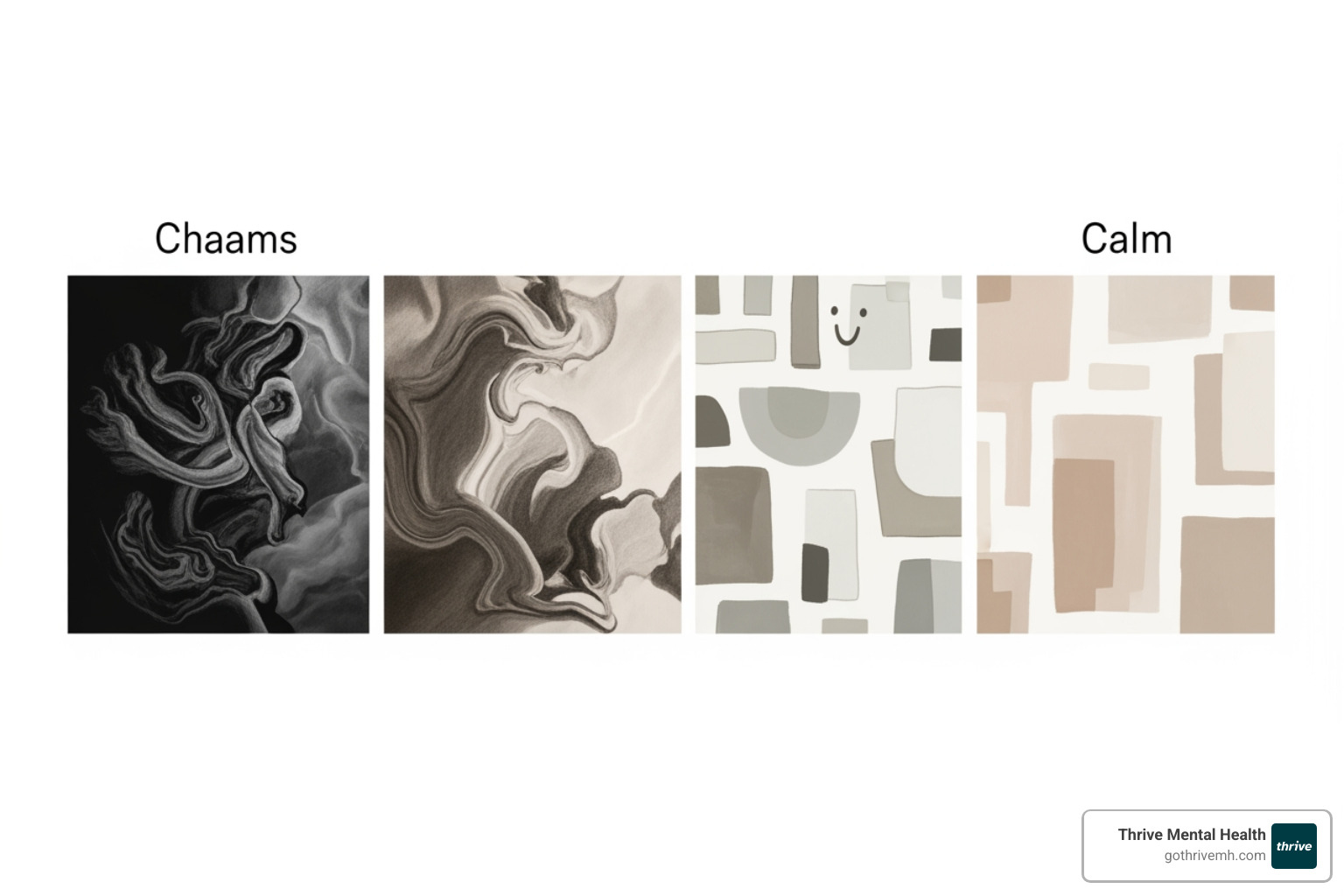
Art therapy for trauma recovery helps you stop being defined by what happened to you. Creating a visual timeline or reinterpreting memories through art gives you control over your narrative. You decide what meaning to make from what you’ve survived. Research shows this process significantly increases self-esteem, emotion regulation, and mental resilience. Each piece you create is proof that you can face your pain and transform it. Learn more about building confidence with our guide on Art Therapy for Low Self Esteem.
Does Art Therapy for Trauma Recovery Actually Work?
Yes. The research is clear, especially for those who haven’t found relief with talk therapy.
- Key Findings:
- 30-50% drop in PTSD symptoms across multiple studies. One pilot study saw a client’s score drop from 49 (severe) to 17 (mild).
- Lower treatment dropout rates because the creative process is more tolerable than just talking about trauma.
- Proven results for veterans, abuse survivors, and refugees. A structured protocol, Trauma-Focused Art Therapy (TFAT), has been shown to be effective in a study published in PubMed.
This approach isn’t just clinically effective, it delivers life-changing results.
What Happens in an Art Therapy Session?

Walking into your first art therapy for trauma recovery session can feel intimidating, but it’s not about being an artist. It’s about giving your trauma a voice when words won’t come.
What to Expect: Session Flow, Safety, and Support
Your session begins with creating a safe, trusting relationship with your therapist. You won’t dive into painful memories on day one. A typical session follows a gentle rhythm through three phases:
- Stabilization: Learning grounding techniques to manage distress.
- Expression: Gently externalizing traumatic experiences through artwork.
- Integration: Processing what you’ve created to build a coherent life story.
Your therapist guides you at your own pace, ensuring you feel supported and never overwhelmed.
No Art Skills Needed, Process Over Product
This is the most important thing to know: you don’t need to be an artist. The quality of your artwork is irrelevant. Stick figures, abstract scribbles, and messy collages are all powerful forms of expression. The goal is to express your story, not to impress anyone. The process of creating is what heals.

Visualization, Metaphor, and Guided Creation
Your therapist will use specific techniques to help you process trauma safely. You might use visualization to create a “safe place” on paper, or use metaphors, like drawing your anxiety as an animal, to explore difficult feelings from a safe distance. These guided activities help you gain insight and develop coping skills. Explore more techniques in our Art Therapy Activities for Adults guide.
How to Find a Qualified Trauma-Informed Art Therapist
Not all art therapists are trained in trauma. Look for a therapist who is trauma-informed and holds credentials like ATR (Registered Art Therapist) or ATR-BC (Board-Certified Art Therapist), which require a master’s degree and specialized training.
Before you start, ask these questions:
- Are you trauma-informed and do you hold ATR/ATR-BC credentials?
- What is your experience treating trauma similar to mine?
- How do you integrate art therapy with other approaches?
At Thrive Mental Health, our therapists meet these rigorous standards. You can Find a Thrive Art Therapist or explore our Online Counseling for Trauma options.
Integrating Art Therapy into Your Trauma Recovery Plan
Art therapy for trauma recovery works best when it’s part of a complete care plan. At Thrive Mental Health, we integrate it into our Intensive Outpatient (IOP) program to provide comprehensive support.
Why Holistic Care Works: Combining Art Therapy with IOP/PHP
Think of art therapy as one powerful tool in a full toolkit. In our IOP program, you combine it with other evidence-based modalities for a holistic approach that addresses your mind, body, and emotions. This integrated care is available through our flexible virtual programs for all Florida residents and at our in-person centers in Florida.
Insurance Coverage: Cigna, Optum, Florida Blue, Aetna, and More
Quality care should be affordable. When art therapy for trauma recovery is part of a structured IOP program at Thrive, it’s covered by most major insurance plans, including Cigna, Optum, Florida Blue, and Aetna. Our team makes it easy to check your benefits. Our Virtual IOP at Thrive is designed to work with your insurance.
Combining Art Therapy with CBT, DBT, and EMDR for Faster Results
Art therapy doesn’t just complement other therapies, it boosts them.
- Talk Therapy (CBT): Art helps you process emotions visually first, building a bridge that makes talking about them easier and more productive.
- DBT: Creating art provides a tangible way to practice emotional regulation and distress tolerance skills.
- EMDR/ART: Visualizing traumatic memories and desired outcomes through art can make reprocessing work more targeted and profound.
Explore our full range of approaches on our Treatment Modalities at Thrive Virtual IOP page.
Accessing Art Therapy in IOP Programs
We’ve removed the barriers to getting help.
- Flexible Options: Choose between virtual programs from home or in-person care at our centers.
- Evening and Hybrid Programs: Our programs are designed to fit your life, so you can maintain your job and family commitments. Check out our Virtual Intensive Outpatient Programs at Thrive.
- Get Started Fast: Verify your insurance online in minutes. We don’t believe in long waiting lists. When you’re ready, we’re ready to help.
Frequently Asked Questions: Art Therapy for Trauma Recovery
We hear these questions all the time from people considering art therapy for trauma recovery. Here are the short answers.
Is art therapy really effective for PTSD?
Yes. Research shows up to a 50% reduction in PTSD symptoms. It’s especially effective when talk therapy feels stuck because it accesses parts of the brain that words can’t reach.
Do I need to be an artist to benefit from art therapy?
Absolutely not. No artistic skill is required. The focus is on the process of expression and healing, not the final product. Your story is what matters, not your technique.
How is art therapy different from just making art at home?
Making art at home is therapeutic, but it’s not therapy. A licensed, trauma-informed art therapist provides a safe, structured environment to guide you, prevent re-traumatization, and help you process what you create.
Does insurance cover art therapy for trauma recovery?
Yes, most major insurance plans, including Cigna, Optum, Florida Blue, and Aetna, cover art therapy when it’s part of a structured IOP program like the one at Thrive. We can help you verify your insurance in 2 minutes.
Can I do art therapy virtually?
Yes. Thrive’s virtual IOP program with art therapy is just as effective as in-person care. You get expert, trauma-informed support with the flexibility and comfort of being in your own space.
Summary: Art Therapy for Trauma Recovery, What You Gain If You Act Now
If talk therapy has left you feeling stuck, art therapy for trauma recovery offers a proven path forward. It’s not just about making art, it’s about rewiring your brain, reducing PTSD symptoms by up to 50%, and reclaiming your story from the parts of your mind that words can’t touch. At Thrive Mental Health, we integrate art therapy into our virtual IOP program across Florida. Most major insurance plans, including Cigna, Optum, Florida Blue, and Aetna, are accepted.
Don’t let trauma steal another day. You can gain control over your narrative, calm your nervous system, and finally start to heal.
Ready for support in Florida? Thrive offers virtual IOP programs with evening options. Verify your insurance in 2 minutes (no obligation) or call 561-203-6085. If you’re in crisis, call/text 988.

This article is for informational purposes only and is not a substitute for individualized clinical advice or insurance verification.