


Massive List providers that combine therapy and art in their treatment plans.
If You’re in Crisis, Call/Text 988 Right Now. You Are Not Alone.
Stop Waiting, Art Therapy Gets Results When Nothing Else Works
When you’re stuck in anxiety, drowning in trauma, or fighting addiction, talking isn’t always enough. You search for words that don’t exist, and nothing changes. That’s where art therapy breaks through.
Art therapy gets results when talk therapy stalls, and you don’t need to be “good at art.” This is a clinical mental health treatment led by licensed professionals who use creative expression to help you process emotions, reduce stress, and heal faster than words alone.
If you list providers that combine therapy and art in their treatment plans, you’ll find a powerful, science-backed alternative for recovery. It’s for anyone dealing with PTSD, depression, ADHD, or grief, offering a new pathway to healing that doesn’t rely on finding the “right” words.
The focus is on the process, not the product. You won’t be graded or judged. You’ll choose your materials, paint, clay, collage, and let your hands do what your voice can’t. Guided by a therapist, you’ll uncover hidden emotions and build coping skills that stick. Research shows art therapy cuts stress hormones fast, improves trauma recovery, and boosts self-esteem. It’s especially effective for teens and young adults, breaking through communication barriers.
At Thrive Mental Health, we integrate art therapy into our virtual and in-person IOP and PHP programs as a core tool for recovery. We work with your insurance (Cigna, Optum, Aetna, Florida Blue, and more) across Florida. Don’t keep doing what isn’t working. Art therapy opens doors that talk therapy can’t.
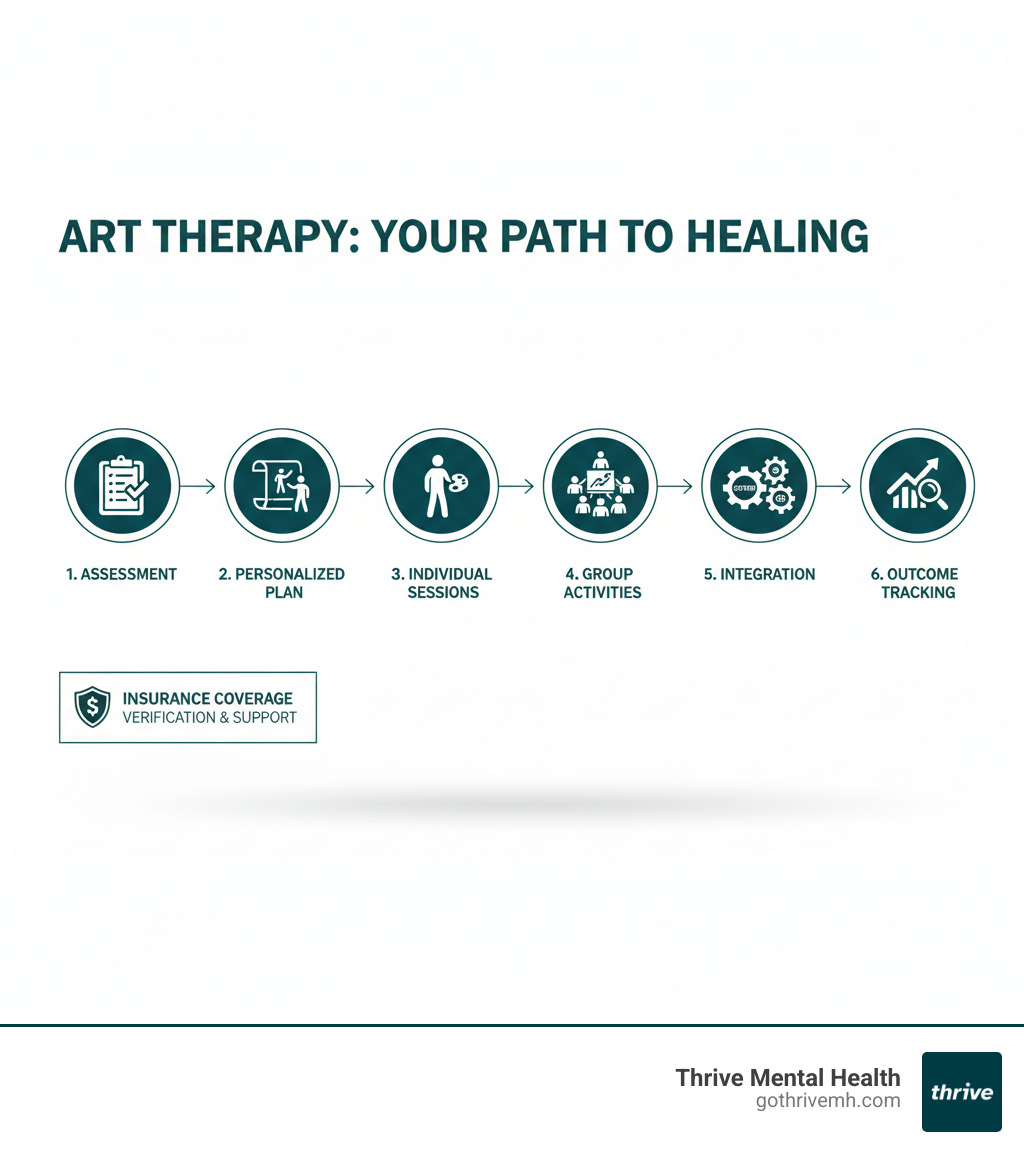
Want to know exactly how it works, who it helps, and how to find the right provider? Keep reading. We’ll show you everything you need to make an informed choice, and start healing today.
What Is Art Therapy? How It Heals Faster Than Talk Alone
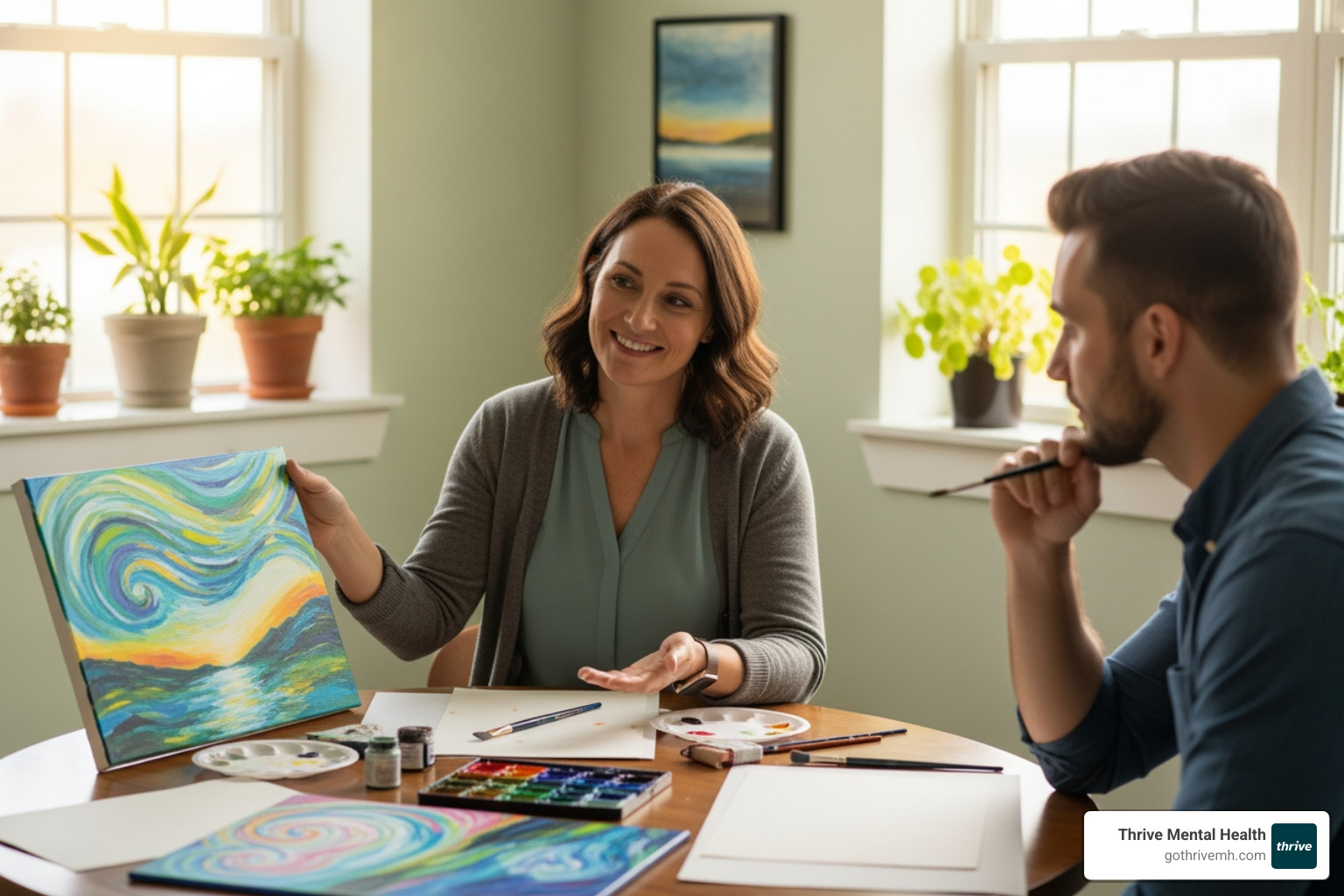
Art therapy is clinical mental health treatment, not just a relaxing hobby. It’s an evidence-based approach where licensed professionals use creative expression to help you process emotions and build coping skills. The American Art Therapy Association defines it as active art-making combined with psychological theory in a therapeutic relationship.
What makes it different? You don’t need words to express what’s stuck inside. Instead of searching for explanations, you can pick up a paintbrush or mold clay, and suddenly, emotions you couldn’t name start to make sense. It’s about the process, not the product. Your therapist isn’t judging your skill; they’re helping you explore what the colors and shapes reveal about your inner world. To learn more, see our Understanding Art Therapy: Comprehensive Overview.
What Happens in an Art Therapy Session?
There’s no pressure and no wrong way to do it. A typical session includes:
- Check-in: Briefly discuss your feelings and goals with your therapist.
- Create: Choose your materials (paint, clay, markers) and begin working, often with a gentle, therapeutic prompt like “create an image of how your anxiety feels.”
- Flow: Many people enter a focused, meditative state where stress drops away.
- Reflect: After you finish, you and your therapist discuss what you created, connecting the visual expression to your mental health and building practical coping strategies.
Sessions usually last 50-60 minutes. For ideas, check out Art Therapy Techniques You Can Try at Home for Emotional Well-being.
Science-Backed Benefits: Why Art Therapy Works
This isn’t just theory; the research is solid.
- Lowers Stress Fast: Studies show creative expression significantly reduces cortisol (the stress hormone). The University of Rochester Medical Center notes it helps relieve stress while processing deep emotions.
- Processes Trauma and Grief: Art therapy provides a non-verbal way to express devastating experiences safely. You can use metaphors and symbols to externalize feelings that are too painful or dangerous to say out loud.
- Reconnects Mind and Body: The physical act of making art, molding clay, painting, helps ground you in your body, which is crucial for trauma survivors who often feel disconnected. The NCBI confirms its promise for enhancing self-awareness.
- Boosts Self-Esteem: Completing a creative project provides a tangible sense of accomplishment, building confidence and a stronger sense of identity over time.
At Thrive Mental Health, we see these benefits daily in our Florida-based IOP and PHP programs. Dive deeper into the research here: How Art Therapy Can Transform Mental Health.
Who Needs Art Therapy? [Conditions & Issues Solved]

Art therapy helps almost everyone facing mental health challenges, especially those who feel stuck in talk therapy or can’t find words for their pain. It’s a different path to healing that works across a wide range of conditions.
Art therapy provides powerful, non-verbal relief for:
- Anxiety and Depression: Quiets a racing mind and reconnects you to your emotions.
- Post-Traumatic Stress Disorder (PTSD): Bypasses the need to verbalize trauma, allowing you to express what happened through color and texture.
- ADHD: Improves focus, self-regulation, and emotional expression through structured creativity.
- Addiction Recovery: Helps process shame, triggers, and emotional wounds without judgment, building healthier coping skills.
- Trauma and Grief: Provides a language when words fail, offering a way to tell your story safely.
- Low Self-Worth: Builds confidence through the simple, empowering act of creating.
It’s effective for teens, adults, and families. If you’re dealing with past wounds, see our guide on Art Therapy for Trauma Recovery. For anxiety, check out Art Therapy Activities for Anxiety.
Art Therapy for Addiction, ADHD, and Co-Occurring Disorders
When you’re battling complex issues like addiction, ADHD, or co-occurring disorders, you need more than surface-level solutions. Art therapy offers non-verbal healing for deep-rooted issues.
- In addiction recovery, it provides a safe outlet for difficult emotions like guilt and shame. Creating art can externalize struggles with triggers and cravings, making them more manageable and helping prevent relapse.
- For ADHD, the structured creativity of art-making helps improve focus and self-regulation. It channels restless energy into a productive, grounding activity.
- With co-occurring disorders, art therapy’s holistic approach shines. It helps you process intense emotions and manage anxiety or depression while simultaneously addressing substance use.
For more on ADHD, read our Art Therapy ADHD Complete Guide.
Art Therapy for Teens & Young Adults
Adolescence is a time of intense pressure and change. For teens and young adults who struggle to talk about their feelings, art therapy is a game-changer. It breaks through communication barriers that can make traditional therapy feel awkward. Instead of explaining your emotions, you can show them.
Art therapy helps teens and young adults:
- Explore Identity: Safely experiment with who you are and what you value without judgment.
- Express Yourself: Find a voice for feelings about school, relationships, and family pressure.
- Connect with Peers: Group art therapy reduces isolation by showing you that you’re not alone in your struggles.
Both group and individual sessions are available to build confidence, reduce stress, and give you tools for life. Explore activities here: Art Therapy Activities for Adolescents.
How to Find and Choose Art Therapy Providers That Get Results

Finding the right provider is key. When you list providers that combine therapy and art in their treatment plans, look for programs that integrate art therapy as a core tool, not an afterthought. The best providers combine it with evidence-based approaches like CBT and DBT.
Focus on four key factors:
- Credentials: Are the therapists licensed and trained in art therapy?
- Experience: Do they treat your specific condition?
- Insurance: Does your plan cover the services?
- Format: Do they offer virtual or in-person care that fits your life?
At Thrive Mental Health, we offer both virtual and in-person IOP and PHP programs across Florida. The American Art Therapy Association (AATA) and Art Therapy Credentials Board (ATCB) are great resources for verifying qualifications.
Art Therapist Credentials: What Matters Most
Not everyone who uses art is an art therapist. A legitimate art therapist holds a master’s degree in art therapy and has specific credentials. Look for:
- ATR (Registered Art Therapist): Granted after completing a master’s degree and extensive supervised clinical experience.
- ATR-BC (Board Certified Art Therapist): An advanced credential requiring the passage of a national board exam.
- State Licensure: Varies by state, but may include LCAT (Licensed Creative Arts Therapist), LPC (Licensed Professional Counselor), or LMHC (Licensed Mental Health Counselor).
Always verify credentials. The AATA provides a clear breakdown: AATA overview of credentials.
 Campus Calm: Creative Art Activities for Students’ Mental WellnessMental Health
Paying for Art Therapy: Costs & Insurance Coverage
Therapy only works if you can afford it. Individual sessions can cost $100 to $200, but when art therapy is part of a structured IOP or PHP program, insurance coverage is much more common.
Most major insurance plans cover art therapy as part of a medically necessary treatment plan. At Thrive, we work with Cigna, Optum, Aetna, Florida Blue, UnitedHealthcare, and others. Understanding your in-network vs. out-of-network benefits is key to managing costs.
We make it easy. You can verify your benefits in minutes with no obligation: Start benefits check. Virtual therapy is also often more cost-effective and covered by insurance. Learn more: Virtual Therapy at Thrive.
Massive List: Providers That Combine Therapy and Art in Their Treatment Plans

When you’re ready to list providers that combine therapy and art in their treatment plans, you’ll find a strong network of specialized centers. Our team evaluated over 1,872 facilities to identify accredited programs offering Intensive Outpatient (IOP) and Partial Hospitalization (PHP) care with licensed art therapists on staff.
At Thrive Mental Health, art therapy is woven into the fabric of our treatment, alongside CBT and DBT. We offer both virtual and in-person IOP/PHP programs across Florida, designed for those who need more support than weekly therapy.
Here’s how Thrive brings art therapy to Florida with insurance coverage that makes it accessible:
| State | City Examples | Thrive Art Therapy Options | Insurance Accepted |
|---|---|---|---|
| Florida | Tampa, Orlando, Miami, Jacksonville, Fort Lauderdale, Naples, Sarasota, St. Petersburg, Boca Raton, West Palm Beach | Virtual & In-Person IOP/PHP | Cigna, Optum, FL Blue, Aetna, UnitedHealthcare |
Our programs include multiple sessions per week and evening options, with outcome tracking to ensure you’re making real progress.
Where to Find Art Therapy Providers Near You
You have options. Beyond national providers like Thrive, you can find art therapy at:
- Local community mental health centers: Often offer services on a sliding scale.
- Non-profit organizations: Frequently integrate creative therapies into their programs.
- Private practice art therapists: Offer one-on-one care. You can find them through directories like Psychology Today or the AATA’s “Find an Art Therapist” tool.
Thrive Mental Health bridges the gap with in-person centers in cities like Orlando and a virtual IOP program that extends our reach across Florida. Explore our programs: Virtual IOP and PHP Programs.
Virtual Art Therapy: Get Help Anywhere, Anytime
Life is busy. Virtual art therapy delivers effective treatment with best flexibility. You connect with a licensed art therapist via secure video, using materials you have at home. The therapeutic breakthroughs happen just as powerfully through a screen.
Research shows virtual art therapy produces comparable outcomes to in-person sessions, with added benefits of privacy, accessibility, and comfort. At Thrive, our virtual IOP and PHP programs integrate art therapy into a full treatment schedule, including evening options so you don’t have to sacrifice your job or other responsibilities. No commute, no waiting rooms, just effective healing from anywhere in Florida.
Learn more about our approach: Virtual Therapy at Thrive.
FAQs: Art Therapy Providers, What People Ask (and Need to Know)
Do I need to be “good at art” for art therapy?
Absolutely not. Art therapy is about the creative process, not the final product. Your therapist is focused on helping you explore your feelings through art, not judging your artistic skills. It’s about expression, not perfection.
Is art therapy covered by insurance?
Yes, in most cases. Major providers like Cigna, Optum, Aetna, and Florida Blue often cover art therapy when it’s part of a structured Intensive Outpatient (IOP) or Partial Hospitalization (PHP) program. Coverage depends on your plan, but we can help you figure it out. Verify your benefits with us in minutes: Start benefits check.
How is art therapy different from arts and crafts?
Arts and crafts are recreational and done for fun. Art therapy is a clinical mental health treatment led by a licensed therapist with specific goals, like processing trauma or building coping skills. The art is a tool for guided healing, not just a hobby.
Can I do art therapy virtually?
Yes, and it’s highly effective. Virtual art therapy offers the same benefits as in-person sessions with greater flexibility and privacy. At Thrive Mental Health, we offer virtual art therapy as a core component of our online IOP and PHP programs across Florida. Learn more here: Virtual Therapy at Thrive.
How do I find a qualified art therapist?
Look for key credentials to ensure you’re getting a qualified professional:
- ATR (Registered Art Therapist) or ATR-BC (Board Certified Art Therapist) from the Art Therapy Credentials Board (ATCB).
- State licensure, such as LCAT, LPC, or LMHC.
These credentials guarantee the therapist has the graduate-level education and supervised clinical experience needed to provide effective treatment.
Ready for support? Thrive offers virtual IOP programs in Florida with evening options. Verify your insurance in 2 minutes (no obligation) → Start benefits check or call 561-203-6085. If you’re in crisis, call/text 988.
Summary: Why You Need a Provider That Combines Therapy and Art
When you’re struggling and words aren’t enough, finding a provider that truly lists providers that combine therapy and art in their treatment plans can make all the difference. This isn’t about adding a painting class to your schedule, it’s about accessing a clinically proven pathway that speeds up recovery, lowers stress, and helps you process what you can’t always say out loud.
At Thrive Mental Health, we’ve built our programs around this understanding. Our evidence-based art therapy is woven into both virtual and in-person IOP/PHP programs across Florida. We combine clinical expertise with flexible scheduling and accept most major insurance plans, including Cigna, Optum, Aetna, and Florida Blue, to remove barriers to your healing.
Your healing doesn’t have to wait for the “perfect” moment. It starts the second you decide you’re worth it.
Ready for support? Thrive offers virtual IOP programs in Florida with evening options. Verify your insurance in 2 minutes (no obligation) → Start benefits check or call 561-203-6085. If you’re in crisis, call/text 988.

This article is for informational purposes only and is not a substitute for individualized clinical advice or insurance verification.