






Art Therapy for ADHD: 5 Powerful Benefits
5 Ways Art Therapy for ADHD Builds Focus & Calms Hyperactivity [Research-Backed]
Art therapy for ADHD offers a unique, research-backed approach that goes far beyond traditional talk therapy. While approximately 5-7% of children in the U.S. manage an ADHD diagnosis, many struggle to express their intense emotions and hyperactive energy through words alone.
Quick Answer: How Art Therapy Helps ADHD
- Focus & Attention: Structured art projects build controlled attention and sequencing skills
- Emotional Regulation: Non-verbal outlet for expressing intense feelings safely
- Impulse Control: Hands-on activities promote mindfulness and reduce impulsivity
- Self-Esteem: Tangible accomplishments boost confidence without fear of “failure”
- Social Skills: Group sessions teach collaboration, sharing, and communication
Research shows that 55.56% of participants perceived art therapy interventions as offering ‘High Value’ for ADHD management. Unlike traditional therapy that relies heavily on verbal communication, art therapy engages different brain regions, stimulating the cerebellum, limbic system, and prefrontal cortex to improve executive functioning and emotional regulation.
The magic happens when busy, hyperactive children can channel their energy into creating something meaningful. Art projects naturally involve ordered steps that scaffold learning, helping children with ADHD develop the very skills they struggle with most: sustained attention, problem-solving, and emotional expression.
At Thrive Mental Health, our clinicians across Florida have seen how art therapy transforms the treatment experience for clients with ADHD and complex presentations. Specialized training in art therapy shows that creative expression often opens up breakthroughs that traditional approaches miss, especially when addressing the intense emotions and behavioral challenges that accompany ADHD.
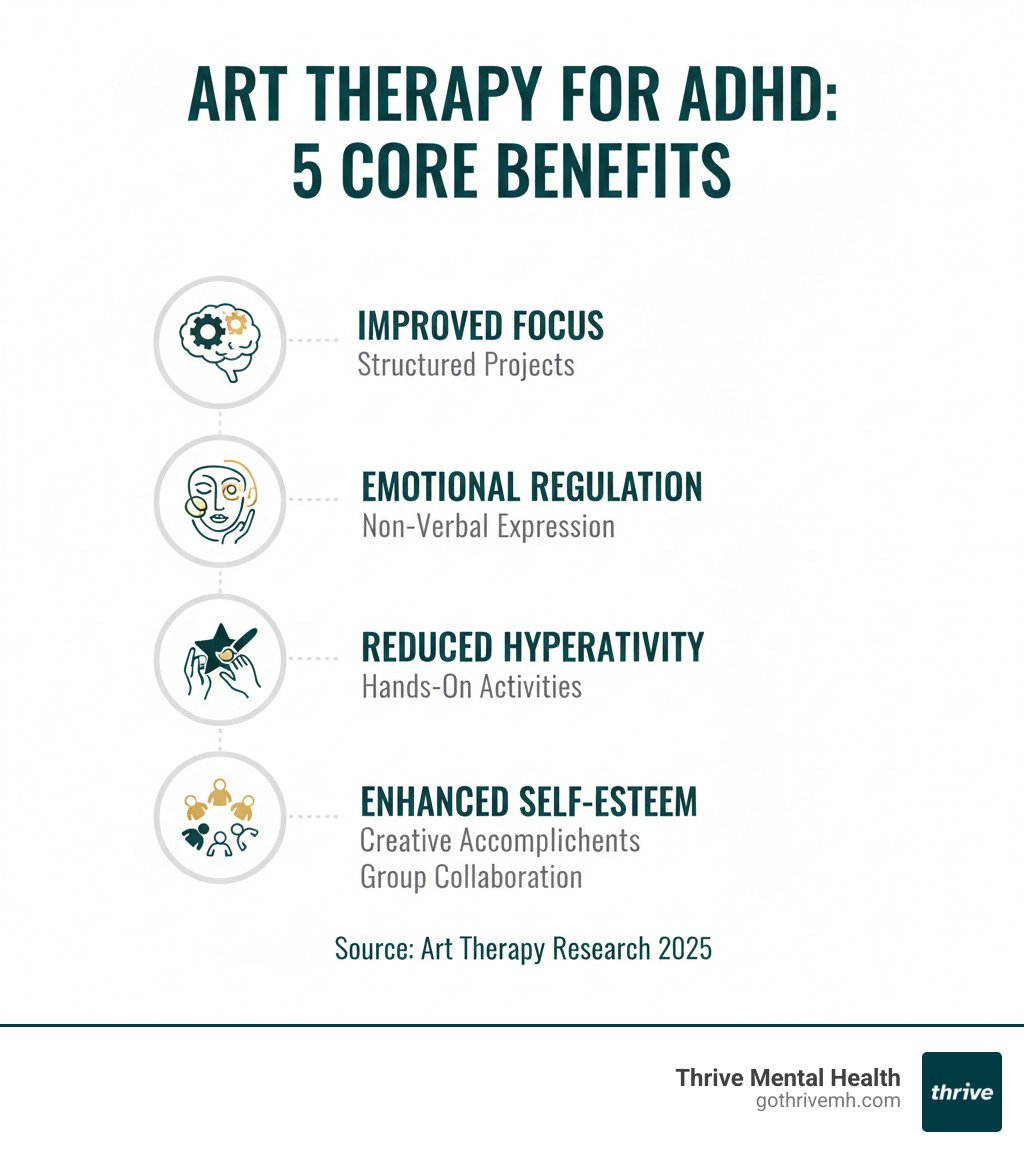
Art therapy for ADHD definitions:
ADHD & Art Therapy 101: A 2-Minute Guide for Overwhelmed Parents
If you’ve ever watched a child with ADHD struggle to sit still during a conversation, you already understand why art therapy for ADHD can be so powerful. Traditional talk therapy asks kids to use words for feelings they might not even understand yet. Art therapy? It meets them exactly where they are.
ADHD affects millions in the U.S., with many families across Florida, from Miami to Tampa, seeking effective support. It impacts roughly 4-6% of adults and 5-7% of children navigating a world that often feels too fast, too loud, or too overwhelming. But ADHD isn’t just about being “easily distracted.” It’s a complex neurodevelopmental condition that impacts how the brain processes attention, impulses, and activity levels.
Art therapy, as defined by the American Art Therapy Association (AATA), takes a completely different approach than traditional therapy. Instead of relying purely on verbal communication, it integrates human development theories with visual arts to improve psychological health, cognitive abilities, and sensory-motor functions. Our virtual therapy programs often incorporate these creative approaches. Think of it as giving your brain multiple ways to process and heal, not just through words, but through the creative process itself.
The difference between art therapy and approaches like Cognitive Behavioral Therapy (CBT) is striking. While CBT focuses on structured interventions and behavior modification through cognitive restructuring, art therapy emphasizes creative expression in a non-judgmental space. It naturally incorporates mindfulness as clients explore emotions and work through impulsivity, often without even realizing they’re doing therapeutic work.
Understanding Core ADHD Symptoms
ADHD shows up differently in every person, but it generally falls into three main areas that can make daily life feel like an uphill battle:
Inattention goes way beyond just “not paying attention.” It’s a persistent struggle with sustaining focus, getting easily pulled away by irrelevant sounds or sights, and difficulty with organization and follow-through. You might notice a child making careless mistakes, forgetting instructions, or avoiding homework that requires sustained mental effort.
Hyperactivity often looks like excessive fidgeting, restlessness, or an inability to stay seated when expected. For children, this might mean constantly being “on the go,” running or climbing at inappropriate times, or talking so much that they struggle to let others participate in conversations.
Impulsivity involves acting before thinking, interrupting others, having difficulty waiting for turns, or making quick decisions that lead to negative consequences. Emotional dysregulation often accompanies these symptoms, creating intense reactions to frustration or stress and rapid mood shifts that can be exhausting for both the child and their family.
These challenges don’t just stay at home. They follow kids to school, creating academic difficulties and social friction with peers who might not understand why their classmate can’t “just sit still and listen.”
Defining Formal Art Therapy
Here’s where things get interesting: formal art therapy for ADHD isn’t just about giving a child some crayons and hoping for the best. It requires working with a certified art therapist, a mental health professional who understands both psychological theories and how creative processes can facilitate healing.
These therapists are specially trained to help individuals process emotions, trauma, and behavioral challenges through drawing, painting, sculpting, and other creative mediums. The magic happens in the combination of talk therapy with the creative process, allowing for both verbal and non-verbal expression in the same session.
What makes this approach particularly powerful for ADHD is that it engages different parts of the brain simultaneously. While a child is focused on manipulating clay or choosing colors for a painting, their mind is processing emotions and experiences in ways that purely verbal therapy might miss. This unique blend makes art therapy especially valuable for individuals who find traditional verbal therapy challenging, which includes many people with ADHD who think and process information differently.
The therapeutic relationship between client and certified art therapist creates a safe space where there’s no “wrong” way to create, no pressure to find the perfect words, and no judgment about the final product. It’s about the process, not the masterpiece.
The Brain Science: How Art Therapy Rewires Focus & Impulse Control in ADHD
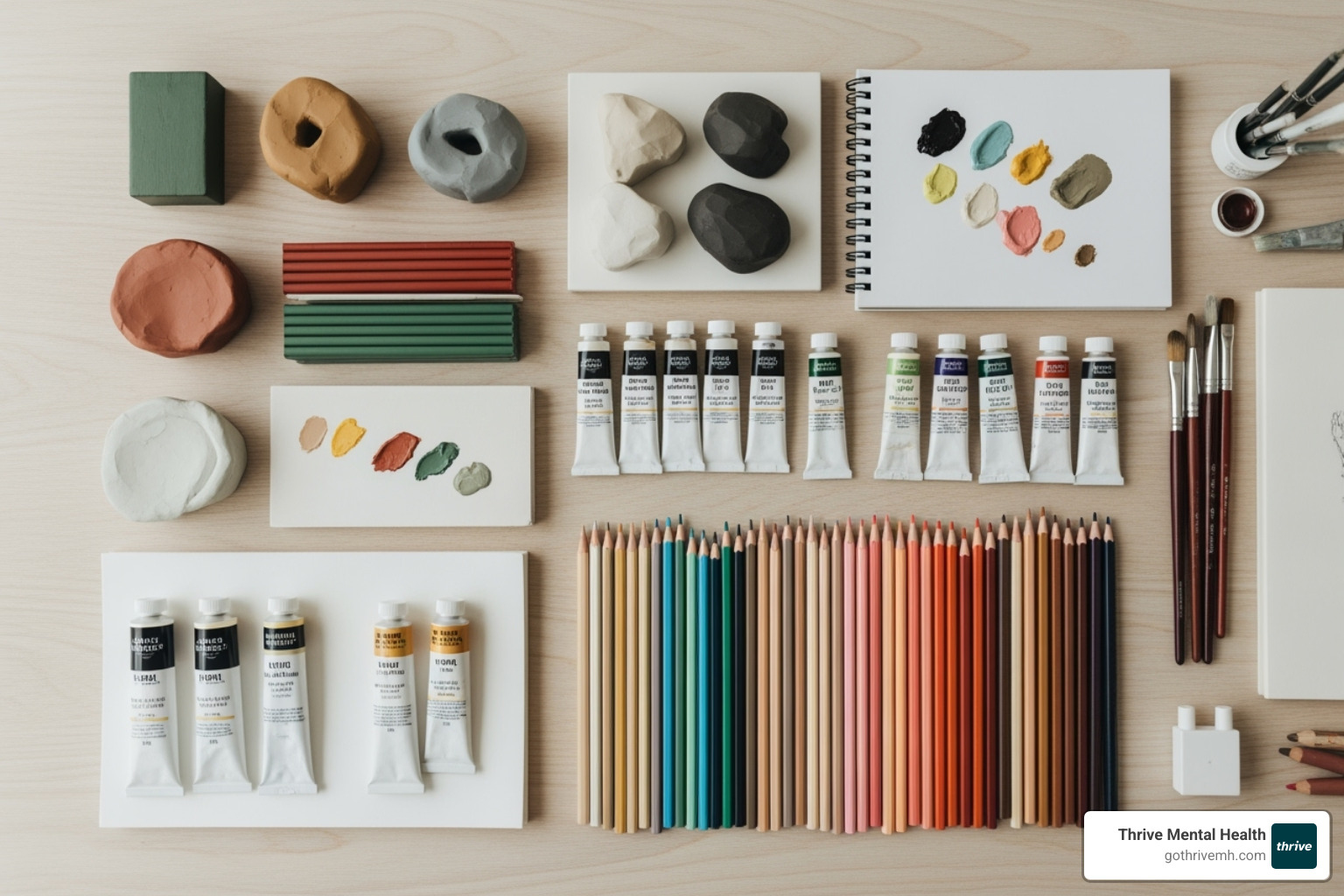
Here’s where art therapy for ADHD gets really exciting. Unlike sitting still for traditional talk therapy (which can feel like torture for an active child), art therapy actually uses that restless energy as a therapeutic tool. When children with ADHD pick up paintbrushes, mold clay, or sketch with pencils, something remarkable happens in their brains.
The creative process activates multiple brain regions simultaneously. The cerebellum handles the sensory-motor aspects of holding tools and making movements. The limbic system processes the emotions flowing through the artwork. Most importantly, the prefrontal cortex, the brain’s executive control center that’s often underdeveloped in ADHD, gets a gentle workout through planning, problem-solving, and working memory tasks.
Think of it like cross-training for the ADHD brain. Instead of forcing a hyperactive child to sit still and talk, we’re giving them a hands-on way to build the exact skills they struggle with most.
Improving Focus and Attention Span
Art projects naturally break down into sequential steps that scaffold learning. A child choosing colors, mixing paints, applying brushstrokes, and adding details engages their selective attention and working memory in a way that feels fun rather than forced.
This structured approach builds controlled attention and attention-sequencing skills organically. When a 10-year-old is deeply absorbed in creating a clay sculpture, they’re practicing the same sustained focus needed for homework, but without the stress and resistance.
Even simple doodling can be therapeutic for children with ADHD. Research shows that keeping hands busy with drawing actually helps maintain mental focus during other activities. The gentle stimulation keeps the mind engaged without overwhelming it, creating a state of relaxed concentration that many children with ADHD rarely experience.
The beauty lies in the mindfulness aspect. Art naturally draws attention to the present moment, the texture of clay, the flow of paint, the pressure of pencil on paper. This present-moment awareness helps reduce the mental noise and distractions that plague children with ADHD.
Calming Hyperactivity and Impulsivity
Hyperactive children have kinetic energy that needs somewhere to go. Art therapy provides the perfect outlet by channeling that energy into purposeful creation. Manipulating clay offers particularly powerful benefits, the resistance of the material provides proprioceptive input that can be deeply calming to an overstimulated nervous system.
The rhythmic motions of painting and drawing naturally promote relaxation by reducing cortisol levels. When children engage in art-making, their stress hormones decrease while feel-good neurotransmitters increase. It’s like giving their nervous system permission to downshift from high alert to creative flow.
Art activities that work especially well for hyperactive children include mandala coloring with its repetitive, meditative patterns, process painting where the focus is on the act rather than the outcome, nature art using collected leaves and stones, clay sculpting for tactile stimulation, and abstract doodling that lets energy flow freely onto paper.
These activities teach patience and planning in a non-threatening way. Unlike academic tasks that can trigger frustration, art projects naturally encourage children to pause, consider, and adjust, building impulse control through creative problem-solving.
Boosting Cognitive and Sensory-Motor Skills
Every art project is essentially a problem-solving exercise. How do I make this color? What happens if I add more water? How can I fix this mistake? These decisions strengthen executive functions like planning, organization, and mental flexibility without feeling like work.
The physical aspects of art-making provide crucial fine motor skill development. Holding paintbrushes, cutting with scissors, and shaping clay all improve hand-eye coordination and dexterity. For children whose gross motor hyperactivity often overshadows their fine motor needs, art therapy provides targeted practice in a enjoyable context.
Sensory processing also improves through varied art experiences. The smooth coolness of clay, the resistance of thick paint, the scratchy texture of charcoal, these sensory inputs help integrate different brain pathways and improve overall sensory regulation.
Perhaps most importantly, art therapy helps children with ADHD find that their brains work differently, not defectively. When they create something beautiful with those same “distractible” and “hyperactive” traits, it reframes their ADHD symptoms as potential strengths rather than just problems to manage.
Beyond Focus: Build Emotional Control & Self-Esteem with Art Therapy for ADHD
If you are struggling with thoughts of self-harm, call or text 988 immediately. Confidential support is available for free, 24/7.
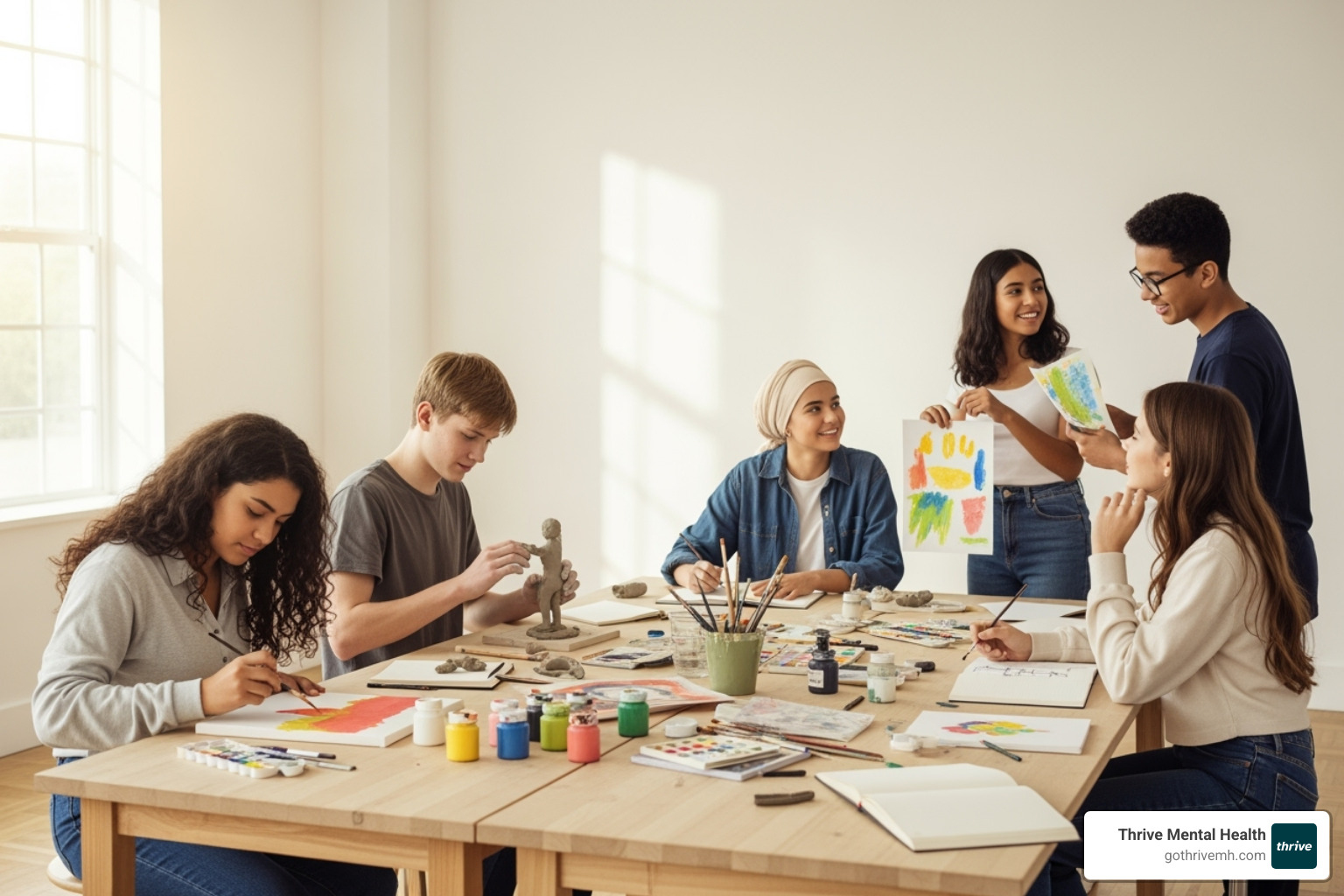
Beyond helping with focus and hyperactivity, art therapy for ADHD opens up a world of deeper healing. Children with ADHD often struggle with emotional overwhelm, low self-worth, and difficulty connecting with peers. Art therapy creates a unique bridge to address these challenges in ways that traditional talk therapy sometimes can’t reach.
The beauty of creative expression lies in its ability to bypass the verbal processing challenges that many children with ADHD face. When words feel impossible or inadequate, colors, shapes, and textures can speak volumes about a child’s inner experience.
A Safe Outlet for Intense Emotions and Self-Harm
Children with ADHD often experience emotions at full volume, intense anger, overwhelming frustration, or crushing disappointment. These feelings can be so powerful that they become frightening, leading some children to consider harmful coping strategies.
Crisis Support: If you’re in crisis, call or text 988 right now for free, confidential support. You are not alone.
Art therapy for ADHD provides a crucial alternative: a non-verbal way to release and process these intense emotions safely. When a child pounds clay to express anger or uses dark colors to show sadness, they’re externalizing their inner turmoil in a controlled environment. This creative outlet allows them to witness their emotions from the outside, making them feel less consuming and more manageable. The process naturally reduces stress hormones like cortisol, as scientific research demonstrates, leading to genuine feelings of calm and relief.
Art therapy also helps children process trauma or difficult experiences that might be too overwhelming to discuss directly. Through symbols, metaphors, and visual storytelling, they can gradually work through painful memories while building healthy coping mechanisms and emotional resilience.
Building Self-Esteem and Confidence
For children with ADHD, school and social situations often feel like a series of failures or criticisms. They hear “sit still,” “pay attention,” or “try harder” so frequently that they begin to internalize a sense of being fundamentally flawed. Art therapy completely flips this narrative.
 Post Traumatic Disorder Recovery: Strategies and SupportMental Health
In the art therapy room, there are no wrong answers. A child’s unique way of seeing and creating becomes a strength rather than a deficit. The tangible nature of art projects provides something concrete to feel proud of, a painted canvas, a sculpted figure, or a colorful collage that represents their inner world. These creations become powerful evidence of their capabilities and creativity.
The process-focused approach of Expressive Arts Therapy means children aren’t judged on technical skill or “correctness.” Instead, they’re celebrated for their willingness to explore, take creative risks, and express themselves authentically. This experience can be transformative for children who’ve struggled with learning disability stigma or who feel misunderstood by the traditional education system.
Each completed project becomes a building block for positive self-image and confidence. Children begin to see themselves as capable creators rather than broken individuals who need fixing.
Improving Social Skills Through Art
Group art therapy sessions create natural opportunities for children with ADHD to practice social skills without the pressure of formal social skills training. When children work side by side on art projects, they organically learn to share materials, negotiate space, and respect each other’s creative processes.
These collaborative experiences teach crucial lessons about giving and receiving feedback respectfully. A child might offer a peer a different color or suggest an addition to their artwork, learning to communicate constructively. They also practice accepting suggestions or gentle criticism without becoming defensive or overwhelmed.
The shared creative experience helps children understand social cues in a low-pressure environment. They observe how their actions affect others and learn to read facial expressions and body language. This is particularly valuable for children with ADHD, who often struggle with social awareness and may miss important interpersonal signals.
Group sessions also provide a sense of belonging and shared experience. Children realize they’re not alone in their struggles and can form meaningful connections with peers who understand their challenges. This sense of community can be incredibly healing for children who often feel isolated or different.
For families in Florida seeking comprehensive support, our virtual intensive outpatient programs combine individual and group therapeutic experiences, helping children develop these vital social and emotional skills while maintaining the flexibility of virtual care.
Art Therapy for ADHD [2025]: Costs, Insurance Coverage & How to Start
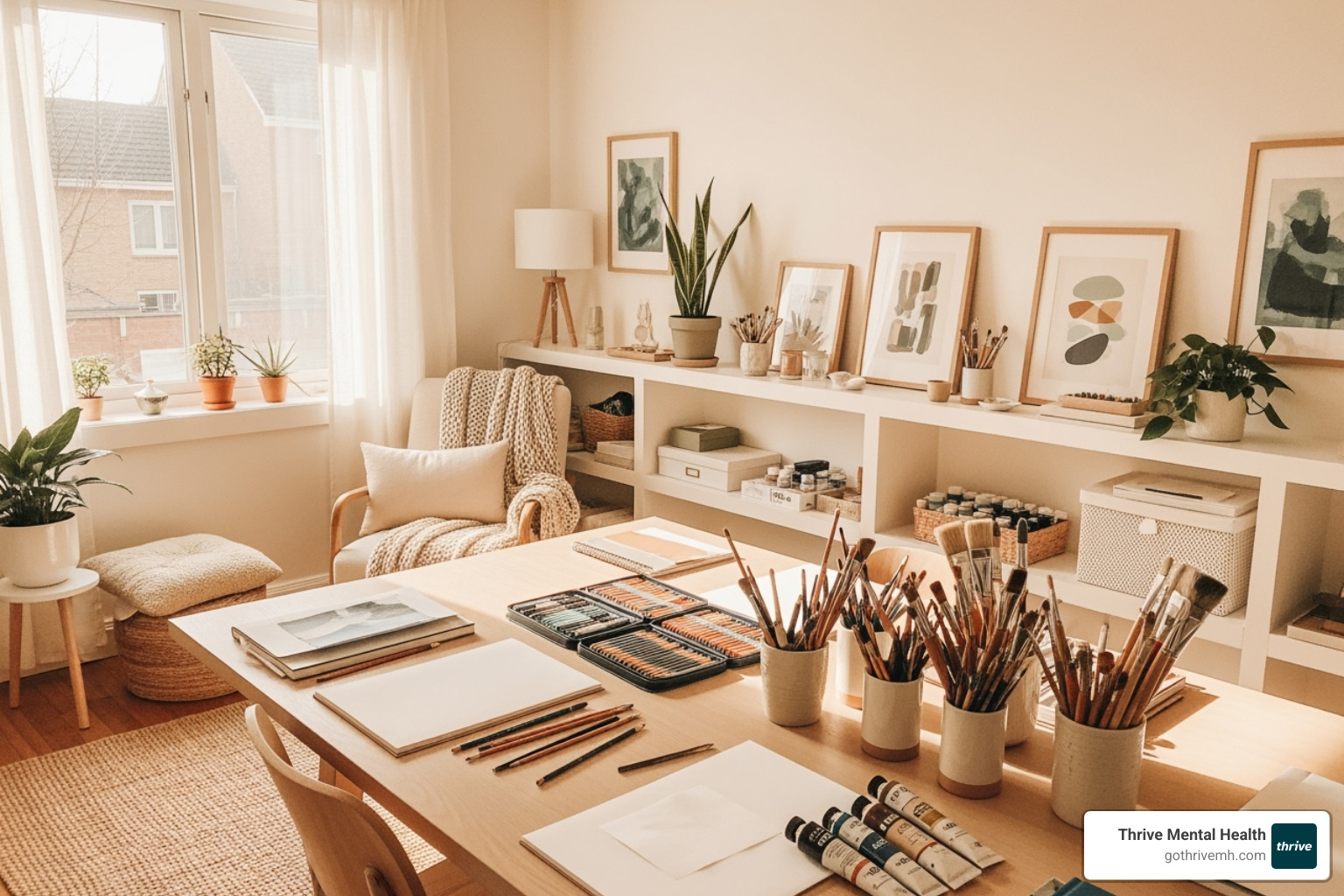
Starting art therapy for ADHD doesn’t have to feel overwhelming. Once you understand the basics of how sessions work, what they cost, and how to find the right therapist, you’ll be well-equipped to make the best choice for your child or family.
Individual vs. Group Art Therapy for ADHD
Choosing between individual and group sessions really comes down to what your child needs most right now. Individual art therapy creates that safe, one-on-one space where a certified art therapist can focus entirely on your child’s unique challenges. If your child struggles with intense emotions, social anxiety, or needs to work through specific trauma, this personalized approach allows the therapist to tailor every activity to their interests and developmental stage.
Group art therapy, on the other hand, opens up a whole different world of healing. When children with ADHD create art alongside their peers, something magical happens. They naturally start sharing materials, taking turns, and giving each other feedback, all while working on their own creative projects. It’s like social skills practice disguised as fun.
Many families find that a combination works best. Individual sessions provide that deep, personalized work, while group sessions help children practice what they’ve learned in a supportive peer environment. Your art therapist can help you decide which approach makes the most sense for your child’s current needs.
Finding a Therapist and Understanding Costs
When it comes to art therapy for ADHD, you want to make sure you’re working with someone who truly knows what they’re doing. Look for certified art therapists who hold credentials like ATR (Art Therapist Registered) or ATR-BC (Art Therapist Board Certified). These professionals have completed Master’s degree programs and extensive training specifically in using creative processes for healing.
The AATA directory is your best starting point for finding qualified therapists in your area. You’ll find art therapists working in private practice, school settings as part of IEP services, and mental health clinics. Some schools offer art therapy at no cost through Individualized Education Programs, which can be a wonderful resource if your child qualifies.
Session costs typically range from $45 to $200 per session, depending on your location, the therapist’s experience, and session length. While this might seem like a significant investment, many insurance providers now recognize the value of art therapy and offer coverage, especially when it’s part of a comprehensive mental health treatment plan.
We make insurance verification simple and stress-free. You can verify your insurance with Cigna, Optum, or Florida Blue in just a few minutes, with no obligation. Start your benefits check here.
Our services are focused on providing expert-led care to families across Florida, including Tampa Bay, St. Petersburg, Miami, and Orlando. We also offer virtual programs in select other states, making our specialized care accessible to more families in need.
Supporting Your Child at Home: Simple Art-Based Activities
You don’t need to be an artist or therapist to bring the benefits of creative expression into your daily life. The secret is focusing on the process, not the product, it’s about the experience of creating, not making something perfect.
Mandala coloring or drawing can be incredibly soothing for hyperactive minds. Whether you use pre-drawn patterns or encourage freehand creation, the repetitive, circular motions naturally promote focus and relaxation. Collage making removes the pressure of drawing “correctly”, just gather magazines, fabric scraps, and glue, then let your child’s imagination run wild.
For sensory seekers, try finger painting or create sensory art bins filled with sand, rice, or dried beans, along with paintbrushes, stamps, and small sculpting tools. The tactile experience can be deeply calming and engaging.
Nature art combines the benefits of outdoor time with creative expression. Collect leaves, twigs, stones, and flowers during walks, then arrange them into temporary outdoor masterpieces or create lasting collages at home.
One of the most powerful activities is storytelling through drawing. Ask your child to draw something from their day or from their imagination, then talk about their creation together. This helps them process experiences while strengthening your connection.
Consider creating a “calm-down” corner in your home with easily accessible art supplies. When emotions run high, having a designated space for creative expression can provide that crucial outlet your child needs. The goal isn’t creating museum-worthy art, it’s providing a safe space for expression, practicing focus, and enjoying the creative process together.
Art Therapy vs. Music Therapy: Which Is Right for ADHD or ASD?
When considering creative therapies for children with ADHD, Autism Spectrum Disorder (ASD), or learning disabilities, families often wonder about the differences between art therapy and music therapy. Both approaches are powerful creative arts therapies that can significantly impact behavior, communication, and social-emotional skills, as highlighted in a systematic review published in Children (Basel).
The choice between these therapies often comes down to how your child naturally engages with the world and what therapeutic goals you’re hoping to achieve.
Art therapy for ADHD tends to work exceptionally well for children who are visual learners or who struggle with verbal expression. The tactile nature of working with clay, paints, and drawing materials provides that crucial sensory input that hyperactive children often crave. It’s particularly effective for developing fine motor skills and executive functioning because art projects require planning, sequencing, and problem-solving.
Music therapy, on the other hand, engages children through auditory processing and rhythmic patterns. It can be especially beneficial for children who respond well to structure and routine, as musical patterns provide predictable frameworks. For children with ASD, music therapy often excels at supporting communication development and social interaction through group singing or instrument play.
Here’s how these therapies compare for different conditions:
| Condition | Art Therapy Benefits | Music Therapy Benefits |
|---|---|---|
| ADHD | Improves focus through structured visual projects; channels hyperactivity into creative movement; builds executive functioning through planning and sequencing | Improves attention through rhythmic patterns; provides structured outlet for energy; improves impulse control through musical timing |
| Autism Spectrum Disorder | Supports non-verbal communication; reduces sensory overwhelm through controlled tactile experiences; builds social skills in group art settings | Facilitates verbal and non-verbal communication; provides predictable sensory input; encourages social interaction through group music-making |
| Learning Disabilities | Strengthens visual-spatial processing; builds confidence through creative accomplishment; improves fine motor skills for writing | Improves memory through musical patterns; supports language development through rhythm and melody; builds sequential processing skills |
The beauty of both therapies lies in their ability to engage different parts of the brain simultaneously. Art therapy for ADHD particularly activates the visual cortex, motor regions, and prefrontal areas responsible for planning and decision-making. Music therapy stimulates auditory processing centers, temporal regions, and areas involved in pattern recognition.
Many children benefit from exposure to both modalities, either simultaneously or at different points in their treatment journey. Some kids naturally gravitate toward visual expression, while others find their voice through musical exploration. The key is finding what resonates with your individual child and supports their unique developmental needs.
If you’re considering creative therapies as part of a comprehensive treatment plan for your family in Florida, our virtual intensive outpatient programs can help coordinate various therapeutic approaches to create the most effective support system.
Frequently Asked Questions About Art Therapy for ADHD
What kind of art is good for ADHD?
Structured, process-oriented art is best. Activities like mandala coloring, clay sculpting, and collage making are effective because they provide sensory input, require sequential steps (building focus), and offer a calming, repetitive motion. The goal is the process, not a perfect product.
How does art therapy help with ADHD focus?
Art therapy improves focus by engaging the brain’s executive functions in a low-stress way. Planning a project, choosing colors, and following steps build sustained attention. The hands-on nature of art also helps quiet a hyperactive mind, allowing for a state of relaxed concentration.
Can art therapy replace medication for ADHD?
Art therapy is a powerful complementary treatment, not a replacement for medication. It helps build coping skills, emotional regulation, and self-esteem that medication doesn’t address. It should be part of a comprehensive treatment plan discussed with your doctor and a certified therapist. Our Intensive Outpatient Programs (IOP) integrate various therapies for holistic care.
Is art therapy covered by insurance for ADHD?
Many insurance plans cover art therapy when it’s provided by a licensed mental health professional for a diagnosed condition like ADHD. In Florida, we frequently work with providers like Cigna, Optum, and Florida Blue. It’s always best to verify your specific benefits beforehand.
Take the Next Step
Ready to find support for your family in Florida? Thrive offers virtual IOP with evening options. Verify your insurance in 2 minutes (no obligation) Start benefits check or call 561-203-6085. If you’re in crisis, call/text 988.

This article is for informational purposes only and is not a substitute for individualized clinical advice or insurance verification.