
5 Creative Ways to Find an Art Therapist for Teen Depression

Find an Art Therapist for Teen Depression: 5 Healing Steps
When Your Teen Won’t Talk, Art Can Speak for Them
If you or your teen are in crisis or having suicidal thoughts, please call or text the 988 Suicide & Crisis Lifeline at 988. You are not alone and help is available 24/7.
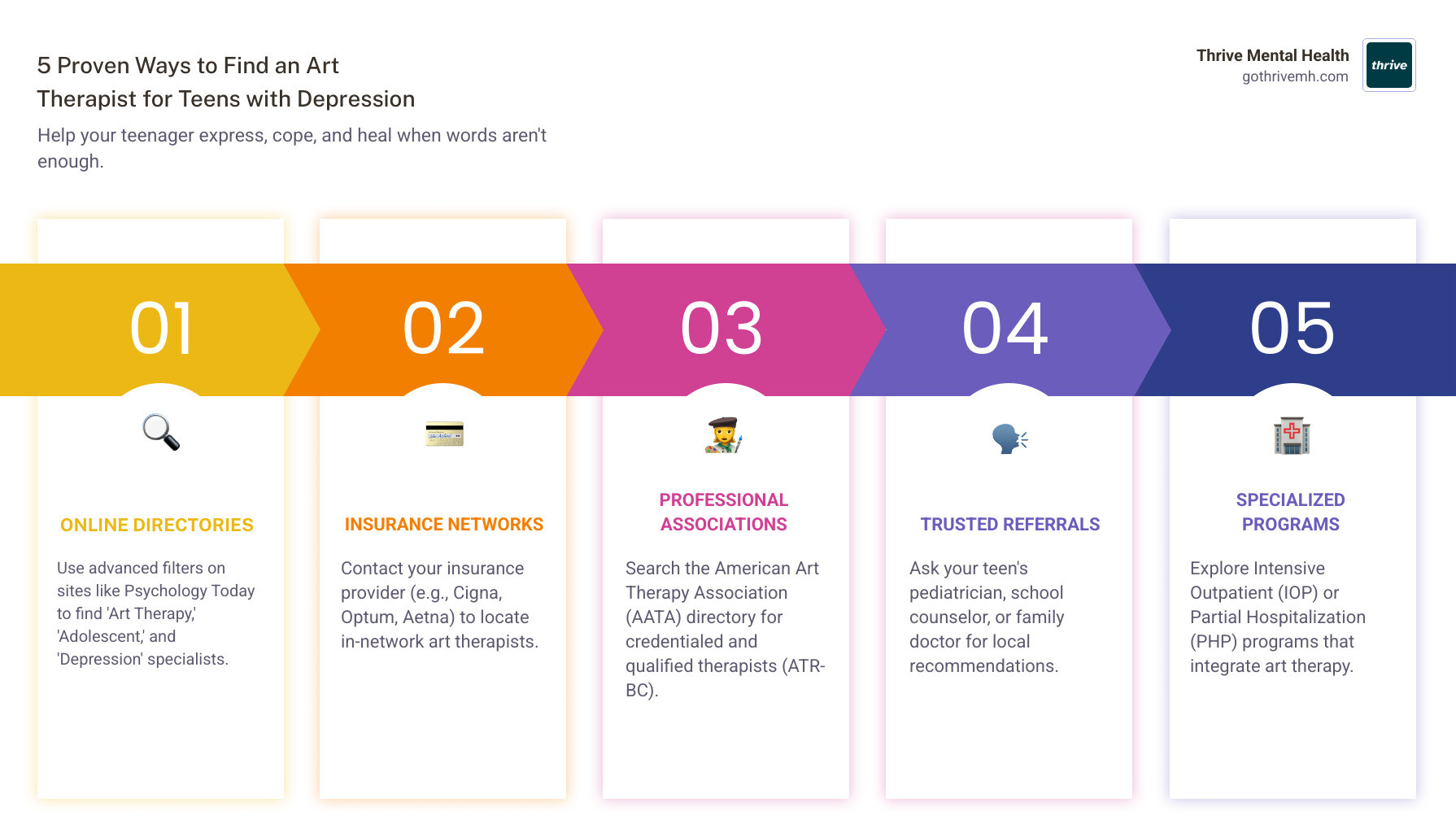
Find a therapist who can suggest an art therapy activity for a teenager with depression by following these quick paths:
- Online Directories: Use Psychology Today or TherapyDen with filters for “Art Therapy,” “Adolescent,” and “Depression”
- Insurance Networks: Contact your provider (Cigna, Optum, Florida Blue) for in-network art therapists
- Professional Associations: Search the American Art Therapy Association (AATA) directory for credentialed therapists
- Trusted Referrals: Ask your teen’s pediatrician, school counselor, or family doctor
- Specialized Programs: Explore IOP/PHP programs that integrate art therapy into comprehensive care
Your teenager is withdrawing. The sadness is visible. You ask what’s wrong, and you get silence—or worse, “I don’t know.”
This isn’t just teenage moodiness. One in seven young people aged 10 to 19 experiences a mental health disorder, with depression being one of the most common. While traditional talk therapy asks teens to verbalize complex emotions they may not understand, art therapy offers another way: it lets them show you instead of telling you.
Art therapy is psychotherapy that uses creative expression as the language. Research shows that engaging in artistic activities can reduce symptoms of depression, anxiety, and trauma in teenagers. It provides a safe, judgment-free space for teens to externalize what they’re feeling through clay, paint, or drawing—and then work with a trained therapist to make sense of it.
But finding the right therapist is crucial. You need someone who understands both teen mental health and the therapeutic power of creative expression. At Thrive Mental Health, we help families find a therapist who can suggest an art therapy activity for a teenager with depression by integrating creative modalities into structured IOP and PHP programs across Florida.
Below, you’ll find five proven methods to locate a qualified art therapist for your teen.
Find more about Find a therapist who can suggest an art therapy activity for a teenager with depression.:
- Find a therapist who uses art therapy for elementary students.
- art therapy and counseling
- therapeutic activities for teens
Why Art Therapy Works When Words Fail for Depressed Teens
When your teen is struggling with depression, getting them to open up can feel impossible. They might shut down, shrug you off, or genuinely lack the words to describe what’s happening inside. This is where art therapy changes the game.
Art therapy isn’t an art class; it’s a form of psychotherapy that uses creative expression as the language. Instead of asking “How do you feel?” and getting silence, it invites your teen to show how they feel through paint, clay, or collage. The focus is on the process of creation, not the final product.

For teens with depression, this approach offers a safe, judgment-free outlet for feelings they can’t yet name. Here’s how it helps:
- Emotional Expression: Art provides a visual channel for anger, sadness, or hope when words aren’t available. Your teen doesn’t need perfect vocabulary—they just need to pick up a brush.
- Stress Reduction: The act of creating is meditative and calming, offering relief from the mental noise of depression. Research shows art significantly boosts mental well-being in teens.
- Self-Esteem Boost: In a space with no right or wrong answers, completing an art piece provides a sense of accomplishment, which is a powerful antidote to the worthlessness depression can cause.
- Building Coping Mechanisms: Through guided activities, teens learn to identify triggers, manage negative thoughts, and develop healthier responses to stress.
A recent study on art therapy for adolescent depression found significant improvement in depressive symptoms after just 10 weeks. The artwork becomes a bridge between what a teen is experiencing and what they can eventually articulate, fostering self-awareness and emotional regulation.
When you find a therapist who can suggest an art therapy activity for a teenager with depression, you’re finding someone who knows healing doesn’t always start with words.
What Art Therapy Activities Can a Therapist Suggest?
A skilled art therapist tailors activities to your teen’s needs. These aren’t random crafts—they’re therapeutic tools.
- Clay Sculpting: A powerful tactile experience to physically externalize frustration, anger, or sadness. The sensory nature of clay also helps ground teens in the present moment.
- Mandala Drawing: These intricate circular designs promote mindfulness and calm. The repetitive nature of creating or coloring a mandala helps reduce anxiety and creates a meditative state.
- Collage Making: Allows teens to piece together their identity and feelings using images and words. It’s especially helpful for teens who feel fragmented or lost, letting them create visual narratives.
- Painting Emotions: Uses color as the primary language. A teen might paint what an emotion looks like, helping them become more emotionally literate while offering immediate release.
- Self-Portraits: Goes beyond drawing a face to depict an internal state—hopes, fears, or how depression makes them see themselves. This can challenge negative self-talk and foster self-compassion.
How Can You Support Your Teen’s Art Therapy Journey?
Your support is vital. Here’s how to create the right environment at home:
- Practice Active Listening: When your teen shares, just listen and validate. “That sounds really hard” is more powerful than advice.
- Maintain a Non-Judgmental Attitude: Never criticize their artwork or try to interpret it. Appreciate that they trusted you enough to share.
- Create a Safe Space: Respect their privacy around their artwork and ensure they know it’s okay to feel whatever they’re feeling.
- Encourage Creativity Without Pressure: Provide art supplies if they’re interested, but never force creation. The choice must be theirs.
- Communicate with the Therapist: With your teen’s consent, stay informed about therapeutic goals and how you can offer support. At Thrive Mental Health, we work closely with families in our IOP and PHP programs.
- Recognize Progress Beyond Words: Notice small shifts in mood or behavior. These are signs of progress. Acknowledge their courage for showing up and doing the work.
How to Find a Therapist Who Can Suggest an Art Therapy Activity for a Teenager with Depression [5 Proven Methods]
Finding a specialist in art therapy and adolescent depression can feel daunting, but there are proven ways to locate the right professional for your teen.
Here are five practical methods to find a therapist who can suggest an art therapy activity for a teenager with depression.

1. Use Online Directories with Advanced Filters
Online therapist directories like Psychology Today and TherapyDen are powerful search engines for mental health care. Use their filters to zero in on the right fit.
Start by selecting “Art Therapy” as a treatment modality, then add filters for “Adolescents” and “Depression.” Next, narrow your search by location, looking for providers in Florida. Many directories also let you filter by insurance, giving you a clear starting point with providers who accept your plan.
2. Check Your Insurance Provider’s Network
Therapy is an investment, so understanding your coverage is a critical first step. Call your insurance provider to ask about your mental health benefits, including deductibles, co-pays, and whether art therapy is covered.
Request a list of in-network therapists specializing in adolescent care and art therapy from providers like Cigna, Optum, Florida Blue, and Aetna. Always call the therapist’s office directly to verify they are still in-network with your specific plan before booking an appointment to avoid surprise bills.
3. Consult Professional Art Therapy Associations
Credentials ensure your teen receives care from a trained, ethical professional. The American Art Therapy Association (AATA) maintains a directory of qualified art therapists who meet strict standards.
Look for credentials from the Art Therapy Credentials Board (ATCB), such as ATR (Registered Art Therapist) or ATR-BC (Board Certified Art Therapist). These designations signify rigorous graduate-level education and supervised clinical experience, so you can trust you’re working with a true expert.
4. Ask for Referrals from Trusted Professionals
Sometimes the best recommendations come from people who already know your teen. Your teen’s pediatrician, family doctor, or school counselor are excellent resources. They often have established relationships with local mental health specialists and can provide vetted referrals based on your teen’s specific needs. Community mental health centers are also valuable, often offering multidisciplinary teams and affordable services under one roof.
5. Explore Specialized Programs That Integrate Art Therapy
If weekly therapy isn’t enough, consider an Intensive Outpatient Program (IOP) or Partial Hospitalization Program (PHP). These programs offer a higher level of care without requiring inpatient hospitalization.
At Thrive Mental Health, our virtual and in-person IOP/PHP programs across Florida integrate art therapy into a comprehensive treatment plan. This team-based approach combines individual, group, and family therapy, ensuring all aspects of your teen’s recovery are addressed in a coordinated way.
Many teens prefer our virtual IOP/PHP programs, which offer expert care from the comfort of home and flexible evening schedules. In this setting, art therapy is a core component of healing, not just an add-on. Learn more about our approach at Art Therapy in IOP/PHP programs.
What to Look For When You Find a Therapist Who Can Suggest an Art Therapy Activity for a Teenager with Depression
Once you have a list of potential therapists, the next step is evaluating their fit. It’s about finding someone who can connect with your teen and create a safe space for healing.

Credentials and Specialization That Matter
When you find a therapist who can suggest an art therapy activity for a teenager with depression, credentials are non-negotiable. They guarantee a standard of care.
- Art Therapy Credentials: Look for a Registered Art Therapist (ATR or ATR-BC). This means they have graduate-level education and extensive supervised clinical hours.
- State Licensure: The therapist should also be a licensed mental health professional, such as an LPC (Licensed Professional Counselor), LMHC, or LCSW. This dual qualification is key.
- Adolescent Experience: Ensure they specialize in working with adolescents, not just adults. Teen depression requires a nuanced understanding of their developmental stage.
- Trauma-Informed Approach: Since depression and trauma often coexist, a therapist with a trauma-informed background can provide sensitive, healing-oriented care.
A Strong Therapeutic Rapport is Non-Negotiable
You could find the most qualified therapist in the world, but if your teen doesn’t feel comfortable with them, therapy won’t work. The relationship—or therapeutic rapport—is the foundation of healing.
Use the initial consultation to see how the therapist interacts with your teen. Do they speak directly to them? Do they create a warm, non-judgmental environment? Your teen must feel safe, heard, and respected. For some, virtual sessions can feel less intimidating and make it easier to build this trust.
Cultural competency is also vital. A therapist who understands and respects your teen’s cultural identity can provide more effective and relevant care.
A Clear, Collaborative Treatment Plan
A good therapist works with your teen to create a clear treatment plan with measurable goals. This should include:
- Therapeutic Goals: What does your teen want to achieve? Involving them in goal-setting increases their investment in the process.
- Progress Assessment: The therapist should have a method for tracking progress, whether through check-ins or self-report measures.
- Parent Communication: While respecting your teen’s privacy, the therapist should establish clear guidelines for keeping you informed about the overall treatment direction.
At Thrive Mental Health, our IOP and PHP programs are built on evidence-based practices and measurable results. We integrate art therapy into a comprehensive, team-based plan to help teens develop lasting coping skills.
Frequently Asked Questions about Art Therapy for Teen Depression
How does art therapy help a teen who isn’t “good at art”?
Art therapy is about the creative process, not the final product. There is no “good at art” requirement. The goal is to express feelings without the pressure of words or artistic skill. A therapist creates a judgment-free zone where your teen can safely explore what’s inside, making it less intimidating than traditional talk therapy.
What kind of emotions might come up in my teen’s artwork?
When you find a therapist who can suggest an art therapy activity for a teenager with depression, their artwork may reveal emotions they can’t verbalize: isolation, anger, sadness, confusion, or even hope. A trained therapist helps your teen explore these themes safely, asking gentle questions to build understanding. The art becomes a bridge to conversation, not a performance to be judged.
How is virtual art therapy different from in-person?
Virtual art therapy delivers the same professional guidance using common household art supplies (markers, paper, etc.) or digital tools. Many teens find it less intimidating to open up from the comfort of their own home. It also dramatically increases access to specialists across Florida, making it a flexible and highly effective option. At Thrive Mental Health, our virtual art therapy programs are designed to be accessible and engaging for teens.
Your Path to Healing Starts Here
Seeking support for your teenager is the most critical step. You’re navigating a difficult path, but you are not alone. Art therapy offers a powerful way for teens with depression to express themselves, build resilience, and heal when words are not enough.
By using the methods above to find a therapist who can suggest an art therapy activity for a teenager with depression, you are giving your teen a safe outlet to process their feelings and develop coping skills. Whether you choose an individual therapist or a more comprehensive program, you are moving toward hope and healing.
For teens needing more than weekly sessions, Thrive Mental Health’s virtual and in-person IOP and PHP programs integrate art therapy into a structured, team-based plan. We offer flexible, evidence-based care across Florida, with evening options that fit your family’s schedule.
Ready for support? You can verify your insurance coverage in 2 minutes with no obligation—or call us directly at 561-203-6085 to speak with someone who understands. If you or your teen are in crisis right now, please call or text 988. Help is available 24/7.