


What is Dialectical Behavior Therapy DBT: 4 Essential Skills
Why Learning What Is Dialectical Behavior Therapy DBT Matters When Emotions Feel Out of Control
If you or someone you know is in crisis or struggling with thoughts of self-harm, please call or text 988 to reach the Suicide & Crisis Lifeline. You are not alone.
What is dialectical behavior therapy dbt? It’s a structured, skills-based psychotherapy designed to help you manage intense emotions, reduce harmful behaviors, and build healthier relationships. Developed by Dr. Marsha Linehan, DBT was created for chronically suicidal individuals with borderline personality disorder (BPD) but is now a gold-standard treatment for PTSD, eating disorders, substance use, and more.
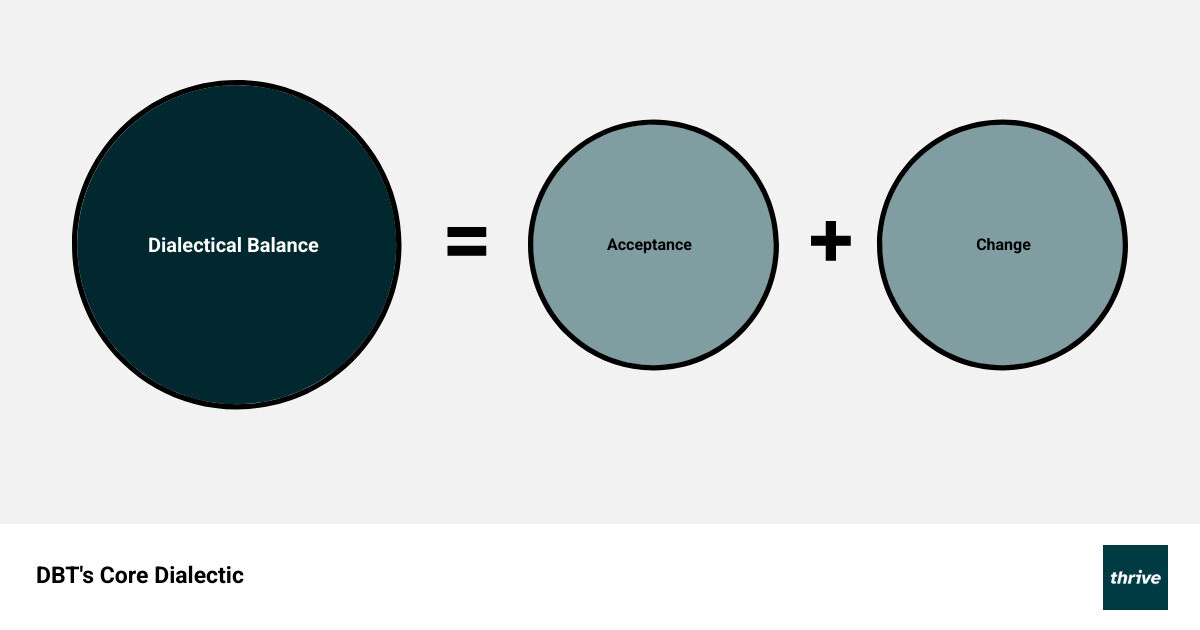
The core principle of DBT is balancing acceptance (validating your feelings as they are) with change (learning new, effective skills). This approach is taught through four key modules: Mindfulness, Distress Tolerance, Emotion Regulation, and Interpersonal Effectiveness. A standard program involves 6-12 months of individual therapy, group skills training, and phone coaching, all supported by a therapist consultation team.
If your emotions feel like they’re in the driver’s seat, DBT offers a practical roadmap. The word dialectical means holding two opposing truths at once: “I’m doing the best I can right now, AND I need to learn new ways to do better.” This guide will walk you through what DBT is, how it works, and who it helps.
I’m Anna Green, LMHC, LPC, Chief Clinical Officer at Thrive Mental Health. With over a decade of experience in evidence-based treatments like DBT, my mission is to make expert care accessible so you can build a life you love.
Related content about what is dialectical behavior therapy dbt:
What is Dialectical Behavior Therapy (DBT) and How Does It Work?
At its heart, what is dialectical behavior therapy dbt is a therapy that balances two seemingly opposite truths: acceptance and change. This means you accept yourself exactly as you are, your pain, your history, your patterns, and you commit to learning new skills to change behaviors that aren’t working. No shame, just growth.
Dr. Marsha Linehan developed DBT for chronically suicidal individuals with Borderline Personality Disorder (BPD) who felt invalidated by traditional therapies that pushed only for change. They needed to be heard and validated first.
The Biosocial Theory: Why Some People Feel Everything More Intensely
Linehan’s biosocial theory suggests some people are born with higher emotional vulnerability, they feel things more and take longer to calm down. When this sensitivity meets an invalidating environment, where feelings are dismissed or punished, a person never learns to manage their emotions. Instead, they develop extreme coping strategies like self-harm or substance use just to survive. DBT validates the pain while teaching practical skills to manage it.
The Four Stages of DBT Treatment
DBT treatment unfolds in four stages, moving you from crisis to a life that feels worth living. You can learn more about the process on our page about How Does Dialectical Behavioral Therapy Work.
Stage 1: Gaining Behavioral Control
The first priority is stabilizing the crisis. This stage focuses on stopping life-threatening behaviors (self-harm, suicidal ideation), therapy-interfering behaviors (missing sessions), and quality-of-life-interfering behaviors (substance abuse, eating disorders).
Stage 2: Experiencing Emotions Fully
Once you’re stable, you can begin to address the underlying emotional pain, often related to PTSD or complex trauma. This stage is about learning to feel emotions without being overwhelmed or resorting to old, harmful coping mechanisms.
Stage 3 & 4: Building a Life Worth Living
Stage 3 focuses on applying your new skills to everyday problems, building self-respect, and fostering healthy relationships. Stage 4 goes deeper, helping you find joy, connection, and a sense of purpose, addressing what Linehan called spiritual emptiness.
These stages provide a flexible roadmap from surviving to thriving.

The 4 Core Components of a Standard DBT Program
When you ask what is dialectical behavior therapy dbt, it’s important to know it’s not just weekly talk therapy. A comprehensive DBT program is a system of four components working together, which is why it’s so effective. This multi-layered approach requires a commitment of six months to a year.
Intensive outpatient (IOP) and partial hospitalization (PHP) programs, like our virtual programs at Thrive, deliver all four components in a structured way to residents throughout Florida. You can learn more about how these parts fit together on our Dialectical Behavior Therapy Components page.
-
Individual Therapy: This is your weekly one-on-one session where you apply DBT skills to your life. Using a diary card to track emotions and urges, you and your therapist perform behavior chain analyses to understand and change unhelpful patterns. This is where you personalize the skills you learn in group.
-
Group Skills Training: These weekly 1.5-2.5 hour sessions are like a class where you learn practical skills from the four DBT modules. You’re not there to process trauma but to learn and practice new coping strategies in a supportive environment with peers.
-
Phone Coaching: This is DBT’s secret weapon. When you’re in a crisis between sessions, you can call your therapist for brief, in-the-moment coaching on how to use your skills. This helps you apply what you’ve learned to the real world when it matters most.
-
Therapist Consultation Team: This is a behind-the-scenes component where your therapist’s team meets weekly. They support each other to ensure they are providing the most effective, faithful DBT treatment and to prevent burnout, which ultimately means better care for you.
If you’re considering an intensive program, our virtual IOP and PHP offerings provide all four components with greater flexibility. Learn more about the benefits of online treatment on our page about Finding an IOP Near Me The Benefits of Online DBT.
The 4 Essential Skill Sets Taught in DBT
Here’s where what is dialectical behavior therapy dbt becomes a set of practical tools. DBT’s power lies in four concrete skill sets that help you manage intense emotions, survive crises, and build better relationships. These skills are the building blocks for a more stable and enjoyable life.

Mindfulness: The Foundation of Awareness
Mindfulness is the core skill in DBT, teaching you to pay attention to the present moment without judgment. This creates a crucial space between an emotional trigger and your reaction, allowing you to choose your response. The goal is to access your Wise Mind, the balance between your emotional side (Emotion Mind) and your logical side (Reasonable Mind).
- “What” Skills: Observe your thoughts and feelings, Describe them with facts, and Participate fully in the moment.
- “How” Skills: Practice being Non-judgmental, doing one thing at a time (One-mindfully), and doing what works (Effectively).
Distress Tolerance: Surviving Crisis Without Making It Worse
These skills help you get through intense emotional pain without resorting to destructive behaviors. The goal isn’t to feel good, but to survive the moment without making it worse.
- Crisis Survival Skills: Use the TIPP skill (Temperature, Intense Exercise, Paced Breathing, Paired Muscle Relaxation) to calm your body’s crisis response. Use ACCEPTS and IMPROVE skills to distract and self-soothe.
- Radical Acceptance: This means fully accepting reality as it is, without approval or judgment. It reduces suffering by ending the fight against what you can’t change, freeing up energy to solve problems.
You can find more details on these techniques by visiting What skills are taught in DBT?.
Emotion Regulation: Understanding and Changing Unwanted Emotions
These skills help you manage your emotional responses for the long term. You learn to identify emotions, understand their purpose, and change them when they aren’t helpful.
- Identify and Label Emotions: Naming your feelings helps you shift from reacting to reflecting.
- Check the Facts: Determine if your emotional reaction fits the actual situation.
- Opposite Action: If an emotion is unhelpful, act opposite to its urge (e.g., approach instead of avoid).
- PLEASE Skills: Reduce your emotional vulnerability by taking care of your physical health: treat PhysicaL illness, Eat balanced meals, avoid mood-Altering drugs, get enough Sleep, and Exercise.
Interpersonal Effectiveness: Building Healthy Relationships
These skills teach you how to get your needs met, maintain relationships, and keep your self-respect.
 Neurodiversity Affirming Therapy Techniques for Health ProfessionalsCoping Strategies
- DEAR MAN: A formula to Describe, Express, Assert, and Reinforce when asking for something or saying no, while staying Mindful, Appearing confident, and being willing to Negotiate.
- GIVE: To maintain relationships, be Gentle, act Interested, Validate the other person, and use an Easy manner.
- FAST: To keep self-respect, be Fair, don’t over-Apologize, Stick to your values, and be Truthful.
Who Can Benefit from DBT? Conditions and Indications
If you are struggling with self-harm or suicidal thoughts, help is available 24/7. Call or text 988 immediately. You are not alone.
While originally for borderline personality disorder (BPD), DBT is now a gold-standard treatment for a wide range of issues. Generally, it’s for anyone who experiences overwhelming emotions, struggles with impulsive behaviors, or gets stuck in relationship conflicts. If your emotions feel out of control, DBT can help.
Research backs this up. Eight randomized clinical trials have proven DBT’s effectiveness. One landmark study on BPD recovery found that 77% of participants no longer met the criteria for BPD after completing DBT.
DBT is highly effective for:
-
Borderline Personality Disorder (BPD): As the original target condition, DBT is proven to reduce self-harm, suicide attempts, hospitalizations, and emotional outbursts associated with BPD.
-
Suicidal and Self-Harming Behaviors: DBT provides life-saving skills to manage crisis moments and offers concrete alternatives to self-destructive urges.
-
Post-Traumatic Stress Disorder (PTSD) and Complex PTSD: DBT helps trauma survivors regulate dangerous-feeling emotions and manage triggers, often in combination with other trauma-focused therapies.
-
Substance Use Disorders: DBT addresses the emotional dysregulation that often drives addiction, teaching healthier coping mechanisms and showing greater reductions in drug use compared to other treatments.
-
Eating Disorders: For conditions like bulimia and binge eating disorder, DBT teaches skills to manage the overwhelming emotions that fuel disordered eating patterns.
-
Treatment-Resistant Depression and Anxiety: The mindfulness and emotion regulation skills in DBT offer powerful tools for individuals who haven’t found relief with other treatments.
DBT is particularly effective for adolescents and young adults, and at Thrive Mental Health, we see its power in helping young professionals across Florida build careers and relationships. To see how DBT compares to other therapies, read our guide: DBT CBT and MBT Which Therapy Is Right For You.
DBT vs. CBT: What’s the Key Difference?
Many people ask how Dialectical Behavior Therapy (DBT) differs from Cognitive Behavioral Therapy (CBT). DBT is a modified form of CBT, but with key distinctions designed for individuals with extreme emotional intensity.
The main difference is DBT’s core principle of balancing acceptance with change. While CBT focuses primarily on changing unhelpful thoughts and behaviors, DBT first validates that intense feelings often make sense given a person’s experiences. This validation is crucial. DBT also places a much stronger emphasis on mindfulness, the therapeutic relationship, and regulating intense emotions.
While standard CBT can be short-term (5-20 sessions), a comprehensive DBT program typically takes 6-12 months to allow for deep skill acquisition across its four components (individual therapy, group skills, phone coaching, and consultation team).
For a deeper dive, check out our article: CBT vs DBT vs MBT Key Differences Therapy.
| Feature | Cognitive Behavioral Therapy (CBT) | Dialectical Behavior Therapy (DBT) |
|---|---|---|
| Primary Focus | Changing unhelpful thoughts and behaviors. | Accepting reality and emotions while also working toward change. |
| Core Principle | Identify and restructure cognitive distortions. | Balance acceptance (validation) with change-based strategies. |
| Key Population | Anxiety, depression, phobias. | BPD, chronic suicidality, severe emotional dysregulation, PTSD, eating disorders, substance use. |
| Emphasis | Focus on thoughts and behaviors. | Focus on emotions, mindfulness, and interpersonal relationships. |
| Structure | Individual therapy, sometimes group. Often 5-20 sessions. | Comprehensive program with individual, group, phone coaching, and consultation team. Often 6-12+ months. |
Finding a DBT Program and Getting Started
Taking the first step toward mental health support is a powerful act. If you’re ready to see how what is dialectical behavior therapy dbt can help you, here’s how to find the right program.
How to Find a Qualified DBT Therapist
Many therapists are “DBT-informed,” but for the most effective treatment, look for a comprehensive program. Key things to look for include:
- Intensively Trained Therapists: This indicates rigorous training from Linehan-approved institutes.
- Certification: The Linehan Board of Certification (DBT-LBC) is a strong indicator of a clinician’s or program’s adherence to the model.
- All Four Components: A true DBT program includes individual therapy, group skills training, phone coaching, and a therapist consultation team.
- A Good Fit: Ensure you feel comfortable and connected with your therapist.
What to Expect from Insurance Coverage for DBT
As an evidence-based treatment, DBT is often covered by insurance, especially within an Intensive Outpatient (IOP) or Partial Hospitalization (PHP) program.
At Thrive Mental Health, we are dedicated to making expert care accessible throughout Florida. We work with major insurance providers, including Florida Blue, Cigna, Optum, and Aetna. We offer a complimentary benefits check to clarify your coverage for our programs serving Florida residents. For more details, see our page on Maximizing Your Aetna Benefits for Dialectical Behavior Therapy DBT.
The Rise of Online DBT: What you need to know about what is dialectical behavior therapy dbt online
Online DBT, especially through virtual IOP programs, has made quality care more accessible than ever, allowing us to serve individuals throughout Florida.
- Accessibility: Overcomes geographical barriers, connecting you with expert therapists from anywhere in Florida.
- Flexibility: Evening and weekend options make it easier to fit treatment into a busy schedule.
- Effectiveness: Research shows virtual DBT can be just as effective as in-person treatment, as all core components translate well to an online format.
Learn more about how this works on our page: How Online DBT Is Revolutionizing Mental Health Care.
Frequently Asked Questions about Dialectical Behavior Therapy (DBT)
{
  "@context": "https://schema.org",
  "@type": "FAQPage",
  "mainEntity": [{
    "@type": "Question",
    "name": "What is the main goal of DBT?",
    "acceptedAnswer": {
      "@type": "Answer",
      "text": "The main goal of Dialectical Behavior Therapy (DBT) is to help individuals build a 'life worth living.' It achieves this by teaching practical skills to manage intense emotions, reduce self-destructive behaviors, improve relationships, and cope with distress in a healthy, effective way."
    }
  },{
    "@type": "Question",
    "name": "How long does it take for DBT to work?",
    "acceptedAnswer": {
      "@type": "Answer",
      "text": "A comprehensive DBT program typically lasts from six months to one year to allow enough time to learn and practice all the skills. However, many individuals begin to see improvements in their ability to manage crises and regulate emotions within the first few months of treatment."
    }
  },{
    "@type": "Question",
    "name": "What is an example of dialectical thinking in DBT?",
    "acceptedAnswer": {
      "@type": "Answer",
      "text": "A core dialectic in DBT is balancing acceptance and change. An example of dialectical thinking is: 'I am doing the best I can right now (acceptance), AND I need to try harder and do better in the future (change).' This mindset reduces self-criticism while still motivating personal growth."
    }
  }]
}
Conclusion: Take Control and Build Your Life Worth Living
Understanding what is dialectical behavior therapy dbt is the first step towards reclaiming control over your emotional life. We’ve explored how this powerful, evidence-based therapy helps individuals, particularly those with intense emotional experiences, to balance acceptance with change. By mastering the four core skill modules, Mindfulness, Distress Tolerance, Emotion Regulation, and Interpersonal Effectiveness, you can learn to steer life’s challenges with greater wisdom, resilience, and connection.
DBT offers a comprehensive roadmap to move from emotional chaos to a life filled with purpose and joy. It’s about empowering you with the tools to manage your emotions, improve your relationships, and build the future you truly desire.
Ready for support? Thrive offers virtual IOP programs with evening options to residents throughout Florida. Verify your insurance in 2 minutes (no obligation) -> Start benefits check or call 561-203-6085. If you’re in crisis, call/text 988.

This article is for informational purposes only and is not a substitute for individualized clinical advice or insurance verification.