


Anxiety Management for Teens [2025]: 9 Quick Steps to Stop Panic in 5 Minutes, Don’t Lose Another Day
Anxiety management for teens is one of the most searched mental health topics online, and for good reason. According to the National Institute of Mental Health, nearly one in three teens will experience an anxiety disorder. This means millions of young people, including many across Florida, are struggling with overwhelming worry, racing thoughts, and physical symptoms that can make getting through the school day, hanging out with friends, or even just falling asleep feel like an impossible challenge.
This guide is designed to give you actionable, evidence-based strategies to fight back. Effective anxiety management for teens focuses on three core areas:
- Calm your body: The first step is to learn how to turn off the physical panic response. When your heart is pounding and you can’t breathe, it’s impossible to think clearly. We’ll teach you techniques like deep belly breathing, progressive muscle relaxation, and grounding exercises that send a signal to your brain that you are safe, effectively hitting the brakes on the fight-or-flight reaction.
- Rewire your brain: Anxiety is fueled by negative thought patterns, or “thinking traps.” You’ll learn to identify and challenge these distortions, like catastrophizing (assuming the worst-case scenario) or all-or-nothing thinking. By questioning these thoughts and replacing them with more balanced ones, you can change your brain’s automatic response to triggers.
- Build resilience: This is about creating a lifestyle that protects your mental health long-term. We’ll cover how to build powerful habits around sleep, nutrition, and exercise. You’ll also learn how to face your fears gradually (a technique called exposure) and build a personalized toolkit of coping strategies for lasting change.
Here’s what makes teen anxiety different from adult anxiety: your brain is still under construction. The prefrontal cortex, the part of your brain responsible for logical reasoning, impulse control, and emotional regulation, isn’t fully mature until your mid-20s. At the same time, the amygdala, your brain’s emotional threat detector, is highly active. Think of it like driving a car with a hyper-sensitive gas pedal and brakes that are still being broken in. This isn’t a weakness; it’s a biological reality. It means you need strategies specifically designed for the way your brain works right now.
Anxiety isn’t just “worrying a lot.” It’s when your brain’s alarm system gets stuck in “danger mode” even when you’re perfectly safe. It’s the dread that settles in your stomach on Sunday night. It’s replaying a conversation from three days ago, convinced you said something wrong. It’s avoiding parties because your heart races at the thought of making small talk. These feelings are real, they are physically and mentally exhausting, and they can steal your life if you don’t learn how to manage them.
The good news? Anxiety is highly treatable. Research consistently shows that therapies like Cognitive Behavioral Therapy (CBT) can significantly increase the chance of remission in teens with anxiety disorders. Learning these skills is like building a muscle; the more you practice, the stronger you get at managing anxious thoughts and feelings. Combined with practical coping skills and lifestyle changes, most teens can take back control from anxiety. You can learn more about how Cognitive Behavioral Therapy (CBT) for Teens works to rewire these patterns.
I’m Anna Green, LMHC, LPC, Chief Clinical Officer at Thrive Mental Health, and I’ve spent my career helping young people master anxiety management for teens through evidence-based programs. Throughout this guide, I’ll share the exact strategies that work, no fluff, just practical tools you can use today.
Get help that fits your life (IOP, PHP, virtual therapy)
- If anxiety is disrupting school, home, or friendships, explore our Virtual Intensive Outpatient Program (IOP) with flexible evening options.
- Need more structure? Our Partial Hospitalization Program (PHP) provides daily support while your teen sleeps at home.
- Prefer 1:1 care? Try Virtual Therapy with licensed clinicians.
- Not sure what’s covered? Verify insurance in 2 minutes, no obligation.
Insurance and locations (Florida)
We accept many plans, including Cigna, Optum/UnitedHealthcare, Aetna, Blue Cross (including Florida Blue), and more. Coverage varies by plan and state.
- Florida: Virtual and hybrid care available statewide.
Have questions? Start a quick benefits check.
Ready for support? Thrive offers virtual IOP with evening options. Verify your insurance in 2 minutes (no obligation) → Start benefits check or call 561-203-6085. If you’re in crisis, call/text 988.
Understanding the Alarm System: Signs of Teen Anxiety
Your body has a brilliant, built-in alarm system designed to keep you safe from harm. When you face a real danger, like a car swerving into your lane, this fight-or-flight response kicks in instantly. Your adrenal glands flood your system with cortisol and adrenaline, your heart races to pump blood to your muscles, your breathing quickens to take in more oxygen, and your brain goes into high alert. It’s a powerful survival mechanism.
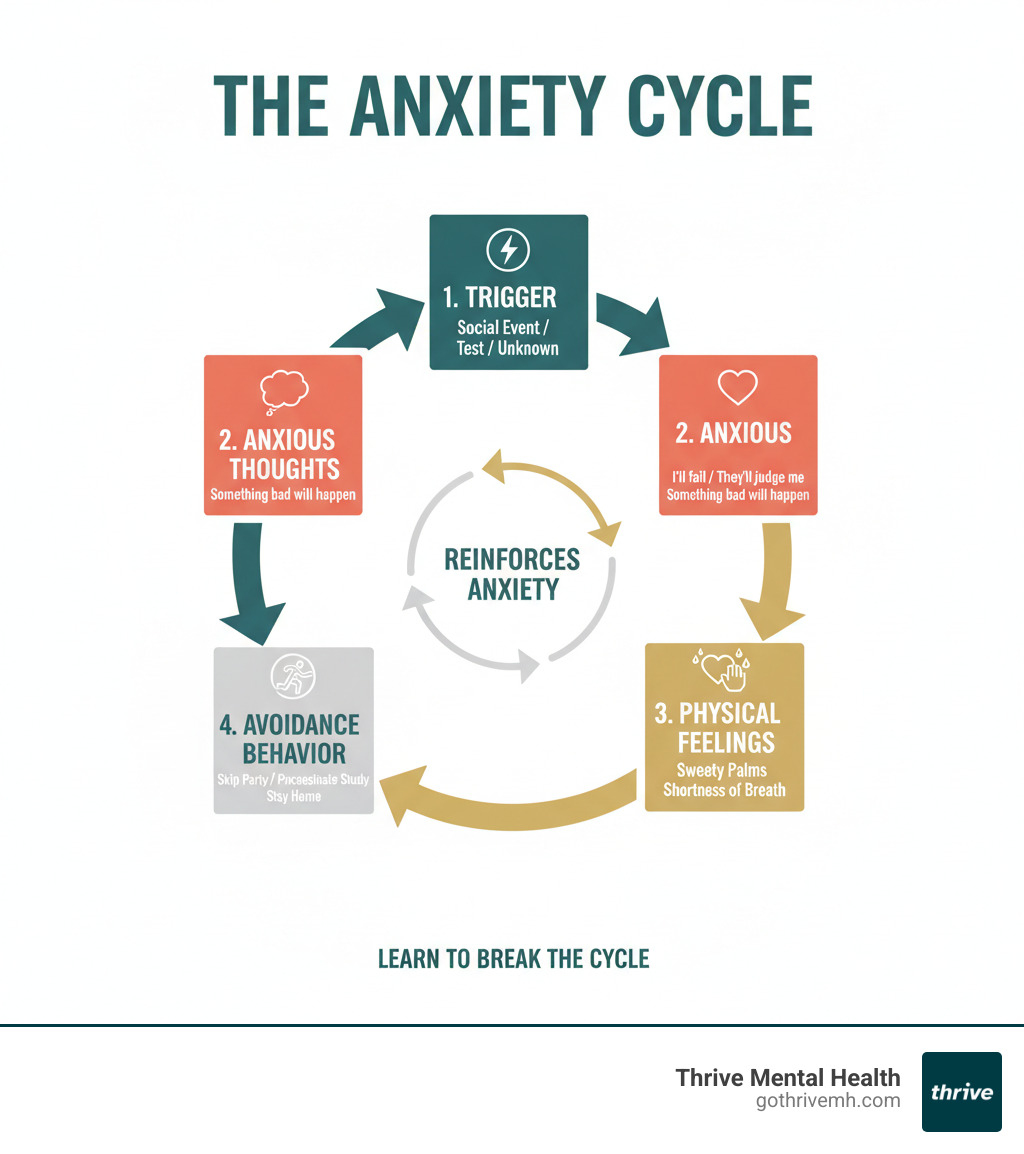
The problem with an anxiety disorder is that this alarm system becomes faulty. It gets stuck in the “on” position, screaming “DANGER!” when you’re just sitting in class, scrolling through social media, or trying to fall asleep. Understanding what’s happening in your body and mind is the foundation of effective anxiety management for teens. The signs can be broken down into three main categories.
Emotional and Cognitive Signs
- Excessive Worry: This isn’t just stress about an upcoming test. It’s persistent, intrusive worry about a wide range of things, school, social status, family issues, or even hypothetical “what if” scenarios. The worry feels uncontrollable and out of proportion to the actual situation.
- Irritability and Agitation: When your nervous system is constantly on high alert, it’s easy to feel irritable, snappy, or on edge. Small frustrations that others might brush off can feel overwhelming. This is often anxiety manifesting as anger.
- Difficulty Concentrating: Anxiety can make your mind feel like a web browser with too many tabs open. Your thoughts might race, making it impossible to focus on homework or a conversation. Alternatively, you might experience “brain fog” or go blank during a test, even if you knew the material.
- Pervasive Feelings of Dread: Many teens with anxiety report a constant, low-level sense of doom, as if something bad is about to happen, even when they can’t name a specific threat.
Physical Signs
The mind and body are deeply connected. Anxious thoughts trigger real physical responses that can be frightening and uncomfortable.
- Racing Heart, Sweating, and Trembling: These are classic fight-or-flight symptoms. Your body is preparing to confront or escape a threat, even if that threat is just a thought.
- Stomach Aches and Headaches: The gut is often called the “second brain.” Anxiety can disrupt your digestive system, leading to nausea, cramps, and stomach pain. Tension headaches are also common due to chronic muscle tightness.
- Muscle Tension: People with anxiety often unconsciously hold tension in their neck, shoulders, and jaw. This constant state of being “braced for impact” leads to soreness and pain.
- Fatigue and Sleep Problems: Anxiety is exhausting. You might feel mentally and physically drained, yet find yourself unable to sleep. Many teens lie awake for hours with a racing mind (“tired but wired”) or wake up frequently during the night.
Behavioral Signs
Anxiety changes how you act. These behaviors are often attempts to cope with or avoid the uncomfortable feelings.
- Avoidance: This is the most common behavioral sign. You might start skipping social events, avoiding presentations, or refusing to go to school. While avoidance provides temporary relief, it reinforces the anxiety in the long run, making the feared situation even scarier next time.
- Seeking Constant Reassurance: You might find yourself repeatedly asking parents or friends if everything is okay, if they’re mad at you, or if you’re going to fail. This is a way to temporarily quiet the anxious thoughts.
- Changes in School Performance: A drop in grades is often a red flag. It’s not because you’ve become less capable, but because anxiety makes it harder to focus, study, and perform under pressure.
- Social Withdrawal: You might pull away from friends and family, spending more time alone because social interaction feels too draining or risky.
These symptoms aren’t just fleeting moments of stress; they stick around and can seriously impact your grades, friendships, and overall quality of life. You can find a more detailed breakdown of these experiences on our Anxiety Symptoms page. Learning to recognize these signs is the first step toward building resilience and developing long-term coping strategies.

Normal Worry vs. an Anxiety Disorder
Let’s be clear: feeling anxious sometimes is a completely normal part of being human. Everyone gets nervous before a big game, a first date, or giving a speech. That’s your body’s alarm system working correctly. The key differences between normal worry and an anxiety disorder are Intensity, Duration, and Impairment.
An anxiety disorder involves fear that is more intense, lasts longer, and gets in the way of your ability to live your life.
| Normal Teen Worries | Signs of an Anxiety Disorder |
|---|---|
| Nervousness before a test that fades once it’s over | Intense fear causing you to skip school or have a panic attack during a test |
| Temporary worry about a social event or party | Persistent social anxiety that leads to avoiding friends and events for weeks |
| Occasional trouble sleeping before a big day | Chronic insomnia or frequently waking up with a racing heart |
| Feeling stressed during a busy week at school | Constant physical symptoms like stomach aches, headaches, or dizziness |
| Bouncing back after a setback or disappointment | Worry that significantly impacts school performance, friendships, or family life |
| Worry is tied to a specific, real-world problem | Free-floating anxiety or constant “what if” thoughts with no clear cause |
If you’re reading this table and the right column feels uncomfortably familiar, it doesn’t mean you’re broken, it means you’re human, and you’re dealing with something that is very real and very treatable. It’s a sign that learning professional strategies for anxiety management for teens could make a profound difference. For many Florida teens, this level of impairment is where more structured support, like a Virtual Intensive Outpatient Program (VIOP), can be life-changing.
FAQs: Anxiety Management for Teens
What calms teen anxiety fast?
- Try box breathing (4-4-4-4), grounding (name 5 things you see), and muscle relaxation. For ongoing relief, skills from CBT and exposure work best. Consider a structured level of care like our IOP for Florida teens if anxiety is disrupting school or sleep.
When should a teen see a therapist for anxiety?
- If anxiety lasts weeks, causes avoidance (school, friends), panic attacks, or sleep problems, it’s time to get help. Start with Virtual Therapy with a Florida-licensed clinician or step up to PHP if needed.
Does insurance cover teen anxiety treatment (IOP/PHP/therapy)?
- Often yes. Coverage for our Florida programs varies by plan. We work with Cigna, Optum/UnitedHealthcare, Aetna, Blue Cross (including Florida Blue), and others. Check benefits in 2 minutes → Verify insurance.
How can parents help without making it worse?
- Validate feelings (“This is hard, and I’m here”), model calm breathing, reduce reassurance cycles, and encourage gradual exposures. For a step-by-step approach, see our guide on building resilience and long-term coping.
Is medication required for teen anxiety?
- Not always. Many teens improve with CBT, exposure, and lifestyle changes. Medication can help in moderate to severe cases, best decided with a clinician.
Ready for support? Thrive offers virtual IOP with evening options. Verify your insurance in 2 minutes (no obligation) → Start benefits check or call 561-203-6085. If you’re in crisis, call/text 988.

This article is for informational purposes only and is not a substitute for individualized clinical advice or insurance verification.