
Buyer’s Guide: Best Mental Health Treatment Centers in Tampa Bay

Mental health treatment centers in Tampa Bay, Florida. #1
Your First Step to a Clearer Tomorrow: Navigating Tampa’s Mental Health Maze
Mental health treatment centers in Tampa Bay, Florida offer a wide range of programs designed to meet different needs—from traditional weekly therapy to intensive daily care. Here’s what you need to know right now:
Quick Overview of Tampa Bay Mental Health Treatment Options:
- Traditional Outpatient Therapy: Weekly sessions for ongoing support
- Intensive Outpatient Programs (IOP): 9-12 hours/week while living at home
- Partial Hospitalization Programs (PHP): 20-30 hours/week, the highest level of outpatient care
- Inpatient/Residential: 24/7 care in a facility for severe crises
- Virtual Telehealth Programs: Flexible online therapy and IOP/PHP options
In Florida, 648,000 adults live with serious mental illness. Tampa Bay has responded with dozens of treatment centers—from crisis stabilization units to specialized programs for trauma, anxiety, depression, and co-occurring disorders. Long-standing organizations and community initiatives like Tampa Bay Thrives work alongside private centers to ensure no one faces these challenges alone.
The challenge? Choosing the right level of care when you’re already overwhelmed. Too little support and you stay stuck. Too much and it disrupts your life unnecessarily. This guide cuts through the confusion and helps you match your needs to the right program.
I’m Nate Raine, CEO of Thrive Mental Health, where we’ve built evidence-based IOP and PHP programs across five states, including Florida. I’ve spent the last decade at the intersection of mental health care, data science, and digital change, helping thousands access the structured support they need while maintaining work, school, and family commitments—and I’ve seen how the right Mental health treatment centers in Tampa Bay, Florida can transform lives when matched correctly to individual needs.
Key terms for Mental health treatment centers in Tampa Bay, Florida.:
What Are Your Options? [Decoding Levels of Care in Tampa Bay]
Navigating the landscape of mental health treatment can feel like learning a new language, especially when you’re already in distress. But understanding the different levels of care is your first, crucial step toward finding the right support. It’s not about finding the “best” center, but the “best fit” for your unique needs. We believe in a stepped-care model, where the intensity of treatment matches the severity of your symptoms and the level of support you require.
Mental health treatment centers in Tampa Bay, Florida offer a spectrum of options, designed to provide care whether you need round-the-clock supervision or just a few hours of therapy a week. Matching your needs to the right program ensures you receive effective care without unnecessary disruption to your life. For adults seeking structured support while maintaining their daily routines, our virtual IOP programs are a flexible and effective solution. You can learn more about our custom approach here: Find Intensive Outpatient Programs for Adults in Tampa Bay, Florida.
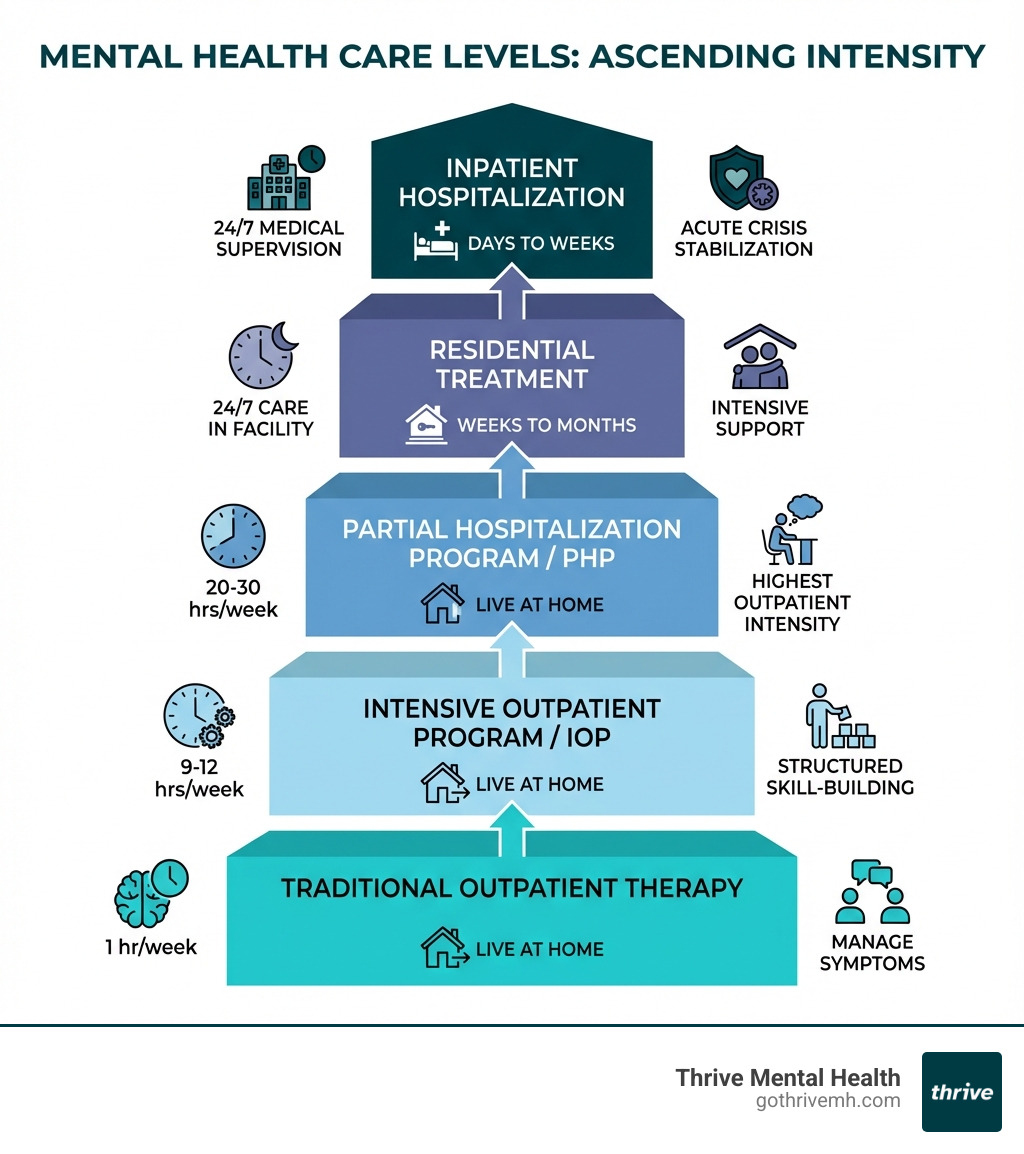
Here’s a breakdown of the common levels of care you’ll find:
- Inpatient Hospitalization: This is the highest level of care, providing 24/7 medical supervision and stabilization for acute mental health crises. It’s typically short-term (days to a week) and focuses on ensuring safety and addressing severe symptoms like suicidal ideation or psychosis. For example, several inpatient centers in the greater Tampa Bay area serve as Baker-Act receiving facilities for emergency evaluations.
- Residential Treatment: Offering 24/7 care in a non-hospital setting, residential programs provide a structured, therapeutic environment for longer periods (weeks to months). They are for individuals who need more support than outpatient programs but don’t require acute medical stabilization.
- Partial Hospitalization Programs (PHP): Often called “day treatment,” PHPs provide intensive, structured therapy for 20-30 hours per week, usually 5 days a week. Clients attend treatment during the day and return home or to a supportive living environment in the evenings. This level is ideal for stepping down from inpatient care or as an alternative to hospitalization for individuals who are medically stable but need significant support.
- Intensive Outpatient Programs (IOP): IOPs offer a flexible yet structured approach, typically involving 9-12 hours of therapy per week, usually 3-5 days a week. Like PHPs, clients live at home, allowing them to integrate treatment with work, school, or family responsibilities. IOPs are suited for those needing more than weekly therapy but less than PHP.
- Traditional Outpatient Therapy: This is the least intensive level, involving weekly or bi-weekly individual, group, or family therapy sessions. It’s suitable for managing stable mental health conditions, maintaining recovery, or addressing specific life stressors.
Inpatient vs. Outpatient: What’s the Real Difference for Your Recovery?
The choice between inpatient and outpatient care hinges on several factors, primarily the severity of your condition, your need for supervision, and your ability to function in daily life. Here’s a clear comparison to help you understand the distinctions:
| Factor | Inpatient Hospitalization | Partial Hospitalization Program (PHP) | Intensive Outpatient Program (IOP) | Traditional Outpatient Therapy |
|---|---|---|---|---|
| Time Commitment | 24/7 care, short-term (days-weeks) | 20-30 hours/week, typically 5 days/week | 9-12 hours/week, typically 3-5 days/week | 1-2 hours/week |
| Living Situation | Live in facility | Live at home or in supportive environment | Live at home | Live at home |
| Intensity of Care | High: medical supervision, crisis stabilization | High: structured daily therapy, close monitoring | Moderate: structured therapy, skill-building | Low: weekly sessions, ongoing support |
| Ideal Candidate | Acute crisis, severe symptoms, safety concerns | Stepping down from inpatient, avoiding hospitalization | More than weekly therapy, less than PHP, maintains routine | Stable condition, maintenance, specific issues |
| Cost Overview | Highest (24/7 medical staff, facility costs) | High (daily structured program, staff) | Moderate (structured program, less hours) | Lowest (per-session basis) |
The Rise of Virtual Care: Is Telehealth in Tampa a Fit for You?
The digital age has revolutionized mental health care, making it more accessible and flexible than ever before. Telehealth, or virtual care, has emerged as a powerful tool, allowing individuals in Tampa Bay to receive high-quality treatment from the comfort and privacy of their homes.

Telehealth in Tampa Bay offers significant benefits, especially for those with busy schedules, transportation barriers, or who simply prefer the convenience of online sessions. Our virtual Intensive Outpatient Programs (IOPs) and Partial Hospitalization Programs (PHPs) are designed to provide the same evidence-based therapies and structured support as in-person programs, but with unparalleled flexibility. This means you can get the intensive care you need without putting your life on hold.
For many, the ability to maintain daily routines—like work, school, or family responsibilities—while attending therapy is a game-changer. Virtual IOPs, like those we offer, allow you to engage in individual counseling, group therapy, and family sessions with expert clinicians, all through a secure online platform. This flexible approach is especially beneficial for young professionals and adults who need structured support but cannot commit to daily in-person attendance.
Insurance coverage for virtual care has expanded significantly, making it a viable option for a growing number of people. Many major providers now cover telehealth services, including virtual IOP and PHP programs. We encourage you to verify your benefits to understand your options. To explore how virtual therapy can fit into your life, visit our guide: Telehealth Counseling Florida.
What Conditions Are Treated & Which Therapies Actually Work?
Mental health treatment centers in Tampa Bay, Florida address a broad spectrum of conditions, recognizing that mental health is as diverse as the individuals experiencing it. Whether you’re struggling with persistent feelings of sadness, overwhelming anxiety, or complex trauma, there’s a program designed to help.
Common conditions treated include:
- Depression: From major depressive disorder to persistent depressive disorder, centers offer comprehensive treatment plans, often combining therapy and medication management.
- Anxiety Disorders: Generalized anxiety disorder, social anxiety, panic disorder, and specific phobias are frequently addressed with custom therapeutic approaches.
- PTSD and Trauma: Specialized programs help individuals process traumatic experiences and develop coping mechanisms to manage symptoms like flashbacks, nightmares, and hypervigilance.
- Bipolar Disorder: Treatment focuses on mood stabilization, symptom management, and developing strategies to live a fulfilling life with the condition.
- Co-occurring Disorders: Many individuals experience both a mental health condition and a substance use disorder. Integrated treatment addresses both issues simultaneously for more effective and lasting recovery.
- Substance Use Disorder: Centers provide detox, residential rehabilitation, and outpatient treatment for various addictions, often alongside mental health support. Many facilities provide behavioral health services to thousands of individuals annually in Hillsborough and surrounding counties, including substance abuse treatment.
At Thrive Mental Health, we incorporate evidence-based therapies into our programs, ensuring you receive the most effective treatment available. Our approach to Mental Health Counseling Tampa is rooted in modalities proven to drive real, measurable results.
Beyond Talk Therapy: Modalities That Drive Real Results
While traditional talk therapy forms the foundation of many treatment plans, modern Mental health treatment centers in Tampa Bay, Florida employ a diverse toolkit of therapeutic modalities. These approaches are often used in combination to address the multifaceted nature of mental health challenges.
Here are some of the most effective and commonly used therapies:
- Cognitive Behavioral Therapy (CBT): This widely used therapy helps individuals identify and change negative thought patterns and behaviors that contribute to their mental health struggles. By restructuring thoughts, CBT empowers clients to develop healthier coping mechanisms.
- Dialectical Behavior Therapy (DBT): Originally developed for Borderline Personality Disorder, DBT is highly effective for anyone struggling with intense emotions, impulsivity, and relationship difficulties. It teaches skills in mindfulness, distress tolerance, emotional regulation, and interpersonal effectiveness.
- Eye Movement Desensitization and Reprocessing (EMDR): A powerful therapy for trauma and PTSD, EMDR helps individuals process distressing memories and reduce their emotional impact.
- Experiential Therapy: These therapies involve engaging in activities like art, music, or outdoor adventures to explore emotions, build self-awareness, and develop new coping skills in a non-traditional setting.
- Group Therapy: Offers a supportive environment where individuals can share experiences, gain insights from peers, and practice new social skills. It fosters a sense of community and reduces feelings of isolation.
- Individual Counseling: One-on-one sessions with a therapist provide a private space for in-depth exploration of personal issues, development of coping strategies, and personalized support.
- Psychiatric Services and Medication Management: For many conditions, medication can be a crucial component of treatment. Psychiatrists provide evaluations, prescribe medication, and monitor its effectiveness, working in conjunction with therapists to ensure comprehensive care.
Finding Specialized Mental Health Treatment Centers in Tampa Bay, Florida
Finding the right mental health treatment isn’t a one-size-fits-all scenario. Many Mental health treatment centers in Tampa Bay, Florida offer specialized programs custom to specific populations or unique needs. This focused approach ensures care is not only effective but also deeply understanding of your individual context.

Tampa Bay itself presents a unique and suitable environment for healing. With its breathtaking coastline, serene natural settings, and a vibrant, supportive community, it offers a backdrop that can foster comfort and ease during recovery. Organizations like Tampa Bay Thrives are dedicated to mobilizing the community to strengthen behavioral health outcomes, focusing on improving early intervention, access, and awareness. They’ve even launched the “Let’s Talk” support line, providing free, confidential mental health support 24/7. You can learn more about their mission here: Tampa Bay Thrives.
How to Choose Among Mental health treatment centers in Tampa Bay, Florida
When selecting from the many Mental health treatment centers in Tampa Bay, Florida, consider what specialized care might best serve you or your loved one:
- Age-Specific Programs:
- Children and Adolescents: Many centers and county resources, like Hillsborough County Children’s Services, provide custom programs, including outpatient, in-home counseling, and even residential options for youth aged 6-18. Hillsborough County Public Schools also prioritizes student mental health with dedicated teams and resources.
- Young Adults: Programs for this age group often focus on life skills, identity development, and transitioning to independence. Our IOP and PHP programs at Thrive Mental Health are particularly well-suited for young professionals and adults seeking to integrate treatment with their evolving lives.
- Adult Mental Health: Comprehensive programs address the unique challenges faced by adults, offering a blend of individual, group, and family therapies. For more information on adult-focused care, check out our guide: Florida Adult Mental Health.
- Seniors: Specialized care for older adults often considers co-occurring medical conditions, cognitive changes, and social support needs. Some local hospitals and centers offer programs specifically for senior adults.
- Population-Specific Care:
- Veterans: Some centers offer programs sensitive to the experiences of veterans, addressing trauma, PTSD, and reintegration challenges.
- LGBTQ+ Affirming Care: Identifying centers that provide culturally competent and affirming care is crucial for the LGBTQ+ community, ensuring a safe and understanding therapeutic environment.
- Women’s Health Programs: There is a growing recognition of the need for gender-specific care, with new facilities being developed to meet this demand. This includes behavioral health hospitals designed specifically for women, signifying a major step forward in specialized treatment.
- First Responders and Professionals: Programs might cater to the unique stressors and confidentiality needs of these groups.
The Practical Guide: Costs, Insurance, and Vetting Your Options
Understanding the financial aspects of mental health treatment is a significant concern for many. While the idea of seeking help can be daunting, we want to assure you that there are various avenues to make treatment accessible and affordable.
Costs associated with mental health treatment in Tampa Bay can vary widely based on the level of care. Traditional outpatient therapy might range from $100-$250 per session. Intensive Outpatient Programs (IOP) and Partial Hospitalization Programs (PHP) are more intensive, potentially costing several hundred dollars per day, while inpatient care is the most expensive due to 24/7 staffing and facility needs. However, these figures are often significantly reduced or covered by insurance.
Insurance verification is a critical first step. Most Mental health treatment centers in Tampa Bay, Florida work with a range of insurance providers. We strongly recommend verifying your benefits directly with your insurance company or through the treatment center’s admissions team. Many centers, including ours, offer free and confidential insurance verification.
Common insurance providers accepted in Florida and by many centers in Tampa Bay include:
- Florida Blue (BlueCross BlueShield)
- Cigna and Evernorth
- Aetna
- UnitedHealthcare UHC | UBH
- Optum
- Humana
- Carelon Behavioral Health
- TRICARE
- Magellan
- United Medical Resources (UMR)
- And many more.
For those with Medicare, it’s important to confirm coverage specifics. You can find more information on this topic here: Virtual Therapy That Accepts Medicare in Florida.
Beyond insurance, consider other payment options:
- Private Pay: Paying out-of-pocket can offer more flexibility in choice of provider and program, though it requires significant financial resources.
- Sliding Scale Fees: Some non-profit organizations and individual therapists offer fees adjusted based on income, making services more affordable. These options may include a Sliding Fee Discount Program to ensure care is accessible regardless of financial situation.
- VA Community Care Network: Veterans may be able to use their benefits for treatment through this network.
When considering in-network versus out-of-network providers, while in-network options generally result in lower out-of-pocket costs, out-of-network providers might offer specialized care or a better fit for your specific needs. It’s always worth exploring your out-of-network benefits.
What to Expect from Mental health treatment centers in Tampa Bay, Florida
Choosing a mental health treatment center is a significant decision. Knowing what to expect can ease some of the apprehension and help you make an informed choice.
The quality of care at Mental health treatment centers in Tampa Bay, Florida is largely defined by the qualifications and experience of their staff. You should expect to find:
- Licensed Therapists: Including Licensed Mental Health Counselors (LMHC), Licensed Clinical Social Workers (LCSW), and Licensed Marriage and Family Therapists (LMFT) who provide individual, group, and family therapy.
- Psychiatrists and Nurse Practitioners: For psychiatric evaluations, medication management, and medical oversight.
- Clinical Social Workers: Often involved in case management, discharge planning, and connecting clients to community resources.
- Support Staff: Including behavioral health technicians, peer support specialists, and administrative personnel who ensure the smooth operation of programs and provide additional client support. Many centers boast decades of combined experience among their mental health professionals.
Facility accreditation is a key indicator of quality and safety. Look for centers accredited by reputable organizations:
- The Joint Commission (JCAHO): This independent, non-profit organization accredits and certifies nearly 21,000 health care organizations and programs in the United States. Joint Commission certification signifies a commitment to consistent patient care and a culture of excellence. You can learn more about their standards here: The Joint Commission.
- State Licensing: In Florida, facilities are licensed and regulated by the Agency for Health Care Administration (AHCA) and the Florida Department of Children and Families (DCF), ensuring they meet state-mandated standards for care and safety.
A reputable center will prioritize creating a safe and comfortable environment for its clients. This often means a non-institutional setting, amenities that promote well-being, and a focus on client privacy. The initial intake process typically involves a comprehensive diagnostic evaluation to determine the most appropriate level of care. This assessment identifies your strengths and needs, which then inform your individualized treatment plan. This plan is dynamic, adapting as you progress through treatment, ensuring continuous assessment and adjustment to lower levels of care as appropriate.
Need Help Now? [Tampa Bay Crisis Support & Immediate Resources]
If you are in crisis or having suicidal thoughts, call or text 988 to reach the Suicide & Crisis Lifeline. You are not alone.
When mental health challenges escalate, immediate support can be life-saving. Fortunately, Tampa Bay offers robust crisis intervention and immediate resources designed to provide help 24/7. Knowing where to turn in a crisis is crucial, and these services ensure that no one in our community has to face their darkest moments alone.
Beyond immediate crisis hotlines, Tampa Bay also benefits from various community-based programs that offer ongoing support, prevention, and intervention. Organizations like Hillsborough County Public Schools and Hillsborough County Children’s Services integrate mental health support into educational and family services, offering counseling and resources for youth and families. For a broader view of mental health resources across the state, our Ultimate Florida Mental Health Guide provides extensive information.
[LIST] of 24/7 Tampa Bay Crisis Hotlines and Helplines
If you or someone you know needs immediate mental health support, these resources are available around the clock:
- Crisis Center of Tampa Bay: For 50 years, the Crisis Center has been a lifeline for the Tampa Bay community, offering support for sexual assault, domestic violence, substance abuse, suicidal thoughts, and other crises through its 211 Contact Center. Call 211 or visit their website: Crisis Center of Tampa Bay.
- SAMHSA’s National Helpline: This confidential, free, 24-hour-a-day, 365-day-a-year information service provides referrals to local treatment facilities, support groups, and community organizations. Call 1-800-662-HELP (4357) or text your zip code to 435748 (HELP4U). More details can be found here: Substance Abuse and Mental Health Services Administration’s (SAMHSA) National Helpline.
- Let’s Talk Tampa Bay support line: Launched by Tampa Bay Thrives, this line provides free, confidential mental health support through 24/7 access to counselors on the phone. Call 844-YOU-OKAY (968-6529) to speak to someone anytime.
- NAMI Hillsborough: The National Alliance on Mental Illness (NAMI) Hillsborough offers support, education, and advocacy for individuals and families affected by mental illness. While not a crisis line, they provide invaluable resources and connections to local support.
Frequently Asked Questions about Tampa Bay Mental Health Treatment
How do I know if I need an IOP or PHP program?
IOP/PHP is for individuals needing more structure than weekly therapy but who don’t require 24/7 inpatient supervision. It’s ideal if you’re struggling to function at work, school, or home but can live independently. If you find yourself unable to manage daily stressors, experiencing increased symptoms, or traditional outpatient therapy isn’t enough, but you’re not in immediate danger, then a PHP or IOP program could be the right fit. Our programs at Thrive Mental Health are specifically designed for this intermediate level of care, offering comprehensive support while allowing you to maintain your daily life.
How much does mental health treatment cost in Tampa?
Costs vary widely based on the level of care and insurance. Outpatient therapy can be $100-$250/session, while IOP/PHP can be several hundred dollars per day. Inpatient care is the most expensive. Always verify your insurance benefits first. Many centers accept major insurance providers like Florida Blue, Cigna, Aetna, and Optum. Some also offer sliding scale fees or financial assistance programs. The key is to communicate openly with admissions teams about your financial situation and insurance coverage.
Do I need a referral to enter a mental health treatment center in Florida?
Most outpatient centers, including IOP and PHP programs, do not require a formal doctor’s referral. You can typically call for a free screening and insurance verification. However, some insurance plans may require a referral for coverage, especially for higher levels of care like residential or inpatient treatment. It’s always best to check with the specific center and your insurance provider to clarify any referral requirements before starting treatment.