






Online Couples Therapy: Top 5 Benefits
Your Relationship is Falling Apart and Traditional Therapy Costs $300/Session, Here’s How to Fix Both Problems
Online couples therapy is professional relationship counseling conducted through secure video sessions, messaging, or phone calls with licensed therapists. Instead of driving to an office, you and your partner connect with your therapist from wherever you feel most comfortable.
Quick Answer for Online Couples Therapy Options:
- What it is: Virtual relationship counseling with licensed therapists via video, phone, or messaging
- Cost: $70-$135 per session (often covered by insurance like Cigna, Optum, Florida Blue)
- Effectiveness: 97% satisfaction rate, proven as effective as in-person therapy
- Best for: Communication issues, conflict resolution, intimacy problems, life transitions
- How to start: Get matched with a therapist, schedule flexible sessions, join from anywhere
The numbers tell a powerful story: over 97% of couples who try therapy get the help they need. Yet many relationships suffer because traditional therapy feels too complicated or expensive. Whether you’re newlyweds, busy parents, or partners facing serious challenges, online therapy breaks down these barriers. You can attend sessions during lunch breaks, after the kids are in bed, or even from different cities.
As Anna Green, LMHC, LPC, I’ve seen virtual therapy deliver the same quality care as office visits while offering the flexibility modern couples need. Online couples therapy removes the excuses that often prevent couples from getting help when they need it most.
Easy online couples therapy glossary:
Save $230 Per Session and Skip the 45-Minute Drive: Why 97% of Couples Choose Virtual Therapy
The shift to virtual therapy isn’t just about convenience, it’s about removing the barriers that keep relationships from getting the help they deserve.
Cut Your Therapy Costs by 60% Without Sacrificing Quality
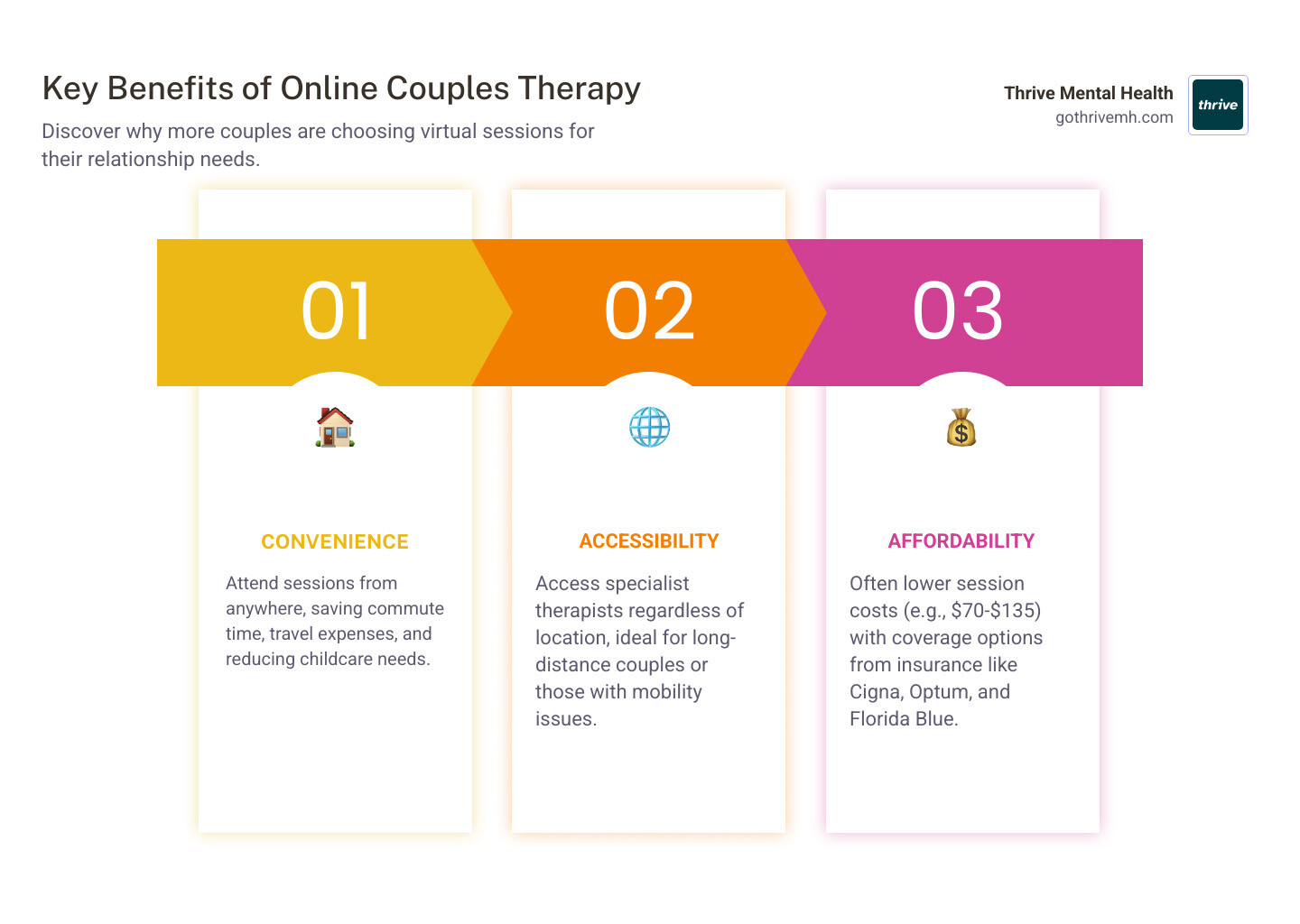
The most immediate benefit is how online couples therapy fits into real life. No more commuting saves time and stress, and flexible scheduling with evening and weekend appointments is a game-changer for couples juggling careers or parenting. For those dealing with work travel or long-distance challenges, you can join from different locations. This eliminates two of the biggest problems: the need for less time off work and reduced childcare needs. For more insights, check out our Online Therapy services.
Get Access to 10X More Specialists in 24 Hours
Online therapy makes professional support possible for couples who previously had no options. You gain access to specialists nationwide, no longer limited by geography. This is crucial if you need someone experienced with LGBTQ+ relationships or infidelity recovery. It also helps overcome mobility issues and is an ideal solution for long-distance couples. Learn more about how we provide Remote Mental Health Support.
Your Insurance Now Covers Virtual Sessions (Save $4,000+ Annually)
Cost is a real concern, and online therapy is often more affordable. Lower average session costs typically range from $70-$135, compared to $100-$300 for traditional therapy. You also have no travel expenses.
Insurance coverage for virtual therapy has expanded dramatically. Many major plans, including coverage in Indiana and California with plans like Cigna, Optum, and Florida Blue, now cover online couples therapy. You can also use HSA/FSA cards. The key is to verify your benefits upfront, a process we make straightforward at Thrive. You can check eligibility in minutes → Start benefits check.
| Feature | Online Couples Therapy | Traditional In-Person Therapy |
|---|---|---|
| Cost | $70-$135/session; potential $0 copay | $100-$300/session without insurance |
| Convenience | From home, no commute, flexible hours | Requires travel, fixed office hours |
| Scheduling | Wide range of appointment times | Limited to office hours |
| Therapist Choice | Access to specialists nationwide | Limited to local providers |
The bottom line is that online couples therapy removes the practical barriers, time, money, and location, that keep couples from getting support.
From Cheating to Money Fights: 9 Relationship Problems Virtual Therapy Fixes in 8-12 Weeks
It’s normal for relationships to face challenges. Online couples therapy can effectively address nearly any issue, from daily communication struggles to major life crises. It’s also a powerful tool for strengthening already-good relationships, think of it as a gym for your partnership.
Stop Fighting in 3 Sessions: Communication Skills That Actually Work
Poor communication is at the root of most relationship problems. A skilled therapist helps you spot and change unhealthy patterns, like shutting down or becoming critical. You’ll learn practical conflict resolution skills to approach disagreements as a team and coping mechanisms to manage high-emotion moments. The most transformative part is often building empathy to understand your partner’s perspective.
Evidence-based approaches like Emotionally Focused Therapy (EFT) and the Gottman Method are incredibly effective in online settings, helping couples create healthier emotional patterns and manage conflict constructively.
The 9 Biggest Relationship Killers (And How to Fix Them Fast)
Beyond communication, online therapy helps you steer life’s toughest situations. Common issues we address include:
- Communication breakdowns and frequent arguing
- Infidelity and rebuilding trust after betrayal
- Lack of intimacy or sexual dissatisfaction
- Financial stress and money disagreements
- Parenting challenges and conflicting styles
- Major life transitions like new parenthood or job loss
- Coping with a partner’s mental health conditions
- Family interference and boundary problems
- Emotional distance and feeling disconnected
Pick Your Fix: 4 Types of Therapy for Different Problems
Different types of therapy cater to specific needs:
- Marriage counseling focuses on the unique challenges of married life.
- Premarital counseling helps engaged couples build a strong foundation.
- Relationship counseling is for any committed partnership looking to strengthen their bond.
- Discernment counseling helps couples who are unsure about their future gain clarity.
No matter your situation, we’re here to support your journey. If you’re in Indiana, learn more on our Couples Therapy Indiana page.
Find Your Perfect Therapist in 48 Hours (Not 3 Months)
Finding the right therapist is the most important step in your online couples therapy journey. The virtual world gives you a wider pool of qualified professionals, so you can find someone who truly gets you and your partner.

The 3 Credentials That Matter (Skip the Rest)
Credentials matter. Start by looking for licensed therapists with specialized training.
- LMFT (Licensed Marriage and Family Therapist): These professionals specialize in relationship dynamics and family systems.
- LCSW (Licensed Clinical Social Worker): They bring a unique perspective on how outside stressors impact your relationship.
- Psychologists (Ph.D. or Psy.D.): They are helpful if individual mental health challenges are affecting the relationship.
Beyond credentials, look for specializations that match your needs and ensure the therapist has significant experience with couples. The American Association of Marriage and Family Therapists (AAMFT) is a great resource for understanding these qualifications.
Red Flags vs. Green Flags: Know in 15 Minutes If They’re Right
A good therapeutic fit is essential. Both you and your partner must feel comfortable and safe. Use the initial consultation to ask questions and see if their style works for you. Discuss your shared goals upfront to create a roadmap for therapy. Understanding the therapist’s approach, such as Emotionally Focused Therapy (EFT) or the Gottman Method, also helps set expectations.
Above all, you should feel comfortable. It’s okay to switch therapists if the first match isn’t right. Also, ensure the platform is HIPAA compliant to protect your privacy and keep sessions confidential. For more guidance, check out our guide on How to Choose the Right Individual Online Counseling Service for Your Needs.
LGBTQ+ Couples: Get Matched with Affirming Therapists Today
For LGBTQ+ couples, finding an affirming therapist who understands and celebrates your relationship is crucial. These professionals have training in the unique stressors and joys of LGBTQ+ relationships, such as dealing with discrimination or navigating family acceptance. Inclusive platforms often have filters to find these specialists. Many insurance plans, including Cigna, Optum, and Florida Blue, cover LGBTQ+ couples therapy, and Thrive can help you verify your benefits.
 Unlocking Emotional Freedom: The Benefits of Somatic TherapyMental Health
97% Success Rate: Why Virtual Therapy Works (Even If You’re Skeptical)
When you’re considering online couples therapy, the big question is: will this actually help? The research and our clinical experience say a resounding yes.

The Numbers Don’t Lie: 97% of Couples See Real Change
The evidence is compelling. Studies show a 97% satisfaction rate among couples who try therapy. What’s more, research shows online couples therapy is as effective as in-person sessions for a wide range of issues.
The benefits are long-lasting. Couples don’t just stay together; they report genuine improved relationship satisfaction. Both partners also often experience significant personal growth, gaining skills that benefit all areas of their lives.
4 Common Problems (And How to Fix Them in Minutes)
While there are potential challenges, each has a practical solution.
- Technology issues: Test your connection beforehand and have a backup plan. Most platforms offer tech support.
- Missing non-verbal cues: Telehealth therapists are skilled at picking up on cues, and you’ll also improve at verbalizing your feelings, a skill that helps your relationship outside of therapy.
- Privacy concerns: Find a quiet, private space and use headphones. Reputable platforms are HIPAA compliant, ensuring your conversations are secure.
- One partner’s resistance: If one partner is hesitant, have an open conversation about their concerns. An initial consultation can often ease worries and show that virtual therapy isn’t as intimidating as it seems.
When to Call 988 Instead (Crisis Warning Signs)
While online couples therapy is effective for most challenges, it is not the right tool for every situation. If you or a loved one is experiencing abuse, please contact the National Domestic Violence Hotline at 1-800-799-7233. Support is available 24/7, and your safety always comes first.
Frequently Asked Questions about Online Couples Therapy
When couples consider taking the leap into virtual relationship counseling, they naturally have questions. We’ve been helping couples steer these decisions for years, and these are the most common concerns that come up during our initial conversations.
Can an online therapist tell you to break up?
This is probably one of the biggest fears couples have when starting therapy, that a therapist will become the judge of their relationship. Here’s the truth: no, a therapist’s role is to provide guidance and tools for you to make your own decisions. They remain completely neutral and support the goals you and your partner set together, whether that’s strengthening your bond or separating amicably.
Think of your therapist as a skilled guide, not a decision-maker. Online therapists, as mental health experts, will never tell clients to break up or get divorced. However, they might suggest a “therapeutic separation”, this isn’t about ending your relationship, but rather giving both partners space to think clearly about what they want and gain fresh perspective on their situation.
The power to decide your relationship’s future always stays in your hands. Your therapist simply helps you both communicate better, understand each other more deeply, and make whatever decision feels right for your unique situation.
Is it better to do couples therapy online or in person?
This question comes up constantly, and the honest answer is that both formats are proven to be effective. The “better” choice really depends on what works for your specific needs and circumstances.
Online couples therapy offers superior convenience and accessibility. You can attend sessions from anywhere at any time, which is a game-changer for busy schedules, parents juggling childcare, or couples dealing with long distances. No more rushing through traffic or scrambling to find parking before your appointment.
In-person therapy might be preferred by couples who value the traditional setting and feel more connected through the physical presence of a therapist. Some people simply feel more comfortable in a formal office environment.
But here’s what the research tells us: studies consistently show that online couples counseling is just as effective as in-person couples counseling. The therapeutic relationship, communication skills, and relationship improvements happen equally well through a screen when you’re working with a qualified therapist.
How long does online couples therapy take to work?
If you’re hoping for a magic timeline, we wish we could give you one. The reality is that the timeline varies dramatically for every couple. Some couples notice meaningful changes in their communication patterns within just a few weeks, while others may need several months to work through deeper, more complex issues.
Success depends on several key factors: the complexity of the issues you’re facing, how clear and realistic your goals are, and most importantly, the commitment of both partners to the process. Think of it like physical therapy, you’ll see faster results if you consistently show up and actively practice what you learn between sessions.
We’ve seen couples make remarkable progress when they’re both genuinely invested in the work. Consistency in attending sessions and actively applying the skills you learn at home are the biggest predictors of how quickly you’ll see improvements in your relationship.
Even if progress feels slow, the tools and insights you gain through online couples therapy often create lasting changes that strengthen your relationship for years to come.
{
  "@context": "https://schema.org",
  "@type": "FAQPage",
  "mainEntity": [
    {
      "@type": "Question",
      "name": "Can an online therapist tell you to break up?",
      "acceptedAnswer": {
        "@type": "Answer",
        "text": "No, a therapist's role is to provide guidance and tools for you to make your own decisions. They remain neutral and support the goals you and your partner set, whether that's improving the relationship or separating amicably. Online therapists, as mental health experts, will never tell clients to break up or get divorced. They may suggest a "therapeutic separation" to give couples space to think about the relationship and gain perspective."
      }
    },
    {
      "@type": "Question",
      "name": "Is it better to do couples therapy online or in person?",
      "acceptedAnswer": {
        "@type": "Answer",
        "text": "Both formats are proven to be effective. The "better" choice depends on your needs. Online therapy offers superior convenience and accessibility, allowing sessions from anywhere at any time, which is ideal for busy schedules or long-distance couples. In-person therapy might be preferred by those who value the traditional setting and the physical presence of a therapist. Research consistently shows that online couples counseling is just as effective as in-person couples counseling."
      }
    },
    {
      "@type": "Question",
      "name": "How long does online couples therapy take to work?",
      "acceptedAnswer": {
        "@type": "Answer",
        "text": "The timeline varies for every couple. Some see progress in a few weeks, while others may need several months. Success depends on the complexity of the issues, your goals, and the commitment of both partners to the process. Consistency in attending sessions and actively applying learned skills between sessions are key factors in how quickly you'll see improvements."
      }
    }
  ]
}
Your Relationship Can Be Saved in 8 Weeks (Start Today for $0)
Your relationship deserves care. As we’ve seen, online couples therapy makes professional support accessible, affordable, and convenient by removing traditional barriers.
With 97% satisfaction rates and effectiveness matching in-person therapy, virtual counseling provides the tools you need for challenges like communication breakdowns, trust issues after infidelity, or navigating parenting disagreements.
Seeking help is an investment in your shared future, not a sign of weakness. The convenience of online couples therapy means you can start this journey without upending your life. Virtual support connects you with specialized therapists who understand your unique situation, removing geographical, scheduling, and financial barriers.
Taking the first step can feel daunting, but thousands of couples have used online therapy to rebuild trust and deepen their connection. Your story can also be one of growth, healing, and renewed partnership.
For more insights into how virtual mental health support can fit into your life, explore our comprehensive guide: Virtual Therapy: A Convenient and Effective Approach to Counseling. If you prefer structured programs, Thrive also offers flexible virtual IOP with evening options.
Ready for support? Thrive offers virtual IOP with evening options. Verify your insurance in 2 minutes (no obligation) → Start benefits check or call 561-203-6085. If you’re in crisis, call/text 988.

This article is for informational purposes only and is not a substitute for individualized clinical advice or insurance verification.