
Sketch Therapy – Drawing Ideas for Better Mental Health
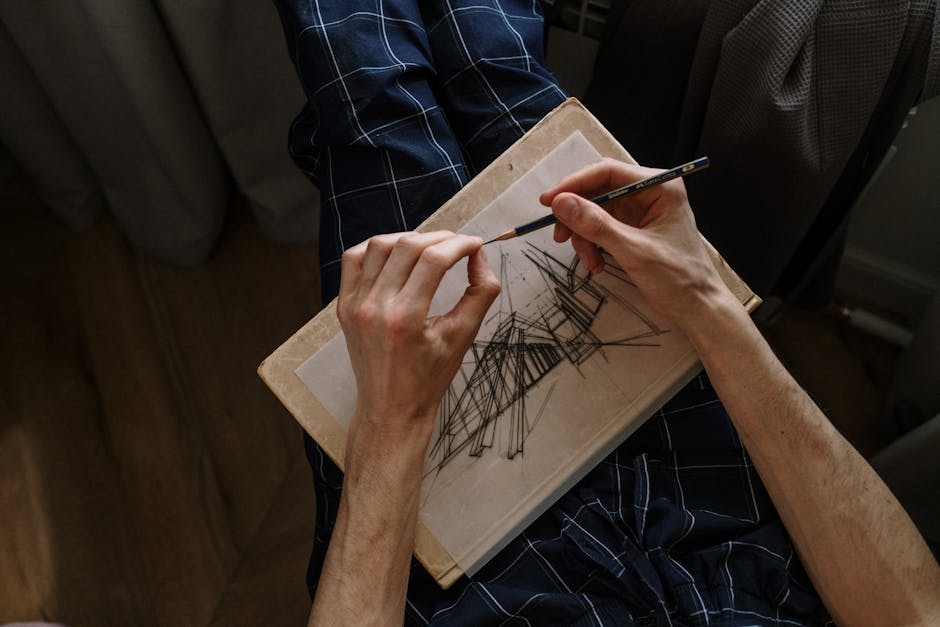
Why Drawing Works When Words Don’t
Drawing ideas for mental health are more than creative hobbies—they’re proven tools for processing emotions, reducing stress, and finding calm when your mind feels overwhelmed.
Quick Answer: 10 Drawing Ideas for Mental Health
- Mindful Scribbling & Doodling – Release perfectionism and ground yourself
- Draw Your Feelings as a Monster or Shape – Externalize anxiety, fear, or sadness
- Mandala Drawing – Create repetitive patterns for instant calm
- Continuous Line Drawing – Accept imperfection and stay present
- Create a Gratitude Tree – Visualize what’s going right in your life
- Sketch Your “Calm Place” – Build a mental escape you can return to
- Draw Your Strengths as Characters – Boost self-esteem through visualization
- Zentangle® Patterns – Practice structured, meditative art
- Map Your Personal Journey – Reflect on growth and resilience
- Start a Visual Art Journal – Track emotions and patterns over time
You don’t need artistic talent. You don’t need expensive supplies. Research shows that just 45 minutes of creative expression can significantly lower cortisol levels and reduce anxiety symptoms. The act of moving your hand across paper—making lines, shapes, or colors—engages your brain in ways that interrupt rumination and create distance from stress.
When you’re feeling trapped by racing thoughts or emotions you can’t name, drawing offers a way out. It’s a form of non-verbal communication with yourself, a way to make the invisible visible. And unlike traditional talk therapy, it doesn’t require you to find the “right words.”
This isn’t about creating gallery-worthy art. It’s about process over product—giving yourself permission to express, explore, and release what’s weighing on you, one line at a time.
I’m Nate Raine, CEO of Thrive Mental Health, and I’ve spent over a decade working at the intersection of mental health innovation and evidence-based care. At Thrive, we integrate drawing ideas for mental health into our intensive outpatient programs in Florida because we’ve seen how creative expression accelerates healing when combined with clinical support.
Quick drawing ideas for mental health terms:
- art and mental health
- exploring mental health through art
- Are there any programs that use art and mental health techniques for young professionals?
Why Drawing Is a Powerful Tool for Your Mind [Not Just a Hobby]
We often think of drawing as a skill reserved for “artists” or a pastime for children. But the truth is, engaging in creative expression, especially drawing, is a powerful tool for mental well-being that anyone can harness. It’s not about the masterpiece you create, but the profound process that unfolds.
How Does Drawing Impact Our Mental Health?
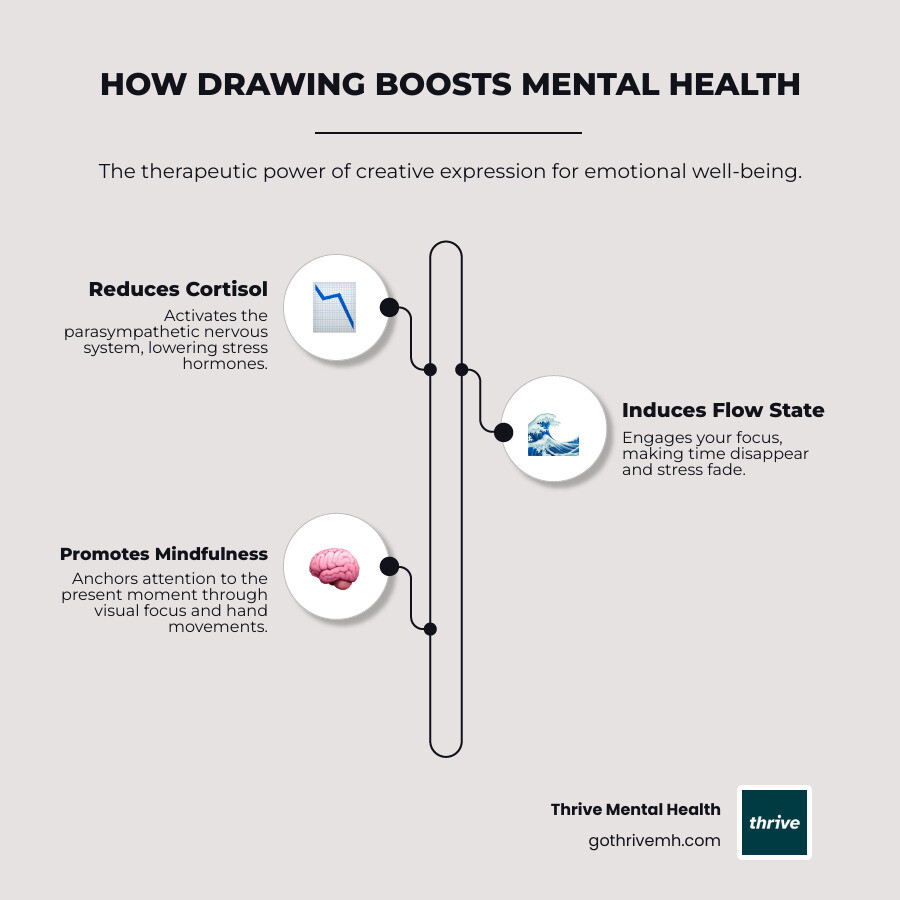
Research has consistently shown the significant mental health benefits of drawing and art-making. For instance, a small 2016 study found that just 45 minutes of creative expression—whether sculpting clay, drawing with markers, or making a collage—could lead to participants feeling more relaxed and experiencing lower levels of the stress hormone cortisol. This isn’t a fluke; creative expression naturally calms the body, reduces blood pressure, and even releases chemicals in the brain that decrease illness-related depression.
Here’s how drawing helps us thrive:
- Stress Relief and Anxiety Reduction: When we draw, our focus shifts from the endless mental chatter to the gentle scratch of pencil on paper. This focused attention can interrupt rumination—the repetitive looping thoughts that often increase distress during anxiety. A 2007 study found that participants who spent 20 minutes drawing reported greater improvement in negative mood symptoms than those who simply looked at art. Drawing offers a controlled activity to channel anxious energy, providing a sense of agency when other aspects of life feel out of control.
- Inducing a “Flow State”: One of the most remarkable benefits of drawing is its ability to induce a “flow state.” This is a deeply immersive experience where we become so absorbed in what we’re doing that time seems to stand still, and outside distractions fade away. This state is not only calming but also incredibly beneficial for our mental health, promoting creativity and emotional wellness by relieving stress. It’s a quiet space in a busy world, allowing us to find peace.
- Boosting Mindfulness: Drawing inherently encourages mindfulness. By focusing on the lines, colors, and textures, we’re anchored in the present moment, tuning into our thoughts, emotions, and bodily sensations. This heightened awareness helps us detach from anxious thoughts and cultivate self-acceptance.
- Processing Difficult Emotions and Trauma: Sometimes, words simply fail us. Whether it’s grief, trauma, or complex emotions, traditional verbal therapy can feel inadequate. Art, however, uses metaphor, symbolism, and dynamic thoughts to represent the human experience in ways language cannot. Making emotions tangible through drawing gives us perspective. When we draw our anxiety as a tangled knot, it suddenly becomes something we can see, understand, and even change. This externalization makes daunting feelings more manageable, separating them from our core identity.
- Non-Verbal Expression and Self-Reflection: Drawing provides an alternative avenue for communication. It allows us to express feelings and experiences that are difficult to articulate verbally. The resulting artwork then offers a chance for self-reflection, providing insight into the source of our thoughts and feelings—an essential step in resolving triggers and fostering self-findy.
At Thrive Mental Health, our Florida-based team understands that true healing often requires diverse approaches. That’s why we champion the power of creative arts. To learn more about how art transforms mental health, explore our article on The Healing Power of Art: How Art Therapy Can Transform Mental Health.
10 Simple Drawing Ideas for Mental Health You Can Start Today
You don’t need a studio, a degree, or even much time to engage in these powerful drawing ideas for mental health. We’ve curated a list of simple, actionable exercises that require minimal supplies (often just a pen and paper!) and no prior artistic experience. These are quick exercises designed to help you tap into your inner calm and process your emotions, right here, right now.
1. Mindful Scribbling & Doodling
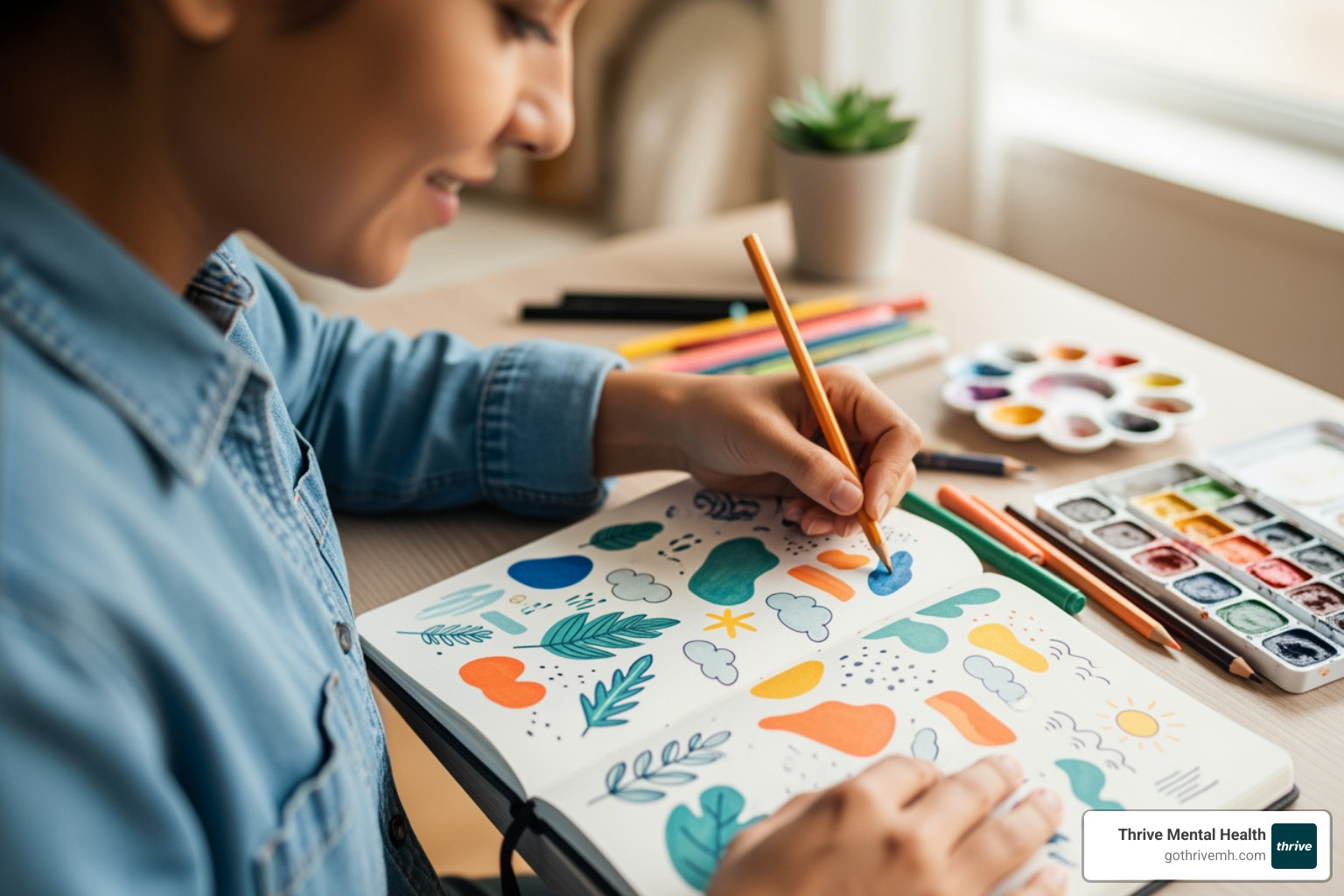
Sometimes, the blank page is the most intimidating part. Mindful scribbling and doodling remove all pressure. There are no rules, no right or wrong. Just let your hand move freely across the page. This technique is fantastic for:
- Releasing Perfectionism: Since a scribble cannot be “good” or “bad,” it frees you from self-judgment.
- Interrupting Rumination: The simple, repetitive motion can help focus your mind on the present moment, diverting attention from worries.
- Grounding Technique: It’s incredibly soothing and calming, especially when feeling overwhelmed. Try using a smaller piece of paper to provide a sense of containment.
Just grab a pen and paper and let loose. You can even fill in and embellish your scribble with colors and patterns afterward if you like!
2. Draw Your Feelings as a Monster or Shape
When emotions feel too big or abstract to name, give them a tangible form. This is a powerful therapy technique called “externalizing.”
- Gaining Perspective: Imagine drawing your anxiety as a tangled knot, your fear as a shadowy figure, or your sadness as a heavy cloud.
- Making Feelings Tangible: By giving your emotions a visual representation, you make them less daunting and more manageable. They become something outside of you that you can observe, understand, and even change.
This exercise helps us separate ourselves from our emotions, providing a crucial distance that allows for processing and healing. Learn more about this approach by exploring A therapy technique called “externalizing”.
3. Mandala Drawing for Instant Calm

Mandala drawing is a therapeutic tool rooted in ancient traditions. A mandala is a 2D, circular drawing that can contain patterns, sketches, or additional drawings inside. There are no hard rules, making it accessible to everyone.
- Meditative State: The repetitive nature of creating or coloring mandalas is known to induce a meditative state, promoting deep relaxation.
- Reducing Negative Feelings: Research from the National Library of Medicine indicates that mandala drawing has the power to reduce negative emotions in its creators. Some studies even suggest coloring mandalas might be more beneficial for anxiety relief than free drawing or coloring other designs.
- Focus: It draws your attention inward, away from external stressors.
You can find pre-printed mandala coloring pages or draw your own by starting with a central point and expanding outward with symmetric patterns. Find more about this calming activity in our Art Therapy Coloring Pages resource.
4. Continuous Line Drawing
This technique is exactly what it sounds like: drawing an object or scene without lifting your pen from the paper.
- Embracing Imperfection: The beauty of continuous line drawing lies in its inherent imperfection. You’re not aiming for realism, but for the flow and observation.
- Improving Focus: It forces intense concentration on the subject, pulling you into the present moment.
- Staying in the Moment: When you can’t lift your pen, you’re committed to the line you’re making, fostering a unique form of mindfulness. Try blind contour drawing—looking only at your subject and not at your paper—for an even deeper present-moment experience.
This exercise is a wonderful way to practice non-judgmental observation and accept whatever emerges on the page.
5. Create a Gratitude Tree
Shift your focus to the positive aspects of your life with a gratitude tree. Scientific research tells us that acknowledging good things in our daily life can reduce negative feelings and improve our overall well-being.
- Positive Psychology in Action: Draw a simple tree trunk and branches. For each thing you’re grateful for—a friend, a sunny day, a warm cup of coffee—draw a leaf and write it on or within the leaf.
- Visualizing Good Things: This visual reminder helps build resilience and shifts your perspective, making you more aware of the abundance in your life.
Display your gratitude tree where you can see it daily to reinforce positive feelings.
6. Sketch Your “Calm Place”
Where do you feel most at peace? Is it a serene beach at sunset, a cozy corner with a good book, a quiet forest path, or a vibrant garden?
- Visualization Exercise: Close your eyes and vividly imagine this place. What do you hear, smell, feel, and see?
- Creating a Mental Escape: Now, draw it. Don’t worry about artistic accuracy. Focus on capturing the essence of that calm, safe space.
- Reducing Stress: Having a visual representation of your calm place can be a powerful tool to reduce stress in the moment, offering a mental refuge you can return to whenever you feel overwhelmed.
Hang your “calm place” artwork somewhere visible, like your bedroom or office, as a visual anchor for peace.
7. Draw Your Strengths as Characters
Boost your self-esteem and recognize your inner resources by personifying your strengths. This is a wonderfully uplifting way to combat feelings of inadequacy.
- Building Self-Esteem: Think about your positive qualities: resilience, kindness, courage, creativity, empathy, humor.
- Personifying Strengths: Now, imagine what these strengths might look like as characters. Is resilience a superhero? Is kindness a gentle, nurturing figure? Draw them!
- Positive Self-Perception: This exercise helps you visualize and connect with your internal power, reminding you of the incredible qualities you possess.
This practice can be particularly impactful for those struggling with self-worth. For more ideas on how art can build confidence, check out our guide on Art Therapy for Low Self Esteem.
8. Zentangle® Patterns
Zentangle is a meditative art form that creates intricate designs from simple, repetitive strokes. It’s often described as “yoga for the brain.”
- Structured, Repetitive Patterns: You follow specific patterns, or “tangles,” to fill small sections of paper, called “tiles.”
- “No Mistakes” Philosophy: A core principle of Zentangle is that there are no mistakes, only opportunities for new patterns. This completely removes the pressure of perfection.
- Increasing Focus: The structured repetition helps quiet the mind, promoting intense focus and a profound sense of calm.
Zentangle is excellent for anxiety, pain management, and simply unwinding after a long day. It’s a powerful tool to take your doodles to the next level, fostering meditation and self-image.
9. Map Your Personal Journey
Our lives are a series of paths, challenges, and triumphs. Mapping your personal journey through drawing can be a deeply reflective and empowering exercise.
- Self-Reflection: Draw your life as a road, a river, a mountain range, or a winding path. Mark significant moments—both joyful and challenging—along the way.
- Visualizing Personal Growth: This allows you to see how far you’ve come, acknowledge the problems you’ve overcome, and recognize your resilience.
- Planning Future Steps: You can also map out your future journey, identifying potential problems and strategies for negotiation.
Seeing your journey visually can provide immense perspective and boost your sense of achievement.
10. Start a Visual Art Journal
An art journal is a personal, private space where you combine images and words to explore your emotions and experiences. Mindful Art Studio calls it “one of the most forgiving ways to make art” because everything is safely contained within your personal book.
- Combining Images and Words: Use drawings, paintings, collages, and writing to document your thoughts, feelings, and daily life.
- Tracking Emotional Patterns: Over time, your art journal becomes a visual diary, helping you identify recurring emotional patterns and gain insights into your inner world.
- A Private Space for Expression: There are no rules, no judgment, and no need for artistic skill. It’s purely for you.
Your art journal can be a powerful tool for self-findy and emotional processing. For more tips on getting started, read our guide on Easy Mental Health Drawing.
How to Start Drawing (and Silence Your Inner Critic)
We often hear, “I’m not good at art,” and that fear of the blank page can be paralyzing. But when it comes to drawing ideas for mental health, that inner critic is simply scared. We believe everyone can draw, even if not like DaVinci. The goal here isn’t to produce a masterpiece, but to engage in the process.
Why your ‘bad’ drawing is perfect for mental health
The beautiful truth is, being “bad” at drawing is actually perfect for mental health drawing. Why? Because it automatically releases you from the pressure of perfection. We’re not aiming for gallery-worthy art; we’re aiming for honest expression.
- Letting Go of Perfectionism: When you know your drawing doesn’t have to be “good,” you’re free to experiment, make “mistakes,” and simply enjoy the act of creating.
- Expression Over Aesthetics: Your wobbly lines, abstract shapes, or unconventional colors are honest reflections of your inner world. The therapeutic value comes from the act of creating, not from the aesthetic outcome.
- Honesty in Wobbly Lines: Accept the imperfections! They are part of your unique expression and journey. Focus on how the process makes you feel, not on what the final product looks like.
Easy drawing ideas for mental health when you feel stuck
Even with the best intentions, we can sometimes feel stuck. Here are some simple prompts to get your creativity flowing:
- Look to Nature: Draw a plant, a leaf, a rock, or even just the view outside your window. Observing natural forms can be incredibly grounding.
- Draw to Music: Put on a piece of music that resonates with your current mood or the mood you want to achieve. Let the sounds guide your hand, translating rhythm, melody, and emotion into lines, shapes, and colors.
- Use a Single Word as a Prompt: Pick a word—like “calm,” “hope,” “release,” “tangle,” or “flow”—and draw whatever comes to mind. Don’t overthink it.
- Abstract Shapes and Colors: Simply play with shapes and colors without any specific object in mind. How do different colors feel? What kind of lines express a particular emotion?
The goal is always to engage in the process, not to create a specific outcome.
Creating a simple, consistent drawing routine
Integrating drawing ideas for mental health into your daily life doesn’t require hours. Consistency is far more important than duration.
- 5-10 Minutes Daily: Even a few minutes a day can make a significant difference. It’s better to draw for five minutes every day than for an hour once a week.
- Integrating into Self-Care: Think of it as a micro-meditation or a creative break. You can “habit stack” it—for example, draw while your morning tea brews, or before bed to unwind.
- Finding a Dedicated, Quiet Corner: Create a simple, welcoming space. All you need is a pen or pencil and computer paper to start. If you’re looking for new supplies, a Micron pen or a small Moleskine journal can be inspiring, but whatever you have on hand works perfectly.
For more practical tips on incorporating art into your self-care, explore our Simple Art Mental Health Tips.
Frequently Asked Questions about Drawing for Mental Health
What’s the difference between professional art therapy and just drawing on my own?
While drawing on your own can be incredibly therapeutic and a powerful self-care tool for stress management and self-expression, it’s distinct from professional art therapy. Art therapy involves a licensed, master’s-level art therapist who guides you through structured art-making processes to explore emotions, cope with trauma, and achieve specific therapeutic goals. It combines the techniques of traditional therapy with creative expression, especially when words fail. When you draw on your own, you’re engaging in expressive art; when a trained professional at a facility like our Florida clinics facilitates that process with therapeutic intent, it’s art therapy.
What if I truly believe I can’t draw?
We hear this often, and our answer is always the same: artistic skill is irrelevant for therapeutic drawing. The goal isn’t to create a masterpiece, but to express yourself. Techniques like mindful scribbling, abstract color work, or drawing simple shapes require zero technical skill and offer the same profound mental health benefits. Your “bad” drawing is perfect because it liberates you from the pressure of perfection, allowing for authentic emotional release.
Can I use an iPad or digital tools for mental health drawing?
Absolutely! Digital tools offer fantastic benefits for mental health drawing, including accessibility, the convenience of an “undo” button for experimentation, and no messy cleanup. Many find digital platforms liberating, allowing them to explore without fear of “wasting” materials. Whether you prefer the tactile experience of traditional pen and paper or the versatility of digital drawing on an iPad or tablet, the key is the creative process itself. Experiment with both to see what feels most comfortable and effective for you.
When Drawing Isn’t Enough: Getting Professional Support
While engaging in drawing ideas for mental health can be incredibly beneficial for self-care and managing daily stress, it’s important to recognize its limitations. If your drawings consistently veer towards darkness or provoke troubling thoughts, if you’re struggling to process deep trauma or grief, or if self-guided artistic expression isn’t providing the relief you need, it might be a signal to seek professional support.
At Thrive Mental Health, we offer structured, evidence-based Intensive Outpatient (IOP) and Partial Hospitalization (PHP) programs designed for adults and young professionals in Florida who need more than once-a-week therapy but less than inpatient care. We integrate creative modalities like Art Therapy and Counseling into our comprehensive treatment plans, recognizing the powerful role art plays in healing. Our programs combine clinical expertise, flexible scheduling, and measurable results, delivered virtually and in person across Florida. We work with most major insurance providers, including Cigna, Optum, and Florida Blue, to make treatment accessible.
We believe that every individual deserves a path to holistic well-being, and sometimes, that path requires expert guidance. Our team is here to help you steer complex emotions, develop healthy coping mechanisms, and build a foundation for lasting mental health.
Ready for support? Thrive offers virtual and hybrid IOP/PHP programs with evening options. Verify your insurance in 2 minutes (no obligation) → Start benefits check or call 561-203-6085. If you’re in crisis, call/text 988.