
Buyer’s Guide: Flexible IOP Programs in Phoenix for Workers

Phoenix IOP for Working Pros: Your Essential 2025 Guide
Don’t Choose Between Your Job and Your Mental Health
Where can I find an IOP program in Phoenix that I can attend while still working? You have several options designed for professionals.
Quick Answer: Florida IOPs for Working Professionals
- Virtual IOP Programs – Attend from anywhere in Florida with flexible evening schedules (6-9 PM typical).
- In-Person Florida IOPs with Evening Hours – Many local centers now offer evening tracks to accommodate work schedules.
- Search Methods:
- Use your insurance provider’s directory.
- Search “evening IOP Florida” or “IOP for working professionals Florida.”
- Call admissions teams directly to confirm schedule flexibility.
- Find Joint Commission-accredited programs via SAMHSA’s treatment locator.
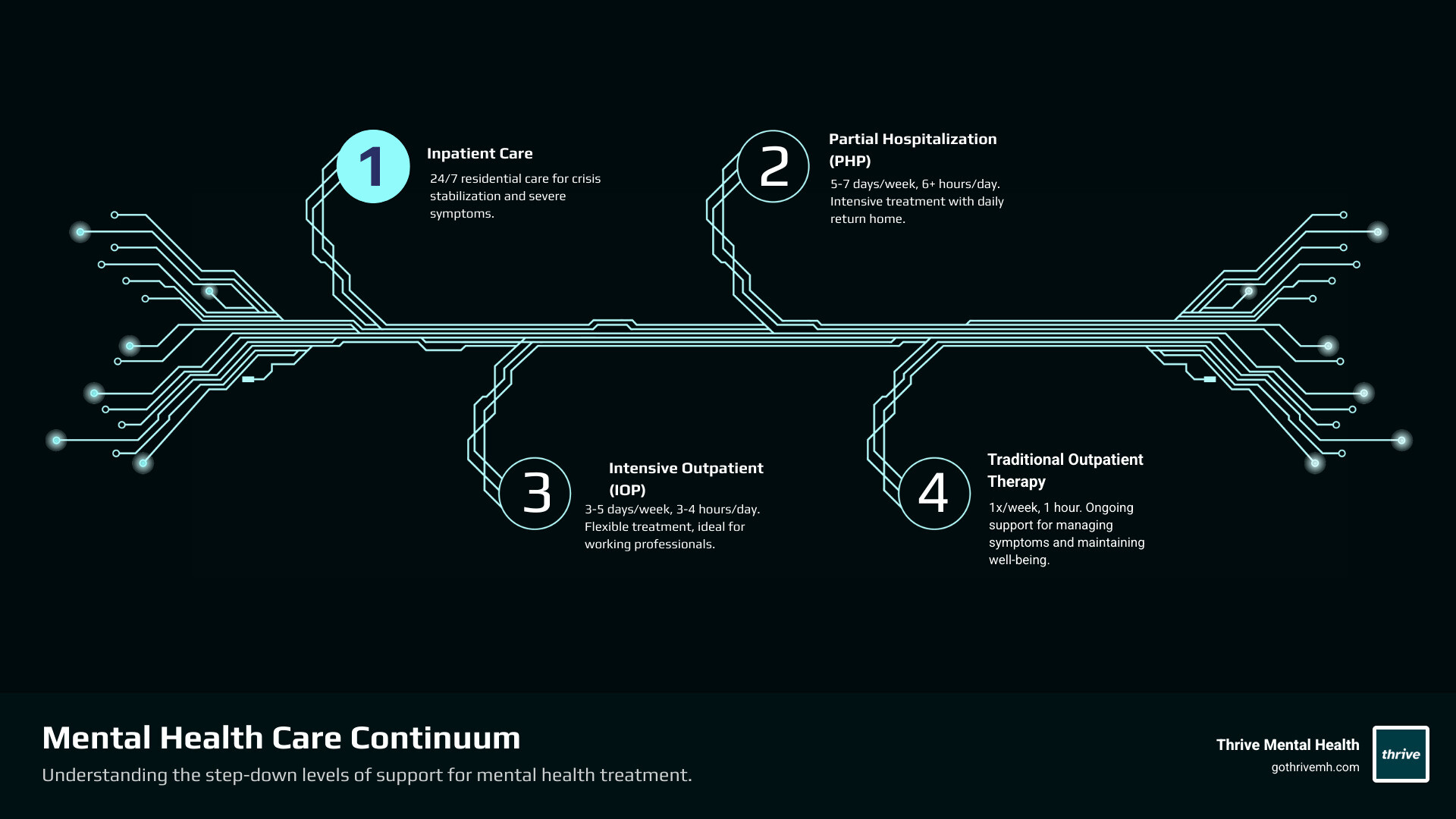
Typical Schedule: 3-5 days per week for 3-4 hours per session, often in the evening.
You’re struggling, but you can’t just stop working—bills don’t pause for mental health crises. Here’s the truth: You don’t have to choose between your paycheck and your recovery.
Intensive Outpatient Programs (IOPs) exist for professionals who need more than weekly therapy but can’t disappear into inpatient treatment. Research shows IOPs deliver comparable outcomes to residential care while allowing you to keep your job and practice new coping skills in your actual life.
In Florida, treatment centers have adapted to this need. Many now offer evening sessions (e.g., 6-9 PM), virtual options, and flexible schedules built for working adults. An IOP provides 9-15 hours of structured treatment per week—including evidence-based therapies like CBT and DBT, group support, and individual counseling—all scheduled around your work commitments. These programs can transform lives without derailing careers.
The Real Benefits of Attending an IOP While Working
Many people think intensive mental health treatment is all or nothing: check into a facility and pause your life, or tough it out with weekly therapy. An Intensive Outpatient Program (IOP) offers a powerful middle ground, especially for working professionals.
The biggest advantage is flexibility. You attend structured therapy sessions—often in the evenings (e.g., 6-9 PM) or on weekends—and then go home. You maintain your daily routines while getting the intensive support you need.
Financially, IOPs are more cost-effective than inpatient care. You aren’t paying for 24/7 accommodations, and most importantly, you maintain your income. This removes the stress of lost wages on top of treatment costs.
The real magic of an IOP is immediate application. You learn a new coping skill for managing workplace stress on Tuesday and use it in a real meeting on Wednesday. This immediate feedback loop makes skills stick in a way residential treatment can’t match. You’re building confidence by handling actual challenges as they arise.
With an IOP, you also maintain career momentum and confidentiality. There are no project gaps or awkward questions about a long absence. Evening or virtual sessions allow you to get care without disclosing it at work.
Finally, group therapy provides powerful community support. You connect with peers who understand your struggles, which combats the isolation that often accompanies mental health challenges. Research confirms that IOPs deliver comparable outcomes to inpatient care for many, but with far greater flexibility and lower costs.
Want to dive deeper? Check out our guides on The Benefits of an Intensive Outpatient Program and What’s an IOP?.
Where can I find an IOP program in Phoenix that I can attend while still working?

Finding the right program when you’re already overwhelmed can feel like another burden. The good news is that Florida providers have adapted, and many now offer evening, weekend, and virtual options designed for working adults. Here’s how to find them.
How to Find Florida IOPs with Evening & Weekend Hours
Knowing how to search makes all the difference.
- Use Specific Search Terms: Instead of a generic “Florida IOP,” search for “evening IOP Florida,” “IOP for working professionals Florida,” or “virtual IOP Florida” to filter for programs that fit your schedule.
- Check Your Insurance Directory: Your provider’s website (Cigna, Aetna, etc.) will list in-network IOPs, which can save you thousands. Our team at Thrive can also verify your benefits for you.
- Call Admissions Directly: This is the most important step. Ask them: “Do you offer evening sessions? What are the exact hours? Can you accommodate a full-time work schedule?” A good program will give you clear answers, not just vague promises of “flexibility.”
- Explore Virtual IOPs: Virtual programs offer maximum flexibility, allowing you to attend from anywhere in Florida without a commute. This is often the best solution for busy professionals. Learn more about this option at Virtual IOP Programs Near Me.
For more guidance, see our guide on Finding Quality IOP Programs Near Me: A Guide.
Key Factors to Consider When Choosing Your Program
Beyond scheduling, ensure the program is high-quality.
- Accreditation: Look for Joint Commission accreditation. It’s the gold standard in behavioral health, signifying the program meets strict national standards for safety and quality.
- Staff Credentials: Are the therapists licensed? Do they have experience with your specific concerns (e.g., trauma, anxiety)? Does the program have psychiatrists for medication management?
- Therapies Offered: A quality IOP uses evidence-based approaches like Cognitive Behavioral Therapy (CBT) and Dialectical Behavior Therapy (DBT). If a program can’t explain its therapeutic model, that’s a red flag.
- Insurance Acceptance: Verify the program is in-network with your specific plan to avoid surprise bills. Thanks to Mental Health Parity laws, insurance must cover mental health care, but provider networks vary.
For more on selecting a quality facility, read The Benefits of Choosing Professional Treatment Centers.
In-Person vs. Virtual IOPs: What’s Best for a Florida Worker?
Both formats are effective, but they suit different needs.
In-Person IOPs
- Pros: Offer face-to-face connection and a dedicated therapeutic environment separate from home or work. This can be crucial if your home environment is chaotic or triggering.
- Cons: Require a commute, which can be significant in Florida’s metro areas. Schedules are often less flexible due to the constraints of a physical location.
Virtual IOPs
- Pros: Offer maximum flexibility and convenience. No commute means you save time and can log in from anywhere with privacy. You also get access to specialized therapists across Florida, not just those near you.
- Cons: Require self-discipline, a reliable internet connection, and a private space. Some people find it harder to connect emotionally over a screen, though this often fades.
For most Florida workers with demanding jobs and long commutes, the convenience of a Virtual IOP Program is a clear winner.
What to Expect: Your IOP Journey from Start to Finish
Starting an IOP can feel intimidating, but it’s a structured process with a clear roadmap. The journey typically lasts 8-12 weeks and unfolds in four phases: assessment, treatment planning, active therapy, and aftercare planning. For working professionals in Florida, sessions are often scheduled in the evenings (e.g., 6-9 PM) to fit around your job.

The Intake Process: Your First Step to Getting Help
Your journey begins with a confidential assessment with a licensed clinician. This conversation helps determine if an IOP is the right level of care for you. The admissions team will also handle insurance verification, contacting your provider (Cigna, Aetna, etc.) to clarify your coverage and any out-of-pocket costs. Once confirmed, you’ll collaborate with your clinical team on a personalized treatment plan with specific, measurable goals custom to your needs and schedule.
For more details, check out What to Expect in an Intensive Outpatient Program.
Common Therapies That Get Results in Florida IOPs
Effective IOPs use evidence-based therapies backed by research.
- Cognitive Behavioral Therapy (CBT): Helps you identify, challenge, and reframe the negative thought patterns that fuel anxiety and depression.
- Dialectical Behavior Therapy (DBT): Teaches practical skills in four key areas: mindfulness, distress tolerance, emotion regulation, and interpersonal effectiveness.
- EMDR (Eye Movement Desensitization and Reprocessing): A powerful therapy that helps your brain process traumatic memories that may be driving current symptoms.
- Group and Individual Therapy: Group therapy provides a supportive community of peers, while individual counseling allows for deeper, one-on-one work on personal issues. The combination is a core strength of the IOP model.
To learn more about these approaches, explore Navigating Intensive Outpatient Therapy: The Roles of CBT and DBT Explained.
Program Duration, Cost, and Insurance Coverage in Florida
Most Florida IOPs run 8 to 12 weeks, with sessions 3 to 5 days per week for 3-4 hours at a time. Evening tracks are common for working professionals.
Cost and insurance are major considerations. The Mental Health Parity and Addiction Equity Act requires insurers to cover mental health care similarly to physical health. Choosing an in-network provider for your plan (e.g., Cigna, Aetna, UnitedHealthcare) will significantly reduce your out-of-pocket costs. A good program will verify your benefits upfront so there are no financial surprises.
For more information about navigating insurance, visit Virtual IOP Insurance.
Is an IOP the Right Level of Care for You?
If you’re wondering whether your situation is “serious enough” for an IOP, you likely need more support than you’re currently getting. An IOP is designed for those who need more than weekly therapy but don’t require 24/7 supervision. You’re still functioning—going to work, managing daily life—but you’re struggling, and your symptoms are getting in the way.
An IOP is often appropriate if you’re stepping down from a higher level of care like a PHP, if your symptoms are worsening despite weekly therapy, or if you need a structured environment to stay accountable. A free clinical assessment, which most reputable IOPs offer, can help you determine the right fit.
Signs You Need More Than Just Weekly Therapy
It’s time to consider an IOP if you notice these signs:
- Daily tasks feel overwhelming: Simple things like getting out of bed, showering, or answering emails have become monumental efforts.
- Unhealthy coping mechanisms are increasing: You’re relying more on alcohol, isolation, or other behaviors to numb your feelings.
- You feel profoundly isolated: Even with friends or a therapist, you feel alone in your struggle. The peer community in an IOP can directly address this.
- Your job performance is suffering: You’re missing deadlines, calling in sick, or struggling to concentrate. These are often symptoms of a treatable condition, not character flaws.
The Impact of Mental Disorders on Daily Life is significant, but intensive treatment can help you regain control.
Finding Specialized IOPs for Co-Occurring Disorders & Trauma
Many people struggle with more than one issue at a time. Over 11 million Americans have co-occurring disorders—a mental health condition and a substance use disorder simultaneously, according to SAMHSA.
Effective treatment must be integrated. Treating depression but not the alcohol use that fuels it (or vice-versa) is a recipe for relapse. Look for a dual diagnosis program that addresses both conditions at once.
Furthermore, trauma-informed care is essential, as trauma often underlies both mental health and substance use issues. A trauma-informed IOP uses therapies like EMDR to help you heal from root causes, not just manage symptoms. Look for a program that treats the whole person.
Frequently Asked Questions about IOPs in Florida
How many hours a week is a typical IOP in Florida?
A typical IOP in Florida involves 9-15 hours of treatment per week. This is usually structured as 3-hour sessions, 3 to 5 days a week. To accommodate working professionals, many programs offer evening sessions, commonly from 6 PM to 9 PM, allowing you to maintain your job.
Can I get fired for attending an IOP for mental health?
No. Federal laws like the Americans with Disabilities Act (ADA) and the Family and Medical Leave Act (FMLA) protect you from discrimination and provide for job-protected leave for serious health conditions, including mental health treatment. Many professionals attend evening or virtual IOPs without needing to disclose their treatment to their employer at all.
Do I need a doctor’s referral to join an IOP in Florida?
No, a referral is not always necessary. Most IOPs, including Thrive Mental Health, allow you to call directly for a confidential, no-cost assessment. A clinical team will determine if an IOP is the right fit for you. This allows you to seek help immediately without waiting for an appointment with another provider.
Your Path to Recovery Starts Now
Here’s what you’ve learned: You don’t have to choose. You can maintain your career, keep earning your income, and still get the intensive mental health support you need. The question “Where can I find an IOP program in Phoenix?” has a clear answer—and it’s more accessible than you might think.
Flexible IOPs, especially virtual mental health programs, have revolutionized recovery for working professionals. You’re no longer forced to pause your life for weeks or months. Instead, you can attend therapy sessions from your home in Miami, Orlando, Tampa, or anywhere in Florida, often during evening hours that work around your professional commitments.
Thrive Mental Health offers Joint Commission-accredited virtual IOP and PHP programs specifically designed for busy professionals like you. Our programs combine clinical excellence with the flexibility you need—evening sessions, expert therapists, and evidence-based treatments like CBT and DBT that deliver real results. We accept major insurance plans including Cigna, Aetna, and UnitedHealthcare, and we serve adults across Florida who need more than weekly therapy but can’t step away from their careers.
The truth is, your mental health isn’t separate from your professional life—it’s the foundation of it. When you’re struggling with anxiety, depression, trauma, or substance use, it affects every aspect of your work. An IOP gives you the tools to manage these challenges in real-time, applying new coping skills during your actual workday, not just in a therapist’s office.
You’ve already taken the hardest step by reading this article. The next one is easier: reach out. Our admissions team can verify your insurance benefits in just two minutes, with no obligation. You’ll know exactly what your coverage looks like and what your investment in recovery will be.
Recovery doesn’t require sacrificing everything you’ve built. It requires taking one intentional step toward getting the support you deserve.
Where can I find an IOP program in Phoenix
Ready for support? Thrive offers virtual and hybrid IOP/PHP programs with evening options. Verify your insurance in 2 minutes (no obligation) → Start benefits check or call 561-203-6085. If you’re in crisis, call/text 988.