




Why Art Therapy Activities for Anxiety Are More Effective Than You Think
Art therapy activities for anxiety offer a powerful, science-backed way to manage stress, especially when words fail. With anxiety disorders affecting 40 million adults in the U.S., many seek alternatives to traditional talk therapy for relief.
Quick Answer: Top Art Therapy Activities for Anxiety Relief
- Mandala drawing, Creates meditative focus and reduces racing thoughts
- Clay sculpting, Provides grounding through tactile engagement
- Emotion painting, Allows non-verbal expression of complex feelings
- Worry monster creation, Externalizes anxious thoughts into manageable forms
- Mindful doodling, Interrupts rumination patterns through gentle focus
- Gratitude collages, Shifts attention toward positive experiences
- Safe place drawings, Builds internal resources for emotional regulation
Creative expression bypasses the analytical mind that often fuels anxiety. Focusing on the creative process, mixing colors, shaping clay, shifts your nervous system into a calmer state. The healing is in the process, not the final product, so no artistic talent is needed.
Research shows creative activities lower cortisol (the stress hormone) and activate brain areas for emotional regulation. This “cognitive disruption” gives your anxious thoughts a new job, allowing your creative mind to take over.
I’m Nate Raine, CEO of Thrive Mental Health, where I’ve witnessed how art therapy activities for anxiety can complement traditional treatment and provide accessible tools for daily stress management. Through my work in behavioral health, I’ve seen countless individuals find that creative expression offers a gentle yet powerful pathway to emotional healing.

Art therapy activities for anxiety terms to learn:
- art therapy activities for adolescents
- art therapy activities for adults
- art therapy for elementary students
What is Art Therapy and How Does It Help Anxiety?
Art therapy for anxiety is more than just a relaxing hobby; it’s a specialized field combining creative expression with professional psychological support. It uses the creative process, painting, drawing, sculpting, as the primary tool for healing. The American Art Therapy Association defines it as an integrative mental health profession that uses art-making and psychological theory within a therapeutic relationship.
It’s powerful for anxiety because it bypasses the overthinking mind. By focusing your hands on a creative task, you disrupt worry loops and calm your nervous system. Anxiety can be hard to verbalize, and art therapy offers a non-verbal path to express complex emotions, using creativity as the language instead of words.
To help you understand how art therapy differs from other approaches, here’s a clear comparison:
| Feature | Art Therapy | General Art-Making | Traditional Psychotherapy |
|---|---|---|---|
| Focus | Process, self-expression, emotional healing | Product, enjoyment, skill building | Verbal communication, insight |
| Goal | Therapeutic healing and emotional regulation | Recreation and personal expression | Mental health improvement through talk |
| Guidance | Trained, certified art therapist | Self-directed or informal instruction | Licensed therapist using verbal techniques |
| Skills Required | None, expression matters more than technique | Often benefits from some artistic ability | Strong verbal and introspective skills |
| Medium | Various art forms chosen therapeutically | Any preferred art form | Primarily spoken conversation |
| Interpretation | Therapist helps uncover meaning and insights | Personal reflection, often informal | Therapist interprets verbal communication |
The Science Behind Creative Healing
The effectiveness of art therapy activities for anxiety is backed by solid science. Art-making reduces cortisol (the stress hormone) and releases dopamine (the feel-good chemical), creating a sense of reward and lifting your mood. A study on art therapy’s impact confirmed significant stress reduction in participants.
Art-making also rewires your brain’s response to stress. It activates the prefrontal cortex (for emotional regulation), calms the amygdala (the brain’s alarm system), and engages the hippocampus and insula, improving your ability to process experiences and recognize bodily sensations. This process reunites your mind and body in a calming, purposeful activity.
Art Therapy vs. Making Art at Home
It’s important to distinguish between casual art-making at home and professional art therapy, as both have a role in managing anxiety.
Making art at home is excellent for self-care. The key is to create without judgment, focusing on the process, not the product. You can find many therapeutic art activities to try on your own.
Professional art therapy goes deeper. A trained therapist uses specific materials and techniques to address mental health goals in a safe, structured environment. The therapeutic relationship is key; the therapist helps you interpret your art, connect it to life patterns, and safely steer difficult emotions that may arise.
If you’re dealing with persistent anxiety, especially if it’s rooted in trauma, working with a qualified art therapist can provide deeper support. For those in Florida seeking comprehensive support, you might want to learn more about our anxiety disorder programs that incorporate various creative modalities.
The Benefits of Using Art for Anxiety Relief
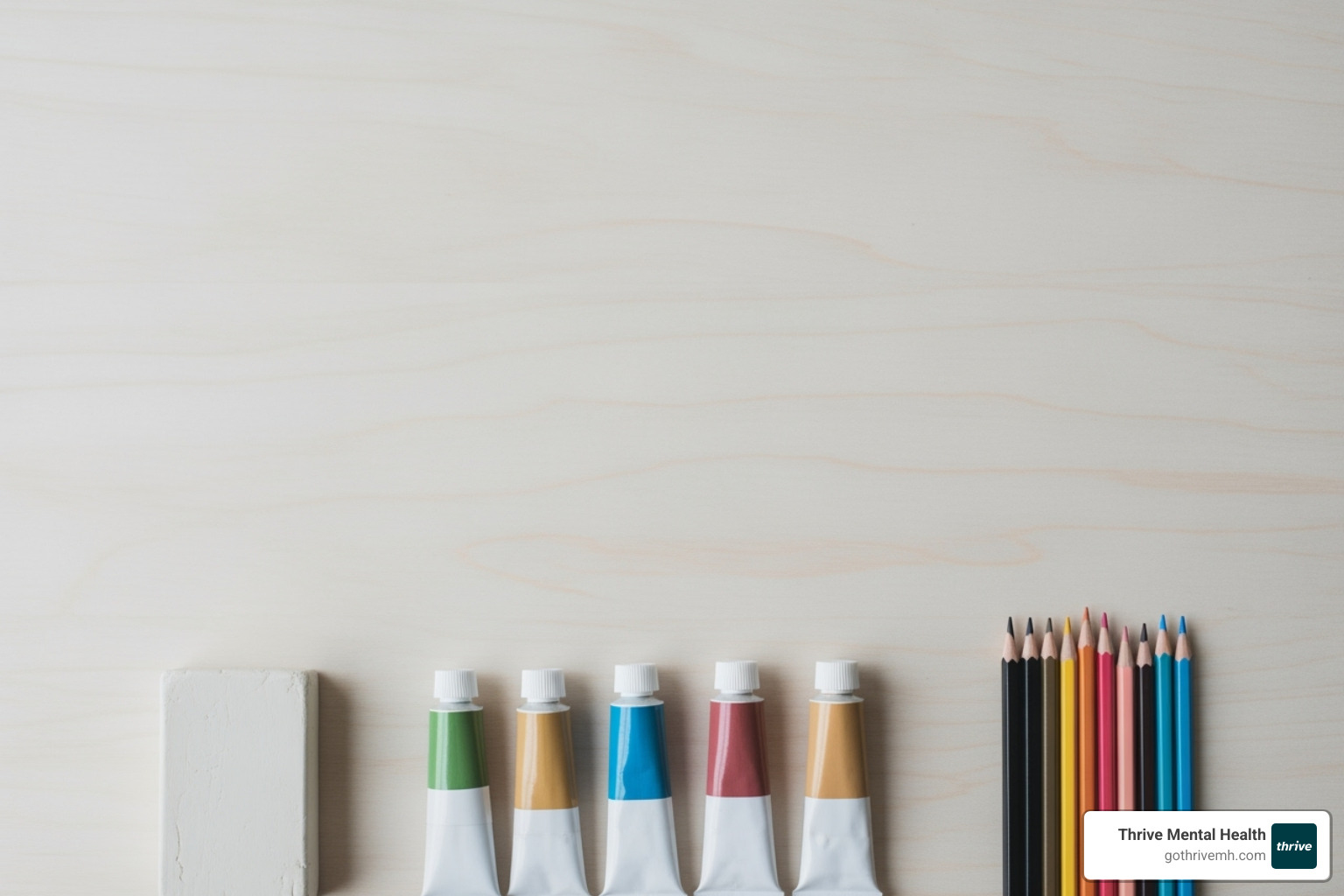
Engaging in art therapy activities for anxiety triggers a cascade of positive psychological and physical changes. It acts as a gentle reset for your nervous system, helping your mind process difficult emotions in new ways.
When anxiety feels like a storm of racing thoughts, art offers a non-verbal language. It allows you to translate internal chaos into something tangible and manageable without needing to find the perfect words.
Psychological and Emotional Benefits
Creative expression bypasses the analytical mind that fuels anxiety’s “what if” scenarios. This process facilitates emotional expression, allowing you to release tension and process feelings like grief or anger non-verbally. It naturally fosters mindfulness, anchoring you in the present moment and breaking the cycle of anxious rumination.
Through creating, you can achieve greater self-awareness, as your choices in color and form reveal your inner world. Finally, completing a project, no matter how simple, provides a tangible boost to self-esteem, countering the negative self-talk that often accompanies anxiety.
Physical and Neurological Benefits
Your body also benefits. The rhythmic motions of art-making, drawing, painting, sculpting, naturally calm your nervous system, leading to deeper breathing and relaxed muscles. This can lower your heart rate, blood pressure, and muscle tension, resetting your body’s stress response.
The focus required induces a meditative state, changing brain wave patterns to those associated with relaxation and healing. Art-making strengthens the prefrontal cortex (for emotional regulation) while calming the amygdala (the brain’s fear center), providing a powerful, natural antidote to anxiety.
For more information on how creative activities can support your overall mental well-being, explore more info about mental health art activities.
15 Simple Art Therapy Activities for Anxiety You Can Try Today

Ready to try some art therapy activities for anxiety? You don’t need special skills or supplies, just a pen and paper will do. The goal is to focus on the creative process, not the final product, giving your anxious mind a much-needed break. Each activity offers a unique path to calm.
Mindfulness & Relaxation Activities
These activities work like a reset button for your nervous system, helping you find your center.
Mandala drawing or coloring: These circular patterns are ancient meditation tools. Research suggests coloring mandalas reduces anxiety by inducing a meditative state. Find free templates online or draw your own, starting from a central point and expanding with repetitive patterns.
Mindful doodling and Zentangles: Turn simple scribbling into a powerful tool. Let your pen wander without a plan, focusing on the emerging lines. Zentangles use structured, repetitive patterns to achieve a similar state of gentle focus, breaking the worry cycle.
Painting to music: Combine two therapeutic experiences. Choose music that reflects your mood, and let the sound guide your brushstrokes. Express the music’s feeling through color and movement, not by creating a recognizable image.
Nature-inspired art: Bring the calm of the outdoors inside. Collect leaves, twigs, or stones and arrange them into a collage, use them for paint prints, or create pleasing patterns. This activity connects you to nature’s peace.
Drawing your breath: Make your breath visible. As you inhale, draw a line. As you exhale, continue the line, letting its quality reflect your breath’s pace and depth. This simple exercise helps regulate your nervous system.
Emotional Expression & Processing art therapy activities for anxiety
These activities create safe spaces to explore and release what you’re feeling inside.

Drawing or painting your emotions: Instead of describing feelings, express them with color, shape, and texture. Is your anxiety a jagged red line or a heavy gray cloud? Putting emotions on paper can provide immediate relief and perspective.
Clay sculpting: The tactile nature of clay is incredibly grounding and can release physical tension. Shape the clay to represent your worries, create something joyful, or simply enjoy the meditative process of working with your hands.
Creating a “worry monster”: Give your anxiety a physical form by drawing or sculpting it. This externalizes the fear, making it feel more manageable. You can then talk to it, cage it, or transform it, reclaiming your power.
Visual journaling: Combine art with writing. On one page, draw an image representing your day or a feeling. On the facing page, write about the image and any insights that arose. This dual approach deepens self-understanding.
 Virtual IOP in Charlotte, North CarolinaIntensive Outpatient Program
Making a “postcard you’ll never send”: Safely express difficult emotions. Create a postcard for a person or situation causing you stress. Use one side for an image and the other to write everything you feel. The act of expression brings relief without consequences.
For more techniques, check out more info about art therapy techniques you can try at home.
Self-Findy & Positive Focus art therapy activities for anxiety
These activities help you build internal resources and cultivate hope for long-term anxiety management.
Creating a “safe place” drawing: Visualize a place where you feel completely calm and secure, whether real or imaginary. Draw it, focusing on details that evoke peace. Use this image as a mental anchor when anxiety strikes.
Collaging a vision board: Shift your focus from worries to aspirations. Cut out images and words from magazines that represent your hopes and the feelings you want to cultivate. This visual board serves as a positive reminder.
Creating a gratitude tree or banner: Rewire your brain for positivity. Draw a tree and on each leaf, write or draw something you’re grateful for. Regularly adding to it helps you notice the good in your daily life.
Making a “self-care” box: Create a tangible toolkit for anxious moments. Decorate a box and fill it with comforting items: a favorite tea, a smooth stone, a happy photo, a calming scent. Use it to ground yourself when you feel overwhelmed.
Drawing yourself as a warrior: Reclaim your personal power. Draw yourself as a warrior, defining strength on your own terms, perhaps armed with creativity or resilience. This empowering visualization reminds you of your inner strength.
Getting Started: Professional Help vs. Self-Practice
Starting with art therapy activities for anxiety is a great step. You can begin on your own or with a professional. The key is understanding which approach is best for you right now.
When to Seek a Professional Art Therapist
While home practice is beneficial, professional art therapy is essential in certain situations:
- Persistent anxiety: If anxiety disrupts your daily life, work, or relationships, a professional can provide a structured, evidence-based plan.
- Trauma history: Art can surface difficult memories. A trained therapist creates a safe space to process these emotions without re-traumatization.
- Co-occurring disorders: An art therapist can integrate creative work into a comprehensive treatment plan for conditions like depression or PTSD.
- Confusing or intense emotions: A professional can help you interpret what your art reveals about your inner world.
- Lack of progress: If self-guided activities aren’t providing relief, a therapist can help adjust the approach.
Here in Florida, many qualified art therapists offer expert care. At Thrive Mental Health, we integrate art therapy into our virtual intensive outpatient program (IOP). Our anxiety disorder programs are custom to meet you exactly where you are.
How to Practice Art Therapy at Home
Creating your own practice at home can be incredibly rewarding. Here’s how to start:
- Create a dedicated space: A quiet corner where you feel comfortable and free from distractions is all you need.
- Gather basic supplies: Start with what you have, paper, pencils, or crayons. The act of creating is more important than the materials.
- Focus on the process, not the product: The healing is in the making. Let go of perfectionism.
- Practice no judgment: Silence your inner critic. Every mark you make is a valid expression.
- Set a routine: Even 15-20 minutes a few times a week can make a difference. Find a time that works for you.
- Combine with mindfulness: Before you start, take a few deep breaths. Pay attention to the physical sensations of creating.
Frequently asked questions
Does art therapy work for anxiety?
It can help. a 2024 review of 50 randomized trials in JAMA Network Open linked visual art therapy to modest gains on measures like anxiety and depression. Many of those studies were small or low quality.
Many people find art calming in the moment. It fits well alongside talk therapy.
How long should an art activity for anxiety take?
Ten to twenty minutes is enough to start. In one study of 39 adults, 45 minutes of art making lowered the stress hormone cortisol. Past art experience made no difference.
Short, regular sessions are easier to keep up than long ones.
Can art therapy replace treatment for an anxiety disorder?
Not on its own. If anxiety gets in the way of work, sleep or relationships, talk to a mental health professional. CBT is commonly used for anxiety, and it can be done by video.
Art activities can support that work between sessions.
When should I get more help for anxiety?
Get help if anxiety lasts for weeks, keeps getting worse, or stops you from doing everyday things. Thrive’s virtual IOP gives adults several hours of therapy each week, and you can start as soon as you are ready.
If you are in crisis, call or text 988 right now.
Conclusion
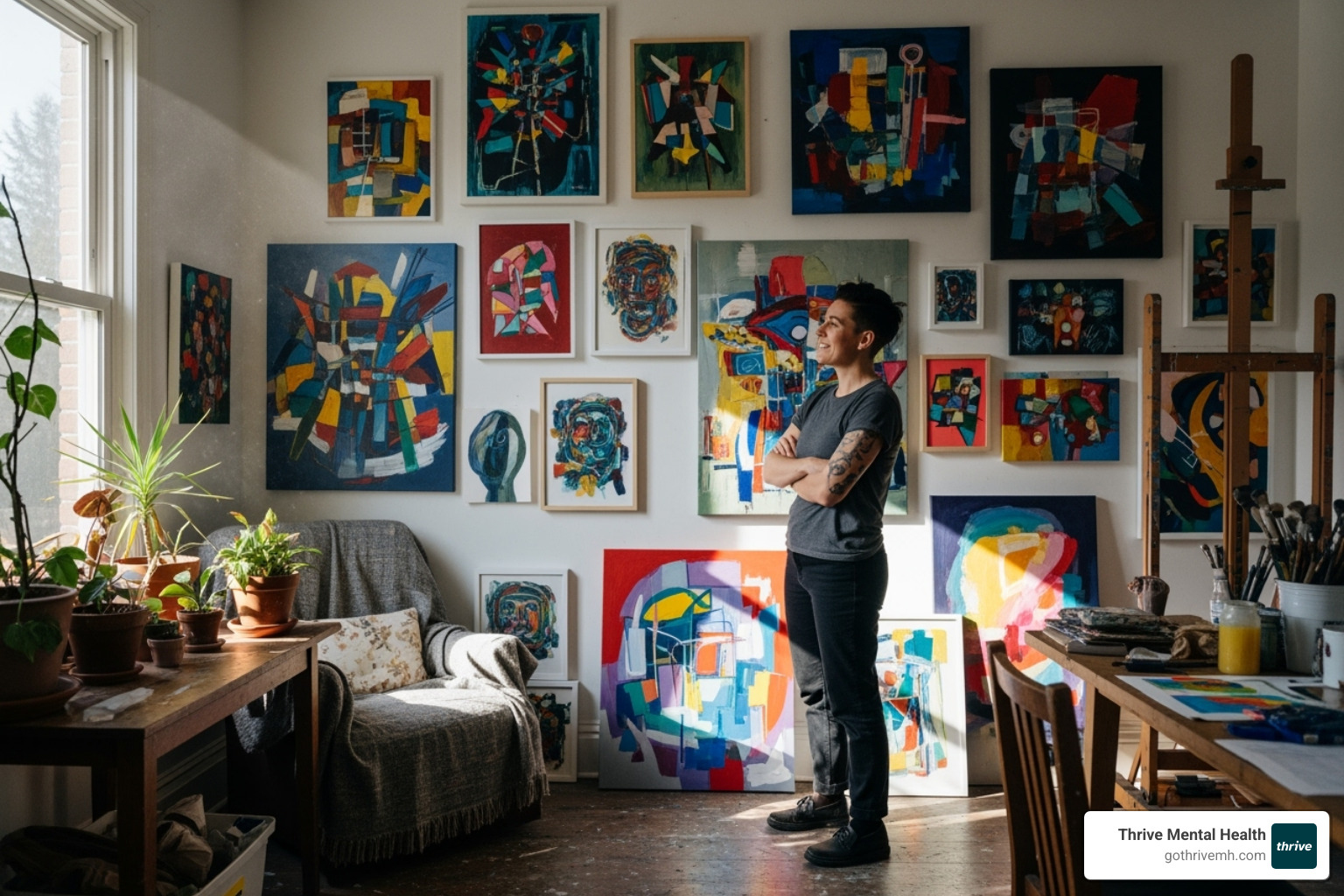
Creativity is more than a hobby; it’s a powerful tool for healing. As we’ve explored, art therapy activities for anxiety offer a science-backed way to calm your nervous system, process difficult emotions, and reconnect with yourself. The magic is in the process, not the product, and you don’t need any artistic skill to begin.
Whether you start by doodling at home or creating a vision board, the simple act of making art can provide immediate relief. Remember to approach it with curiosity and without judgment.
While self-practice is valuable, professional guidance is crucial for those with persistent anxiety or trauma. At Thrive Mental Health, we integrate expert-led art therapy into our comprehensive virtual programs across Florida, providing the support you need to heal.
Your journey to wellness is in your hands. Pick up a pencil and find how creative expression can become a cornerstone of your mental health.
Ready to explore how art therapy can fit into a broader mental health journey? Learn more about our virtual Art Therapy programs and find how creative expression can become a cornerstone of your path to wellness.

This article is for informational purposes only and is not a substitute for individualized clinical advice or insurance verification.