




The Thrive platform
Behavioral health, finally built like infrastructure.
One platform runs every session, note, claim and admission at Thrive. We built it ourselves, multi-tenant from day one, with AI inside the clinical workflow instead of bolted on.
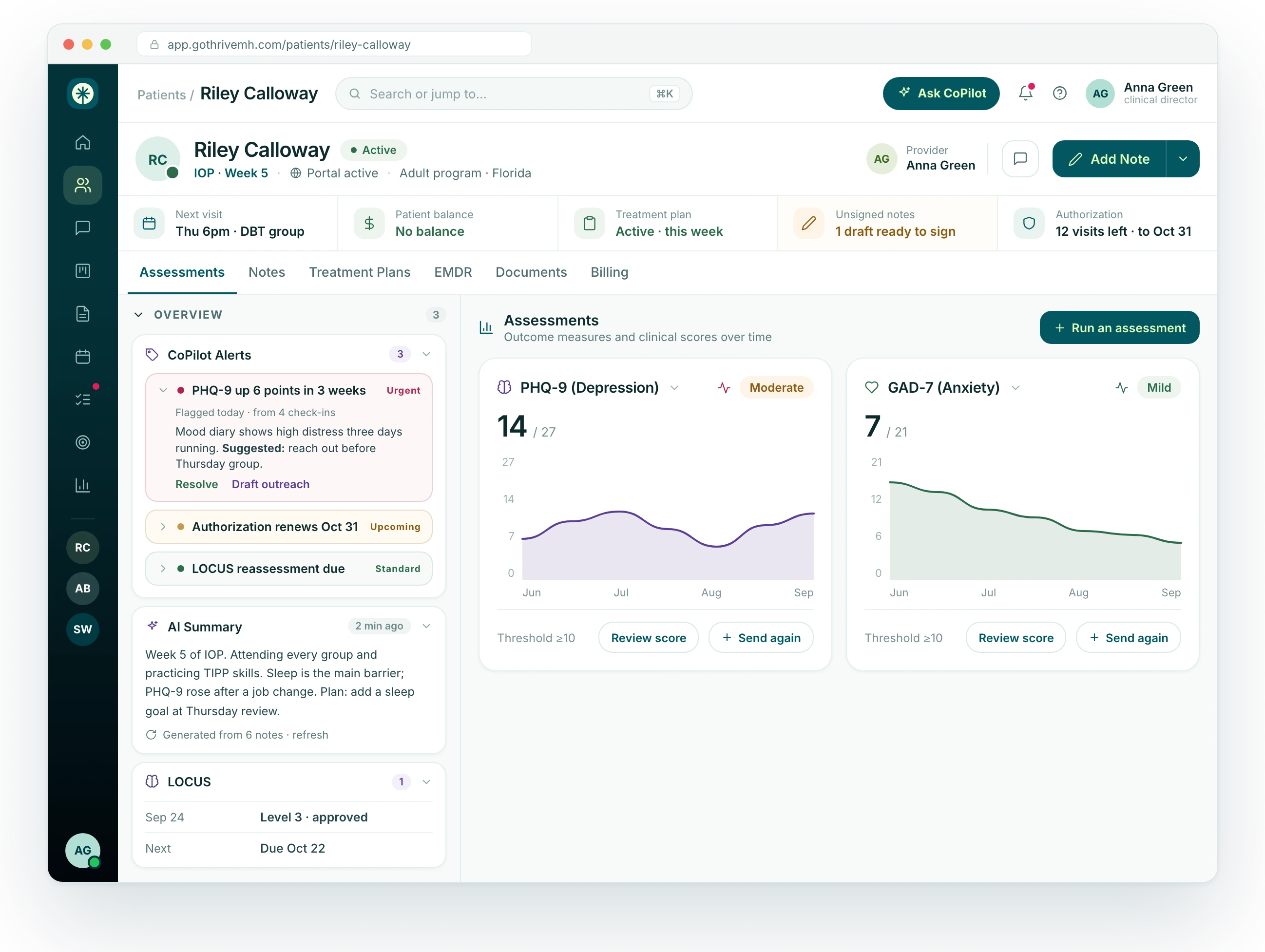
CoPilot alert
PHQ-9 up 6 points · outreach drafted
6 group notes drafted
AI Scribe · DBT Skills Group
Claim paid
Oscar · $250.00 posted from the 835
1,208
claims submitted through our own billing engine since February 2026
<1%
of submitted claims currently denied
Each dot is 1% of claims
9days
median from claim submission to payment
Submitted
Paid
7states
live on one multi-tenant platform
AZ
CA
FL
IN
NC
SC
TX
Thrive platform records, non-test claims submitted Feb 6 to Sep 29, 2026. Denial share is claims currently in denied status. Payment time is the median days from submission to payment. Product screens on this page show sample data.
AI scribe
Notes that write themselves. Even for groups.
The scribe listens to the session, maps every voice to the right patient and drafts a note for each one in the template you choose. The clinician reviews, signs and moves on.

DAP, BIRP, GIRP, SOAP, intake and discharge templates
Other attendees are removed from every note before it saves
Drafter signs, the rendering clinician countersigns
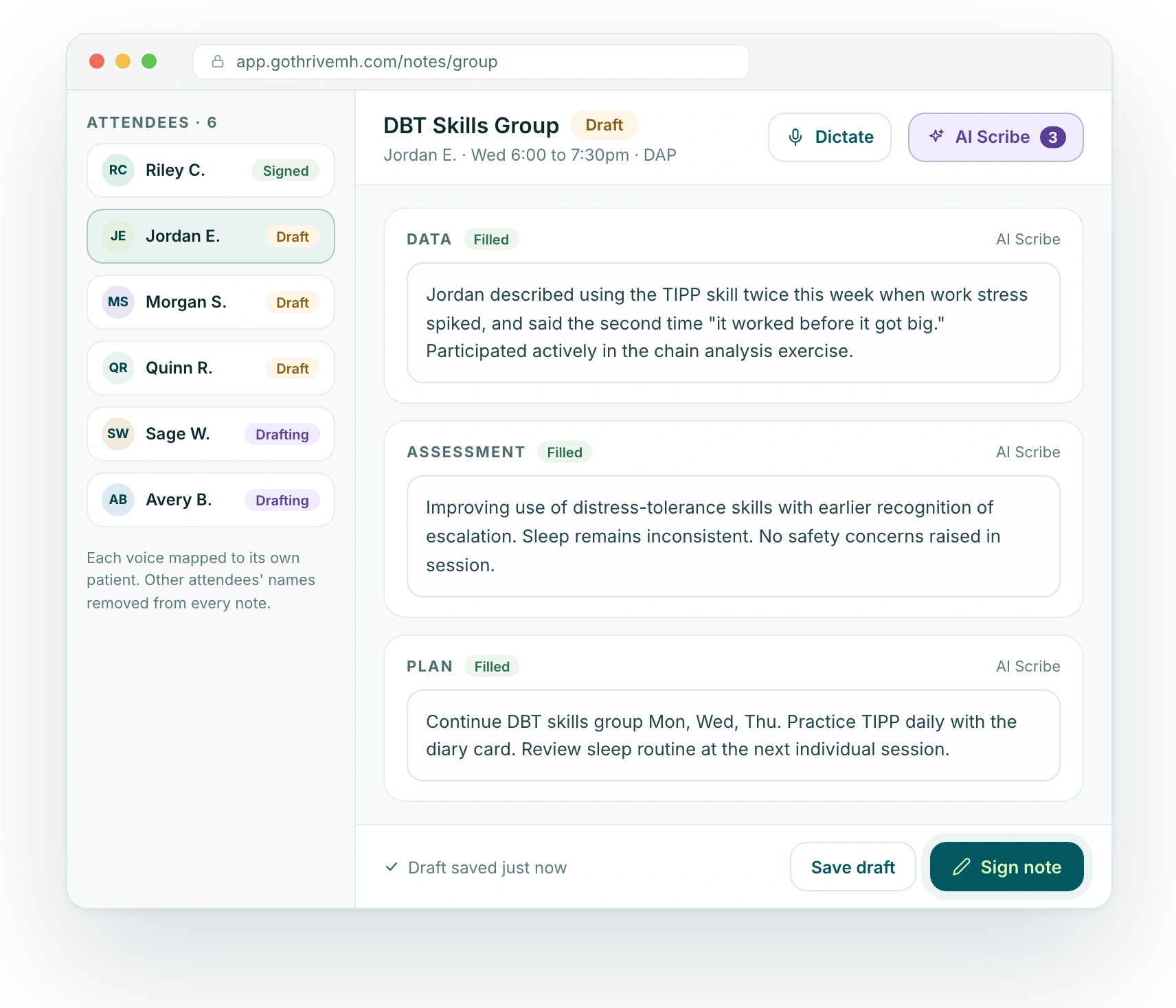
Listening to the group
6 voices matched to 6 patients
Clinical intelligence
The chart tells you what needs attention.
CoPilot reads scores, mood diaries and messages together and raises only what matters. LOCUS keeps itself current from the notes, with payer justification written alongside.
Crisis language reaches a real clinician in the moment
Two-stage dedup, so the same alert never fires twice
A plain-English briefing every morning
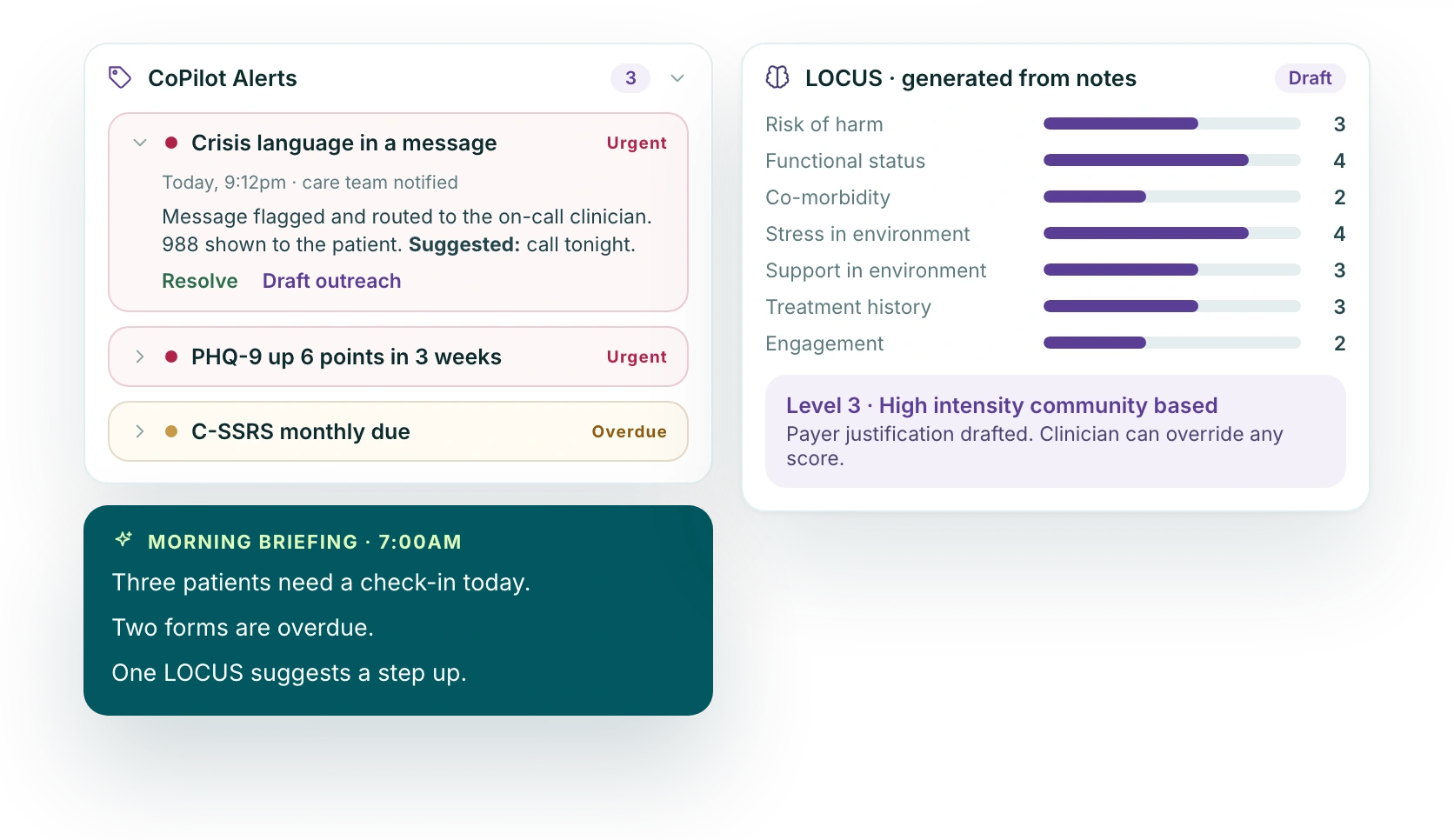
On-call clinician notified
Crisis language in a patient message
EMDR
EMDR, live in the room.
Bilateral stimulation runs on the patient’s own screen, synced in real time. SUD and VOC are captured between sets and charted across sessions, and the note drafts from the timeline.
Targets with negative and positive cognitions
SUD progress on the same memory, session over session
Protocol scripts and interweaves built in
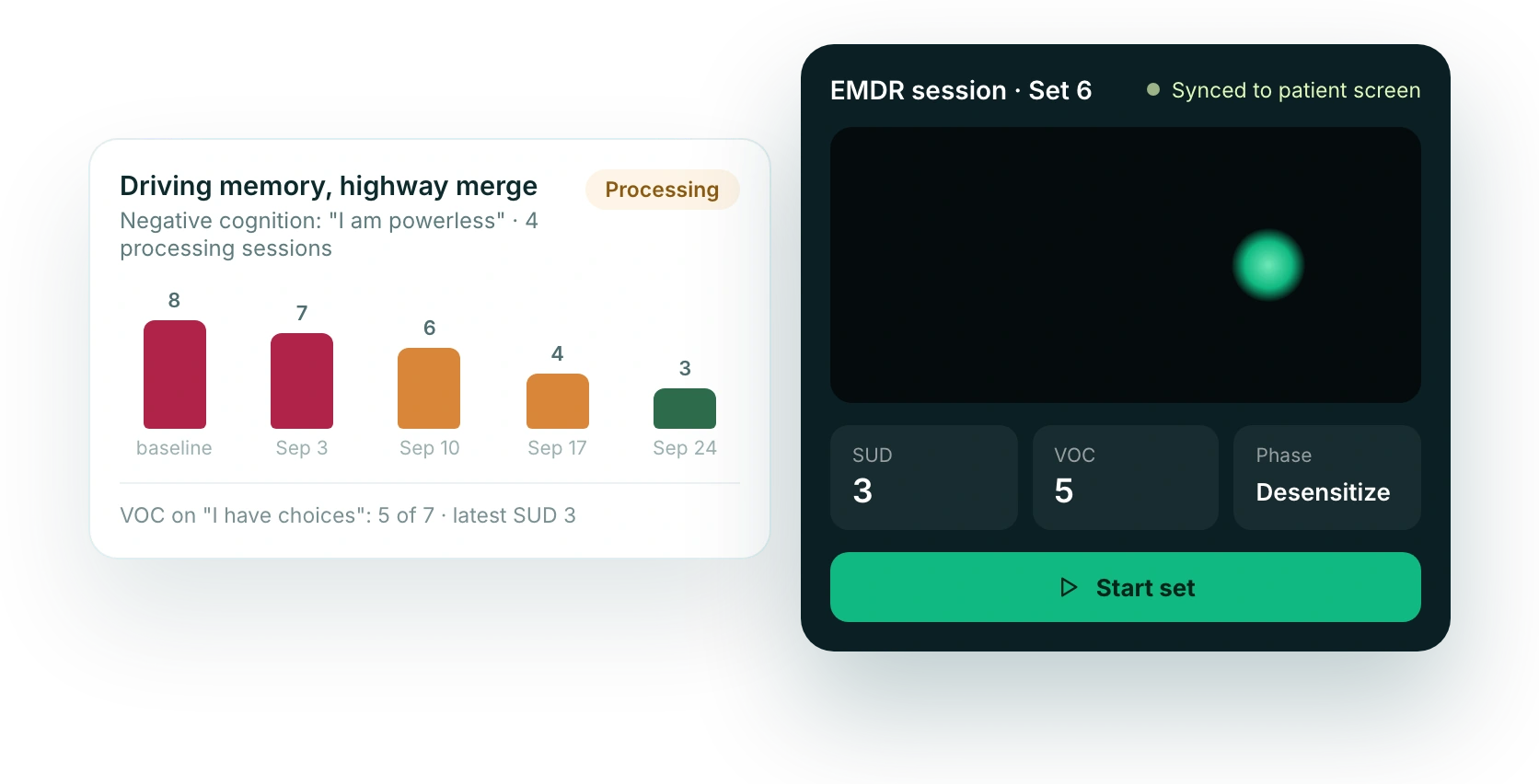
SUD 8 to 3
Same memory, four sessions
Admissions
From referral to first session, on one board.
Eligibility, authorization and intake readiness on every card, with the next step spelled out. Median time from referral to admission is 8 days.
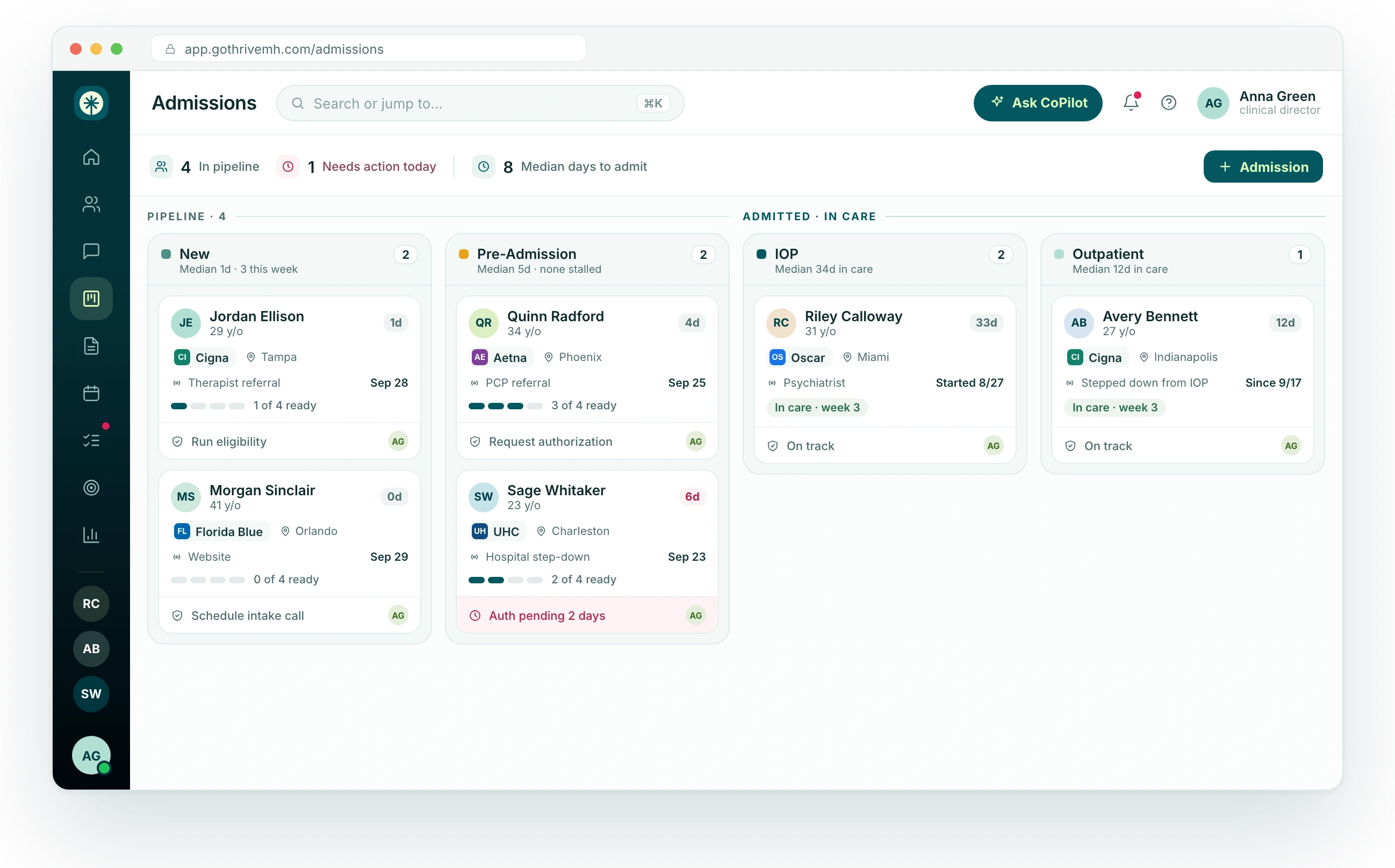
Eligibility verified
Aetna · IOP covered, card moved to Ready
Revenue cycle
Click once. Walk away.
Eligibility runs on its own. Every claim passes a consistency check before it leaves, then the 837 is built, submitted and reconciled against the 835 per date of service.
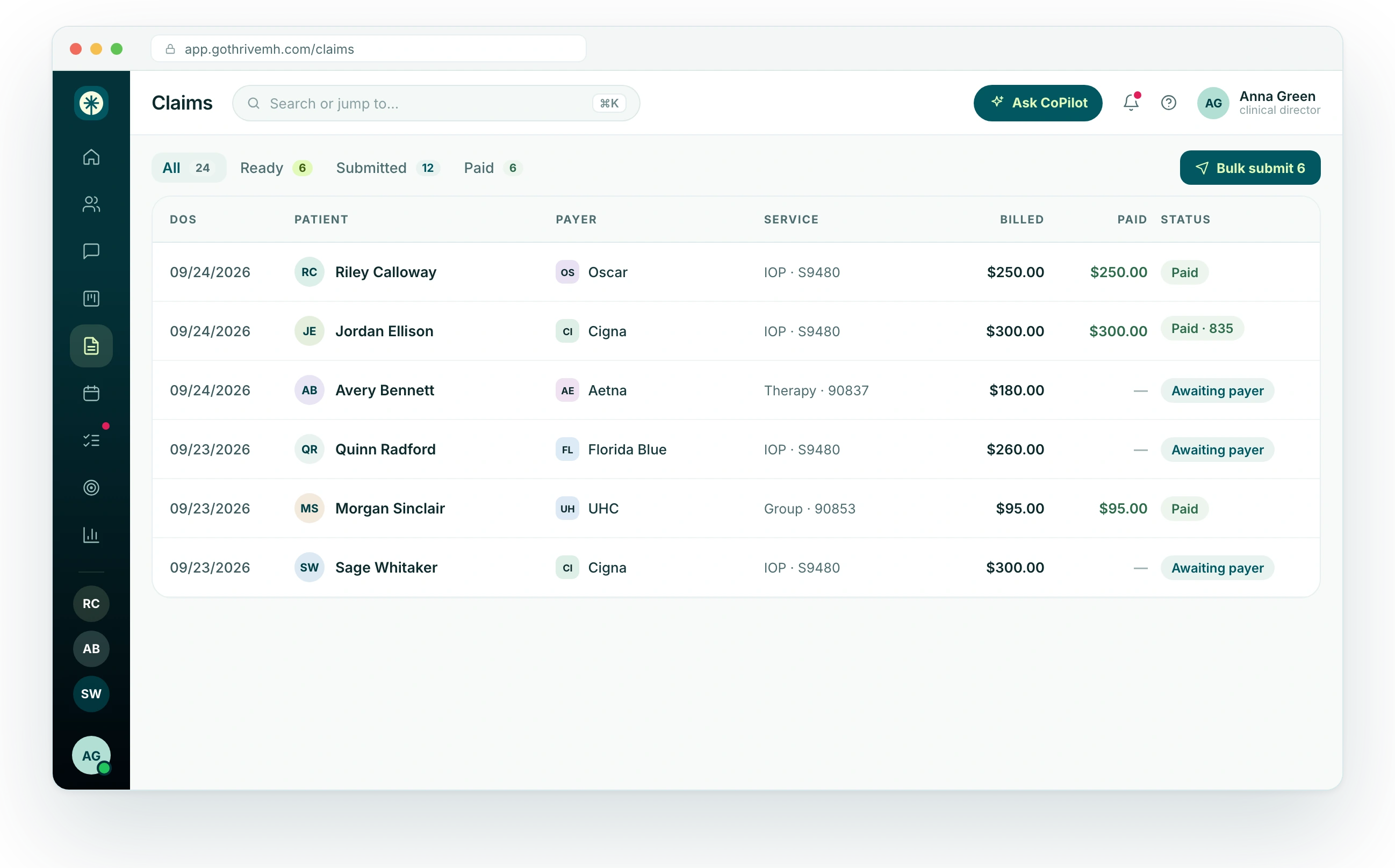
835 received
Cigna · $300.00 matched to date of service

Security and scale
Compliant by construction. Built to scale.
One codebase and one database serve every practice and every state, with the safeguards underneath all of it rather than added later.

Signed notes are immutable
The template is frozen at the first signature. What is in the chart on day one is in the chart in year ten.

Every PHI touch is logged
Reads and writes land in an audit trail scoped to the practice.

Row-level security everywhere
Every record is scoped to its practice at the database, not in the app.

MFA with device trust
Staff sign in with a second factor and trusted devices.

Encrypted daily backups
Backups run daily with selective restore.

It watches itself
Background workers retry, reconcile and alert the team the moment a sync stops.
For payer network teams
Less friction between care and payment.
NUBC · 837P/I
Clean claims
Institutional and professional claims checked against NUBC rules and payer-specific edits before they go out. 277CAs ingested automatically.
270/271 · 835
Network-ready
Live eligibility, 837 submission and 835 reconciliation per date of service across major commercial plans.
CAQH · SFTP
Data-ready
Structured outcomes export, CAQH attestation tracking and SFTP-based 837 submission where you need it.
One inbox
One contact
Credentialing, contracting and claims questions all go to network@gothrivemh.com.

“Most virtual programs run on generic, off-the-shelf software. We built our own platform for one purpose: delivering intensive behavioral health care that actually works online.”
Every update is reviewed, tested and checked for security and compliance before it reaches patient care, and the platform is maintained by the same team that delivers the care.
Nate Raine · Chief Executive Officer, Thrive
Want to see it?
Thirty minutes. The real platform. Any technical question.