






Anxiety Therapy for Teens: 2025’s Fast Relief
Why Your Teen’s Anxiety Won’t Just “Go Away”, And What Actually Works
Anxiety therapy for teens is a highly effective intervention for adolescent mental health, and it’s more accessible than most parents realize. If your teen is struggling with persistent worry, avoiding school, or showing signs of panic, the right treatment can change everything.
Quick Answer: What Works for Teen Anxiety?
| Treatment Type | What It Is | Why It Works |
|---|---|---|
| Cognitive Behavioral Therapy (CBT) | Evidence-based therapy that changes anxious thoughts and behaviors | 77% of teens show significant improvement |
| Virtual IOP/PHP Programs | Intensive outpatient care with more support than weekly therapy | Faster results, flexible scheduling, evening options |
| Exposure Therapy | Gradual, supported practice facing fears | Proven to reduce avoidance and build confidence |
| Medication (SSRIs) | Used alongside therapy when needed | Helps manage severe symptoms under professional guidance |
Most major insurance plans (Cigna, Optum, Aetna, Florida Blue) cover anxiety therapy for teens, including virtual programs.
Here’s the reality: Teen anxiety isn’t just stress or something they’ll “grow out of.” Without treatment, it can lead to depression, substance use, and academic failure. But with evidence-based anxiety therapy for teens, recovery is not just possible, it’s expected.
Nearly 1 in 3 teens will be diagnosed with an anxiety disorder, yet many parents wait years to seek help, hoping it’s “just a phase.” This guide cuts through the confusion to show you what works, what’s fueling the anxiety, and what you can do today.
At Thrive Mental Health, we’ve helped thousands of families access evidence-based anxiety therapy for teens through our virtual and hybrid programs. We’ve seen teens recover faster with the right support, and we’re here to help yours too.
Crisis Support: Don’t Wait
If you or your teen are in crisis or thinking about self-harm, call or text 988 now to reach the 988 Suicide & Crisis Lifeline. You are not alone, help is available 24/7.
Thrive’s Mental Health Crisis Guide 2025
Teen Angst or Anxiety Disorder? [How to Tell the Difference]
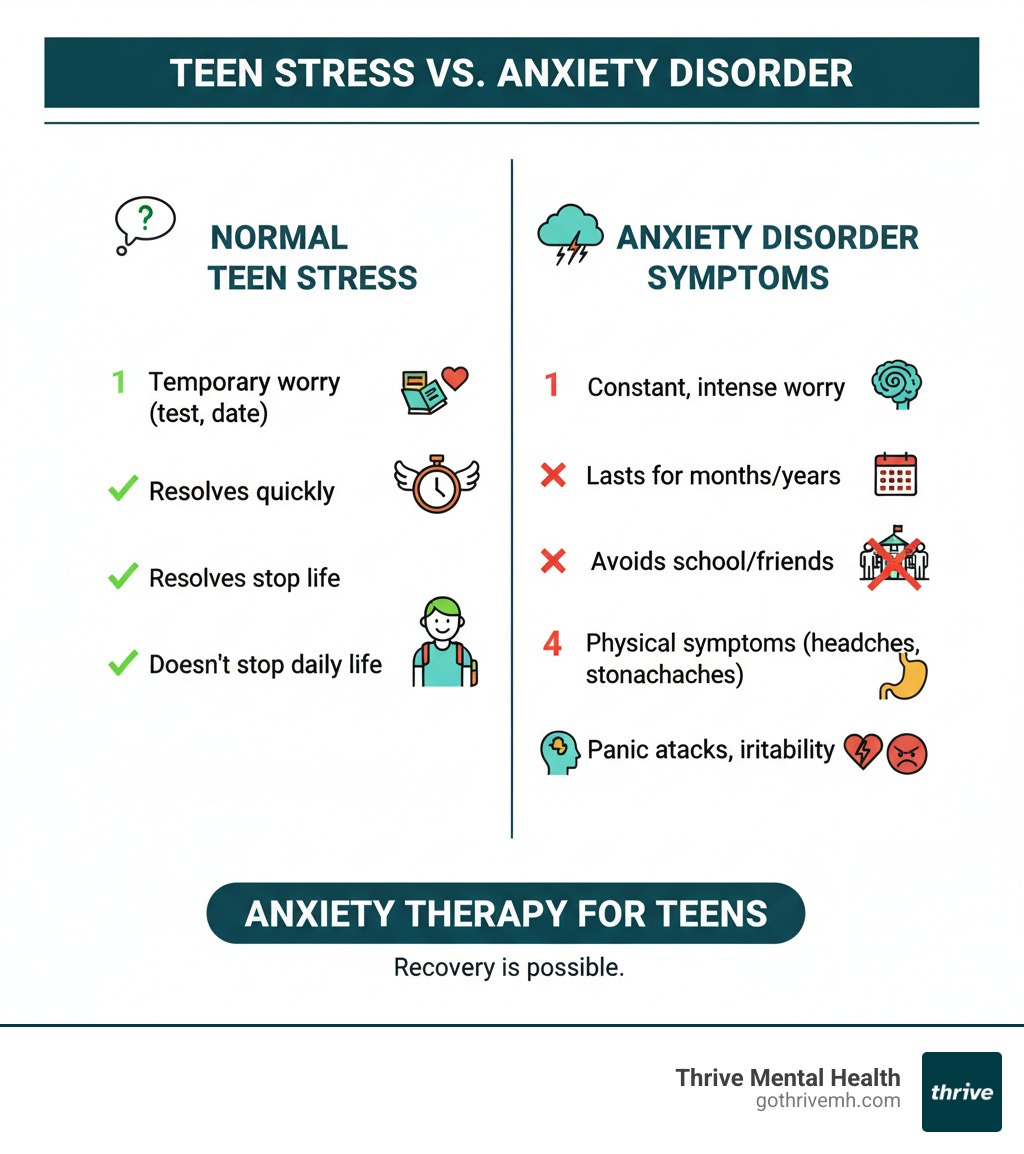
It’s normal for teens to worry about grades, friendships, and the future. But when does normal worry cross the line into a clinical anxiety disorder? The key difference is that normal anxiety is temporary and proportional to the situation. An anxiety disorder, however, involves worry and fear that are persistent, intense, and interfere with daily life.
According to the Mayo Clinic’s research on anxiety disorders, this fear is often out of proportion to any actual danger and feels impossible to control. A worried teen stresses about a test; an anxious teen is sick with worry for days and may avoid school altogether.
Red Flags: Signs Your Teen’s Anxiety Isn’t “Just a Phase”
Look for patterns of persistence, intensity, and interference. Teen anxiety often revolves around grades, social status, body image, and the future.
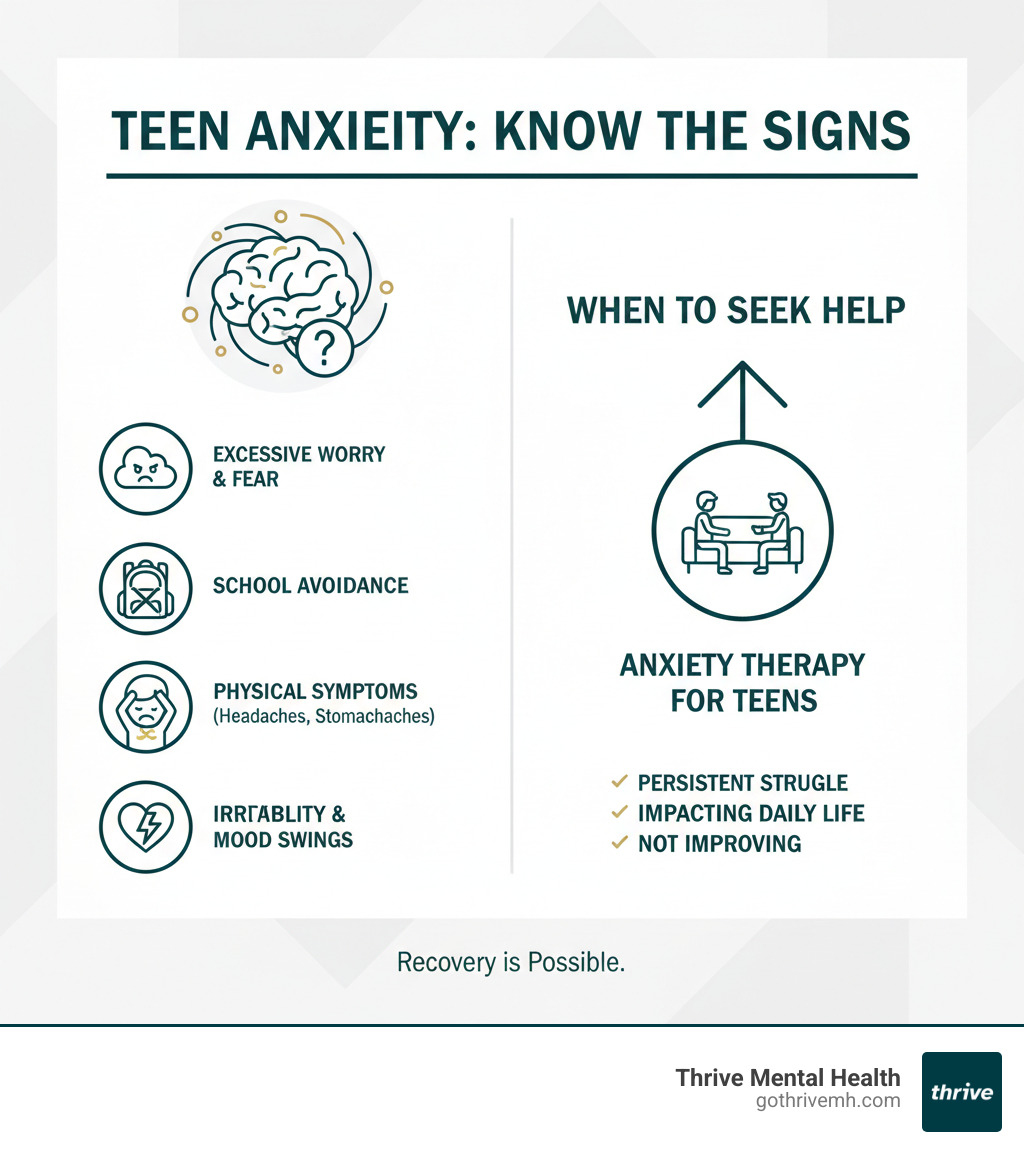
Key warning signs include:
- Excessive Worry: Constant, uncontrollable worry about everyday things or unlikely scenarios.
- Irritability and Agitation: More than typical moodiness; a constant state of being on edge.
- Restlessness and Poor Concentration: Feeling unable to relax or focus in class and on homework.
- Avoidance: Refusing to go to school, withdrawing from friends, or quitting activities they once enjoyed. This is a major red flag.
- Perfectionism: An intense fear of making mistakes, leading to endless redos or avoiding challenges.
- Social Withdrawal: Spending more time alone and disengaging from family.
- Sleep Problems: Trouble falling or staying asleep, or sleeping excessively.
- Constant Reassurance-Seeking: Repeatedly asking, “Am I okay?” or “Are you mad at me?”
- Decline in Grades: A sudden drop in academic performance or interest in hobbies.
For a complete breakdown, see our guide on Anxiety Symptoms.
The Physical Cost: How Anxiety Hurts Your Teen’s Body
Anxiety isn’t just mental; it’s physical. Many parents first suspect a medical issue. The body’s constant fight-or-flight response can cause:
- Frequent headaches and stomachaches with no clear medical cause.
- Chronic fatigue, even after a full night’s sleep.
- Muscle tension in the neck, shoulders, and back.
- Panic attacks: Sudden episodes of intense fear with a racing heart, shortness of breath, and dizziness. The fear of having another attack often leads to more avoidance.
Understanding these Anxiety Symptoms and Their Impact on Daily Life is crucial for recognizing when your teen needs help.
When to Get Professional Help, And Why Waiting Makes It Worse
Don’t wait and hope your teen will “grow out of it.” Waiting makes anxiety worse. It’s time to get help now if your teen’s symptoms have:
- Lasted more than six months.
- Led to school refusal or social withdrawal.
- Begun disrupting daily family life.
Untreated anxiety increases the risk for depression, substance abuse, and suicidal thoughts. It prevents teens from developing the skills they need for a healthy adult life.
The good news is that anxiety therapy for teens works. The Benefits of Professional Treatment are clear: early intervention leads to faster recovery and gives teens their lives back. You don’t have to figure this out alone.
What’s Fueling Your Teen’s Anxiety? [The Hidden Triggers You Can’t Ignore]

Today’s teens face a perfect storm of pressures. Anxiety therapy for teens is most effective when we understand the real causes driving their worry. It’s rarely one thing, but a mix of biology and environment.
The Real Causes: It’s Not Just “In Their Head”
Anxiety often has multiple roots:
- Genetics and Brain Chemistry: Anxiety can run in families. Some brains are simply wired to be more sensitive to stress. This isn’t a fault; it’s biology.
- Academic and Social Pressure: The relentless pressure to achieve perfect grades, excel in activities, and steer complex peer relationships is a major source of chronic stress.
- Bullying and Trauma: Experiences like bullying (online or in-person), family conflict, or loss can trigger or worsen anxiety disorders.
- Social Media: Platforms like TikTok and Instagram often fuel comparison, judgment, and FOMO (fear of missing out). The U.S. Surgeon General’s advisory on social media’s impact on teen mental health warns that teens spending over three hours a day on social media face double the risk of poor mental health.
The Price of Ignoring Teen Anxiety [What’s at Stake?]
Untreated anxiety doesn’t just go away, it escalates, with devastating consequences.
- Depression and Substance Use: Anxiety is a strong predictor of developing depression and turning to drugs or alcohol to cope, which can lead to addiction.
- Academic Failure: It’s nearly impossible to focus in class when your mind is racing with worry. Anxiety can hijack a teen’s ability to learn.
- Relationship Problems: Social anxiety can make it difficult to form friendships, leading to isolation and loneliness that feed the anxiety cycle.
- Suicidal Thoughts: In severe cases, anxiety can feel so inescapable that teens may consider ending their pain. Understanding signs of passive suicidal ideation is critical for parents.
The long-term impact can stretch into adulthood, affecting careers and quality of life. But with the right anxiety therapy for teens, these outcomes are preventable. Recovery is possible.
The Fastest Way to Relief: Anxiety Therapy for Teens That Works

When anxiety is derailing your teen’s life, you need treatment that gets results. Anxiety therapy for teens is one of the most successful mental health treatments available. At Thrive Mental Health, we’ve seen thousands of teens reclaim their lives with evidence-based care.
Why Thrive’s Virtual IOP Gets Results for Teen Anxiety
Weekly therapy isn’t always enough for severe anxiety. That’s where Intensive Outpatient Programs (IOP) and Partial Hospitalization Programs (PHP) are game-changers. They offer intensive support without requiring teens to leave home or school for extended periods.
Thrive’s virtual IOP programs are designed for teens across Florida. Here’s why they work:
 Comprehensive Guide to Behavioral Health ServicesMental Health
- More Support, Faster Results: Multiple sessions per week provide the consistency needed to build skills and see progress quickly.
- Virtual and Flexible: No commutes and evening sessions mean therapy fits into your teen’s life. Virtual Counseling for Teens is proven to be as effective as in-person care.
- Comprehensive Care: We integrate individual, group, and family therapy to equip the whole family for success. Our Virtual IOP for Anxiety Disorders provides targeted care.
- Insurance Coverage: Most major plans (Cigna, Optum, Aetna, Florida Blue) cover our programs. You can Verify Insurance Coverage in two minutes.
How Thrive’s Evidence-Based Therapy Helps Teens Beat Anxiety
We use treatments proven to work. The gold standard is Cognitive Behavioral Therapy (CBT), which helps 77% of teens show significant improvement.
CBT helps teens rewire their anxious brains by teaching them to:
- Identify Anxious Thoughts: Catch catastrophic thinking and other “thinking traps.”
- Challenge and Reframe: Question the evidence for their fears and replace them with balanced, realistic thoughts.
- Build Coping Skills: Learn practical tools like deep breathing and problem-solving to manage anxiety in the moment.
Our Beginner’s Guide to CBT explains this process in more detail.
We also use exposure-based therapy, where teens gradually and safely face their fears in a supportive environment. This is the most effective way to break the cycle of avoidance. By facing fears step-by-step, teens learn a powerful lesson: they can handle it. This builds real, lasting confidence.
Should Teens Take Medication for Anxiety? [What Parents Need to Know]
Medication is a tool, not a standalone solution. It’s considered when anxiety is severe and therapy alone isn’t providing enough relief. The most common medications are SSRIs, which, when combined with CBT, often produce the best results.
Think of it this way: medication can lower the intensity of anxiety, making it easier for a teen to engage in therapy and learn long-term skills. At Thrive, medication is always prescribed by a psychiatrist and paired with comprehensive therapy. Always consult a licensed provider to determine the best approach for your teen.
How to Build Real Resilience: What Parents and Teens Can Do Today

Effective anxiety therapy for teens extends beyond the session. Lasting recovery happens when new skills become daily habits, with parents and teens working as partners.
5 Ways Parents Can Help Teens Beat Anxiety (Without Making It Worse)
Your instinct is to protect your child, but with anxiety, enabling avoidance can keep them stuck. Here’s how to provide support that builds strength:
- Validate Their Feelings, Don’t Dismiss Them: Instead of “Just calm down,” say, “I can see this is really hard for you.” Acknowledging their emotion is real is the first step.
- Create Space for Open Conversation: Ask open-ended questions like, “What’s been on your mind lately?” during low-pressure moments. Listen more than you talk.
- Model Healthy Coping Yourself: Your teen is watching. Show them how you manage stress by taking a walk, talking about your feelings, or practicing deep breathing.
- Set Boundaries Instead of Enabling Avoidance: It’s tough, but allowing your teen to constantly skip school or activities reinforces the idea that anxiety is a threat. Work with your therapist to gradually reduce accommodations and empower your teen to face challenges.
- Partner with Your Teen’s Thrive Therapist: We include parents in therapy to teach you how to respond to anxiety at home. This collaboration speeds up recovery. Our guide on Parenting Neurodivergent Children: Essential Tips and Advice offers more strategies.
7 Healthy Coping Skills Every Teen Should Try Now
Daily coping skills give teens power over anxiety in the moment. Here are some of the most effective ones we teach at Thrive:
- Mindfulness and Deep Breathing: Use the 4-7-8 technique (breathe in for 4, hold for 7, exhale for 8) to calm the body’s stress response.
- Journaling: Write down worries to get them out of their head and identify triggers.
- Regular Physical Activity: Even a 20-minute walk can reduce stress hormones and improve mood.
- Prioritize Sleep Hygiene: A consistent bedtime and a screen-free wind-down routine are crucial, as poor sleep worsens anxiety.
- Limit Social Media: Encourage boundaries, like no phones after 9 PM, to reduce comparison and anxiety.
- Build a Support Network: Help them identify trusted friends, family, or teachers to reach out to.
- Practice Positive Self-Talk: Teach them to counter harsh self-criticism with balanced statements like, “This is hard, but I can handle it.”
For more strategies, explore our article on Building Resilience: Online Coping Strategies for Long-Term Mental Health. Practicing these skills daily builds a foundation for lasting recovery.
FAQ: Anxiety Therapy for Teens, What Parents Ask Most
We hear these questions from parents every day at Thrive. Here are the clear, honest answers you need.
What’s the fastest, most effective therapy for teen anxiety?
Cognitive Behavioral Therapy (CBT) and exposure-based approaches are the gold standard. For faster results, Thrive’s Virtual IOP provides more support than weekly therapy, helping teens build skills and confidence more quickly.
How do I get my teen to agree to therapy?
Start with a non-judgmental conversation expressing your concern. Frame therapy as skill-building, not a punishment. Involving your teen in choosing a Thrive therapist who specializes in adolescents can increase their willingness to engage. The convenience of virtual therapy also appeals to many teens.
How much does anxiety therapy for teens cost? Does insurance cover it?
Cost varies, but the good news is most major insurance plans cover Thrive’s IOP and virtual therapy programs. We work with Cigna, Optum, Aetna, UnitedHealthcare, Florida Blue, and others. You can verify your insurance coverage on our site in two minutes with no obligation.
Can my teen do therapy virtually? Is it as effective?
Yes, absolutely. Research shows virtual therapy is just as effective as in-person treatment. Thrive’s virtual programs offer flexibility and accessibility for teens throughout Florida, allowing them to get specialized care from the comfort of home.
What if my teen is in crisis or talks about self-harm?
Call or text 988 immediately. The 988 Suicide & Crisis Lifeline provides free, confidential, 24/7 support. Do not wait for a therapy appointment or try to handle it alone. Reaching out is the safest and most protective action you can take.
Summary: Don’t Let Teen Anxiety Steal Their Future, Get Help That Works
Anxiety therapy for teens isn’t just an option, it’s essential for recovery. Your teen’s anxiety won’t disappear on its own, but with evidence-based treatment, they can reclaim their confidence and their future.
Thrive’s virtual IOP programs offer the intensive, consistent support needed for rapid progress. Using proven methods like CBT, we help teens across Florida break free from anxiety. We offer evening sessions and accept most major insurance plans, including Cigna, Optum, and Aetna, because effective care should be accessible.
The teens we work with don’t just cope; they thrive. They go back to school, rebuild friendships, and learn skills for life. Don’t let another day be lost to anxiety.
Ready for support? Thrive offers virtual IOP programs with evening options. Verify your insurance in 2 minutes (no obligation) → Start benefits check or call 561-203-6085. If you’re in crisis, call/text 988.

This article is for informational purposes only and is not a substitute for individualized clinical advice or insurance verification.