


Autism Behavioral Health Services 2025: Essential Guide
Understanding What Autism Behavioral Health Services Really Mean
Autism behavioral health services are specialized therapies that help autistic individuals develop skills, manage challenges, and thrive. Unlike general mental health care, these services address the unique ways autistic brains process information, communicate, and interact with the world.
Core services include:
- Applied Behavior Analysis (ABA): Skill-building through behavior modification
- Occupational Therapy (OT): Sensory processing and daily living skills
- Speech-Language Pathology (SLP): Communication and social interaction support
- Mental Health Counseling: For anxiety, depression, and emotional regulation
- Social Skills Training: Peer interaction and relationship building
- Parent/Caregiver Training: Family support and coaching
Most autistic people have co-occurring conditions like anxiety, depression, or ADHD. Comprehensive support is crucial, not to “cure” autism, but to help individuals build on their strengths and steer a world designed for neurotypical brains.
Modern services are shifting toward neurodiversity-affirming care, which respects autistic ways of being while providing practical support. For example, instead of forcing eye contact, a therapist might help develop alternative, more comfortable communication strategies.
The landscape of services is broad, ranging from early intervention for toddlers to crisis support for adults. As Anna Green, LMHC, LPC, I’ve seen how the right evidence-based support, delivered through accessible virtual care, can be truly life-changing.
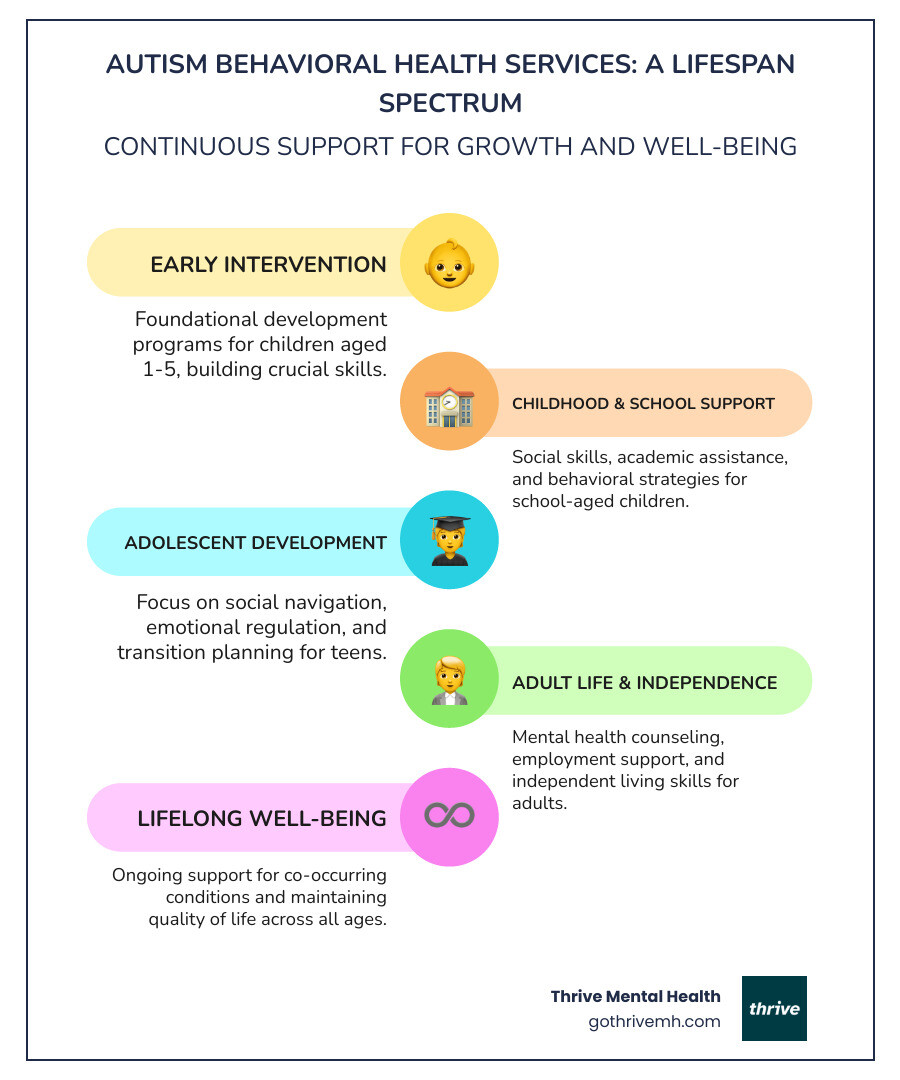
Autism behavioral health services basics:
Understanding the Landscape of Autism Behavioral Health Services: What You Need to Know
When seeking autism behavioral health services, you’ll find they differ significantly from traditional mental health care. Autism-focused services recognize that autistic brains work differently and require specific support strategies, often delivered by interdisciplinary teams of psychologists, occupational therapists, and speech-language pathologists.
These services are effective because they rely on evidence-based practices, proven approaches backed by solid research, not trendy methods.
For a deeper understanding of autism itself, check out our Essential Insights for Understanding the Autism Spectrum.

What Are the Different Types of Autism Behavioral Health Services?
The world of autism behavioral health services is a toolkit with different tools for different jobs. They often work best when combined.
- Applied Behavior Analysis (ABA) focuses on understanding and modifying behavior to increase helpful skills. We’ll explore ABA’s evolution in the next section.
- Occupational Therapy (OT) provides support for daily living skills and sensory processing, from fine motor skills to managing overwhelming environments.
- Speech-Language Pathology (SLP) helps with all forms of communication, including verbal skills, communication devices, and understanding social cues.
- Mental Health Counseling addresses co-occurring conditions like anxiety and depression with an understanding of autism.
- Social Skills Training focuses on building genuine connections rather than memorizing social rules.
- Parent and Caregiver Training teaches families practical strategies for communication and behavior support.
For a comprehensive look at how these therapies can be personalized to individual needs, explore our Comprehensive Autism Therapy: From Personalized Treatments to Online Support Programs.
How Do These Services Address Unique Autistic Needs?
Autism-focused services help individuals thrive as their authentic selves. They are not about trying to make autistic people “normal.”
- Communication differences are honored. The goal is effective communication, whether through speech, writing, or other methods, not forcing conformity.
- Sensory processing support helps individuals develop strategies to manage overwhelming sensory input, like noise or lighting.
- Executive functioning strategies provide tools to address challenges with planning, organization, and time management.
- Emotional regulation skills teach people to recognize and manage their emotions, including signs of overwhelm.
- Building individual strengths is a core focus. Services identify and leverage a person’s unique talents as building blocks for confidence.
The impact on learning is significant too. To understand more about this connection, read our article on Understanding the Impact of Autism on Learning Abilities: Strategies and Insights.
The Role of Applied Behavior Analysis (ABA) [A Critical Look]
Applied Behavior Analysis (ABA) is one of the most well-known and debated autism behavioral health services. It’s a scientific approach to understanding behavior using the Antecedent-Behavior-Consequence (ABC) model:
- Antecedent: The trigger right before a behavior.
- Behavior: The person’s response.
- Consequence: What happens after, influencing future behavior.
Traditionally, ABA focused on skill acquisition and independence by breaking down complex tasks and teaching communication. The goal is to build on strengths while addressing challenges that interfere with daily life.
Modern approaches emphasize Neurodiversity-Affirming Therapy Techniques for Health Professionals, recognizing that effective therapy respects autistic ways of being rather than trying to eliminate them.

The Evolution and Controversy of ABA
Historically, ABA practices often focused on eliminating behaviors that made autistic people seem “different,” sometimes using punishment-based methods to enforce conformity. Many autistic adults report lasting negative effects from these older approaches, including trauma documented in reports of trauma associated with ABA therapy. The autistic community has raised valid concerns about prioritizing compliance over consent and suppressing natural behaviors like stimming.
Fortunately, ABA has evolved. The shift towards neurodiversity-affirming ABA is a fundamental change. Modern practitioners prioritize assent and quality of life over compliance, ensuring the individual wants to participate and that goals are meaningful to them.
Modern ABA approaches are more person-centered:
- Early Intensive Behavioral Intervention (EIBI) focuses on language and functional skills with attention to the child’s comfort.
- Early Start Denver Model (ESDM) uses play-based, child-led activities for toddlers.
- Pivotal Response Treatment (PRT) uses a child’s motivations to build key skills like self-management.
The key difference is that modern ABA views autism as a natural variation, not something to cure. It supports autistic communication styles and sensory needs. If considering ABA, ask providers about their philosophy to ensure their approach is supportive, not coercive.
Accessing Services: Your Guide to Programs and Eligibility [2025]

The path to autism behavioral health services can feel complex, but options are available. The journey typically begins with a formal autism diagnosis, which is the key to opening up specialized programs and funding. After diagnosis, the next step is finding qualified providers, which may involve waitlists and navigating eligibility requirements.
The good news? Once you know where to look, finding quality support becomes much more manageable. For detailed guidance on locating services that match your specific needs, check out our guide to Comprehensive Autism Therapy in Florida.
How to Find and Qualify for Autism Behavioral Health Services
- Government programs: In Florida, state-funded initiatives offer comprehensive support, though they may have wait times. For example, the Agency for Persons with Disabilities (APD) manages programs like the iBudget Florida waiver, which can fund a variety of services.
- Private providers: Thrive Mental Health offers virtual and hybrid programs across Florida, reducing geographical barriers and often with shorter wait times than public options.
- School-based services: Students may receive support like speech or occupational therapy through an Individualized Education Program (IEP).
- Community resources: Local autism organizations and support groups are valuable sources for workshops and social programs.
Eligibility criteria vary by location and program, but most require a formal ASD diagnosis and may have age restrictions. The application process often involves paperwork and waiting periods, but persistence is key.
Understanding Insurance Coverage for Autism Therapy
Paying for services is a major consideration. While coverage has improved, you’ll need to do some research.
Verifying your benefits is the first step. Call your insurer and ask about covered therapies, deductibles, copays, session limits, and prior authorization needs. Understanding the cost difference between in-network and out-of-network providers is also crucial.

Major insurance plans like Cigna, Optum, and Florida Blue have expanded their autism coverage, but details vary by plan. Federal mental health parity laws require most insurers to cover mental health services at the same level as medical care, which can help manage costs.
At Thrive Mental Health, we streamline this process. You can verify your coverage before your first appointment. Our Virtual IOP/PHP Programs are designed for flexibility, accommodating the needs of neurodivergent adults.
Custom Support Across the Lifespan: Never Too Early, Never Too Late
Autism behavioral health services are not one-size-fits-all, and it’s never too late to start. Autistic needs evolve from toddlerhood to adulthood, and effective support evolves too. Early intervention builds foundational skills, teen support focuses on social navigation and independence, and adult services prioritize mental health and career development. Quality support makes a profound difference at any age.

Services for Children and Youth
Early support focuses on building social and emotional foundations through play and family involvement.
- Caregiver-mediated programs like Project ImPACT empower families with strategies to support a child’s communication and play skills at home.
- Entry to School programs help children aged 3-5 build communication, self-regulation, and pre-academic skills to ease the transition to school.
- Play-based therapies weave learning into enjoyable games and activities, helping children develop skills naturally.
- Social skills groups provide a supportive setting for children to practice interactions and build confidence in making genuine connections.
The journey of parenting a neurodivergent child comes with its own joys and challenges. Our guide on Parenting Neurodivergent Children: Essential Tips and Advice offers practical wisdom for families navigating this path.
Mental Health and Transition Support for Adults
Adult services address complex life challenges like careers, relationships, and mental health.
- Addressing co-occurring conditions is a priority. Autistic people often have psychiatric comorbidities like anxiety, depression, and ADHD. Adapted therapies like CBT and DBT can be very effective.
- Employment support programs, such as Florida’s Vocational Rehabilitation (VR) services, help create inclusive workplaces and support autistic employees in their careers.
- Independent living skills support helps with daily tasks like finances, cooking, and self-advocacy.
- Support for autistic women is crucial. Historically underdiagnosed, many women learn to “mask” their traits, which can lead to delayed diagnosis and mental health struggles. Affirming care that validates these unique experiences is essential.
For mental health professionals and individuals seeking specialized adult support, our article on Effective Strategies for Counselling Autistic Adults provides detailed guidance on evidence-based approaches that actually work.
Co-Occurring Conditions and Crisis Support: When Mental Health Takes Center Stage
If you or someone you know is in crisis or thinking of suicide, call or text 988 to reach the Suicide & Crisis Lifeline. You are not alone.
Autism behavioral health services must also address mental health. Research shows the vast majority of autistic people have co-occurring conditions like anxiety, depression, ADHD, or OCD. These are often direct results of the stress from masking autistic traits, sensory overload, and navigating a neurotypical world.
Mental health crises can look different for autistic individuals. A meltdown is an involuntary response to being overwhelmed, not a “tantrum.” A shutdown may look like withdrawal, but it’s a protective response to nervous system overload. The constant effort of masking can also lead to burnout, isolation, and suicidal ideation.
Creating a crisis plan is essential. This involves identifying triggers, developing coping strategies for an autistic brain, and building a support network. Knowing how to access professional help is a critical part of this plan.
Our Neurodivergent Intensive Outpatient Treatment programs, available to residents in Florida, are designed for these situations. We provide specialized mental health support that honors neurological differences. The goal is not to eliminate distress, but to build resilience and authentic coping skills with a support system that understands your autistic identity and mental health needs.
Frequently Asked Questions about Autism Behavioral Health Services
Navigating autism behavioral health services can be confusing. Here are answers to common questions.
What is the first step to getting behavioral services for autism?
The first step is getting a formal diagnosis of Autism Spectrum Disorder from a qualified professional, such as a psychologist or developmental pediatrician. This diagnosis is the key to accessing specialized services and insurance coverage. A thorough assessment also provides valuable insights into individual strengths and needs.
Is ABA the only therapy for autism?
No. While ABA is well-known, it’s just one tool. A comprehensive plan often includes Occupational Therapy (OT) for sensory and daily living skills, Speech-Language Pathology (SLP) for communication, and mental health counseling for co-occurring conditions like anxiety. The best approach is always individualized.
Can adults get a new autism diagnosis?
Yes, adult diagnosis is increasingly common, especially for women who may have been missed in childhood due to “masking” their traits. An adult diagnosis can be life-changing, providing validation, self-understanding, and access to appropriate support. The process is similar to that for children but includes a review of developmental history.
How much do autism behavioral health services cost?
Costs vary based on the service, provider, location, and your insurance. Many plans, including Cigna, Optum, and Florida Blue, now cover autism services. Florida has state programs and mandates that help expand coverage for autism services. Always verify your benefits to understand your out-of-pocket costs. At Thrive Mental Health, you can verify your insurance coverage online in minutes.
Your Path to a More Supported Life
Finding the right autism behavioral health services is a journey. The goal is to build a support system that grows with you by finding care that is personalized, evidence-based, and neurodiversity-affirming. The right support respects your goals and improves your quality of life.
You don’t have to steer this alone. Support is available, whether you’re seeking an adult diagnosis or help for co-occurring conditions like anxiety. The key is finding providers who see your autism as part of who you are, not a problem to be fixed.
At Thrive Mental Health, we specialize in neurodivergent-affirming care for adults in Florida through our virtual IOP programs. We offer flexible evening options because we know traditional schedules don’t work for everyone. Our programs help you build skills for managing mental health while honoring your autistic identity.
Ready to take the next step? Verify your insurance in 2 minutes (no obligation) or call 561-203-6085 to speak with our team.
If you’re in crisis, please call or text 988. Immediate support is available.

This article is for informational purposes only and is not a substitute for individualized clinical advice or insurance verification.