
The 5 Best Evansville, IN IOPs Compared

Evansville, Indiana intensive outpatient therapy: The 5 Best
Why Weekly Therapy Isn’t Enough for Evansville Residents (And How to Get Real Results Fast)
Evansville, Indiana intensive outpatient therapy is the critical middle ground between weekly therapy sessions that aren’t cutting it and full hospitalization you’re trying to avoid. Here’s what you need to know right now:
Quick Answer: Top Evansville IOP Options
- Thrive Hospital-Integrated IOP & PHP – Comprehensive medical + psychiatric care with medication management
- Thrive Addiction & Recovery IOP – Substance use, dual diagnosis, relapse prevention with peer support
- Thrive Specialized Mental Health IOP – Advanced therapy (DBT, EMDR) for trauma, BPD, mood disorders
- Thrive Youth & Family IOP – Teen-focused with family therapy and academic support
- Thrive Virtual IOP – Flexible evening sessions for busy adults, accessible from home
Nearly 18% of Indiana adults live with a diagnosable mental health condition. In 2021, 28% of Indiana high school students seriously considered suicide. Here in Evansville, anxiety, depression, and substance abuse are the most voiced concerns.
If you’ve been going to therapy once a week for months and still feel stuck—you’re not failing. Weekly therapy wasn’t designed for what you’re dealing with.
When anxiety wakes you up at 3 AM. When depression makes you miss work three days this month. When you’re using substances just to get through the day. When your relationships are falling apart because you can’t regulate your emotions.
That’s when you need more than an hour a week.
What you risk by waiting:
- Lost income from missed work
- Damaged or broken relationships
- Physical health decline
- Increased substance dependence
- Potential hospitalization
Intensive Outpatient Programs (IOPs) give you 9-10 hours per week of structured therapy—group sessions, individual counseling, skills training, and often medication management. You learn real coping tools. You practice them daily. You get accountability and support when it actually matters.
And you do it all while keeping your job, staying home, and maintaining your life.
IOPs sit between traditional outpatient therapy and more intensive care like Partial Hospitalization Programs (PHP) or inpatient treatment. They’re covered by most insurance plans including Medicaid, Cigna, Aetna, Blue Cross Blue Shield, and UnitedHealthcare.
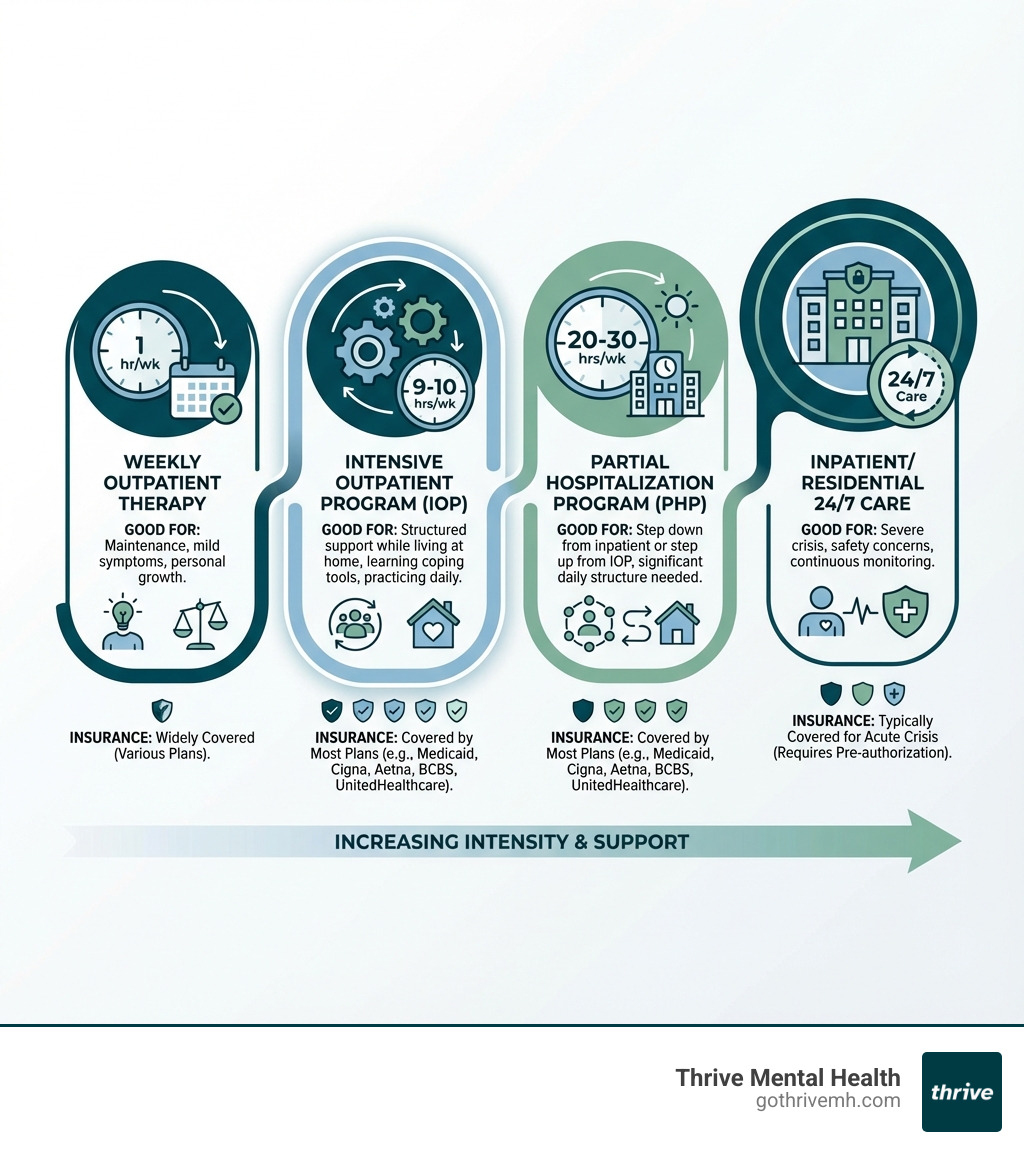
The mental health care ladder works like this:
- Weekly Outpatient Therapy: 1 hour/week, good for maintenance or mild symptoms
- Intensive Outpatient Program (IOP): 9-10 hours/week, structured support while living at home
- Partial Hospitalization Program (PHP): 20-30 hours/week, step down from inpatient or step up from IOP
- Inpatient/Residential: 24/7 care for severe crisis or safety concerns
Most people in Evansville who need help fall into that IOP range—you need more than weekly therapy, but you don’t need to leave your life behind.
I’m Nate Raine, CEO of Thrive Mental Health, and I’ve spent over a decade building behavioral health systems that deliver measurable outcomes through evidence-based Evansville, Indiana intensive outpatient therapy and virtual care. Thrive operates across five states, and our mission is to make high-quality IOP and PHP programs accessible, effective, and integrated into real life—not separate from it.
Evansville, Indiana intensive outpatient therapy vocab to learn:
What Is Intensive Outpatient Therapy? [Table: IOP vs PHP vs Weekly Therapy]
Understanding the different levels of mental health care can feel like navigating a maze. But for residents of Evansville, Indiana, who are seeking more support than traditional weekly therapy, knowing the distinction between IOP, PHP, and standard outpatient care is crucial. This knowledge helps you find the right intensity of treatment without disrupting your entire life.
IOP vs PHP vs Outpatient: What’s the difference?
Traditional Outpatient Therapy is what most people picture: weekly or bi-weekly sessions with a therapist. It’s excellent for managing mild symptoms, providing ongoing support, or addressing specific life stressors. However, for persistent or more severe mental health challenges, it often doesn’t provide enough structure or intervention.
A Partial Hospitalization Program (PHP), sometimes called “day treatment,” offers a much higher level of care. PHP typically involves 20-30 hours of therapy per week, often meeting five to six days a week for several hours each day. It provides comprehensive services, including individual, group, and family therapy, and often includes holistic activities. PHP is ideal for individuals stepping down from inpatient care or those who need intensive support but don’t require 24/7 supervision. It’s a significant time commitment, but it allows you to return home in the evenings. You can learn more about this level of care by visiting our guide on PHP Program.
An Intensive Outpatient Program (IOP) bridges the gap between weekly therapy and PHP. It provides structured, evidence-based treatment for 9-10 hours per week, typically spread over three to five days. IOPs focus heavily on group therapy, skill-building, and developing coping mechanisms, alongside individual and family therapy. It’s designed for those who need significant therapeutic support but can maintain their daily responsibilities like work, school, or family life. Our comprehensive guide, What’s an IOP?, offers even more detail.
TABLE: Compare time, cost, focus, and who benefits most
| Feature | Weekly Outpatient Therapy | Intensive Outpatient Program (IOP) | Partial Hospitalization Program (PHP) |
|---|---|---|---|
| Weekly Hours | 1-2 hours | 9-10 hours | 20-30 hours |
| Primary Format | Individual therapy | Group therapy, individual, family | Group, individual, family, holistic |
| Focus | Symptom management, support | Skill-building, relapse prevention | Crisis stabilization, intensive therapy |
| Setting | Office, virtual | Office, virtual (live at home) | Facility-based (live at home) |
| Flexibility | High | High (allows work/school) | Moderate (full-day commitment) |
| Cost | Lowest (per week) | Moderate | Highest (per week) |
| Who Benefits | Mild symptoms, maintenance | Moderate-severe symptoms, step-down | Severe symptoms, crisis, step-down from inpatient |
Flexibility: Keep your job, stay home, get real help
One of the biggest advantages of Evansville, Indiana intensive outpatient therapy is its flexibility. We understand that life doesn’t stop just because you need help. Our IOPs are designed to integrate into your existing schedule, with evening options and virtual programs available. This means you can continue working, attending school, or caring for your family while receiving the intensive support necessary for lasting change. This flexibility is a game-changer for many, removing significant barriers to accessing crucial care.
Cost-effective: Insurance covers most IOPs (Cigna, Aetna, BCBS, UnitedHealthcare, Medicaid)
We know that concerns about cost can be a major deterrent to seeking treatment. The good news is that most major insurance providers, including Cigna, Aetna, Blue Cross Blue Shield, UnitedHealthcare, and Medicaid, recognize the value of IOPs and provide significant coverage. This makes intensive outpatient therapy a more affordable and accessible option compared to inpatient care. We’re committed to helping you understand your benefits; you can verify your insurance in just two minutes, with no obligation.
Real-world skills, not just talk
Unlike therapy that might focus solely on discussion, IOPs are highly practical. Our programs emphasize teaching and practicing real-world skills that you can immediately apply to your daily life. This includes coping mechanisms for stress and anxiety, strategies for managing cravings, emotional regulation techniques, and communication skills. The goal is not just to understand your challenges, but to equip you with the tools to overcome them and build a more fulfilling life. The numerous benefits of this structured approach are detailed in The Benefits of an Intensive Outpatient Program.
Conditions treated: Depression, Anxiety, Trauma, Dual diagnosis
Our Evansville, Indiana intensive outpatient therapy programs are designed to treat a wide range of mental health and substance use conditions. These include:
- Depression: From major depressive disorder to persistent sadness, our IOPs provide targeted interventions. We explore the roots of depression and equip you with strategies to manage symptoms and refind joy.
- Anxiety Disorders: Whether it’s generalized anxiety, panic disorder, or social anxiety, we help you understand your triggers, develop coping skills, and reduce the impact of anxiety on your life.
- Trauma and PTSD: Our trauma-informed care recognizes the profound impact of past experiences. We offer specialized therapies to process trauma, reduce its emotional hold, and foster healing.
- Substance Use Disorders: For individuals struggling with addiction, our IOPs provide a structured environment for recovery, relapse prevention, and building a sober life. This includes dedicated programs for Online IOP for alcohol.
- Dual Diagnosis (Co-occurring Disorders): Many individuals face both mental health conditions and substance use disorders. Our integrated approach treats both simultaneously, recognizing their interconnectedness for more effective and sustainable recovery.
- Other conditions such as mood disorders, personality disorders (like Borderline Personality Disorder), and OCD are also effectively addressed within our specialized programs.
The 5 Best Evansville, Indiana Intensive Outpatient Therapy Options [No Competitors—All Thrive Solutions]
At Thrive Mental Health, we offer a range of specialized intensive outpatient programs custom to meet diverse needs within the Evansville community. Our programs combine clinical expertise, flexible scheduling, and measurable results, all designed for people who need more than once-a-week therapy but less than inpatient care.

1. Thrive Hospital-Integrated IOP & PHP
Our Hospital-Integrated IOP and PHP programs in Evansville are designed for individuals who require comprehensive medical and psychiatric care alongside their therapy. This program is ideal for those stepping down from an inpatient stay or who need a higher level of medical oversight.
- Integrated Medical and Psychiatric Care: We coordinate closely with medical professionals to ensure all aspects of your health are addressed.
- Medication Management: Our team includes prescribers who can manage your psychiatric medications, ensuring optimal dosage and effectiveness. This is often a crucial step-down from more intensive care, providing continuity.
- Best for: Individuals needing a robust, medically supported program, those transitioning from inpatient care, or those with complex co-occurring medical conditions.
2. Thrive Addiction & Recovery IOP
For those battling substance use disorders and co-occurring mental health challenges, our Addiction & Recovery IOP offers a lifeline. We understand that addiction is often intertwined with underlying mental health issues, and our program addresses both simultaneously.
- Substance Use, Dual Diagnosis, Relapse Prevention: We focus on understanding triggers, developing healthy coping mechanisms, and building a strong foundation for long-term sobriety.
- Online IOP for alcohol: We provide specialized support for alcohol dependency, offering flexible online options for those who need it.
- Peer Support, Evidence-Based Care: Group therapy fosters a sense of community and shared experience, while our therapies are rooted in proven methods.
- Best for: Individuals seeking recovery from addiction, those with a dual diagnosis of mental health and substance use disorders, and anyone needing robust relapse prevention strategies.
3. Thrive Specialized Mental Health IOP
Our Specialized Mental Health IOP is custom for individuals struggling with more complex mental health conditions, providing advanced therapeutic modalities.
- Mood Disorders, Trauma, BPD, C-PTSD: We address conditions like severe depression, bipolar disorder, Borderline Personality Disorder (BPD), and Complex Post-Traumatic Stress Disorder (C-PTSD) with targeted, evidence-based approaches.
- DBT, EMDR, Trauma-Informed: Our expert therapists use Dialectical Behavior Therapy (DBT) for emotional regulation and interpersonal effectiveness, and Eye Movement Desensitization and Reprocessing (EMDR) for trauma processing. Our entire approach is trauma-informed.
- Best for: Those needing advanced therapy modalities for chronic or severe mental health conditions, including mood disorders, personality disorders, and complex trauma.
4. Thrive Youth & Family IOP
Mental health challenges often affect the entire family, especially when adolescents and young adults are struggling. Our Youth & Family IOP in Evansville provides comprehensive support for teens, young adults, and their families.
- Teens, Young Adults, Family Therapy, Academic Support: We offer age-appropriate therapy, address developmental challenges, and provide crucial academic support. Family therapy is a cornerstone, as family involvement is a key predictor of success in IOP. Check out our Teen Virtual IOP Complete Guide for more insights.
- Art Therapy: Creative and expressive therapies like art therapy are integrated to help young people communicate and process emotions in non-verbal ways.
- Best for: Adolescents (13+) and young adults (17+) struggling with mental health or substance use, and families seeking to improve communication and support their loved one’s recovery.
5. Thrive Virtual IOP for Evansville Adults
For busy professionals and adults in Evansville who need effective treatment without the commute, our Virtual IOP offers unparalleled accessibility and flexibility.
- Virtual IOP Indiana Complete Guide: Our comprehensive guide explains everything you need to know about accessing high-quality intensive outpatient therapy from the comfort of your home.
- Flexible Evenings, Work/Life Fit, Adult and Young Professional Focus: Our virtual programs are designed to accommodate demanding schedules, allowing you to participate in therapy during evenings or other convenient times. This is perfect for maintaining work-life balance.
- CBT, DBT, EMDR: Our virtual programs use the same evidence-based therapies as our in-person options, delivered by expert clinicians.
- Best for: Adults and young professionals in Evansville seeking flexible, accessible, and effective intensive outpatient therapy from anywhere in Indiana.
What to Expect: Your First Week in Evansville, Indiana Intensive Outpatient Therapy
Starting an IOP can feel like a big step, but understanding what to expect can ease any apprehension. Our programs are structured, supportive, and designed to get you on the path to recovery quickly.

Typical Schedule: 9–10 hours/week, group + individual therapy, skills training
During your first week in a Thrive Evansville, Indiana intensive outpatient therapy program, you’ll typically engage in 9-10 hours of structured therapy per week. This usually breaks down into several group therapy sessions, individual therapy, and potentially family therapy.
- Group Therapy: This is a cornerstone of IOP. You’ll join a small group led by master’s-level clinicians. These sessions are a safe space to share experiences, learn from others, and practice new coping skills in a supportive environment. Topics often include coping with diagnosis, relapse prevention, emotional regulation, communication skills, and self-identity.
- Individual Therapy: You’ll have dedicated one-on-one time with a therapist to address your specific concerns, develop personalized strategies, and process issues in a private setting.
- Skills Training: A significant portion of your time will be spent learning and practicing practical skills. This might include mindfulness exercises, distress tolerance techniques, interpersonal effectiveness strategies, and emotional regulation tools. The goal is to equip you with a toolkit to steer life’s challenges more effectively.
Medication Management Complete Guide
For many, medication plays a vital role in managing mental health conditions. Our IOPs often include integrated medication management. Our licensed medical providers can assess your needs, prescribe appropriate medications, and monitor their effectiveness and side effects. This ensures a holistic approach to your care, combining therapeutic interventions with pharmacological support when necessary.
Evidence-based approaches: CBT, DBT
We pride ourselves on using therapies that are backed by scientific research and proven to be effective. In our Evansville, Indiana intensive outpatient therapy programs, you’ll encounter modalities such as:
- Cognitive Behavioral Therapy (CBT): This approach helps you identify and challenge negative thought patterns and behaviors that contribute to your distress. By reframing thoughts and developing healthier responses, you can significantly improve your mood and functioning.
- Dialectical Behavior Therapy (DBT): DBT is particularly effective for individuals struggling with intense emotions, impulsivity, and relationship difficulties. It teaches skills in mindfulness, distress tolerance, emotional regulation, and interpersonal effectiveness.
- Trauma-Informed Care: We recognize the widespread impact of trauma and incorporate this understanding into all aspects of our treatment, creating a safe and healing environment.
Real results: faster progress, less disruption, more support
The intensive nature of IOP means you often see faster progress than with weekly therapy. By dedicating more time to treatment, practicing skills daily, and receiving consistent support, you build momentum in your recovery. All this happens with minimal disruption to your daily life, allowing you to heal while staying connected to your responsibilities and loved ones. It’s about getting back to your best self, faster.
How to Start and Pay for IOP in Evansville [Insurance & Intake Guide]
Taking the first step is often the hardest, but we’ve made the process of accessing Evansville, Indiana intensive outpatient therapy as smooth and straightforward as possible.
Step 1: Fast, Free Assessment & Intake
Your journey begins with a quick, confidential phone consult. This initial conversation helps us understand your needs and determines if an IOP is the right fit for you. Following this, we conduct a comprehensive clinical assessment to develop a personalized treatment plan.
- Quick Phone Consult, Clinical Assessment, Insurance Check: We’ll gather essential information about your mental and physical health history, symptoms, and any substance use. At this stage, we can also begin the process of checking your insurance benefits.
- Personalized Plan—No Waiting Lists: Based on your assessment, we’ll recommend a custom treatment plan. We aim to provide immediate access to care, helping you avoid long waiting lists that can delay your recovery.
- How to Read Mental Health Insurance Benefits: Navigating insurance can be complex, but our team is here to help you understand your coverage.
Step 2: Insurance Coverage for Evansville, Indiana IOP
We believe that financial barriers shouldn’t prevent anyone from accessing quality mental health care. That’s why we work with a wide range of insurance providers.
- Medicaid, Aetna, Blue Cross Blue Shield, Cigna, UnitedHealthcare, Self-Pay: We are in-network with most major commercial insurance companies, as well as Medicaid. For those without insurance or who prefer not to use it, self-pay options are also available.
- More info about insurance coverage: Our website provides additional details on the insurance plans we accept and how to maximize your benefits.
- Most Plans Cover IOP—Verify in 2 Minutes: Due to the medical necessity and evidence-based effectiveness of IOPs, most insurance plans offer substantial coverage. We can quickly verify your benefits, often within minutes, so you know exactly what to expect.
Step 3: Aftercare—What Happens After IOP?
Completing an IOP is a significant milestone, but it’s not the end of your recovery journey. We emphasize comprehensive aftercare planning to ensure you maintain the progress you’ve made.
- Step-Down to Weekly Therapy, Alumni Groups, Relapse Prevention: Your aftercare plan might include transitioning to less intensive weekly therapy, joining alumni support groups for ongoing connection, and continued focus on relapse prevention strategies.
- Indiana Mental Health Resources: We connect you with local resources and support networks in Evansville and across Indiana to provide sustained community and care.
- Ongoing Support for Lasting Change: Our goal is to equip you with the tools and support systems needed for long-term mental wellness and sustained recovery.
Evansville, Indiana IOP FAQs
How long does intensive outpatient therapy last?
Most Thrive IOPs run 6–12 weeks, with flexible options custom to your individual needs and schedule.
Can I keep my job or go to school while in IOP?
Yes. Thrive IOPs are designed for real life—most sessions are held in the evenings or virtually, allowing you to maintain your work, academic, or family commitments.
What’s the difference between virtual and in-person IOP?
Virtual IOP offers the same expert care, evidence-based therapies, and structured support as in-person programs, but from the comfort and privacy of your home. It eliminates commute time and offers greater flexibility, delivering the same results.
Does insurance cover IOP in Indiana?
Yes. Most major plans, including Cigna, Aetna, Blue Cross Blue Shield, UnitedHealthcare, and Medicaid, typically cover Thrive IOP programs. We encourage you to verify your insurance now to understand your specific benefits.
Summary: Evansville, Indiana Intensive Outpatient Therapy—Get Help, Get Results, Get Your Life Back
For residents of Evansville, Indiana, struggling with mental health or addiction, intensive outpatient therapy offers a powerful, flexible, and effective path to recovery. We’ve seen how untreated mental health can cost you precious time, vital relationships, and your overall well-being. Don’t wait until things escalate.
Thrive Mental Health’s Evansville IOPs are designed to be fast, flexible, and covered by most insurance plans, making high-quality care accessible. With both virtual and in-person options for adults, teens, and families, we provide the structured, evidence-based support you need to regain control and thrive.
Start your recovery today and find how our expert-led programs can help you build the skills for lasting change and a healthier, more fulfilling life.
If you’re in crisis, call/text 988 right now. You are not alone.
Ready for support? Thrive offers virtual and hybrid IOP/PHP programs with evening options. Verify your insurance in 2 minutes (no obligation) → Start benefits check or call 561-203-6085. If you’re in crisis, call/text 988.