






A virtual IOP should be able to show you, in numbers, whether its patients get better. The method is called measurement-based care: validated symptom scales administered on a schedule, reviewed with the patient, and used to change the treatment plan when the trend line stalls. This article explains how outcome measurement works at the intensive outpatient level, what the evidence says it adds, and how we run it at Thrive, so you can ask any program you are considering the same questions we would ask.
The uncomfortable truth about behavioral health is that most programs still track attendance, not improvement. Asking “how do you measure outcomes” is the single fastest way to tell a serious program from a schedule of meetings.
What measurement-based care actually is
Measurement-based care (MBC) has three parts, and all three are required:
- Systematic measurement. Brief validated instruments, on a fixed schedule, not when someone remembers.
- Shared review. The clinician and patient look at the scores together. The data belongs in the session, not in a filing cabinet.
- Treatment response. When scores are not moving, something changes: the modality, the intensity, the medication conversation, the goals.
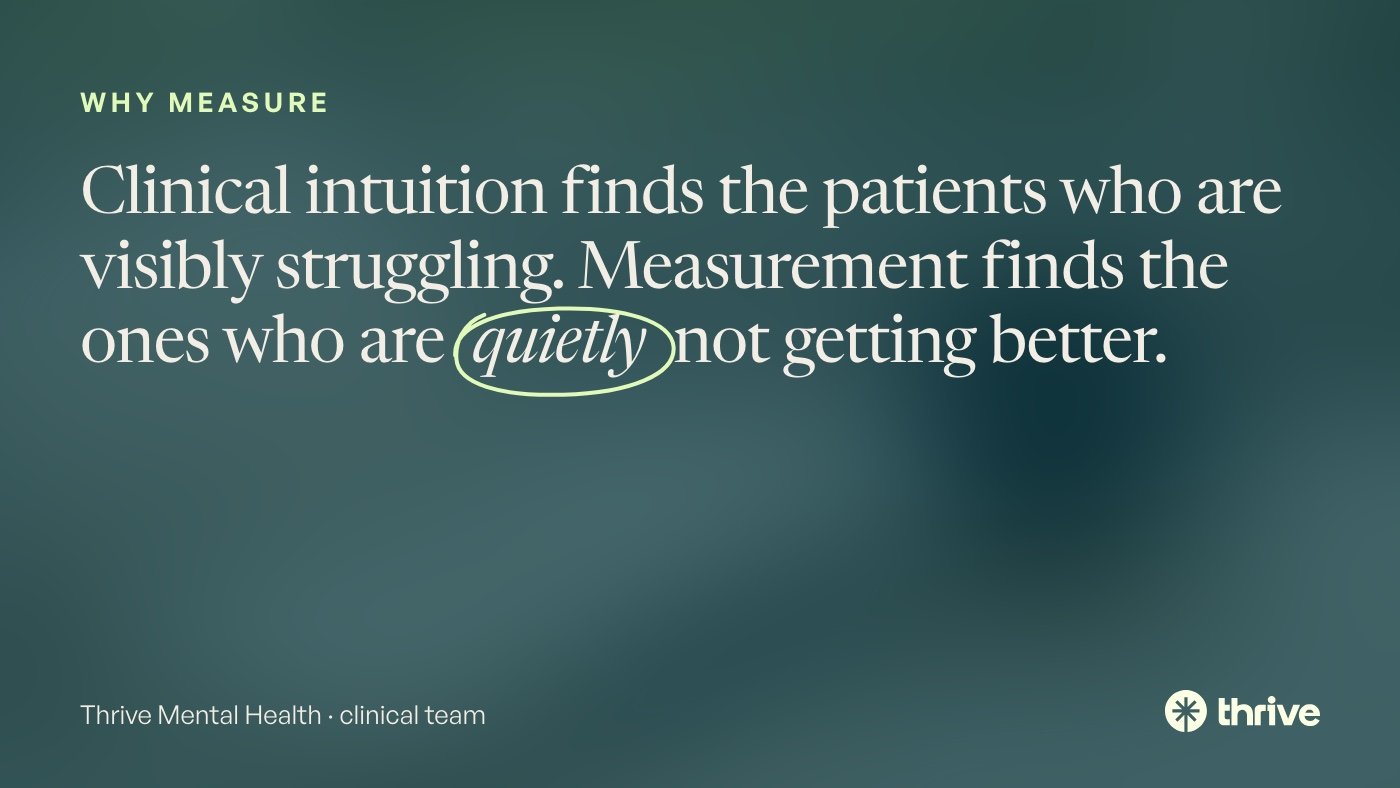
The evidence for the practice is strong and specific. A landmark review in Psychiatric Services found that trials with frequent, timely feedback of patient-reported symptoms to the clinician significantly improved outcomes, with the largest gains among patients who were not improving, exactly the people routine care tends to miss. Subsequent implementation research, including a federal evidence review of patient-reported outcome measures in mental health care, reached the same conclusion: measured care outperforms assumed care.
The instruments, in plain English
| Instrument | What it measures | Why it is trusted |
|---|---|---|
| PHQ-9 | Depression severity, 9 questions | Validated against clinical diagnosis in peer-reviewed research; sensitive to change over weeks |
| GAD-7 | Anxiety severity, 7 questions | Validated in a large primary-care study; the standard anxiety trend measure |
| PCL-5 and condition-specific scales | Trauma symptoms and other targeted domains | Added when the presenting problem calls for them |
| Functioning and engagement markers | Attendance, work/school participation, goal progress | Symptoms are half the story; a life reopening is the other half |
Each takes a few minutes. The value is not any single score; it is the trend across weeks of treatment, which is where a program earns or loses its claims.
How this works at Thrive, week by week
Inside our virtual IOP, measurement runs on a rhythm:
- At intake: baseline PHQ-9, GAD-7, and condition-specific scales establish the starting point, alongside the clinical assessment that sets the treatment plan.
- Through treatment: repeat measures on a fixed cadence. Scores land in front of the clinical team, and members see their own trend lines. Watching your own graph bend is, for many people, the first concrete proof that treatment is working.
- At the team level: our clinicians review measures across the caseload, so a stalled trend triggers a case discussion rather than another identical week. This is the “respond” half of MBC that distinguishes it from surveying.
- At discharge: final measures document the change, and the step-down plan (usually back to weekly therapy) travels with the data. Referring clinicians get their patient back with a record of what moved, not just a discharge date.
Our published results live on the Thrive outcomes page, and our what-to-expect guide shows where the check-ins sit inside a treatment week.
Why this matters more, not less, in a virtual program
Skeptics sometimes assume video-delivered treatment must be measured on faith. The opposite is true. The virtual format was validated with exactly these tools: research comparing more than 1,100 intensive-treatment patients in the Journal of Psychiatric Research found telehealth outcomes comparable to in-person care, measured on standardized scales. And SAMHSA’s Treatment Improvement Protocol for intensive outpatient treatment emphasizes structured assessment as core to the IOP model in any setting.
Virtual delivery actually makes measurement easier to do well: instruments arrive on the same screen treatment does, completion rates rise, and the data reaches the team before the next session instead of after it.
Questions to ask any program you are considering
- “Which validated instruments do you use, and how often?” Accept named scales on a schedule; be wary of “we check in regularly.”
- “Will I see my own scores?” Shared review is half the effect. A program that measures but does not show you is doing quality assurance, not measurement-based care.
- “What happens when my numbers do not improve?” The answer should describe a concrete change process, not reassurance.
- “Do you publish or share outcomes data?” Programs proud of their results tend to show them.
- “Is the program accredited, and by whom?” Independent accreditation, such as the Joint Commission’s behavioral health standards, audits exactly these processes. Thrive is accredited by The Joint Commission for Behavioral Health Care and Human Services.
What improvement realistically looks like
Honest expectations, from the data and from practice:
- Trend, not staircase. Scores wobble week to week; the multi-week slope is the signal. One hard week does not erase a bending curve.
- Function often follows symptoms. Sleep and concentration frequently move before mood does. That is why we track both.
- Response is not the finish line. The step-down plan, usually weekly therapy plus the skills built in program, is what protects the gains. Our guide to IOP versus weekly therapy explains how the levels hand off.
- Not everyone responds to the first plan, and measured care is how you find out early. A plan change in week three beats a surprised discharge review in week ten.
What the data does at the program level
Individual trend lines are half the value. Aggregated, de-identified outcomes are how a program improves itself:
 Virtual Mental Health IOP: Intensive Care, Zero CommuteMental Health
- Curriculum decisions. If members in a given track consistently plateau at week four, the week-four curriculum gets rebuilt, not defended.
- Clinician development. Outcome patterns inform supervision. That is uncomfortable to say and essential to do; it is also standard practice in every other branch of medicine.
- Accreditation audits. Joint Commission behavioral health standards require outcome measurement processes, and surveys audit whether the loop from data to plan change actually closes.
- Honest marketing. Published outcomes keep a program’s public claims tethered to its charts. If the website says members improve, the aggregate PHQ-9 deltas should say the same thing.
The limits of outcome data, stated plainly
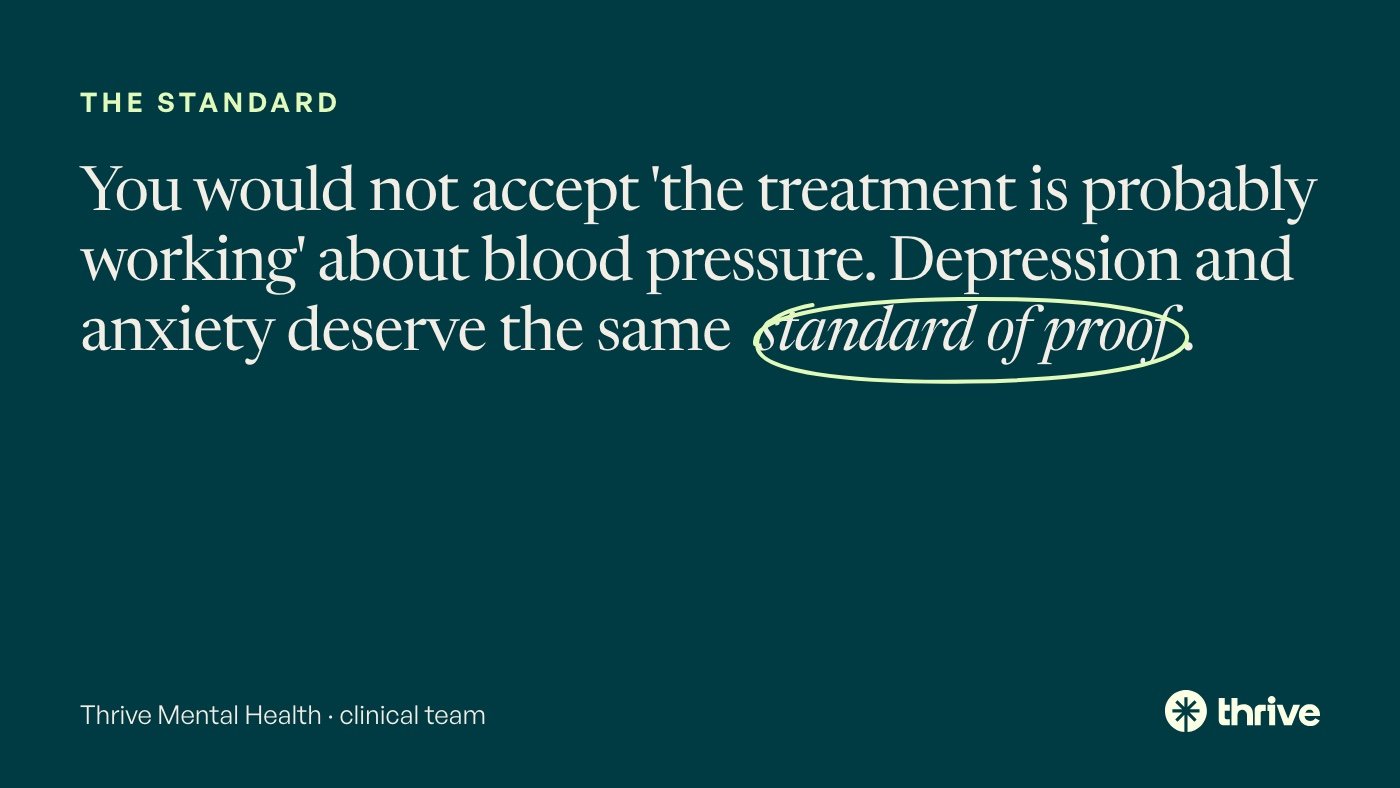
Measurement-based care is a floor, not an oracle. Self-report scales can be gamed, good weeks can flatter a trend, and aggregate statistics say nothing certain about any single person’s course. Programs that treat the PHQ-9 as a verdict rather than a conversation starter have missed the point of the practice. The honest claim is narrower and still powerful: measured treatment catches non-response months earlier than unmeasured treatment, and earlier course corrections produce better endings. That is what the trials show, and it is the standard worth holding any program to, ours included.
Common questions about virtual IOP outcomes
What outcomes should a virtual IOP measure?
At minimum: depression (PHQ-9) and anxiety (GAD-7) on a fixed schedule, condition-specific scales where relevant, plus attendance and functional markers like work or school participation.
Do virtual IOPs work as well as in-person programs?
Peer-reviewed comparisons of intensive treatment delivered by telehealth versus in person show comparable outcomes on standardized measures.
What is measurement-based care?
The systematic use of validated symptom scales during treatment, reviewed with the patient, and used to adjust the plan. Trials show it improves outcomes versus unmeasured care, especially for patients not responding.
How quickly should scores improve in an IOP?
Many members see movement within two to four weeks, but the multi-week trend matters more than any single score. Flat trends should trigger a plan change, not more of the same.
Does Thrive share outcome data with my referring therapist?
With your consent, yes. Coordinated step-down is part of the model: your clinician gets the trend data along with the discharge plan.
Are outcome questionnaires just paperwork for insurance?
No. Insurers do sometimes request scores for authorization, but the clinical purpose is different: trend lines drive treatment decisions week to week. A program that only measures when a payer asks is doing compliance, not measurement-based care, and the difference shows in how the data is used in sessions.
Next steps
If you are comparing programs, ask every one of them the five questions above. Thrive Mental Health is a Joint Commission accredited provider of virtual IOP for adults in Florida, Indiana, Arizona, California, North Carolina, South Carolina, and Texas, and we will happily answer them before you commit to anything.
Start with a free, confidential benefits check. Most people receive a summary within 24 hours, and many begin treatment the same week. Prefer to talk first? Call (561) 203-6085.

This article is for informational purposes only and is not a substitute for individualized clinical advice or insurance verification.